
Alf

Tradition / Region: Dutch Mythology
Alternate Names: Elle, Elvinne
Category: Fairy, Spirit


The Myth

The Alven are elusive beings who move between the human world and a hidden one of their own. They are seldom seen directly, yet their influence is felt wherever paths twist strangely, hills rise unnaturally, or circles appear in the grass at dawn.

They are said to travel in floating eggshells upon water or fly through the air in sieves, drifting lightly between places. Wherever they pass, certain plants may become poisonous, marked by their touch. The Alven make their homes inside hills, mounds, and terpen, known as alvenheuvels or alvinnenheuvels, hollow places where their world presses close to the surface.

Those who lose their way without reason are said to have been “led” or “lured” by an alf. The path seems familiar, yet turns endlessly, and the traveler wanders until fear or exhaustion takes hold. This confusion is no accident: the Alven delight in making the world appear other than it truly is.

At night, they dance above marshes and pools or in rings upon the grass. Their music and movement are enchanting, and those who join them may dance until dawn without knowing how much time has passed. When morning comes, the Alven are gone, but a circle remains pressed into the grass, silent proof of their presence.

In old stories and medieval texts, the elvinne is especially known for deception. She casts illusions so convincing that sight itself cannot be trusted—hence the word alfsgedrog, meaning a false vision or glamour. She is alluring, unrestrained, and dangerous in her beauty. Sometimes she exchanges her child for a human infant, leaving confusion and sorrow behind.

In Flemish tradition, the Alven are ruled by a queen named Wanne Thekla, a powerful and unseen sovereign of their hidden courts.

The Alven are not merely playful spirits. They are tricksters, tempters, and deceivers, beings who blur truth and illusion. To encounter them is to risk losing one’s way, one’s certainty, or even one’s child—yet their traces remain lightly stamped upon the land, in hills, circles, and paths that never quite lead where they should.


Sources

Abe de Verteller contributors. (n.d.). Van aardmannetje tot zwarte juffer: Een lijst van Nederlandse en Vlaamse elfen en geesten. In Abe de Verteller, from https://abedeverteller.nl/van-aardmannetje-tot-zwarte-juffer-een-lijst-van-nederlandse-en-vlaamse-elfen-en-geesten/
Klaas Vaak

Tradition / Region: Dutch Mythology, German Mythology
Alternate Names: Zandmannetje
Category: Spirit


The Myth

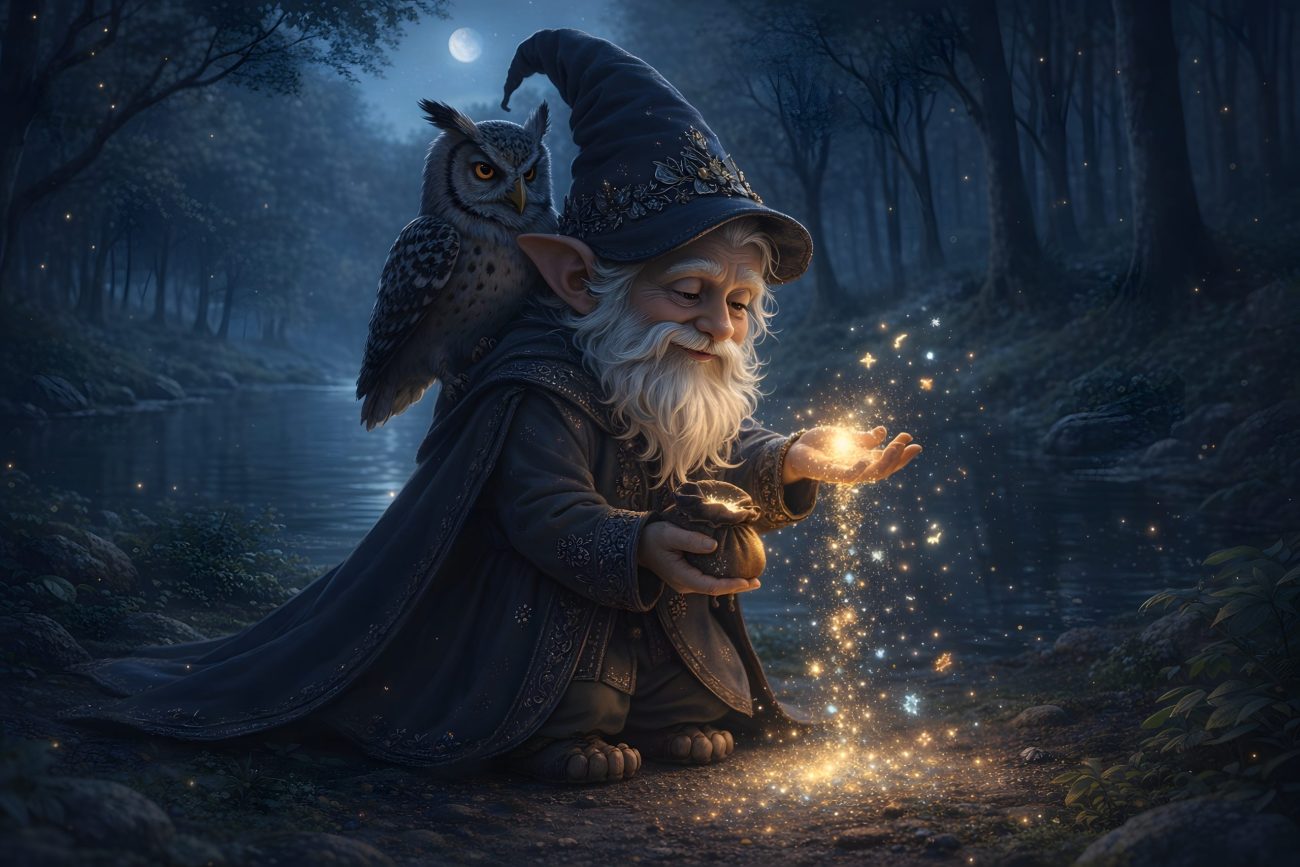
Klaas Vaak, also known as the Zandmannetje, is a figure believed to bring sleep to children. He is already mentioned in a poem from 1651, where it is said that he gently strokes people’s eyelids to make them yawn and fall asleep. In this early form, his presence is soothing and quiet, associated with the natural onset of sleep.

By 1767, the name Zandmannetje appears for the first time in a lullaby. In this version of the belief, Klaas Vaak causes sleep by sprinkling sand into people’s eyes, making them rub their eyelids. In the morning, the grains of sand are said to remain in the corners of the eyes as proof of his visit.

In a darker German version recorded in 1816, the Sandman is described as a frightening figure. Children were told that if they refused to go to bed, he would throw so much sand into their eyes that they would bleed from their sockets. He would then collect their eyes in a sack, carry them to the moon, and feed them to his own children. In this tradition, he becomes associated with the Man in the Moon and functions as a figure used to frighten children into obedience.

Like Sinterklaas, Klaas Vaak is sometimes said to enter homes through the chimney. While it is not known for certain whether the terrifying version of the Sandman was used in the Netherlands, the belief that Klaas Vaak visits at night to bring sleep was widespread and enduring.


Nachtwerkertjes

Tradition / Region: Dutch Mythology
Alternate Names: Werkgeesten (related)
Category: Spirit


The Myth

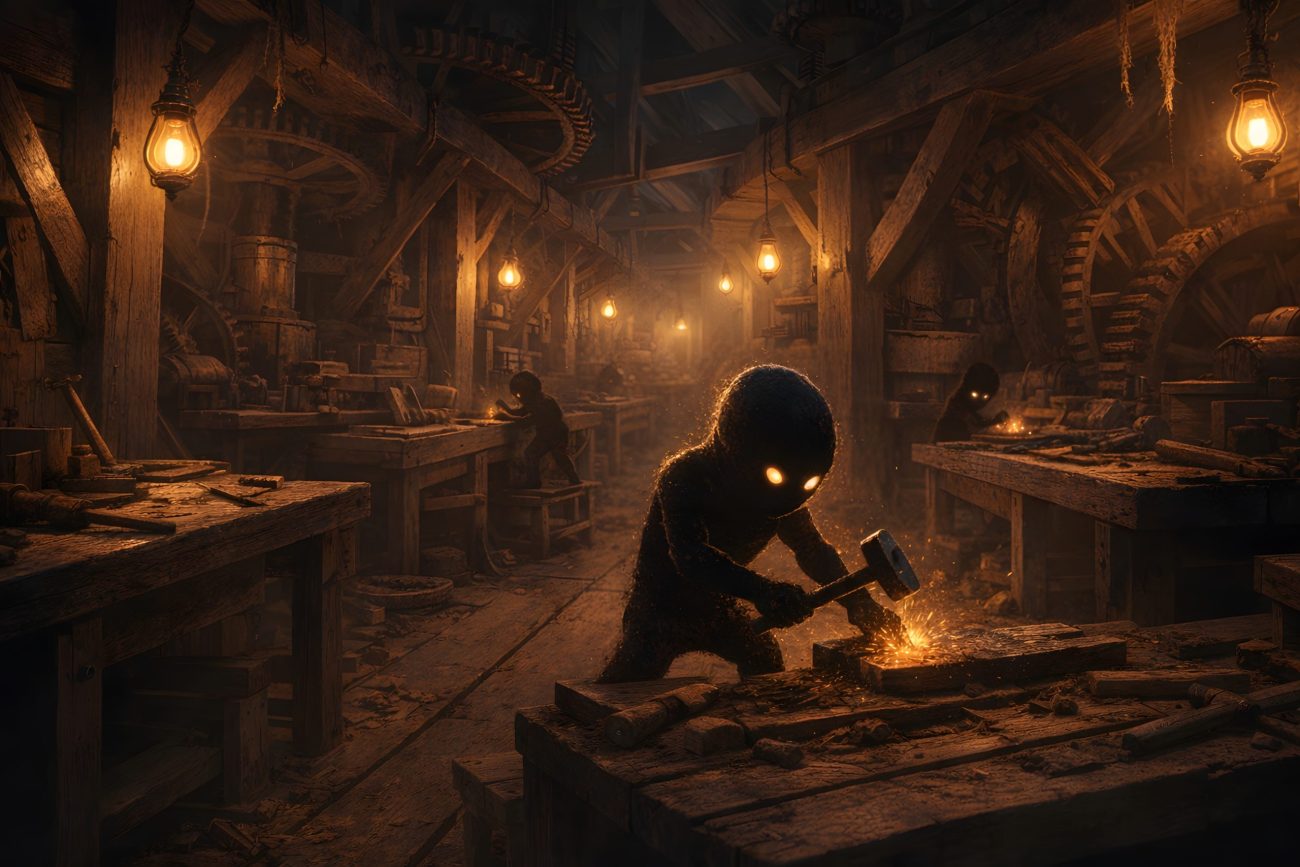
In Dutch folklore, Nachtwerkertjes are mysterious beings heard at night inside workshops and workspaces. When loud hammering, sawing, or other work noises are heard in the middle of the night—without any human present—it is said that the nachtwerkertjes are at work.

Their presence is believed to be a sign of what is to come. Hearing them foretells that there will soon be much work to be done, as if the spirits are preparing in advance. In the Zaan region, where windmills dominate the landscape, the sounds of nachtwerkertjes are specifically taken as a warning that a storm is approaching. Such storms often caused damage to mills, leading to extensive repair work afterward.

Thus, the nachtwerkertjes do not appear directly to people, but announce themselves through sound, acting as unseen workers whose nocturnal activity signals impending labor and disruption.