Sárkány

Tradition / Region: Hungarian Mythology
Alternate Names: —
Category: Dragon


The Myth

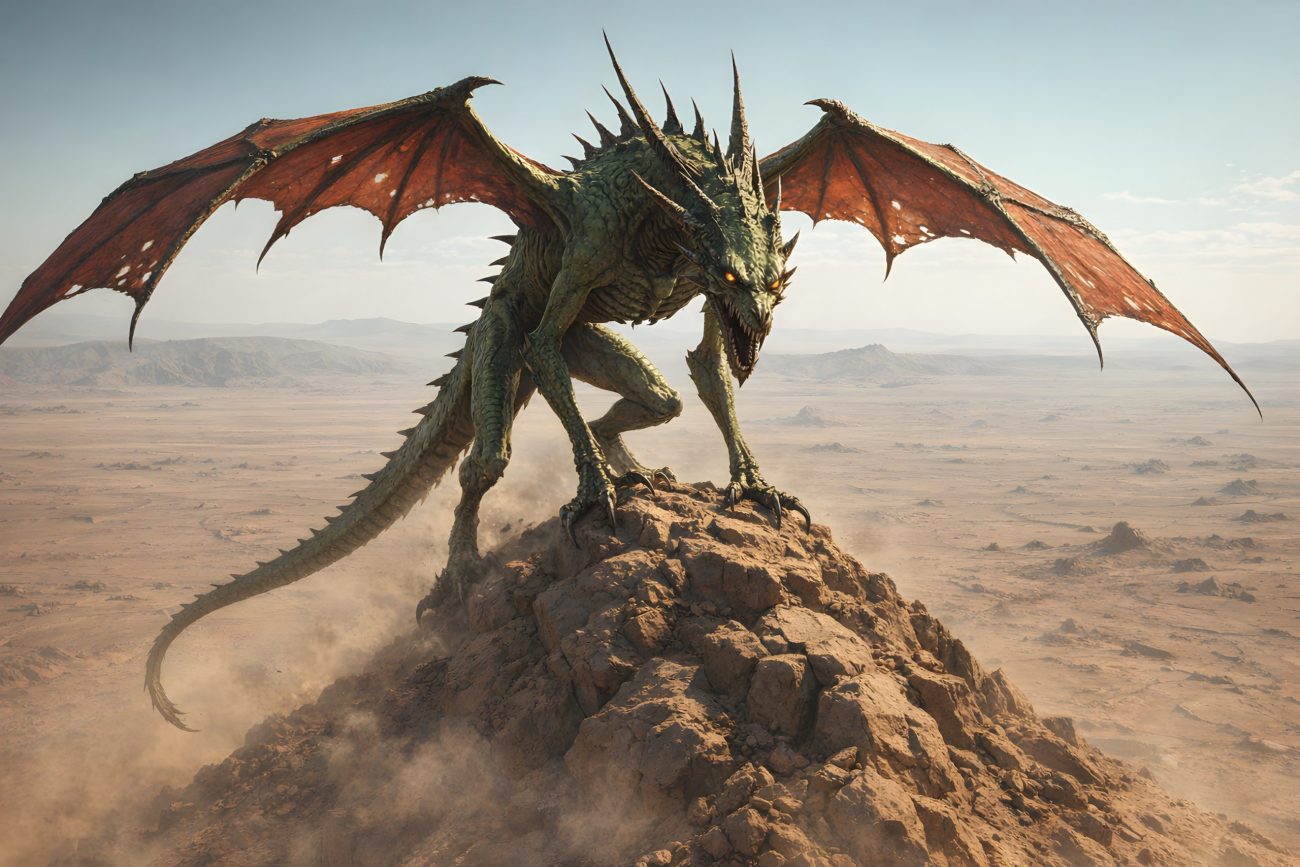
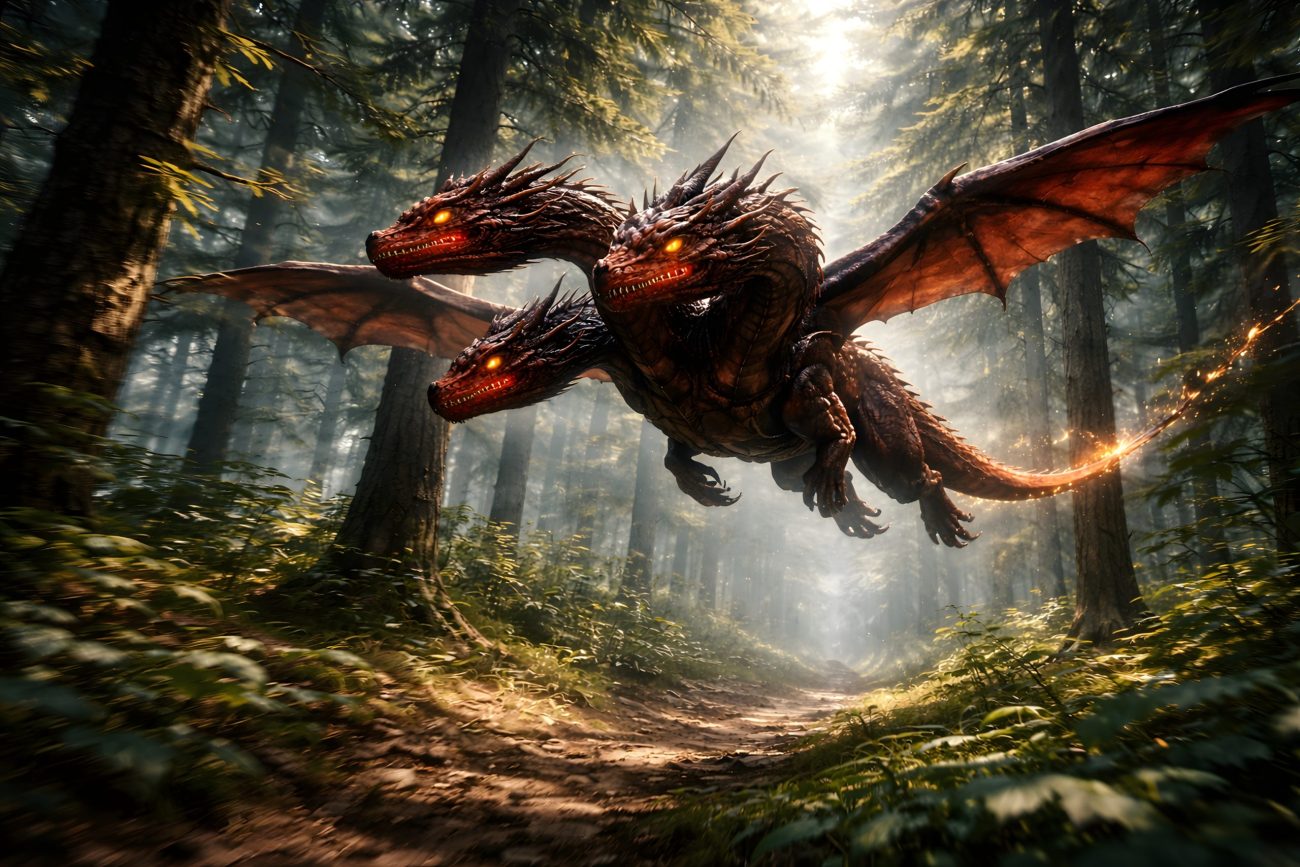
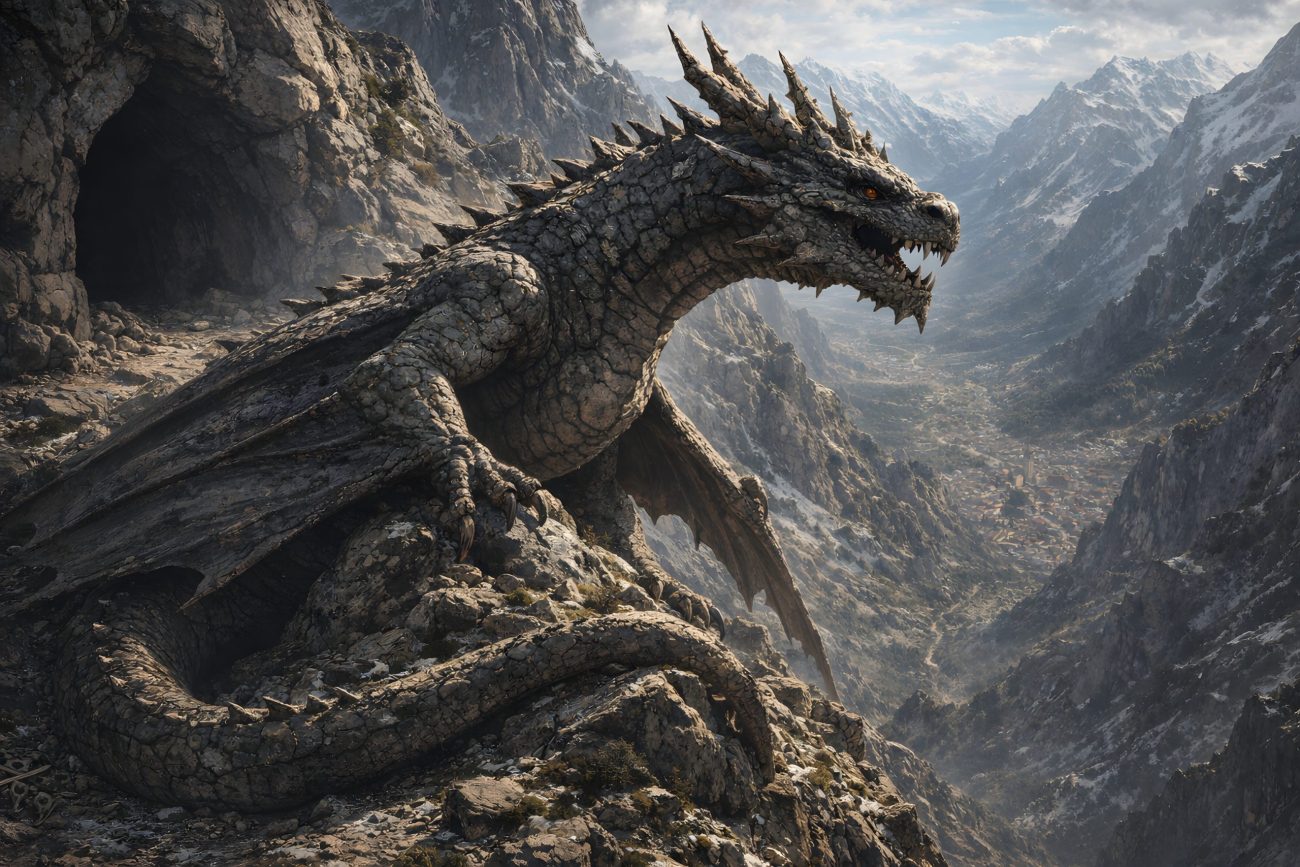
The sárkány is a large and powerful mythical creature, typically described as a reptilian being with magical or spiritual properties. In Hungarian tradition, it may also appear as a humanoid figure and often has multiple heads.

Creatures identified as dragons appear in many cultures and likely do not share a single origin. Similar beings are found in ancient mythologies such as Mesopotamian and Akkadian traditions, where serpent-like or dragon-like creatures already existed. In European and Persian traditions, dragons are generally hostile, while in other cultures they may be benevolent.

In Hungarian belief, the meaning of the word sárkány changed over time. During earlier periods it could refer to a title or role, but later became associated with the monstrous dragon known from Western-Christian traditions.

In folklore and fairy tales, the sárkány is commonly a dangerous, multi-headed enemy. It is often connected with storms or whirlwinds and may appear together with violent weather. Many stories describe encounters between humans and such creatures, where the sárkány proves deadly and difficult to defeat.


Sources

Wikipedia contributors. (n.d.). Sárkány (mitológia). In Wikipedia, from https://hu.wikipedia.org/wiki/S%C3%A1rk%C3%A1ny_%28mitol%C3%B3gia%29


Brennet Wurm

Tradition / Region: Czech Mythology
Alternate Names: Brennetwurm
Category: Dragon


The Myth

The Brennet Wurm is a gigantic serpent said to dwell in the dense forests of the Brennetberg. It is described as an enormous snake-like creature, powerful enough to disturb both nature and human life.

Driven by thirst, the creature would descend from the mountains into the valley and drink from streams in such vast quantities that it could stop the flow of water, even halting the work of mills. Its presence was therefore not only terrifying but also destructive to local livelihoods.

In one encounter, a man unknowingly sat upon what he believed to be a fallen tree trunk. As he rested and emptied the ashes from his pipe, the heat struck the surface beneath him—revealing that the “log” was in fact the sleeping serpent. The creature suddenly sprang to life and slithered away with immense speed.

The Brennet Wurm also ravaged fields, crushing crops and causing widespread damage. Unable to tolerate its destruction any longer, the villagers armed themselves and drove it back into the wilderness.

There, they set the forest ablaze, using fire to destroy the beast. Through this act, the Brennet Wurm was finally eradicated.

The creature represents a classic European motif:
a dragon-like serpent tied to land and water, whose presence disrupts both natural balance and human survival, and which can only be defeated through collective action and elemental force—especially fire.


Sources

sagen.at contributors. (n.d.). Der Brennetwurm. In sagen.at, from https://www.sagen.at/texte/sagen/tschechien/watzlik/brennetwurm.html


Dragon Children

Tradition / Region: Armenian Mythology
Alternate Names: Brood of the Vishap, Dragon offspring
Category: Dragon, Hybrid


The Myth

The Dragon Children are the offspring or brood of the Vishap, the great dragons of Armenian mythology. They are described as uncanny beings that exist between human and dragon, combining physical presence with ghostly and demonic traits.

These beings were believed to dwell around Mount Massis, the sacred mountain strongly associated with dragons. They lived near their parent creatures in hidden ravines, mountain palaces, and remote regions, forming a kind of extended dragon lineage or tribe.

In some traditions, they were not purely monstrous but could appear human or semi-human, suggesting that they were born from unions between dragons and human women. This gave rise to the idea of dragon-born individuals—people with unnatural origins, often marked by strange behavior, magical abilities, or a sinister nature.

The Dragon Children were closely linked to witchcraft and supernatural knowledge. They were said to possess skill in magic and deception, and their presence among humans often brought unease. Some were thought to infiltrate human society, living among people while hiding their true nature.

A particularly feared trait was their connection to changelings. Like their dragon parents, they were believed to steal human children and replace them with one of their own kind—offspring that appeared human but behaved wickedly and unnaturally.

Historical and legendary figures were sometimes associated with this lineage. Individuals of strange origin or destructive character were believed to have dragon ancestry, reinforcing the idea that the Dragon Children could influence human bloodlines.

Despite their danger, they were not purely chaotic monsters. Their behavior reflected a primitive, almost human way of life—they hunted, set traps, and lived in organized groups, much like early human societies. This blurred the boundary between monster and being.

Overall, the Dragon Children represent a disturbing and complex concept: a race born from dragons, existing between worlds, capable of blending into humanity while carrying the power, cunning, and danger of their ancient lineage.


Sources

Ananikian, M. H. (1925). Armenian Mythology. In The Mythology of All Races, Vol. 7. Published by the Archaeological Institute of America p. 77–79.


Vishap

Tradition / Region: Armenian Mythology
Alternate Names: Dragon, Vishap (from Persian, “poisonous”)
Category: Dragon


The Myth

The Vishap is a dragon-like being of Armenian mythology, often envisioned as a gigantic serpent or monstrous creature associated with mountains, especially Mount Massis. It is both a physical and supernatural entity, combining traits of beasts, spirits, and demons.

These dragons were believed to dwell in remote and dangerous places such as high mountain ravines, volcanic regions, and deep waters. Their connection to Mount Massis was especially strong, where eruptions, smoke, and fire reinforced their image as destructive and fearsome beings.

Vishaps were intelligent and magical creatures capable of shape-shifting, often appearing as humans or serpents. Despite their monstrous nature, they were not purely evil. While dangerous and sometimes hostile, they also possessed qualities that made them part of a broader mythological balance rather than absolute embodiments of evil.

They were known to abduct humans, especially children, sometimes replacing them with strange offspring of their own kind. In certain legends, they formed relationships with humans, suggesting the existence of dragon-born lineages or hybrid beings with supernatural abilities.

Vishaps also had strong ties to fertility and natural forces. They were said to steal milk from livestock and carry away crops, linking them to both abundance and loss. Their presence could disrupt human life, yet also indicated a deep connection to the cycles of nature.

In heroic mythology, they served as adversaries to divine or semi-divine figures. The god Vahagn, associated with fire and lightning, was known as a slayer of dragons, battling Vishaps in a role similar to storm gods defeating forces of chaos and drought.

They were believed to possess powerful talismans, such as serpent stones, and to have poisonous breath or essence. Their voices were terrifying, and their sheer size made them overwhelming to encounter.

Overall, the Vishap represents a complex dragon figure—part natural force, part demon, part ancient being—feared by humans but deeply embedded in the mythological landscape of Armenia.


Sources

Ananikian, M. H. (1925). Armenian Mythology. In The Mythology of All Races, Vol. 7. Published by the Archaeological Institute of America p. 77–79.


Alber

Tradition / Region: Austrian Mythology
Alternate Names: —
Category: Dragon


The Myth

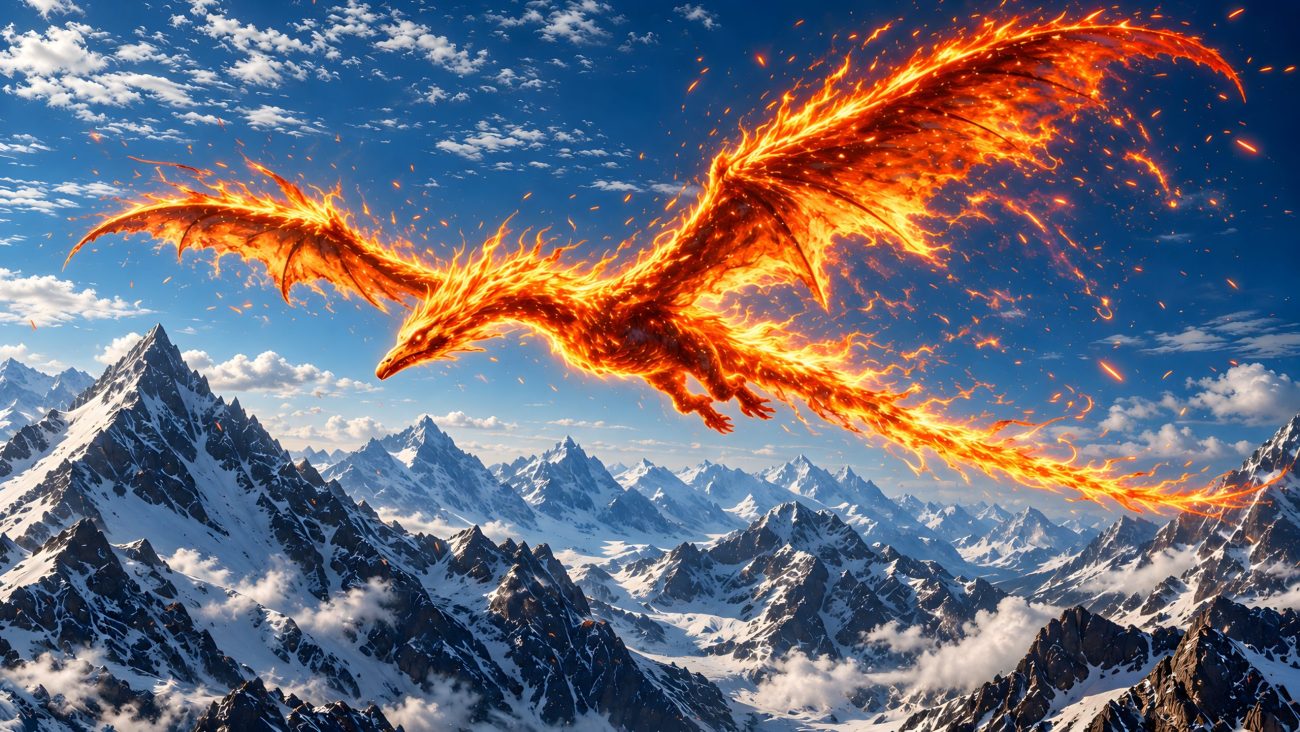
The Alber is a demonic being said to appear as a great fiery dragon descending from the mountain known as the “Devil’s Corner.” It glows with an intense, unnatural light and flies through the mountains toward the valley, bringing with it signs of disaster such as plague, war, and famine.

It is not merely a creature, but a manifestation of destructive forces, associated directly with the devil and appearing during ominous or cursed moments.

In one account, two men climbed a cherry tree near a sacred cross during a pitch-black night. One of them, a dishonest and reckless man, had made a bet to steal cherries, while the other was an honest villager who had been persuaded to join him.

As they were in the tree, the Alber suddenly passed by, lighting the darkness with its fiery glow. The dishonest man was overcome with fear, nearly falling from the tree, while the honest man remained calm and even addressed the creature without fear.

Because of his integrity and lack of wrongdoing, the Alber had no power over him and departed immediately.

The Alber represents a demonic force that is drawn to corruption and wrongdoing, yet powerless against those who remain morally upright and unafraid.


Sources

A Book of Creatures contributors. (2021, May 3). Alber. In A Book of Creatures, from https://abookofcreatures.com/2021/05/03/alber/


Putis

Tradition / Region: Latvian mythology
Alternate Names: Putiene
Category: Dragon


The Myth

Putis is a fire-breathing, many-headed dragon in Latvian folklore that lives in or near water. When tamed, it brings wealth to a household by stealing food and money from others at night and carrying them through the air while appearing as a flying flame. A domesticated putis lives in farm outbuildings, must be fed blood and given sacrifices, and can be killed with a silver bullet.

According to legend, a farm owner may obtain a putis by buying one or by selling their own soul, or the soul of someone close to them, to the devil or to the putis itself. Once bound to the household, the dragon steals goods from neighbors and brings them home to its master.

However, the price of keeping such a creature is severe. The master of a putis is said to die in agony and find no peace after death, unable to receive God’s blessing.


Sources

Bestiary. (n.d.). Pukis. From https://www.bestiary.us/pukis


Smo of Minarken

Tradition / Region: Romanian Mythology
Alternate Names: –
Category: Dragon


The Myth

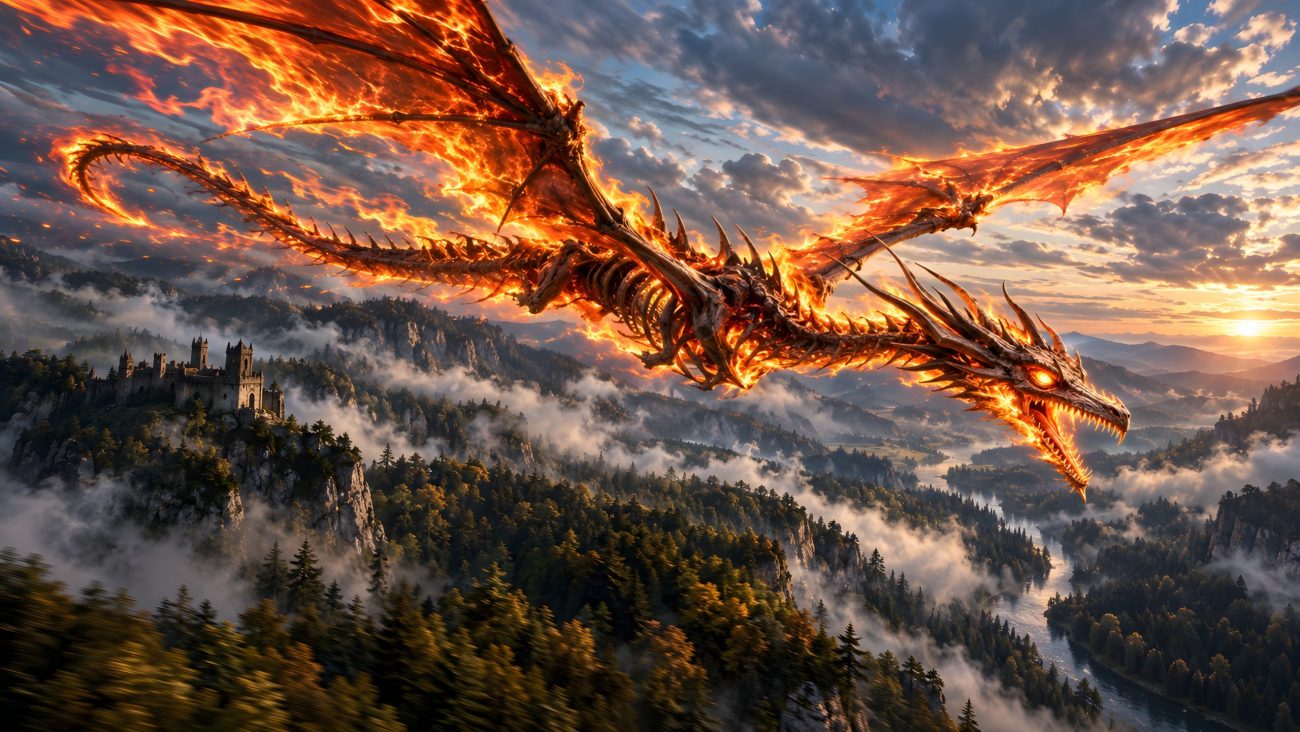
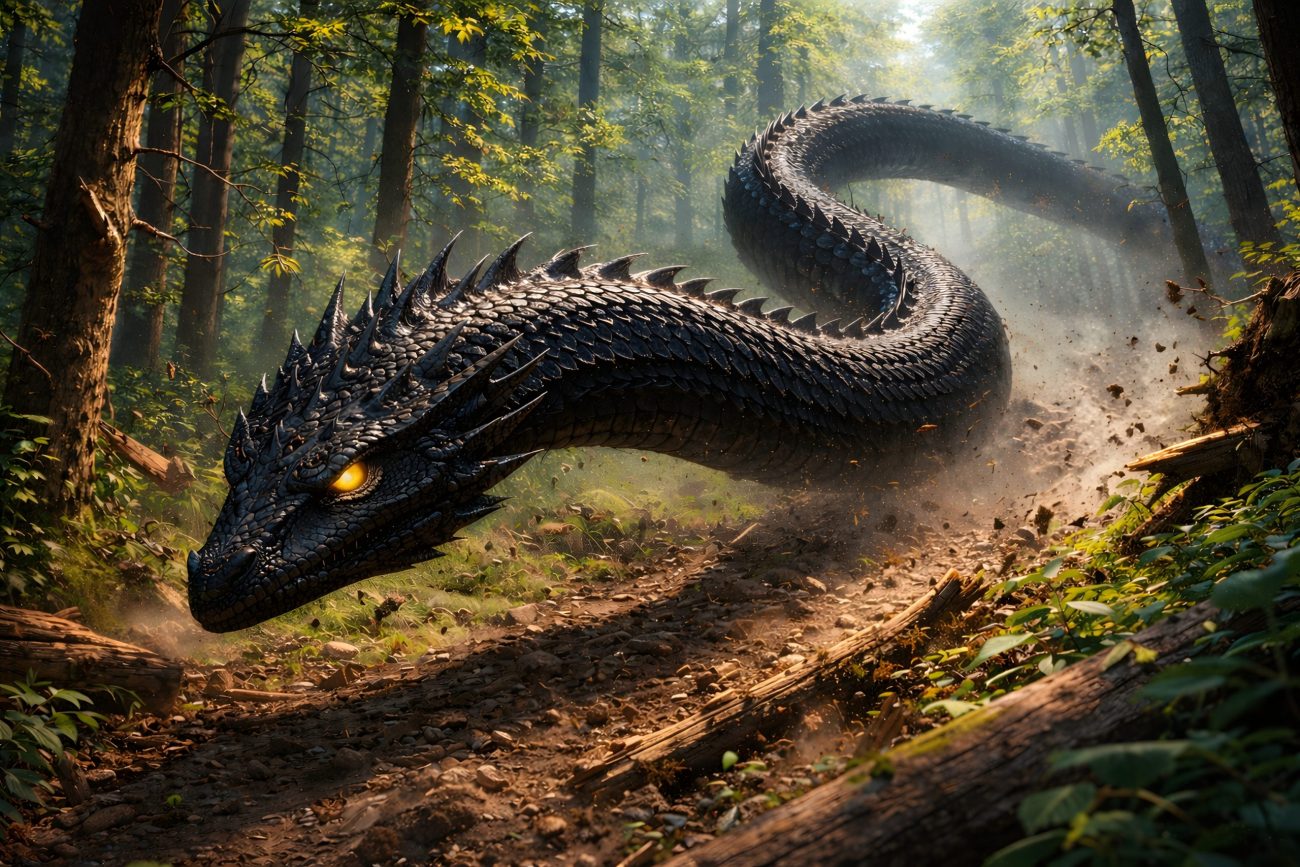
The Smo is a long, fiery dragon with a human head and a long reddish-yellow, serpentine body. It flies through the night surrounded by sparks, fire, hissing and rushing sounds. It is described as an evil spirit of the night, and is feared by those who encounter it alone. It is said that the Smo comes from the west and that it may dwell in Hell.

One evening, the old laborer Stephan and his companions were working in the forest until after dark. As they prepared to leave, they saw a red streak over the Magura. Stephan immediately recognized it as the Smo and told his companions not to be afraid. The fiery creature rushed through the air, scattering sparks on both sides. When it passed directly over them, there was a crackling and rushing sound, and suddenly the Smo stood among them. The other men fled in terror and hid behind the oak trees.

Stephan, however, stepped forward without fear. Remembering what his grandmother had taught him, he quickly named every individual part of their wagon, from the largest wheel to the smallest nail, making sure that not a single piece was omitted. At this, the Smo withdrew. It quietly rose into the air and flew away, hissing and spraying sparks as its long reddish-yellow body twisted through the sky. Only then did Stephan’s companions emerge from hiding, and afterwards they never again left the forest so late.

The Smo could also be summoned and commanded by a sufficiently courageous person. One night, a young herdsman named Simon was sitting with other shepherds around their fire while they guarded their masters’ herds. Simon jokingly claimed that he could call the Smo to them if he saw it flying overhead. His companions laughed and challenged him, offering him bottles of brandy if he succeeded.

Soon a flash appeared in the western sky, and the dreaded spirit came flying toward them, throwing fiery sparks down from the heights. Simon immediately stood up. He carried a small iron fork beside his knife, as was customary among the shepherds. He pulled it from his belt, swung it three times in a circle above his head, and threw it into the ground in front of him. Then he loudly commanded the Smo to follow him when he called.

The fiery dragon turned in the distance and came rushing toward them, breathing fire. Simon ordered it to stop, and the spirit obeyed the human voice, coming to a halt before him. Simon asked where it was going. The Smo answered in a deep voice that it had a sweetheart in the village below. Fire poured from its mouth and eyes as it spoke.

Simon told the Smo that the girl belonged to him, not to the spirit, and ordered it to remain where it was for as long as he wished. The dragon remained there under his command for a long time. Near dawn, Simon again took up his iron fork, threw it from the air toward the ground, and ordered the Smo to return to where it had come from and never go back to the village.

The dragon rose and slowly flew westward, in the direction from which it had come. By then the first cocks were already crowing and the mountains were beginning to turn pale red with the approaching sunrise. When daylight came, the Smo and the other spirits of the night could no longer walk among humans. The night belonged to the spirits, while the day belonged to human beings and their work.


Sources

sagen.at contributors. (n.d.). Stephan und der Drachen. In sagen.at, from https://www.sagen.at/texte/sagen/rumaenien/siebenbuergen/stephan.html

sagen.at contributors. (n.d.). Berufung des Smo. In sagen.at, from https://www.sagen.at/texte/sagen/rumaenien/siebenbuergen/berufungdessmo.html
Linddur of the Peak

Tradition / Region: Romanian Mythology
Alternate Names: The Kronstadt Lindworm; Peak Dragon; The Mountain Linddur
Category: Dragon


The Myth

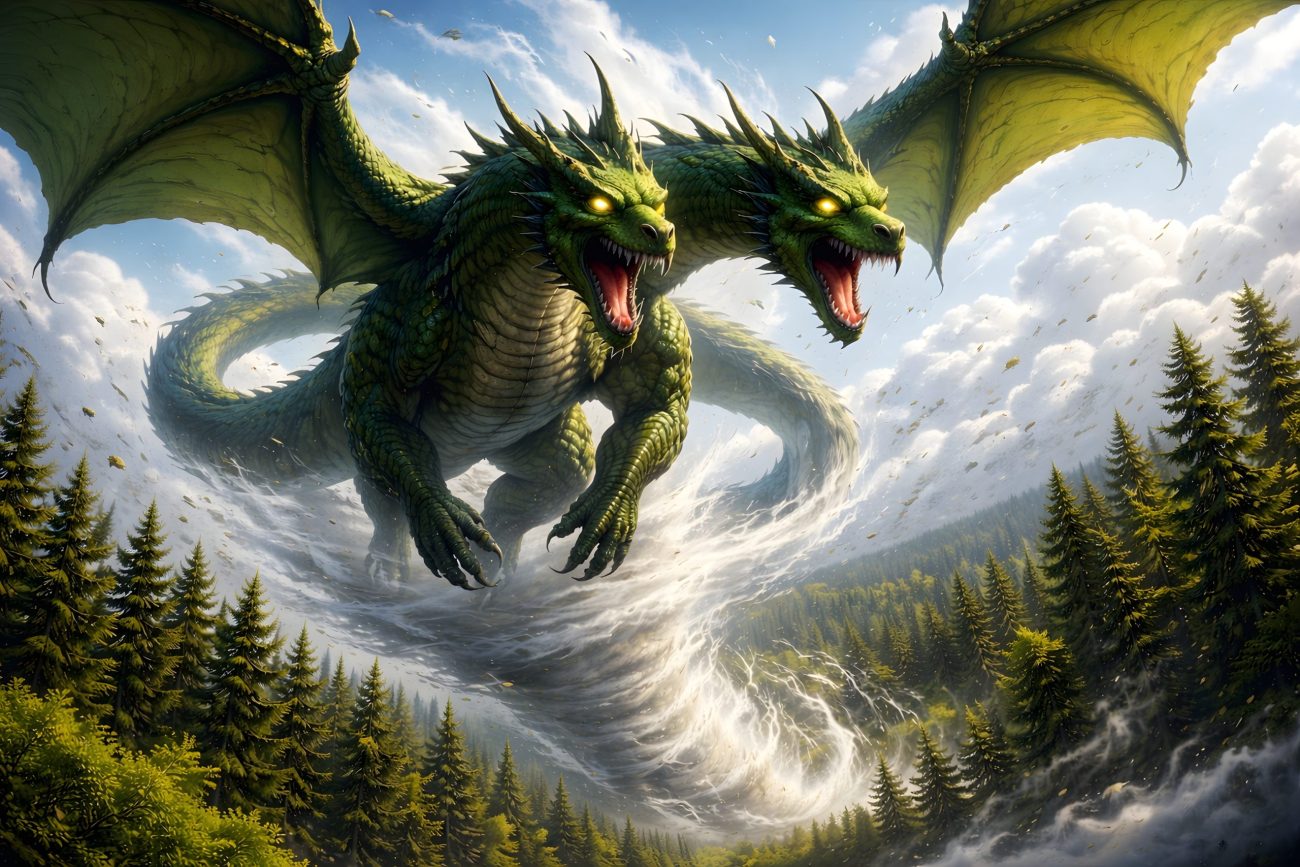
Not long after the town of Kronstadt was founded among the mountains, people said a dreadful dragon lived in a small cave high on a peak above the settlement. The creature, called the Linddur, would fly down into the valley whenever hunger drove it, devouring both people and animals and filling the region with fear.

One day the son of the town judge, a student preparing to preach, went outside the walls to memorize his sermon. Near the city wall he found a quiet place and began to recite his words aloud. He spoke so loudly and earnestly that the Linddur heard him from its mountain cave.

The dragon swooped down before the youth could escape and swallowed him whole.

Grief spread through the town, for the young man was well loved, and his parents were overcome with sorrow. While they mourned, a stranger came before the judge and said, “Strength cannot defeat such a beast, but cunning may. If we act quickly, your son may yet be saved.”

The judge promised him a rich reward. The stranger took a calfskin and filled it with quicklime. He laid it out in an open patch of grass near the castle and hid nearby, bleating like a calf.

Hearing the sound, the Linddur descended at once. It saw what it thought was prey and devoured the calfskin greedily. Soon afterward it was seized by a terrible thirst and flew to the nearest water to drink deeply.

But the quicklime within it drank the water faster still and burned with such heat that the dragon’s body swelled and burst apart. When the beast split open, the student was found still alive inside and was rescued.

In gratitude, the judge rewarded the clever stranger with many gifts. And to remember the deliverance, the image of the Lindworm was set upon the wall that leads from the eastern corner of the city up toward the archer’s battlement, so that all would recall the dragon that once haunted the peak above Kronstadt.


Sources

sagen.at contributors. (n.d.). Der Lindwurm auf der Zinne. In sagen.at, from https://www.sagen.at/texte/sagen/rumaenien/siebenbuergen/lindwurm.html


Zwergel

Tradition / Region: Romanian Mythology
Alternate Names: The Dragon of Wendchenberg; The Rock Dragon; Fire Dragon of Klein-Logdes
Category: Dragon


The Myth

In the hills near Kreisch, high on the Wendchenberg, there lies a rocky cleft known as the Zwergelloch. Long ago, people said a terrible creature lived there, called the Zwergel.

The villagers feared it greatly. To keep the monster from descending upon them, they were forced to offer it a human sacrifice every week. Only by feeding it could they keep it in its rocky lair and spare the village from destruction.

The same creature was also seen in other places. Once, it flew over Klein-Logdes, breathing fire as it crossed the sky. Yet whenever the flames touched the earth, they died at once, as if the ground itself would not burn.

The Zwergel was not only a devourer but also a spirit that could seize human bodies. It once possessed a Wallachian maid, who wasted away under its power. Her mother, in desperation, laid her out on a bier as if she were already dead and called neighbors and relatives to mourn her. Through this false funeral, the creature was driven out, and the girl was freed.

But in the mountains, people still spoke of the cleft in the rock and of the being that once lived there — the Zwergel, the dragon that demanded flesh and could enter the living as easily as it flew through the sky.


Sources

sagen.at contributors. (n.d.). Drachen. In sagen.at, from https://www.sagen.at/texte/sagen/rumaenien/siebenbuergen/drachen.html


Dragon of Mordiford

Tradition / Region: British Mythology
Alternate Names: The Mordiford Dragon
Category: Dragon, Wyvern


The Myth

Near the village of Mordiford, where the River Lugg meets the River Wye, there once lived a dragon whose story is closely bound to a young girl named Maud.

Maud was a child who longed deeply for a companion of her own. One day, while wandering in the woodland near her village, she discovered a small, bright creature among the flowers. It had a narrow snout and tiny, translucent wings, and it moved with curious life. Delighted, Maud took the creature home, believing she had finally found the pet she desired.

Her parents, however, recognized the truth at once. The creature was no harmless animal but a young wyvern, and they warned Maud that it would bring danger upon the village. They ordered her to return it to the forest immediately. Though she pretended to obey, Maud could not bear to part with it. Instead, she hid the wyvern in a secluded place in the woods and secretly returned to it each day.

Maud fed the creature milk, played with it, and watched as it grew stronger, learning to stretch and beat its wings. Month by month, it grew larger, its body taking on a deep emerald color, its wings becoming broad and powerful. What had once been small enough to cradle soon became something vast and dangerous.

In time, the dragon’s hunger changed. Milk no longer satisfied it, and it began to crave meat. It descended upon nearby farms, killing sheep and cattle. When the farmers tried to stop it, the dragon turned on them as well, discovering a taste for human flesh. The countryside fell into fear.

Maud continued to visit the dragon, begging it to stop its violence. The beast ignored all pleas. Though it spared Maud—its first and only friend—it killed everything else in its path, until the people of Mordiford could endure no more.

At last, a man from the Garstone family armed himself and went into the forest to confront the dragon. When he found it, the wyvern unleashed fire upon him, but he pressed forward and drove his weapon through its throat, killing it where it lay among the trees.

Hearing the struggle, Maud rushed from the forest. She arrived too late. The dragon lay dead, and Maud fell beside it, overwhelmed with grief for the creature she had raised and loved.

Thus ended the dragon of Mordiford—born of wonder, nurtured in secrecy, and destroyed when its nature could no longer be contained. The tale remains a reminder that affection alone cannot tame what is meant to grow beyond human control.


Gallery


Sources

Wikipedia contributors. (n.d.). Dragon of Mordiford. In Wikipedia, The Free Encyclopedia, from https://en.wikipedia.org/wiki/Dragon_of_Mordiford


Interpretive Lenses

Religious Readings
  • Christian Ascetic Deep Dive
Philosophical Readings
  • Nietzschean Deep Dive
Psychological Readings
  • Jungian Deep Dive
Esoteric Deep Dive
  • Hermetic Deep Dive
Political / Social Readings
  • Marxist Deep Dive
Other
  • How to Invite The Dragon of Mordiford