Tradition: English Mythology
Alternative Names: Sockburn Dragon, Fiery Flying Serpent
Category: Dragon
The Myth
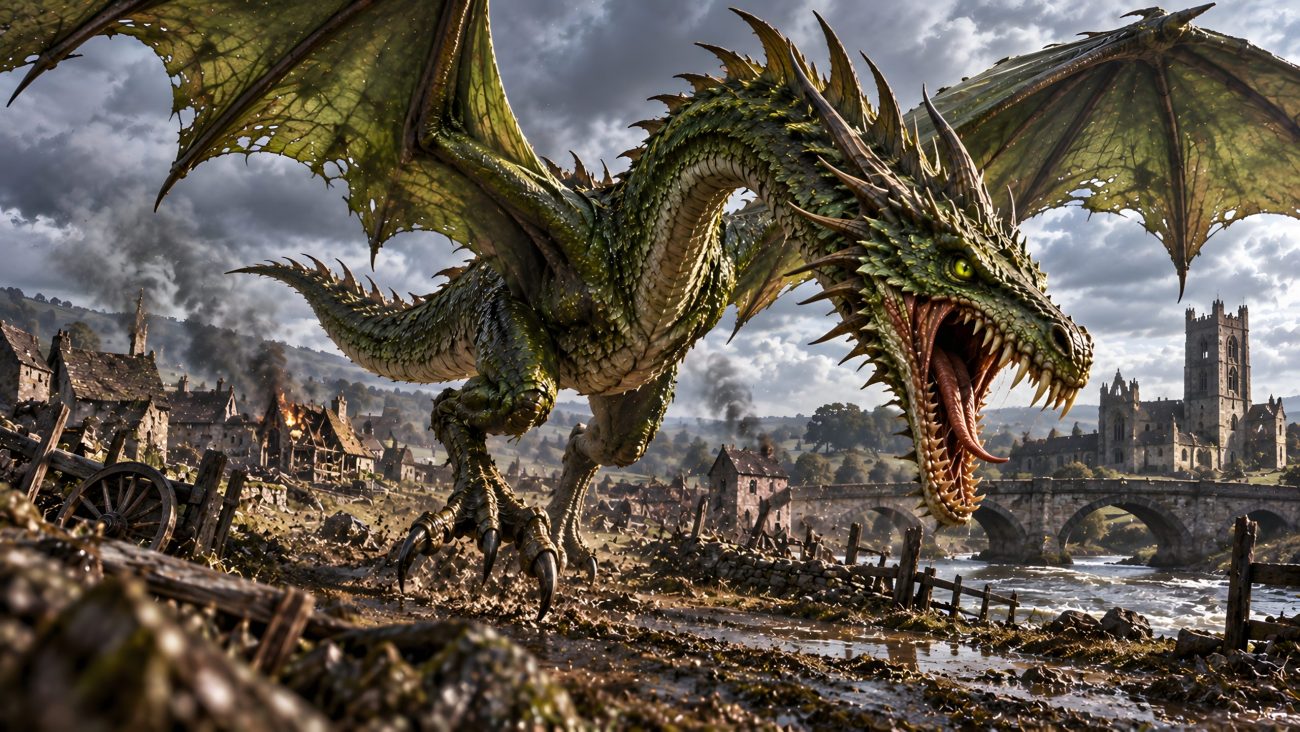
The Sockburn Worm was a ferocious wyvern that terrorized the village of Sockburn in Durham, laying waste to the settlement and destroying its people. The creature was described in the tradition surrounding its defeat as a worm, dragon, or fiery flying serpent, a monstrous beast capable of bringing death and destruction to the inhabitants of the region.
The creature’s reign of terror eventually came to an end when Sir John Conyers confronted it and slew the Worm with his falchion. The victory became so important to local tradition that the reigning king is said to have granted Conyers the manor of Sockburn, with a remarkable condition attached to the grant.
The sword believed to have killed the Worm became known as the Conyers Falchion. For generations it was kept as a physical reminder of the legendary battle. Whenever a newly appointed Bishop of Durham entered the bishopric for the first time at Croft-on-Tees, near the southern edge of the diocese, the Lord of Sockburn traditionally presented the bishop with the weapon.
The presentation was accompanied by a formal declaration recalling the ancient deed: the falchion was presented as the weapon with which the champion Conyers had slain the worm, dragon, or fiery flying serpent that had destroyed men, women, and children. The bishop would take the sword and immediately return it, wishing its holder health and continued enjoyment of the manor.
The memory of the monster survives beyond the sword and ceremony. The Sockburn Worm, shown with the falchion embedded in its body, appears on the district badge of the local Darlington & District Scout Association.
Sources
“Sockburn Worm.” Wikipedia: The Free Encyclopedia. Wikimedia Foundation. Accessed October 3, 2026. https://en.wikipedia.org/wiki/Sockburn_Worm