Dragon of Mordiford

Tradition: English Mythology
Alternative Names: Mordiford Dragon, Dragon of Mordiford
Category: Dragon


The Myth

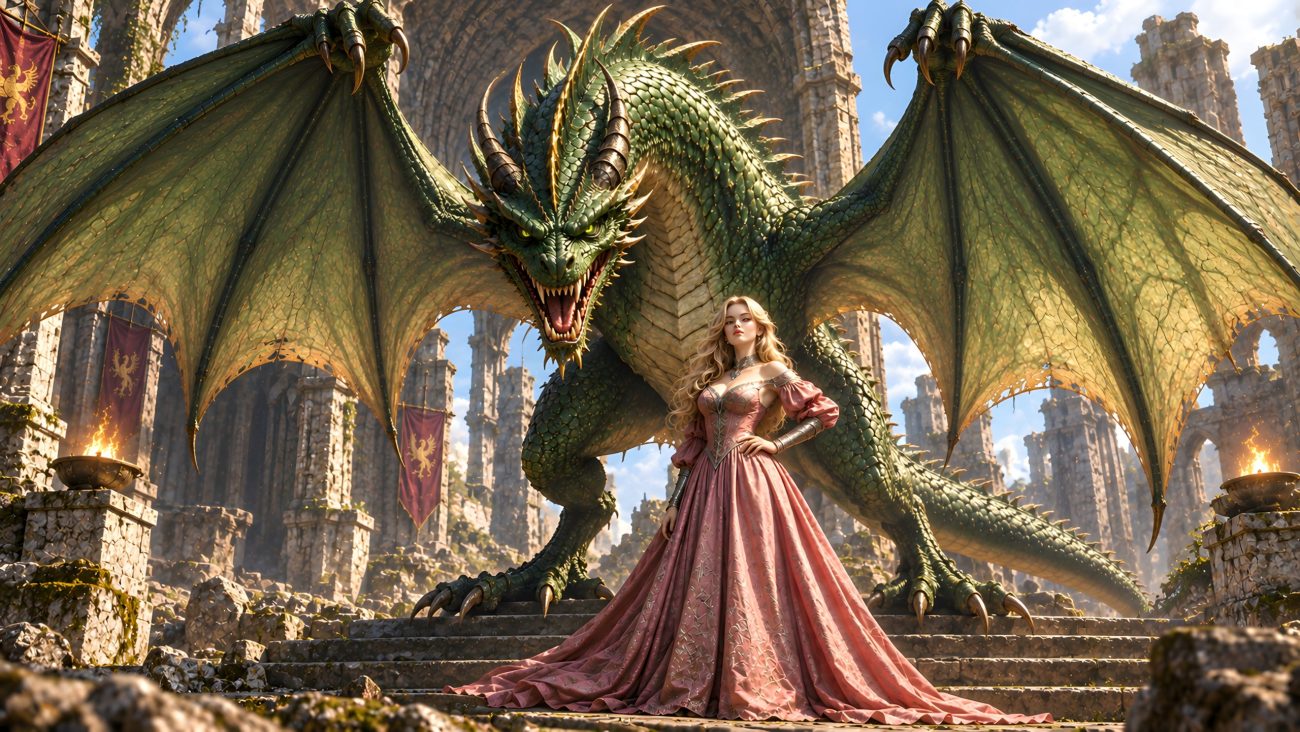
The Dragon of Mordiford was a fearsome creature said to live in the woods and waterways around Mordiford, where the River Lugg meets the River Wye. Its form changes in the telling of the legend, sometimes appearing as a winged wyvern and sometimes as a great poisonous serpent.

In the tale of Maud and the wyvern, a young girl named Maud discovered a tiny, brightly colored creature prowling among some flowers in the forest. It had a snout and small translucent wings, and Maud, delighted to have found a new companion, carried it home. Her parents immediately recognized it as a young wyvern and ordered her to return it to the forest, warning that it would bring trouble to the village.

Maud pretended to obey, but secretly hid the creature in the woods. She began raising it as her pet, feeding it milk, playing with it, and watching it struggle to fly. The little creature grew enormously with each passing month. Its body became emerald green and its wings grew thick and powerful.

Eventually, milk was no longer enough. The dragon developed an enormous appetite for meat and began attacking the farms around Mordiford. It killed cows and sheep, and when the farmers tried to destroy it, the creature turned upon them as well, discovering that it liked human flesh.

Maud continued visiting her old companion and begged it to stop its killing. The dragon listened to no one except Maud, sparing her while destroying everything else that crossed its path.

The people of Mordiford could endure the attacks no longer, and the noblemen of the village were called upon to destroy the beast. A man of the Garstone family rode out in full armour to confront it. The dragon was almost invisible among the plants of the forest, but when the knight approached, it suddenly unleashed a blast of fire. He barely managed to deflect the flames.

Gathering himself, Garstone aimed his lance at the dragon’s throat and drove it straight through the beast, killing it.

Maud emerged from the forest when she saw what had happened. Overcome with rage and grief, she mourned the creature that had once been her beloved little pet.

Another tale gives the Dragon of Mordiford a more serpentine form. This creature lived in Haugh Wood and terrorized the surrounding countryside with its poisonous nature. Its attacks became so severe that the working population of Mordiford began to decline.

Eventually, a local convict offered to kill the serpent in exchange for a pardon. Once his pardon was promised, he obtained a bow, arrows, and a large cider barrel. He concealed himself inside the barrel beside the River Lugg, where the serpent came to drink.

When the dragon arrived at the river and began drinking, the convict fired an arrow through a hole in the barrel. The arrow struck the creature in the heart and killed it.

But the victory cost the convict his life. As the dying dragon’s poison flowed into the barrel, it poisoned and killed the man who had slain it.


Sources

“Dragon of Mordiford.” Wikipedia: The Free Encyclopedia. Wikimedia Foundation. Accessed September 20, 2026. https://en.wikipedia.org/wiki/Dragon_of_Mordiford
Bisterne Dragon

Tradition: English Mythology
Alternative Names: Bisterne Dragon
Category: Dragon


The Myth

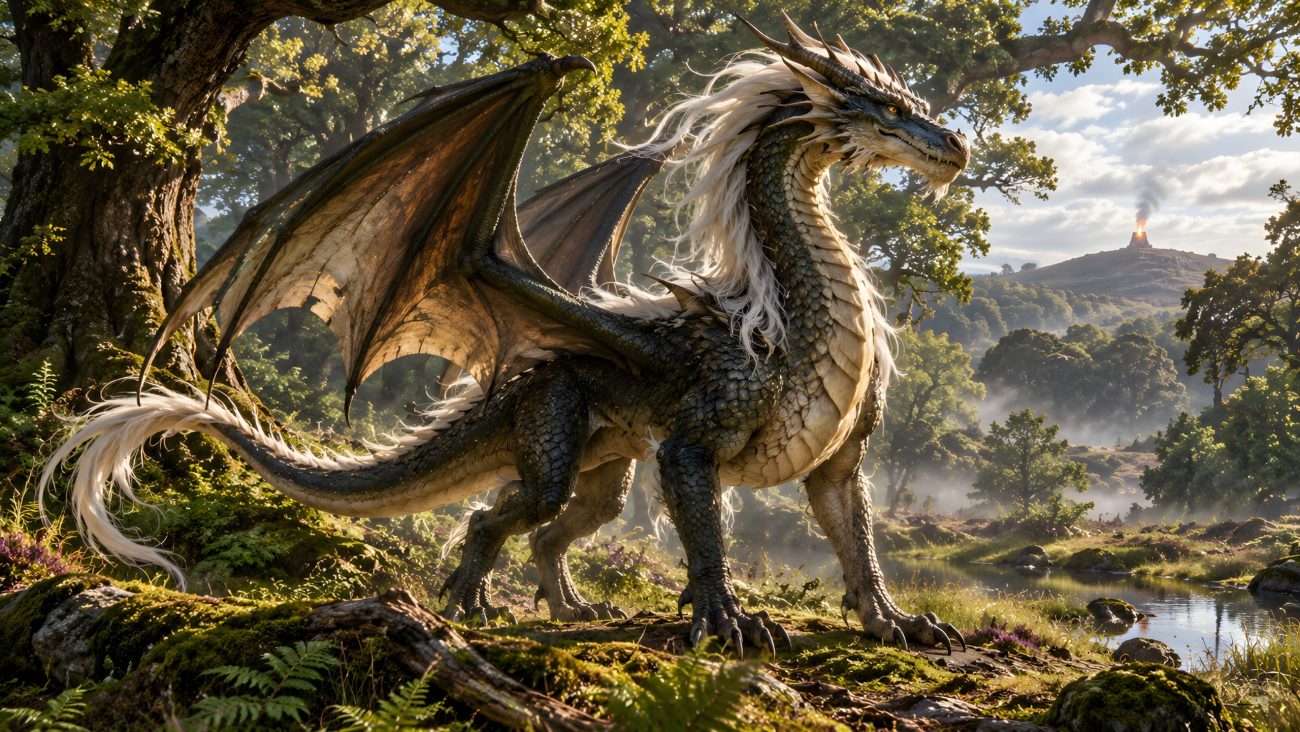
The Bisterne Dragon was a terrifying creature that made its lair at Burley Beacon, near Bisterne in the New Forest. From there it terrorized the surrounding countryside, preying upon both people and livestock. Each morning the dragon would fly from its den to Bisterne, where it was given milk.

A knight named Berkeley resolved to put an end to the beast. He built himself a small hiding place and waited with two dogs for the dragon to arrive. When the creature came for its milk, the dogs were unleashed and threw themselves upon it. The dragon fought back fiercely, killing both animals, but the attack gave the knight his opportunity. He sprang upon the distracted beast and engaged it in a desperate battle.

The struggle did not end quickly. The dragon and the knight fought their way through the forest until at last the creature was brought down near Lyndhurst. In the fight, however, the knight himself was left deeply shaken. The dragon was dead, but its slayer did not long survive his victory. After thirty days and thirty nights he returned to the place where the beast had fallen and died alone upon the hill.

His yew-wood bow fell beside his body. From it grew a yew tree, marking the place where the dragon’s killer met his own end.

The tale was also remembered with the name of Sir Maurice Berkeley, a man renowned for his strength and courage. The story tells that when the dragon had ravaged Hampshire and proved too dangerous for others to destroy, Maurice armed himself and went out to meet it. After a fierce encounter he succeeded in killing the beast, only to die himself soon afterward.

The dragon’s defeat also inspired stranger tales of how such a creature could be overcome. Its hide was said to be so formidable that ordinary weapons were useless, and in the telling that became popular around the New Forest, the knight covered his armour with glass so that the dragon could not harm him. Thus, through courage, cunning, and a long and bloody struggle, the creature that had terrorized the countryside was finally slain.


Sources

“Bisterne Dragon.” Wikipedia: The Free Encyclopedia. Wikimedia Foundation. Accessed September 20, 2026. https://en.wikipedia.org/wiki/Bisterne_Dragon


Knucker

Tradition: English Mythology
Alternative Names: Knucker, Knucker Dragon
Category: Dragon


The Myth

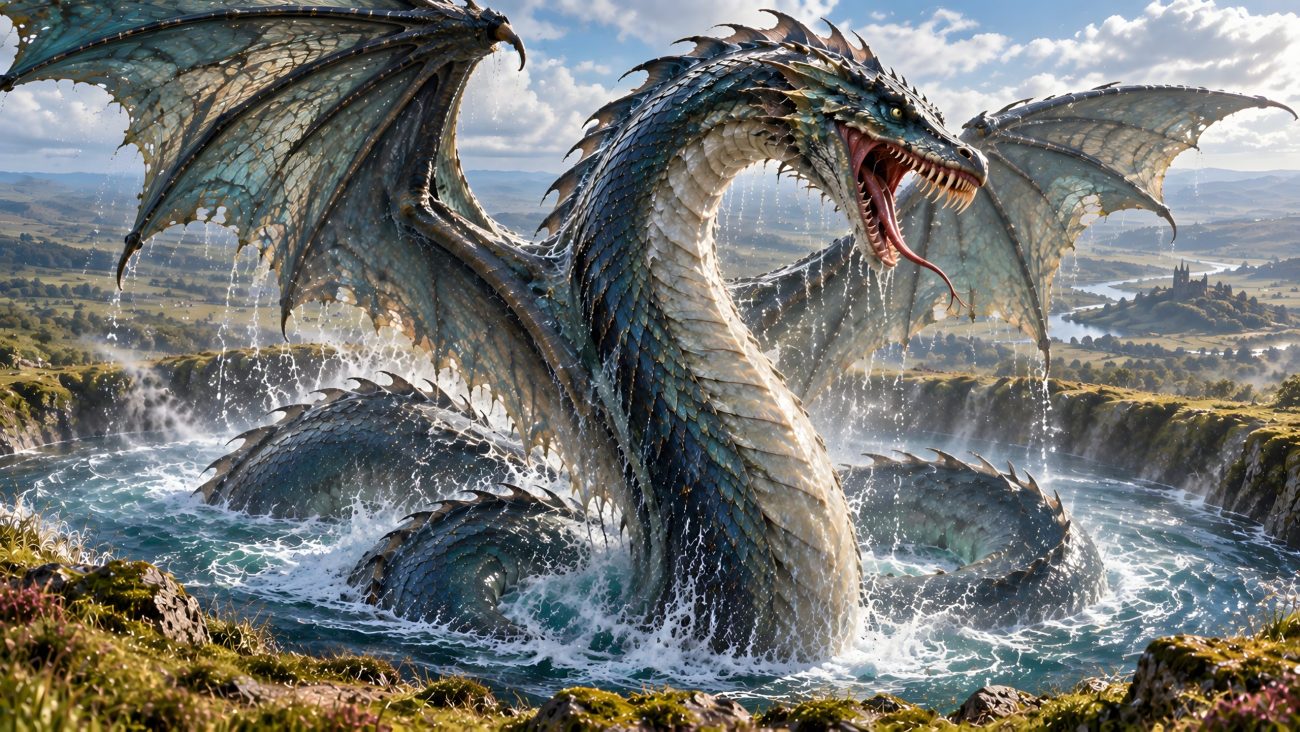
The Knucker is a winged water dragon said to live in deep pools known as knuckerholes in Sussex, England. It is sometimes described as a sea serpent, with a gigantic slithering body, cold sea-serpent-like eyes, and a deadly hissing mouth.

The most famous Knucker lived at Lyminster. It caused great trouble by devouring local livestock and even villagers, so the people decided that the monster had to be killed.

In one legend, the King of Sussex offered his daughter’s hand in marriage to whoever could slay the dragon. A knight-errant accepted the challenge and killed the beast. He married the princess and settled at Lyminster. His gravestone, known as the Slayer’s Slab, was said to remain at Lyminster Church.

Another legend tells that the Knucker was defeated by a local farmer’s boy named Jim Pulk, or Jim Puttock, who was said in some versions to have come from Wick. The Mayor of Arundel had offered a reward for killing the dragon. The boy prepared a gigantic poisoned pie and transported it to the Knuckerhole on a horse and cart.

The Knucker devoured the entire offering, including the horse and cart, and eventually died from the poison. Jim returned and cut off its head. In some versions, however, Jim himself later died from the poison he had used against the dragon. This death may have been added to explain the Slayer’s Slab.

Knuckers were believed to inhabit knuckerholes in several places across Sussex, including Binsted, Lyminster, Lancing, Shoreham, and Worthing. A knuckerhole was believed to be an extraordinarily deep, round pool, sometimes considered to be bottomless.

The Lyminster knuckerhole was actually only about thirty feet deep, but local legend claimed that the villagers once tied together all six bell ropes from the church tower and lowered them into the pool without reaching its bottom.


Sources

“Knucker.” Wikipedia: The Free Encyclopedia. Wikimedia Foundation. Accessed September 19, 2026. https://en.wikipedia.org/wiki/Knucker