Sekiryū

Tradition: Japanese mythology
Alternative Names: Red Dragon
Category: Dragon


The Myth

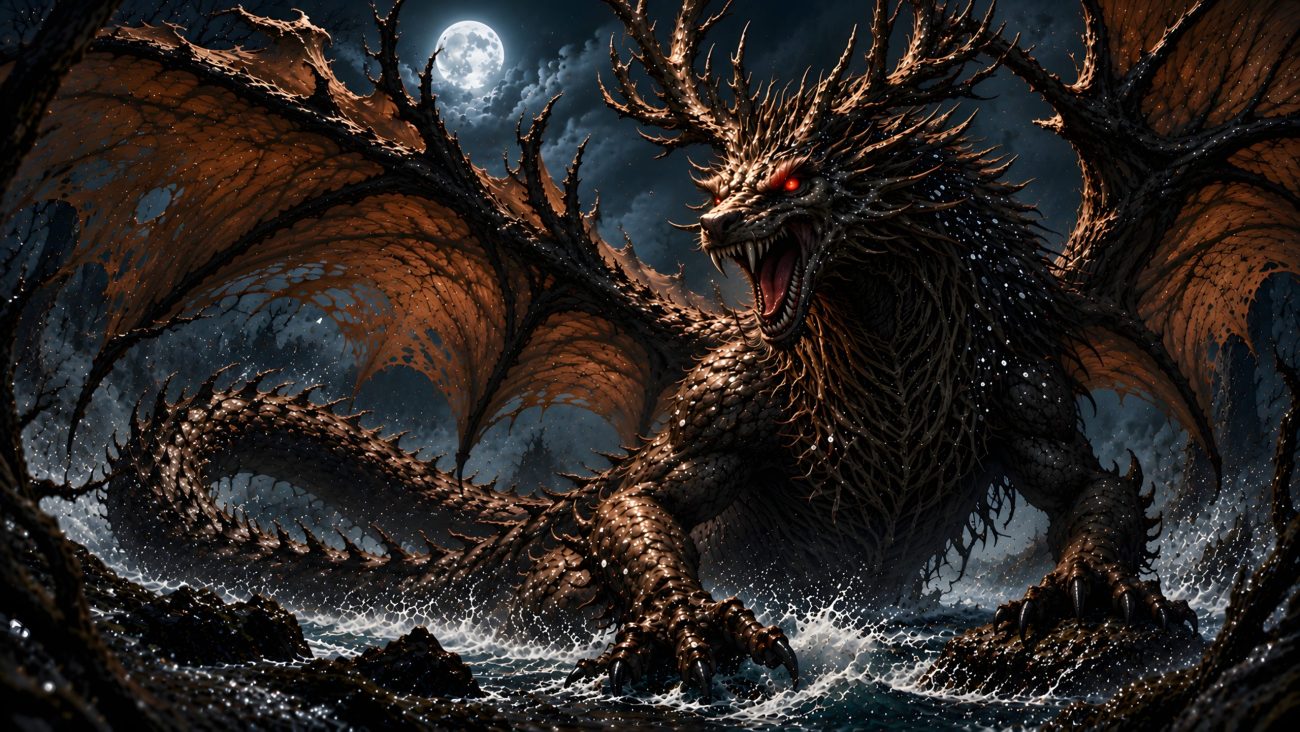
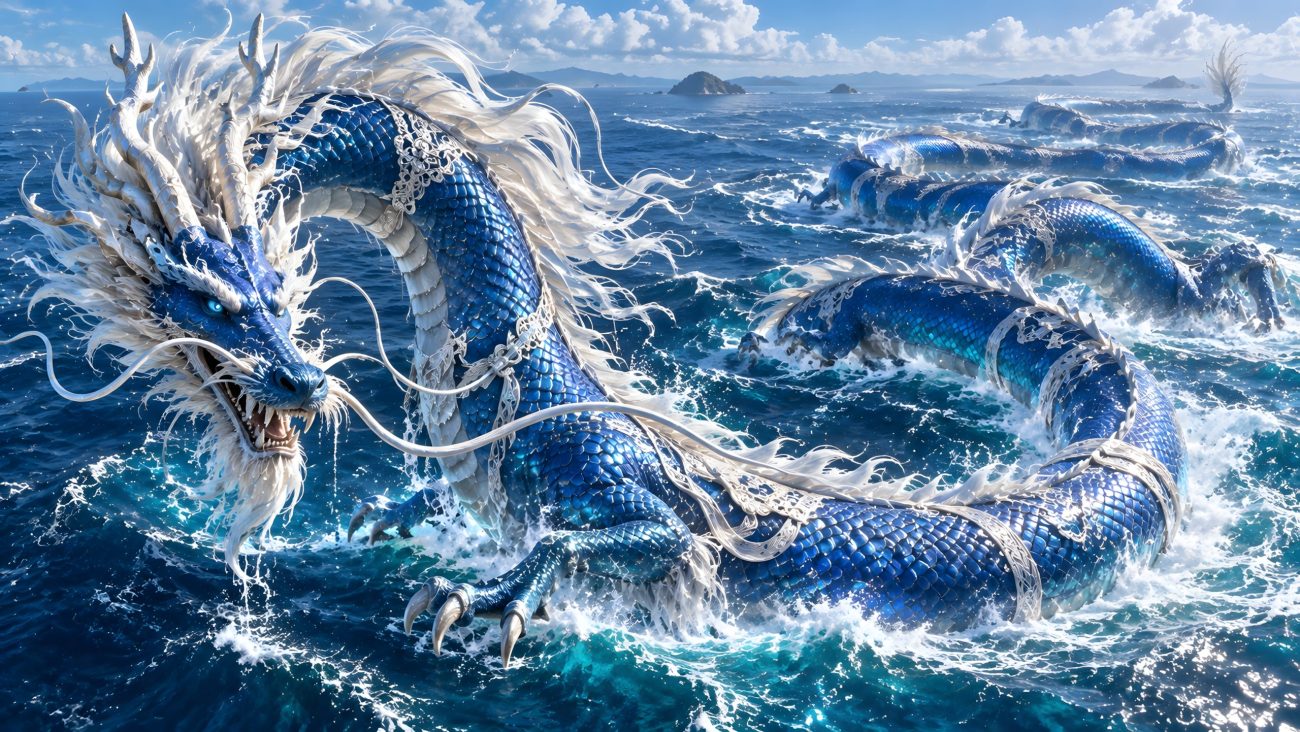
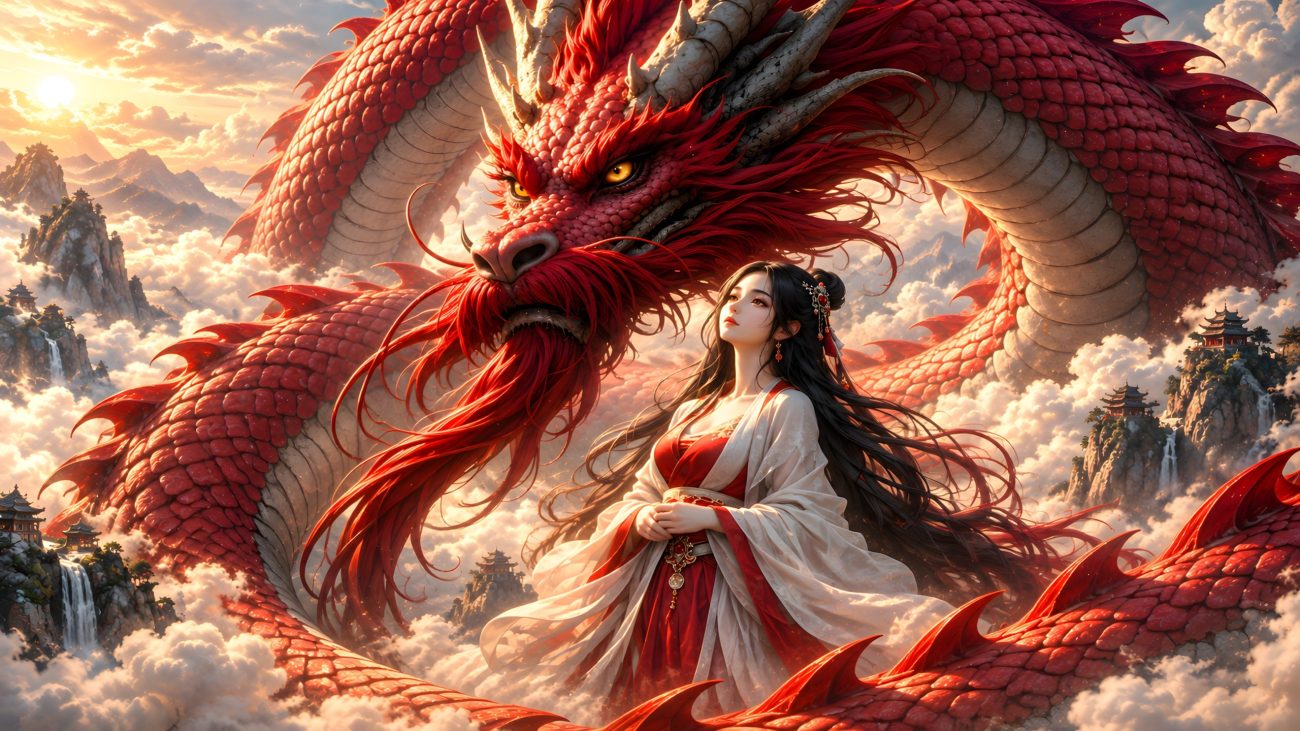
Sekiryū is a dragon with a brilliant red body, appearing in Japanese legends and tales as a supernatural being associated with extraordinary births and immense martial power.

In the Zen Taiheiki, the Red Dragon is said to have played a part in the birth of Sakata Kintoki, better known as Kintarō, who later became one of Minamoto no Yorimitsu’s Four Heavenly Kings. In the fourth year of Ten’en, 976, Yorimitsu visited Mount Ashigara. As he approached the red clouds hanging over the mountain, he encountered an old woman of about sixty and a young man of about twenty who was still dressed like a child. Despite the rugged rocks and steep terrain, the pair moved across the mountain as effortlessly as though they were walking on level ground.

The old woman was the young man’s mother. She described her son as one who had been “conceived between heaven and earth” and had received the command of Heaven. He had neither a surname nor a known father. She then revealed the strange circumstances surrounding his birth.

Before becoming pregnant, the woman had been sleeping upon the mountaintop when she dreamed that she united with a Red Dragon. She awoke to the sound of violent thunder. From this mysterious encounter the extraordinary child was conceived.

As the boy grew, his supernatural nature became increasingly apparent. He could cross mountains with ease, moving over the wild terrain as though it were nothing, and possessed immense strength. He was even capable of lifting enormous rocky cliffs with his bare hands.

When Yorimitsu learned of the young man’s remarkable martial abilities, he recognized his extraordinary potential. The two exchanged cups of sake in a formal bond between lord and retainer, and Yorimitsu bestowed upon him the name Sakata Kintoki. Thus the Red Dragon became the supernatural father of a warrior whose immense strength and martial prowess would make him one of Yorimitsu’s legendary Four Heavenly Kings.

The tale also recalls an older Chinese tradition concerning Liu Bang, the founder and first emperor of the Former Han Dynasty. According to the Records of the Grand Historian, Liu Bang’s mother once dreamed that she had mated with a dragon before becoming pregnant with him. The dragon was identified as a red dragon. The connection between the two stories was recognized within the Japanese tradition, and the Chronicles of Great Peace has Yorimitsu invoke the example when recognizing Kintoki’s extraordinary martial ability.

The strange birth of Kintoki was not universally accepted as a literal encounter with a dragon. The Commentary on the Mountains offers a much more skeptical interpretation, suggesting that the mountain woman may have had relations with several men and, not knowing the true father of her child, claimed that she had conceived him through a dream involving the Red Dragon in order to avoid accusations. The text compares this explanation with stories such as that of Yang Guozhong’s wife in the Tianbao Yishi, where women are said to have concealed questionable pregnancies by claiming that they had conceived through the influence of the sun, moon, or a supernatural dream.

Sekiryū therefore stands at the boundary between divine dragon mythology and the legendary origins of extraordinary heroes: a red dragon appearing in a dream, accompanied by thunder, becomes the mysterious father of a child whose superhuman strength marks him as destined for greatness.


Sources

Takahashi, Toshihiro. “赤竜 [せきりゅう] (Sekiryū).” 新版TYZ 妖怪図鑑 (New TYZ Yokai Encyclopedia). October 21, 2024. https://tyz-yokai.blog.jp/archives/1082924042.html
Rô Beast

Tradition: French Mythology
Alternative Names: Rô, Beast of Rô
Category: Dragon


The Myth

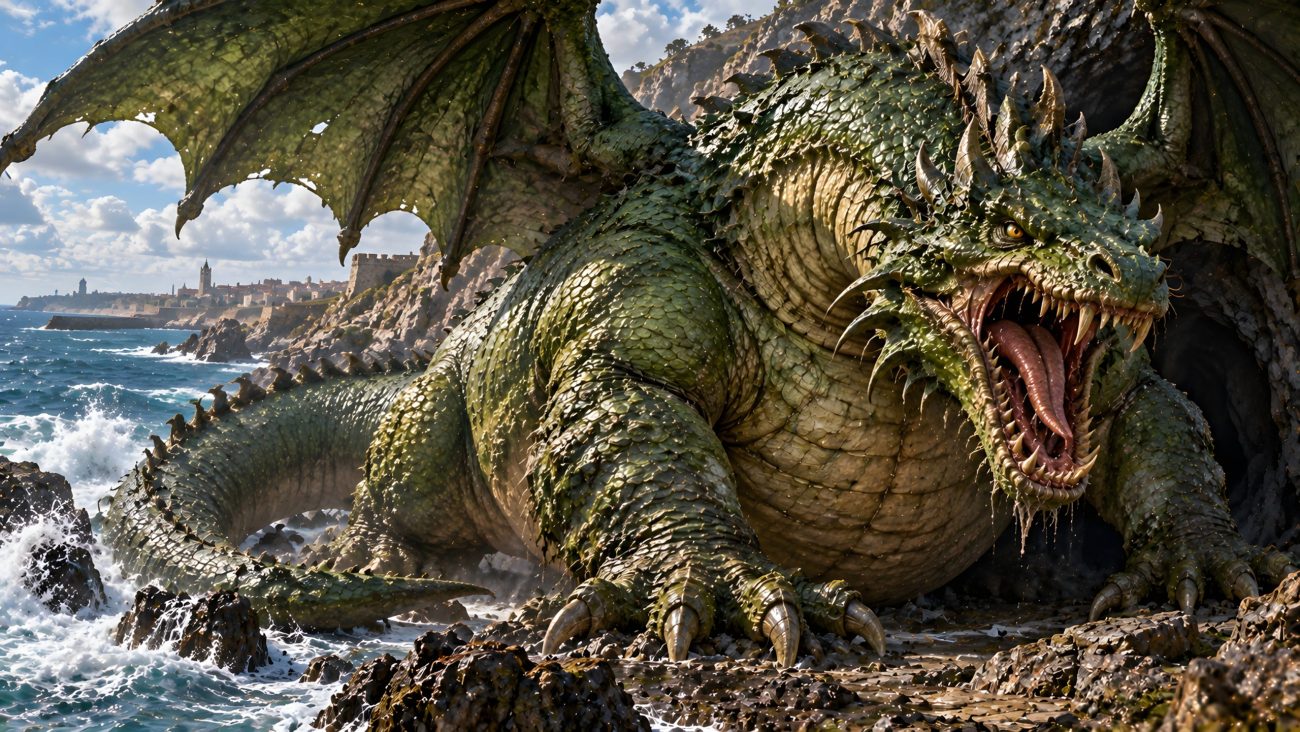
The Rô Beast was a hideous dragon with a winged body and a long, scaly tail. It possessed a malign intelligence almost like that of a human, using its cunning to set traps for people and devour them. The creature lived in a cavern at the Pointe de Roux near Aytré, off La Rochelle, and its terror spread throughout the surrounding coastline. No one was able to stand against it.

The reign of the Rô Beast finally ended when seven pagan heroes arrived by boat on the rising tide. They had come specifically to judge the monster. When Rô saw them approaching, it panicked and retreated toward the Pont de la Pierre, keeping its eyes fixed upon the seven figures who pursued it.

There the heroes attacked. They loosed seven arrows at the dragon, each one intended to seal away a part of its terrible senses. Two arrows struck and closed its eyes, two pierced and blocked its ears, two sealed its nostrils, and the final arrow pinned its monstrous mouth shut.

Rô roared and thrashed in agony, but the heroes cast the helpless beast into a deep pit. There it was condemned to remain until the end of time. The seven heroes then took their places around the pit, becoming eternal guardians who watched over the imprisoned dragon.

Yet Rô was never truly silent. The beast still lives within its prison, screaming and howling with rage. Its cries are said to stir the surrounding sea. When Rô howls toward the north, the Gulf of Chevarache in the Breton Pertuis becomes agitated with waves. When it turns its fury toward the south, the waters of Maumusson begin to stir. The old people feared what might happen if the imprisoned beast ever turned its voice toward the west, for then, they said, the islands themselves would be reduced to dust.

The landscape around the legend became bound to the story. The Pont de la Pierre was once associated with a ruined cromlech, while seven granite stones surrounding a deep pit were regarded as the seats of the seven heroes who had judged Rô. An image resembling the beast was also recognized in the arch of the principal portal of the Church of Talmont, although the figure may instead represent the lion of Ezekiel.

The seven mysterious heroes remain an equally ancient part of the legend. Their arrival from the sea evokes warriors such as Vikings, while the tale may preserve the memory of an older Gaulish tradition in which divine or heroic figures came from across the sea. The name Rô itself has likewise been interpreted as possibly preserving the corrupted name of an older pagan deity.


Sources

“Ro.” A Book of Creatures. May 14, 2021. https://abookofcreatures.com/2021/05/14/ro/


Python

Tradition: Greek mythology
Alternative Names: Pythōn, Delphynē, Drakaina Delphynē
Category: Dragon


The Myth

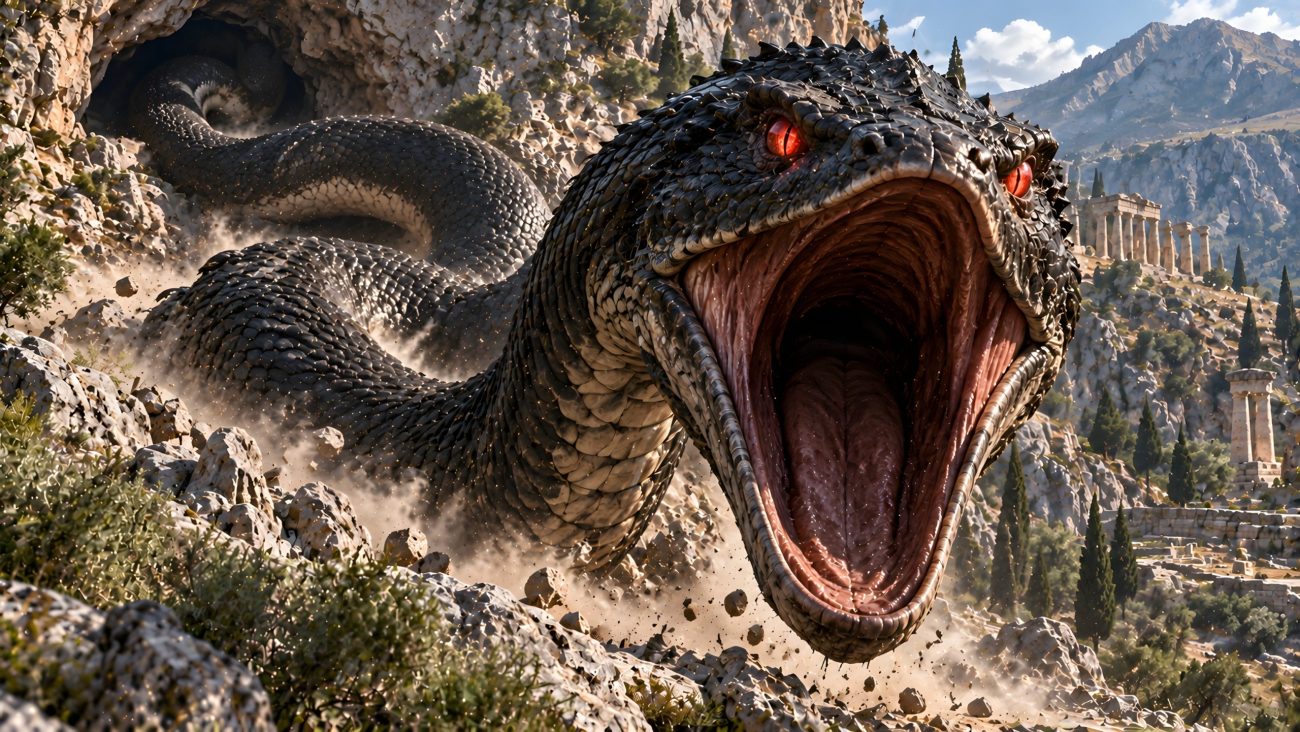
Python was a gigantic dragon-serpent that lived among the caves and slopes of Mount Parnassus near Delphi. The monster was a fearsome and bloody creature, with enormous jaws and a body that could coil around the mountain. In some traditions Python was male, while others described the creature as a female Drakaina, a monstrous serpent with the form of a woman from the waist upward.

Python was set by Gaia, the Earth, to guard the sacred oracle at Delphi. The creature dwelt near the prophetic sanctuary and prevented others from approaching the oracle. The monster was also said to have received and raised Typhoeus, the terrible offspring associated with Hera, and to have been a deadly plague upon humans and their animals.

When Apollo came to Delphi and sought to claim the oracle, Python moved to stop him from reaching the sacred opening. Apollo attacked the dragon with his bow. In the tradition preserved by Simonides, he struck Python with a hundred arrows, while other accounts simply describe Apollo shooting the monster with his deadly arrows.

The battle ended with Python dying beneath Apollo’s attack. The dragon writhed in agony, gasping for breath as its blood spilled onto the earth. Apollo then proclaimed that the monster would rot there and no longer prey upon those who lived from the fruits of the earth. The ancient name Pytho was connected with the word for rotting, referring to the decay of Python’s corpse beneath the power of the sun.

After Python’s death, Apollo took possession of the oracle at Delphi. The sanctuary and its games became associated with the slain dragon, giving rise to the names Pytho, Pythian, and the Pythian Games. The contest between Apollo and Python was remembered in music and ritual, including the Pythian musical tradition that celebrated the god’s victory and the dragon’s final death.

Some traditions give the story an additional motive: Python had relentlessly pursued Apollo’s mother, Leto, while she was pregnant with him. Apollo’s killing of the dragon could therefore be understood as both the conquest of the oracle and vengeance for the suffering inflicted upon his mother.

The ancient traditions also preserve a different interpretation in which Python was not a supernatural dragon at all, but a violent and lawless man who attacked the sanctuary and robbed the wealthy. Apollo killed this Python with his arrows, and the story of the dragon could be understood as the mythical form given to this ancient enemy of Delphi.

After the dragon’s death, Apollo’s victory became one of the defining legends of Delphi. Python’s corpse remained at the heart of the story, giving the sanctuary its ancient name and transforming the place where the monstrous guardian had once ruled into the sacred seat of Apollo’s oracle.


Sources

Atsma, Aaron J. “Drakaina Python (Python).” Theoi Greek Mythology. Accessed October 3, 2026.
https://www.theoi.com/Ther/DrakainaPython.html


Pozoj

Tradition: Croatian Mythology, Slovenian Mythology
Alternative Names: Pozoj, Črne Škole Dijak, Črnošolec, Grabancijaš Dijak
Category: Dragon


The Myth

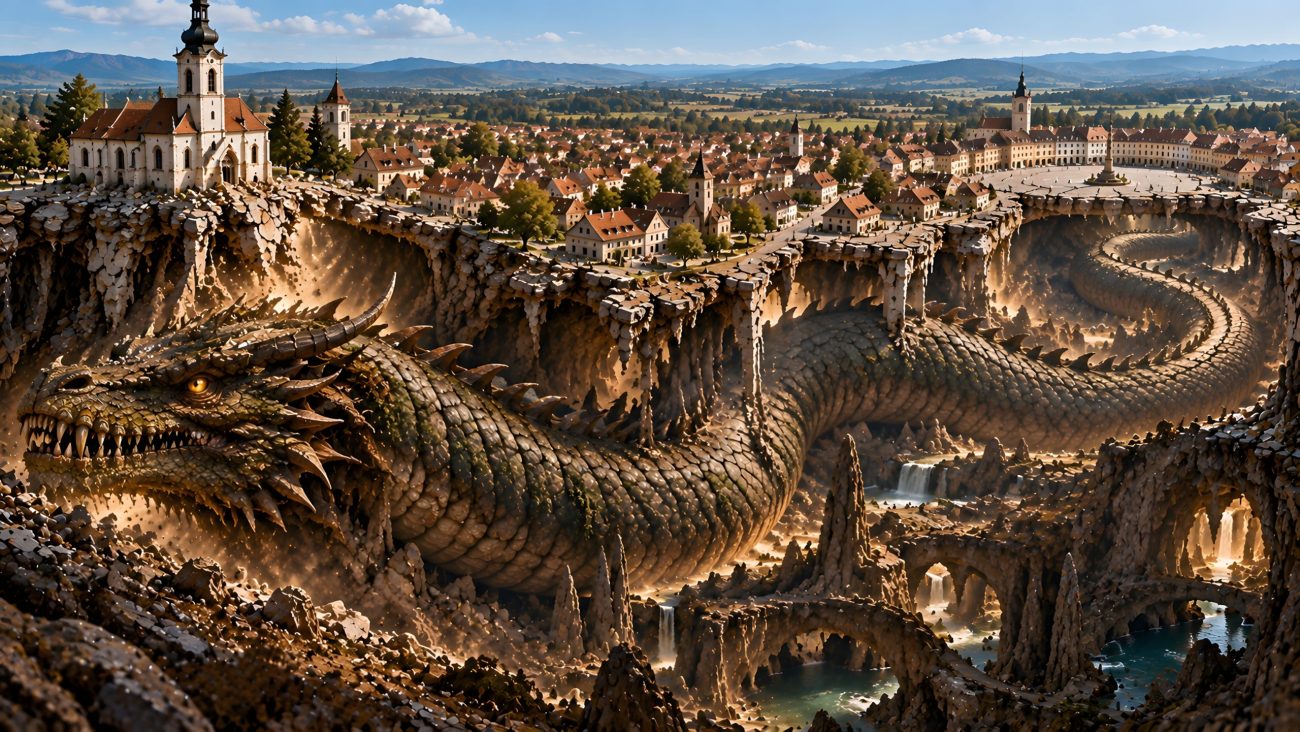
Pozoj is a great dragon said to dwell beneath cities and settlements, buried deep beneath the earth. In Čakovec in Međimurje County, the creature was believed to lie beneath the city with its head beneath the church and its enormous tail beneath the town square, although the positions could also be reversed.

The Pozoj could not be driven away by ordinary people. To defeat or remove it required a grabancijaš, a wandering scholar associated with the mysterious “black school” and the study of magic. Slovenian traditions similarly connect the dragon with the črne škole dijak, or “black school student,” also known as the črnošolec, the sorcerer’s apprentice.

Another Pozoj was said to lie beneath Zagreb. Whenever the enormous creature stirred or shrugged beneath the earth, it caused an earthquake above. The dragon therefore became a supernatural explanation for the violent movement of the earth beneath the city.

The Pozoj was also known in Slovenia, where dragons were generally regarded as dangerous creatures and were frequently associated with Saint George. The Slovenian hero Kresnik was likewise remembered as a dragon-slayer, placing the Pozoj within a broader tradition of monstrous dragons that must be overcome by a magical or heroic figure.


Sources

“Slavic dragon.” Wikipedia: The Free Encyclopedia. Wikimedia Foundation. Accessed October 3, 2026. https://en.wikipedia.org/wiki/Slavic_dragon


Nidhogg

Tradition: Norse mythology
Alternative Names: Níðhǫggr, Níðhöggr, Nidhöggur, Nidhug
Category: Dragon


The Myth

Nidhogg is a terrible dragon or serpent that dwells beneath Yggdrasil, the great World Tree. He gnaws endlessly at one of the tree’s great roots, the root that stretches over Niflheim. Beneath the world tree, he continually tears at its foundations while other creatures inhabit the branches above.

Nidhogg is also associated with the dead and the dark realms beneath the world. In the halls of Náströnd, where the wicked dead suffer, venom falls through the roof and the hall is woven from serpents’ spines. There Nidhogg feeds upon the corpses of those who committed murder, broke oaths, or betrayed those who trusted them. He is described as a creature of malice, a monstrous serpent that consumes the dead.

High above him, an eagle dwells among the branches of Yggdrasil. Between the eagle and Nidhogg runs the squirrel Ratatoskr, carrying hostile and envious words between the two creatures as it travels up and down the World Tree. Thus the great dragon beneath the roots is locked into an ancient struggle with the creature above.

Nidhogg’s most ominous appearance comes at the end of Völuspá. After the events surrounding Ragnarök, a dark dragon comes flying from the direction of Niðafjöll, described as a gleaming serpent carrying the corpses of the dead in its wings. The dragon is Nidhogg, rising from the darkness with the bodies of the dead as the world sinks. The meaning of this final appearance is uncertain, but it is commonly understood as an ominous image connected with Ragnarök.

His name itself is connected with biting or striking, and may evoke malice, darkness, or the act of gnawing below the roots of Yggdrasil. Whatever its precise meaning, Nidhogg’s role is unmistakable: beneath the World Tree waits a monstrous serpent, endlessly gnawing at its roots and feeding upon the dead.


Sources

“Níðhöggr.” Wikipedia: The Free Encyclopedia. Wikimedia Foundation. Accessed October 2, 2026. https://en.wikipedia.org/wiki/Nidhogg


Mao Long

Tradition: Chinese mythology
Alternative Names: Hairy Dragon
Category: Dragon


The Myth

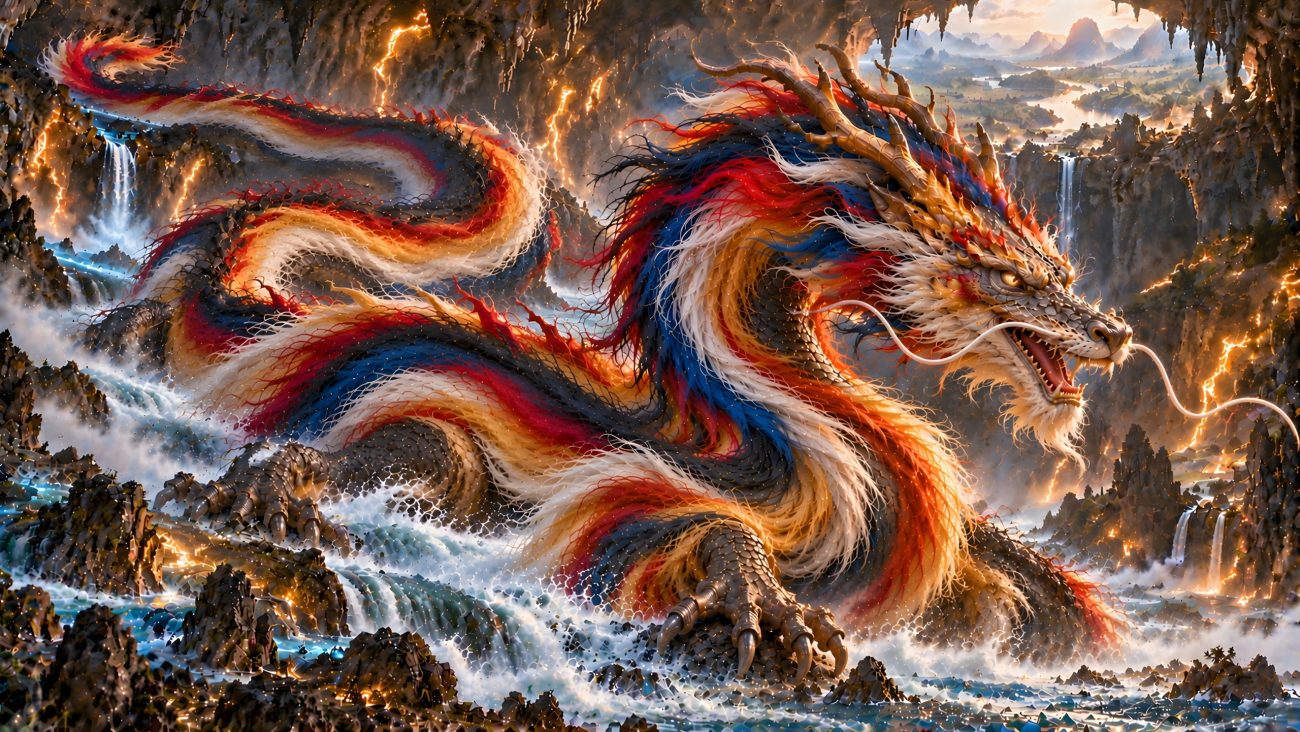
Mao Long is a strange dragon covered in hair of five different colors. It lived deep beneath the earth in a mysterious cave called Yin Yuan Li, located in the southern land of Nanxun. The cave was connected to the earth’s veins and was also inhabited by Mao Yu, a hairy fish. The hairy dragons and hairy fish lived together within the hidden cavern, while the bones of such creatures could sometimes be found scattered across the marshlands above.

During the time of Shun, the kingdom of Nanxun presented two Mao Longs to the rulers, one male and one female. Because of these remarkable dragons, a special palace was established for the raising and keeping of dragons. The tradition of raising dragons continued through the Xia Dynasty, and the clan associated with these dragon keepers took its name from the creatures.

When Yu undertook the great task of guiding the rivers, he rode upon a Mao Long. The hairy dragon carried him through the waters as he brought order to the rivers and helped bring peace to the four seas. Once the waters and the land had been brought under control, Yu released the dragon back into the waters, allowing it to return to its natural realm.


Sources

“毛龙 (Máolóng; Hairy Dragon).” Chinese Wikipedia. Wikimedia Foundation. Accessed October 2, 2026. https://zh.wikipedia.org/wiki/%E6%AF%9B%E9%BE%99


Poison Dragon

Tradition: Chinese mythology
Alternative Names: Dulong (毒龙)
Category: Dragon


The Myth

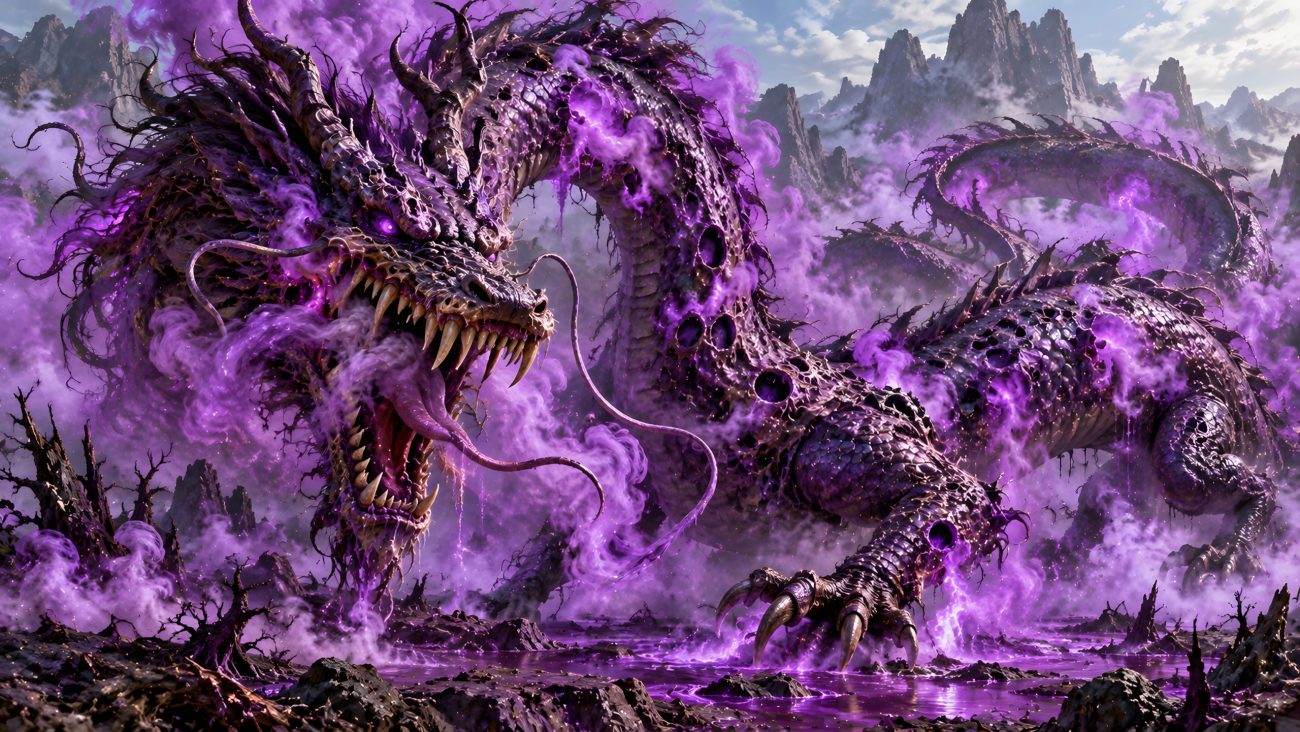
The Poison Dragon is an evil dragon of Chinese legend, a dangerous and malevolent creature associated particularly with the ancient Western Regions. Unlike benevolent dragons that govern rain and water, the Poison Dragon is remembered as a hostile supernatural being whose nature is expressed through its name: the poisonous dragon.

Ancient Chinese records repeatedly mention Poison Dragons. They appear in works such as the You Tianzhu Ji (Record of a Journey to Tianzhu), the Luoyang Qielan Ji (Record of the Buddhist Monasteries of Luoyang), and the Liang Jing Ji (Record of the Two Capitals). These accounts place the creatures especially within the lands of the ancient Western Regions, where encounters with strange dragons and supernatural beings formed part of the legendary landscape.

The Poison Dragon also appears in the later Xiuyun Ge, where Poison Dragon and other demons gather together after being summoned. The gathered creatures initially believe that they have been called together to fight the Daoist of Wanxing Terrace. Poison Dragon explains that this is not their purpose: they have instead been ordered by an immortal to assemble the demons and form a magical array against Sanjian.

Thus the Poison Dragon appears in Chinese legendary literature as a distinctly malevolent dragon, associated with poisonous and demonic forces rather than the protective or auspicious nature commonly attributed to other Chinese dragons.


Sources

“毒龙 (Dúlóng; Poison Dragon).” Chinese Wikipedia. Wikimedia Foundation. Accessed October 2, 2026. https://zh.wikipedia.org/wiki/%E6%AF%92%E9%BE%99


Lubia

Tradition: Albanian mythology
Alternative Names: Ljubi, Mother Lubia
Category: Dragon


The Myth

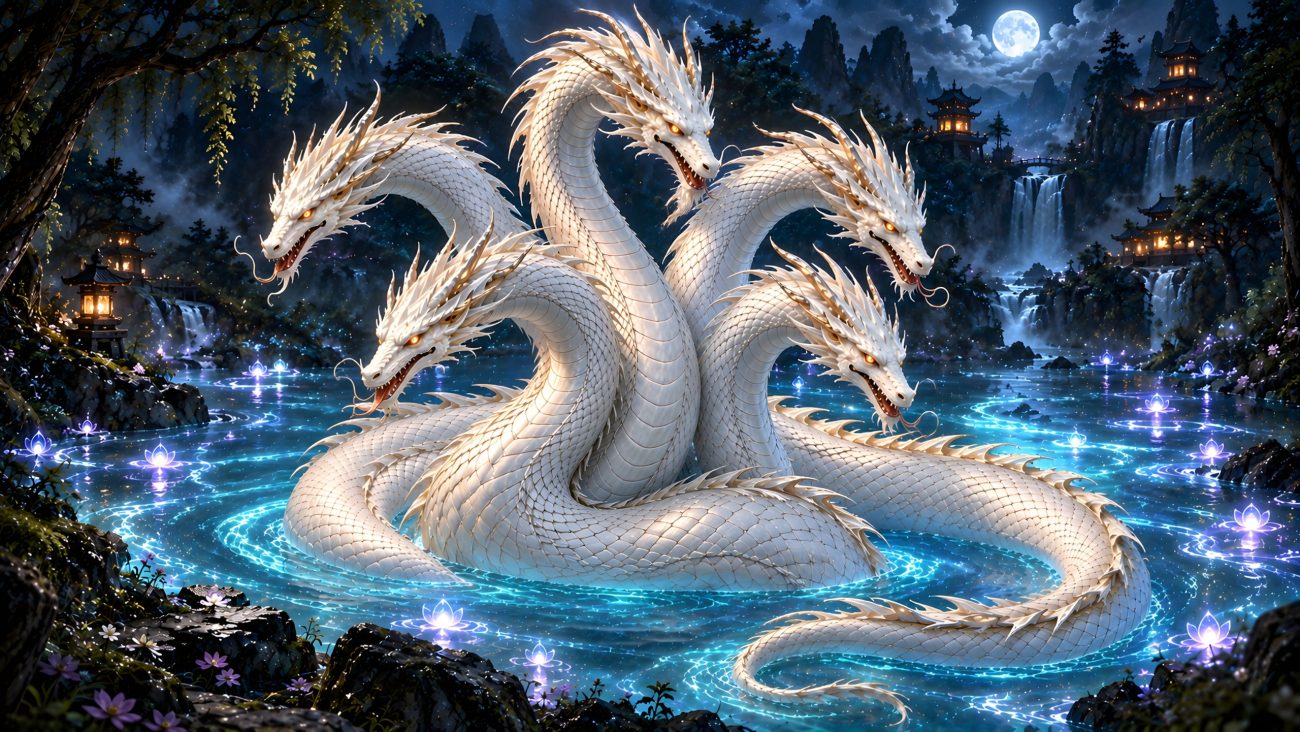
Lubia is a gigantic female serpent-dragon with numerous heads, a terrifying water and storm demon whose appearance reflects the violence of the sea during a storm. She is said to possess anywhere from seven to one hundred heads, and like the Hydra of Lerna, whenever one of her heads is cut off, another grows in its place. She has an enormous appetite and an especially fierce craving for human flesh, with little girls said to be among her favorite prey.

Lubia is believed to live in a magnificent vegetable garden, despite her monstrous nature. As a powerful spirit of water and storms, she can bring destruction upon the waters and is said to cause them to dry up unless a virgin is sacrificed to her. The people who feared her imagined the terrifying force of bad weather as a monstrous woman with an insatiable hunger, giving the storm a living and dreadful form.

In southern Albanian tradition, Lubia is regarded as a storm deity and is also called Mother Lubia. Her enormous appetite, strange personality, and terrible power all mirror the frightening impression of the sea when storms turn its waters violent.

Lubia closely resembles the Kulshedra, another enormous multi-headed female dragon of Albanian folklore. Like Lubia, the Kulshedra is associated with water and storms and must be placated through human sacrifice. The two beings are therefore sometimes treated as closely related or even as different names for the same kind of powerful dragon-demon, with Kulshedra possessing greater fame and power in Albanian tradition.

Her many heads and regenerative nature also recall the Lernaean Hydra, giving Lubia the form of an ancient multi-headed serpent whose destruction becomes nearly impossible as each severed head gives rise to another.


Sources

“Ljubi.” Wikipedia: The Free Encyclopedia. Wikimedia Foundation. Accessed October 2, 2026. https://en.wikipedia.org/wiki/Ljubi


Mizuchi

Tradition: Japanese mythology
Alternative Names: Mi-tsu-chi, Great Mizuchi, Water Dragon
Category: Dragon


The Myth

Mizuchi is a powerful water spirit appearing in the form of a great serpent or dragon, associated with rivers, pools, and dangerous waters. In ancient tradition, the creature was feared as a deadly being capable of poisoning those who came near its waters. The name itself was associated with water and spirit, and Mizuchi could be understood as a master or spirit of the water.

One of the oldest tales of the Mizuchi takes place in Kibi Province during the reign of Emperor Nintoku. At a fork in the Kawashima River lived a great water serpent that would breathe or spit venom, poisoning and killing people who passed by. The monster dwelt in a pool and had become a deadly menace to those who approached the river.

A man named Agatamori came to the pool determined to destroy the creature. Rather than simply attack it, he challenged the Mizuchi to prove its supernatural power. He threw three calabashes onto the surface of the water and declared that if the creature could make them sink, he would submit to it; if it failed, Agatamori would kill it.

The Mizuchi transformed itself into a deer and attempted to sink the floating gourds, but it could not. Agatamori then slew the monster. He searched the depths of the pool and discovered that the creature was not alone. A whole tribe of water dragons occupied a cavern beneath the water. Agatamori killed them all, and their blood turned the river red. The pool thereafter became known as Agatamori’s Pool.

Another ancient story tells of a River God whose waters repeatedly broke the great dikes along the Yodo River. An oracle commanded that two men be sacrificed to the river deity. One of them refused to accept his fate and used the same test of the floating calabash to challenge the supposed divine command. When a whirlwind came and tried to sink the gourd but failed, the man escaped his sacrifice through his own cleverness.

The River God in this story is associated by later interpreters with the Mizuchi, suggesting an ancient conception of water dragons not merely as monsters but as powerful spirits or gods of rivers who could demand offerings and even human sacrifice.

Mizuchi also appears in an ancient Japanese poem, where the speaker imagines possessing a sword powerful enough to ride into a green pool and slay the Mizuchi dwelling there. Thus the creature remained an embodiment of the dangerous and mysterious power believed to inhabit Japan’s waters.


Sources

“Mizuchi.” Wikipedia: The Free Encyclopedia. Wikimedia Foundation. Accessed October 2, 2026. https://en.wikipedia.org/wiki/Mizuchi


Marraco

Tradition: Catalan folklore, Spanish Mythology
Alternative Names: Lo Marraco
Category: Dragon


The Myth

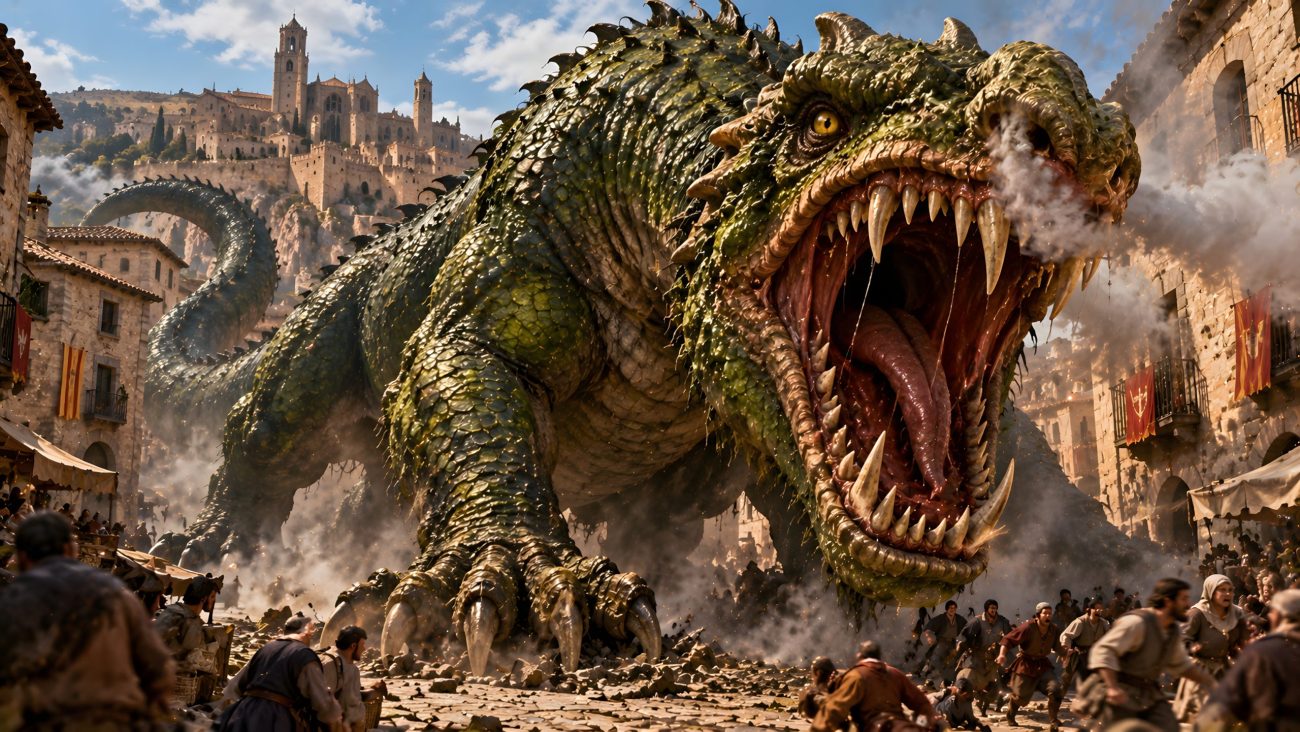
Lo Marraco is a terrifying dragon-like creature from the folklore of Lleida, said to possess an enormous mouth capable of swallowing a person whole. In tales told to frighten children, the monster lurks as a frightening threat to those who misbehave, with adults warning that the Marraco will come and devour them.

The Marraco became one of the great frightening creatures of Lleida. Its gigantic jaws were imagined as large enough to swallow children whole, making it an especially effective bogeyman. Adults used the creature to frighten disobedient children into behaving, turning its monstrous appetite into a warning passed from one generation to the next.

The creature eventually took physical form in the great processional monster of Lleida. A dragon figure had already appeared in the city’s religious processions in the sixteenth century, and another dragon was ordered to be built in 1671. In 1907, the Marraco was given a recognizable physical form as a large green dragon effigy mounted on wheels. It could emit smoke from its nostrils, giving the imaginary beast a frightening presence as it moved through the streets during celebrations.


Sources

“Marraco.” Wikipedia: The Free Encyclopedia. Wikimedia Foundation. Accessed October 2, 2026. https://en.wikipedia.org/wiki/Marraco