Bolts

Tradition / Region: Polish Mythology
Alternate Names: Errors
Category: Forest dweller, Demon


The Myth

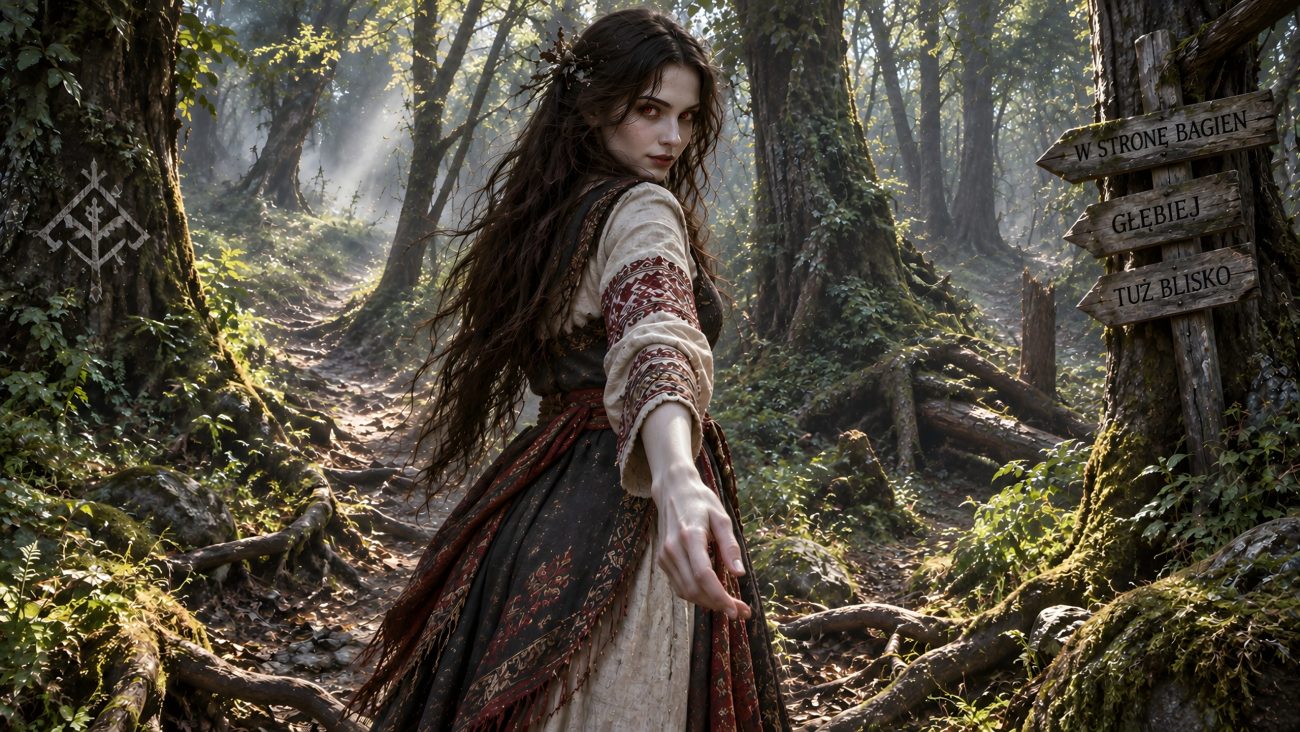
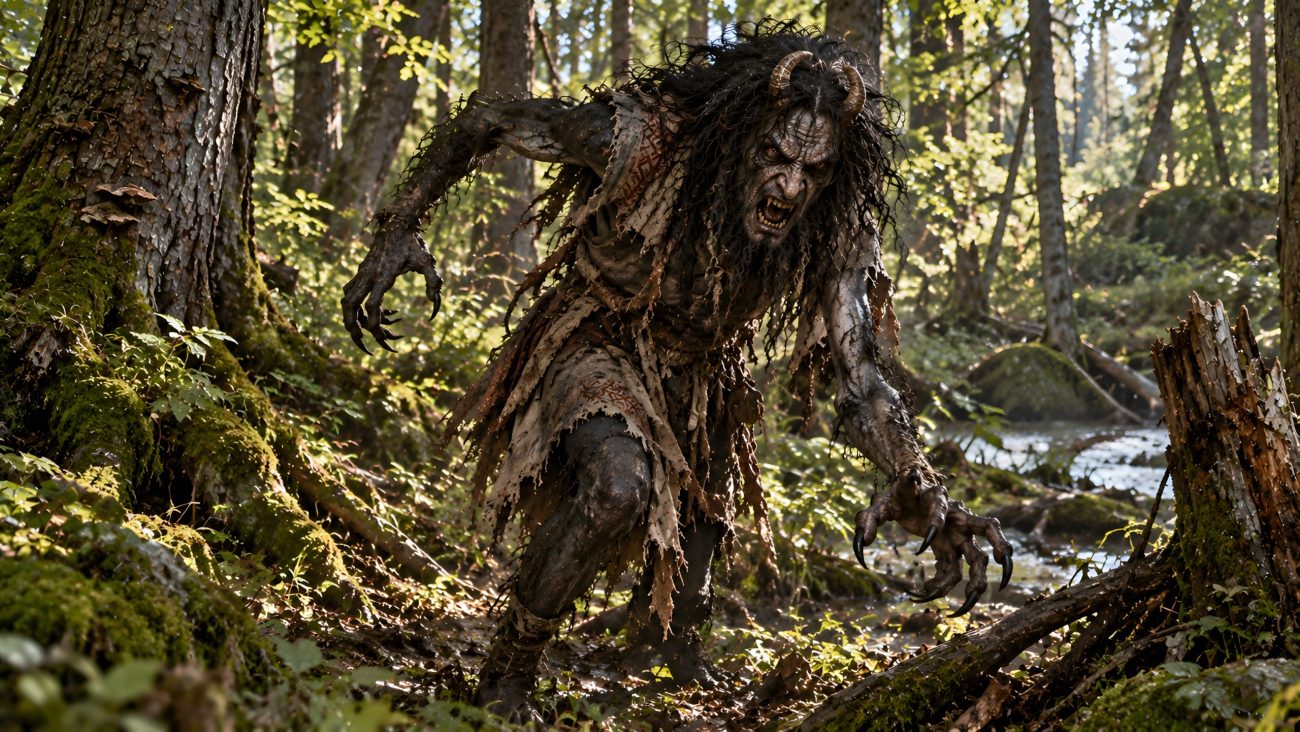
Bolts are malicious forest or field demons known in the folk tales of Eastern Lesser Poland. They are believed to lure people away from proper paths, drawing travelers into wilderness, fields, or unfamiliar terrain where they lose their sense of direction.

These beings are closely associated with confusion and delusion, and are sometimes described as manifestations of madness or devilish influence. In local belief, bolts often appeared to people returning at night—especially those walking home from inns or taverns—leading them astray and preventing them from finding their way.

In the region of the Rzeszów Foothills, bolts were closely related to another figure known as the error, a demon said to sit at crossroads, sometimes beneath stones. Like the bolt, this being led nighttime travelers through open fields, causing spatial disorientation and helpless wandering. Because of these beliefs, people erected roadside shrines at such places and held special processions there, hoping to protect themselves from being misled.

Bolts were thought to nest near roads and highways, choosing places where travelers were most vulnerable. By means unknown, they caused sudden loss of orientation, making familiar routes feel unfamiliar. They seemed to take particular pleasure in confusing those who had spent the evening drinking, and many tales describe people arriving home at dawn ragged, bruised, and without their belongings, claiming that a bolt had led them astray.

In popular explanation, such misfortune was attributed not to human error, but to the direct action of these demons. To say that “a bolt went wild” became a way of explaining unexplained wandering, exhaustion, and loss.

Though later generations joked that the demon itself may have vanished, folklore preserves the belief that the experience of confusion in the night—of losing one’s way without knowing how—has never entirely disappeared.


Sources

Bestiary.us contributors. (n.d.). Bolts. In Bestiary.us, from https://www.bestiary.us/belty/pl


Kushkaftar

Tradition / Region: Dagestan Mythology, Russian Mythology
Alternate Names: Kashkaftar
Category: Forest dweller, Spirit, Demon


The Myth

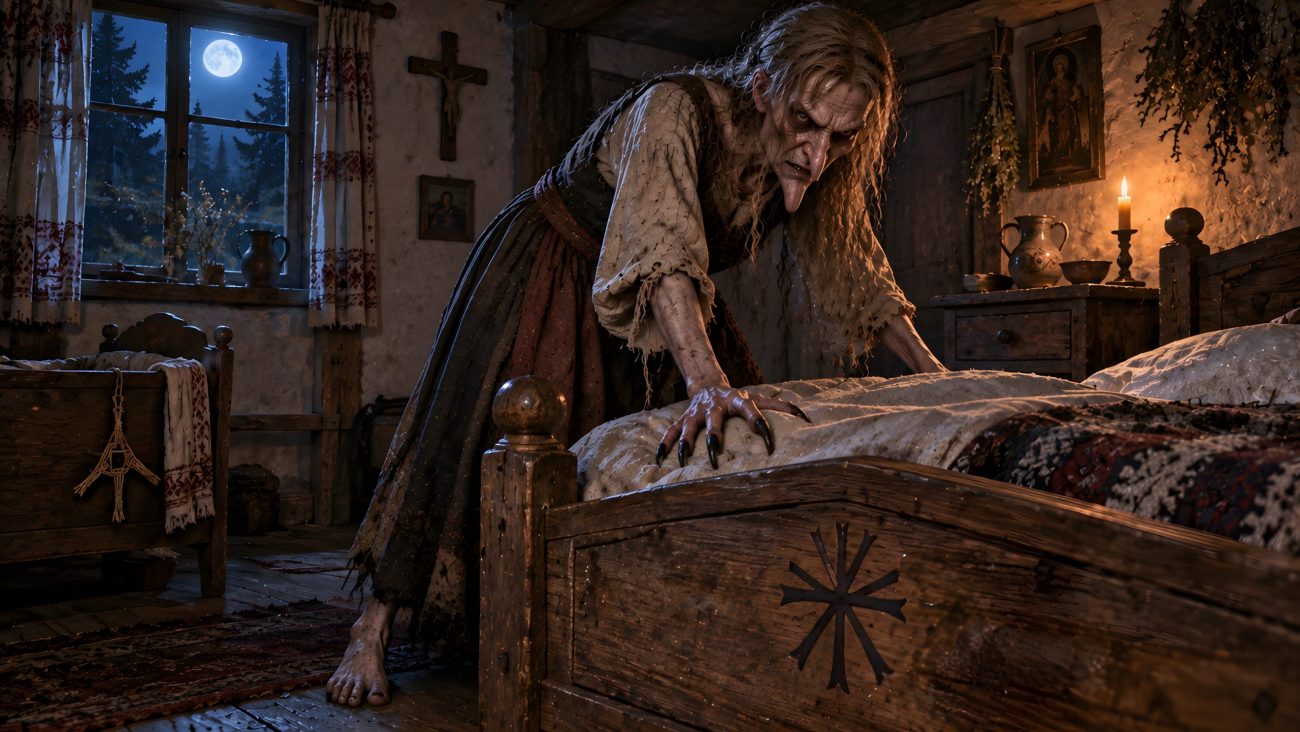
In the folklore of several peoples of Dagestan, Kushkaftar is an evil forest spirit feared for her terrifying appearance and cruelty. She belongs to the realm of lower mythology and is known among the Tabasarans, Lezgins, Rutuls, Tsakhurs, Laks, and others.

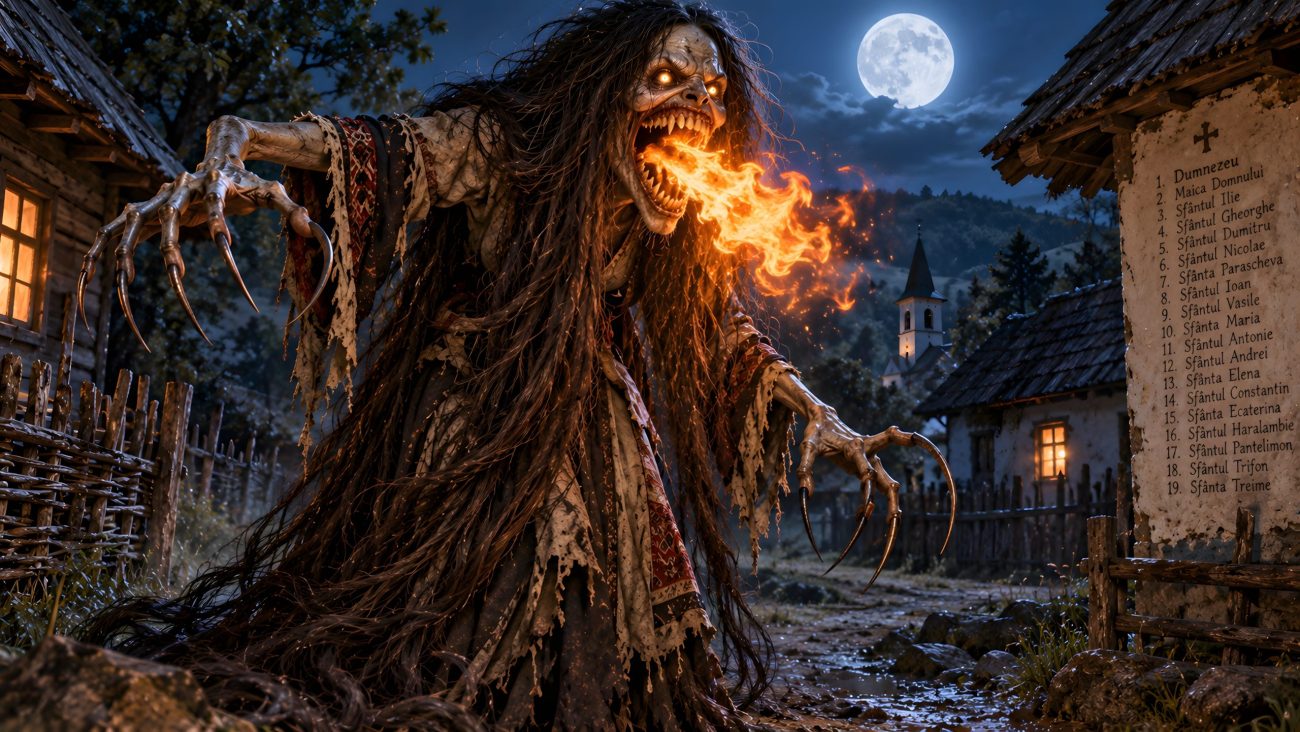
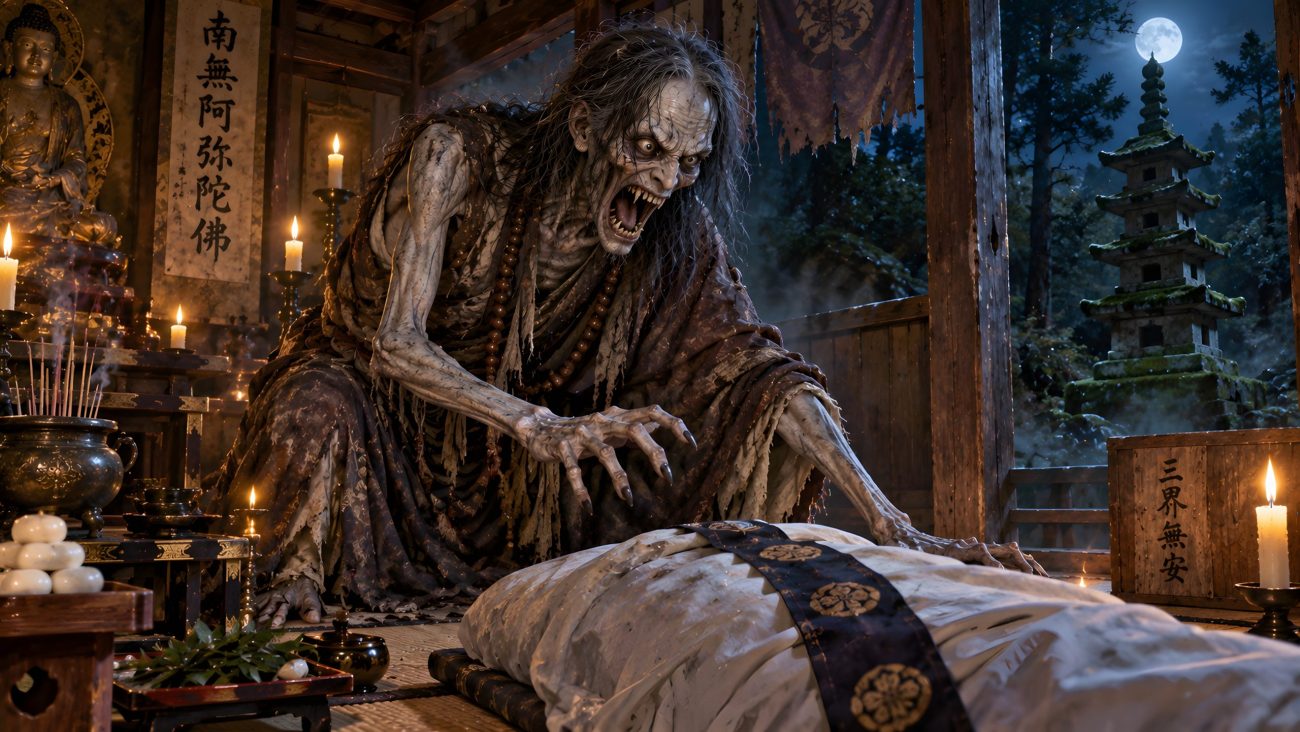
Most commonly, Kushkaftar is described as an ugly old woman. She has sharp fangs protruding from her mouth, fiery eyes, and long, tangled hair that hangs unkempt around her body. Her breasts are described as unusually large, further marking her as unnatural and frightening. According to belief, she lives deep in the forest together with her daughter.

At night, Kushkaftar is said to abduct children, carrying them away into the forest where she devours them. Because of this, she is regarded as a particular danger to families and a figure of terror used to explain disappearances and warn against wandering after dark.

Among the Rutuls, Kushkaftar—often called Kashkaftar—is described in a very different but equally frightening form. In these accounts, she appears as a strange, glowing creature, shining like phosphorus. She walks on two legs and possesses a single enormous eye, flat and plate-like, covering her entire face. From her mouth hangs a bright red tongue, and instead of ears she has burning lanterns, which glow in the darkness.

Despite differences in appearance across regions, Kushkaftar remains consistently portrayed as a malevolent forest being, associated with night, fear, and the consumption of children, embodying the dangers believed to lurk beyond the safety of the village.


Sources

Bestiary.us contributors. (n.d.). Kushkaftar. In Bestiary.us, from https://www.bestiary.us/Kushkaftar


Abyzou

Tradition / Region: Mesopotamian, Greek, Byzantine
Alternate Names: Abizou, Obizuth, Obyzouth, Byzou, Gylou, Gello, Alabasandria, Anabardalea, and countless others
Category: Demon, Snake, Hybrid


The Myth

From the deepest darkness before the world was formed, Abyzou came forth. She rose from the primeval waters, from the abyss that existed before heaven and earth were divided. In that endless sea she was born barren, and from her barrenness grew envy without limit.

Abyzou wandered the world without rest or sleep. She moved silently through night and shadow, drawn to the cries of women in labor and the breath of newborn children. She was said to feel no mercy, for what she desired most had been denied her forever. Because she could not give life, she sought to take it.

When a woman lay ready to give birth, Abyzou would draw near. If she was not driven away, she strangled infants in their cradles, stole them in the night, or brought sickness upon them so that they wasted away. She whispered illness into bodies, closing throats, blinding eyes, twisting minds, and filling flesh with pain. Wherever she passed, suffering followed.

Abyzou did not walk openly among mortals. Her form was half-seen: a greenish, gleaming face framed by writhing, serpent-like hair, while the rest of her body dissolved into darkness. Sometimes she appeared with the scales or tail of a fish or serpent, for she belonged to the ancient waters. She claimed to possess countless names and shapes, changing them constantly so that none might easily command her.

In ancient times, King Solomon encountered her while binding demons to build the Temple. When she was brought before him in chains, she confessed her deeds freely, boasting that she never slept and that each night she sought children to destroy. Solomon ordered her bound by her own hair and displayed before the Temple, so that all might see the demon who preyed upon mothers and infants.

Yet Abyzou could never be destroyed. She could only be driven away.

Thus people learned to defend themselves through sacred names, seals, and charms. Her name was written on amulets, spoken aloud in childbirth, carved into metal and stone. When she was named correctly, she was forced to flee. When the names of her enemies—angels, saints, or divine protectors—were invoked, she recoiled in fury and envy.

In Egypt she was known as Alabasandria. In Byzantium she was Gylou or Gello. In each land she took a new name, but her hunger remained the same. Riders trampled her beneath their horses in sacred images. She was whipped, bound, cursed, and cast out in spells, yet always returned when vigilance failed.

Only one thing could stop her: knowledge of her names. When a woman about to give birth wore an amulet bearing those names, Abyzou was powerless. Forced by oath, she would turn away and retreat to the dark waters from which she had come.

And so Abyzou still wanders the edges of night, driven by envy, searching for life she can never possess—an ancient shadow born from the abyss, feared wherever children are born.


Gallery


Sources

Wikipedia contributors. (n.d.). Abyzou. In Wikipedia, The Free Encyclopedia, from https://en.wikipedia.org/wiki/Abyzou


Interpretive Lenses

Religious Readings
  • Christian Ascetic Deep Dive
Philosophical Readings
  • Nietzschean Deep Dive
Psychological Readings
  • Jungian Deep Dive
Esoteric Deep Dive
  • Hermetic Deep Dive
Political / Social Readings
  • Marxist Deep Dive
Other
  • How to Invite The Abyzou

Oto Akuka

Tradition / Region: Japanese Mythology
Alternate Names:
Category: Demon, Cow, Pig


The Myth

Oto Akuka is a demon recorded only once, in a single old Japanese scroll. Beyond this appearance, nothing more is known. There are no surviving stories, no extended legends, and no later mentions of the creature.

In the scroll, Oto Akuka is shown with blue skin and a beast-like face. Its head is bald and crowned with two horns, and its nose appears crushed, giving it the resemblance of a cow or a pig. The demon is depicted kneeling on the ground. One hand is pressed firmly against the floor, while the other supports its body as it vomits.

The image presents Oto Akuka not as a being that attacks others, but as one overcome by what rises within itself. The demon is shown in the moment of release, brought low and humiliated by its own condition. Its punishment is not delivered by an external force, but unfolds openly through its own body, in full view.

Oto Akuka remains an isolated figure in Japanese folklore—a single, unsettling image preserved in a scroll, offering no tale of origin or aftermath, only the enduring vision of a demon brought to shame.


Gallery


Sources


Youkai Gazou Database. (2007).
鬼;オニ,嘔吐;オウトInternational Research Center for Japanese Studies (Nichibunken). Retrieved from https://www.nichibun.ac.jp/cgi-bin/YoukaiGazou/card.cgi?identifier=U426_nichibunken_0080_0008_0005

Also mentioned in my book Legendary and Mythical Cows

Interpretive Lenses

Religious Readings
  • Christian Ascetic Deep Dive
Philosophical Readings
  • Nietzschean Deep Dive
Psychological Readings
  • Jungian Deep Dive
Esoteric Deep Dive
  • Hermetic Deep Dive
Political / Social Readings
  • Marxist Deep Dive
Other
  • How to Invite The Oto Akuka

Flower Spirit

Tradition / Region: Chinese Folklore
Alternate Names: Huā Yāo (花妖), Huā Xiān (花仙), Huā Jīng (花精)
Category: Spirit


The Myth

In Chinese folklore, flowers are not lifeless plants but beings endowed with spirit and awareness. It is said that flowers which survive for a hundred years may awaken consciousness and become flower spirits. After a thousand years of cultivation, such beings may ascend further and become immortals. These spirits are known as Huā Yāo or Huā Jīng when their nature is closer to demons, and Huā Xiān when they attain a purer, immortal state.

Flower spirits often appear in human form, usually as young women of extraordinary beauty whose appearance reflects the flower from which they were born. Their lives are bound to the cycles of nature: blooming, fading, and renewal. Though rooted in the soil, they can walk, speak, love, and suffer like humans, while retaining a deep connection to their original plant form.

One of the most famous accounts appears in “Xiangyu” from Strange Tales from a Chinese Studio by Pu Songling of the Qing dynasty. In this story, a peony flower spirit forms a relationship with a scholar surnamed Huang. The spirit is gentle and affectionate, yet vulnerable to the forces of the human world, illness, and spiritual imbalance. Her existence demonstrates both the beauty and fragility of flower spirits, who live between nature and humanity.

Earlier sources trace the idea of flower spirits back to Taiping Guangji, where flowers transforming into conscious beings are recorded as marvels of the natural world. These stories present flower spirits not as monsters, but as manifestations of the living earth itself—natural entities capable of emotion, loyalty, and moral action.

Poetry further reinforces their presence in the cultural imagination. Writers of the Tang, Song, and Ming dynasties frequently invoked flower fairies as unseen guests descending among blossoms, dancing beneath moonlight or moving with the wind through gardens. Their arrival often marked moments when the boundary between the human world and the spirit realm grew thin.

Flower spirits were also associated with imbalance in nature. Historical records sometimes attributed strange winds, unseasonal darkness, or disturbances among flowers to the activity of flower demons, suggesting that when the harmony of earth was disrupted, these spirits manifested visibly.

Across all accounts, flower spirits remain bound to impermanence. If their flower is destroyed, neglected, or uprooted, the spirit weakens or dies. Their stories serve as reminders that beauty, life, and spirit arise from patience and time, and that nature itself is alive, observant, and capable of transformation.


Interpretive Lenses

Religious Readings
  • Christian Ascetic Deep Dive
Philosophical Readings
  • Nietzschean Deep Dive
Psychological Readings
  • Jungian Deep Dive
Esoteric Deep Dive
Political / Social Readings
  • Marxist Deep Dive
Other

Shanjing

Tradition / Region: Chinese Folklore (Hebei Province; Anguo / Ankoku region)
Alternate Names: Mountain Spirit; One-Legged Mountain Spirit; Xiao
Category: Mountain Dweller / Demon / Spirit


The Myth

In the mountains of what is now Anguo City in Hebei Province, there was said to exist a being known as the Shanjing, the Mountain Spirit. Ancient Chinese texts describe it as a small humanoid creature, usually between one and four feet tall depending on the source, with only a single leg. Its most striking feature was its foot: the heel faced backward, an unmistakable sign that it was not a natural being.

The Mountain Spirit was said to dwell in mountainous regions and remain hidden during the day, emerging only at night. It was known to steal salt from humans, slipping into storage huts or mountain shelters under cover of darkness. Its diet consisted primarily of crabs and frogs gathered from the mountains and streams. Some accounts describe it carrying crabs in its hands as it approached human dwellings.

When encountered at night, the Mountain Spirit could attack people. However, it was believed that if a person called out the word “Ba,” the creature would lose its ability to harm them. At the same time, the Mountain Spirit was dangerous to provoke. Those who struck or injured it were said to suffer illness afterward, or find their houses consumed by fire.

Classical texts give varying descriptions of its appearance. Some portray it as human-shaped, others as resembling a small child. Several sources note that its body was hairy, its face dark or blackened, and that it laughed when it saw humans. In Daoist writings such as the Baopuzi, it is described as a nocturnal attacker and listed among spirits that could invade human homes.

The Mountain Spirit appears frequently in Chinese poetry and literature, where it is mentioned alongside other supernatural beings such as fox spirits and animal demons. These references describe it as a presence bound to mountains, night, and wild places, a being that moved between the human world and the unseen realm.

Through later transmission into Japan, the Mountain Spirit was depicted in illustrated demon compendiums, notably in Toriyama Sekien’s Konjaku Gazu Zoku Hyakki. There it appears gazing at mountain huts while holding crabs, preserving the older Chinese description of a salt-stealing, crab-eating, one-legged mountain being that emerges after dark and vanishes again before dawn.


Interpretive Lenses

Religious Readings
Philosophical Readings
  • Nietzschean Deep Dive
Psychological Readings
  • Jungian Deep Dive
Esoteric Deep Dive
  • Hermetic Deep Dive
Political / Social Readings
  • Marxist Deep Dive
Other

Ebajalg

Tradition / Region: Estonian mythology
Category: Spirit, Demon


The Myth

Ebajalg is a being of Estonian folklore that manifests as a violent whirlwind. Rather than a natural phenomenon alone, it is believed to be a malicious spirit or demon moving through the landscape in the form of spinning wind.

Ebajalg is associated with sudden destruction and overwhelming force. When it appears, it may tear through fields, damage buildings, or scatter objects, its strength far beyond that of ordinary wind. Encounters with Ebajalg are not personal or communicative; its presence is felt through impact and chaos rather than speech or form.

In Estonian belief, Ebajalg represents the dangerous animation of nature itself—an unseen will acting through the air, embodying the fear that destruction may arise suddenly, without warning, and without human cause.


Lange Wapper

Tradition / Region: Belgian Mythology
Alternate Names:
Category: Demon


The Myth

Lange Wapper is a water spirit said to dwell in the black mud of the canals and moats of Antwerp. He hides beneath the water and emerges to wander the city and its outskirts, playing cruel and often dangerous tricks on humans.

According to a legend from Wilrijk dating to the sixteenth century, Lange Wapper was once an ordinary boy. One day, he saved an old woman—revealed to be a witch—from drowning. As a reward, she granted him the power of shapeshifting. With this gift, he could alter his size at will, becoming so enormous that he could leap from one city to another in a single bound. From this ability, he gained his name, meaning “Long Strider.”

Lange Wapper can take many forms. He appears as a cat, a dog, a man, a child, or even as an ordinary object such as a white napkin. He may grow immensely tall, with long legs that allow him to peer into the windows of houses, or shrink himself to a tiny size. He can even duplicate himself. In one guise, he becomes a boy who plays with other children until he provokes a violent quarrel. In another, he transforms into a crying infant; when a young mother, moved by pity, offers him her breast, he suddenly resumes his true form as a large man and mocks her cruelly.

Many of his pranks ended in death. He was said to delay servants sent to fetch a midwife, causing newborns to die before baptism. He strangled drunkards by simply twisting their necks. Because of these acts, people came to regard Lange Wapper as a devil rather than a mere spirit.

When his mischief was complete, Lange Wapper would announce himself with a horrific, unmistakable laugh, so that people knew who had tormented them. According to tradition, his presence in Antwerp ended only after statues of the Virgin Mary were placed on street corners throughout the city. After this, Lange Wapper fled Antwerp and was seen no more.


Atua

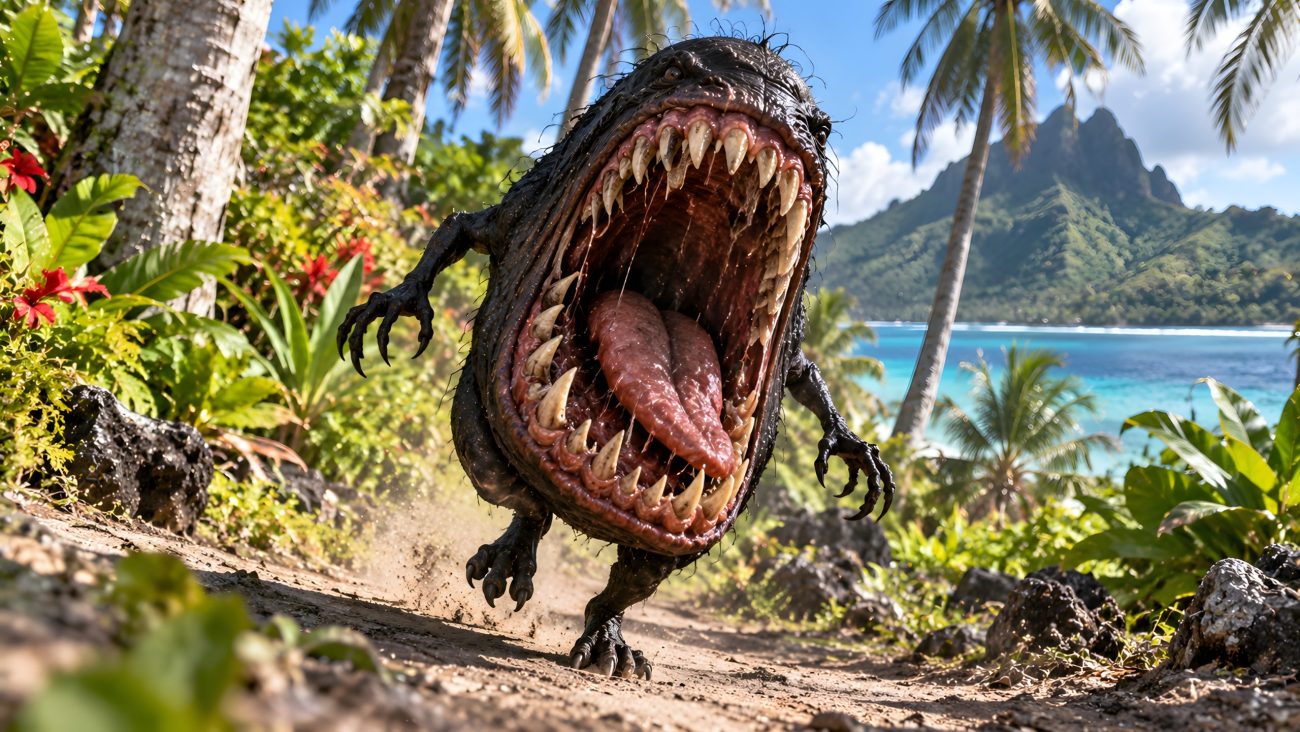
Tradition / Region: Polynesia Mythology, Hawaiian Mythology, Maori Mythology
Alternate Names:
Category: Demon / supernatural being


The Myth

Atua are supernatural beings known in the traditional beliefs of the Polynesian world. Among Hawaiians, Māori, and other Polynesian peoples, atua are regarded as powerful entities that exist beyond the human realm.

They are described as deities or demons, feared and revered alike, whose presence influences the natural world and human life. Atua may dwell in specific places, manifest through natural forces, or act invisibly, shaping events according to their will.

Through tradition, atua are remembered as ever-present supernatural beings, forming a vital part of Polynesian cosmology and belief.


Interpretive Lenses

Religious Readings
Philosophical Readings
Psychological Readings
Esoteric Deep Dive
Political / Social Readings
Other