Arae

Tradition: Greek mythology
Alternative Names: Arae, Arai (Αραί)
Category: Demon


The Myth

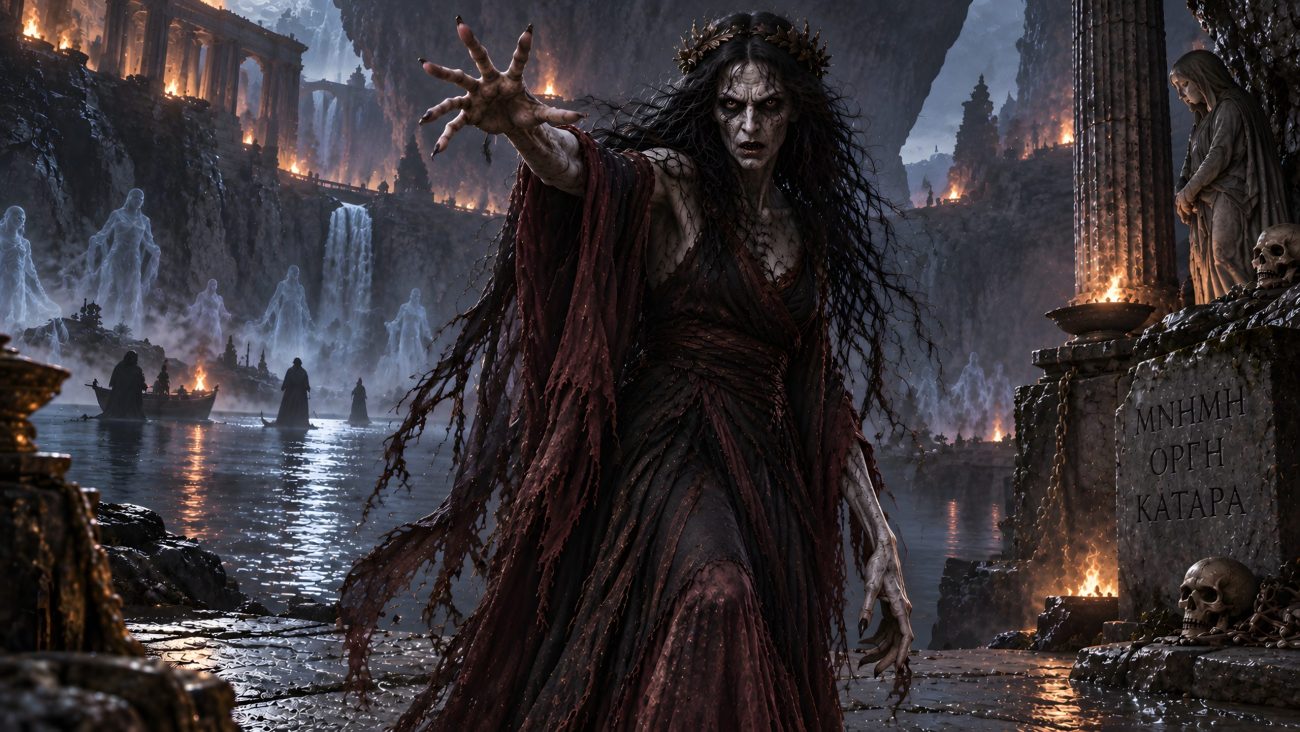
The Arae are female spirits of curses, particularly curses laid by the dead upon those responsible for their deaths. They are associated with the Underworld and are sometimes identified with the Erinyes, the Furies.

The Arae are described as powers residing beneath the earth. In the traditions preserved by Aeschylus, the Erinyes themselves say that they are the eternal children of Nyx (Night) and that they are called Arai, or Curses, in their dwelling beneath the earth.

Their curses are closely connected with bloodshed and vengeance. Blood spilled upon the earth demands further blood, and the Erinys arising from those who have been murdered brings destruction upon the guilty. The Arae therefore pursue the consequences of murder and wrongdoing, particularly within cursed families.

The House of Atreus is repeatedly associated with the Arae. Orestes calls upon the powerful Curses of the slain as he suffers the consequences of the violence within his family. Clytemnestra likewise addresses the Ara, the curse haunting the house of the Atreides, blaming it for taking away those she loves.

The curse is also connected with the downfall of Oedipus and his family. When his family is thrown into disorder, the Arae raise their piercing cry as the descendants of Oedipus are driven apart.

In the story of Eteocles and the Seven Against Thebes, Eteocles prays to Zeus, Earth, and the gods protecting Thebes, as well as to the Curse acting as the agent of his father’s vengeance. He begs that the Ara not destroy his city or its homes and hearths.

The Arae could also be invoked by those seeking vengeance for unjustly murdered people or those deprived of marriage. In the Electra tradition, Electra calls upon the powers of the Underworld, including Hermes Chthonios, the holy Ara, and the divine Erinyes, asking them to avenge the murder of her father.

The Arae thus represent curses arising from wrongdoing and bloodshed, particularly the vengeance of the dead against those responsible for their deaths.


Sources

“Arae.” Wikipedia: The Free Encyclopedia. Wikimedia Foundation. Accessed September 9, 2026. https://en.wikipedia.org/wiki/Arae
Karajishi Dōji

Tradition: Japanese mythology
Alternative Names: Karajishi Dōji, Chinese Lion Boy
Category: Demon, Lion


The Myth

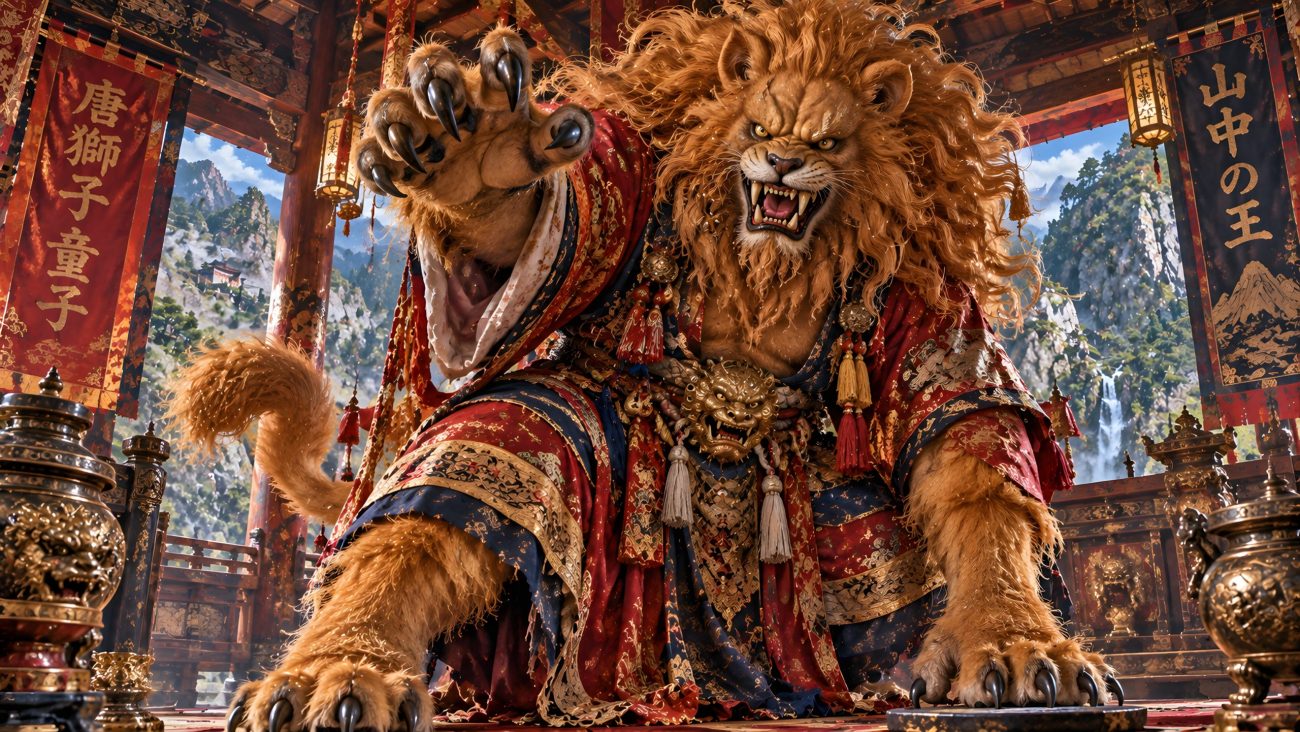
Karajishi Dōji is the leader of the demons in the Edo-period picture book Saru no Yamairi Karajishi Dōji. In the story, the characters from the legend of Minamoto no Yorimitsu and his retainers defeating Shuten-dōji are replaced by animals, with Karajishi Dōji taking the role of Shuten-dōji, the leader of the demons.

The warriors who oppose him are represented by a monkey, corresponding to Minamoto no Yorimitsu, accompanied by four animal warriors: a dragon representing Watanabe no Tsuna, a horse representing Sakata Kintoki, a rat representing Usui Sadamitsu, and a rabbit representing Urabe Suetake. A lone boar represents Hirai Yasumasa.

The conflict begins at Rashōmon, where the dragon and rat confront a tiger representing Ibaraki Dōji. They succeed in cutting off the tiger’s arm, but the tiger and a sheep recover the severed arm and take it away.

The monkey and his companions pursue them into the mountains. Disguised as mountain ascetics, they reach the stronghold of Karajishi Dōji and are invited into his mansion. To gain the demon boy’s trust and lower his guard, the group performs a monkey show for him.

When the opportunity arises, the monkey and his companions launch their attack. With the assistance of Sannō Gongen, the guardian deity of Mount Hiei whose messengers are monkeys, they scatter Karajishi Dōji and his demonic followers, represented by the tiger, sheep, and dogs.


Sources

Takahashi, Toshihiro. “唐獅子童子 [からじしどうじ] (Karajishi Dōji).” 新版TYZ 妖怪図鑑 (New TYZ Yokai Encyclopedia). September 24, 2016. https://tyz-yokai.blog.jp/archives/1061255510.html


Tsunodaishi

Tradition: Japanese mythology
Alternative Names: Tsunodaishi, Horned Daishi, Gansan Daishi
Category: Demon


The Myth

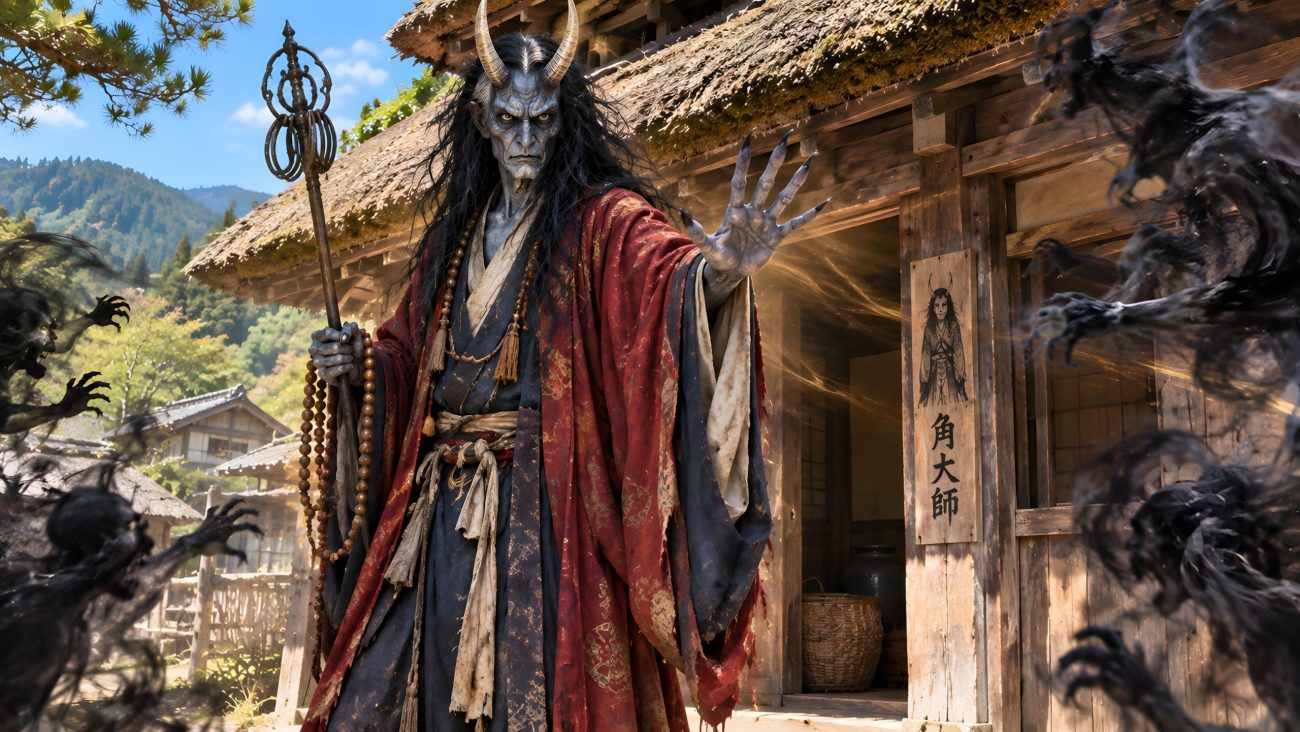
Tsunodaishi is the demon-like form of Ryōgen, the eighteenth head of the Tendai Buddhist sect. He is depicted as a slender, horned, demonic figure and is believed to represent Gansan Daishi after transforming himself into a yaksha.

Ryōgen was a highly revered monk of the Heian period, and many legends and anecdotes developed around him. According to the legend of Tsunodaishi, Ryōgen became seriously ill and made a vow to ward off illness from himself and from other people. He transformed his appearance into that of a terrifying yaksha and saw this demonic form reflected in a mirror.

Ryōgen declared that wherever his image was placed, evil spirits would not enter and calamities would be driven away. His demonic image therefore became a protective charm against evil.

Images of the Great Master were subsequently placed on buildings throughout society, from the pillars of major temple gates to the doors of ordinary people’s thatched houses. The image was intended to protect those places from evil spirits and misfortune.

A similar account appears in the Inōshō, compiled by Gyōyo around the Bun’an era (1444–1449), indicating that images of the Great Master were already regarded as protective charms against evil at that time. However, that earlier account does not mention Ryōgen transforming into a yaksha.


Sources

Takahashi, Toshihiro. “角大師 [つのだいし] (Tsunodaishi).” 新版TYZ 妖怪図鑑 (New TYZ Yokai Encyclopedia). August 25, 2019. https://tyz-yokai.blog.jp/archives/1074589343.html


Oko-jōgo

Tradition: Japanese mythology
Alternative Names: Angry Drunkard
Category: Demon


The Myth

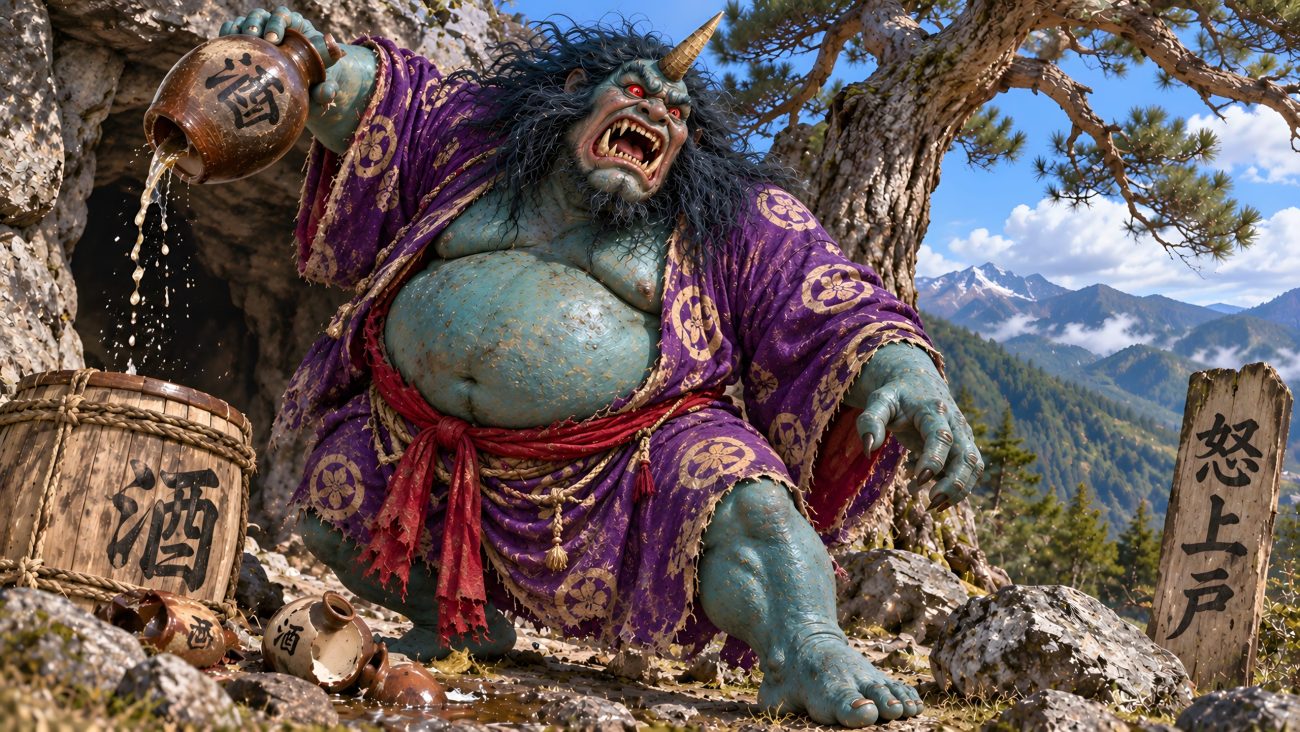
Oko-jōgo is a demon who becomes violently angry when drunk. He lived in a cave on a monstrous mountain to the northeast and was notorious for his enormous appetite and terrifying temper.

An old man named Sakubei was an exceptionally enthusiastic drinker. He invited anyone he encountered to drink with him, constantly saying, “Hey, let’s have a drink.” Because of his love of alcohol, people called him Orochi-jiisan, the Great Serpent Old Man.

Eventually, however, Sakubei accumulated a debt of 2 yen and 38 sen at his usual liquor store and could no longer obtain enough sake. When he tried to persuade the shopkeeper to give him more, arguing that there was no record of a great serpent ever bringing money, his efforts failed.

The village headman’s son then told Sakubei about a demon living in a cave on a mountain to the northeast. The demon loved sake and became extremely angry whenever it became drunk. It had promised to provide free sake to anyone who could retrieve both of its eyes.

Several people had already attempted to defeat the demon, but all had failed. Some fled in terror, while others were killed and eaten. Since humans became intoxicated more easily than the demon, they had little hope of overcoming it. The village headman’s son therefore suggested that Sakubei, whose drinking ability was supposedly unmatched, might be capable of obtaining the demon’s eyes.

Sakubei carried a large barrel of sake on his back and traveled into the mountains. When he reached the demon’s cave, he encouraged the demon to drink and joined it himself. The demon became increasingly intoxicated and boasted about its strength, declaring that when it drank sake it could smash rocks, kill horses and cows, and devour humans with ease.

The drunken demon then attempted to eat Sakubei. Sakubei narrowly escaped and suggested that they continue drinking on a mountaintop where they could enjoy a beautiful view, accompanied by rabbits and monkeys.

They eventually reached a lone pine tree. The demon was delighted by the scenery and continued drinking until the barrel was completely empty. Sakubei immediately climbed the pine tree and taunted the demon, telling it that it was merely a drunkard who could not even handle a little sake.

The demon became furious and attempted to climb the tree and tear Sakubei apart. However, it was so heavily intoxicated that it could not climb properly. It repeatedly climbed and fell, then climbed again as its rage grew. Its eyes gleamed as it stared upward at Sakubei.

Finally, as the demon glared up at him, both of its eyes suddenly popped out of their sockets. Sakubei quickly seized the eyeballs, bound the now-blind demon, and dragged it back to the village.

The demon’s eyes were placed on the festival float as a treasure of the village’s guardian shrine. The blind demon itself was spared and, out of pity, was made a guardian of the shrine.

Sakubei was praised for his achievement and given permission to drink as much sake as he wished. However, fearing that excessive drinking might cause him to suffer the same fate as the demon, he eventually stopped drinking, devoted himself to cultivating the fields, and became a wealthy man.


Sources

Takahashi, Toshihiro. “怒り上戸 [おこ‐じょうご] (Oko-jōgo).” 新版TYZ 妖怪図鑑 (New TYZ Yokai Encyclopedia). May 9, 2015. https://tyz-yokai.blog.jp/archives/1026352266.html


Shuten-dōji

Tradition: Japanese mythology
Alternative Names: Shuten-dōji, Shuten Doji
Category: Demon


The Myth

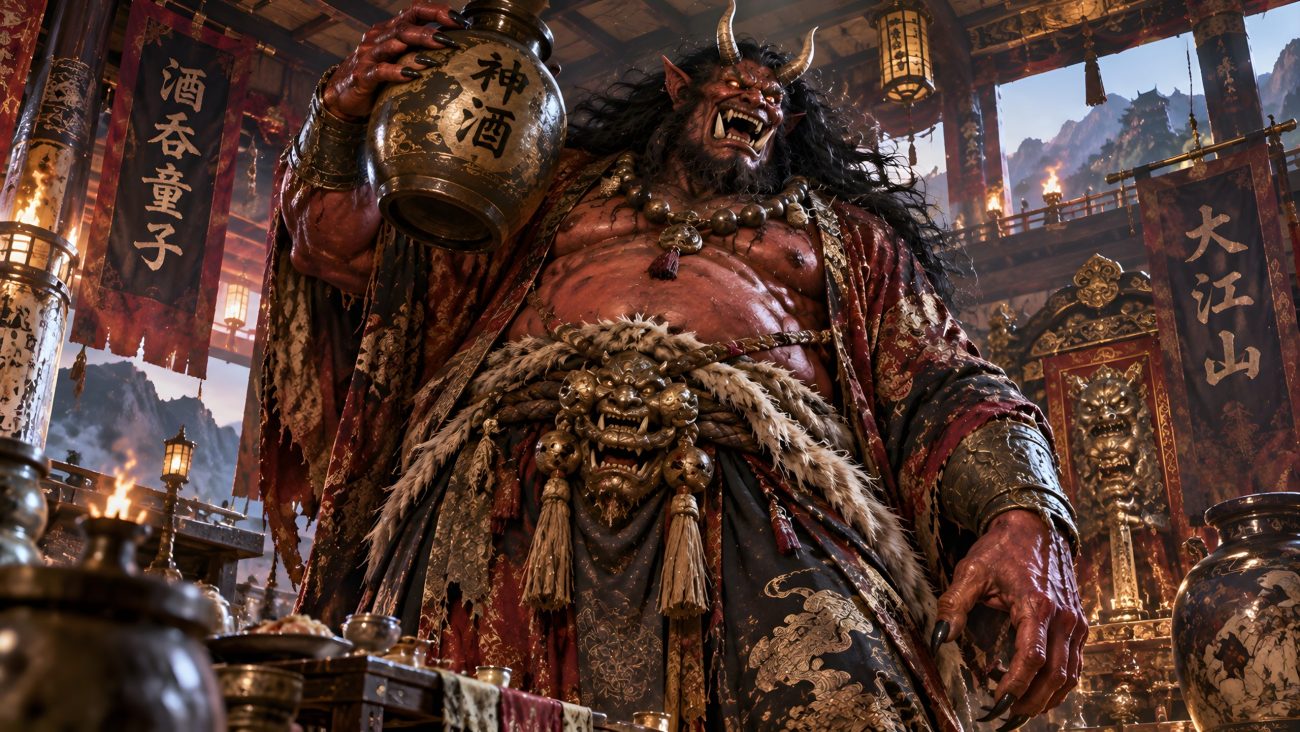
Shuten-dōji was a powerful demon king who lived on Mount Ōe near Kyoto during the reign of Emperor Ichijō. He appeared at first as a young boy, but his true form was that of a gigantic demon. He was particularly fond of sake and surrounded himself with demons and women whom he had kidnapped from Kyoto.

During the Shōryaku era, people of all social classes and both sexes began disappearing throughout and around the capital. When the court consulted the onmyōji Abe no Seimei, he determined that demons living on Mount Ōe were responsible.

The court first selected samurai to defeat the demons, but they declined the task. The order was therefore given to Minamoto no Yorimitsu, governor of Settsu Province, and Fujiwara no Yasumasa, governor of Tango Province. They prayed at shrines including Hachiman and Sumiyoshi for success before beginning their expedition.

Yorimitsu and Yasumasa were joined by four warriors: Watanabe no Tsuna, Sakata no Kintoki, Usui Sadamitsu, and Urabe no Suetake. Together they traveled toward Mount Ōe.

In the mountains they encountered four unfamiliar old men, who were actually incarnations of Hachiman and other gods. The gods advised the warriors to hide their armor and disguise themselves as mountain ascetics. They also gave them a sacred sake called Divine Transformation Demon Poison Sake.

Further into the mountains, the warriors encountered an old woman washing bloodstained clothing beside a stream. She explained that demons had kidnapped her more than two hundred years earlier. Although she had escaped being eaten, they had forced her to serve them as a laundress ever since. She described the mountains and showed the warriors where the demons’ castle was located.

She also described Shuten-dōji as a demon king who appeared in the form of a child, loved sake, and surrounded himself with women from Kyoto whom he had kidnapped.

Guided by the old woman, Yorimitsu and his companions reached the demon’s castle. Disguised as mountain ascetics, they claimed to be pilgrims and succeeded in gaining Shuten-dōji’s trust.

A great banquet was held. Shuten-dōji refused the sake offered by the disguised warriors, but eagerly drank the special sake given to them by the old man. His demon followers also drank it. As the feast continued, Shuten-dōji told the warriors about his life while his demonic followers entertained the gathering with dengaku and other performances.

While the banquet continued, Yorimitsu and his companions secretly explored the castle. They discovered a prison where the young lord of Mido Nyūdō and other kidnapped people were being held. They also found a terrible pile of corpses, revealing the fate of many of the demon’s victims.

Eventually the poisoned sake took effect. Shuten-dōji returned to his chambers, where beautiful women surrounded him. He revealed his enormous demonic form and fell asleep, weakened by the poison.

When the demons were asleep, Yorimitsu and his warriors launched their attack. They pinned down Shuten-dōji’s enormous body and cut off his head. Even after being severed, the demon’s head remained alive. It flew through the air screaming and attached itself to Yorimitsu’s helmet, refusing to release him.

Tsuna and Kintoki gouged out the demon’s eyes, and Shuten-dōji finally died.

After defeating the demon king, the warriors cremated his body and returned triumphantly to the capital, carrying his head in a palanquin. The head was presented to the regent and chancellor before being placed in the treasure house of Byōdō-in Temple.

Yorimitsu and Yasumasa were rewarded for their victory and appointed Great Generals of the Eastern and Western Barbarians respectively.

In other versions of the legend, Shuten-dōji’s dwelling is placed on Mount Ibuki in Ōmi Province. Other accounts also name powerful demon followers such as Ibaraki-dōji, Kumadōji, and Hoshikuma-dōji, as well as the Four Heavenly Kings who appear at Rashōmon.


Sources

Takahashi, Toshihiro. “酒呑童子 [しゅてんどうじ] (Shuten-dōji).” 新版TYZ 妖怪図鑑 (New TYZ Yokai Encyclopedia). August 3, 2013. https://tyz-yokai.blog.jp/archives/1010654411.html


Namahage

Tradition: Japanese mythology
Alternative Names: Namahage, Amahage, Amamehagi, Namomihagi, Appossha
Category: Demon


The Myth

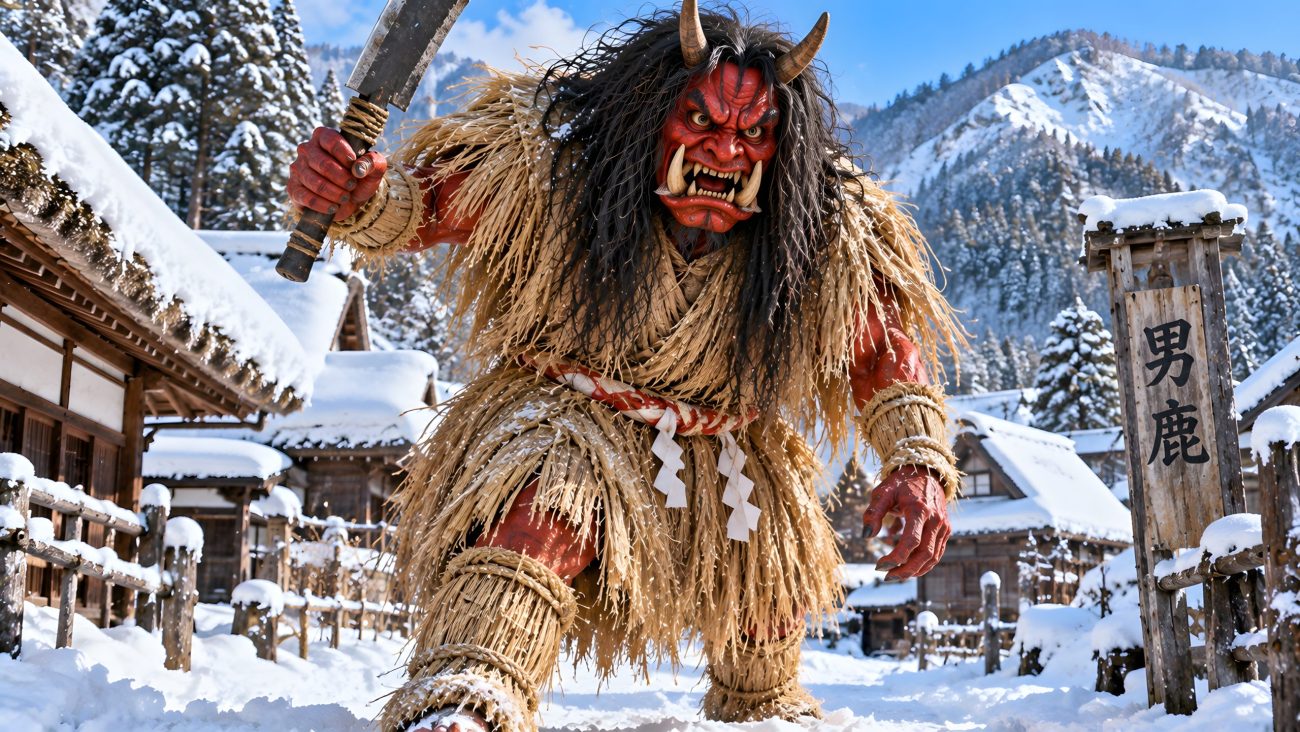
Namahage are frightening, demon-like yōkai who live in the mountains along the northern coast of the Sea of Japan. They resemble oni, with bright red or blue skin, wild hair, large eyes, enormous mouths filled with sharp teeth, and often horns growing from their foreheads. They wear straw leggings and raincoats and carry large blades.

Once a year, during koshōgatsu, the first full moon of the New Year, the Namahage descend from the mountains and visit villages. They go from house to house brandishing their knives and demanding to know whether there are any badly behaved children. They particularly enjoy frightening small children and newly married women.

Despite their terrifying appearance and behavior, Namahage are not purely evil. They descend from the mountains as messengers of the gods, sent to warn and chastise people who have become lazy or wicked. Their frightening visits are therefore intended to encourage villagers to behave properly.

The name Namahage comes from one of the questions they traditionally ask: “Have your blisters peeled yet?” During the cold winter, people who spent too much time sitting close to the fireplace could develop heat blisters. Namomi was a regional term for these blisters, while hagu means “to peel.” The two words eventually combined to form Namahage.

Similar supernatural figures are known under different names in neighboring regions. In Yamagata Prefecture they are called Amahage, in Ishikawa Prefecture Amamehagi, and in Fukui Prefecture Appossha.


Sources

“Namahage.” Yokai.com: The Japanese Yokai Encyclopedia. Accessed September 9, 2026. https://yokai.com/namahage/


Kehno

Tradition: Finnish Mythology
Alternative Names: Kehno
Category: Demon


The Myth

Kehno is an evil spirit in Finnish and Karelian folklore and a mythical character appearing in epic songs. He is described as a kind of analogue to the Slavic devil.

No specific physical appearance, powers, or individual legends concerning Kehno are given in the source.


Sources

“Кехно (Kehno).” New Bestiary (Bestiary.us). Accessed September 9, 2026. https://www.bestiary.us/kehno


Daolao

Tradition: Chinese mythology
Alternative Names: Daolao demons
Category: Demon


The Myth

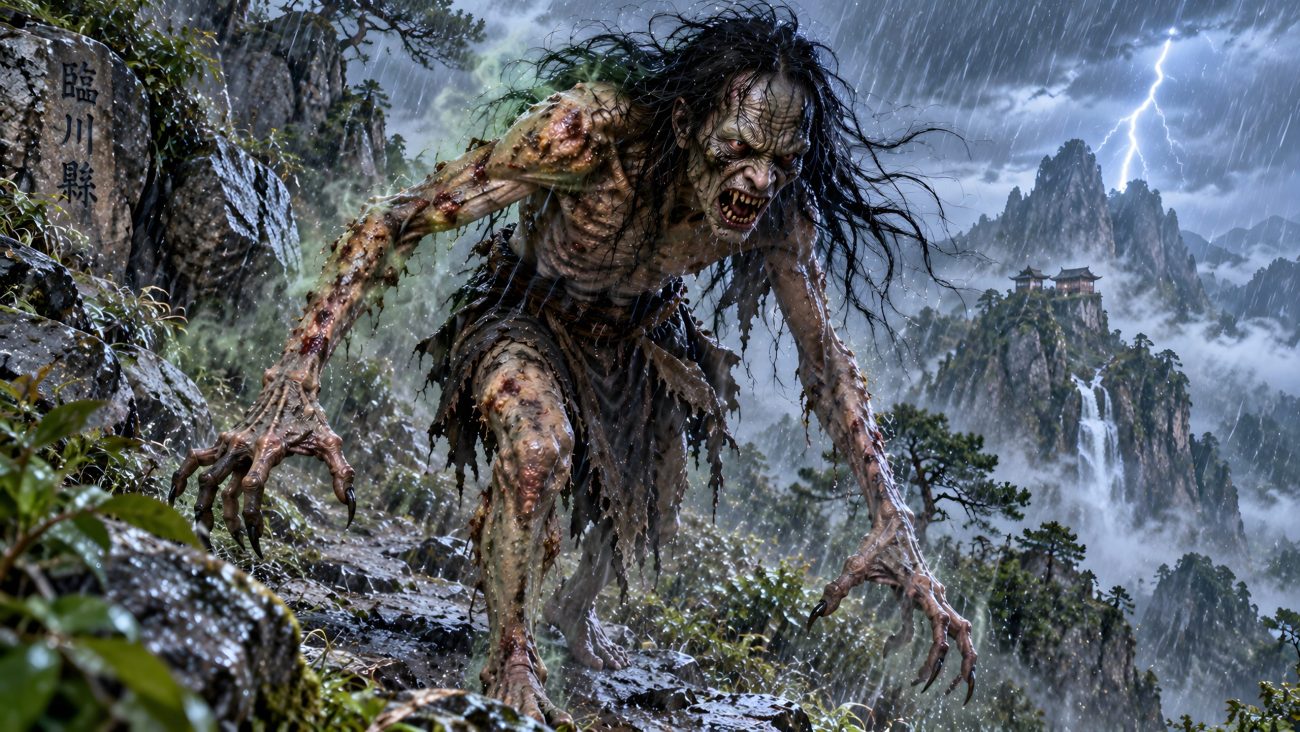
Daolao are malicious creatures that inhabit the mountains of Linchuan County in Jiangxi Province. They appear most often during storms and heavy rain, when they produce whistling sounds and can fire arrows at people. Anyone struck by one of these arrows is immediately covered in sores caused by a powerful poison.

Daolao are divided into males and females. The males are active, but their activity lasts for no more than half a day. The females are comparatively sluggish, and their sluggishness lasts much longer.

People who come into contact with Daolao are usually saved, but those who are rescued only slightly and not completely may die.

Daolao are described as demons whose supernatural nature can bring both trouble and happiness to the world. In the account of Gan Bao, they are presented as examples of the mysterious creatures that exist through the forces of Yin and Yang.

Gan Bao further explains that Heaven and Earth, demons and spirits, were originally born identical to humans. When the elements separated, their essences became different, and differences in the lands produced differences in their forms and natures. The existence of strange creatures such as the Daolao is therefore connected to the primordial forces of Yin and Yang.


Sources

“Даолао (Daolao).” New Bestiary (Bestiary.us). Accessed September 9, 2026. https://www.bestiary.us/Daolao


Oni Musume

Tradition: Japanese mythology
Alternative Names: Oni Musume, Demon Girl
Category: Demon


The Myth

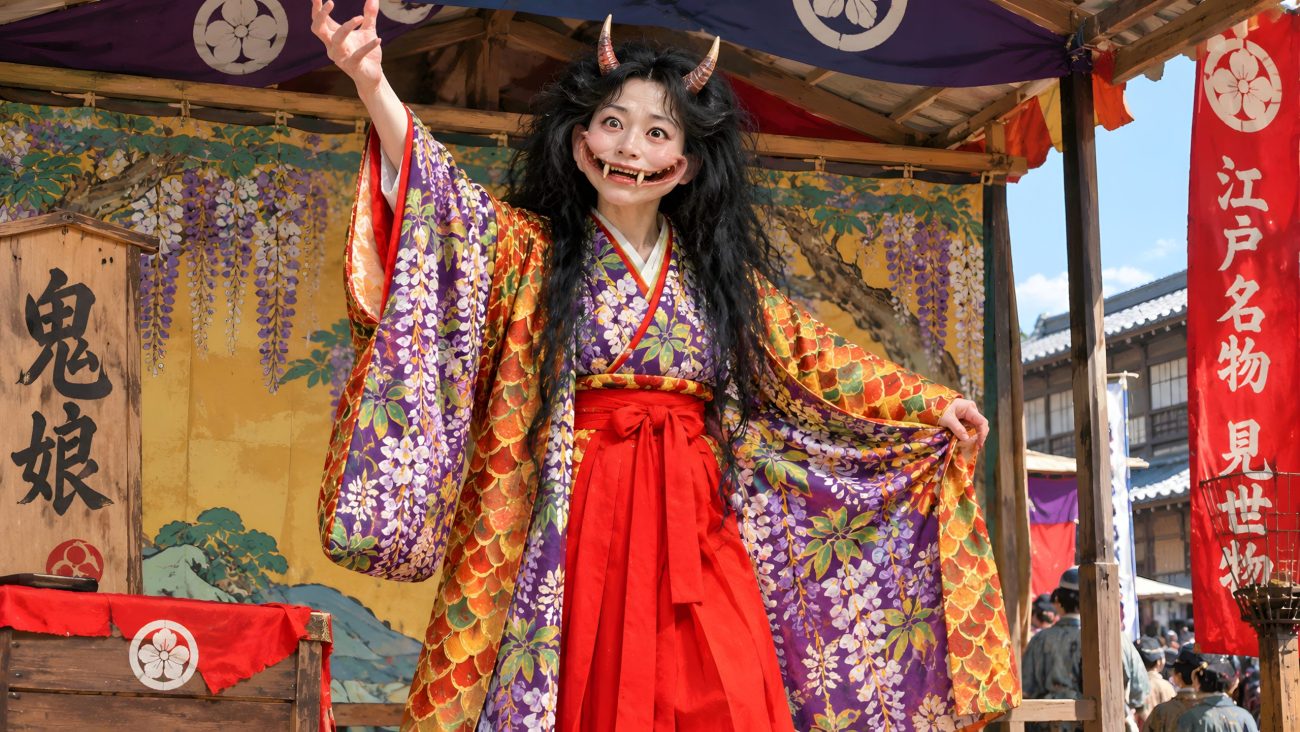
Oni Musume was a woman with a frightening appearance, characterized by horn-like protrusions known as velvet horns growing from her head. She was also said to have had a mouth split to the base of her ears and two fangs.

According to the sideshow’s opening monologue, the woman was named Omatsu, the daughter of Tajiemon, a farmer from Tasae Village at the foot of Mount Daisen in Hōki Province. She had possessed her unusual features from birth. Because she bit the midwife, her fangs were removed and her mouth was sewn shut.

During the performance, Omatsu appeared wearing a furisode kimono with a wisteria pattern, scarlet hakama, and a scale-patterned uchikake. Her clothing was gradually removed as part of the act. She then opened her mouth, stood up, and revealed her frightening face and unusual features to the audience.

The Oni Musume was displayed as a sideshow attraction in Nishiryōgoku Hirokoji during the Zenkoji Amida Buddha exhibition of 1778 at Ekōin Temple in Edo. The performance itself was relatively simple and apparently consisted mainly of revealing her strange appearance to spectators.

The attraction became extremely popular, and promotional yellow-covered books known as kiwamono were produced about her. Imitations of the Oni Musume also appeared across the Ryōgoku area. One imitation had a face made from tanned leather, with toad-like eyes, soapstone fangs, and calf horns. Because this artificial demon girl resembled the demons shown in illustrations, she reportedly became even more popular than the supposed original.

In kibyōshi literature, the Oni Musume was transformed into a more fantastical character. She could be portrayed as a beautiful girl or as a demon brought from Hell, with writers adding their own embellishments to her story. Even after the sideshow craze faded, the character was occasionally revived, and later works also parodied her through characters such as a “demon son” or a “human girl.”


Sources

Takahashi, Toshihiro. “鬼娘 [おにむすめ] (Oni Musume).” 新版TYZ 妖怪図鑑 (New TYZ Yokai Encyclopedia). April 7, 2012. https://tyz-yokai.blog.jp/archives/1010654253.html


Kurozuka

Tradition: Japanese mythology
Alternative Names: Kurozuka, Demon of Adachigahara, Onibaba (鬼婆)
Category: Demon


The Myth

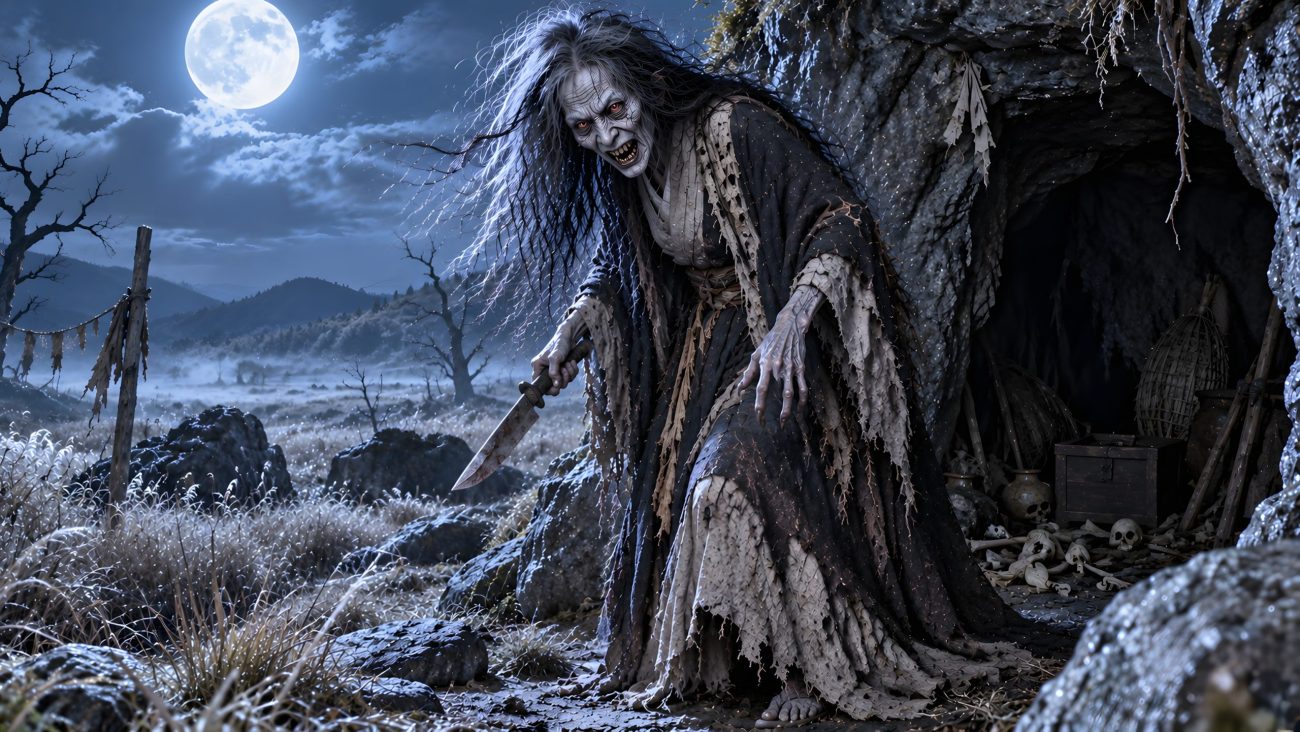
Kurozuka is a demonic woman who haunts the moors of Adachigahara. She is also known as the Demon of Adachigahara or Onibaba, the demon hag. Her original human form was that of a nanny, but after committing a terrible murder and discovering the identity of her victim, she lost her sanity and was transformed into a yokai.

Long ago, a wealthy noble couple had a daughter who was extremely sickly. Even though she was five years old, she had never spoken a word. After consulting priests and doctors, the couple finally met a doctor who claimed that the only cure was the fresh liver of an unborn fetus.

The couple ordered their daughter’s nanny to obtain the liver. Expecting the search to take a long time, the nanny prepared for a journey. She gave the girl a protective charm and promised that she would not return until she had obtained the liver.

The nanny traveled for days, then months, and eventually years, but could not find anyone willing to sacrifice their unborn child. Her search eventually brought her to the moors of Adachigahara in Fukushima. Desperate, she decided that if no one would give her a liver, she would have to take one herself. She made her home in a cave beside the road and waited for a pregnant traveler to pass.

Many years later, a lone pregnant woman finally appeared. The nanny sprang from her cave and killed her with a knife. She cut open the woman’s belly, killed the unborn child, and took its liver.

Only afterward did she look closely at her victim and recognize the protective charm around the woman’s neck. It was the very same charm she had given to the noble couple’s daughter many years earlier. The pregnant woman was the girl she had left behind.

The realization of what she had done drove the nanny insane, and she transformed into a yokai. She became a powerful demon woman capable of using supernatural abilities to lure travelers into her shelter. She would invite them to spend the night and then murder them while they slept. For many years she remained on the moors of Adachigahara, killing lone travelers who passed her cave and eating their remains.

In the Noh version of the story, Kurozuka is eventually visited by traveling Buddhist priests. She intends to kill them, but while she is away gathering firewood, the priests discover a room filled with corpses and human bones. They realize that the woman is the Demon of Adachigahara.

Kurozuka returns and pursues the priests, but they use Buddhist prayers to hold her back and drive the evil spirit from her. Once the demon is expelled from her body, she returns to the form of an old woman and dies.

The monks bury her remains and construct a grave among the black mounds where she had haunted and murdered travelers.


Sources

“Kurozuka.” Yokai.com: The Japanese Yokai Encyclopedia. Accessed September 9, 2026. https://yokai.com/kurozuka/