Tradition: Japanese mythology
Alternative Names: 鬼, おに, Ogre, Demon
Category: Demon
The Myth
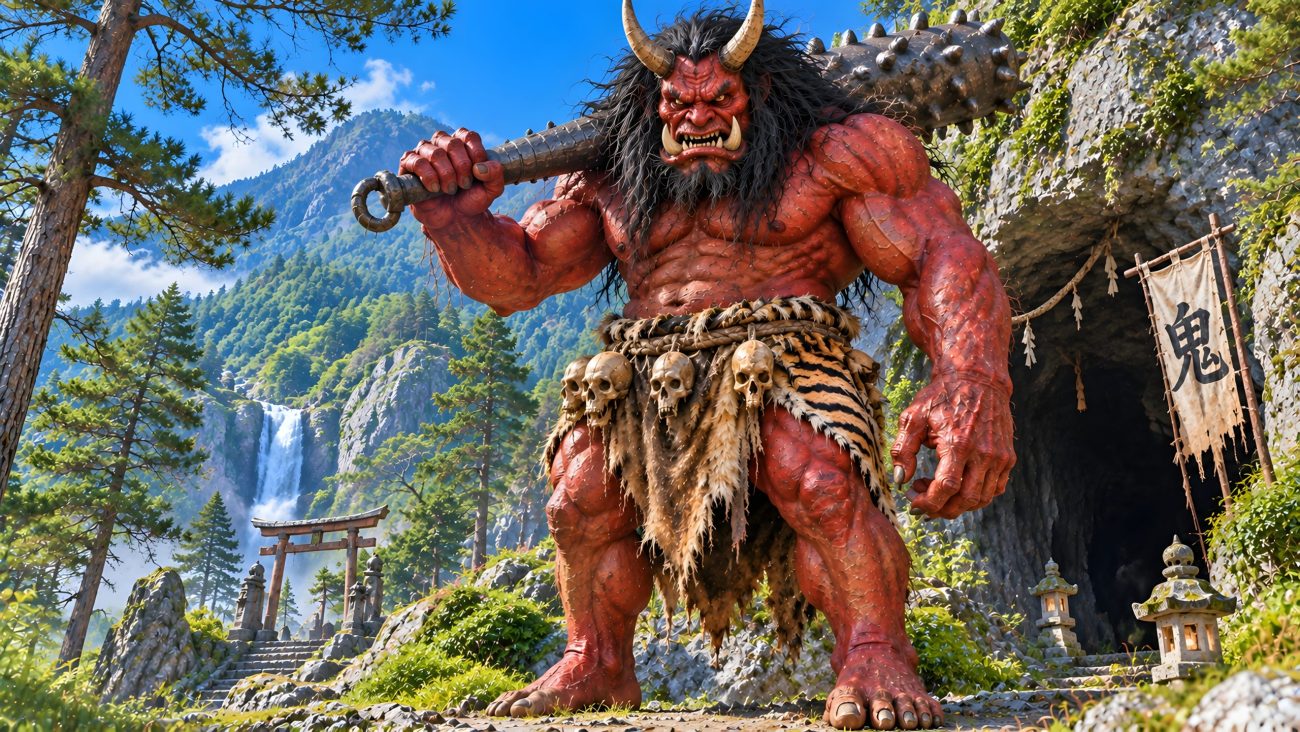
Oni are large, frightening demons, standing taller than the tallest human and sometimes even taller than trees. They are most commonly depicted with red or blue skin, wild hair, two or more horns, and fang-like tusks. Other oni may have different colors and varying numbers of horns, eyes, fingers, or toes. They wear loincloths made from the pelts of great beasts. All oni possess tremendous physical strength and endurance, and many are powerful sorcerers.
Oni are ferocious beings associated with disaster, disease, and the punishment of the damned. They inhabit Hell, remote mountains, caves, islands, and abandoned fortresses. They are omnivorous and are particularly associated with eating livestock and humans, as well as drinking alcohol.
Oni are said to be born when truly wicked humans die and descend into one of the many Buddhist hells. There they are transformed into oni and become brutal servants of Great Lord Enma, the ruler of Hell. Armed with enormous iron clubs, they torment and destroy humans for their own enjoyment. Their duties include inflicting terrible punishments upon the damned, such as peeling away their skin, crushing their bones, and subjecting them to other horrifying tortures.
The victims of these punishments are wicked sinners who are condemned to Hell but were not wicked enough to be reborn as oni themselves. Hell is therefore filled with oni, who also form the armies of the great generals of the underworld.
On rare occasions, a human can become so completely wicked that his soul is considered beyond redemption and he transforms into an oni while still alive. Such an oni remains in the human world and terrorizes the living. These earthly oni are the ones most frequently encountered in legends and are considered especially dangerous to humans.
Japanese mythology contains countless stories of encounters between oni and humans, including lords, ladies, warriors, and rogues. Although individual stories differ greatly, oni generally appear as villains and enemies of mankind.
Originally, the word oni had a much broader meaning. Spirits, ghosts, monsters, and other supernatural beings could all be called oni. The name derives from a word meaning “hidden” or “concealed” and was written using the Chinese character for “ghost.” In early Japan, before supernatural beings had been more clearly categorized, oni could refer to almost any supernatural creature, including ghosts, obscure gods, large or frightening yōkai, and even exceptionally vicious humans. Over time, the meanings of the various types of supernatural beings became more specific. Female demons are generally called kijo rather than oni.
Sources
“oni.” Yokai.com: The Japanese Yokai Encyclopedia. Accessed September 9, 2026. https://yokai.com/oni/