Zobutsu Daijoou

Tradition / Region: Japanese religious folklore
Alternate Names: Kuriekisu, Great Queen of Creation
Category: Demon


The Myth

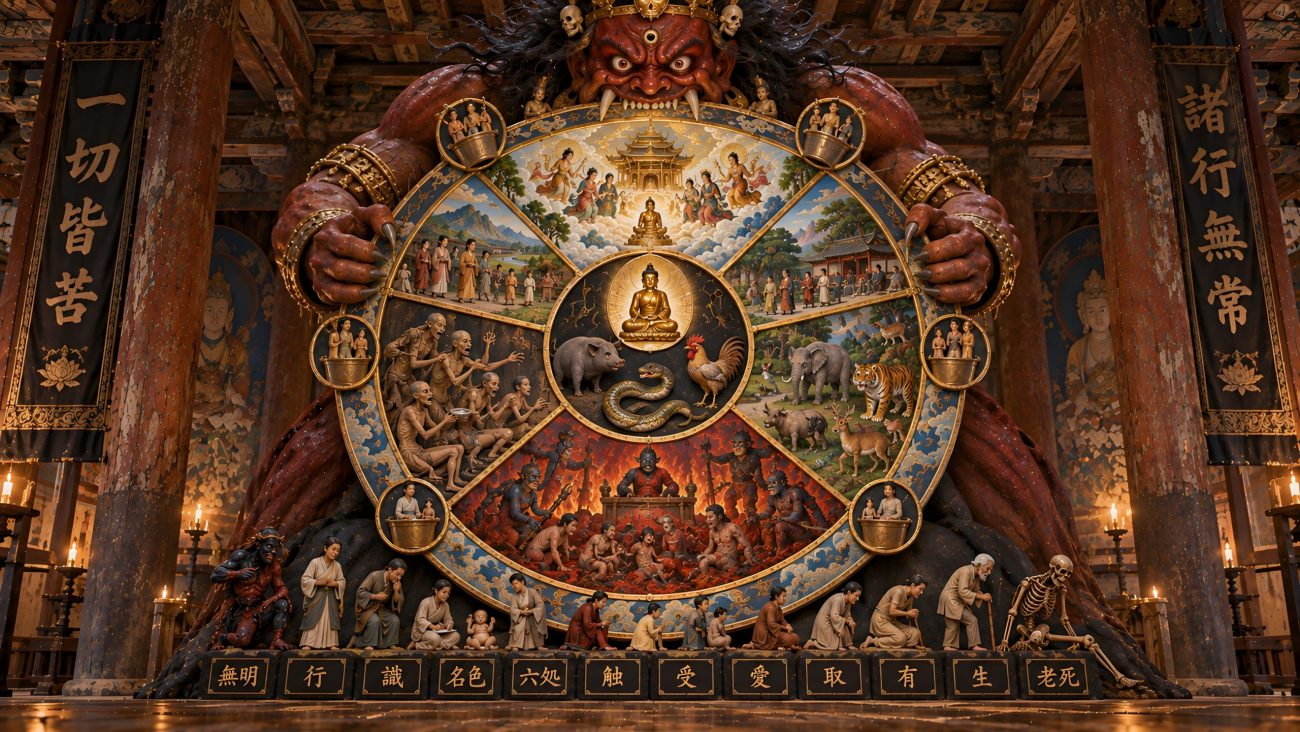
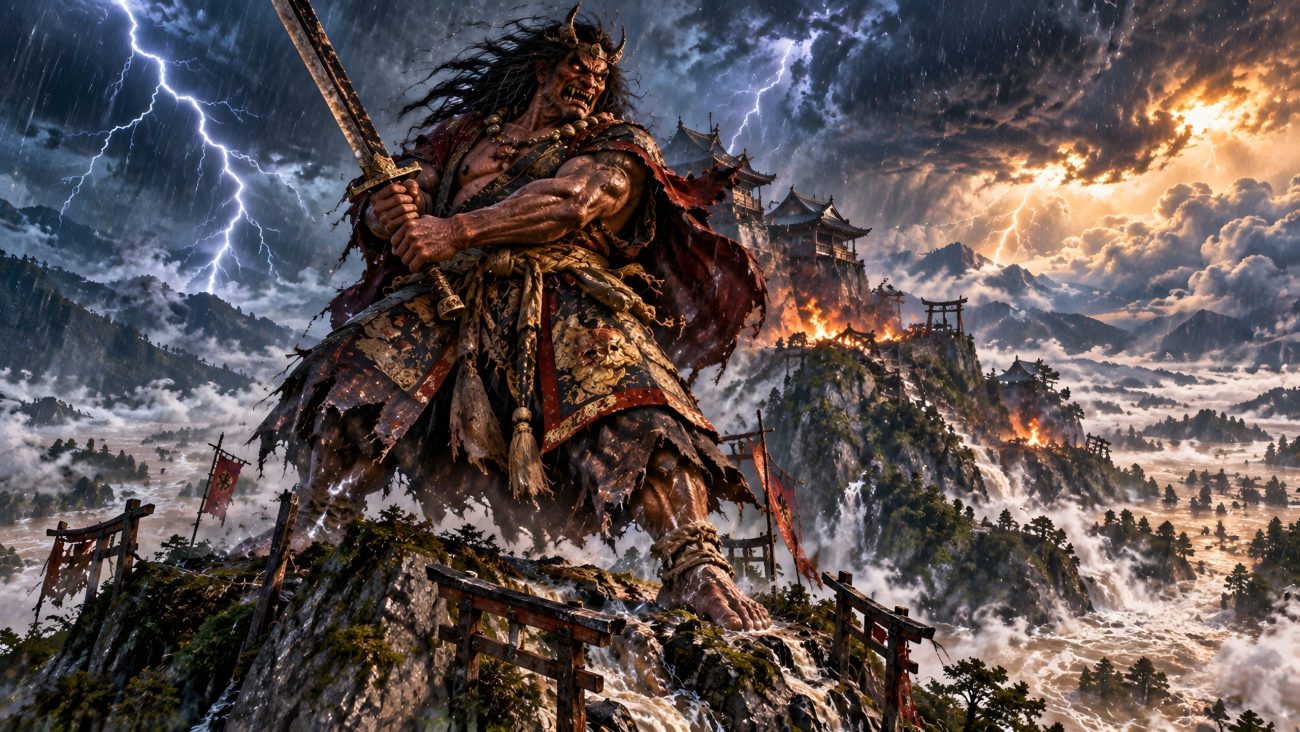
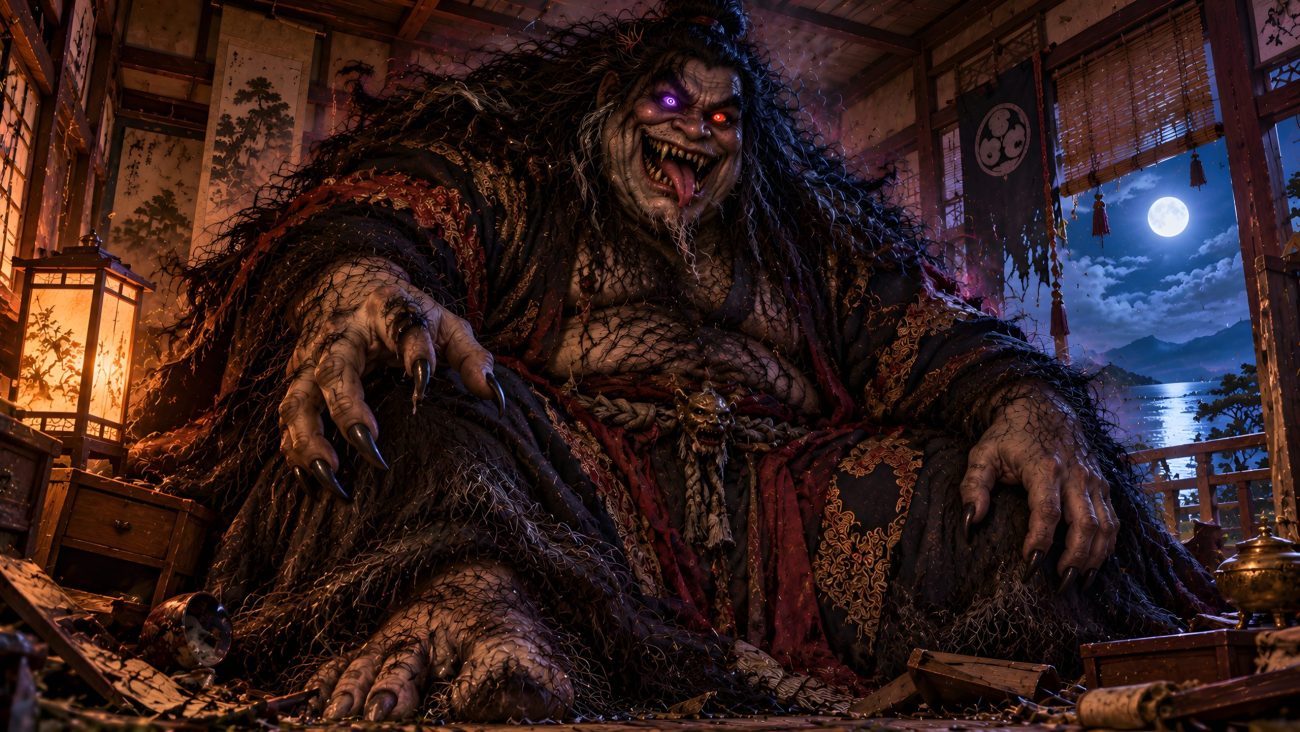
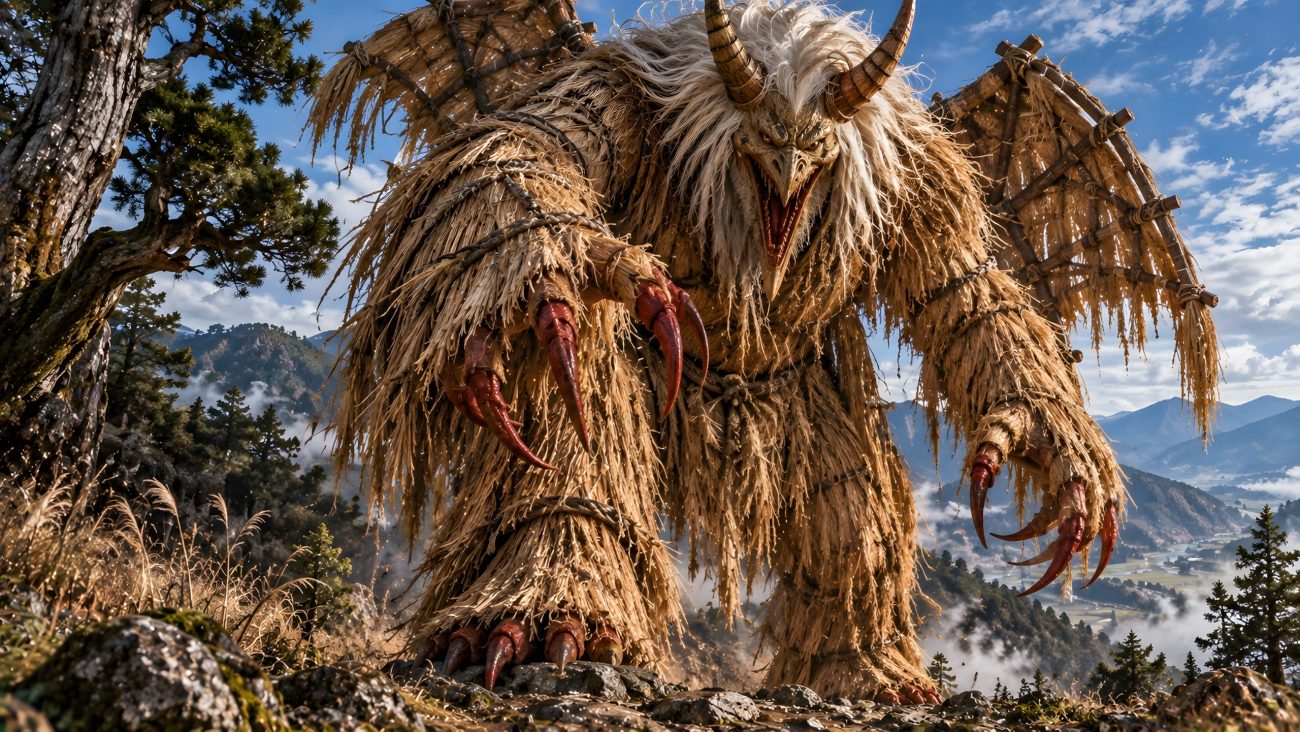
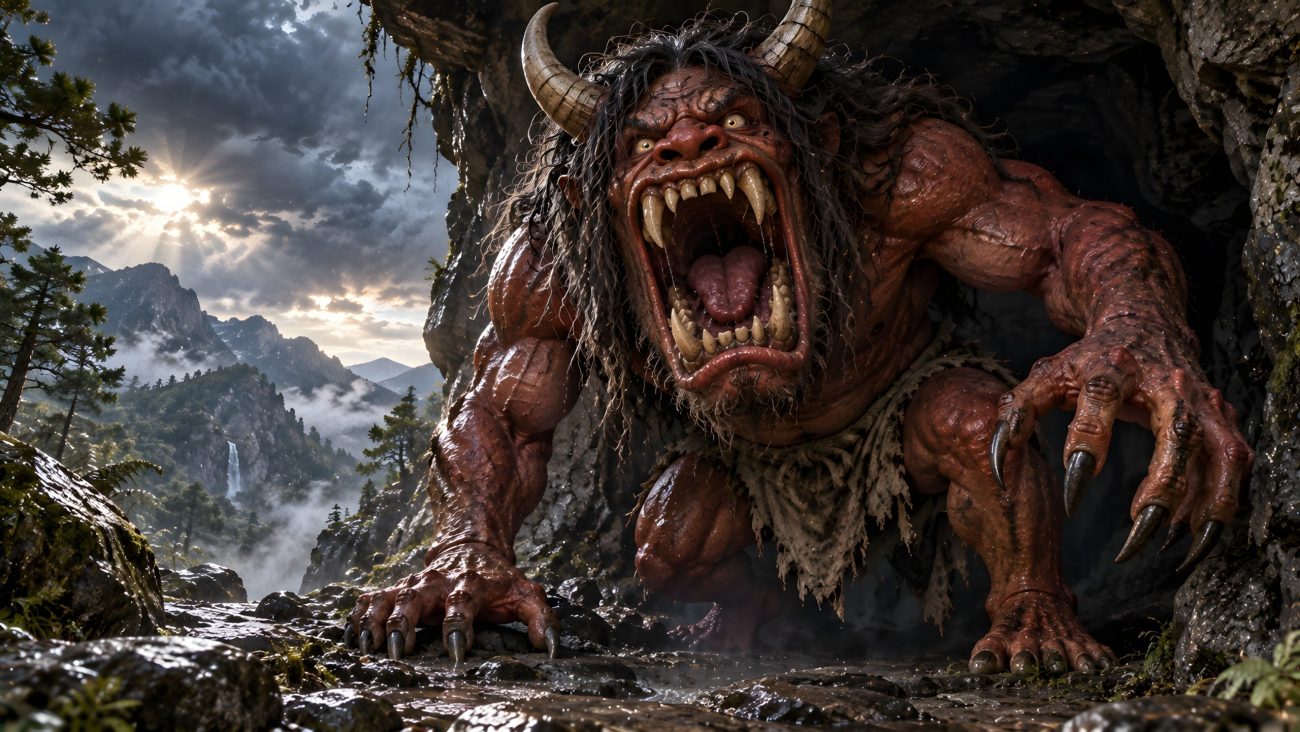
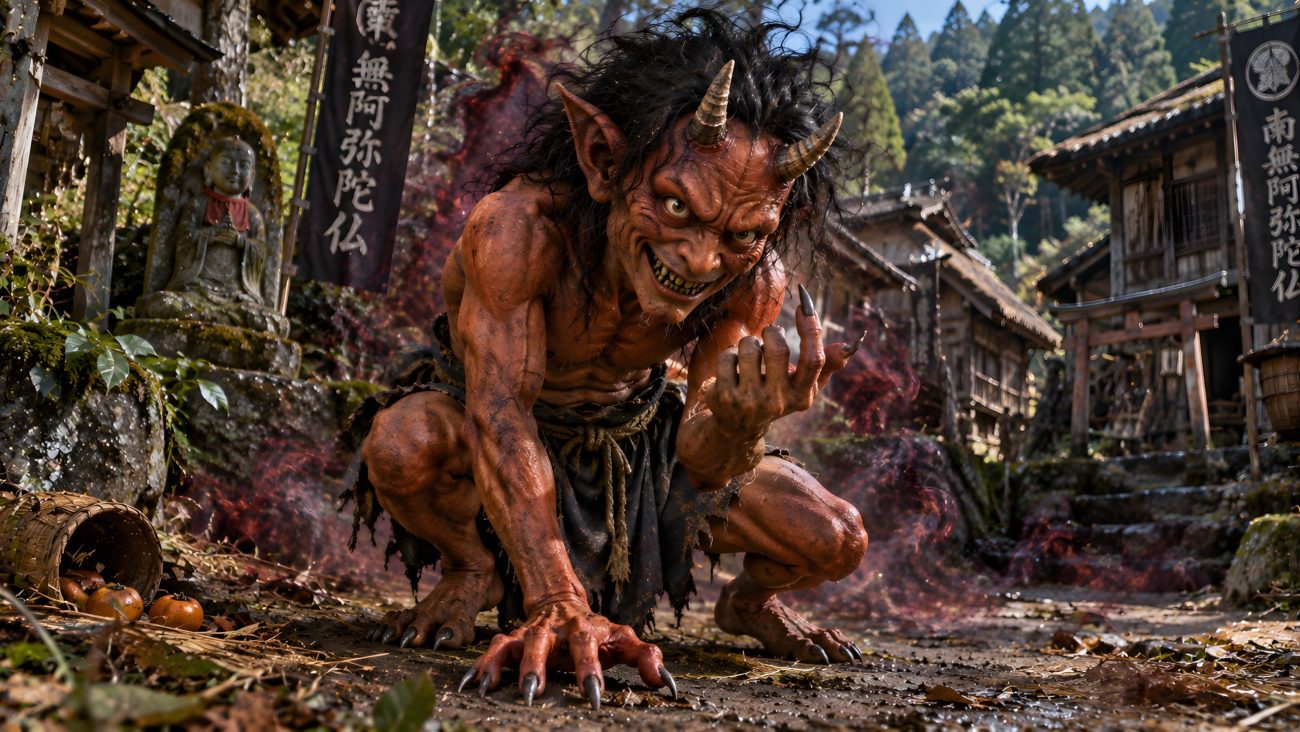
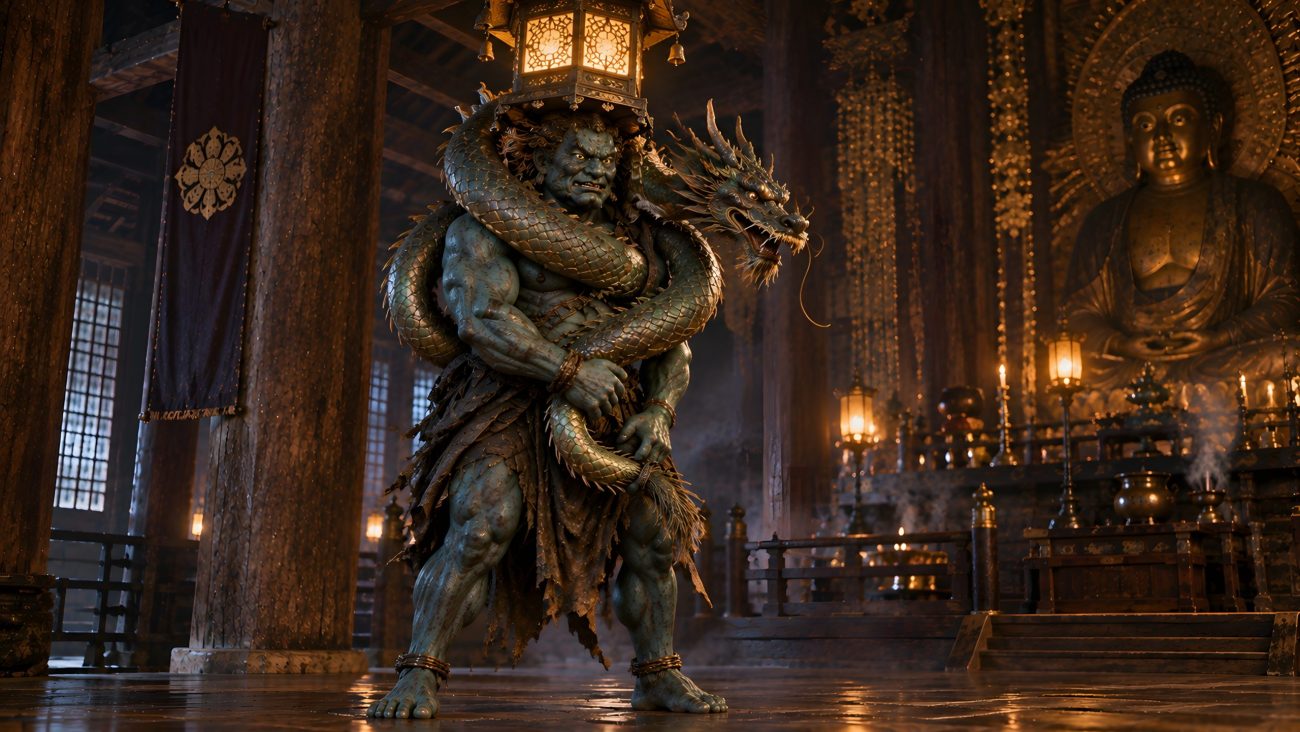
Zobutsu Daijoou is the highest-ranking of the twelve great demon kings described in a religious account of the demon realm. She is said to possess power one hundred times greater than that of an average god and is considered so terrifying that even powerful spiritual masters warned against approaching her. She has a white face, thin black eyebrows, yellow lips, and stands about three feet tall. Her hair rises two feet upward, bends backward, and divides into three sections that fall to her waist. She was said to have come into being when the accumulated shadows at the creation of the world condensed into evil energy.

Among the hundreds of demon leaders said to inhabit the demon realm, twelve hold the highest rank, and Zobutsu Daijoou stands above them all. Each of these demon kings rules a separate domain with their own followers and may bring disaster upon the human world. Alongside her in special distinction is the Queen of the Bottomless Sea, and together they are set apart from the rest.

On the night of July 19, 1880, a procession of these demon kings was said to pass across the sky. Their names were identified as they appeared, with Zobutsu Daijoou recognized as the foremost among them.


Gallery


Sources

TYZ Yokai Blog. (2018). 祖仏大王 (Zobutsu Daijōō). From https://tyz-yokai.blog.jp/archives/1034642738.html


Interpretive Lenses

Religious Readings
  • Christian Ascetic Deep Dive
Philosophical Readings
  • Nietzschean Deep Dive
Psychological Readings
  • Jungian Deep Dive
Esoteric Deep Dive
  • Hermetic Deep Dive
Political / Social Readings
  • Marxist Deep Dive

Alzen Bridge Devil

Tradition / Region: Romanian Mythology
Alternate Names:
Category: Demon


The Myth

Many years ago, the pastor of Alzen had the habit of visiting the casino in Leschkirch twice each week. At midnight his coachman was sent to fetch him home. This duty troubled the servant greatly, for he had to drive alone across the Altmühl bridge at that lonely and haunted hour.

It was the custom to halt on the far side of the bridge so the horses could rest. Whether the coachman wished it or not, the animals were trained to stop there, and no urging could make them do otherwise.

One cold, bright night, under a clear moon, the coachman drove out as usual. The pastor’s coat lay folded on the back seat for the journey home. When the carriage reached the far side of the bridge, the horses halted of their own accord.

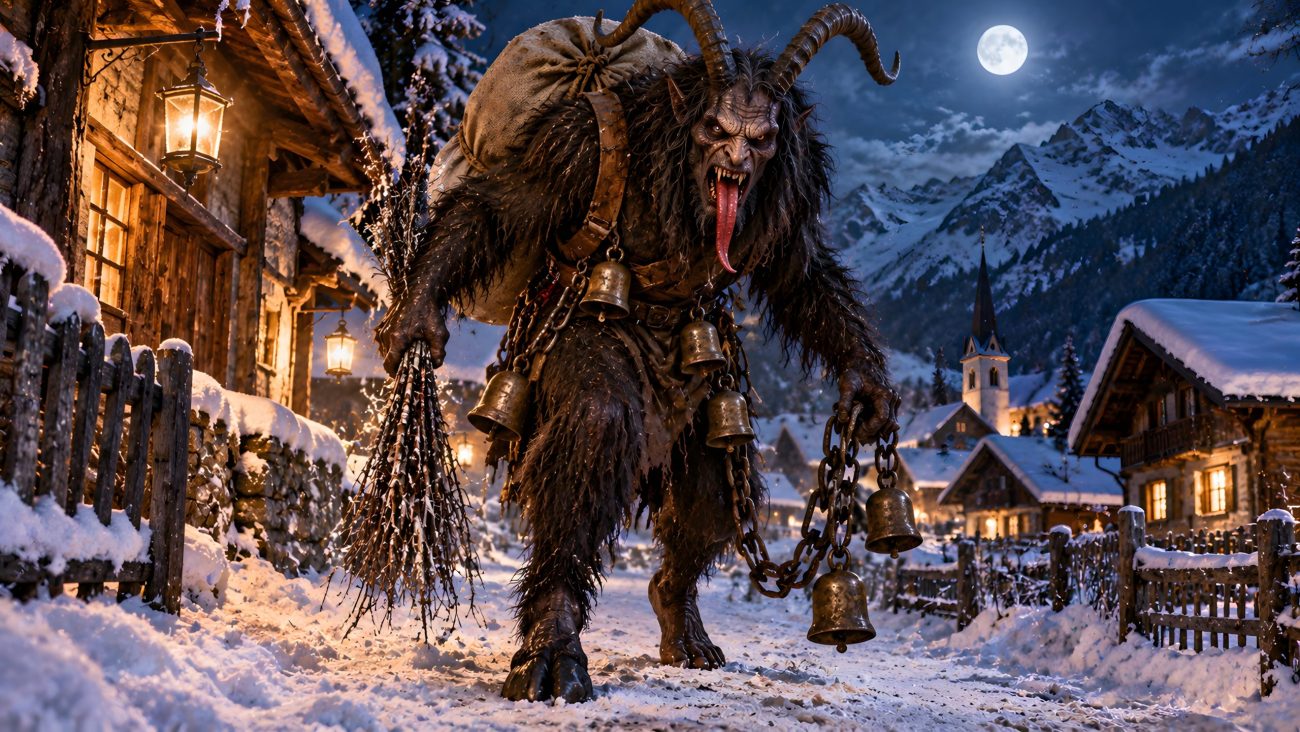
At that moment the coachman saw, in the pale light, a silent figure detach itself from the shadow of the bridge. Hat in hand, it climbed lightly onto the back seat and put on the priest’s coat.

The coachman trembled with fear. He thought he had glimpsed two horns upon the stranger’s head. His hands shook so violently he could scarcely hold the reins, and he dared not turn around again. The horses, as if driven by some unseen force, sped onward at a furious pace until they reached the appointed place.

Only then did the coachman gather the courage to look back. The seat was empty. The coat lay exactly where he had left it, untouched, and there was no sign of the strange passenger.

In the days that followed, people in every tavern spoke of the event. It was said that the pastor’s servant had unwittingly driven the Devil himself, and that he nearly left his master’s service rather than face such a night again.


Sources

sagen.at contributors. (n.d.). Alzener Pfarrersknecht als des Teufels Fuhrmann. In sagen.at, from https://www.sagen.at/texte/sagen/rumaenien/siebenbuergen/alzenerpfarrersknecht.html


Kidoku

Tradition / Region: Japanese Mythology
Alternate Names: Oni-doku
Category: Mountain dweller, Demon


The Myth

On the thirteenth day of the eighth month in the second year of Kan’en (1749), a strange and terrifying event took place in Soma County of Hitachi Province.

Atop Mount Masakado stood an ancient pine tree. It was said to have grown there since the days of Taira no Masakado, its roots gripping the mountain for generations. But that year, long and relentless rains soaked the land. The mountain soil eroded, and floodwaters rushed down its slopes, exposing the roots of the old pine. Then a fierce wind arose and toppled the great tree from its base.

When the pine fell, something was revealed beneath its roots.

Buried in the earth lay a monstrous being—what people called a “Kidoku,” a Demon Slayer, though no one knew its true nature. As the rain beat down upon it, the creature awoke and began to scream.

Its cries echoed across the castle town below. The sound was so dreadful that men, women, and children alike were seized with terror. Some collapsed where they stood. Others fled indoors, covering their ears. The wailing did not cease.

The castle’s commander gathered a rifle squad and marched to the mountain. The creature, fully exposed now, writhed and shrieked beneath the fallen pine. It was immense—said to be the size of eight tatami mats laid side by side.

Those who saw it described a form like a monstrous ogre mixed with a crab. Its eyes were round and bowl-like, shining with an eerie light. The top of its head was sunken inward. Crimson hair, stiff and sharp like palm leaves, bristled from its scalp, and beneath its chin grew spiky strands like thorns. Its teeth were bared in rage.

The riflemen fired again and again. After several shots, the monster finally fell silent.

Thus the Kidoku was slain, and the mountain returned to stillness. But people long remembered the day when the ancient pine fell, and a screaming demon rose from the earth beneath its roots.


Gallery


Sources

tyz-yokai.blog.jp contributors. (n.d.). Kidoku. In tyz-yokai.blog.jp, from https://tyz-yokai.blog.jp/archives/1077741605.html


Interpretive Lenses

Religious Readings
  • Christian Ascetic Deep Dive
Philosophical Readings
  • Nietzschean Deep Dive
Psychological Readings
  • Jungian Deep Dive
Esoteric Deep Dive
  • Hermetic Deep Dive
Political / Social Readings
  • Marxist Deep Dive
Other
  • How to Invite The Kidoku

Mouryō

Tradition / Region: Chinese mythology
Alternate Names: Hōryō, Hōliang, Hōxiang, Hongliang, Mizuha
Category: Mountain dweller, Zombie, Demon


The Myth

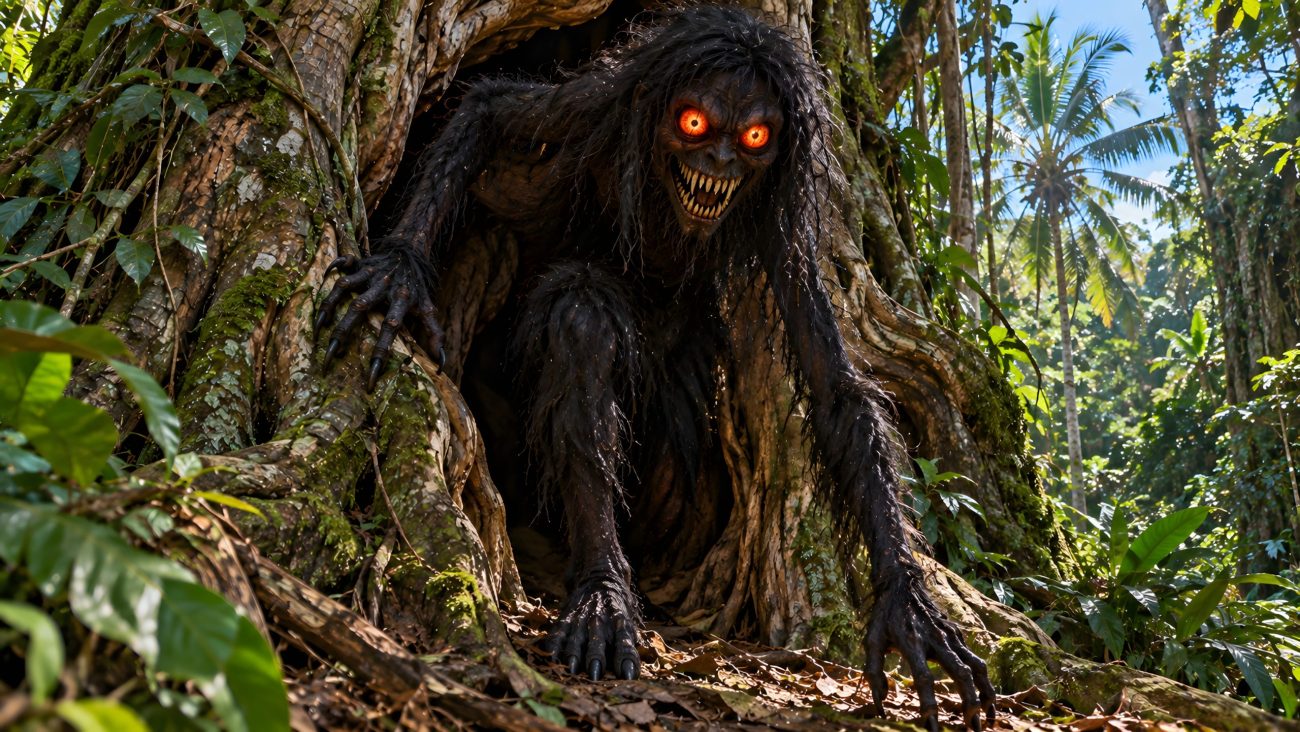
In the deep places of the world—where mountains rise thick with trees and rivers slip silently through stone—there dwell beings known as the mouryō. They are not born as humans are, but arise from the spirit of the land itself: from forests, streams, roots, and shadows beneath the earth.

Ancient texts say that the mouryō appear like small children, no taller than three-year-olds, yet their forms are unsettling. Their skin is dark and reddish, their eyes glow red, their ears are long, and their hair is strangely beautiful. Though they resemble children, they are not innocent. They linger near graves, riverbanks, and old pine trees, places where the boundary between life and death is thin.

At night, the mouryō creep from the roots of trees or from wet earth. They dig into burial grounds and feast upon the livers of corpses, sustaining themselves on the remains of the dead. Because of this, people once feared them greatly, believing that graves left unguarded would invite these beings. Some said that when a corpse vanished, carried away in the night, it was not the work of hellfire or demons from below, but the mouryō dragging the body back into the forest.

In later tales, the mouryō became confused with other corpse-stealing monsters. Some claimed they were the same as the fiery kasha, while others insisted they were water spirits, haunting rivers and marshes. Still others said they were kin to the kappa, born of stagnant waters and rot. No matter the explanation, the fear remained the same: the mouryō were creatures that thrived where decay met neglect.

Travelers avoided old trees at night, and families guarded their dead, for it was said that once a mouryō had tasted a corpse, it would return again and again. Silent, patient, and hungry, the mouryō endured as a reminder that the land itself remembers death—and that some spirits feed upon what humans leave behind.


Gallery


Sources

TYZ-Yokai Blog contributors. (n.d.). 魍魎 (Mouryō). In TYZ-Yokai Blog, from https://tyz-yokai.blog.jp/archives/1072334859.html


Interpretive Lenses

Religious Readings
  • Christian Ascetic Deep Dive
Philosophical Readings
  • Nietzschean Deep Dive
Psychological Readings
  • Jungian Deep Dive
Esoteric Deep Dive
  • Hermetic Deep Dive
Political / Social Readings
  • Marxist Deep Dive
Other
  • How to Invite The Mouryō

Devil Boruta

Tradition / Region: Polish mythology
Alternate Names: Boruta, Błotnik, Borowiec
Category: Demon, Swamp dweller, Shapeshifter


The Myth

In the forests, swamps, and muddy roads of Poland, people long spoke of Devil Boruta, a spirit who delighted in confusing travelers and leading them astray at night. When carts became stuck in the mud or paths vanished in the dark, it was Boruta who was blamed—lurking unseen, laughing as people wandered in circles through marsh and woodland.

Boruta was not always imagined as a horned demon. In older folk belief, he was closer note a wild forest spirit, a remnant of pre-Christian beings who ruled untamed places. After Christianization, this spirit was reshaped into a devil, though he retained his connection to bogs, dams, forests, and muddy crossings. He could appear suddenly as a black dog, slip through reeds as a shadow, or remain unseen while his presence was felt through fear and confusion.

Later stories—especially those popularized in books—portrayed Boruta as a devil dressed like a nobleman, tempting the upper classes with pride, corruption, and excess. Yet among common folk, Boruta was far less refined. He was a błotnik, a swamp devil, called upon when wagons sank into mud or when travelers lost their way. Peasants did not fear him as a tempter of souls so much as a malicious spirit of difficult terrain, a force of nature that punished arrogance and carelessness.

Boruta did not rule hell, nor did he demand worship. He belonged to the borderlands—between forest and field, road and swamp, safety and danger. To meet him was not always fatal, but it was humiliating, exhausting, and frightening. Those who mocked him or wandered carelessly risked being lost until dawn.

In this way, Devil Boruta stands as a shadow of older pagan spirits: no grand lord of evil, but a sly, muddy trickster who reminds humans that the wild places do not belong to them.


Sources

Wikipedia contributors. (n.d.). Devil Boruta. In Wikipedia, The Free Encyclopedia, from https://en.wikipedia.org/wiki/Devil_Boruta


Manchachicoj

Tradition / Region: Argentine Mythology
Alternate Names:
Category: Demon, Gnome


The Myth

Manchachicoj was said to be a small and deformed being, born of an unnatural union between a demon and a terrestrial witch. Though his body was misshapen, he possessed a strange charm: elegant in manner, seductive in speech, and gifted with a romantic soul that did not match his monstrous origins.

He lived in the Salamanca, the legendary place of sorcery and forbidden knowledge, where demons, witches, and spirits gathered beyond the reach of ordinary people. From this shadowed world, Manchachicoj would emerge, drawn again and again toward humanity by an unfulfilled longing.

His fate was tragic. No matter how refined his words or how sincere his devotion, Manchachicoj was doomed to fall in love with young human women who could never truly belong to him. Each love was impossible from the start, divided by nature, destiny, and fear. He could enchant and fascinate, but never remain. His presence carried danger and sorrow, and his romances ended in separation, loss, or despair.

Thus Manchachicoj became a symbol of cursed desire: a being caught between worlds, elegant yet grotesque, condemned to wander in search of a love he could approach but never keep.


Gallery


Sources

Wikipedia contributors. (n.d.). Legendary creatures of the Argentine Northwest region. In Wikipedia, The Free Encyclopedia, from https://en.wikipedia.org/wiki/Legendary_creatures_of_the_Argentine_Northwest_region


Interpretive Lenses

Religious Readings
  • Christian Ascetic Deep Dive
Philosophical Readings
  • Nietzschean Deep Dive
Psychological Readings
  • Jungian Deep Dive
Esoteric Deep Dive
  • Hermetic Deep Dive
Political / Social Readings
  • Marxist Deep Dive
Other
  • How to Invite The Manchachicoj

Mężyk

Tradition / Region: Polish mythology
Alternate Names: Mały mąż, mały człowiek, mały mężczyzna
Category: Demon, Gnome


The Myth

In the old beliefs of the Pomeranian people, Mężyk was a feared male demon who preyed upon the most vulnerable moments of human life. He was especially dangerous to women who had just given birth and to their newborn children, striking during the fragile time of childbirth and early infancy.

Mężyk was described as a small, male figure with a beard so long it reached all the way to the ground. He moved unseen through homes at night, slipping close to cradles. When his moment came, he would seize a child from its crib and hurl it onto the bench near the hearth. If no one intervened in time, he would steal the infant away completely, carrying it down into the underground world from which he came. Some believed the stolen children were never returned, replaced instead with sickly or unnatural beings.

He was considered the male counterpart to dangerous female spirits such as the dziwożony, mamuny, sybiele, and boginki—beings likewise blamed for the disappearance or exchange of infants. Together, these spirits embodied the deep anxieties surrounding childbirth, infant mortality, and unseen forces lurking at the edge of the household.

To protect against Mężyk, families relied on simple but powerful defenses. Iron or steel objects were placed in the cradle—knives, nails, or other metal items—believed to repel the demon and prevent him from approaching the child. Through such measures, people sought to guard newborns from the bearded thief who waited in the shadows, ready to snatch life away before it had fully begun.


Sources

Wikipedia contributors. (n.d.). Mężyk (demon). In Wikipedia, The Free Encyclopedia (Polish), from https://pl.wikipedia.org/wiki/M%C4%99%C5%BCyk_(demon)


Iratxoak

Tradition / Region: Basque mythology
Alternate Names: Iratxo (singular), Galtxagorriak
Category: Demon, Gnome


The Myth

The Iratxoak are small, imp-like beings who live close to human settlements, especially farms and rural households. Though easily overlooked, they are generally benevolent and industrious, favoring people who treat them with respect.

By night, while humans sleep, the iratxoak may come out to help with farm labor—threshing grain, tidying barns, or completing chores that would take people much longer by day. They ask little in return. Simple offerings of food are enough to secure their goodwill. When welcomed in this way, they work silently and efficiently, leaving signs of their help behind by morning.

Among the iratxoak are a well-known group called the Galtxagorriak, whose name means “red pants.” These iratxoak are distinguished by the bright red trousers they wear. Lively and tireless, they are especially fond of work and movement, often completing tasks at astonishing speed through the night.

Though helpful, iratxoak are not to be mocked or ignored. Their aid depends on mutual respect, and without proper offerings or gratitude, they may simply vanish—or refuse to help again. In this way, they embody a quiet moral of Basque folklore: prosperity comes through reciprocity, care, and respect for unseen helpers who share the land.


Gallery


Sources

Wikipedia contributors. (n.d.). Iratxoak. In Wikipedia, The Free Encyclopedia, from https://en.wikipedia.org/wiki/Iratxoak


Interpretive Lenses

Religious Readings
  • Christian Ascetic Deep Dive
Philosophical Readings
  • Nietzschean Deep Dive
Psychological Readings
  • Jungian Deep Dive
Esoteric Deep Dive
  • Hermetic Deep Dive
Political / Social Readings
  • Marxist Deep Dive
Other
  • How to Invite The Iratxoak

Galgenjong

Tradition / Region: Belgian Mythology
Alternate Names: Galgenaas, Duivelsjongen
Category: Gnome, Demon, Familiar


The Myth

In old Flemish tales there is a sinister little being known as the Galgenjong, a creature bound to bargains and blood. In its smallest form it appears as a tiny black beast, no larger than a pea, with a blood-red mouth. At other times it takes on a clearer shape: a gnome-sized figure, as large as a child’s doll, black-skinned, with shining eyes and a red tongue. In this form it hides itself in a small box or a pouch, waiting for its owner’s command.

Whoever possesses a Galgenjong gains unnatural advantages. Their hands move faster than any other worker’s, their strength exceeds human limits, and luck follows them—especially in games of cards. The creature can see what is yet to come and knows where hidden treasures lie, whispering secrets no ordinary person could uncover.

But its gifts are never free. Each day the Galgenjong must be fed a drop of its owner’s blood. Without this offering it grows restless and dangerous. Though it brings fortune to its master, it spreads misfortune to everyone around them. Neighbors fall into bad luck, accidents multiply, and prosperity withers wherever the creature lingers.

To obtain a Galgenjong, one must commit oneself to darkness. Some say it can be gained by fasting for three days in honor of the Devil. Others claim it comes only through joining a secret and wicked brotherhood. Once acquired, the creature is almost impossible to be rid of. It cannot be dismissed or destroyed by its owner’s will alone. Only if someone else steals it away can its bond be broken.

If the Galgenjong remains with its master until death, it claims its final payment. When the owner dies, the creature carries their soul with it, dragging it down to hell as the last fulfillment of the pact.

Thus the Galgenjong is remembered as a source of power and ruin alike: a tiny servant of immense danger, promising success in life while quietly ensuring damnation in the end.


Sources

Abe de Verteller contributors. (n.d.). Van aardmannetje tot zwarte juffer: Een lijst van Nederlandse en Vlaamse elfen en geesten. In Abe de Verteller, from https://abedeverteller.nl/van-aardmannetje-tot-zwarte-juffer-een-lijst-van-nederlandse-en-vlaamse-elfen-en-geesten/


Loviduch

Tradition / Region: Polish Mythology
Alternate Names:
Category: Forest dweller, Demon


The Myth

Loviduch is a forest demon found in the folklore of the Lasowiaks, a subethnic group of the Lesser Poles living on the Tarnobrzeg Plain in southeastern Poland. According to beliefs recorded in the 19th century, the loviduch dwelled in the Sandomierz Forest, where it lay in wait for restless souls wandering far from their proper place.

In appearance, the loviduch was described as strange and unsettling. It resembled a tuberous or onion-shaped body, set upon spiny, five-toed feet. Its limbs were short and thin, ending in long fingers armed with sharp claws. Though small and misshapen, it was considered fearsome because of its purpose rather than its strength.

The loviduch did not prey upon the living. Instead, it hunted ghosts and wandering spirits, capturing those restless souls that lingered in wastelands far from human settlements. Its dwelling was said to be the desolate, empty places, where such spirits were believed to roam. Once it seized a soul, the loviduch tormented it relentlessly, mocking it and making it cry, though it never destroyed it outright.

Despite its cruel treatment of spirits, the loviduch posed no danger to living people. Humans were not its concern, and it did not attack or harm them. Its role was limited entirely to the supernatural realm, acting as a tormentor of the dead who failed to find rest.

Over time, the name loviduch came to be applied jokingly or disparagingly to certain medical workers, though this usage bore no resemblance to the original being. Unlike these human namesakes, the true loviduch of folklore remained a creature concerned only with ghosts and spirits, dangerous solely to the dead and invisible to the living.


Sources

Bestiary.us contributors. (n.d.). lovidukh. In Bestiary.us, from https://www.bestiary.us/lovidukh