Zhelmaya

Tradition / Region: Kazakhstan Mythology
Alternative names: Zhelmaya
Category: Camel, Bird


The Myth

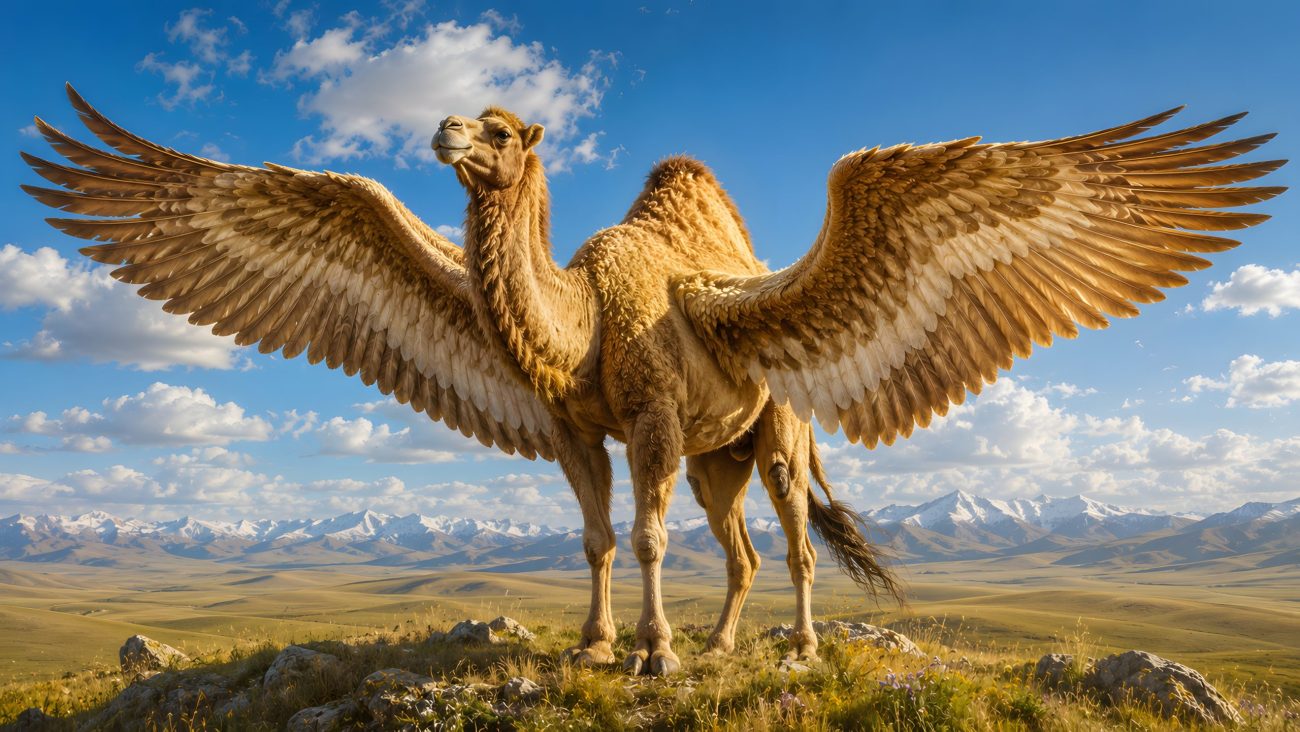
The Zhelmaya is a legendary winged camel in Kazakh folklore. Its name combines the words for wind and one-humped camel, reflecting its extraordinary speed and supernatural nature. Unlike ordinary camels, the Zhelmaya can soar through the air and travel vast distances with ease.

The creature is most often associated with legendary figures such as priests, seers, shamans, wise elders, and wandering heroes, who ride the Zhelmaya on long journeys. Its connection to these revered figures makes it a symbol of wisdom, guidance, and sacred travel.

According to tradition, the Zhelmaya preserves the memory of an ancient belief that the camel was the principal mount of holy men and prophets. As a swift, winged beast capable of crossing the world like the wind, it remains one of the most remarkable mythical creatures of Kazakh folklore.


Sources

Bestiary.us. (n.d.). Zhelmaya. In New Bestiary: Encyclopedia of Imaginary Beings. Retrieved June 29, 2026, from https://www.bestiary.us/zhelmaya. (webrate.org)


Jasin Bird

Tradition / Region: Japanese Mythology
Alternative names: Jasintori; Jasin Bird
Category: Bird


The Myth

The Jasin Bird is a gigantic bird said to come from across the sea. Resembling an enormous hawk, it terrorized a village by flying in every night and carrying away oxen, horses, and other livestock. A samurai resolved to end the attacks by hiding inside the carcass of a dead horse, allowing the bird to seize him and carry him back to its nest.

At the nest, the samurai found the Jasin Bird feeding its chicks while a great serpent crawled nearby. He emerged from the horse’s body and slew the parent bird before killing all of its hungry young. The serpent escaped unharmed, and the samurai began the long journey home.

Unable to cross a great river, the samurai was met by a beautiful woman who revealed herself to be the serpent transformed into human form. Grateful that he had spared her life, she turned her own body into a bridge so he could cross the river and gave him a bamboo tube containing a miraculous medicine capable of curing every disease. After he reached the opposite bank, the serpent disappeared beneath the water.

The samurai never returned to his original village but settled in another land, marrying the daughter of an old woman who had lost her family to the Jasin Birds. Years later, the old woman accidentally poured out the miraculous medicine into her garden. A new healing herb sprang from the ground where it fell, and from that time onward the village lived in peace, for the Jasin Birds never returned.


Sources

Wikipedia contributors. (n.d.). Kurangaituku. In Wikipedia. Retrieved June 29, 2026, from https://en.wikipedia.org/wiki/Kurangaituku


Rakshasa Bird

Tradition / Region: Chinese mythology
Alternative names: Rakshasa Bird
Category: Bird


The Myth

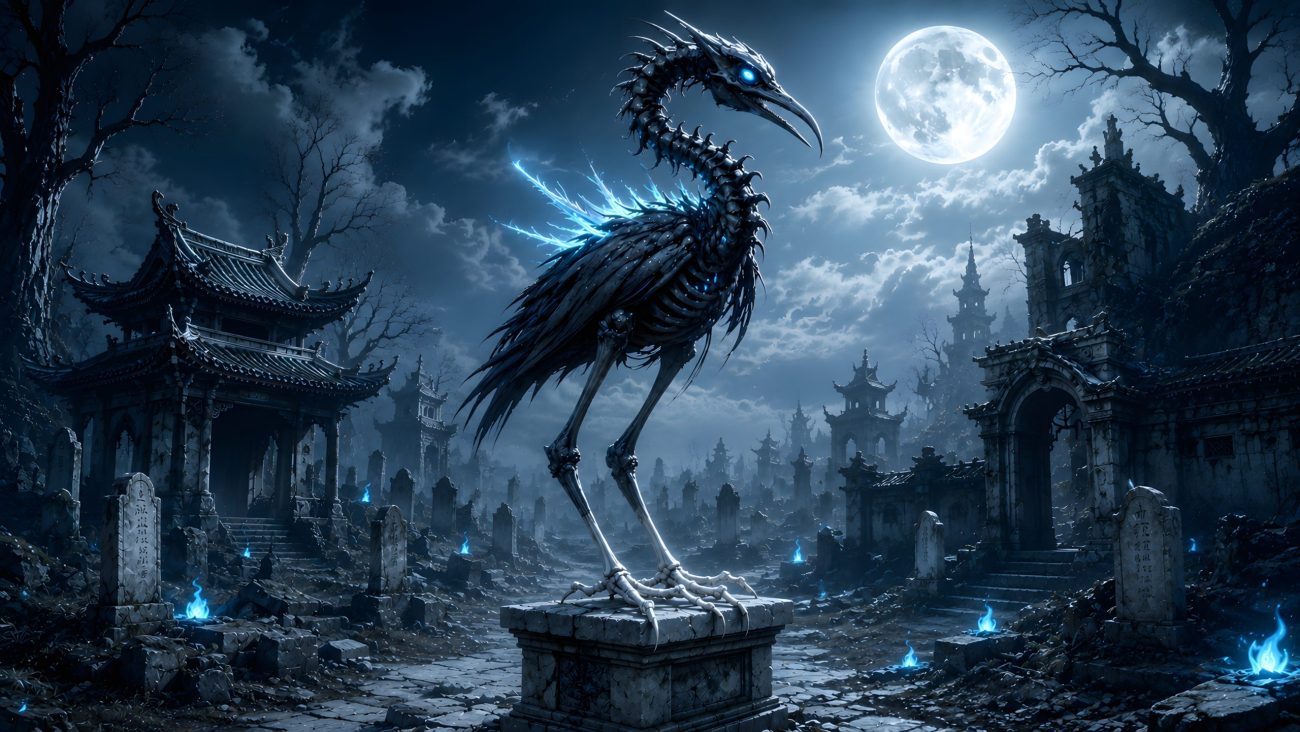
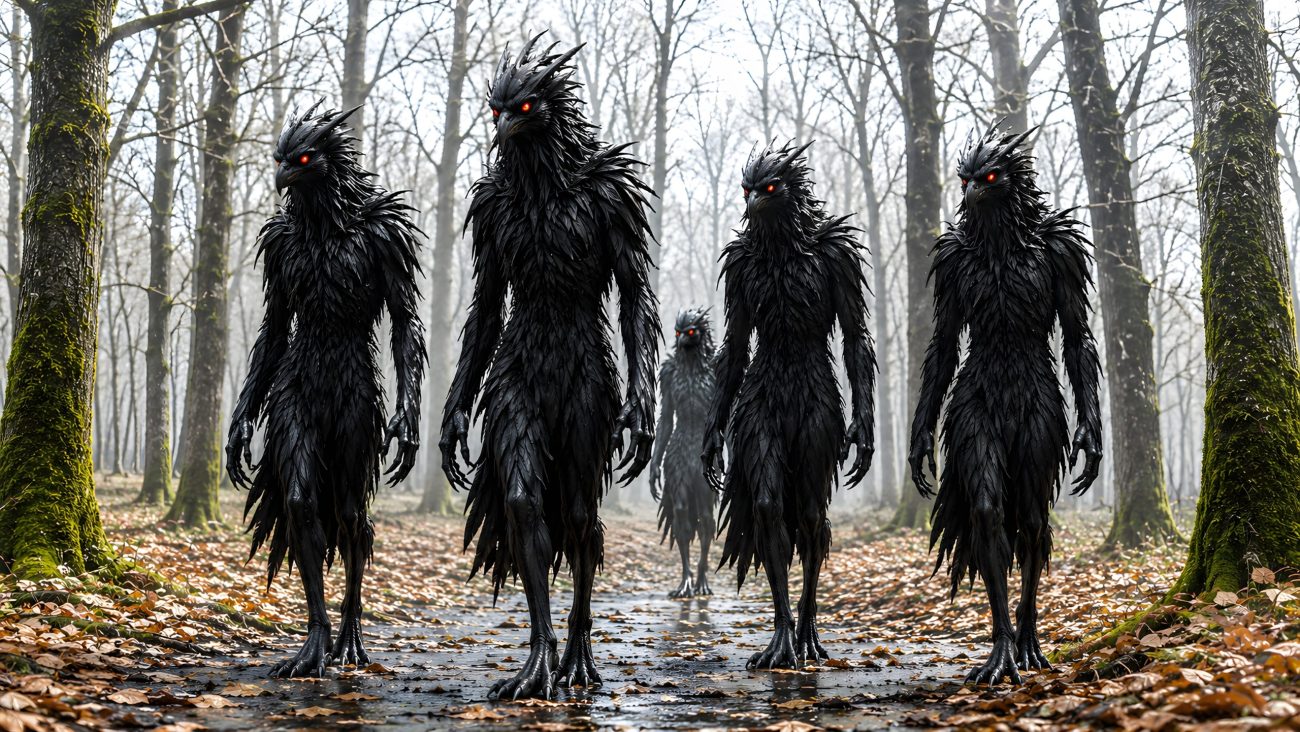
The Rakshasa Bird is a monstrous bird said to have been born from the accumulated evil essence of an abandoned graveyard. Slightly larger than a gray crane, it has a hooked beak, enormous snow-white claws, and glowing blue eyes. One of its most terrifying powers is the ability to transform into human form in order to deceive its victims.

According to a tale from the Zi Bu Yu, a bride was traveling to her wedding when a violent whirlwind rose from an ancient cemetery and surrounded her sedan chair. When she arrived at the groom’s home, a second bride—identical in appearance, clothing, and manner—stepped from the same sedan chair. Unable to distinguish the real bride from the impostor, the wedding proceeded with both women present.

That night, the false bride revealed her true nature. She tore out the groom’s eyes and attacked the real bride before transforming into a huge gray-black bird. As frightened servants rushed into the room, they saw the creature perched upon a beam with its hooked beak, white claws, and eerie blue eyes before it escaped into the darkness. Although the couple survived after months of recovery, both remained blind. Ever afterward, the Rakshasa Bird was feared as a shape-shifting demon that delights in devouring human eyes.


Sources

維基百科貢獻者. (n.d.). 羅剎鳥. In 維基百科,自由的百科全書. Retrieved June 29, 2026, from https://zh.wikipedia.org/wiki/%E7%BD%97%E5%88%B9%E9%B8%9F


Kurangaituku

Tradition / Region: Māori, New Zealand Mythology
Alternative names: Kurungaituku; Hine-ingoingo
Category: Bird


The Myth

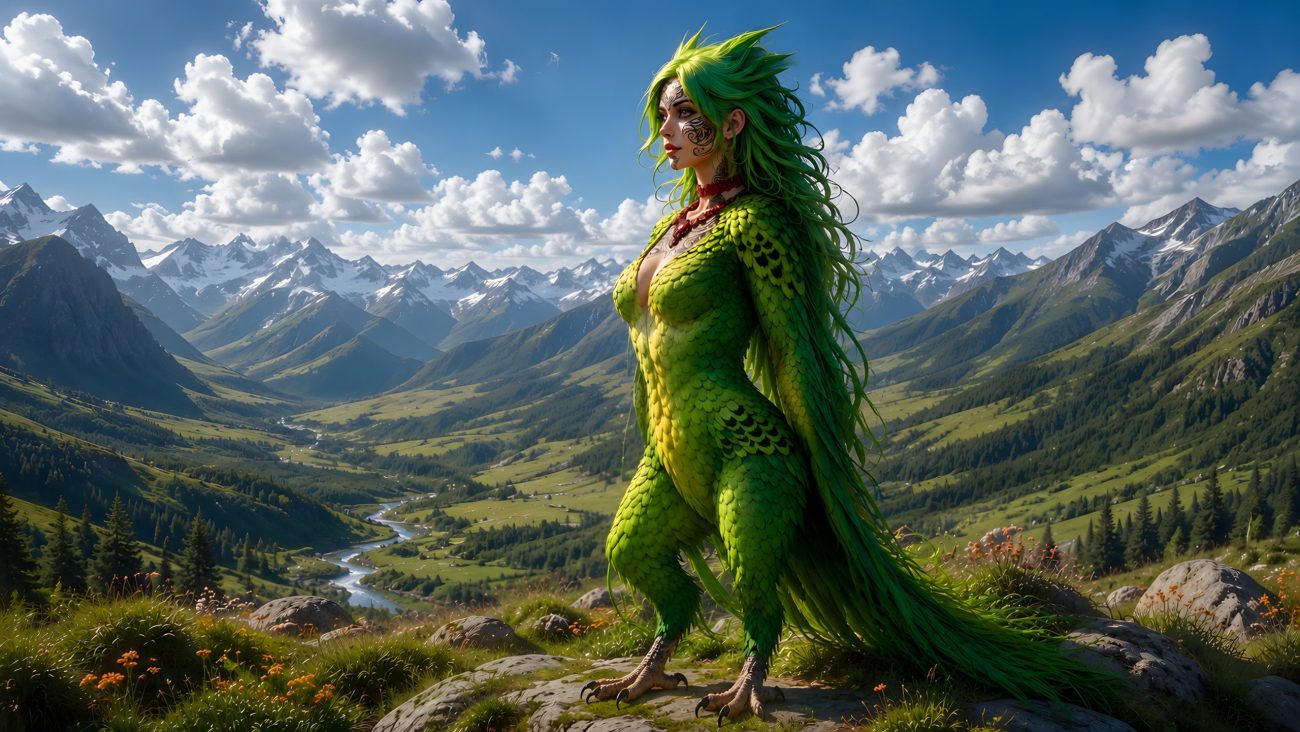
Kurangaituku is a supernatural woman with the wings of a bird, claws instead of fingers, and a beak in place of a human mouth. She is the guardian of birds and other creatures, keeping them in her forest home. In some traditions she is feared as an ogress or witch, while in others she is remembered as a compassionate being who shelters injured animals and nurses the wounded back to health.

One day the young hunter Hatupatu entered her domain. In some versions she captured him after he hunted her birds, while in others she found him injured and cared for him until he recovered. Hatupatu lived with her for a time, but eventually betrayed her by destroying or imprisoning her beloved birds and reptiles and stealing her treasured feather cloaks before fleeing.

A single small bird escaped and warned Kurangaituku of the betrayal. She pursued Hatupatu through the forests with incredible speed. During the chase, Hatupatu called upon a great rock to open and hide him, escaping her grasp. When he reached the geothermal lands of Whakarewarewa, he dodged between the boiling mud pools, but Kurangaituku rushed after him and was consumed by the scalding mud, bringing the pursuit to its tragic end.

In some Māori traditions, however, Kurangaituku is remembered not as a monster but as the wronged guardian of the forest, whose kindness was repaid with betrayal. Her story remains one of the best-known legends of New Zealand, preserving both versions of her character in Māori oral tradition.


Sources

Wikipedia contributors. (n.d.). Kurangaituku. In Wikipedia. Retrieved June 29, 2026, from https://en.wikipedia.org/wiki/Kurangaituku


Impundulu

Tradition / Region: South African Mythology
Alternative names: Lightning-bird; Intakezulu; Chimungu; Inyoni Yezulu; Isivolovolo; Izulu
Category: Bird


The Myth

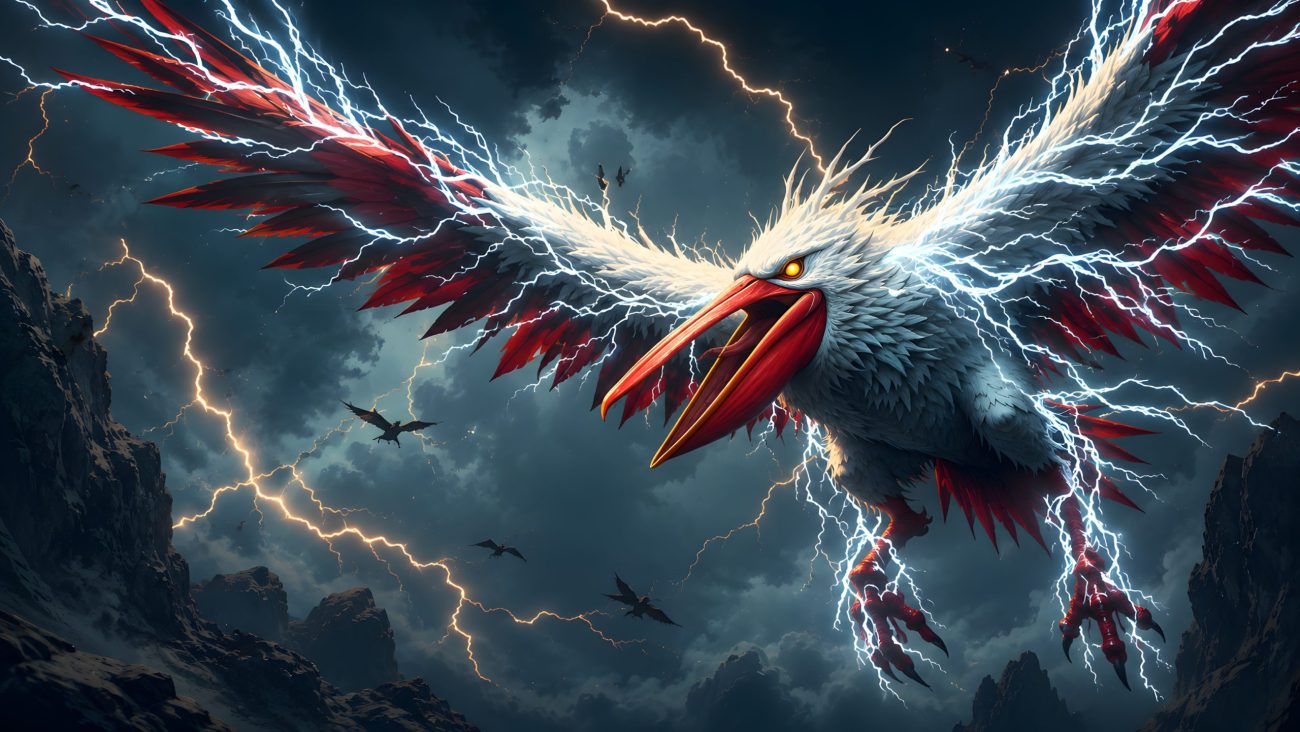
The Impundulu, or Lightning-bird, is a supernatural bird of storms that appears throughout southern African folklore in many different forms. Among the Xhosa it is usually described as a great white bird with red wings, red legs, and a short red tail, though it can also take the shape of a human. The beating of its wings creates thunder, while flashes of lightning mark its descent to the earth to bury a single enormous egg beneath the ground.

The bird is closely connected with witches and shamans. Witches are said to keep an Impundulu as a familiar spirit, sending it to attack their enemies, while shamans search for its buried eggs and destroy them before they hatch, preventing more Lightning-birds from entering the world. Warriors also throw spears into the sky to discourage the creature from landing during storms.

The Impundulu is feared as a vampire that drinks human blood until its victims die. It is also blamed for carrying away unprotected children and for causing illnesses by stealing a person’s breath. Although it craves blood, it is also said to love milk, and poisoned milk is one of the few ways to kill it.

When the Impundulu assumes human form, it may seduce women, and legends claim that any children born from such unions become birds. Despite its fearsome reputation, the bird also appears in local sayings, where being “visited by the Impundulu” can refer either to misfortune, such as a nosebleed, or to an unexpected stroke of good luck.


Sources

A Book of Creatures. (2016, November 7). Impundulu. Retrieved June 29, 2026, from https://abookofcreatures.com/2016/11/07/impundulu/. (abookofcreatures.com)


Gartsuk

Tradition / Region: Belarusian Mythology
Alternative names: Gartsuk; Gartsuki
Category: Bird


The Myth

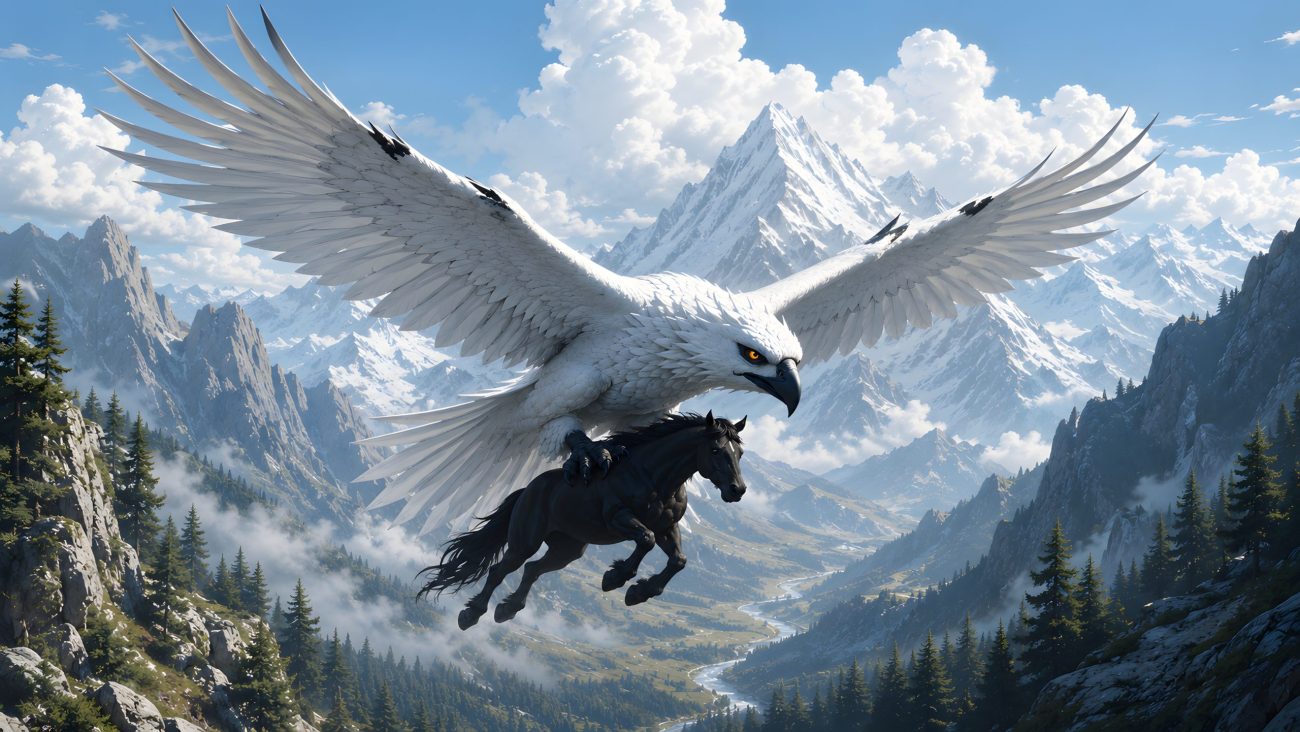
The Gartsuki are mountain spirits in Belarusian folklore that serve Perun, the god of thunder. They usually appear as birds of prey, but they can also take the form of small children with human faces or even transform into horses. Wherever they pass, they leave destruction behind—branches are torn from trees, dust rises into the air, and forests echo with the force of their unseen movement.

At sunrise the Gartsuki descend from the mountains and race through fields and forests. By midday they play among the mountain peaks, and in the evening they return to the highlands. Their constant running and flying stir up powerful winds and storms, making them both companions and servants of Perun. The louder the storm, the more fiercely the Gartsuki are believed to be playing.

Although they are not considered evil, the Gartsuki are wild and dangerous. Their games can flatten crops, break trees, and whip up violent weather. According to tradition, travelers caught in their path risk being overwhelmed by the storms they create, and the spirits vanish only after returning to the mountains with the setting sun.


Sources

Bestiary.us. (n.d.). Gartsuki. In New Bestiary: Encyclopedia of Imaginary Beings. Retrieved June 29, 2026, from https://www.bestiary.us/Gartsuki


Nine-Headed Bird

Tradition / Region: Chinese mythology
Alternative names: Nine Phoenix; Ghost Chariot; Ghost Bird; Guiche
Category: Bird


The Myth

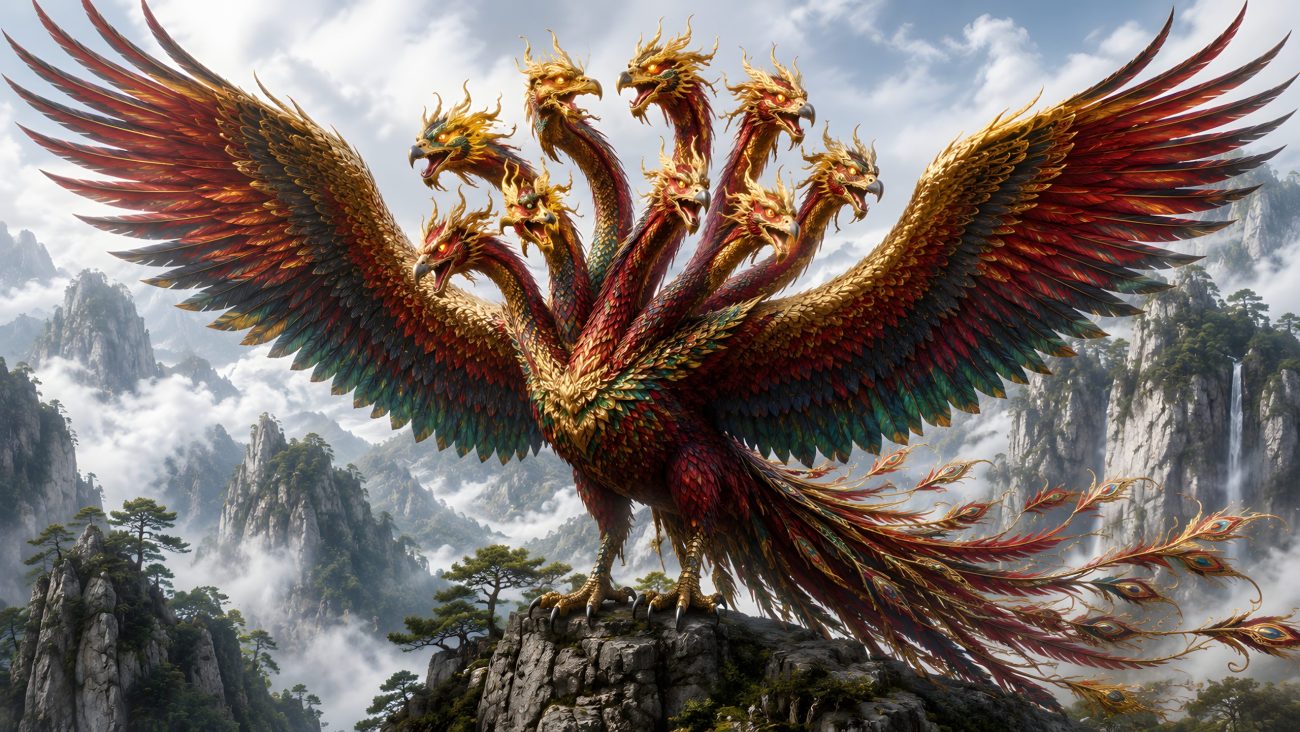
The Nine-Headed Bird, also known as the Nine Phoenix, was originally a divine bird worshipped by the ancient Chu people. It was described as having a bird’s body, a human face, and nine heads, serving as a sacred totem of the Chu state. Over time, however, it came to be rejected by the dominant Zhou culture, and its image gradually changed from that of a revered deity into a fearsome monster associated with misfortune.

Later traditions portray the Nine-Headed Bird as an evil spirit that flies through the night, especially during the first month of the year. People believed it brought disaster wherever it appeared, so families would beat on their beds and doors, extinguish their lamps, and use dogs to drive it away. According to legend, the bird originally had ten heads until one was bitten off by a dog, leaving a bleeding neck that dripped blood upon houses, an omen of coming calamity.

Other accounts describe the creature as resembling a duck with brilliant red feathers. It was feared for entering homes under cover of darkness to steal the souls of those inside. Because of this, dogs were believed to be its greatest weakness, and their presence or even the mention of them was thought to frighten the Nine-Headed Bird away.


Sources

維基百科貢獻者. (n.d.). 九頭鳥. In 維基百科,自由的百科全書. Retrieved June 29, 2026, from https://zh.wikipedia.org/wiki/%E4%B9%9D%E9%A0%AD%E9%B3%A5


Furari-bi

Tradition / Region: Japanese Mythology
Alternative names: Wandering Fire; Burari-bi
Category: Bird, Dog


The Myth

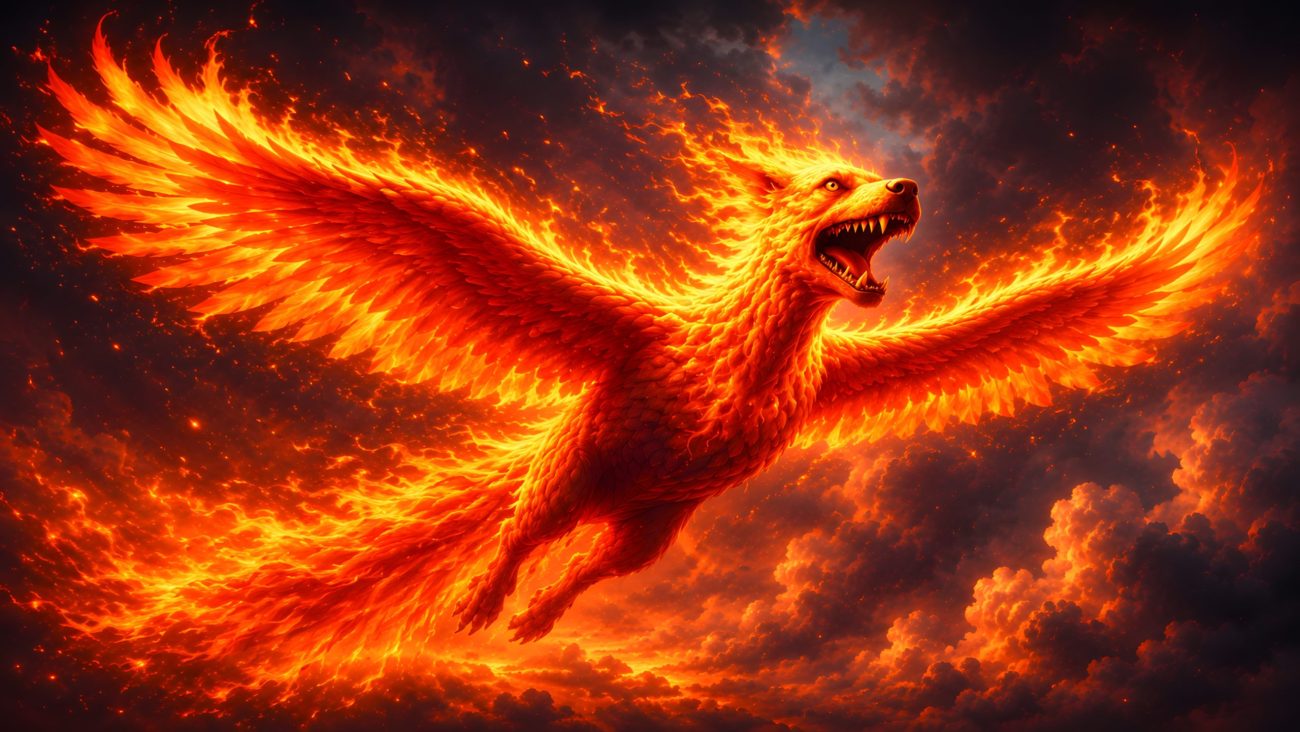
The Furari-bi (“Wandering Fire”) is a mysterious yokai depicted as a bird surrounded by flames. In some Edo-period illustrations, it has a bird’s body with a dog-like face emerging from the center of the fire, while in others it appears as a more conventional flaming bird. Another illustrated tradition refers to the same creature as Burari-bi.

Unlike many yokai, the Furari-bi is known almost entirely from illustrated monster scrolls, including the Hyakkai Zukan, Gazu Hyakki Yagyō, and the Hyakki Yagyō Emaki. These works portray it as a wandering mass of living fire in avian form, but they provide no accompanying story or explanation of its behavior.

Because the Furari-bi appears only in these illustrations, no traditional legend describing its origin or powers has survived. Modern interpretations of the yokai are therefore considered later speculation rather than part of the original folklore.


Sources

TYZ. (2016, May 21). 雉子娘 (Kiji Musume). In 新版TYZ 妖怪図鑑. Retrieved June 29, 2026, from https://tyz-yokai.blog.jp/archives/1057632664.html


Alkonost

Tradition / Region: Russian Mythology
Alternative names: Alkonost
Category: Bird


The Myth

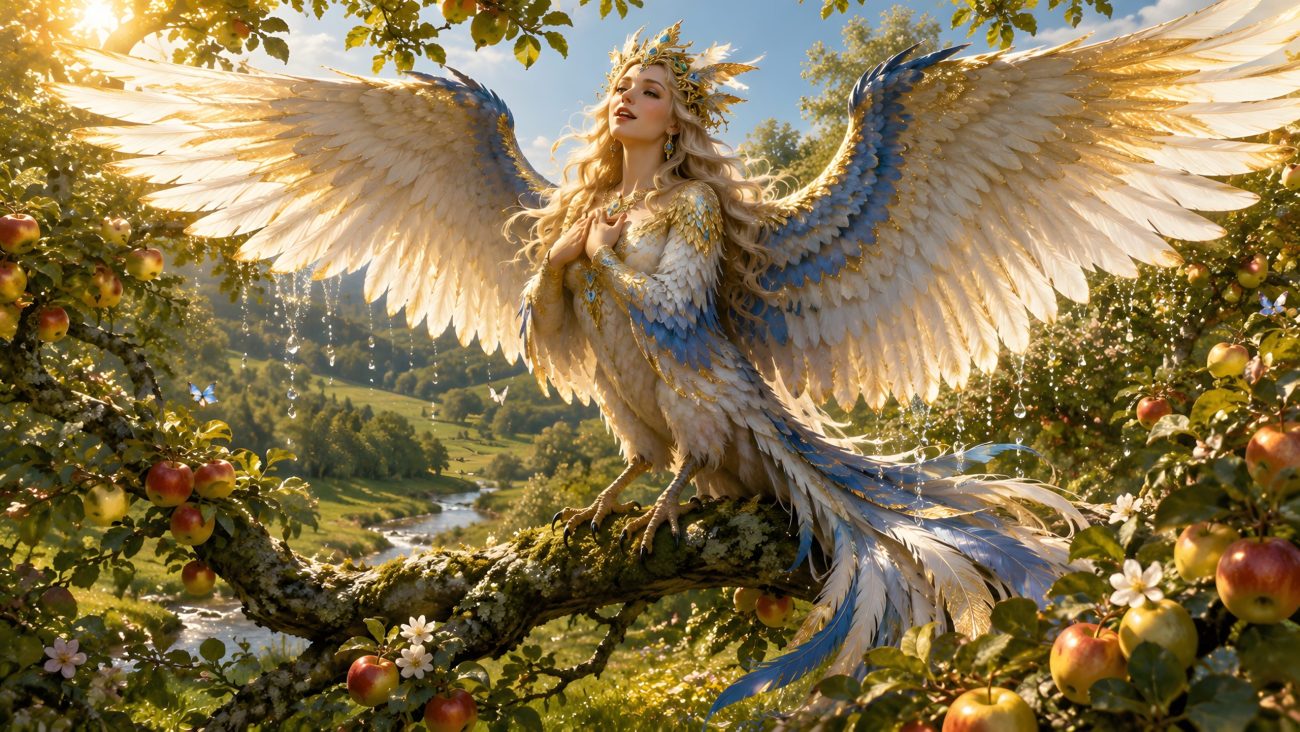
The Alkonost is a legendary bird with the body of a bird and the head of a beautiful woman. She dwells in the underworld alongside her counterpart, the Sirin, and is regarded as the sister of other mythical birds such as Rarog and Stratim.

The Alkonost possesses a voice of extraordinary beauty. Anyone who hears her enchanting song forgets everything they once knew and desires nothing else but to continue listening. She also lays her eggs upon the shore before rolling them into the sea. When the eggs hatch, a mighty thunderstorm erupts, churning the sea into such violent waves that it becomes impossible to cross.

According to East Slavic tradition, on the morning of the Apple Feast of the Saviour, the Sirin visits the apple orchards and weeps in sorrow. Later that day, the Alkonost arrives laughing with joy. As she brushes the dew from her wings, the dew falls upon the fruit, granting the apples healing powers.


Sources

Wikipedia contributors. (n.d.). Alkonost. In Wikipedia. Retrieved June 29, 2026, from https://en.wikipedia.org/wiki/Alkonost


Azaran Blbul

Tradition / Region: Armenian Mythology
Alternative names: Hazaran Blbul; Zahi Avk; Plpyul; Thousand-Voiced Nightingale
Category: Bird


The Myth

The Azaran Blbul (“Thousand-Voiced Nightingale”) is a unique firebird in Armenian mythology. Unlike all other birds, it has no mate and never breeds, existing as the only one of its kind. Its brilliant plumage and magical song surpass those of every other bird, and wherever it sings, prosperity, happiness, love, and harmony flourish.

The bird’s voice possesses miraculous powers. It can restore animals that have been cursed by witches, while barren gardens, mountains, and valleys spring back to life with lush vegetation at the sound of its song. Because of these blessings, people never dared to harm or capture the Azaran Blbul, fearing that if it fled a blooming valley, it would never return.

When the Azaran Blbul grows old and senses its death approaching, it builds a nest from rare, dry, flammable plants. At the moment of its death, both the bird and its nest burst into flames and are reduced to ashes. From the warm ashes a small lump forms, from which a new chick emerges, identical to the one that came before, allowing the miraculous bird to be reborn forever.


Sources

Участники Википедии. (n.d.). Азаран Блбул. В Википедия. Retrieved June 29, 2026, from https://ru.wikipedia.org/wiki/%D0%90%D0%B7%D0%B0%D1%80%D0%B0%D0%BD_%D0%91%D0%BB%D0%B1%D1%83%D0%BB