Vogel Greif

Tradition / Region: Luxembourg Mythology
Alternative names: Greif; Vogel Greif
Category: Bird


The Myth

Near the village of Bous, beside the road leading to Stadtbredimus, lies a field known as Neckelswuos, a place long feared for its supernatural happenings. Travelers tell of phantom pigs racing through wagon wheels, a ghostly sow followed by seven piglets, a floating skull, a woman clothed only by her long hair, and a great black dog haunting the area.

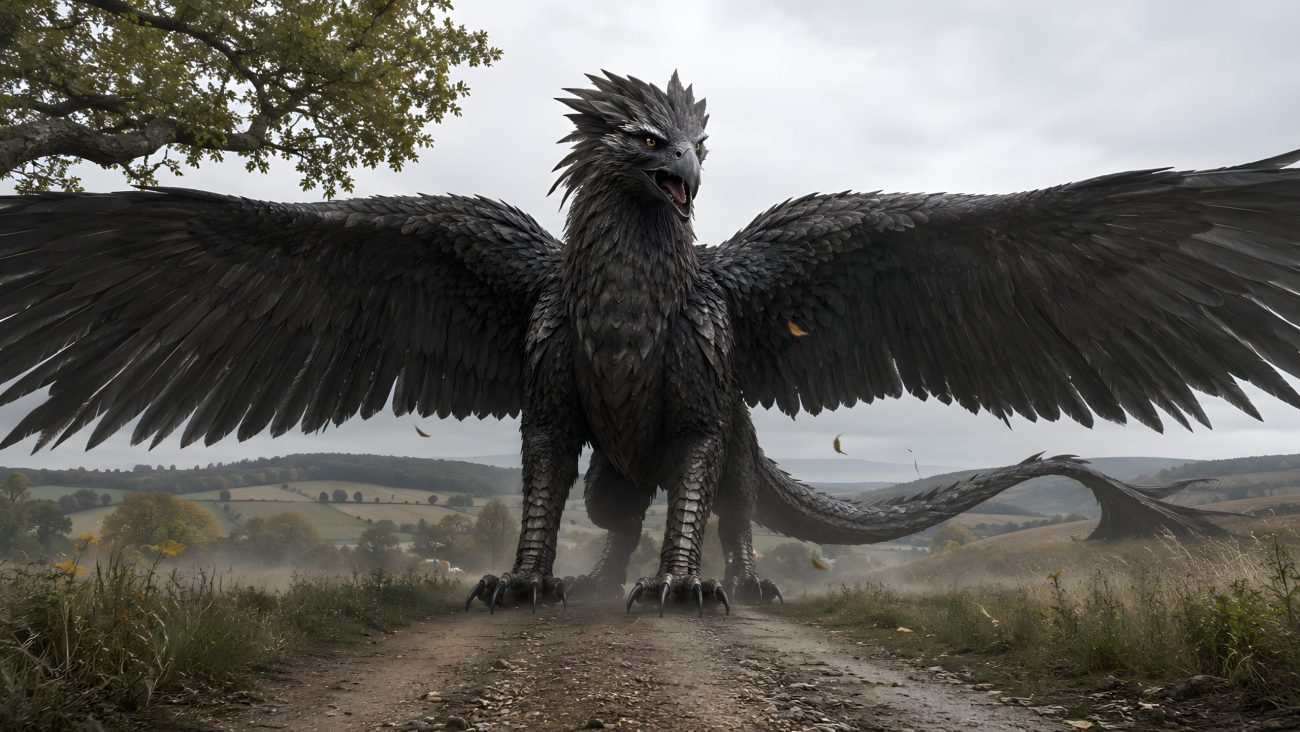
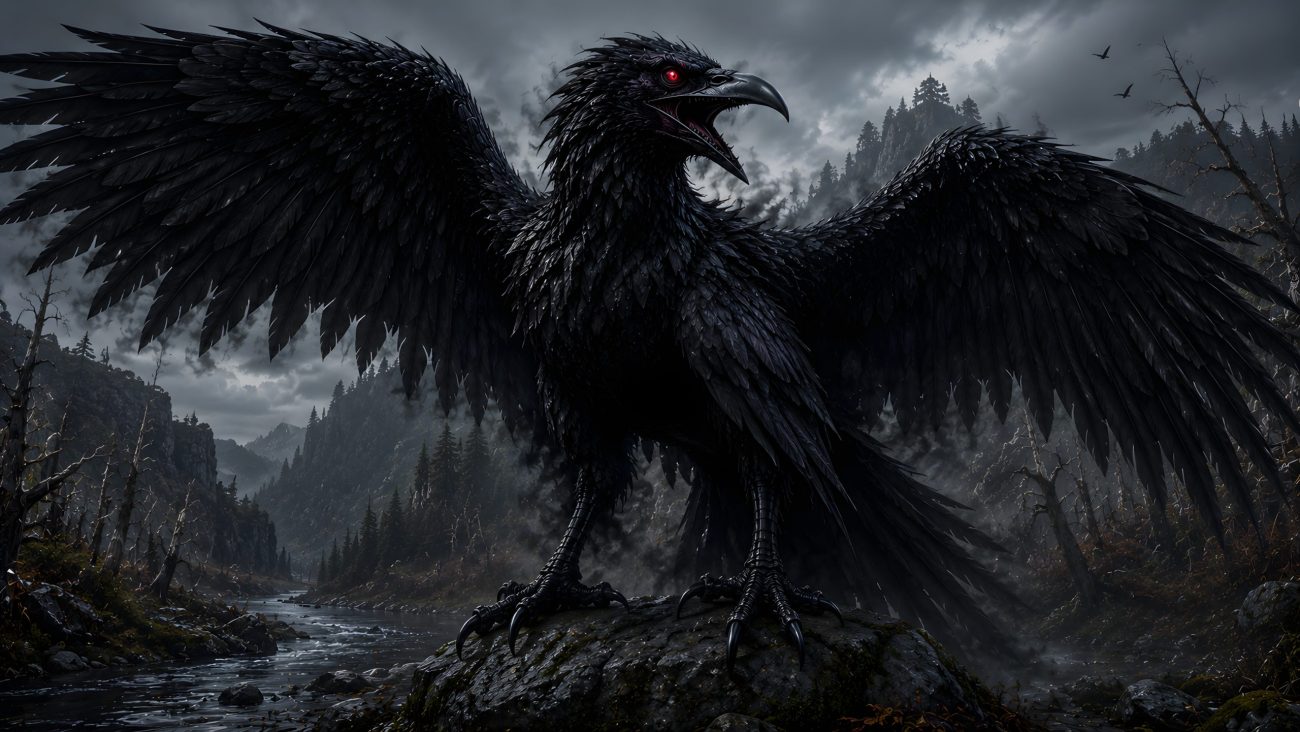
One night, around midnight, a blacksmith from Stadtbredimus passed through Neckelswuos. As he traveled along the road, he suddenly saw an enormous bird-like creature hovering above him. The being was so vast that its body covered the entire width of the road, while the tips of its wings stretched far into the fields on both sides. Terrified, the blacksmith believed it to be a Greif or perhaps a dragon, and fled from the place in panic.


Sources

La Fontaine, E. de. (1882). Luxemburger Sagen und Legenden. Jos. Beffort. Retrieved June 29, 2026, from https://archive.org/details/luxemburgersagen00lafouoft


Ongoli Bird

Tradition / Region: Mongolian Mythology, Russian Mythology
Alternative names: Ongoli Bird
Category: Bird


The Myth

After the hero Abai Geser defeated the mangadhai Abarga Sesen, his wife Tumen Jargalan bewitched him with enchanted food out of jealousy, causing him to lose his memory and remain in the land of the demons as a simple herdsman. Unable to find their missing brother, Geser’s three sisters searched the world until they discovered him tending the demon’s cattle. To rescue him, they transformed themselves into three ongoli birds and flew into the kingdom of the mangadhai.

The three ongoli birds circled around Geser, beating him gently with their wings before disappearing. They then resumed their true forms as his sisters and struck him on each cheek, forcing him to vomit the black substance that had clouded his mind. His memory and strength immediately returned, and the sisters once again transformed into ongoli birds before flying back into the sky. Restored to himself, Abai Geser departed the land of the demons with Tumen Jargalan and continued his journey home.


Sources

Jamba, T. (Trans.). (n.d.). The Battle with Abarga Sesen Mangadhai (Seventh Branch). BuryatMongol.com. Retrieved June 29, 2026, from https://web.archive.org/web/20070613200651/http://www.buryatmongol.com/halaa7.html


Iron Raven

Tradition / Region: Mongolian Mythology, Russian Mythology
Alternative names: Iron-Beaked Raven
Category: Bird


The Myth

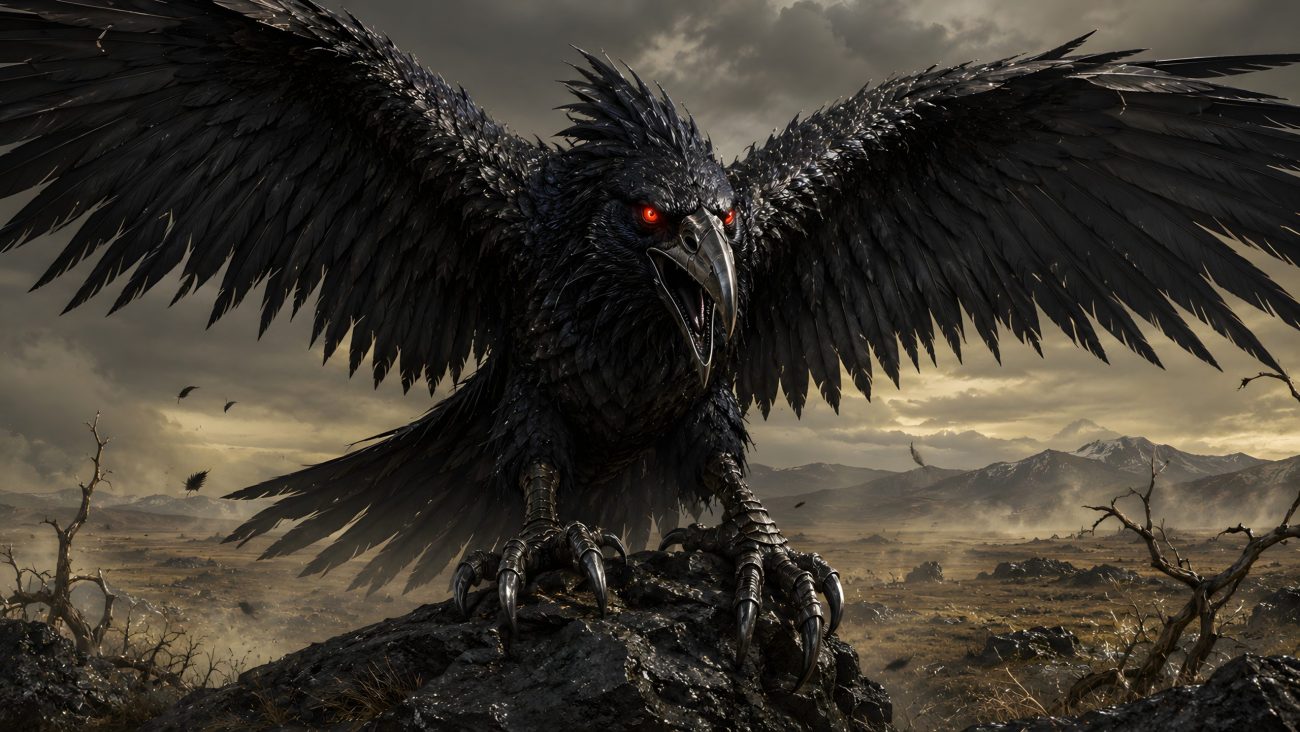
In the Buryat epic of Geser, the forces of evil sought to destroy the infant hero Bukhe Beligte before he could grow to challenge them. After monstrous rats failed in their attempt, the nine hundred evil spirits and ninety black demons created two black ravens and sent them to the child’s cradle. Their purpose was to peck out the infant’s eyes and kill him. Unlike ordinary birds, these ravens possessed beaks and talons made of iron.

As the ravens hovered over him, Bukhe Beligte seized them by their wings and demanded to know what kind of devils they were, flying through the world with iron beaks and claws. He tore away their iron beaks and replaced them with horn beaks, then broke off their iron talons and gave them horn claws instead. Declaring that all ravens would bear horn beaks and claws from that day onward, he released them to live upon the steppe. The infant hero then proclaimed that, though only two days old, he had already defeated his second enemy.


Sources

Jamba, T. (Trans.). (n.d.). The Geser Epic: Second Branch. BuryatMongol.com. Retrieved June 29, 2026, from https://web.archive.org/web/20070628230811/http://www.buryatmongol.com/halaa2.html


Tulevieja

Tradition / Region: Costa Rica Mythology, Panama Mythology
Alternative names: Tulivieja; Tepesa (Ngäbe-Buglé); Itsö (Bribri tradition)
Category: Bird


The Myth

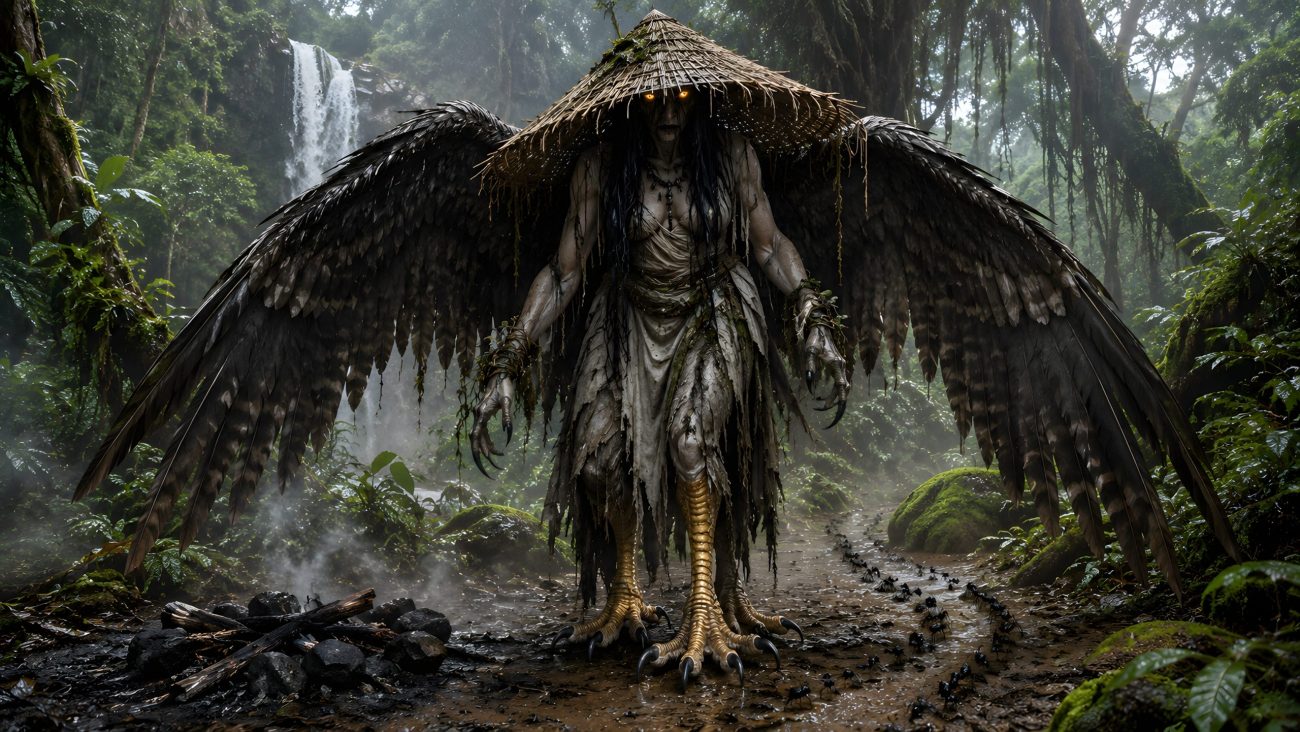
The Tulevieja is a terrifying spirit from the folklore of Costa Rica and Panama. She appears as a short, heavyset woman wearing an old tule hat, with tangled hair, enormous milk-filled breasts, and the wings of a bird or bat. Instead of human legs, she has the talons of a great bird of prey, leaving backward footprints that make her impossible to track. Ants are said to follow the trail of milk that spills from her breasts. In older Indigenous traditions, she is identified with Itsö, a powerful supernatural being of the mountains, forests, wind, and rain.

According to the most widespread legend, the Tulevieja was once a beautiful young woman who secretly became pregnant. After drowning her newborn child in a river, she was cursed and transformed into a monstrous creature doomed to wander the wilderness. In some versions she also drowned herself, returning as a restless spirit forever haunted by her crime.

The Tulevieja is feared as a hunter of the living. She lures lustful or irresponsible men toward her, only to tear them apart with her eagle-like claws. In some traditions, she has merged with La Llorona, roaming in search of children to nurse or steal. The creature can be driven away by reciting the prayer “Alabado sea el Santísimo”, while older Indigenous legends say that only blessed tule vines given by the god Sibú could bind and restrain her.


Sources

Wikipedia contributors. (n.d.). Tulevieja. In Wikipedia. Retrieved June 29, 2026, from https://en.wikipedia.org/wiki/Tulevieja


Kunne Cikap

Tradition / Region: Japanese Mythology
Alternative names: Black Bird; Kunne Cikap-po
Category: Bird


The Myth

The Kunne Cikap (“Black Bird”) is a monstrous bird from Ainu tradition. It was said to dwell at the Black River (Kunne pe) in the northern lands until it was overcome by the culture hero Ponyaunpe during his adventures. It is paired with the Hure Cikap (“Red Bird”), another fearsome bird that lived in the Red Forest.

In later Ainu tradition and literature, the Kunne Cikap came to represent evil and ill omens. It is described as a black bird that gathers in flocks to peck at the bodies of the dead, becoming a symbol of darkness, falsehood, and malevolent forces. This image appears in Ainu poetry, where the bird is invoked as something that should not be feared despite its sinister reputation.


Sources

Wikipedia contributors. (n.d.). Kunne cikap. In Wikipedia. Retrieved June 29, 2026, from https://en.wikipedia.org/wiki/Kunne_cikap


Goose Wife

Tradition / Region: Inuit Mythology, Canadian Mythology, American Mythology
Alternative names: Goose Woman; Goose Maiden
Category: Bird, Nymph


The Myth

The Goose Wife is a bird maiden found in the traditions of the Inuit and other Arctic peoples. A hunter discovers a group of geese that remove their goose skins to become women while bathing in a lake. He secretly steals the skin of one of the women, preventing her from returning to bird form, and she is forced to become his wife. Together they have children, but she never forgets her home in the Land of Birds.

In time, the Goose Wife secretly gathers feathers and fashions new wings for herself and her children. Once they are complete, they transform back into birds and fly away. Determined to reunite with his family, the hunter journeys to the distant Land of Birds, where he encounters marvelous beings, including a giant who creates fish from chips of wood and helps him cross the waters to his wife’s homeland.

The ending varies among different Arctic traditions. In some versions, the hunter is reunited with his wife for a time before she departs again with the bird people. In others, he is transformed into a bird himself so he may remain with his family, while some stories end tragically, with the Goose Wife dying or the husband never truly recovering what he had lost. Despite these differences, the Goose Wife remains one of the best-known bird maiden figures of Arctic folklore.


Sources

Wikipedia contributors. (n.d.). Goose Wife (Inuit). In Wikipedia. Retrieved June 29, 2026, from https://en.wikipedia.org/wiki/Goose_Wife_(Inuit)


Tuglay Bird

Tradition / Region: Philippine Mythology
Alternative names: None
Category: Bird


The Myth

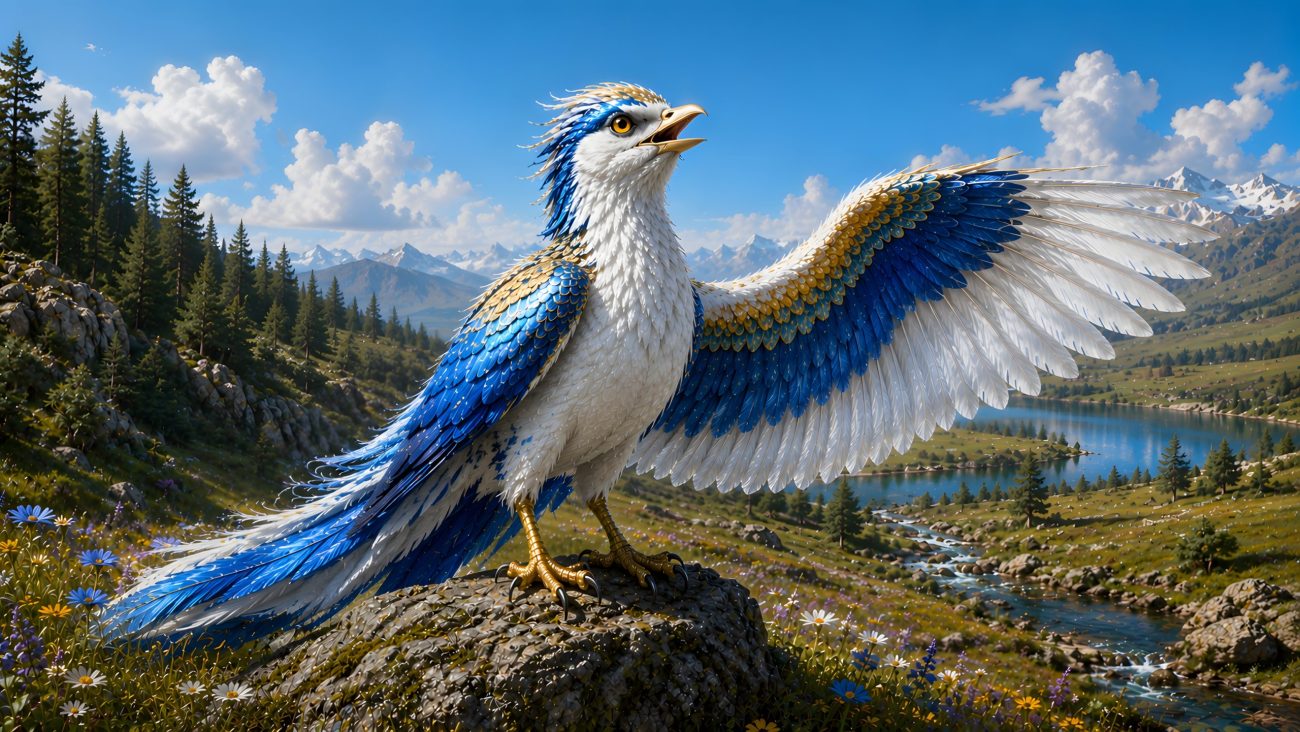
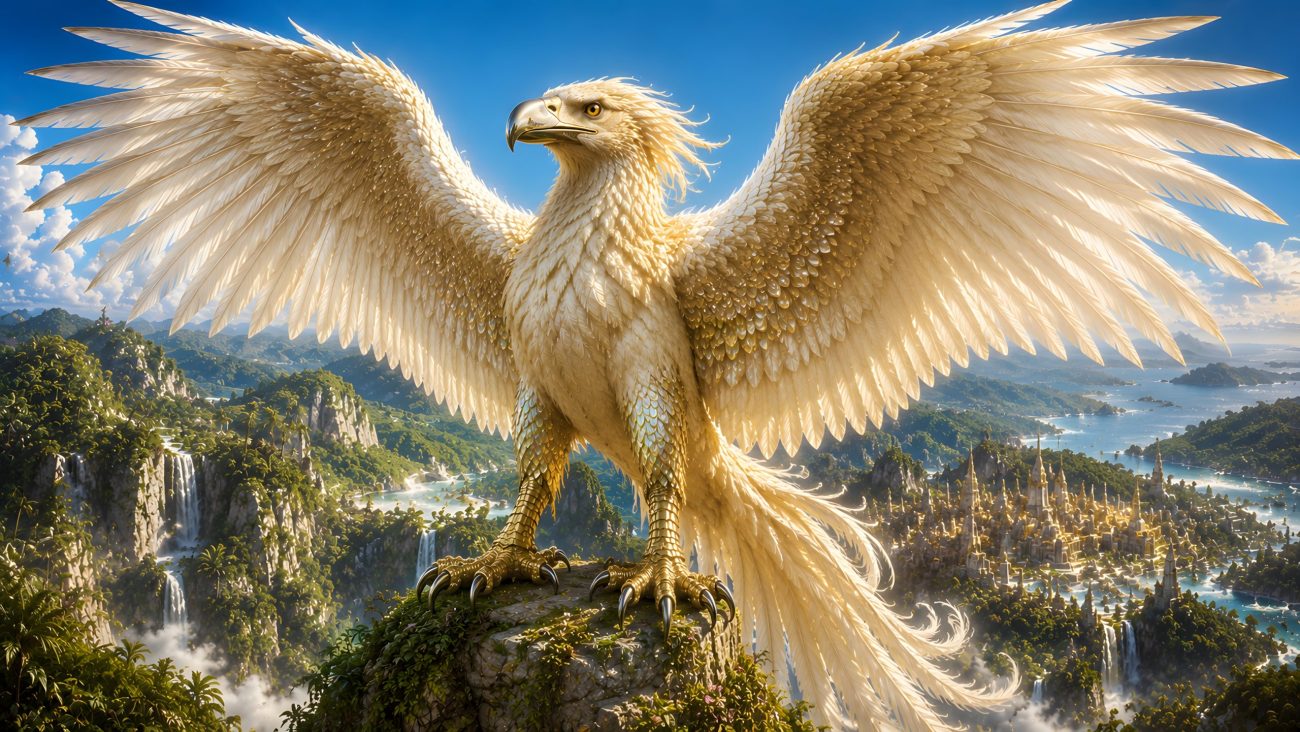
A Bagobo legend tells of a marvelous bird that lives at the rim of the sky. It is described as having soft, downy feathers, claws of steel, a beak like a mirror, and a body covered with countless overlapping scales.

One day the bird gazed upon the magnificent town of the legendary ancestor Tuglay. So beautiful was the city that the bird chose never to return to its distant home, remaining instead to admire the splendor of Tuglay’s realm.

This article stays faithful to the source without inventing details.


Sources

Benedict, L. E. W. (1916). A study of Bagobo ceremonial, magic and myth. [s.n.]. Originally presented as a doctoral dissertation, Columbia University (1914). Retrieved June 29, 2026, from https://archive.org/details/studyofbagobocer00bene


Dingbat

Tradition / Region: American Mythology
Alternative names: Dingbat
Category: Bird


The Myth

The Dingbat is a legendary Fearsome Critter of the Great Lakes region. It is described as a strange hybrid of bird and mammal, with a short feathered body, large wings, and a pair of short antlers.

Rather than attacking people directly, the Dingbat delights in tormenting hunters. During deer season it is said to catch bullets in mid-air before they can strike their target, drink the gasoline from hunters’ automobiles, and play countless other tricks that leave sportsmen frustrated and unsuccessful.

Because of its mischievous nature, hunters have long blamed the Dingbat whenever an apparently perfect shot inexplicably misses. Although sightings of the creature are rare, it remains one of the best-known pranksters among the legendary Fearsome Critters of North American folklore.


Sources

A Book of Creatures. (2019, October 25). Dingbat. Retrieved June 29, 2026, from https://abookofcreatures.com/2019/10/25/dingbat/


Kusa Kap

Tradition / Region: Australian Mythology
Alternative names: Kusa Kap
Category: Bird


The Myth

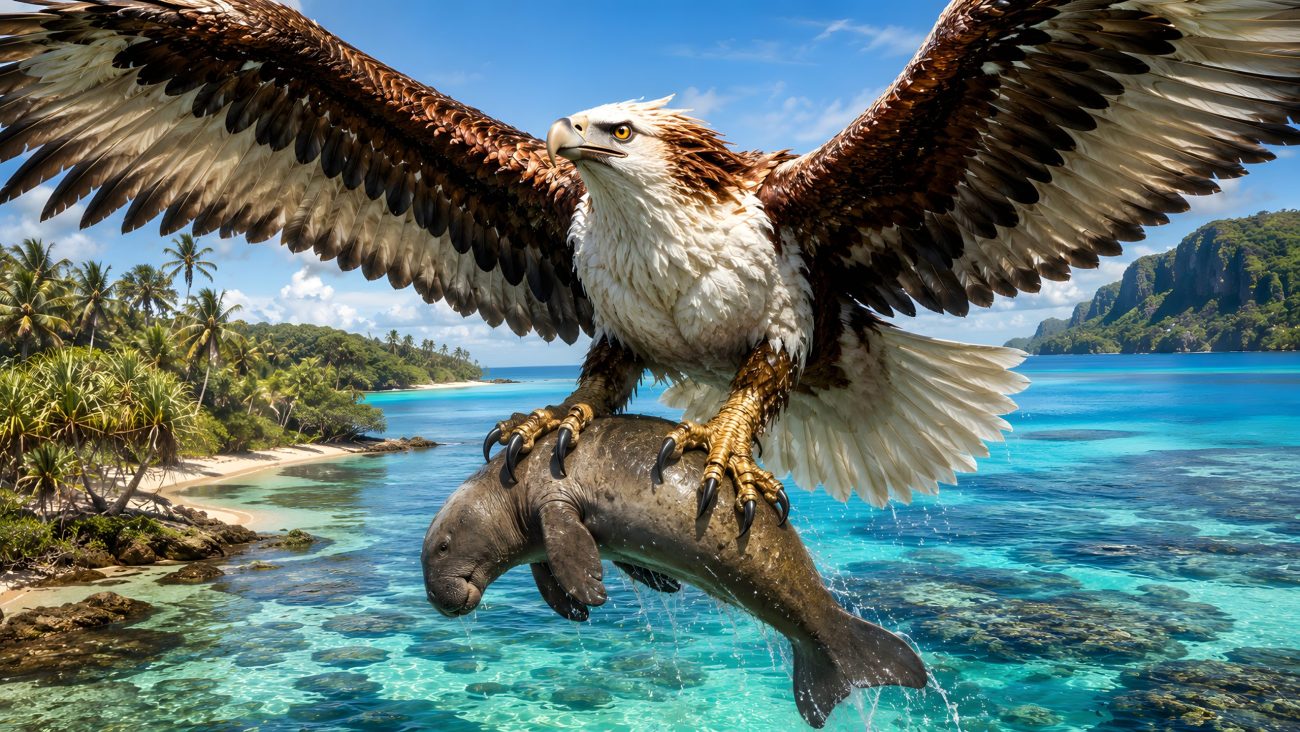
The Kusa Kap is a giant eagle from the traditions of the Torres Strait Islands. After the beautiful Bakar is abducted by the shapeshifting spirit Giz and abandoned on the lonely island of Kusar, she survives by eating the seeds of the kusa plant. In time, she lays an egg like that of a sea eagle, from which hatches the mighty bird Kusa Kap. She raises him as her own son.

Kusa Kap grows with extraordinary speed. Once his wings become strong enough, he flies great distances to gather tools and fire-making materials for Bakar. Later he begins hunting dugongs, carrying the enormous animals away in his talons and providing his mother with food, while sharing the surplus with nearby people.

When Bakar tells Kusa Kap about his father, Kaudab, the eagle flies to Dauan and guides him across the sea to Kusar, where the husband and wife are reunited. Kusa Kap then takes revenge on the evil spirit Giz, carrying her high into the air before dropping her into the sea, where she turns to stone. The giant eagle is remembered as the loyal son whose strength, devotion, and courage restored his family.


Sources

A Book of Creatures. (2021, March 5). Kusa Kap. Retrieved June 29, 2026, from https://abookofcreatures.com/2021/03/05/kusa-kap/


Stymphalian Bird

Tradition / Region: Greek Mythology
Alternative names: Stymphalides Ornithes
Category: Bird


The Myth

The Stymphalian Birds were a flock of monstrous, man-eating birds that dwelled in the marshes of Lake Stymphalia in Arcadia. They possessed bronze beaks, razor-sharp metallic feathers that they could shoot like arrows, and poisonous droppings. Sacred to Artemis or, in some traditions, raised by Ares, they devastated the surrounding countryside, killing people and destroying crops.

The birds were the target of the Sixth Labour of Heracles. Unable to enter the marsh where they nested, Heracles received a bronze rattle from Athena, forged by Hephaestus. Shaking it frightened the birds into the air, allowing him to shoot many of them with arrows tipped in the poisoned blood of the Lernaean Hydra. The surviving birds fled Arcadia and later settled on the island of Aretias in the Black Sea, where they were encountered by the Argonauts during their voyage.

A lesser-known tradition tells a different story, claiming that the Stymphalian Birds were not birds at all but the daughters of Stymphalus and Ornis, who were transformed or represented as birds and slain by Heracles after refusing him hospitality. Nevertheless, they are most widely remembered as the deadly flock defeated during one of the hero’s greatest labors.


Sources

Wikipedia contributors. (n.d.). Stymphalian birds. In Wikipedia. Retrieved June 29, 2026, from https://en.wikipedia.org/wiki/Stymphalian_birds