Readrokje

Tradition / Region: Dutch Mythology
Alternative names: Roodrokje
Category: Ghost, Bird


The Myth

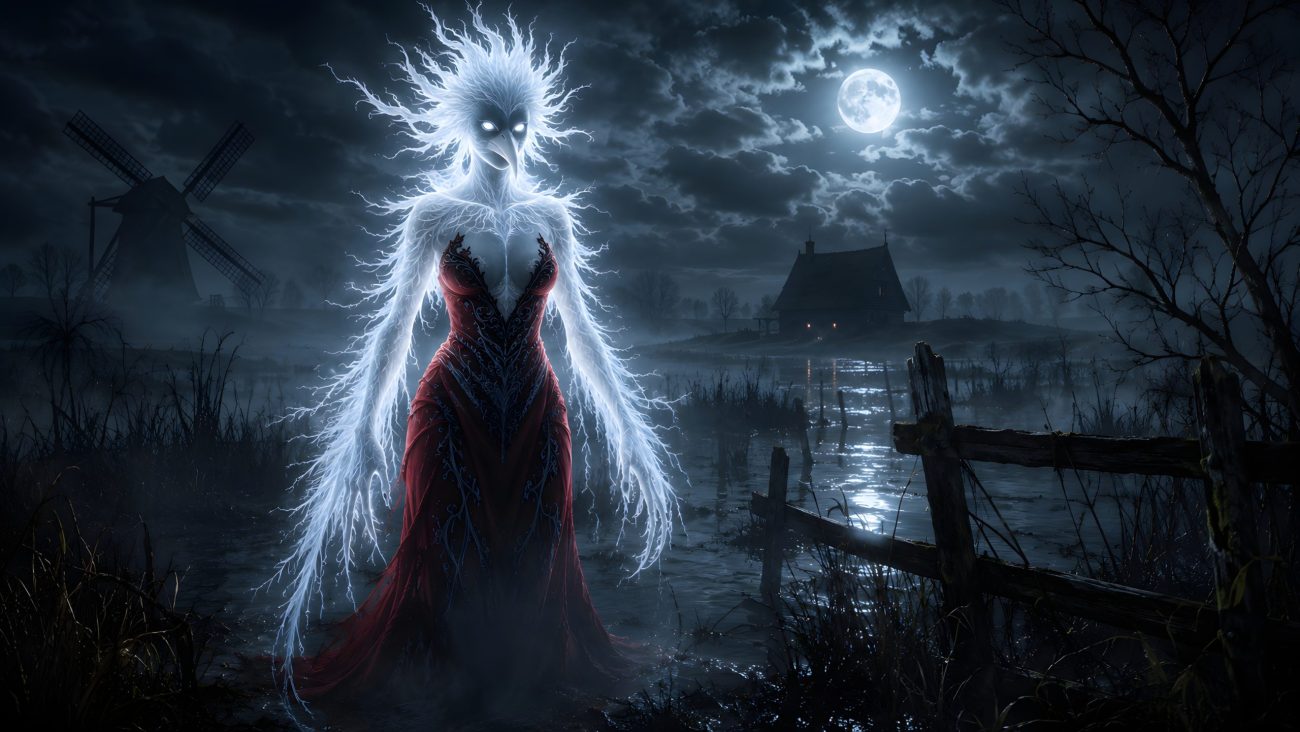
The Readrokje (“Little Red Skirt”) is a ghost said to haunt the area around Akkrum in Friesland. She is described as having a sharp, bird-like face, a white upper garment, and a distinctive red skirt.

She wanders the countryside with long, silent strides, gliding effortlessly over ditches and through beds of reeds. At times, the Readrokje suddenly rushes straight toward a lone traveler walking late at night, frightening them so badly that they flee in terror.


Sources

Abe van der Veen. (2014, July 8). Van aardmannetje tot zwarte juffer: Een lijst van Nederlandse en Vlaamse elfen en geesten. Abe de Verteller. Retrieved June 29, 2026, from https://abedeverteller.nl/van-aardmannetje-tot-zwarte-juffer-een-lijst-van-nederlandse-en-vlaamse-elfen-en-geesten/


Inmaraki

Tradition / Region: Japanese Mythology
Alternative names: Yinmaraki; Onmoraki (variant)
Category: Bird


The Myth

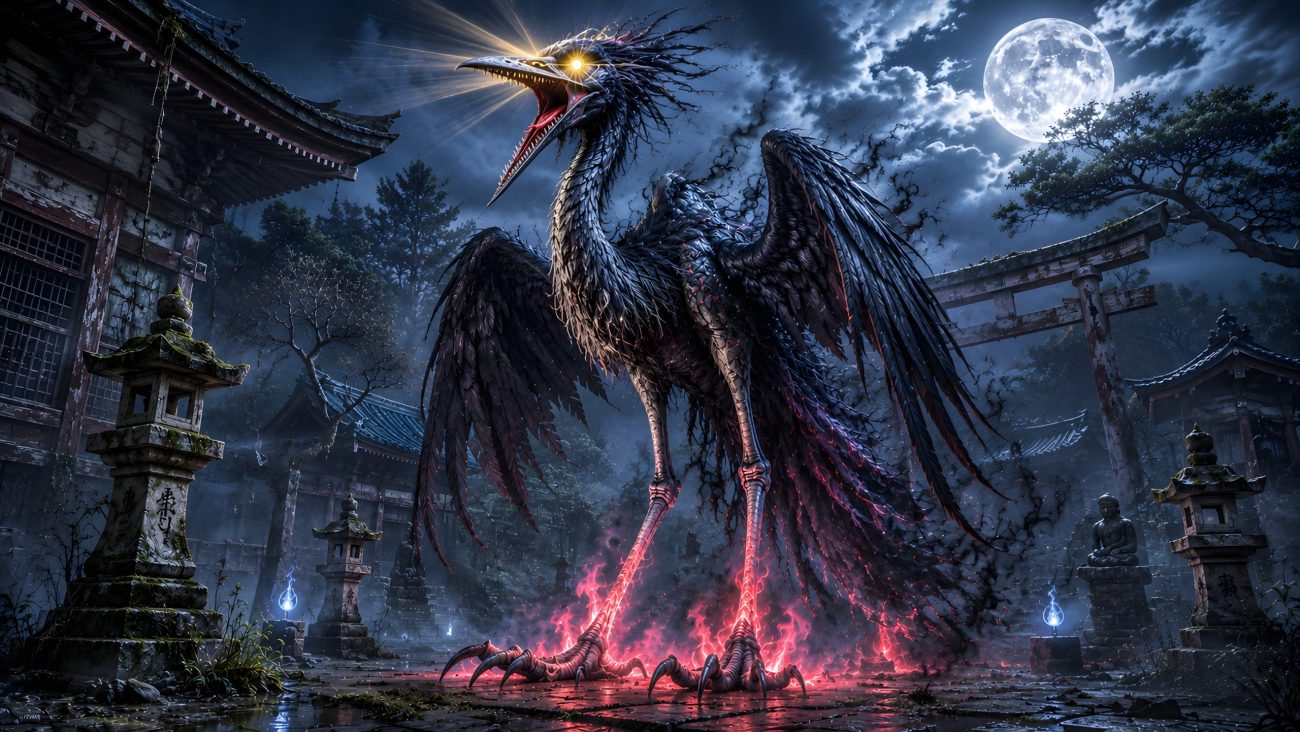
The Inmaraki is a monstrous bird that appears in the 1809 revenge tale Konjin Chōgorō Chūkō Monogatari. After the concubine Oyuki and her young son Tsuyuichi are cruelly abused and ultimately killed, their restless spirits unite into a single terrifying being. The creature appears as a black, crane-like bird with blazing eyes and a shrill cry, confronting the woman responsible for their suffering.

The Inmaraki is accompanied by the ghosts of Oyuki and her headless son, who continue to haunt their tormentor. As the apparitions appear again and again, they drive her into terror, madness, and eventually death, completing their revenge.

The creature is based on the older Onmoraki, a bird yokai said to arise from the lingering energy of a corpse. In Konjin Chōgorō Chūkō Monogatari, however, it is specifically called Inmaraki and is depicted as the physical manifestation of the vengeful spirits of the murdered mother and child, making it a distinct variation of the older legend.


Sources

TYZ. (2018, October 20). 陰摩羅鬼 (Inmaraki). In 新版TYZ 妖怪図鑑. Retrieved June 29, 2026, from https://tyz-yokai.blog.jp/archives/1072670895.html


Tōjukei

Tradition / Region: Japanese Mythology, Chinese Mythology
Alternative names: Spitting-Swallowing Chicken; Ribbon-Spitting Chicken
Category: Bird


The Myth

The Tōjukei is a legendary bird described in Chinese and Japanese tradition. It is said to resemble a pheasant or turkey and bears two green horns upon its head. During the clear days of spring and summer, the fleshy wattles hanging from its throat spread open, giving the impression that the bird is spitting out long ribbons, from which it takes its name.

Another tradition explains the name differently. It says that when the Tōjukei breathes toward the sun, its breath shines in five brilliant colors like a rainbow, resembling a brightly colored ribbon. Because of its unusual appearance and marvelous qualities, the bird became a popular subject in Japanese paintings and temple decorations.


Sources

TYZ. (2017, January 24). 吐綬鶏 (Tojukei). In 新版TYZ 妖怪図鑑. Retrieved June 29, 2026, from https://tyz-yokai.blog.jp/archives/1063934758.html


Kiji Musume

Tradition / Region: Japanese Mythology
Alternative names: Pheasant Maiden; Kiji-musume
Category: Bird


The Myth

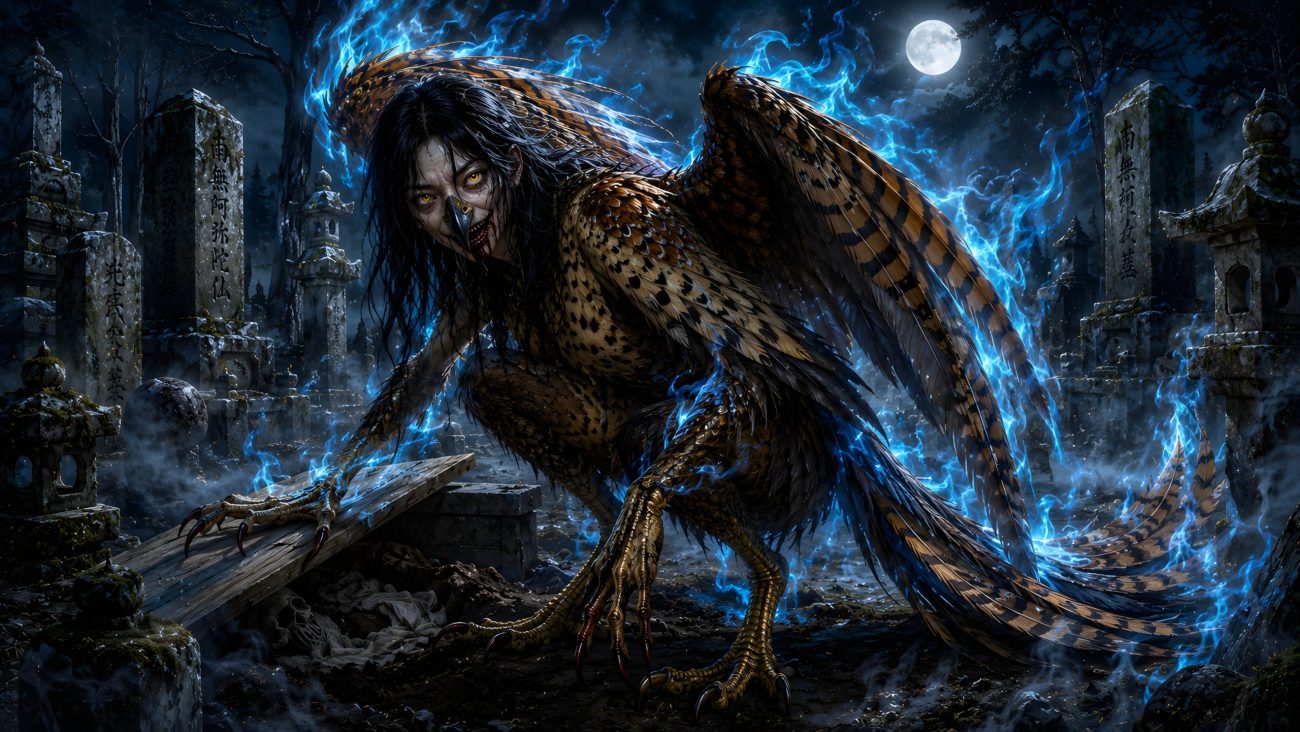
The Kiji Musume (“Pheasant Maiden”) is a yokai from the village of Tsuchibuchi in Iwate Prefecture. An elderly couple who longed for a child prayed every night to the local deity, asking for a child no matter what form it might take. After the wife dreamed of a flowering vine blooming in her robe, she gave birth to a beautiful daughter named Kosan, who grew into a lovely young woman and eventually married.

Soon after her marriage, Kosan began secretly leaving her bed each night, always returning with hands and feet as cold as ice. Suspicious, her husband followed her to the village cemetery, where he saw her digging up a fresh grave. Too terrified to watch further, he fled home without confronting her.

The following night, the husband and Kosan’s mother secretly watched together. They saw Kosan break open a coffin and devour the corpse inside with the appearance of a fearsome demon. Shocked, her mother cried out to her. Realizing her secret had been discovered, Kosan declared that the bond between them had come to an end. Blue flames burst from her body, and she transformed into a pheasant, flying away toward the mountains and never returning.


Sources

TYZ. (2016, May 21). 雉子娘 (Kiji Musume). In 新版TYZ 妖怪図鑑. Retrieved June 29, 2026, from https://tyz-yokai.blog.jp/archives/1057632664.html


Karyōbinga

Tradition / Region: Indian Mythology, Japanese Mythology
Alternative names: Kalavinka; Kalaviṅka; Karyōbinga
Category: Bird


The Myth

The Karyōbinga is a divine bird said to dwell in the Pure Land. It has the face of a human and the body of a bird, and its voice is so beautiful that it preaches the teachings of Buddhism through its song. In Buddhist art, it is sometimes shown playing a flute or another musical instrument as it sings.

The Karyōbinga is the Japanese form of the Sanskrit Kalaviṅka, a heavenly bird renowned for its incomparable voice. It is frequently depicted in temples and on Buddhist ornaments, often appearing beside the halo of Amida Buddha. The bird is also celebrated in gagaku, Japan’s classical court music, where the dance Karyōbinga portrays the celestial bird descending from the heavens to perform its graceful dance.


Sources

TYZ. (2009, July 26). 迦陵頻伽 (Karyōbinga / Kalyobinga). In 新版TYZ 妖怪図鑑. Retrieved June 29, 2026, from https://tyz-yokai.blog.jp/archives/1010655151.html


Pentachikoro Oyashi

Tradition / Region: Japanese Mythology
Alternative names: Pentachi-koro-oyashi; Ghost that Carries a Torch
Category: Bird


The Myth

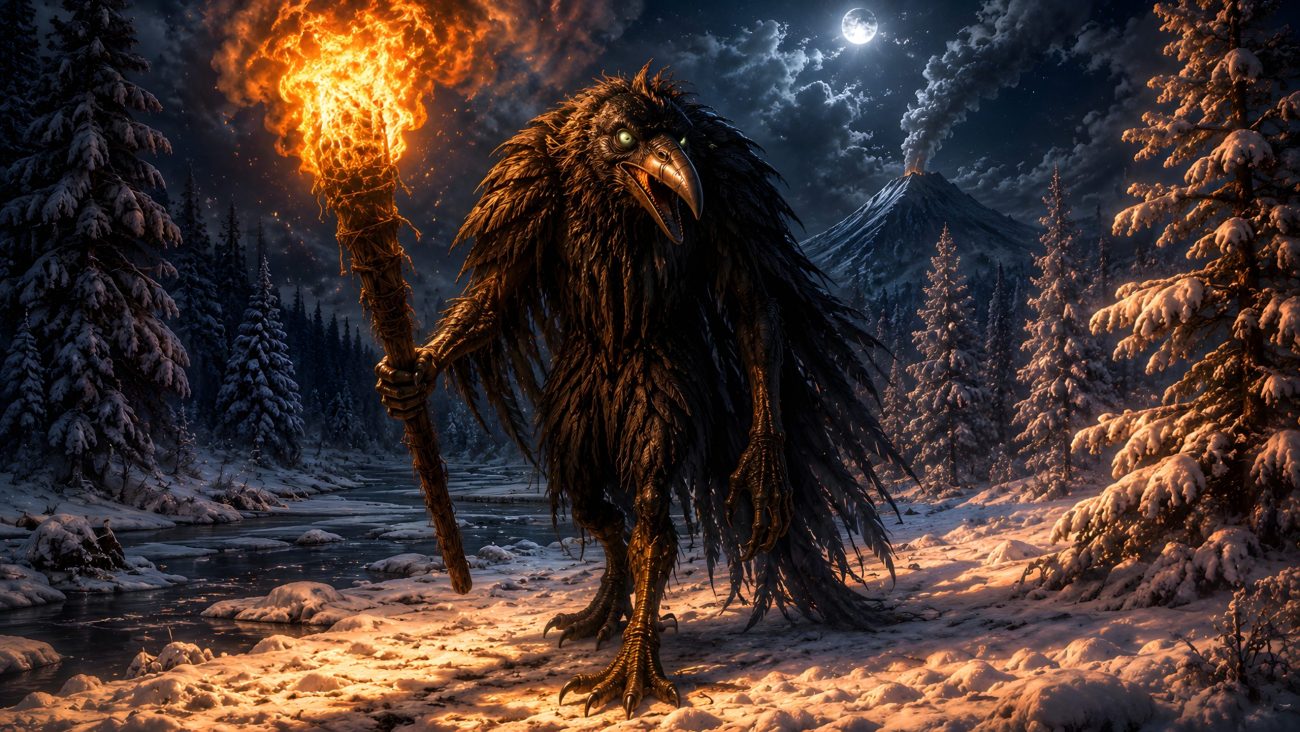
The Pentachikoro Oyashi is a supernatural being from the traditions of the Sakhalin Ainu. Its name means “Ghost that Carries a Torch,” and it is said to wander the night holding a blazing torch that frightens travelers.

One night, the chief of Toyukushi was traveling to the settlement of Kotankeshi when the torch-bearing apparition followed him. The light of its torch reflected across the snow, making the dark road as bright as day. Terrified, the chief reached Kotankeshi and reported that a monster had pursued him.

The brave chief of Kotankeshi set out with his sword to confront the creature. Before long, the mysterious torchlight appeared behind him, and the Pentachikoro Oyashi drew near. As it reached out to touch him, the chief thrust his sword into it. The creature writhed in agony before collapsing, while the chief himself fainted from the encounter. When others returned the following morning, they discovered that the slain monster was in fact a giant raven. The Pentachikoro Oyashi was said to be an evil raven that had disguised itself as a torch-bearing ghost.


Sources

TYZ. (2009, July 26). ペンタチコロオヤシ (Pentachikoro Oyashi). In 新版TYZ 妖怪図鑑. Retrieved June 29, 2026, from https://tyz-yokai.blog.jp/archives/1010654297.html


Messenger of the Queen Mother

Tradition / Region: Chinese Mythology
Alternative names: Wangmu Shizhe; Queen Mother’s Messenger
Category: Bird


The Myth

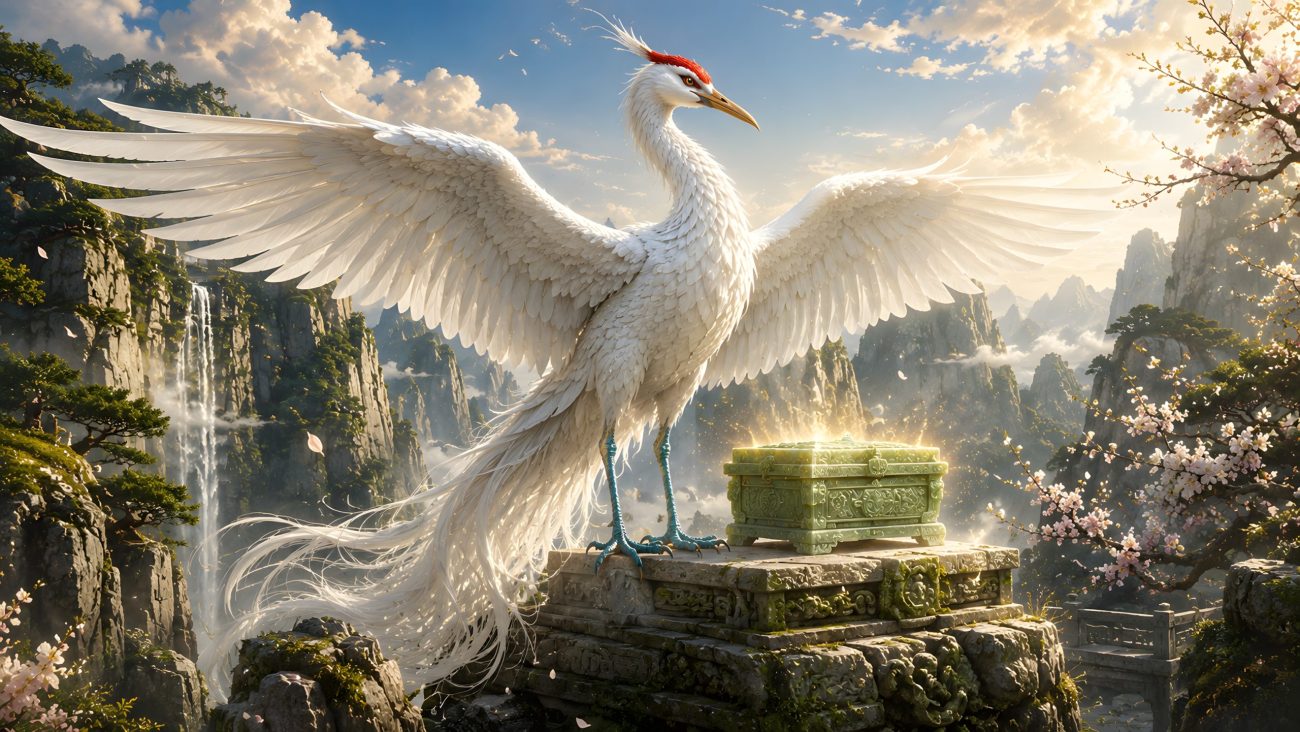
The Messenger of the Queen Mother is a mythical bird recorded in the Youyang Zazu. It is described as having blue feet, a reddish-yellow beak, white wings, and a crimson forehead. The bird is said to dwell on Han Mountain in Qi Commandery.

According to the legend, Emperor Wu of Han once climbed the mountain and discovered a jade casket measuring five inches in length. As he descended the mountain, the jade casket suddenly transformed into a white bird and flew away. People believed that the mountain contained a medicine casket belonging to the Queen Mother of the West, and that this miraculous bird had been appointed to guard it.


Sources

維基百科貢獻者. (n.d.). 王母使者. In 維基百科,自由的百科全書. Retrieved June 29, 2026, from https://zh.wikipedia.org/wiki/%E7%8E%8B%E6%AF%8D%E4%BD%BF%E8%80%85


Shang Yang

Tradition / Region: Chinese Mythology
Alternative names: Shangyang
Category: Bird


The Myth

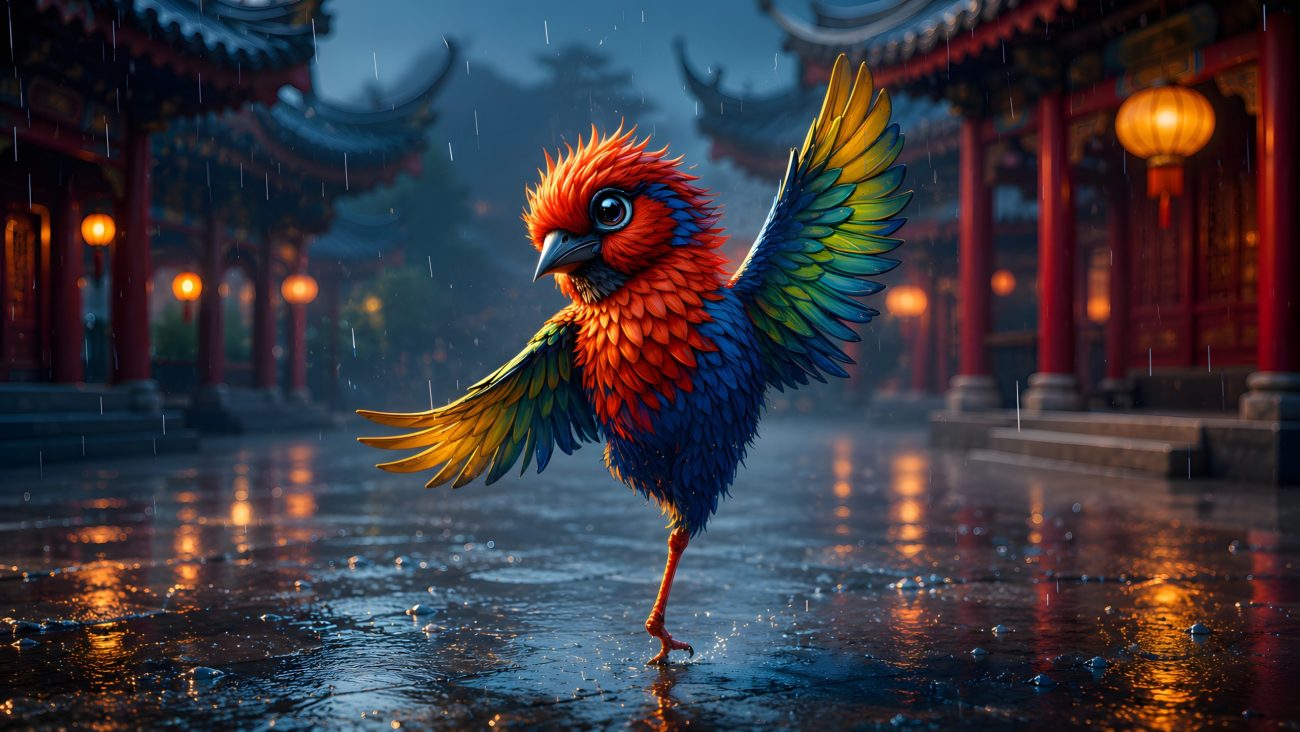
The Shang Yang is a legendary one-legged bird associated with rain and floods in Chinese mythology. It is said to hop and dance upon a single leg whenever heavy rain is about to fall, making its appearance a sure sign that rivers will soon overflow.

According to Confucius’ Family Sayings, the bird once appeared in the state of Qi, where it danced before the ruler’s palace. When the Duke of Qi asked Confucius about the strange creature, Confucius identified it as the Shang Yang and warned that its dance foretold a great flood. He advised the people to repair their dikes and drainage channels, and soon afterward torrential rains arrived, causing widespread flooding.

Because of this legend, the Shang Yang became a symbol of approaching rain. Its dance gave rise to the saying “Shang Yang dances”, an expression used to predict heavy rainfall and floods.


Sources

維基百科貢獻者. (n.d.). 商羊. In 維基百科,自由的百科全書. Retrieved June 29, 2026, from https://zh.wikipedia.org/wiki/%E5%95%86%E7%BE%8A


Zhu

Tradition / Region: Chinese Mythology
Alternative names: Zhū; Zhu Bird
Category: Bird


The Myth

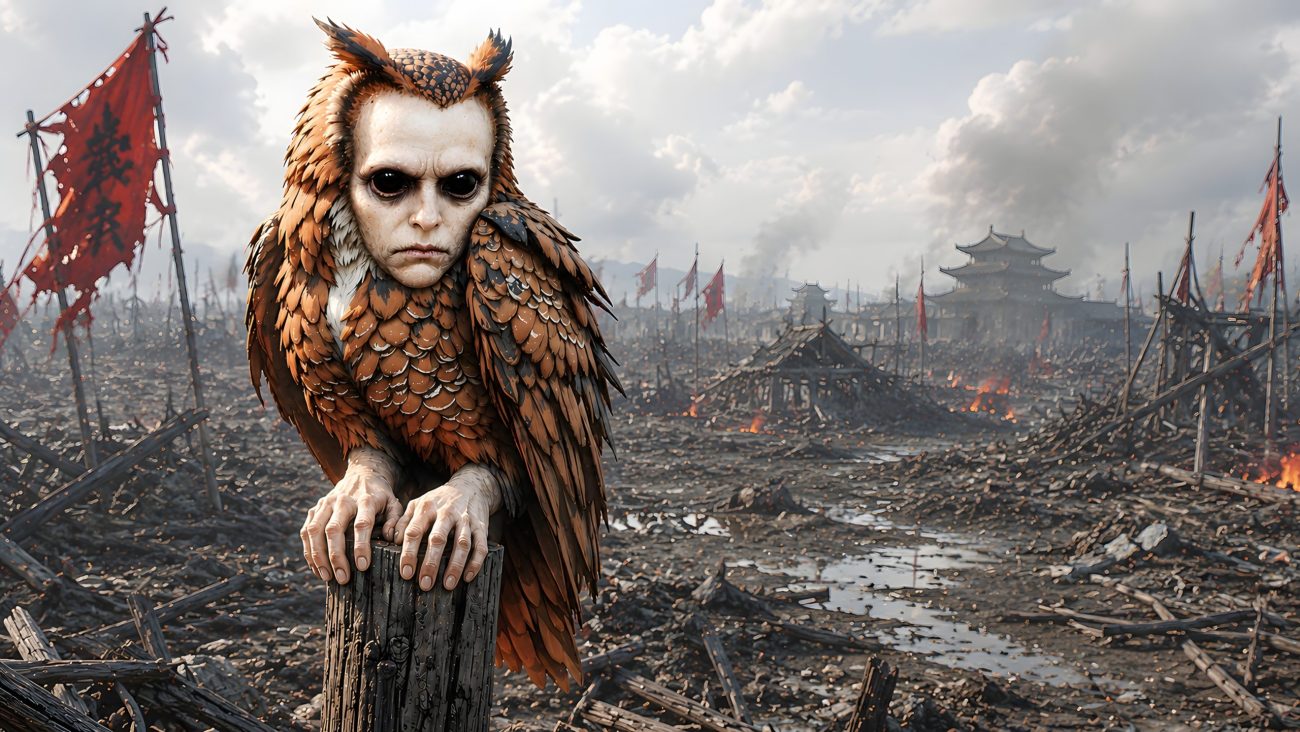
The Zhu is a strange bird described in the Classic of Mountains and Seas. It resembles an owl but has human hands instead of wings or claws. Its cry sounds like a loud quacking noise, and its appearance is said to foretell the banishment of virtuous and talented people from the region where it is seen.

Later tradition identifies the Zhu as the transformed form of Danzhu, the son of the legendary Emperor Yao. After rebelling against Emperor Shun and suffering defeat, Danzhu drowned himself in the South China Sea out of shame and became the Zhu bird. Because of this origin, the bird came to symbolize exile and misfortune. It is also said that Danzhu’s descendants founded the distant Kingdom of Danzhu, whose inhabitants possessed human faces and the wings of birds.


Sources

維基百科貢獻者. (n.d.). 鴸鳥. In 維基百科,自由的百科全書. Retrieved June 29, 2026, from https://zh.wikipedia.org/wiki/%E9%B4%B8%E9%B8%9F


Gu Diao

Tradition / Region: Chinese Mythology
Alternative names: Gudiao
Category: Bird


The Myth

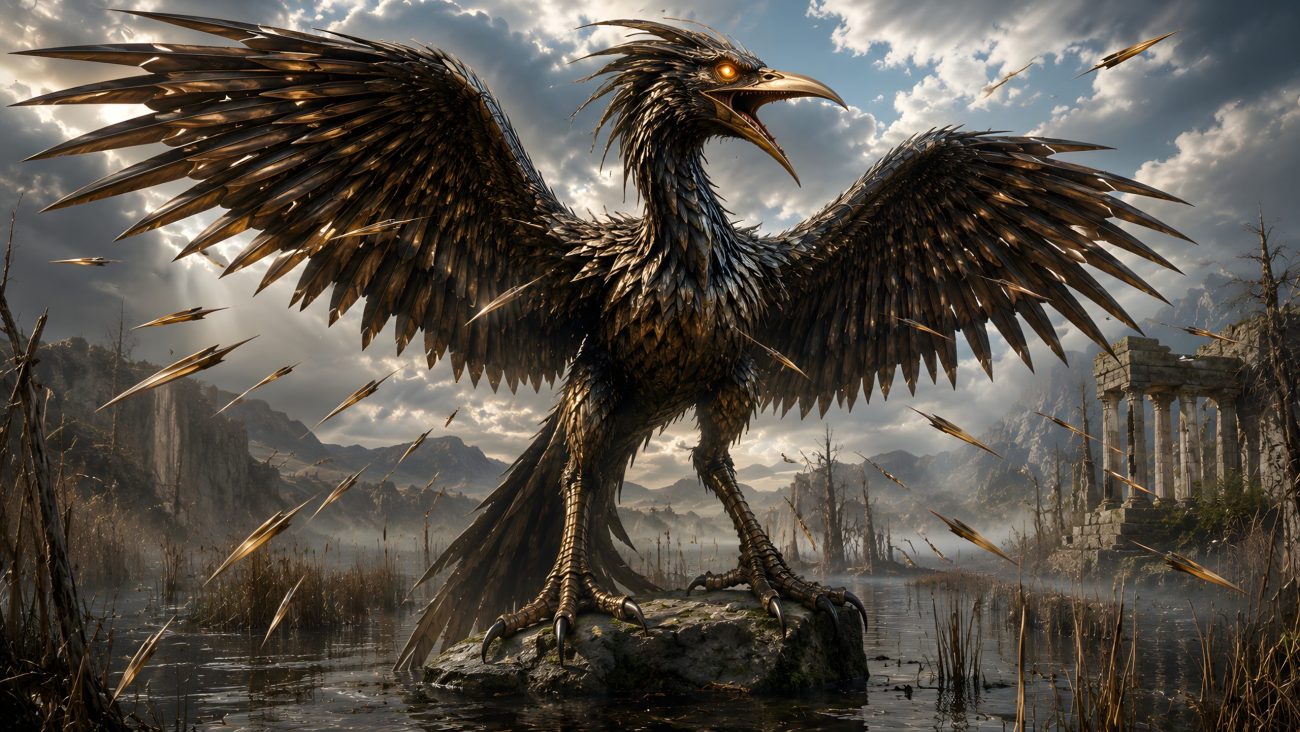
The Gu Diao is a man-eating monster described in the Classic of Mountains and Seas. It is said to live in the Zegeng River beside Mount Luwu. The creature resembles an eagle with horns upon its head, cries like a human infant, and preys upon people.

Later sources offer different descriptions of the Gu Diao. The Pianya also describes it as an eagle with horns, while the Book of Things and Things (Shiwu Ganzhu) portrays it as a leopard-like beast with a bird’s beak, a single horn, and the cry of a baby. Despite these differing appearances, all accounts describe it as a fearsome supernatural creature.


Sources

維基百科貢獻者. (n.d.). 蠱雕. In 維基百科,自由的百科全書. Retrieved June 29, 2026, from https://zh.wikipedia.org/wiki/%E8%A0%B1%E9%9B%95