Blauw Vuurtje

Tradition / Region: Dutch Mythology
Alternate Names:
Category: Flame


The Myth

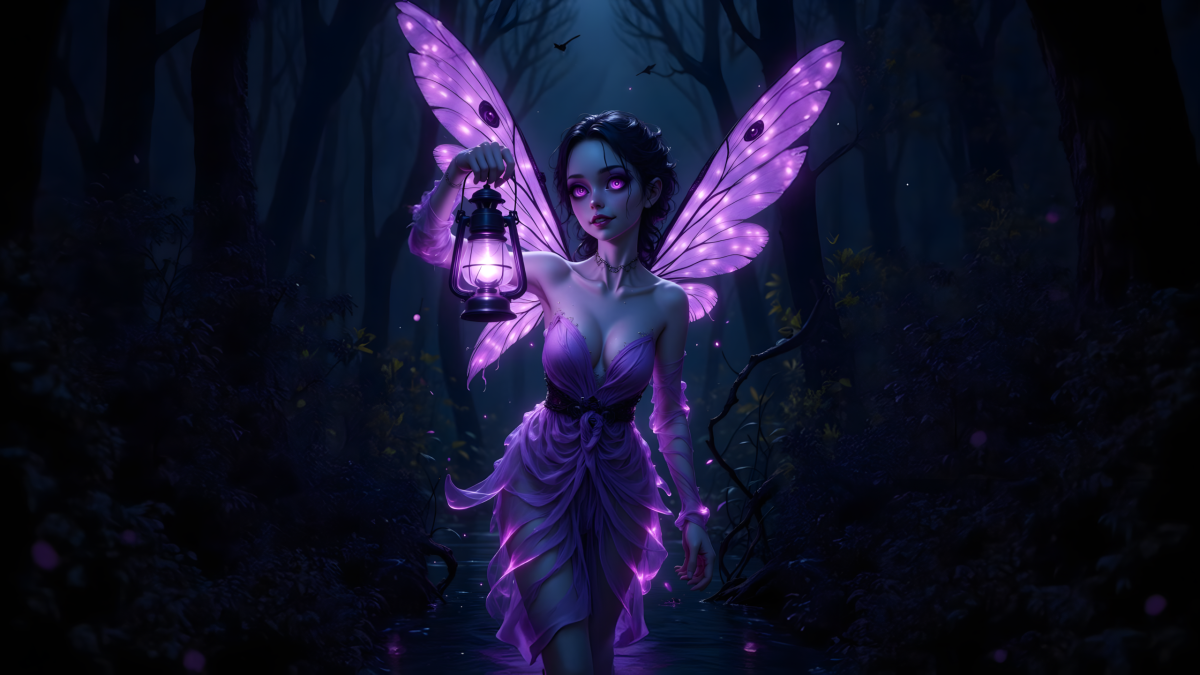
In the quiet places of Limburg and the Veluwe, small blue flames are said to appear at night. These are the Blauw Vuurtje, fire-elves that drift silently above the earth.

They hover only where treasures lie hidden beneath the ground. Their light is soft but unwavering, marking the spot for those who know how to read the signs. Yet the treasure is not meant for everyone.

Only a person of pure heart may dig where the blue flame floats. He must also know how to keep silent, for a single spoken word will cause the Blauw Vuurtje to vanish at once. If the flame disappears, the earth closes its secret again, and the treasure is lost forever.

Thus the blue fire waits patiently, glowing in the darkness, revealing riches only to the worthy and the wordless.


Gallery


Sources

Abe de Verteller. (2014). Van aardmannetje tot zwarte juffer: Een lijst van Nederlandse en Vlaamse elfen en geesten. In AbeDeVerteller.nl, from https://abedeverteller.nl/van-aardmannetje-tot-zwarte-juffer-een-lijst-van-nederlandse-en-vlaamse-elfen-en-geesten/


Interpretive Lenses

Religious Readings
  • Christian Ascetic Deep Dive
Philosophical Readings
  • Nietzschean Deep Dive
Psychological Readings
  • Jungian Deep Dive
Esoteric Deep Dive
  • Hermetic Deep Dive
Political / Social Readings
  • Marxist Deep Dive
Other
  • How to Invite The Blauw Vuurtje

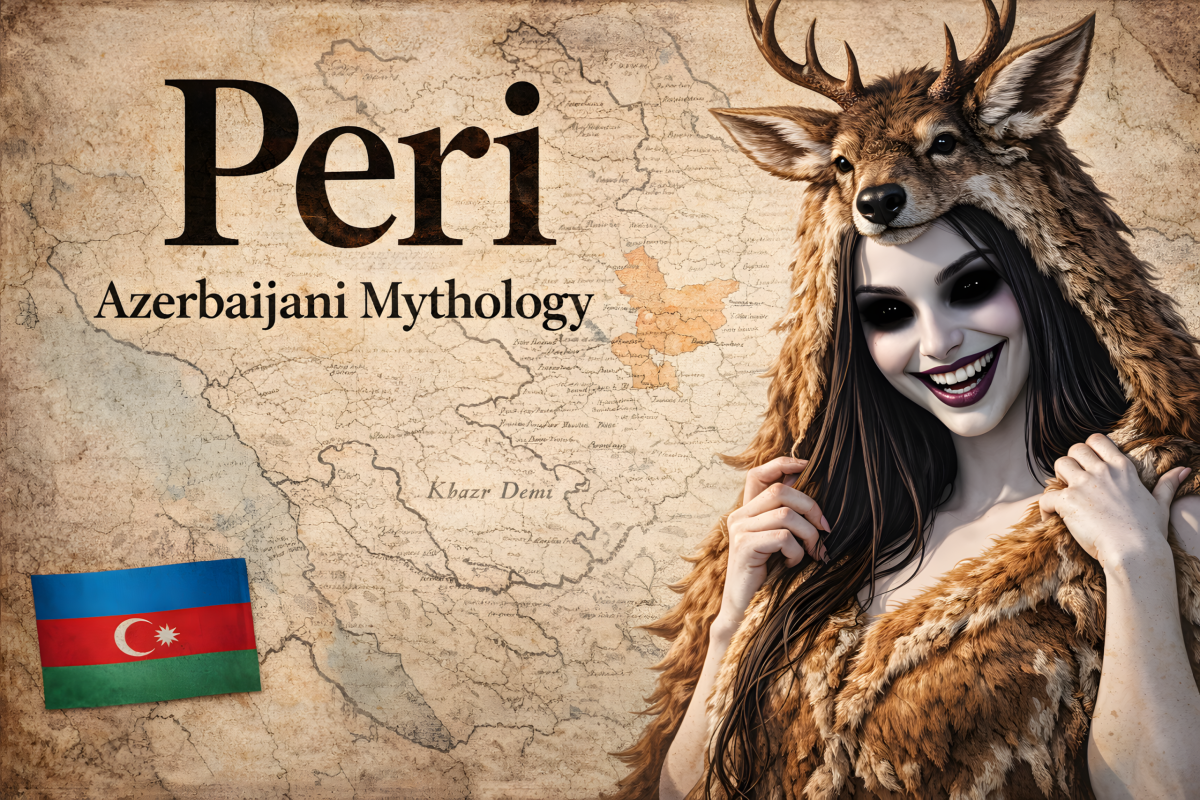
Peri

Tradition / Region: Azerbaijani
Alternate Names:
Category: Nymph, Pigeon, Deer, Lake Dweller


The Myth

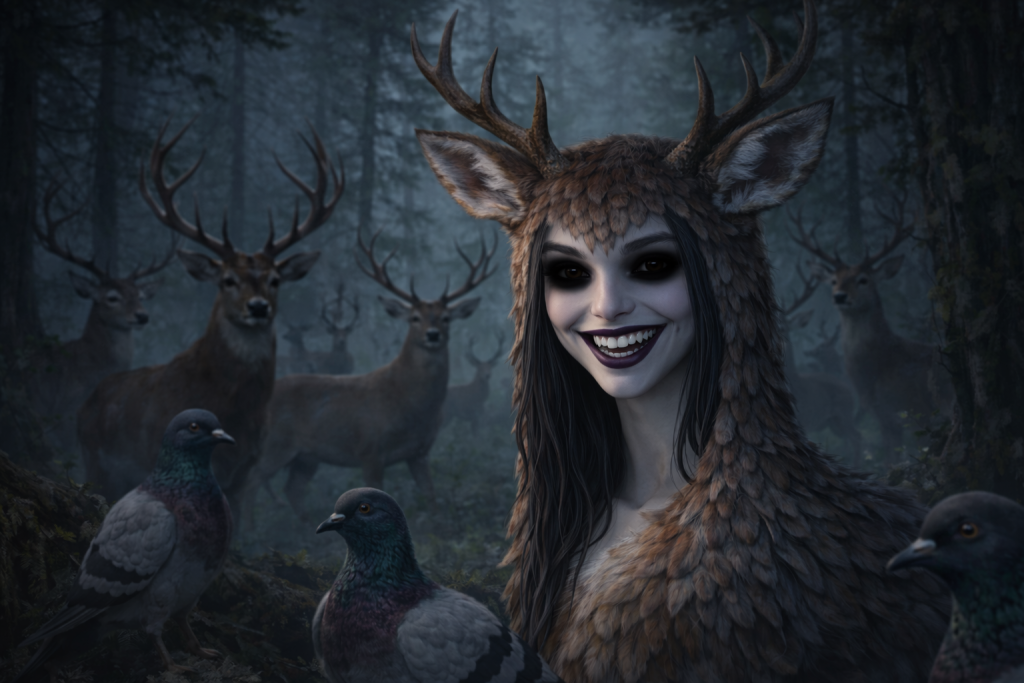
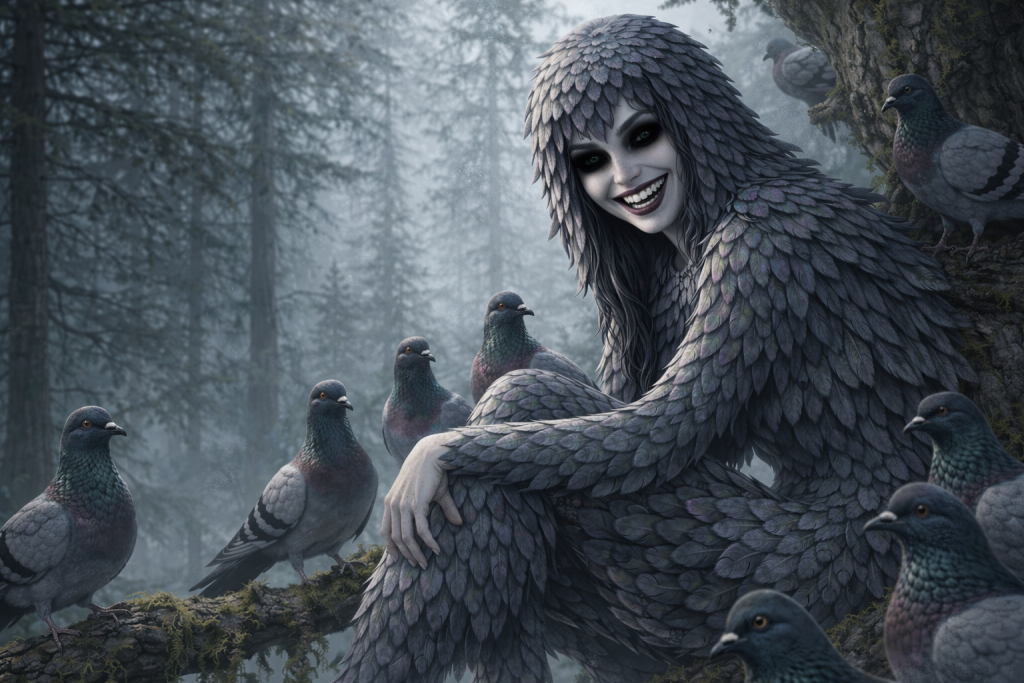
The Peri is a beautiful supernatural maiden, gentle by nature and radiant in form. She often appears as a pigeon or a deer, coming to ponds or rivers where she removes her animal skin and bathes as a human woman.

If someone steals this skin, the Peri is trapped and can be forced to obey, performing magic or granting favors. Yet such acts are dangerous, for Peris are not evil beings. They are kind-hearted, capable of fighting demons, and may even marry humans.

A Peri must be treated with respect. When offended or humiliated, her sorrow can turn into power, bringing misfortune or supernatural disaster. Thus she is remembered as a being of beauty and kindness, but one whose dignity must never be violated.


Gallery


Sources

JAMnews.net. (2017). The magical creatures of Azerbaijani mythology. Retrieved from https://jam-news.net/azerbaijani-demons/


Interpretive Lenses

Religious Readings
  • Christian Ascetic Deep Dive
Philosophical Readings
  • Nietzschean Deep Dive
Psychological Readings
  • Jungian Deep Dive
Esoteric Deep Dive
  • Hermetic Deep Dive
Political / Social Readings
  • Marxist Deep Dive
Other
  • How to Invite The Peri

Tepegöz

Tradition / Region: Azerbaijani and Turkic mythology
Alternate Names:
Category: Giant


The Myth

Tepegöz is a huge one-eyed giant who dwells in a cave and feeds on humans. When angered, he forces people inside his lair, where none escape alive. His sense of smell is keen, and he can track victims even in darkness.

There is only one way to survive him. A person must hide beneath a sheep’s skin so the giant cannot detect their scent. When the moment comes, Tepegöz can be slain only by driving a sharp sword into his single eye.

Though powerful and terrifying, Tepegöz is slow-witted. Those who rely on cunning rather than strength alone may overcome him, proving that brute force without intelligence is doomed to fall.


Source

jam-news.net/azerbaijani-demons/

Qulyabani

Tradition / Region: Azerbaijani mythology
Alternate Names:
Category: Sorcerer, Steppe dweller


The Myth

Qulyabani wanders the steppes and cemeteries, waiting for travelers who walk too late into the night. He looks like a man covered in dark hair, but his feet are turned backward, marking him as something unnatural. He speaks with a human voice and often challenges those he meets, delighting in fear and confusion.

Though dangerous, Qulyabani can be bound. If someone is clever enough to stick a needle into the collar of his clothing, he becomes their servant. Yet his obedience is twisted. Every command is fulfilled in reverse or in the most harmful way possible.

Thus, Qulyabani is both threat and temptation—a being whose power can be used, but never trusted, and whose tricks often punish those who believe they can control him.


Source

jam-news.net/azerbaijani-demons/

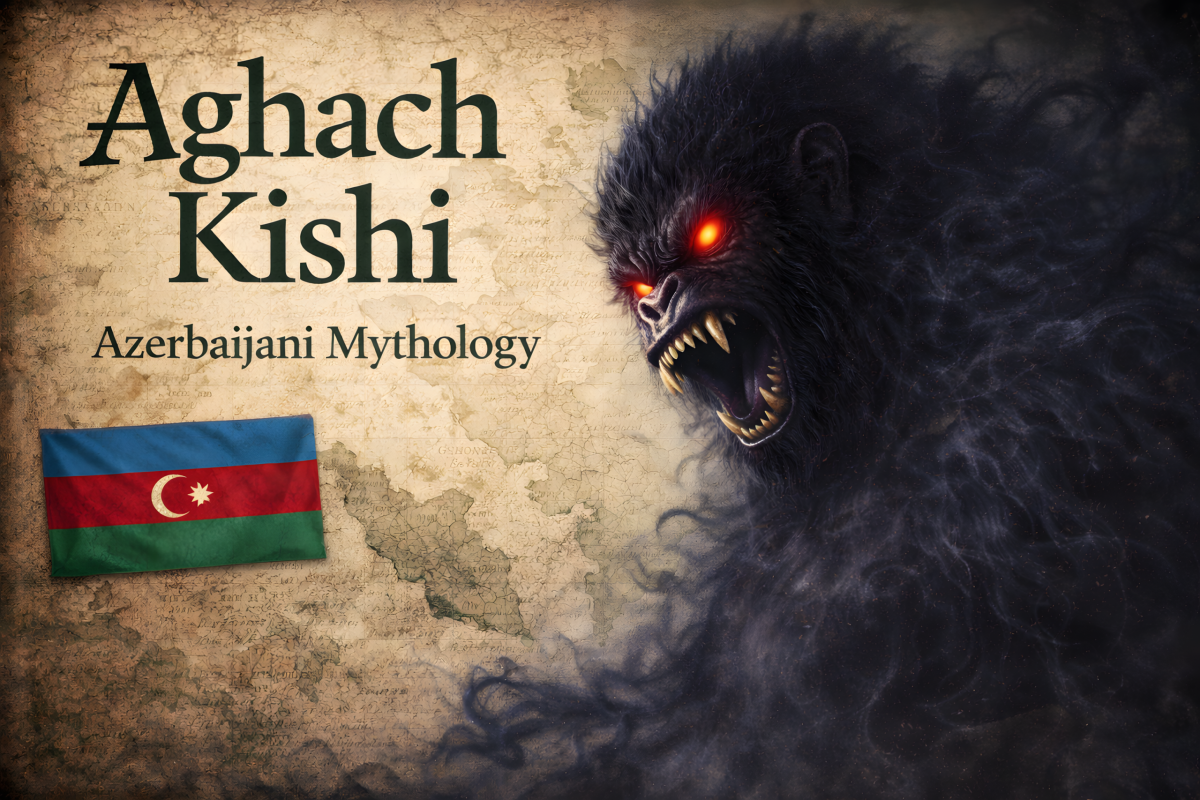
Aghach Kishi

Tradition / Region: Azerbaijani mythology
Alternate Names: Mesha Adam
Category: Monkey, Forest dweller, Mountain dweller, Ghost


The Myth

In the mountainous forests there lives Aghach Kishi, the Woodman. He is a wild, ghostlike being, his body covered in hair, moving through the trees with a will of his own. Some say he resembles a man, others a beast, but he belongs fully to the forest.

Aghach Kishi wanders near villages and gardens, where he sometimes appears without warning. He has a strong, unpleasant smell, and he is known to take clothing left behind by humans. In older times, people would leave garments for him on purpose, hoping to avoid angering him.

Though he does not always attack, encounters with Aghach Kishi are uneasy and unsettling. He is a reminder that the forests are not empty, and that something older and untamed still walks among the trees.


Gallery


Sources

JAMnews.net. (2017). The magical creatures of Azerbaijani mythology. Retrieved from https://jam-news.net/azerbaijani-demons/


Interpretive Lenses

Religious Readings
  • Christian Ascetic Deep Dive
Philosophical Readings
  • Nietzschean Deep Dive
Psychological Readings
  • Jungian Deep Dive
Esoteric Deep Dive
  • Hermetic Deep Dive
Political / Social Readings
  • Marxist Deep Dive
Other
  • How to Invite The Peri

Sirānis

Tradition / Region: Afghanistan (Kabul, Zabulistan)
Alternate Names: Siranis
Category: Forest dweller


The Myth

In the forests and undergrowth of Kabul and Zabulistan dwells the Sirānis, a strange carnivorous creature whose breath is music. Its snout is pierced by many openings, and when it exhales, a flute-like melody flows from them, sweet and irresistible.

Animals that hear this sound are drawn toward it, gathering peacefully as if enchanted. They stand transfixed, overwhelmed by the beauty of the music, until the Sirānis calmly chooses its prey and devours it. If none please it, the creature releases a terrible shriek that shatters the spell and sends all fleeing in terror.

It is said the Sirānis inspired the creation of musical instruments, for its sound was unlike anything else in the natural world. Thus it remains a being of deadly beauty—one whose song brings wonder, stillness, and sudden death to those who listen too closely.


Sources

abookofcreatures.com– Sirānis entry

Contadini, A. Musical Beasts: The Swan-Phoenix in the Ibn Bakhtishu’ Bestiaries. In O, Kane, B. (2005) The Iconography of Islamic Art. Edinburgh University Press.

Contadini, A. (2012) A World of Beasts: A Thirteenth-Century Illustrated Arabic Book on Animals (the Kitab Na’t al-Hayawan) in the Ibn Bakhtishu’ Tradition. Brill, Leiden.

Ettinghausen, R. (1950) The Unicorn. Studies in Muslim Iconography, Freer Gallery of Art Occasional Papers Vol. 1, No. 3, Washington.

al-Qazwini, Z. (1849) Zakariya ben Muhammed ben Mahmud el-Cazwini’s Kosmographie. Erster Theil: Die Wunder der Schöpfung. Ed. F. Wüstenfeld. Dieterichsche Buchhandlung, Göttingen.

Âssas Buxxam

Tradition / Region: Algeria (Kabyle / Amazigh folklore)
Alternate Names: Guardian of the House
Category: Household guardian spirit


The Myth

Every home is watched by an unseen presence known as the Âssas Buxxam, the guardian of the house. It lives quietly among the family, observing daily life, protecting the household, and expecting respect in return. When a house contains a rocky outcrop, it is believed the guardian dwells there, and during celebrations a lamp is kept burning so it is not neglected.

The Âssas Buxxam is not alone. It belongs to a greater host of Guardians who dwell in fields, trees, caves, and notable places shaped by nature. These spirits must be greeted and honored, for they are the watchers of the world.

They serve the great lord Aguellid Amokrane, acting as his sentinels. To them, humans do not truly own their homes or lands—they merely borrow them. The Guardians watch how people live, how they treat the earth, and how they behave toward one another.

When respected, the Âssas Buxxam brings harmony to the household and may even speak on behalf of its people before God. When ignored or insulted, its favor withdraws, reminding all who live there that the home is never truly empty, and never entirely theirs.

Annequin

Tradition / Region: French Folklore (Ardennes)
Alternate Names: Hannequet; Hannequin; Harliquin
Category: Fairy / Goblin / Will-o’-the-wisp


The Myth

In the folklore of the Ardennes, the annequin is a malevolent fairy creature, often described as a kind of goblin or will-o’-the-wisp. It is known above all for luring humans to their deaths. Those who encounter an annequin are said to be drawn irresistibly toward marshes and wetlands, where they become lost and drown.

The annequins are closely associated with the mesnie Hellequin, the spectral procession that roams the night sky, and through it with the figure later known as Harlequin. Their nature is restless and predatory, bound to movement, noise, and disappearance.

According to tradition, annequins gather in a round dance every Saturday night. On certain nights, they are said to pass above houses, flying through the air while emitting shrill, piercing whistles. Anyone who is surprised by their passage is believed to vanish forever, leaving no trace behind.

The annequins are said to dwell especially in wooded areas, particularly in the forests of Puilly, where their presence is marked by strange sounds, sudden lights, and the dangerous pull toward bogs and swamps. Those who follow these signs are rarely seen again.

In the legends of the Ardennes, the annequin is remembered as a being of deception and disappearance, a nocturnal spirit whose call leads not to wonder, but to death.


Interpretive Lenses

Religious Readings
  • Christian Ascetic Deep Dive
Philosophical Readings
  • Nietzschean Deep Dive
Psychological Readings
  • Jungian Deep Dive
Esoteric Deep Dive
Political / Social Readings
  • Marxist Deep Dive
Other

Flower Spirits (Huā Yāo / Huā Xiān)

Tradition / Region: Chinese Folklore
Alternate Names: Huā Yāo (花妖), Huā Xiān (花仙), Huā Jīng (花精)
Category: Plant Spirit / Flower Spirit


The Myth

In Chinese folklore, flowers are not lifeless plants but beings endowed with spirit and awareness. It is said that flowers which survive for a hundred years may awaken consciousness and become flower spirits. After a thousand years of cultivation, such beings may ascend further and become immortals. These spirits are known as Huā Yāo or Huā Jīng when their nature is closer to demons, and Huā Xiān when they attain a purer, immortal state.

Flower spirits often appear in human form, usually as young women of extraordinary beauty whose appearance reflects the flower from which they were born. Their lives are bound to the cycles of nature: blooming, fading, and renewal. Though rooted in the soil, they can walk, speak, love, and suffer like humans, while retaining a deep connection to their original plant form.

One of the most famous accounts appears in “Xiangyu” from Strange Tales from a Chinese Studio by Pu Songling of the Qing dynasty. In this story, a peony flower spirit forms a relationship with a scholar surnamed Huang. The spirit is gentle and affectionate, yet vulnerable to the forces of the human world, illness, and spiritual imbalance. Her existence demonstrates both the beauty and fragility of flower spirits, who live between nature and humanity.

Earlier sources trace the idea of flower spirits back to Taiping Guangji, where flowers transforming into conscious beings are recorded as marvels of the natural world. These stories present flower spirits not as monsters, but as manifestations of the living earth itself—natural entities capable of emotion, loyalty, and moral action.

Poetry further reinforces their presence in the cultural imagination. Writers of the Tang, Song, and Ming dynasties frequently invoked flower fairies as unseen guests descending among blossoms, dancing beneath moonlight or moving with the wind through gardens. Their arrival often marked moments when the boundary between the human world and the spirit realm grew thin.

Flower spirits were also associated with imbalance in nature. Historical records sometimes attributed strange winds, unseasonal darkness, or disturbances among flowers to the activity of flower demons, suggesting that when the harmony of earth was disrupted, these spirits manifested visibly.

Across all accounts, flower spirits remain bound to impermanence. If their flower is destroyed, neglected, or uprooted, the spirit weakens or dies. Their stories serve as reminders that beauty, life, and spirit arise from patience and time, and that nature itself is alive, observant, and capable of transformation.


Interpretive Lenses

Religious Readings
  • Christian Ascetic Deep Dive
Philosophical Readings
  • Nietzschean Deep Dive
Psychological Readings
  • Jungian Deep Dive
Esoteric Deep Dive
Political / Social Readings
  • Marxist Deep Dive
Other

Aderyn y Corff

Tradition / Region: Welsh mythology
Alternate Names: Corpse Bird
Category: Bird, Zombie


The Myth

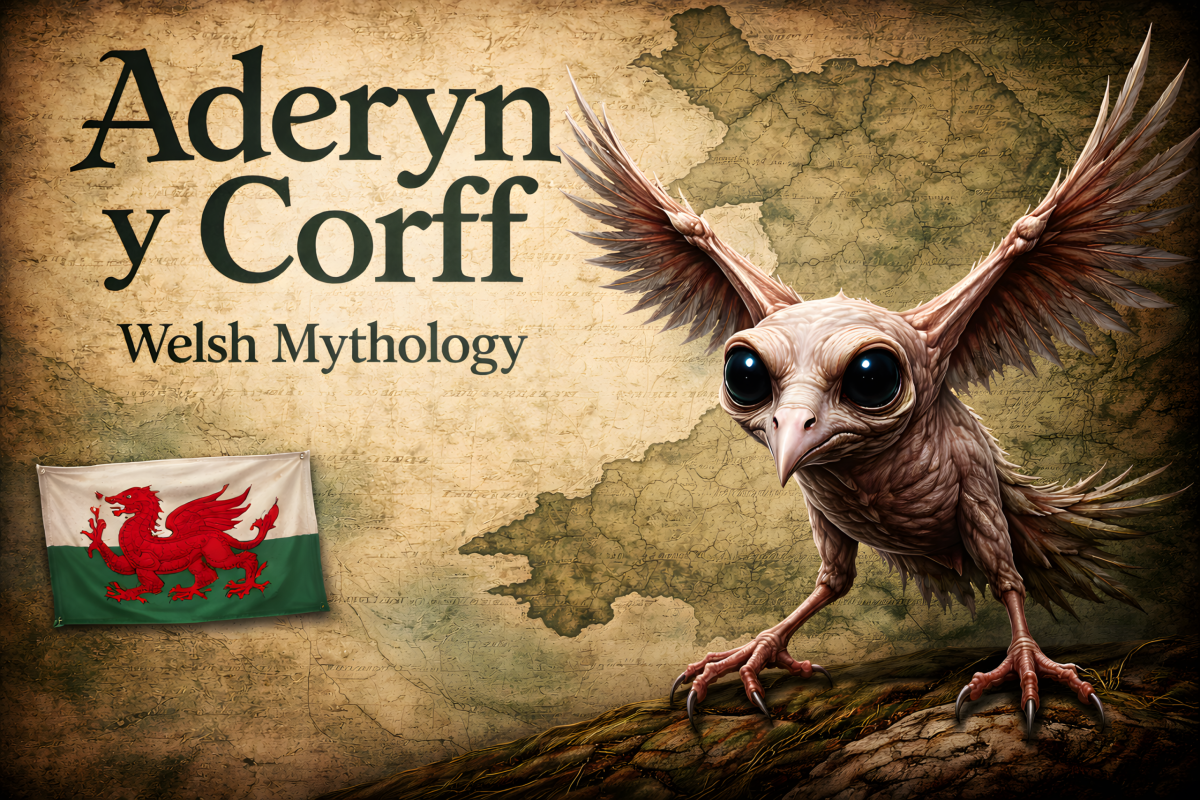
The Aderyn y Corff, the “corpse bird,” appears at the very edge of life, when death is no longer distant but imminent. In Welsh tradition, it does not wander the countryside at random nor bring vague ill fortune. It comes with purpose. When a person is near death, the bird is said to arrive outside the house, perching near a door or window, and calling softly into the night.

Its cry is described as sounding like dewch, dewch—“come, come.” This is not a threat or a warning meant to be avoided. It is a summons. The call is directed not to the living, but to the soul of the dying, inviting it to leave the body and pass onward. In this role, the Aderyn y Corff acts as a messenger between worlds, announcing that the moment of crossing has arrived.

The creature’s form marks it as something profoundly unnatural. It is said to have no feathers and no wings, yet it flies. This impossibility places it outside ordinary creation, identifying it as a being that does not belong fully to the physical world. Its movement obeys no natural law, only the logic of death and transition, reinforcing its status as a liminal presence suspended between life and the otherworld.

When it is not calling to the dying, the Aderyn y Corff is believed to dwell in another realm entirely—a plane of illusion or unreality that exists alongside the human world but rarely touches it. Death is one of the few moments when the boundary thins enough for the bird to cross over. It does not linger after its task is done. Once the soul has departed, the bird vanishes.

In many tellings, the Aderyn y Corff is closely associated with the screech owl, whose piercing nocturnal cry has long been linked to death across Europe. In Welsh usage, the name itself can refer to such owls, blurring the line between natural bird and supernatural herald. Yet folklore insists that when the call comes at the right moment, it is no ordinary owl but the corpse bird itself.

The Aderyn y Corff is feared, but not hated. It does not kill, curse, or deceive. It simply announces what cannot be changed. Its presence affirms a belief deeply rooted in Welsh tradition: death does not arrive silently. The otherworld sends a messenger first, and when the corpse bird calls, the soul is already being gathered.


Gallery


Sources

Sikes, W. (1881). British Goblins: Welsh Folk-lore, Fairy Mythology, Legends and Traditions. Sampson Low, Marston, Searle, & Rivington, p. 213.

Wikipedia contributors. (n.d.). Aderyn y Corff. In Wikipedia, The Free Encyclopedia, from https://en.wikipedia.org/wiki/Aderyn_y_Corff


Interpretive Lenses

Religious Readings
Philosophical Readings
  • Nietzschean Deep Dive
Psychological Readings
  • Jungian Deep Dive
Esoteric Deep Dive
  • Hermetic Deep Dive
Political / Social Readings
  • Marxist Deep Dive
Other
  • How to Invite The Spirit