Yakantsuru

Tradition: Japanese Mythology
Alternative Names: Yakan Tsuru, 薬缶吊る
Category: Object


The Myth

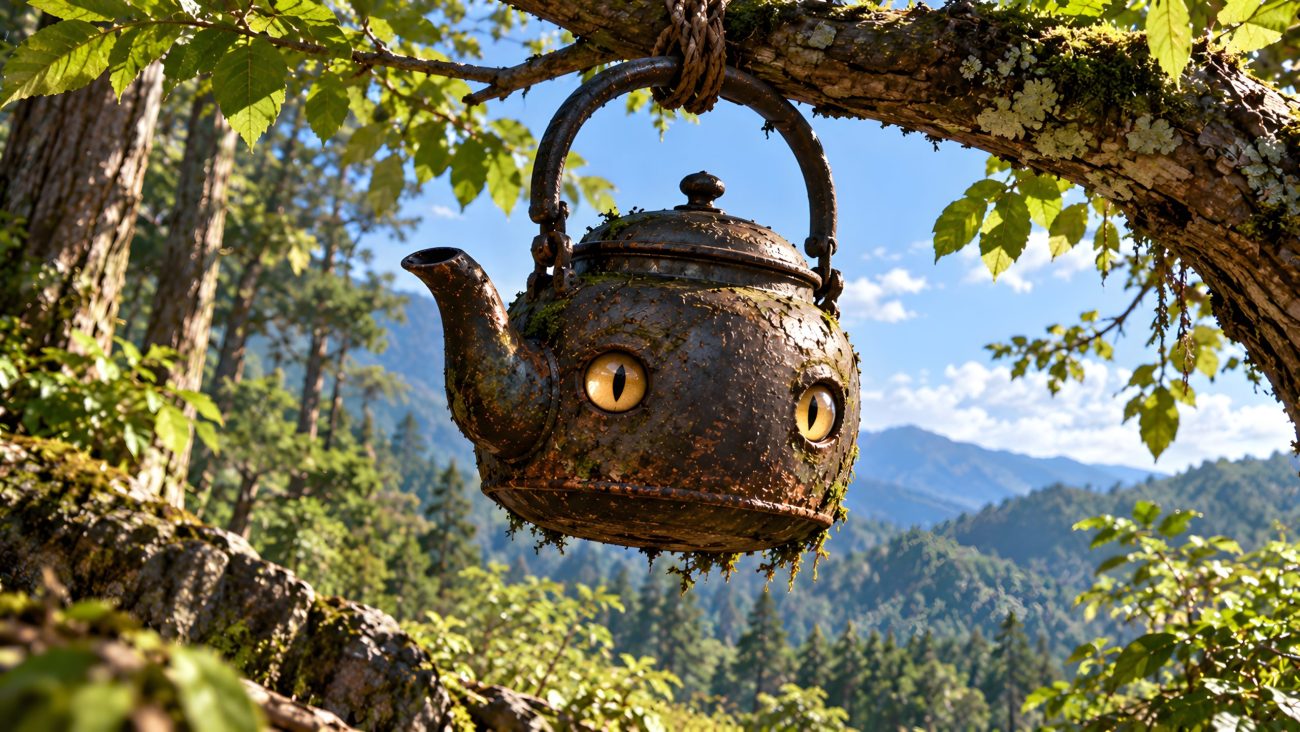
Yakantsuru is a mysterious yokai from Nagano Prefecture, Japan. Its name refers to a hanging kettle, reflecting the strange phenomenon associated with this supernatural being.

Those walking through a forest at night may encounter a kettle suddenly dangling down from the trees above. The sight appears unexpectedly in the darkness, making the Yakantsuru an eerie presence in the nighttime woods. Beyond this unusual occurrence, little is known about its appearance, behavior, or origins.


Sources

“Yakanzu.” 新版TYZ 妖怪図鑑 (New TYZ Yokai Encyclopedia). https://tyz-yokai.blog.jp/archives/1010652582.html


Yarikechō

Tradition: Japanese Mythology
Alternative Names: Yarimocho, Yarikenaga
Category: Object


The Myth

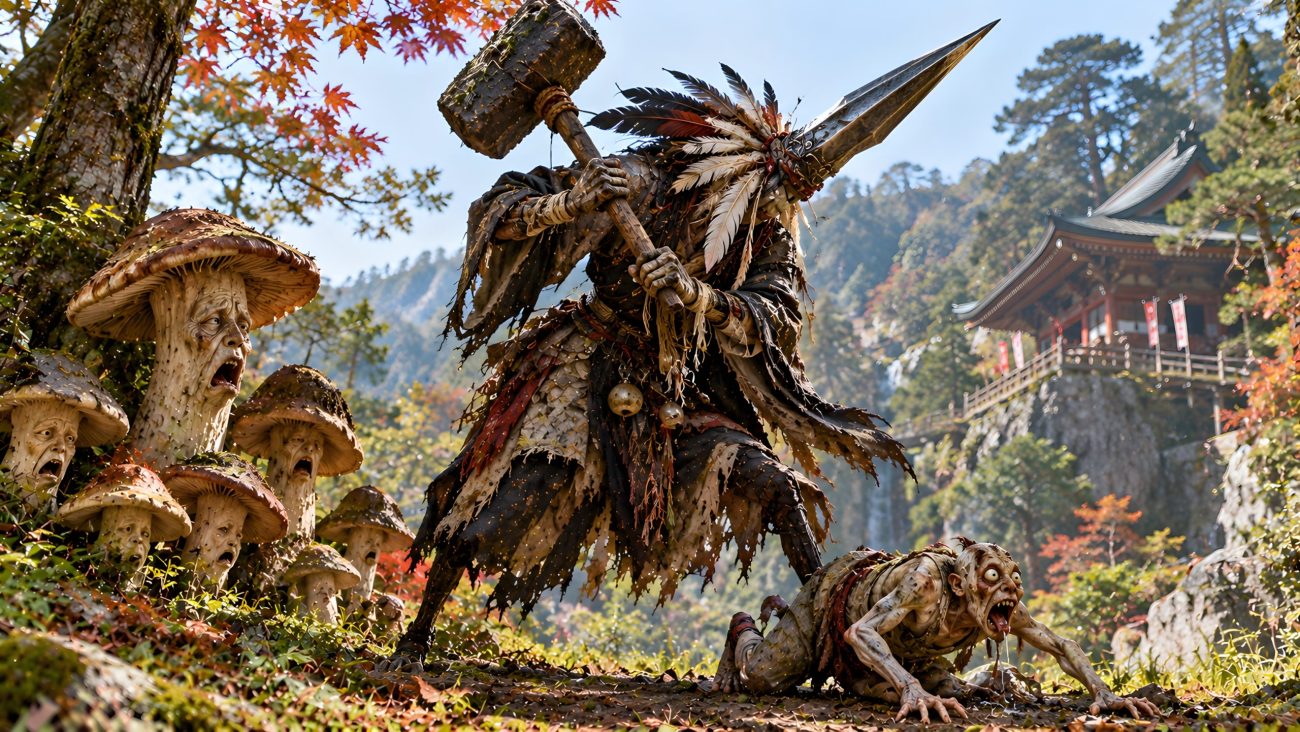
Yarikechō is a strange yokai associated with the keyari, a ceremonial spear decorated with feathers near its tip. Such spears were carried at the front of daimyō processions and festivals, where spear-bearers displayed their skill and helped lead the procession. Yarikechō takes the form of a supernatural being whose head is the pointed tip of a spear. It holds a hammer in both hands, raising it as though preparing to strike.

The yokai is depicted standing beside a cluster of peculiar mushrooms with human faces. In its illustration, Yarikechō appears to be raising its hammer toward a smaller, crawling yokai at its feet, as if preparing to attack it. Its unusual combination of a spear-shaped head and raised hammer gives it the appearance of a weapon transformed into a supernatural warrior.

Yarikechō is associated with the strange powers of weapons that have passed through the hands of great warriors. Its accompanying inscription wonders whether the spear might once have been touched by Japan’s greatest warrior, suggesting that its supernatural strangeness is a sign of exceptional martial skill. The yokai embodies the transformation of a ceremonial weapon into a mysterious being, revealing the uncanny potential hidden within objects associated with warriors and their processions.


Sources

“牛打坊 (Ushiuchibō).” 新版TYZ 妖怪図鑑 (New TYZ Yokai Encyclopedia). https://tyz-yokai.blog.jp/archives/1079440823.html


Vurige Wagen

Tradition: Belgian Mythology, Dutch Mythology
Alternative Names: Korenwagen, Gloeiende Wagen, Hellewagen, Spookwagen
Category: Object


The Myth

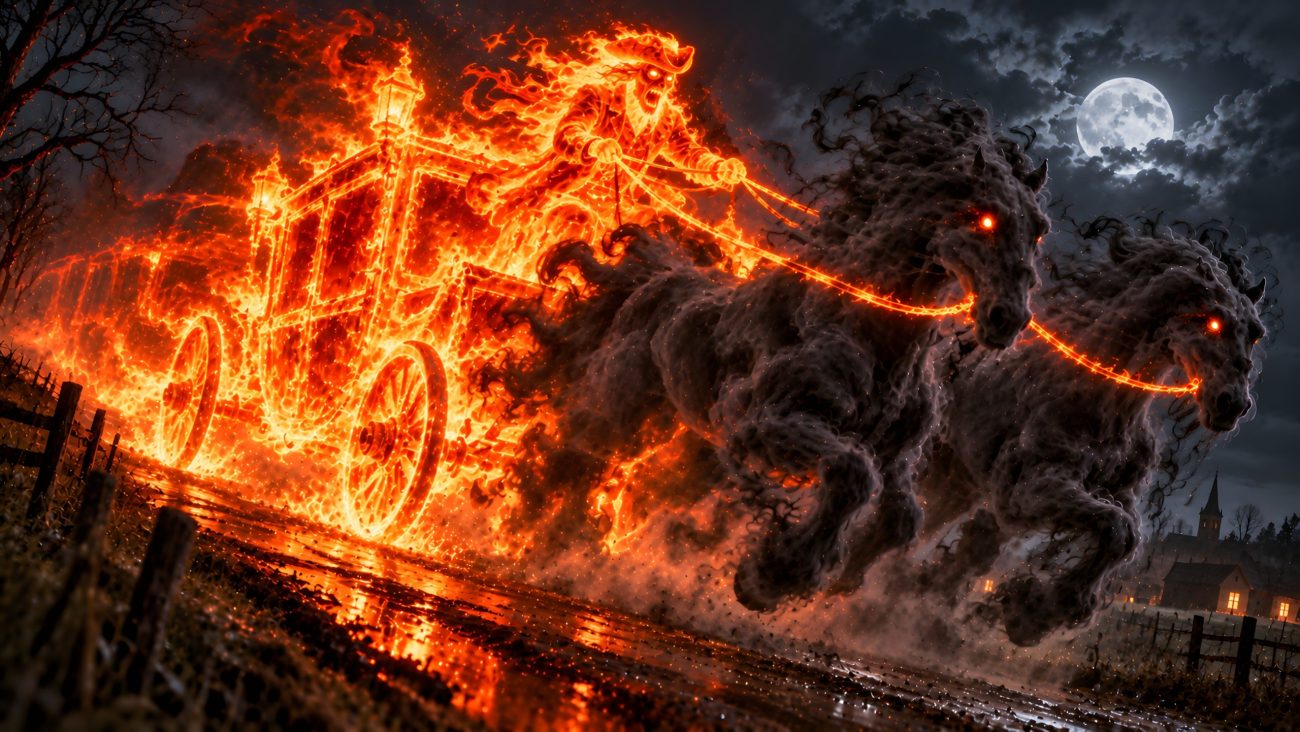
The Vurige Wagen is a glowing, fiery coach that appears at night, usually between midnight and one o’clock. It is drawn by black or invisible horses and sometimes rises into the air, racing through the darkness with an infernal roar.

Inside the coach, blood-red lights glow ominously, while the coachman himself shines with heat and spits fire. The terrifying vehicle is said to be the punishment of wealthy sinners who exploited and oppressed ordinary people during their lives.

One late-night traveller once heard the dreadful carriage thundering toward him. As the noise grew louder, he expected the fiery vehicle to rush past him, but when it came close, it suddenly vanished. Only a few metres farther away did it appear again, continuing its supernatural journey through the night.

The Vurige Wagen could also be understood as the restless spirit of a dissolute nobleman, condemned after death to drive eternally through the darkness in his blazing coach.


Sources

Reuland, Heinrich Adolph. Luxemburger Volksbücher: Geschichten und Sagen aus dem luxemburger Volksleben. Luxemburg: St. Paulus-Dr., 1892.


Tooverpluimen

Tradition: Belgian Mythology
Alternative Names: The Magic Feathers, De Tooverpluimen
Category: Object


The Myth

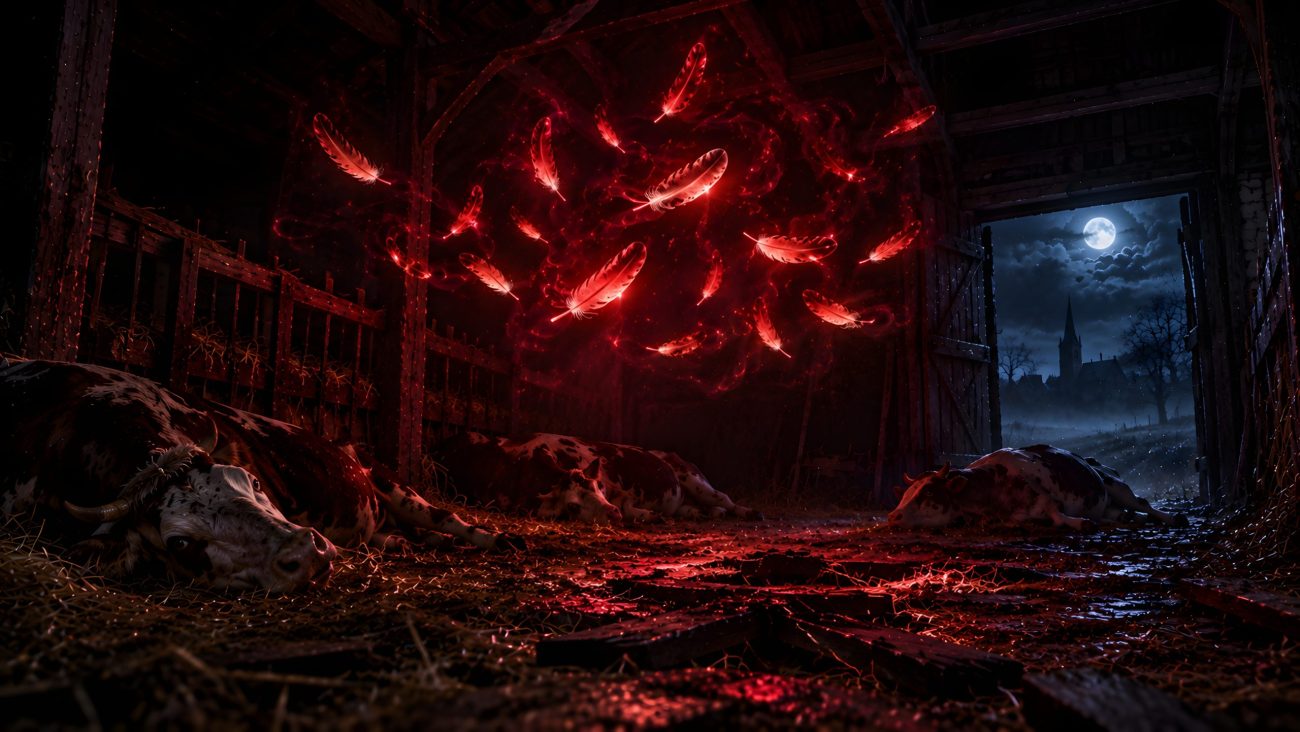
The Tooverpluimen are magical feathers hidden beneath the thresholds and feeding troughs of a farmer’s cowshed.

In Iddergem, a farmer discovered one morning that all three of his cows were dead, their necks twisted around. He bought new animals, but they suffered exactly the same fate. When he had no cattle left, the misfortune turned upon his children. They were struck by a strange bone disease that left them unable to support themselves on their own bones.

At last the priest was called. After much hesitation, he finally agreed to come to the farm. He ordered the thresholds, feeding troughs, and floor of the cowshed to be broken up.

Beneath the thresholds and troughs they discovered the hidden cause: the ground was filled with feathers.

Once the feathers were removed, the enchantment disappeared, and the deaths of the animals and illness afflicting the children came to an end.


Sources

De Cock, Alfons. Vlaamsche sagen uit den volksmond. Amsterdam: Maatschappij voor Goede en Goedkoope Lectuur, 1921.


Kratt

Tradition / Region: Estonian Mythology, Finnish Mythology
Alternative names: Pisuhänd, Puuk, Tulihänd, Vedaja
Category: Spirit, Object


The Myth

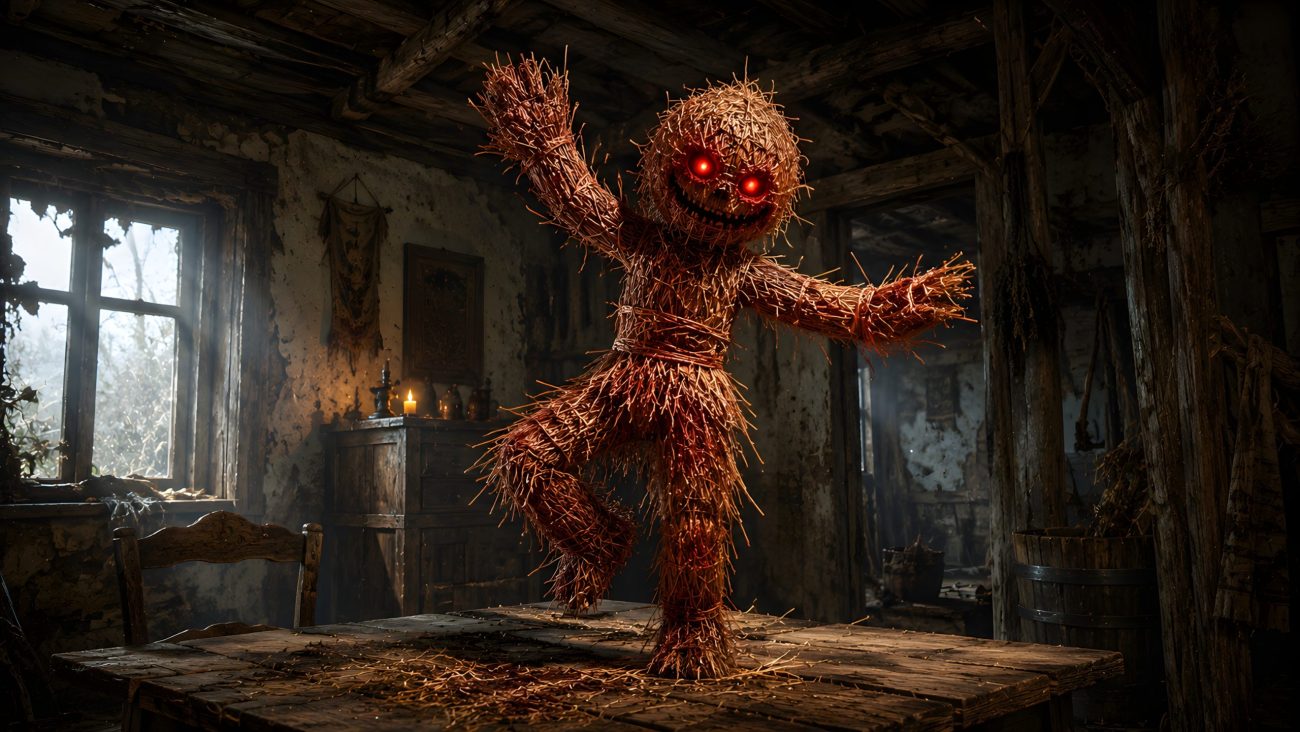
The Kratt is one of Estonia’s most famous magical beings—a supernatural servant created by humans to steal wealth and carry out endless work. It was usually built from hay, old tools, sticks, household objects, or other scraps, then brought to life after its creator made a pact with the Devil by giving three drops of blood.

Once animated, the Kratt obeyed every command of its master. Its favorite task was stealing grain, livestock, butter, money, and valuables from neighboring farms and secretly delivering them to its owner. It could travel through the night sky, often appearing as a blazing streak of fire as it flew between farms carrying stolen treasure.

The Kratt could never be left without work. If it had nothing to do, it became dangerous and could turn against its own master. To destroy an unwanted Kratt, people assigned it an impossible task—such as weaving a rope from sand or building a ladder out of bread. Unable to complete the impossible command, the hay-built creature would labor endlessly until it finally burst into flames and burned itself to ashes.

People also believed that blazing fireballs or bright meteors crossing the night sky were Kratts attempting to complete impossible tasks before burning away.

A closely related belief existed in Finland. There, Kratti or Aarni was the supernatural guardian of buried treasure. Hidden riches were protected by a spirit that revealed their location only to those who made the proper offerings. On Midsummer Night, mysterious flames known as Aarni Fire were said to burn above hidden treasure pits, marking where great wealth lay beneath the earth. Those who approached correctly could claim the treasure, while the greedy or disrespectful would see it disappear again.

Whether as a tireless servant stealing wealth for its master or as the guardian of hidden riches beneath the earth, the Kratt became one of the most enduring magical beings of Estonian and Finnish folklore.


Sources

Wikipedia contributors. (n.d.). Kratt. In Wikipedia. Retrieved June 29, 2026, from https://en.wikipedia.org/wiki/Kratt


Flying Dutchman

Tradition / Region: Dutch Mythology
Alternative names: De Vliegende Hollander
Category: Ghost, Object


The Myth

The Flying Dutchman is a legendary ghost ship condemned to sail the seas for all eternity, never able to enter port or find rest. Surrounded by an eerie supernatural glow, it appears during violent storms or in heavy mist, serving as one of the most feared omens in maritime folklore. Sailors believed that seeing the phantom vessel foretold disaster, shipwreck, or death.

According to the most famous version of the legend, the ship was commanded by the Dutch captain Hendrick van der Decken, who attempted to round the Cape of Good Hope during a fierce storm. When urged to seek shelter, the stubborn captain swore that he would round the cape even if it took until the Day of Judgment. For his blasphemous oath and defiance of Heaven, he and his crew were cursed to wander the oceans forever.

Other traditions claim the crew had committed terrible crimes such as piracy, murder, or even participating in the early slave trade, and that their eternal voyage was divine punishment for these sins.

The ghost ship is said to appear suddenly out of storms with blood-red or ghostly white light illuminating its sails. It moves without regard for wind or current and may vanish as quickly as it appears. Some witnesses claimed it could pass directly through other ships without collision.

One of its most infamous traits is attempting to deliver letters addressed to people who died long ago. Sailors warned that accepting these messages would bring terrible misfortune or death.

Numerous sightings have been reported since the eighteenth century. Perhaps the most famous occurred in 1881, when the future King George V and several crew members aboard HMS Bacchante reported seeing a glowing phantom ship. Later that same day, one of the sailors who witnessed the apparition fell to his death, reinforcing the Flying Dutchman’s reputation as a harbinger of doom.

The Flying Dutchman remains one of the world’s most enduring ghost-ship legends, symbolizing eternal punishment, doomed ambition, and the unforgiving power of the sea.


Sources

Wikipedia contributors. (n.d.). Flying Dutchman. In Wikipedia. Retrieved June 27, 2026, from https://en.wikipedia.org/wiki/Flying_Dutchman


Pipa Ghost

Tradition / Region: Chinese Mythology
Alternative names: Pipa Spirit
Category: Ghost, Object


The Myth

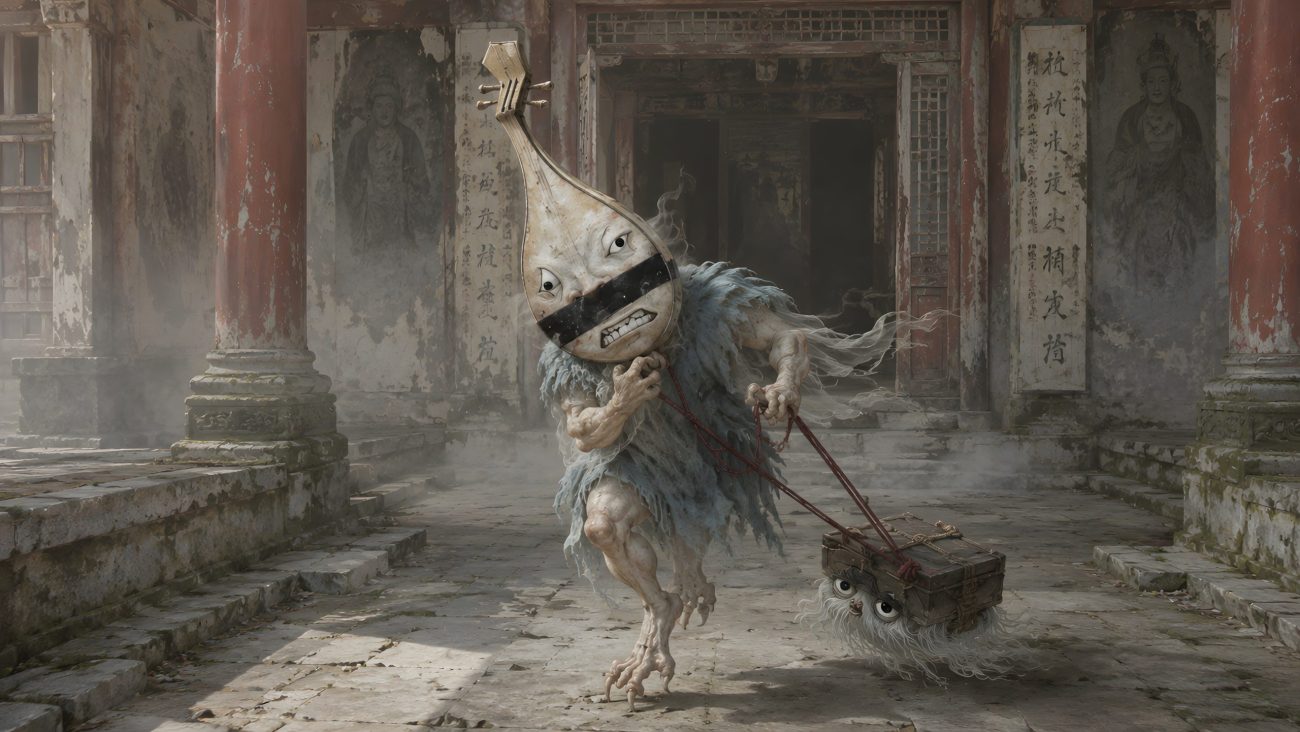
The Pipa Ghost is an invisible malevolent spirit said to inhabit a pipa, the traditional Chinese lute, from which it takes its name. Though normally unseen, it can speak and possesses supernatural intelligence. Once released, it is capable of entering human beings, causing mysterious illnesses and spreading misfortune throughout entire communities.

According to ancient Chinese legend, the Pipa Ghost is a soul that has taken residence within a pipa. By night it leaves its hiding place to hunt, feeding upon the internal organs of both humans and animals. Those it attacks soon waste away and die, while villages plagued by its presence suffer sickness, livestock deaths, and widespread calamity.

Some traditions claim the spirit remains sealed inside household vessels or beneath tightly covered pots. If a pot is broken or its lid left carelessly open, the Pipa Ghost escapes and begins haunting the household. Anyone suspected of being possessed by the spirit is believed to endanger the entire village.

Among the Dai people of Yunnan, the fear of the Pipa Ghost became deeply rooted in local belief. Families accused of harboring one of these spirits were often completely ostracized. Those believed to be possessed could be expelled from the village, their homes burned, and, in extreme cases, attacked or even killed by frightened neighbors. It was also believed that someone carrying the Pipa Ghost could marry only another person similarly afflicted, lest the spirit spread into another family.

To rid a community of the demon, shamans performed exorcisms and special ceremonies intended to capture or destroy the spirit. During times of plague, entire villages gathered to conduct rituals in which the Pipa Ghost was symbolically hunted down and burned, believing this would end the epidemic and restore harmony.

Thus the Pipa Ghost is remembered as one of China’s most feared possessing spirits—a hidden demon that spreads disease, devours life from within, and turns fear itself into a force capable of destroying entire communities.


Sources

Wikipedia contributors. (n.d.). 琵琶鬼. In 維基百科,自由的百科全書. Retrieved June 27, 2026, from https://zh.wikipedia.org/wiki/%E7%90%B5%E7%90%B6%E9%AC%BC


Kotoko and the Magical Hoe

Tradition / Region: Ghana Mythology
Alternative names: Kotoko the Porcupine
Category: Object


The Myth

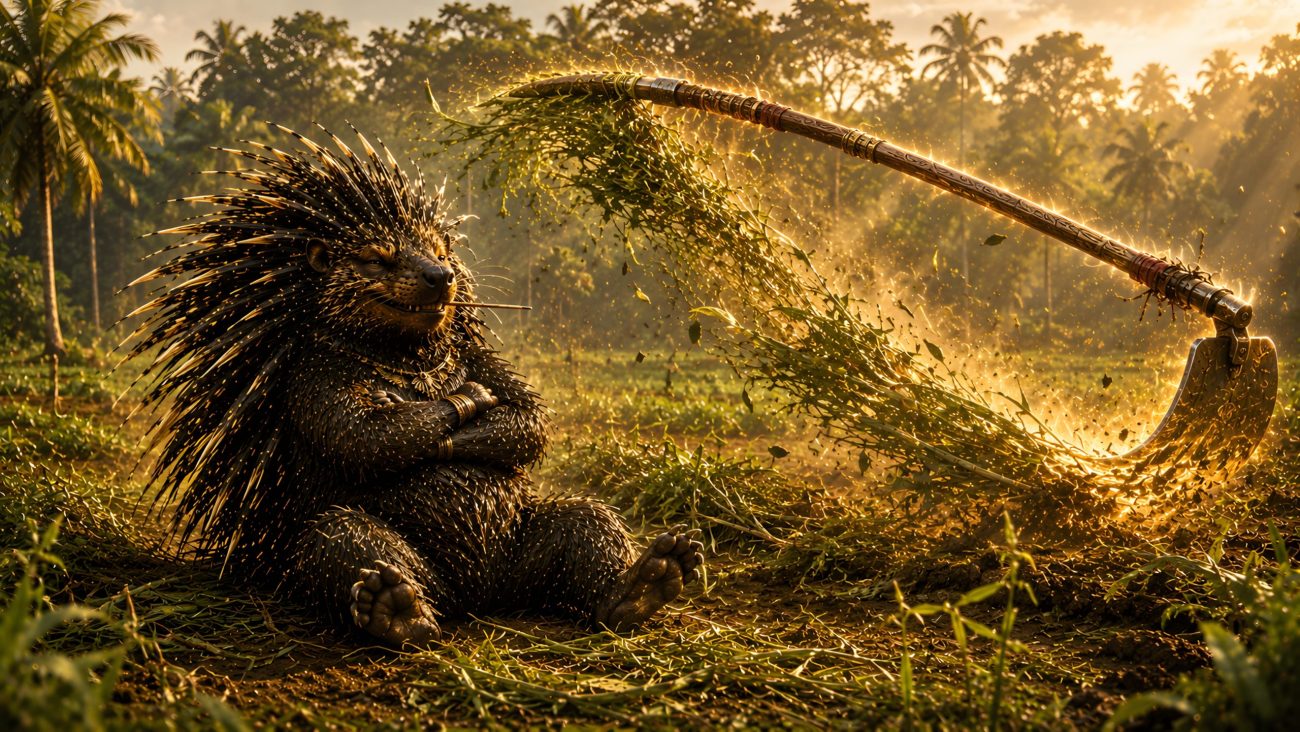
Kotoko, the Porcupine, was believed to possess a magical hoe unlike any ordinary farming tool. The enchanted hoe could clear enormous stretches of land by itself whenever the correct song was spoken.

One story tells that Kwaku Ananse the Spider lived together with his strange children — Tikononkono, Afudotwedotwe, and Nyiwankonfwea — alongside Kotoko the Porcupine. When Kotoko began clearing a new farm, Ananse begged him for a small piece of land to cultivate for himself, and Kotoko agreed.

While Ananse and his children struggled to dig the earth by hand, Kotoko returned home to eat. When he came back, he lifted his magical hoe and sang:

“Gyensaworowa, Kotoko saworowa…”

At once the hoe sprang to life and rapidly turned over huge stretches of land by itself. When the work was finished, Kotoko carefully hid the magical tool. But Ananse secretly watched where it had been hidden and decided to steal it the next morning.

Very early the next day, Ananse took the hoe and carried it to his own farm. He repeated the magical song exactly as Kotoko had done. The hoe immediately began clearing the land at tremendous speed.

But Ananse did not know how to stop it.

The magical hoe continued digging endlessly, racing farther and farther away. It crossed the lands of the Sea God and eventually reached the country of distant white men. There the foreigners discovered the strange tool, examined it, and began making many more hoes modeled after it.

According to the story, this is how hoes first spread among the Ashanti people. Before that time, only Kotoko the Porcupine possessed such a tool.


Sources

Rattray, R. S. (1930). Akan-Ashanti folk-tales. Oxford: Clarendon Press.


Enchanted Lion of Ntringui

Tradition / Region: Comoros Mythology
Alternative names: The Lion Guardian of Ntringui, The Stone Lion of the Mountain
Category: Object, Lion


The Myth

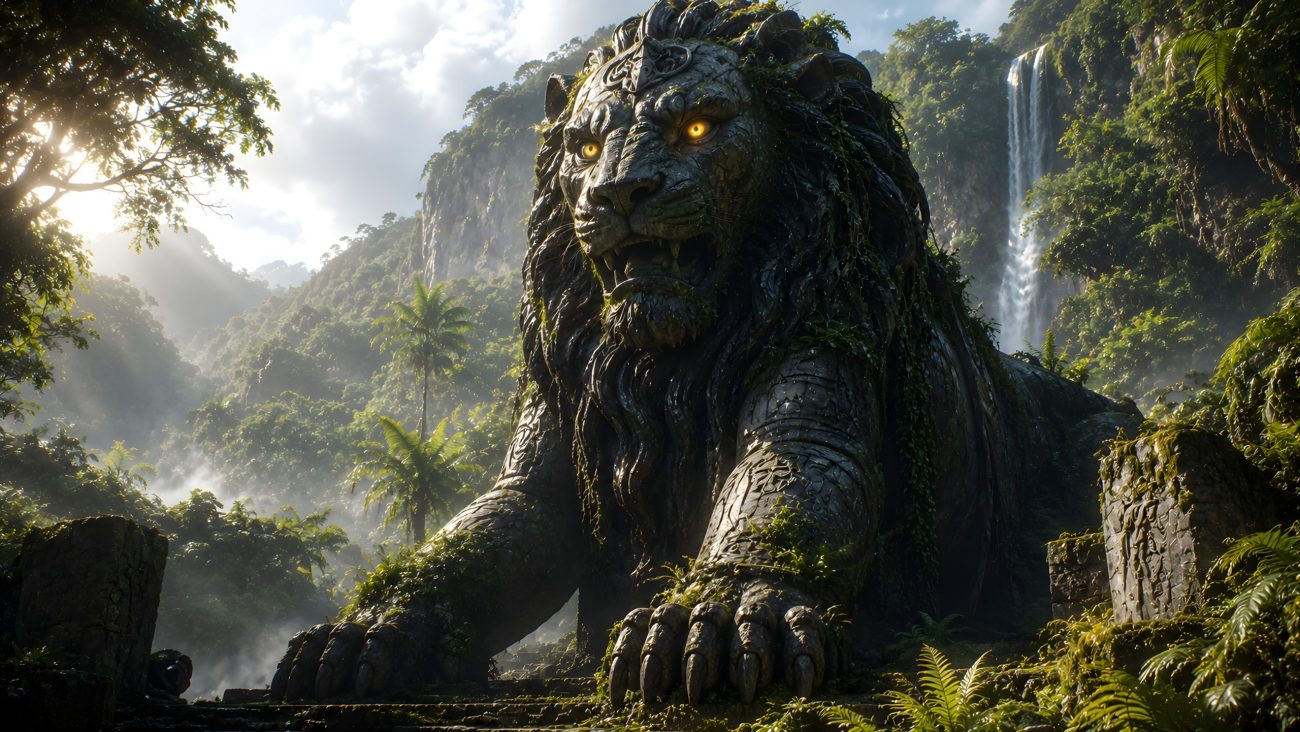
Deep within the forests of Mount Ntringui, travelers speak of an enormous stone lion hidden among tangled vines and ancient trees. The statue is said to guard the sacred paths leading toward the mountain’s supernatural heart. Though carved from stone, the lion is believed to possess awareness, intelligence, and the power to judge the souls of those who approach it.

According to legend, the lion stands within a secluded clearing surrounded by dense jungle where the air grows unnaturally silent. Moss and roots cover much of its body, but its face remains perfectly untouched, its eyes fixed upon the mountain paths as if eternally watching intruders.

The people of Anjouan believe the statue was placed there long ago by the Mountain Spirit of Ntringui to prevent the selfish, greedy, and cruel from reaching the sacred summit. Many who sought the mountain’s hidden wonders reportedly fled after hearing growls echo through the forest or seeing the lion’s eyes glow in the darkness.

The most famous story connected to the lion concerns a young woman named Amina, who climbed Mount Ntringui hoping to help her struggling village. Unlike treasure seekers who came before her, Amina sought nothing for herself. She wished only for prosperity and peace for her people.

While traveling through the mountain forest, she reached the clearing of the lion statue. As she approached, the ground trembled and the lion’s stone eyes began to shine with supernatural light. The creature spoke with a voice like thunder and demanded proof that her heart was pure.

Instead of showing fear, Amina knelt before the lion and explained that she desired no riches or glory, only relief for her starving village. The enchanted guardian recognized the sincerity in her words. Its expression softened, and with a deafening roar it moved aside, allowing her passage deeper into the mountain.

Because of this story, the Enchanted Lion became a symbol of courage, humility, and spiritual worthiness in Anjouan folklore. The statue is not viewed as evil, but as a sacred protector that separates the pure-hearted from those corrupted by greed.

Even today, some villagers claim strange things happen near the forests of Ntringui. Travelers report hearing distant roaring despite there being no lions on the island, while others speak of glimpsing glowing eyes between the trees before suddenly losing the mountain path. Many believe the Enchanted Lion still guards the hidden mysteries of Ntringui, waiting silently for the next worthy soul to approach.


Sources

Hichamou, P. (n.d.). Prince tales of the Comoros: Legends, mysteries & enchantments from the Isles of the Moon.
Heavy Wagon of Malmkrog

Tradition / Region: Romanian Mythology
Alternate Names: The Heavy Wagon; The Mountain Car; The Vespers Wagon
Category: Object, Wagon


The Myth

About thirty years before the tale was told, a farmer’s wife from Malmkrog was harvesting grain on a field high up the mountainside. Her small son, no more than four or five years old, sat in the shade of a few sheaves, restless and bored while she worked.

Below the field the slope dropped steeply into an old, half-cleared forest. It was late afternoon, and the village bells began to ring for vespers. According to custom and belief, people were meant to stop their labor and return home at that hour, but the woman remained in the field.

Then from the nearby woods came a sudden uproar.

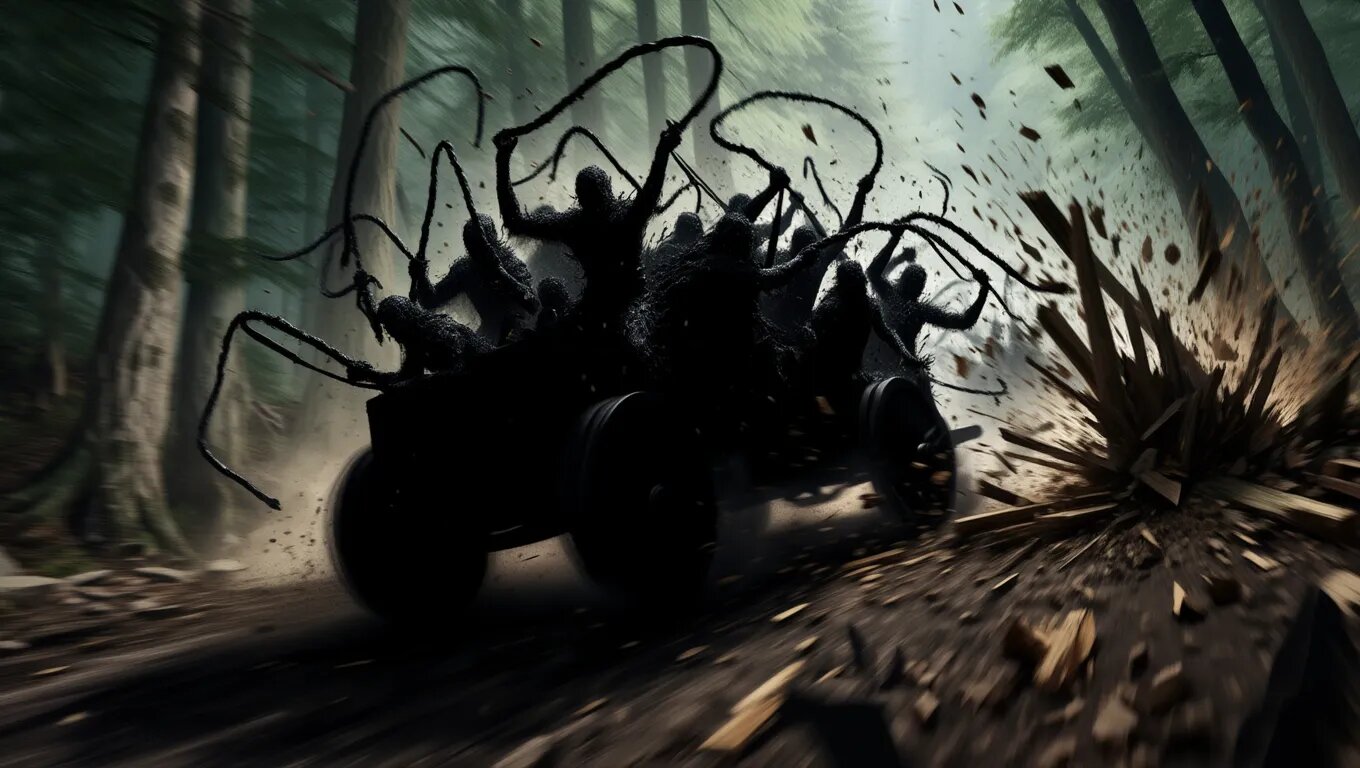
The boy later said he heard the crack of whips echoing through the trees, along with loud shouting and calls of “Hi!” and “Ho!” It sounded as if many unseen men were straining to haul a heavily laden cart up the steep, trackless mountainside. The noise of wheels, crashing wood, and clattering harness rang through the forest, though no one could be seen.

Panic seized the woman. She ran to her child, snatched up what she had brought from home, and took his hand. Behind them the din grew louder — the shouts, the cracking whips, the grinding of the burdened wagon — as if the unseen drivers were drawing ever nearer.

Without looking back, she fled with the boy down the mountain toward the village.

That evening she told the men who had already returned from their work:

“When the bell rang for vespers, they came with the Heavy Wagon. Never again will I stay on the Hattert once the church bell rings.”

And from that time on, people remembered the tale and kept to the old custom, leaving the mountain fields when the bells began to sound.


Sources

sagen.at contributors. (n.d.). Der schwere Wagen. In sagen.at, from https://www.sagen.at/texte/sagen/rumaenien/siebenbuergen/derschwerewagen.html