Tradition: Belgian Mythology, Dutch Mythology
Alternative Names: Korenwagen, Gloeiende Wagen, Hellewagen, Spookwagen
Category: Object
The Myth
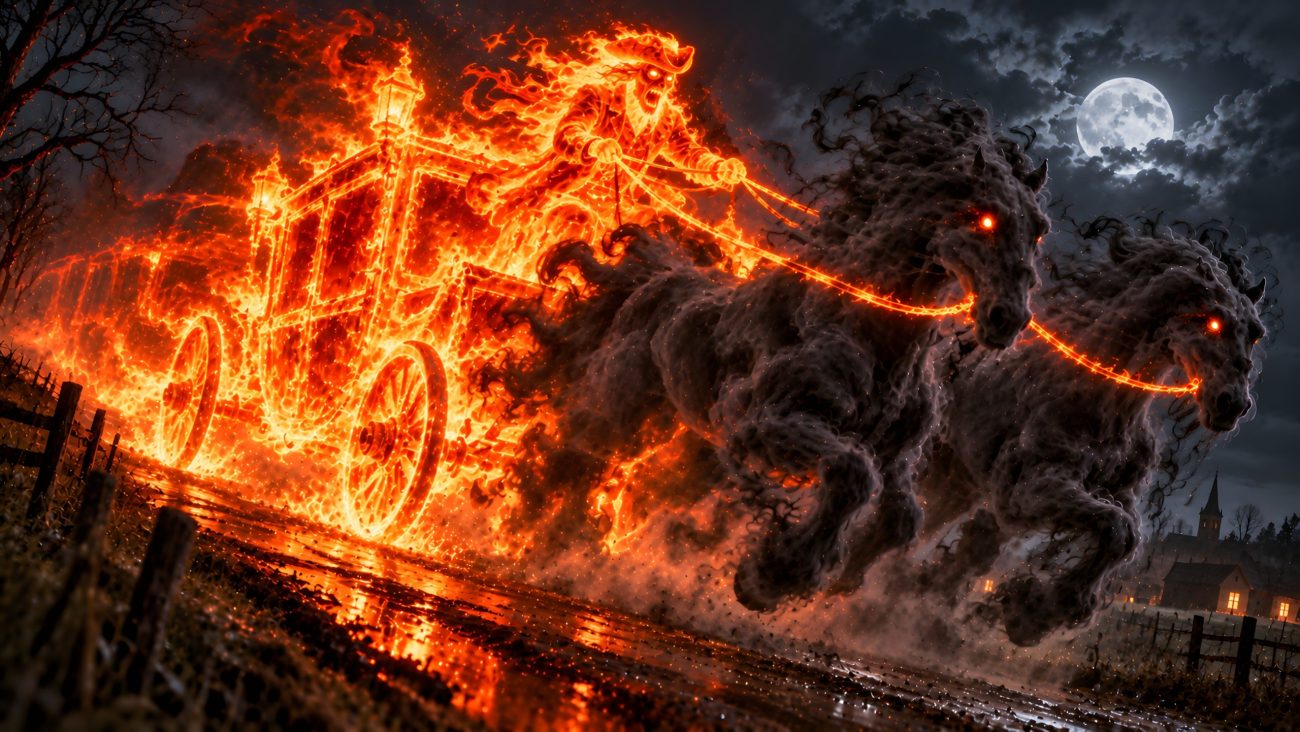
The Vurige Wagen is a glowing, fiery coach that appears at night, usually between midnight and one o’clock. It is drawn by black or invisible horses and sometimes rises into the air, racing through the darkness with an infernal roar.
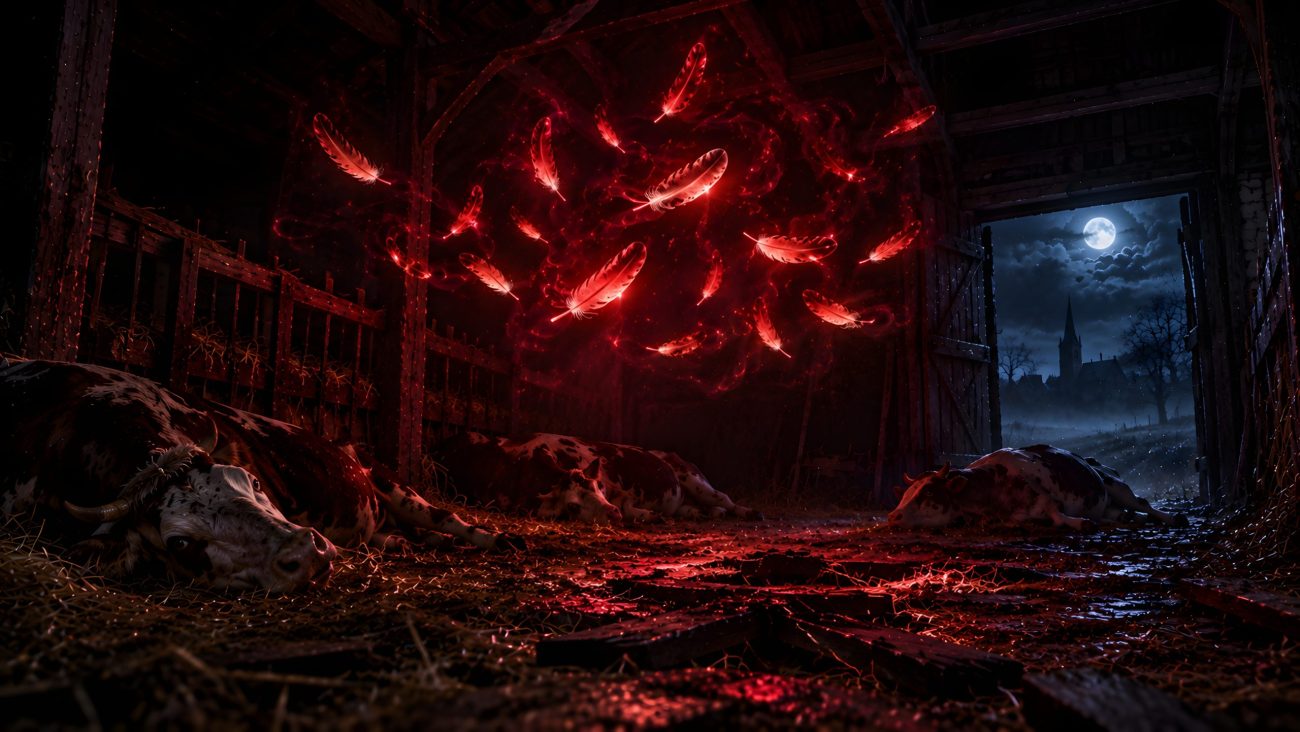
Inside the coach, blood-red lights glow ominously, while the coachman himself shines with heat and spits fire. The terrifying vehicle is said to be the punishment of wealthy sinners who exploited and oppressed ordinary people during their lives.
One late-night traveller once heard the dreadful carriage thundering toward him. As the noise grew louder, he expected the fiery vehicle to rush past him, but when it came close, it suddenly vanished. Only a few metres farther away did it appear again, continuing its supernatural journey through the night.
The Vurige Wagen could also be understood as the restless spirit of a dissolute nobleman, condemned after death to drive eternally through the darkness in his blazing coach.
Sources
Reuland, Heinrich Adolph. Luxemburger Volksbücher: Geschichten und Sagen aus dem luxemburger Volksleben. Luxemburg: St. Paulus-Dr., 1892.