Onibi

Tradition: Japanese Mythology
Alternative Names: Ghost Fire, Onibi
Category: Flame


The Myth

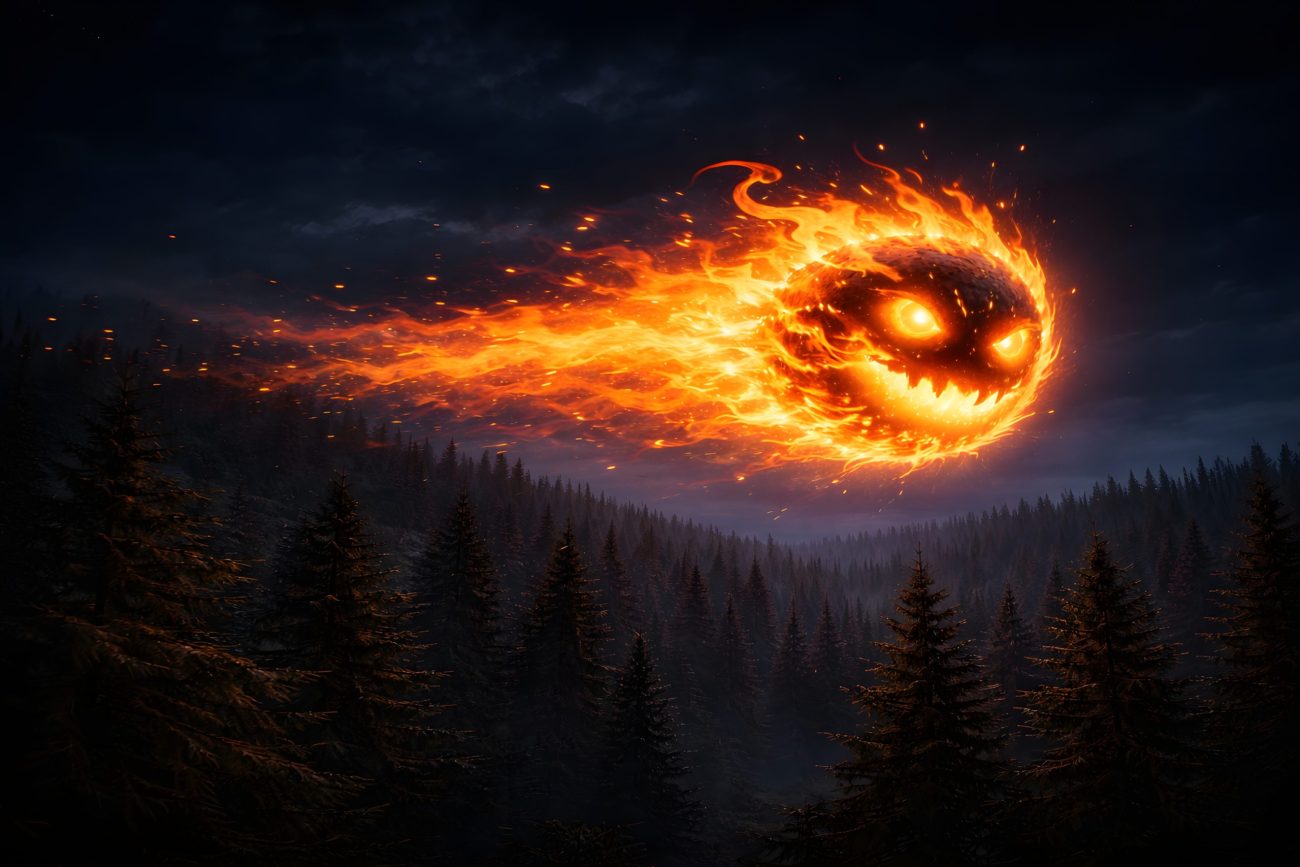
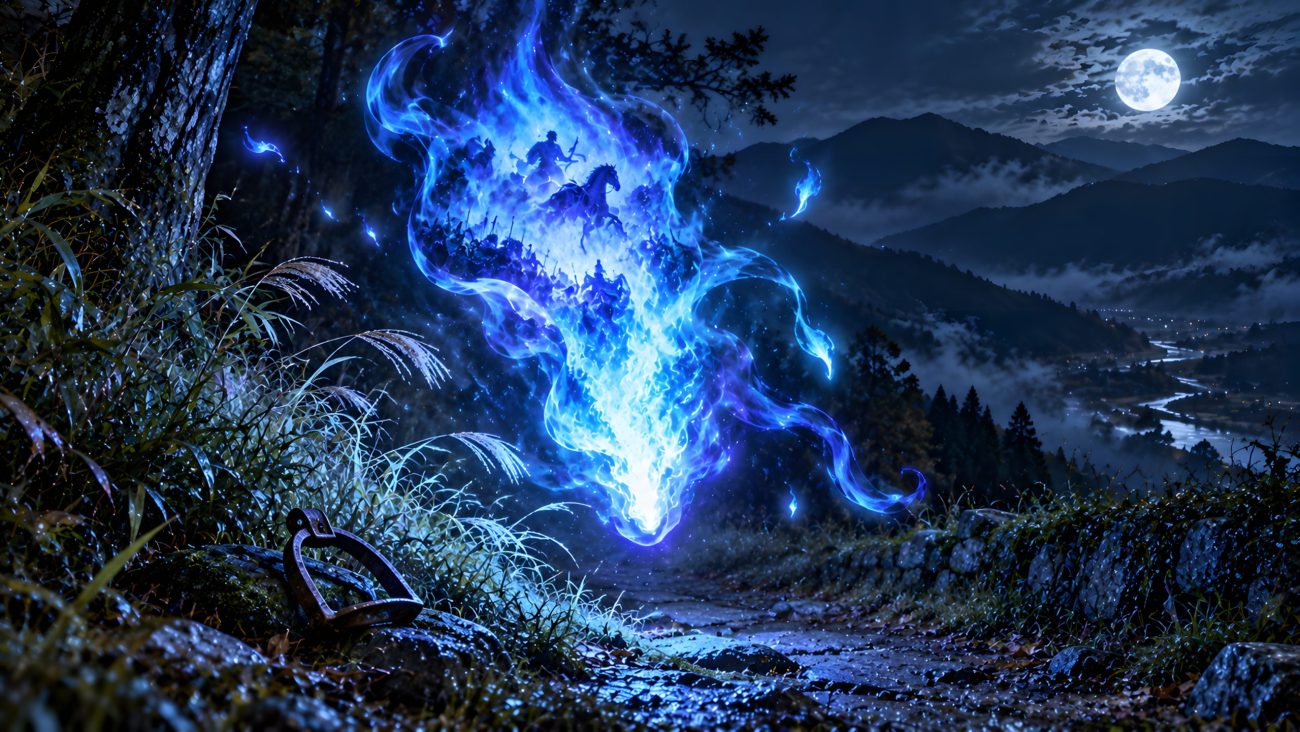
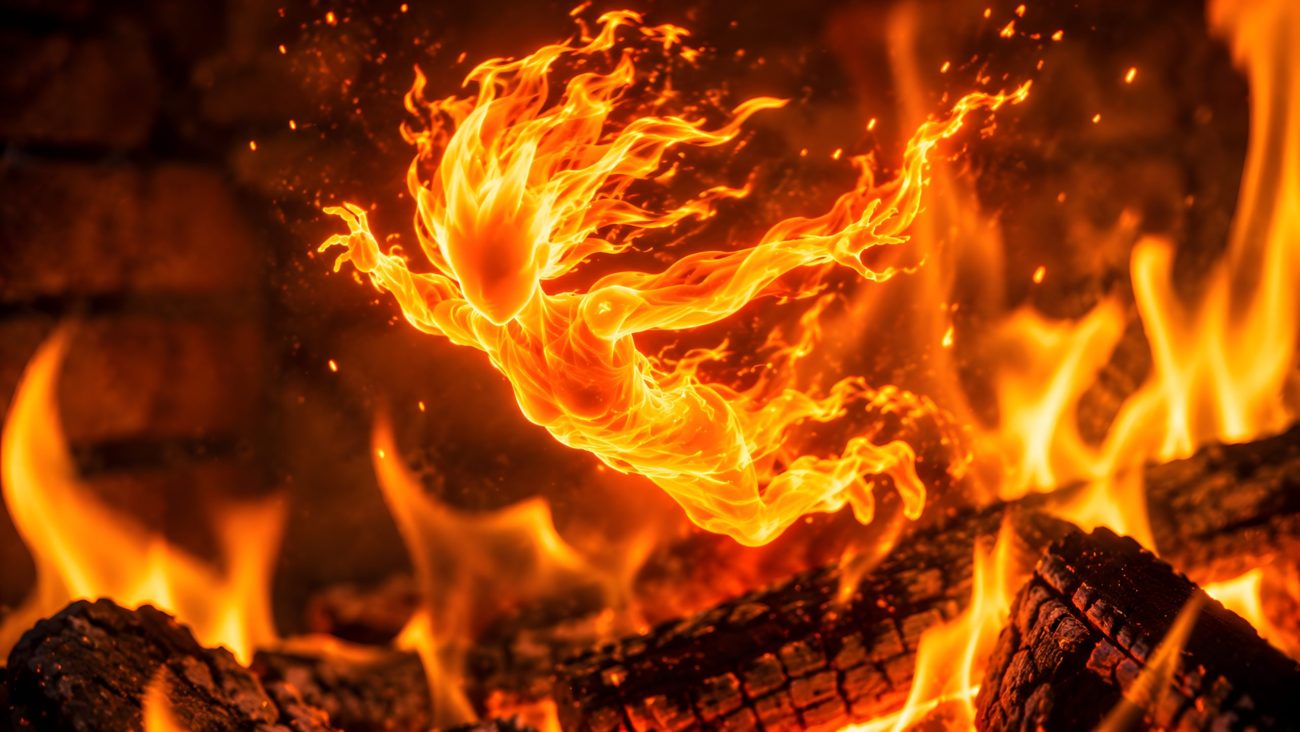
Onibi, meaning ghost fire, is a mysterious supernatural flame said to appear in various regions of Japan. It is most often described as a blue fire, sometimes resembling a burning torch, although accounts also describe flames of other colours. These strange lights appear without an ordinary source and are associated with spirits and the lingering presence of the dead.

According to the Wakan Sansai Zue, which cites the Chinese Bencao Gangmu, onibi are formed from the blood of fallen soldiers or cattle and horses that seeps into the earth and transforms over time. This account distinguishes them from will-o’-the-wisps and shadow fires, which are also described as transformations of spirits. Onibi are said to gather together and separate as they approach people, absorbing their life force. However, they can reportedly be made to disappear by producing a sound, such as striking them with a horse’s stirrups.

The name onibi is also used more broadly for mysterious flames of uncertain origin. Depending on the account, it may refer to foxfire, fires born from the resentment of the dead, or other unexplained supernatural lights. These varying descriptions make onibi a broad category of eerie flames associated with spirits, death, and mysterious occurrences.


Sources

“鬼火 [おにび] (Onibi).” 新版TYZ 妖怪図鑑 (New TYZ Yokai Encyclopedia). https://tyz-yokai.blog.jp/archives/1010652578.html
Nojukubi

Tradition: Japanese Mythology
Alternative Names: –
Category: Flame


The Myth

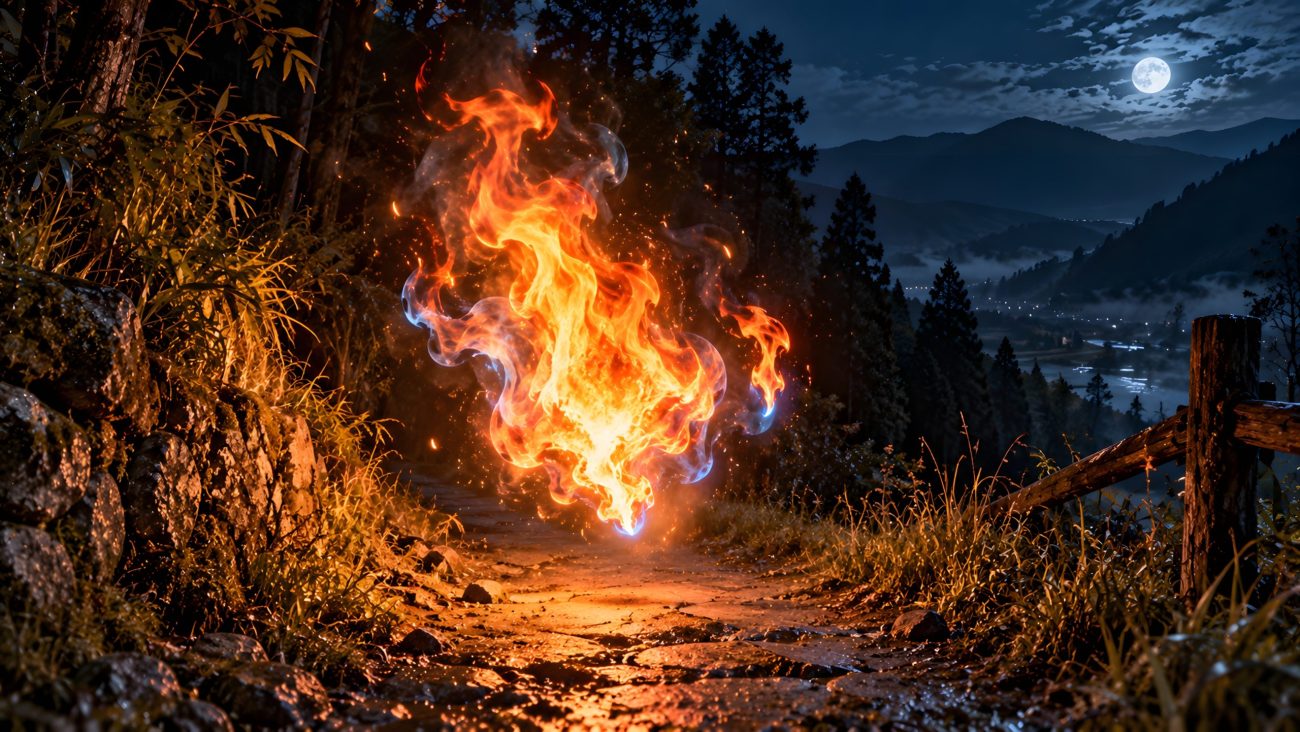
Nojukubi is a mysterious supernatural fire that appears along country roads, highways, and in the mountains of Japan. It manifests in places where no people are present, burning briefly before suddenly going out, only to appear again somewhere nearby. Unlike ordinary fires, it seems to arise without any visible cause, illuminating lonely and deserted places before vanishing into the darkness.

The Nojukubi is distinguished from foxfire and other natural-looking mysterious flames. Its appearances are unpredictable, and it is sometimes accompanied by strange sounds, including the noise of people talking excitedly or singing. These unexplained voices, heard alongside the flickering flames, give the phenomenon an eerie quality, as though an unseen gathering were taking place in the wilderness.


Sources

“Nojukubi.” 新版TYZ 妖怪図鑑 (New TYZ Yokai Encyclopedia). https://tyz-yokai.blog.jp/archives/1010653472.html


Tulehaldjad

Tradition / Region: Estonian Mythology
Alternative names: Fire Spirits
Category: Spirit, Flame


The Myth

The Tulehaldjad are the living spirits of fire. Fire was believed to possess a soul and a will of its own, capable of rewarding those who respected it and punishing those who neglected or insulted it. For this reason, families carefully kept the household fire alive, burying glowing embers beneath ashes overnight so the sacred flame would never die.

One legend tells of a woman whose hearth fire had gone out. After bringing home a new flame from a neighbor, she heard the two fires speaking. The visiting fire praised its careful mistress for always tending it, while the neglected hearth fire complained that its own mistress often left it to starve. It swore revenge, and soon afterward the farmhouse burned down.

Fire was regarded as sacred. People were forbidden to spit into it or kick burning logs, as such acts dishonored the spirit dwelling within the flames. Lightning, as heavenly fire, was also revered. Fires started by lightning were believed to be extinguishable only with milk, not water.

Offerings of bread and milk were made to the fire spirits during Midsummer. The sacred fire was believed to purify people, drive away evil spirits, and protect livestock. Ancient fire charms also invoke both a Fire Lord and a Fire Lady, asking them to come and calm the flames.


Sources

Wikipedia contributors. (n.d.). Tulehaldjad. In Vikipeedia. Retrieved June 29, 2026, from https://et.wikipedia.org/wiki/Tulehaldjad


Katawaguruma Nyūdō

Tradition / Region: Japanese Mythology
Alternative names: One-Wheeled Monk / Flaming Wheel Monk
Category: Yokai, Flame


The Myth

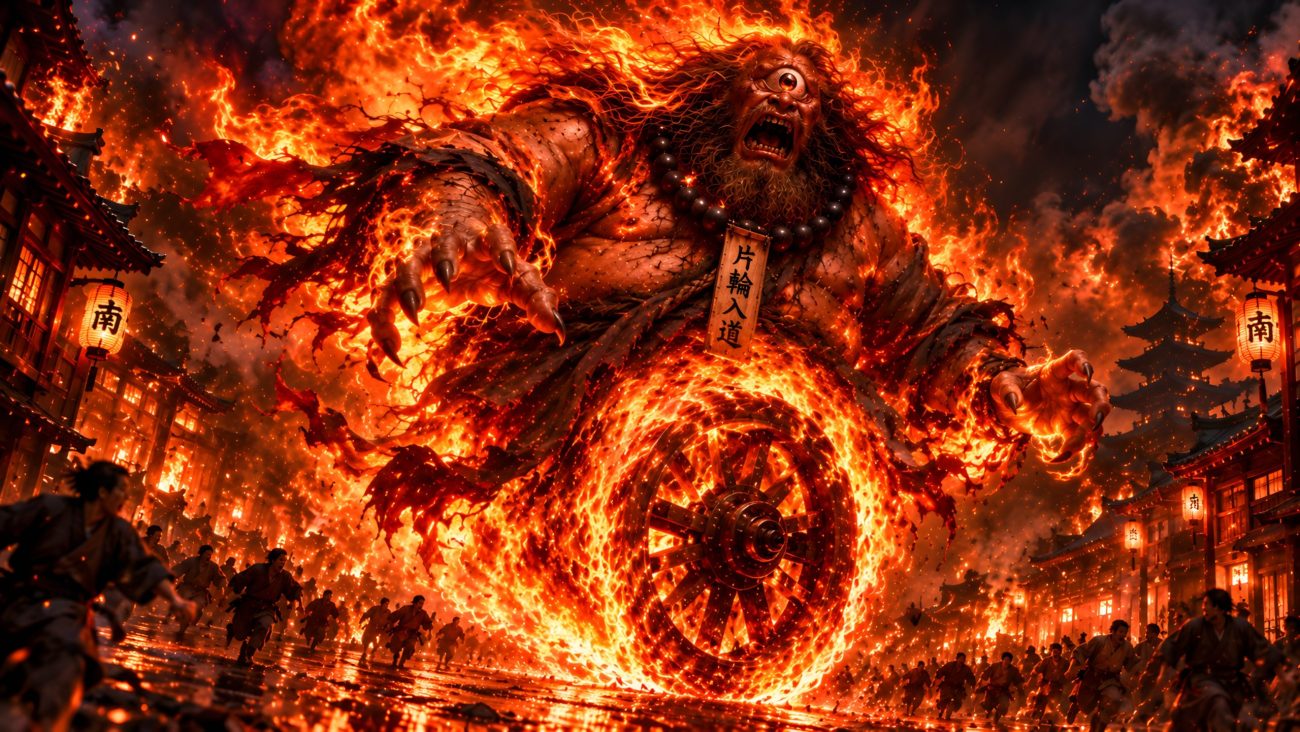
The Katawaguruma Nyūdō is a terrifying yokai that roams the streets of Kyoto at night. It appears as a gigantic hairy monk with a fierce face and enormous strength, riding upon a single wheel engulfed in flames. The burning wheel races through the darkness like a cart from hell, spreading fire and fear wherever it passes.

According to legend, the creature was once a powerful and wealthy monk who lived in the Rokuhara district of Kyoto. Cruel and arrogant, he delighted in the suffering of others and committed countless wicked deeds without fear of divine punishment. Although he enjoyed great prosperity during his life, his evil eventually caught up with him.

Divine punishment descended upon the monk, and he was consumed by supernatural flames. Transformed into a monstrous spirit, he became the Katawaguruma Nyūdō, forever condemned to wander Kyoto upon his fiery wheel.

One night, a woman living nearby put her three children to sleep and, through a knot hole in her door, secretly watched the terrible apparition pass by. The flaming monk noticed her gaze and shouted:

“Look to your children instead of looking at me!”

Terrified, the woman rushed to her children, but it was too late. The Katawaguruma Nyūdō seized all four members of the family and carried them away into the night, and they were never seen again.

Thus the One-Wheeled Monk became one of Kyoto’s most feared supernatural beings — a burning spirit born from greed and cruelty, whose fiery wheel still races through the darkness searching for those unfortunate enough to witness its passage.


Sources

TYZ. (n.d.). Katawaguruma Nyudo [片輪車入道]. In 新版TYZ 妖怪図鑑. Retrieved June 13, 2026, from https://tyz-yokai.blog.jp/archives/1079937229.html


Paasselkä Devils

Tradition / Region: Finnish Mythology
Alternate Names: Paasselän pirut
Category: Flame


The Myth

The Paasselkä Devils are mysterious glowing lights said to appear over Lake Paasselkä and the surrounding forests and swamps. In folklore, they are not merely natural lights, but supernatural beings with a will of their own.

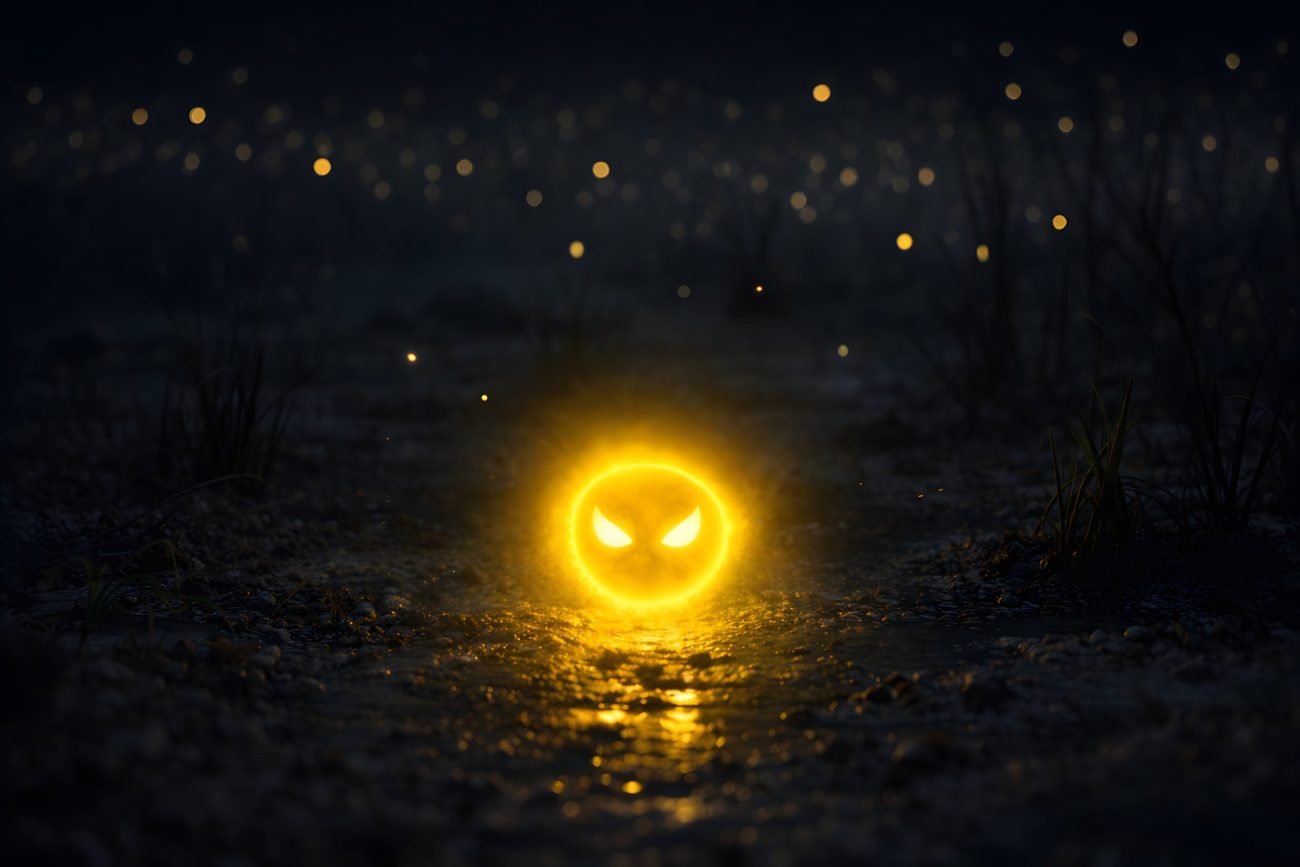
They are most often seen as floating balls of fire or light hovering above the water or drifting through the night air. Sometimes a single light appears, while at other times several move together across the landscape.

What makes them feared is their strange, almost intelligent behavior. The lights may follow boats, approach people, or suddenly flee when pursued. They can remain still for long periods, then dart away at incredible speed, as if reacting to human presence.

Because of this, locals came to believe that these lights were living entities — spirits or demons — rather than simple natural phenomena. Their unpredictable movements and eerie glow gave them a sinister reputation.

In older belief, encountering these lights was considered dangerous. They were thought to mislead travelers, lure people into unsafe places, or bring misfortune.

The Paasselkä Devils represent
a haunting presence in the wilderness — lights that watch, move, and react, as if something unseen is alive within them.


Sources

Wikipedia contributors. (n.d.). Paasselkä devils. In Wikipedia, from https://en.wikipedia.org/wiki/Paasselk%C3%A4_devils


Kitsunebi

Tradition / Region: Japanese Mythology
Alternate Names: Fox Lantern, Fox Torch, Kitsunebi
Category: Fox, Flame


The Myth

Across many parts of Japan, people have long spoken of mysterious lights appearing in the night, known as Fox Fire.

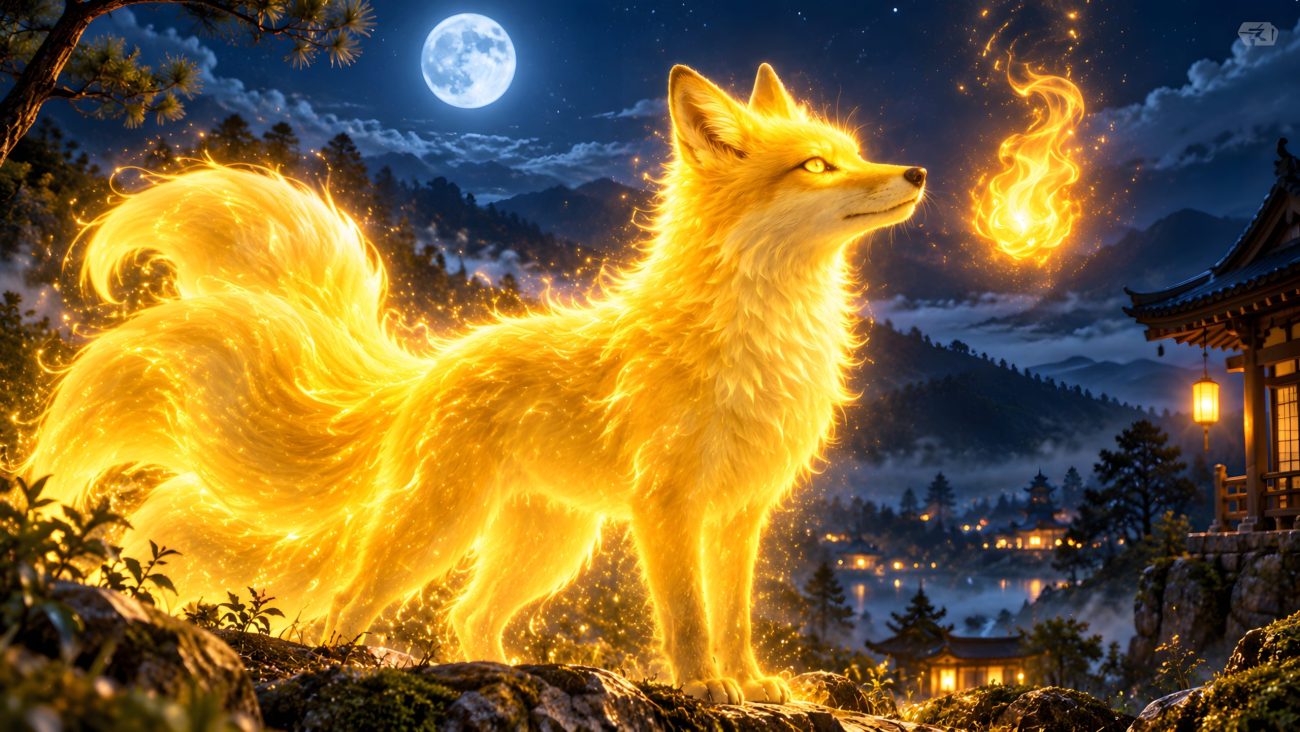
These flames are said to be created by foxes. Some believe the fire comes from their breath, glowing as they exhale into the darkness. Others say foxes strike their tails together to spark the light, or that they kindle it from strange materials such as bones. Sometimes the fire appears as floating balls of light that drift across fields and roads.

Because of its steady glow, the light is often called a fox lantern or fox torch. When many of these lights appear at once and move together through the night, people say a fox wedding is taking place somewhere unseen.

One famous tradition tells that at Ōji Inari Shrine in Edo, foxes from across the Kantō region gathered on New Year’s Eve. On that night, countless fox fires were said to dance across the fields as the foxes assembled to receive ranks from their deity. Villagers would watch the number and movement of the lights, believing they foretold whether the coming year would bring a good harvest.

Thus Fox Fire became known as both a sign of the hidden world and a message carried in light — a glow in the night that revealed the unseen presence of foxes and the mysteries that followed them.


Sources

Tyz-Yokai Blog. (n.d.). Kitsunebi. Retrieved March 1, 2026, from https://tyz-yokai.blog.jp/archives/1010653498.html


Innu

Tradition / Region: Japanese Mythology
Alternate Names: Innu fī kutē atchūn
Category: Dog, Flame


The Myth

In the folklore of Okinawa, there is said to be a mysterious yokai known as Innu, a name that simply means “dog” in the local language. The creature is remembered mainly through brief written references rather than long stories, but those mentions describe it as something uncanny and supernatural.

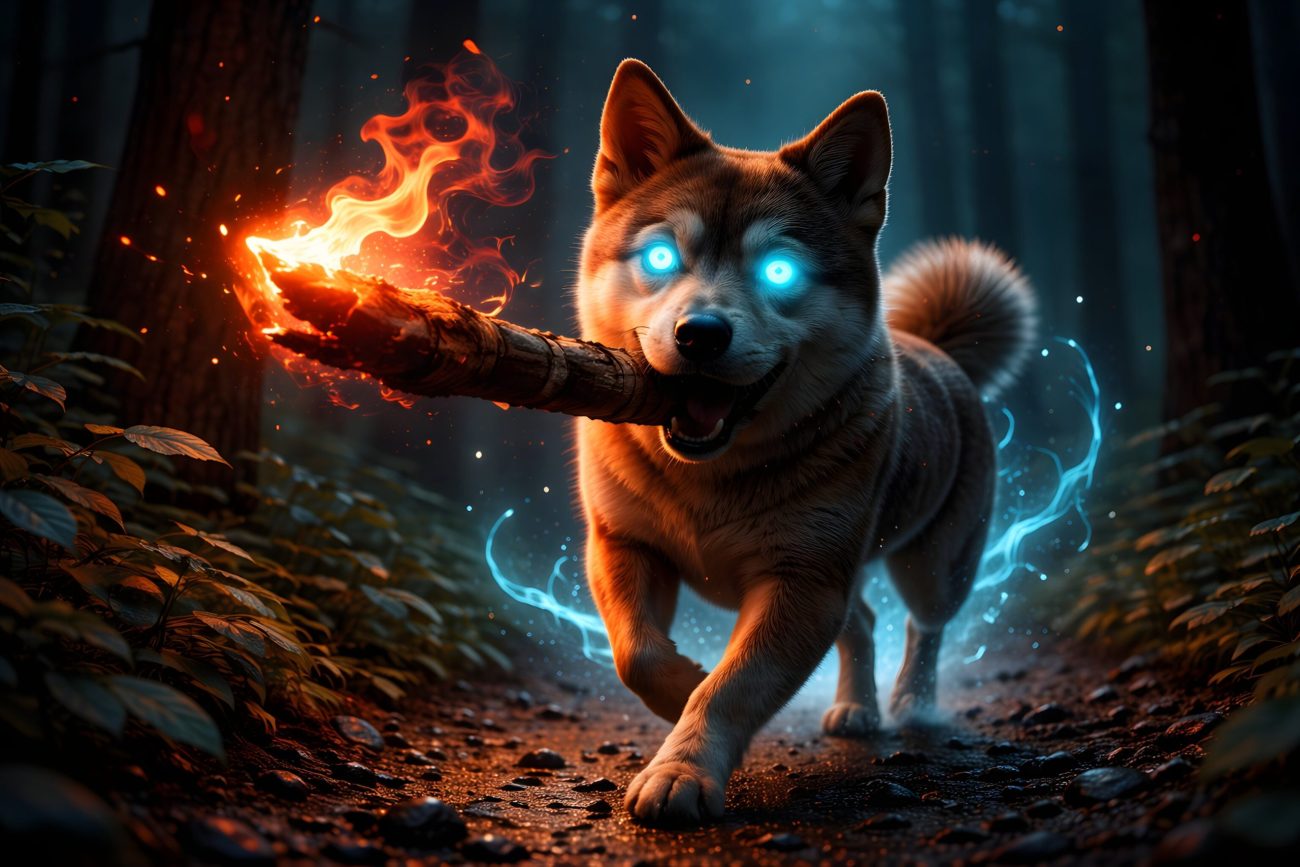
According to one early account, the Innu is a strange being that wanders about while dealing with fire. Some traditions say it roams the night devouring flames, moving from place to place as if feeding on burning light. Other interpretations describe it not as eating fire, but as carrying it, walking through the darkness with flames in its presence like a living torch.

Though little detail survives about its appearance or behavior beyond this, the Innu is remembered as a roaming, fire-associated dog spirit, moving silently through the night in the villages of Okinawa, its presence tied to mysterious lights and wandering flames.


Sources

Tyz-Yokai Blog. (n.d.). Innu. Retrieved March 1, 2026, from https://tyz-yokai.blog.jp/archives/1069220364.html


Błudnik

Tradition / Region: Sorbian Mythology, Polish Mythology, German Mythology
Alternate Names:
Category: Swamp dweller, Flame, Spirit


The Myth

In Sorbian tales, the Błudnik appears at night in places where the land itself is uncertain: bogs, marshes, wetlands, dark forests, and damp meadows. Travelers speak of strange lights drifting low over the ground—flickering, swaying, and always just out of reach. To follow them is dangerous.

The Błudnik is not merely a light, but a being with intent. It lures wanderers from safe paths, drawing them deeper into swamps or endless forest loops. Those who follow its glow find themselves hopelessly lost, walking in circles until exhaustion, fear, or the land itself overcomes them. In some stories, travelers vanish forever after chasing the light.

The spirit delights in confusion. It does not attack openly, nor does it speak. Instead, it misleads with false hope—appearing like a guiding flame, a lantern, or a sign of human presence. Only when it is too late does the victim realize the truth.

Elders warned that the Błudnik appears especially to the careless, the proud, or those who wander at night without respect for the land. To protect oneself, one must ignore strange lights, turn clothing inside out, pray, or mark a cross in the earth—anything to break the spell of deception.

In this way, the Błudnik stands as a reminder that not all light leads to safety, and that the night has its own will.


Sources

Wikipedia contributors. (n.d.). Błudnik. In Wikipedia, The Free Encyclopedia (Lower Sorbian), from https://dsb.wikipedia.org/wiki/B%C5%82udnik


Lidérc

Tradition / Region: Hungarian Mythology
Alternate Names: Ludvérc
Category: Bird, Chicken, Flame, Spirit, Shapeshifter


The Myth

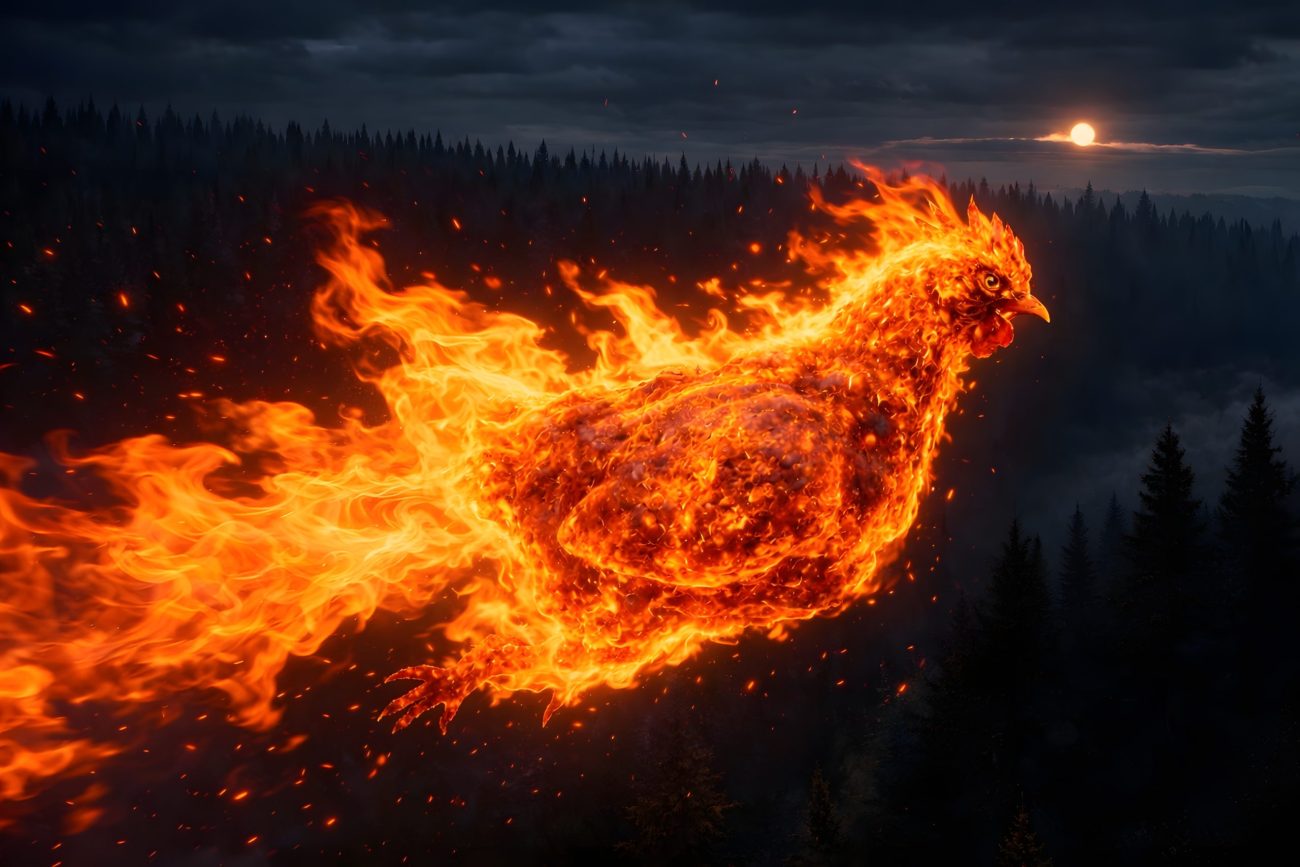
In the villages and marshlands of Hungary, people speak of the Lidérc, a restless and many-formed spirit that moves between fire, flesh, and shadow.

On some nights it appears as a shooting star or a wandering flame, streaking low across the sky or flickering over bogs and fields. Wherever it passes, sparks leap and fires may break out, barns and pens igniting without cause. In other places it takes the shape of a fiery rod, a blazing figure, or a marsh light that lures the unwary.

But the Lidérc is most feared for the form it takes among humans.

It seeks the lonely: widows, widowers, abandoned lovers, those whose beloveds are far away or dead. Slipping through the night, it enters their homes and assumes the exact appearance of the person they long for most. It speaks gently, knows their memories, and offers comfort, affection, and desire. Night after night it returns, lying beside its victim, feeding not on blood but on life itself. The victim grows pale and weak, dizzy and thin, until at last they waste away and die, loved to death. When its prey is spent, the Lidérc abandons the body and rises again into the sky as a star, seeking another heart to consume.

Yet the Lidérc is never perfect in its disguise. One of its legs always betrays it: a scaly goose foot, a chicken’s claw, or sometimes a horse’s iron-shod hoof. Those who scatter ashes at their threshold may see the tracks—one human footstep, one monstrous—and know what has crossed their door. Garlic, cords, and household charms can bar its entry, if the danger is recognized in time.

There is another kind of Lidérc as well, one born not from fire but from human greed. If the first egg laid by a black hen is hidden beneath a person’s armpit and warmed there, a strange, featherless creature will hatch. This Lidérc binds itself to its keeper, speaking with intelligence and obeying commands. It brings wealth, steals treasure, and works tirelessly, living on butter and favors. But it is never satisfied. If its master fails to give it constant tasks, it becomes restless and cruel, pestering day and night until it finally destroys the one who raised it.

The only escape is to give the Lidérc an impossible command: to carry water in a sieve, to squeeze through solid wood, to complete a task that cannot be done. Unable to endure failure, the creature will rage, weaken, and finally vanish.

Thus the Lidérc remains a warning whispered in Hungarian folklore: that desire, loneliness, and greed can summon something that looks like love or fortune—but feeds only on ruin.


Sources

A Book of Creatures contributors. (2021). Lidérc. In ABookOfCreatures.com, from https://abookofcreatures.com/2021/03/22/liderc/

Wikipedia contributors. (n.d.). Lidérc. In Wikipedia, The Free Encyclopedia, from https://en.wikipedia.org/wiki/Lid%C3%A9rc


Blauw Vuurtje

Tradition / Region: Dutch Mythology
Alternate Names: —
Category: Flame


The Myth

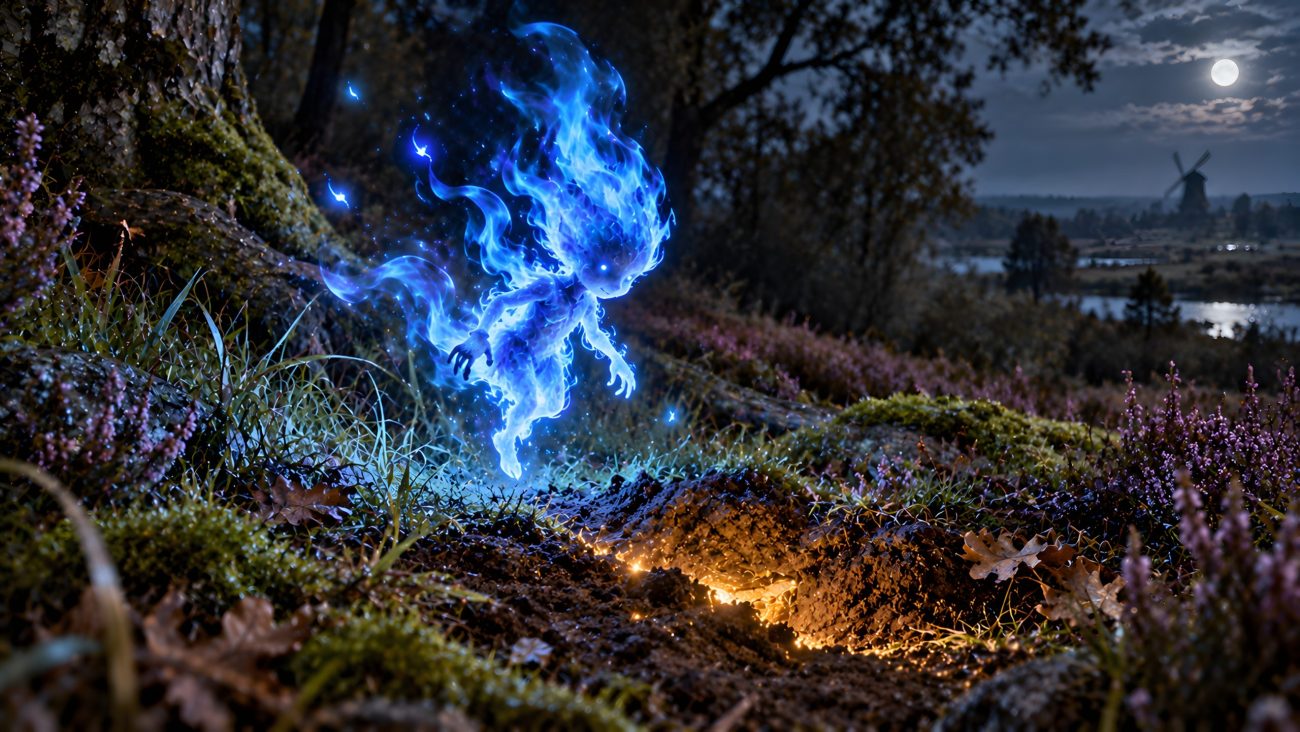
In the quiet places of Limburg and the Veluwe, small blue flames are said to appear at night. These are the Blauw Vuurtje, fire-elves that drift silently above the earth.

They hover only where treasures lie hidden beneath the ground. Their light is soft but unwavering, marking the spot for those who know how to read the signs. Yet the treasure is not meant for everyone.

Only a person of pure heart may dig where the blue flame floats. He must also know how to keep silent, for a single spoken word will cause the Blauw Vuurtje to vanish at once. If the flame disappears, the earth closes its secret again, and the treasure is lost forever.

Thus the blue fire waits patiently, glowing in the darkness, revealing riches only to the worthy and the wordless.


Sources

Abe de Verteller. (2014). Van aardmannetje tot zwarte juffer: Een lijst van Nederlandse en Vlaamse elfen en geesten. In AbeDeVerteller.nl, from https://abedeverteller.nl/van-aardmannetje-tot-zwarte-juffer-een-lijst-van-nederlandse-en-vlaamse-elfen-en-geesten/