Baidoku Daiō

Tradition: Japanese Mythology
Alternative Names: King of Venereal Disease, Bai Doku Daiō, Golden-Haired Nine-Tailed White-Faced Fox
Category: Fox


The Myth

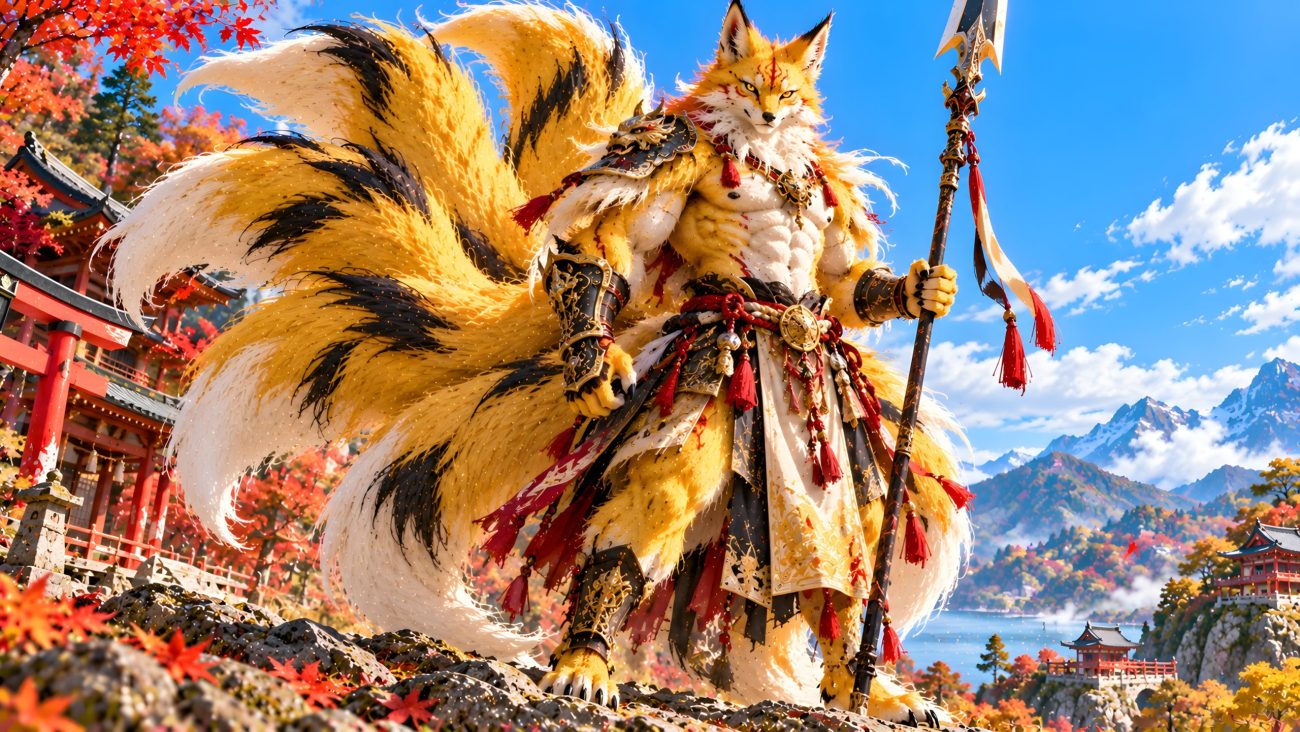
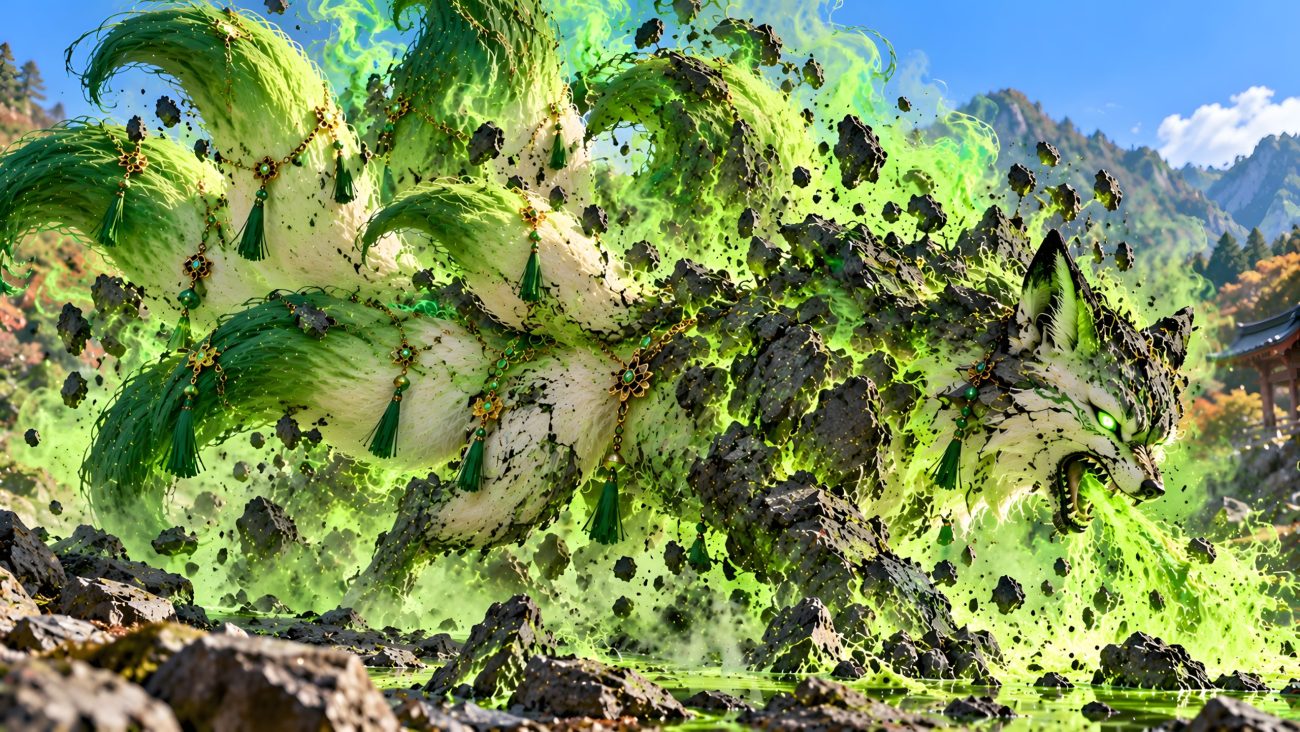
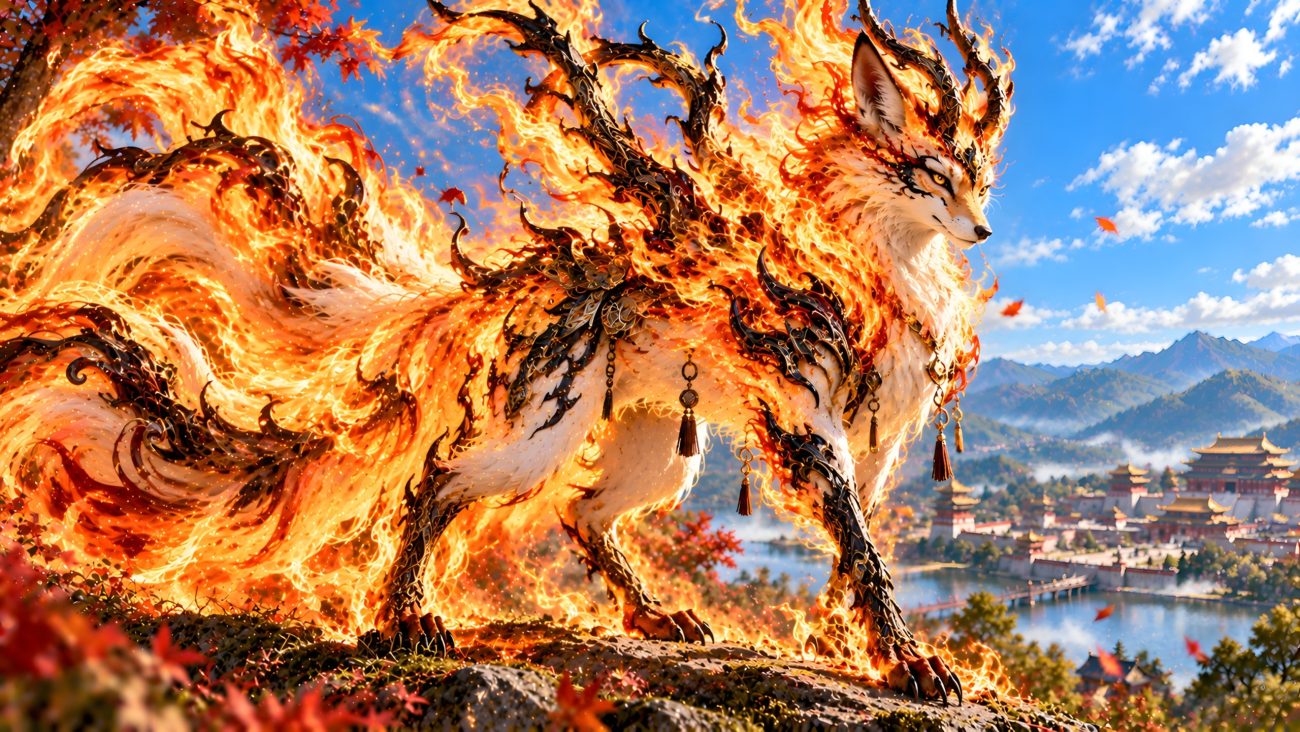
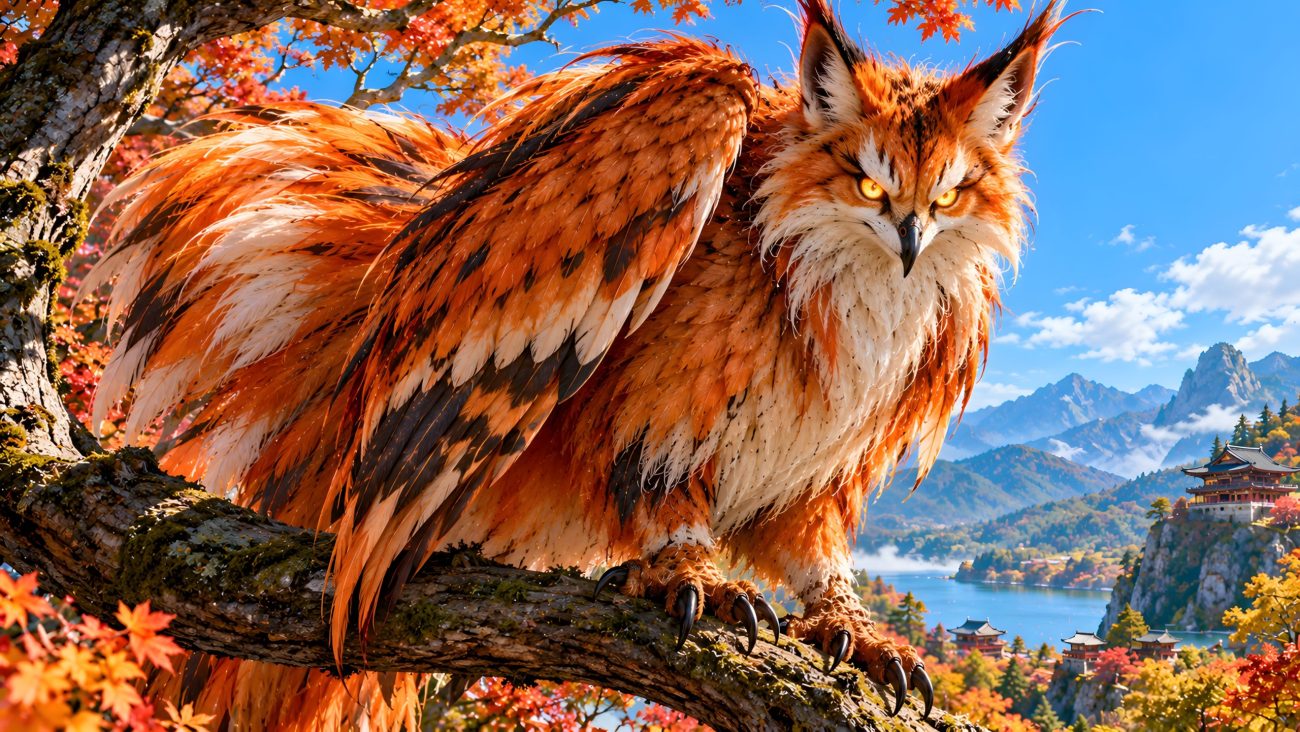
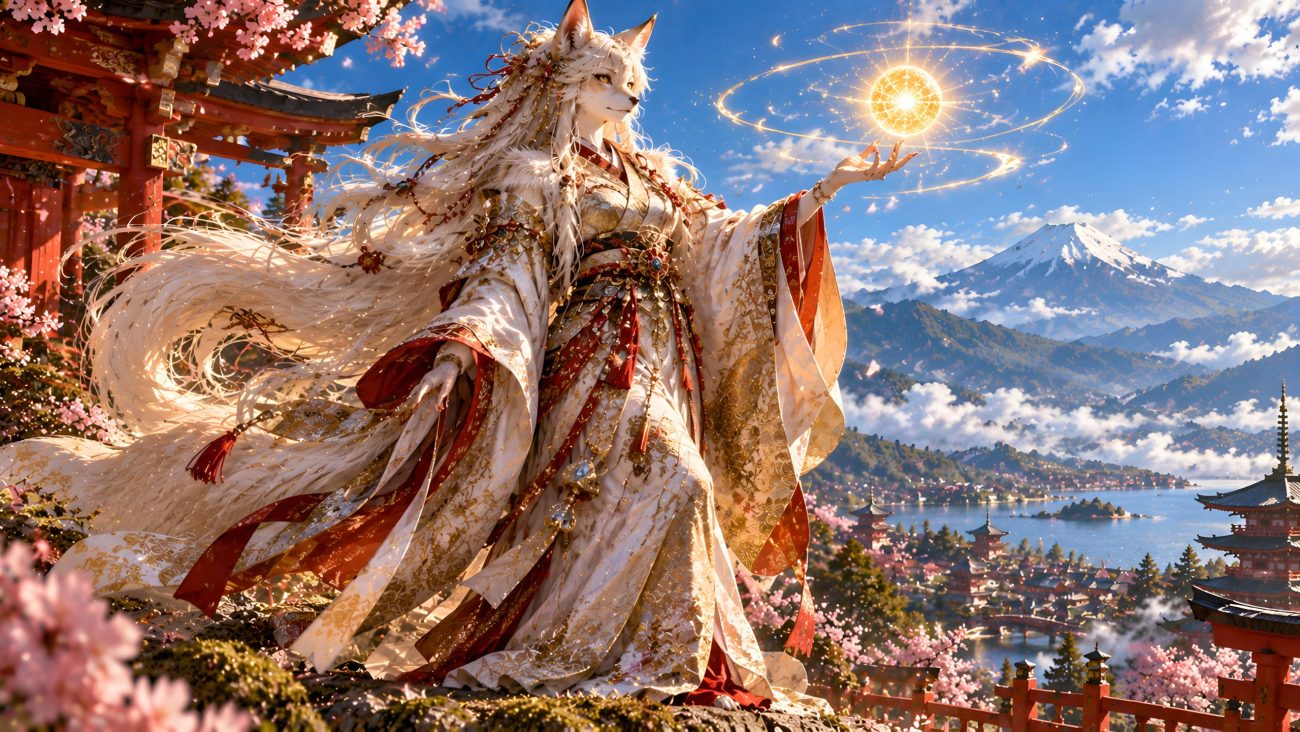
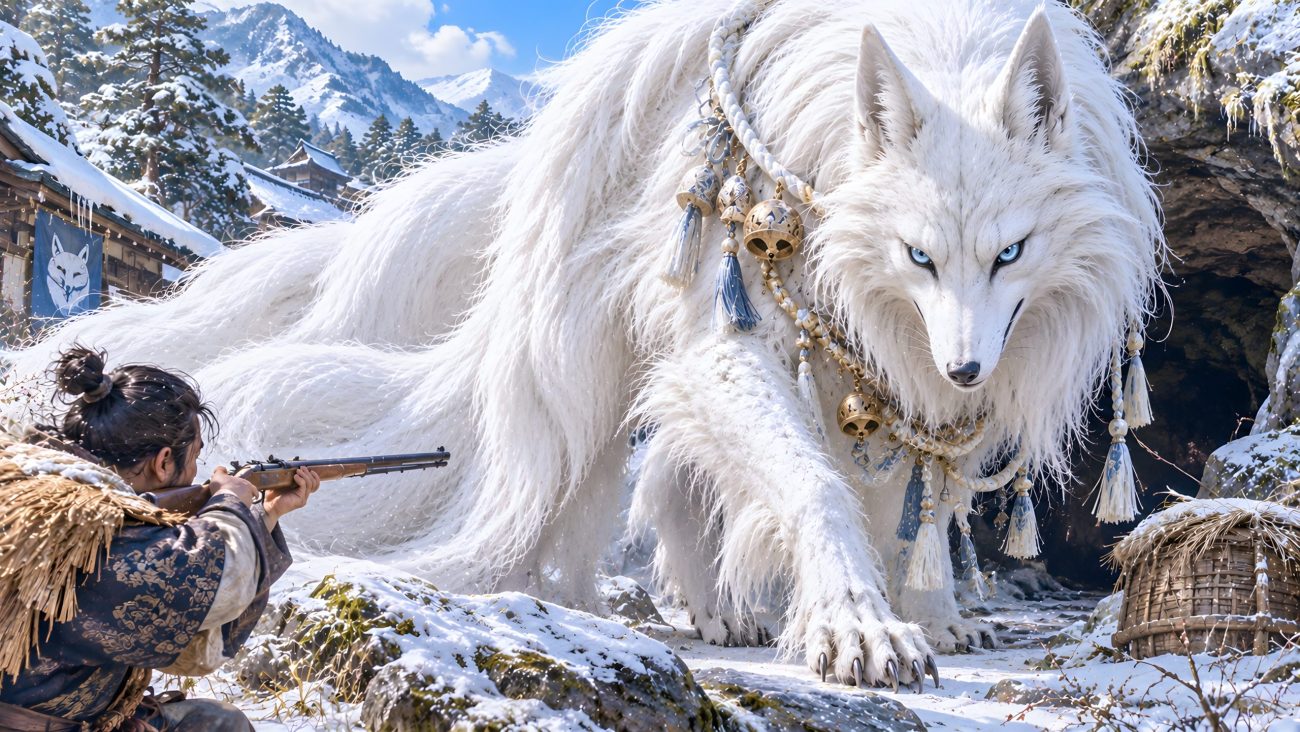
Baidoku Daiō, the King of Venereal Disease, is a terrifying supernatural being born from the accumulated yin energy of the world since the beginning of creation. In his original form, he is a golden-haired, nine-tailed, white-faced fox capable of flying freely through the cosmos and transforming into different shapes. His ultimate ambition is to exterminate humanity and turn every land into a realm of demons. Throughout the ages, he has repeatedly assumed the identities of infamous women to spread destruction. He first appeared as Daji, the consort of King Zhou of Shang, encouraging the tyrant’s cruelty and plunging his kingdom into disorder. He later became the wife of King Ban足 in India, disguised as a peasant’s daughter near Mount Huayang, where he once again committed atrocities, attacked Buddhism, and sought to slaughter the population. Finally, he travelled to Japan and became Tamamo-no-Mae, the beloved courtesan of Emperor Toba. His true nature was exposed once more, and he was hunted down and killed in the plains of Nasu. Although his immense lifespan finally appeared to end, his spirit continued to haunt the world by possessing a stone that harmed both people and animals. The monk Genno eventually shattered the stone with his staff, apparently destroying the fox’s remaining spirit.

However, the fox’s scattered spiritual remnants gathered again in the Lingnan region of China, where they took human form and acquired new supernatural powers. The resurrected demon transformed into Baidoku, a terrible and difficult-to-cure disease, and gathered eighty-four thousand followers to launch another campaign of slaughter against humanity. As Baidoku Daiō, he appears as an imposing ruler dressed in mould-coloured robes and ceremonial headwear. His army consists of horrifying disease generals, including Fistula, Poisonous Infection, Residual Poison, and Wax-Candle Chancre, whose monstrous bodies reflect the diseases they represent. Together, the King and his vast army seek to spread sickness throughout the human body, imagined as a kingdom under siege.

Baidoku Daiō eventually appears before Junjoku, a physician devoted to treating venereal disease, disguised as a woman. He warns the physician to abandon his medical research, but when Junjoku recognizes his true identity, the demon reveals his fox form and attacks him with foul-smelling poisonous vapours. The physician is saved by Raishin, a divine general who is the son of King Wen’s descendant Jichang and now guards the heavenly imperial palace. Raishin drives the fox away, beginning a great supernatural war between the forces of disease and the defenders of the human body. Junjoku and Raishin are aided by medicinal generals, including Enjumaru, Chisōmaru, and Baikōsan, whose powers represent the healing effects of different remedies. In the final battle, Enjumaru defeats the disease general Rōreki, after which Baidoku Daiō himself is beheaded. With their leader destroyed, the army of disease collapses. Junjoku then awakens in his study, realizing that the entire battle was a dream. Inspired by the vision, he prepares a medicine to treat venereal disease and rejoices that his long-standing ambition to develop an effective remedy has finally been fulfilled.


Sources

“黴毒大王 [ばいどくだいおう] (Baidoku Daiō).” 新版TYZ 妖怪図鑑 (New TYZ Yokai Encyclopedia). https://tyz-yokai.blog.jp/archives/1010655118.html
Tenko

Tradition: Japanese Mythology
Alternative Names: Heavenly Fox, Tenko (天狐)
Category: Fox


The Myth

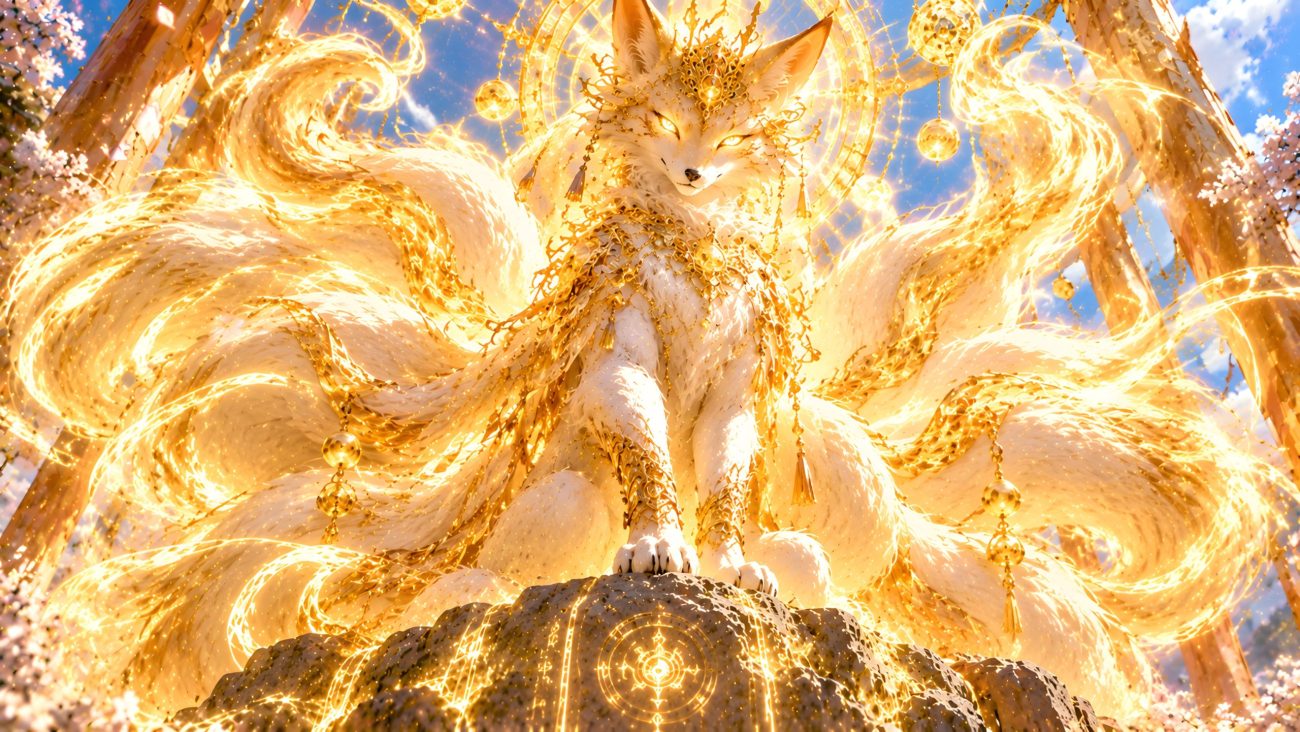
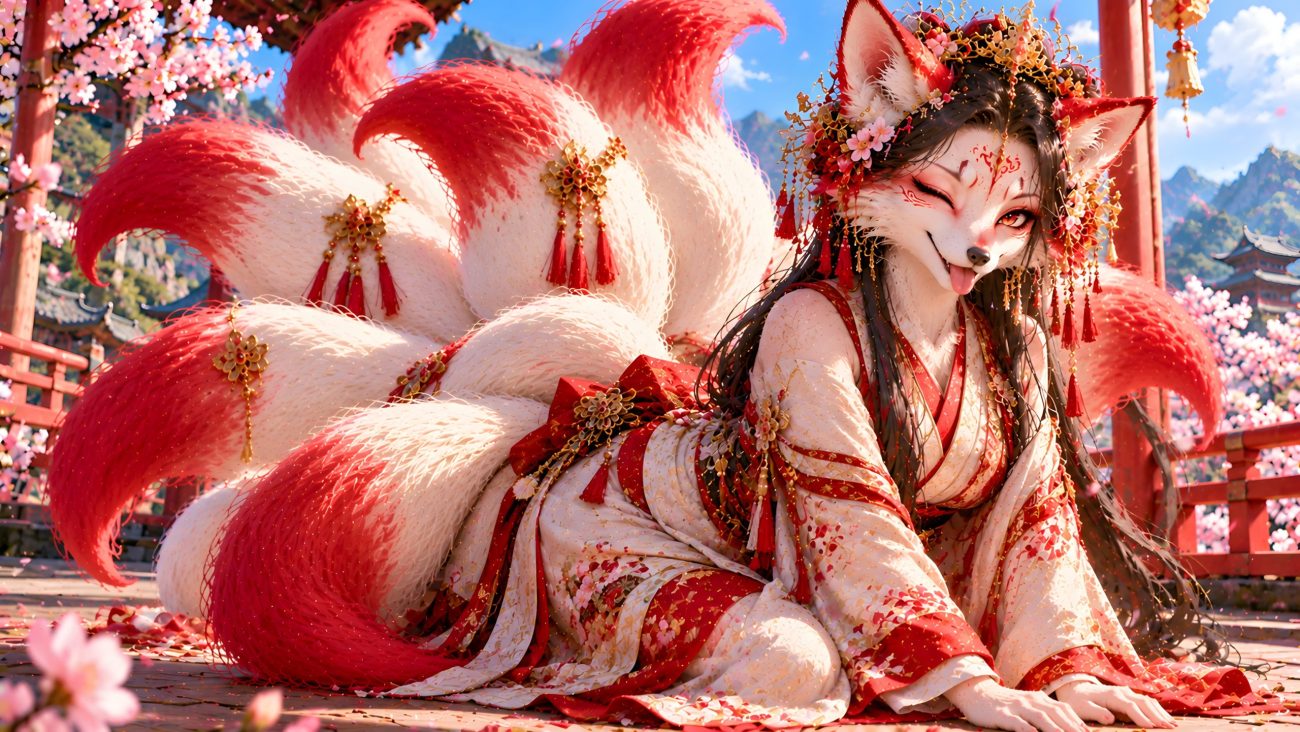
Tenko are the highest-ranking and most powerful of the benevolent kitsune, possessing divine abilities comparable to those of the gods. They are usually described as fox spirits that have lived for a thousand years, attaining extraordinary wisdom and supernatural power through centuries of cultivation. Their fur may be golden, silver, or white, and they are often depicted with multiple bushy tails, commonly four. As spiritual beings without permanent physical bodies, they can assume different appearances, frequently manifesting as beautiful, goddess-like figures. Having reached the highest stage of fox cultivation, they no longer need to feed on human life force and abandon the wicked behaviour associated with less advanced fox spirits.

Tenko are noble and benevolent beings who may be worshipped as gods by humans. They grant blessings, favours, and supernatural assistance to those who revere them. Although they can possess human beings, their possession differs from the harmful influence associated with malevolent fox spirits. A person inhabited by a tenko may acquire the spirit’s extraordinary clairvoyance, gaining the ability to predict future events accurately. Their divine status distinguishes them from younger kitsune, which are often more mischievous, deceptive, or dangerous.

According to Japanese traditions concerning kitsune, fox spirits belong to a hierarchy in which age, wisdom, and spiritual cultivation determine their rank. One classification divides benevolent foxes, known as zenko, into five kinds: tenko, kinko or golden foxes, ginko or silver foxes, kuroko or black foxes, and byakko or white foxes. Another classification places wild foxes, called nogitsune, at the lowest level, followed by kiko, or spirit foxes, then kūko, or void foxes, and finally tenko at the highest rank. These celestial foxes represent the ultimate development of kitsune power, having transcended their earthly nature and attained a divine existence.


Sources

“Tenko.” Yokai.com: The Database of Japanese Folklore. https://yokai.com/tenko/


Tamamo-no-Mae

Tradition: Japanese Mythology
Alternative Names: Tamamo-no-Gozen, Lady Kayō, Nine-Tailed Fox, Tamamo
Category: Fox


The Myth

Tamamo-no-Mae was a beautiful and extraordinarily intelligent woman who served as a courtesan at the court of Emperor Konoe. Her beauty and knowledge made her the emperor’s favourite, and she seemed capable of answering every question put to her. Yet beneath her elegant appearance lurked a powerful nine-tailed fox spirit whose true nature remained hidden. Through her supernatural influence, she caused the emperor to fall gravely ill, threatening the stability of the imperial court.

Unable to explain the emperor’s mysterious illness, the court summoned the astrologer Abe no Yasuchika. He eventually discovered that Tamamo-no-Mae was not human but a fox spirit using her beauty and intelligence to deceive the ruler. Once her identity was revealed, the emperor ordered warriors Kazusa-no-suke and Miura-no-suke to hunt her down. They pursued her to the plains of Nasu, where they finally killed the supernatural fox. However, her death did not end her power, and her vengeful spirit continued to haunt the land.

According to legend, Tamamo-no-Mae’s spirit entered a stone known as the Sesshō-seki, or Killing Stone. The stone released poisonous vapours that killed birds, animals, and anyone unfortunate enough to approach it. Eventually, the Buddhist monk Gennō Shinshō travelled to the stone and performed religious rites to free the spirit from its curse. He broke the stone apart and held a memorial service for Tamamo-no-Mae, allowing her repentant spirit to find peace. The legend of Tamamo-no-Mae also connects her to earlier incarnations in China and India, where she allegedly disguised herself as royal concubines and manipulated rulers, bringing terror and disorder to their kingdoms before fleeing to Japan.


Sources

“Tamamo-no-Mae.” Wikipedia: The Free Encyclopedia. Wikimedia Foundation. Accessed October 12, 2026. https://en.wikipedia.org/wiki/Tamamo-no-Mae


Inari Ōkami

Tradition: Japanese Mythology
Alternative Names: Ō-Inari, Inari, Inari Daimyōjin
Category: Fox, Deity


The Myth

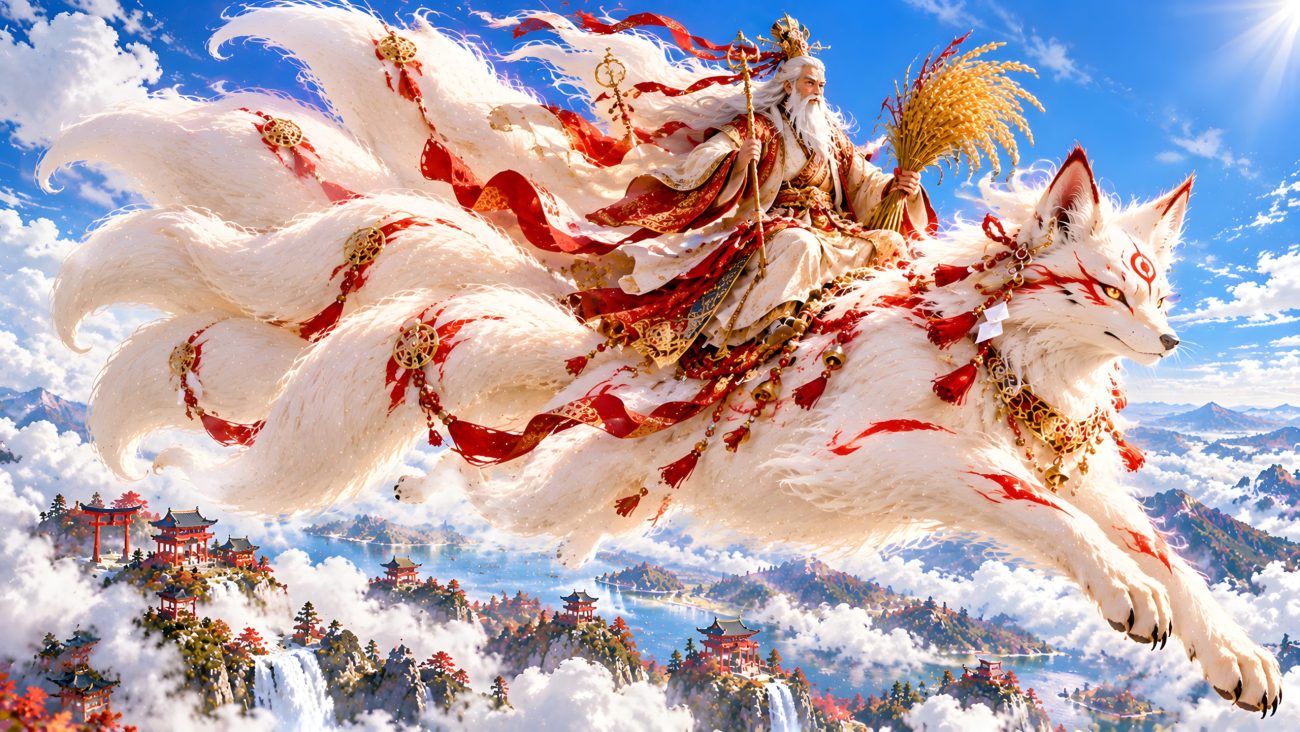
Inari Ōkami is a powerful Japanese kami associated with rice, fertility, agriculture, tea, sake, industry, and prosperity. Often depicted as either a beautiful young woman or an elderly man carrying sheaves of rice, Inari can appear in different forms and is sometimes understood as a collective of several deities. Inari’s name is associated with the bearing and cultivation of rice, and the kami is closely connected with the abundance of the harvest and the success of human livelihoods. Inari is also revered as a protector of merchants, swordsmiths, and warriors, granting prosperity and worldly success to those who honor the deity.

According to one legend, Inari descended from heaven during an ancient famine that threatened Japan. Riding upon a white fox and carrying sheaves of grain, the kami brought nourishment to a land of swamps and waters. The grain Inari carried was said to be an ancient cereal that grew in marshy ground before rice cultivation became widespread. Another tale tells of a wealthy man named Hata no Irogu who used rice cakes as targets for archery practice. Angered by this disrespect toward a divine gift, the rice kami flew away in the form of a white bird and landed on a mountain. The man recognized his mistake and established a shrine at the place where the bird had settled. The bird then transformed into a growing rice plant, and the mountain became a sacred place of worship.

Inari’s most recognizable companions are the white kitsune, or fox spirits, who serve as divine messengers. Although Inari is often mistakenly imagined as a fox, the kami and the foxes are distinct beings. The foxes are associated with the protection of rice fields and the delivery of offerings, and people traditionally presented them with red rice and fried tofu. Inari is also connected with magical jewels, sacred scrolls, sheaves of rice, sickles, and swords. The deity’s worship spread throughout Japan, and Inari became a protector of temples, households, businesses, and craftsmen. Inari’s powers extend beyond agriculture, encompassing wealth, trade, food, and the general prosperity of those who seek the kami’s favour.


Sources

“Inari Ōkami.” Wikipedia: The Free Encyclopedia. Wikimedia Foundation. Accessed October 12, 2026. https://en.wikipedia.org/wiki/Inari_%C5%8Ckami


Gorozaemon Kitsune

Tradition: Japanese Mythology
Alternative Names: Gorōzaemon, Gorozaemon of Funayama
Category: Fox


The Myth

Gorozaemon Kitsune is a powerful fox warrior associated with Funayama Inari Shrine and the foxes of Kogarashi Forest. Renowned for his strength and courage, he commands the respect of other fox spirits and is feared by hostile supernatural beings. His legend begins during a conflict between Yamahiko, the leader of the yokai of Abeyama, and Nomawari Kitsune, the leader of the foxes of Kogarashi Forest. After Yamahiko’s followers attack Nomawari’s foxes and are punished by the mighty Mikoshi Nyūdō, Yamahiko swears revenge and gathers the mountain yokai to assault the fox forest. The attackers become intoxicated after drinking sake that leaves them paralyzed, and Gorozaemon arrives with a host of fox warriors. He defeats the yokai one after another, forcing Yamahiko himself to flee in fear.

Following the victory, Nomawari Kitsune rewards the foxes who fought bravely. However, the battle devastates their territory, destroying the fence that once marked the boundary between the lands of two foxes, Yabukuguri and Konchiki. Their dispute over ownership escalates into a larger brawl among the foxes. The disagreement is eventually settled in Yabukuguri’s favour, but Gorozaemon later learns how the cleverness of a female nekomata helped determine the outcome. Konchiki had originally erected an Inari shrine pillar bearing his name, and Yabukuguri had wanted to replace the inscription with his own. Unable to write, Yabukuguri asked the nekomata for help. She deliberately restored Konchiki’s name, reasoning that this would make it appear that someone had attempted to falsify the inscription and direct suspicion toward Konchiki. Her plan succeeds, and Gorozaemon is impressed by her intelligence. The two become friends and frequently drink together.

Later, Gorozaemon encounters the nekomata being attacked by a group of unruly monsters near a ruined castle on Mount Koiwa. She had tried to reason with them, but when they could not answer her arguments, they resorted to violence. Gorozaemon attempts to mediate, but the monsters insult him as well. He responds by throwing them to the ground, overpowering them, and tying them up before rescuing the cat spirit. After hearing what happened, he recognizes that her argument had been justified and falls in love with her, eventually taking her as his concubine. The nekomata’s father, a thieving cat monster known as Homeless, serves under Yamahiko. Because his daughter has become involved with Yamahiko’s enemy, Homeless is branded a traitor and captured. Yamahiko threatens to torture both father and daughter unless she agrees to poison Gorozaemon and the other foxes with fried rat meat. She reluctantly agrees to save her father’s life. Meanwhile, Gorozaemon is appointed head of the attendants of Funayama Inari Shrine and receives gifts of gold, silver, and rice from the surrounding foxes. Unaware of the plot against him, he offers his New Year’s greetings as the tale ends, leaving the promised continuation of his adventures unresolved.


Sources

“東光 (Tōkō).” 新版TYZ 妖怪図鑑 (New TYZ Yokai Encyclopedia). https://tyz-yokai.blog.jp/archives/1063271583.html


Sesshōseki

Tradition: Japanese Mythology
Alternative Names: Killing Stone, Sesshoseki
Category: Fox


The Myth

The Sesshōseki, meaning “Killing Stone,” is a mysterious and poisonous stone found in the Nasu region of Tochigi Prefecture, Japan. It is the transformed remains of Tamamo-no-Mae, a nine-tailed fox who disguised herself as a beautiful woman and gained the favour of Emperor Toba. When her true identity was discovered, the warriors Miura-no-suke and Kazusa-no-suke hunted her down and killed her. Yet the fox’s death did not end her evil influence. Her vengeful spirit transformed her remains into a deadly stone that emitted poison and killed birds and animals that approached it.

According to legend, the spirit of Tamamo-no-Mae continued to seek revenge against the descendants of those who had destroyed her. In 1390, Tsunoda Tsunatoshi, a descendant of Miura-no-suke, was hunting in Nasu when a beautiful woman appeared before him. When he took her hand, she transformed into a demon, seized him, and attempted to carry him into the sky. Tsunatoshi fought back with his sword and managed to escape. News of the encounter reached Ashikaga Ujimitsu, who requested Buddhist monks to subdue the dangerous spirit. One monk, Daitetsu, travelled into the mountains and discovered the enormous Killing Stone, which measured approximately seven feet long. The stone began to sweat when he approached it and sank into the ground when he touched it. Recognizing that the spirit had responded to Buddhist teachings, Daitetsu returned home.

The final destruction of the Sesshōseki came when the monk Genno travelled to Nasu after receiving a spiritual dream. He performed Buddhist rites to release Tamamo-no-Mae from her curse, then smashed the stone with his staff. The fox spirit emerged from the shattered rock, but Genno struck it down and brought its supernatural terror to an end. Tamamo-no-Mae was subsequently mourned and enshrined as Shinohara Inari Daimyōjin. According to another tradition, fragments of the shattered stone scattered across Japan, giving rise to further legends of Killing Stones in distant regions. The Sesshōseki remains a symbol of the dangerous supernatural power that endured even after the death of the legendary nine-tailed fox.


Sources

“殺生石 (Sesshōseki).” 新版TYZ 妖怪図鑑 (New TYZ Yokai Encyclopedia). https://tyz-yokai.blog.jp/archives/1010654430.html


Tōkō

Tradition: Japanese Mythology, Chinese Mythology
Alternative Names: Tenghuang, Chenghuang, Feihuang, Guhuang, Cuihuang
Category: Fox


The Myth

Tōkō is a rare mythical beast resembling a fox, with flames surrounding its shoulders, two horns growing from its back, and a long tail. According to legend, it has existed in Japan since the age of the gods, surviving for two thousand years before travelling to Tang China. Its unusual appearance combines the form of a fox with fiery features and hornlike protrusions, distinguishing it from ordinary animals and marking it as a creature of extraordinary power.

In China, Tōkō became the mount of the Yellow Emperor, who rode upon its back while travelling throughout the land. During these journeys, the emperor taught people how to ride horses for the first time. One tradition suggests that the famous account of the Yellow Emperor travelling across the world on an eight-winged dragon actually describes Tōkō. The beast was therefore associated with imperial journeys, ancient wisdom, and the spread of knowledge among humanity.

Tōkō is connected with other mythical beasts described in Chinese traditions, including Chenghuang, a foxlike creature with horns on its back. According to legend, riding Chenghuang grants a lifespan of two thousand years. Other creatures, known as Feihuang, Guhuang, and Cuihuang, have also been associated with Tōkō because of their similar supernatural characteristics. Tōkō’s image was even included among the mythical beasts embroidered on ceremonial decorations displayed beneath the eaves of the Japanese imperial palace when the emperor ascended the throne.


Sources

“東光 (Tōkō).” 新版TYZ 妖怪図鑑 (New TYZ Yokai Encyclopedia). https://tyz-yokai.blog.jp/archives/1063271583.html


Tsukitokko

Tradition: Japanese Mythology
Alternative Names: Konotsukitokkou, Tokkuo, Tokkuodori
Category: Fox, Bird


The Myth

Tsukitokko is a frightening supernatural creature associated with the story of Oishi Hyoroku, a young samurai from Satsuma who set out to defeat a fox known for tricking people and shaving their heads. The fox used its supernatural powers to transform into various monsters, confronting Hyoroku with a succession of terrifying apparitions. Exhausted and terrified, Hyoroku eventually wished aloud for dawn to arrive, hoping that the horrors of the night would soon end.

A monstrous figure suddenly appeared before him, declaring that it was Tsukitokko and questioning what he would do when morning came. The creature emerged with such force that it seemed ready to pounce at any moment. Its two eyes shone ominously, its beak was pointed, and wings extended from both sides of its body. Startled by this new apparition, Hyoroku leapt up and fled in panic, heedless of the thorns beneath his feet.

Tsukitokko is thought to be another disguise assumed by the mischievous fox. Its appearance resembles a gigantic owl, connecting it to the expression Konotsukitokkou, used in the Satsuma region to represent the sound of an owl hooting. The owl itself was also known as a tokkuo or tokkuodori. Through its imposing, birdlike form, Tsukitokko became one of the many monstrous disguises that terrified Hyoroku during his ill-fated fox hunt.


Sources

“月徳狐 (Tsukitokko).” 新版TYZ 妖怪図鑑 (New TYZ Yokai Encyclopedia). https://tyz-yokai.blog.jp/archives/1010654382.html


Kūko

Tradition: Japanese Mythology
Alternative Names: Kūko (空狐), Inari Kūko, Sky Fox
Category: Fox


The Myth

Kūko are exceptionally ancient and powerful benevolent fox spirits known as zenko, or good kitsune. After reaching three thousand years of age, a tenko may ascend to the rank of kūko, becoming a being of pure spirit with magical powers comparable to those of the gods. Unlike younger kitsune, kūko have no physical bodies and require no food or other sustenance. Their appearance becomes more human-like, and they lose their tails entirely, although their ears retain their distinctive foxlike shape. They possess extraordinary abilities, including telepathy, clairvoyance, and the power to see into the future.

Despite their immense power and great age, kūko rank below tenko in kitsune society. This is because they have reached a stage resembling retirement from active service to Inari, the deity associated with fox spirits. Rather than carrying out duties directly, they act as revered elders and trusted advisers. When they interact with humans, their intentions are benevolent. They may bring prosperity to temples and households, help honest people gain recognition for their talents, or temporarily possess a foolish but good-hearted person to teach them valuable lessons. Unlike the harmful possession associated with malevolent fox spirits, a kūko’s possession does not cause illness or mental disturbance.

One account describes a kūko who had lived in Kyoto for a long time before travelling to Edo. During his journey, he stopped at the home of a samurai named Nagasaki Genjirō and temporarily inhabited the body of one of the samurai’s fourteen-year-old servants. Speaking through the boy, the spirit explained the different ranks of foxes and the distinction between benevolent zenko and harmful yako. For five days, he entertained Genjirō and his neighbours with stories about the Genpei War, the Battle of Dannoura, and the Battle of Sekigahara. Before departing, the kūko used his powers to cure the boy’s illnesses. As a final gesture of gratitude for the hospitality he had received, he left Genjirō a signed calligraphic scroll containing the secret inner teachings of Hakke Shinto.


Sources

“Kuuko.” Yokai.com: The Database of Japanese Folklore. https://yokai.com/kuuko/


Kitamu-Inkyo

Tradition: Japanese Mythology
Alternative Names: Kitamu Inkyo, North-facing Hermit
Category: Fox


The Myth

Kitamu-Inkyo is a powerful shapeshifting fox from the mountains of Aomori Prefecture, feared for its cunning disguises and deadly schemes. It belongs to a hierarchy of exceptionally old foxes, each possessing greater size and supernatural power than the last. Among them are Old Man Higashiyama, a fox as large as a fawn, and the Old Man of the Sunset, a fox as large as a calf. Kitamu-Inkyo surpasses them both, appearing as an enormous old fox whose long white fur drags along the ground. It possesses such mastery of transformation that it can impersonate a human being convincingly and devise elaborate plans to deceive its enemies.

The creature’s story begins with a hunter named Minomi Tozo, who once spotted a young fox stripping the feathers from a pheasant. The fox transformed the featherless bird into a baby, turned a horse bone into beautiful sandals, and fashioned a baby carrier from plants before disguising itself as a woman carrying a child. It entered a house pretending to be Kinko, the daughter of the household’s owner. Tozo followed and exposed the deception by holding a knife to the supposed baby’s throat, causing it to revert to a pheasant and fly away. That night, a fox disguised as Tozo’s wife lured him into shooting his real wife, who was hiding in the latrine. Devastated by the trick, Tozo vowed to hunt down the evil foxes responsible. While hiding in a cave, he overheard a gathering of foxes discussing how to kill him. Their leader decided that Kitamu-Inkyo should disguise itself as Tozo’s older brother, a Buddhist monk from Kyoto, and visit his home to murder him.

Having heard the plot, Tozo prepared an ambush at his house, sealing its openings and hiding a large dog in a boat in the garden. When Kitamu-Inkyo arrived disguised as the monk, accompanied by an impressive procession, Tozo welcomed the visitors and served them sake. At a signal from the hunter, the doors were shut, the young men attacked with mallets, and the dog sprang from its hiding place. Many foxes were killed, but Kitamu-Inkyo escaped through a smoke vent in the roof. Tozo pursued the white fox across the mountains until he reached a strange village where metal objects were forbidden and a young woman was to be sacrificed to a terrifying local god. Tozo volunteered to take her place and hid inside a wicker basket placed at the entrance of the monster’s cave. When the creature reached for the basket’s lid, Tozo shot it through the throat. The next morning, the villagers discovered a huge dead fox deep inside the cave: Kitamu-Inkyo at last lay defeated. Grateful for his bravery, the villagers welcomed Tozo, and he married the young woman he had saved.


Sources

“北村隠居 (Kitamu-inkyo).” 新版TYZ 妖怪図鑑 (New TYZ Yokai Encyclopedia). https://tyz-yokai.blog.jp/archives/1065549434.html