Yumian

Tradition: Chinese Mythology
Alternative Names: Jade Face, Yumian Fox, Yumian Princess, Hu Xiaojie
Category: Fox


The Myth

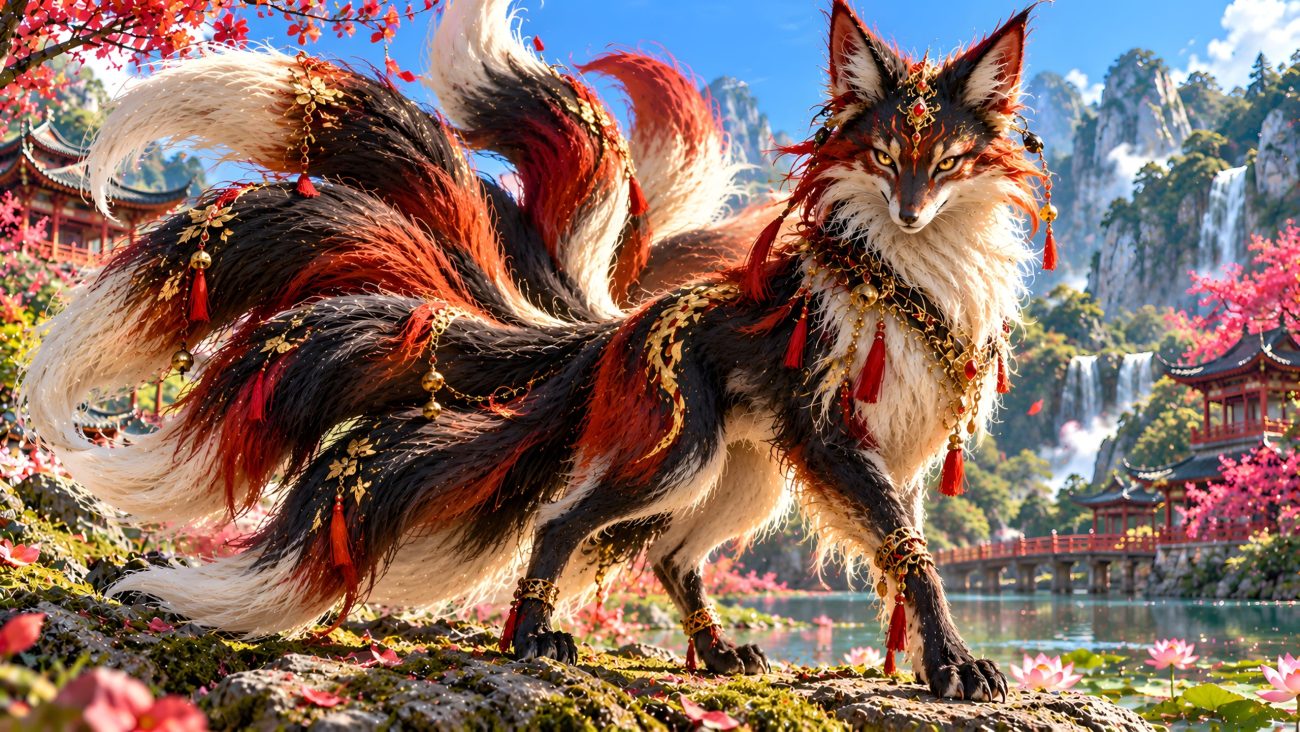
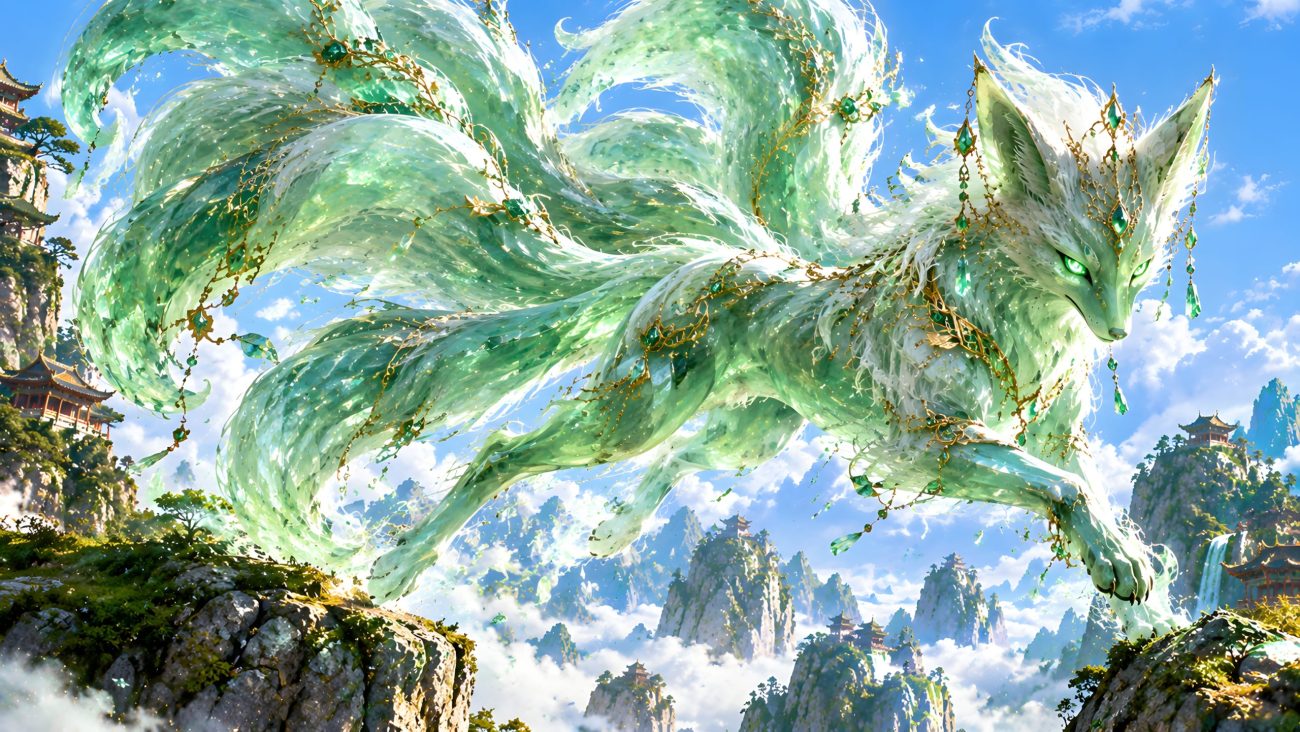
Yumian is a powerful fox demon known for her beautiful, jade-like face and extraordinary powers of transformation. In the tale The Complete Story of the Fox’s Karmic Affinity, Yumian is described as a nine-tailed fox who has cultivated her supernatural abilities for nine thousand years, gaining an additional tail for every thousand years of practice. Despite her immense age and magical power, she remains fascinated by the pleasures of the human world and frequently disguises herself as a beautiful woman to interact with mortals.

Taking the identity of Miss Hu, Yumian visits the study of a young scholar named Zhou at night. She becomes involved with him and secretly absorbs his yang essence to strengthen her own cultivation. As their encounters continue, Zhou neglects his studies and eventually falls ill, weakened by the fox demon’s supernatural influence. His declining health draws attention to the danger concealed behind Yumian’s alluring human appearance.

Eventually, the immortal Lü Dongbin descends into the mortal world to subdue the fox demon. The two engage in a supernatural battle, but neither can gain the upper hand, and their confrontation ends in a draw. Yumian also appears in other Chinese literary tales. In The Complete Biography of Ji Gong, the Jade-Faced Fox visits the monk Ji Gong to seek his teachings. In Journey to the West, the Jade-Faced Princess is a fox spirit and the daughter of the Ten-Thousand-Year Fox King. She lives in Cloud-Gathering Cave on Mount Jilei and becomes the concubine of the Bull Demon King.


Sources

“玉面 (Yùmiàn).” Chinese Wikipedia. Wikimedia Foundation. Accessed October 12, 2026. https://zh.wikipedia.org/wiki/%E7%8E%89%E9%9D%A2
Longzhi

Tradition: Chinese Mythology
Alternative Names: 蠪蛭 (Lóngzhì)
Category: Fox


The Myth

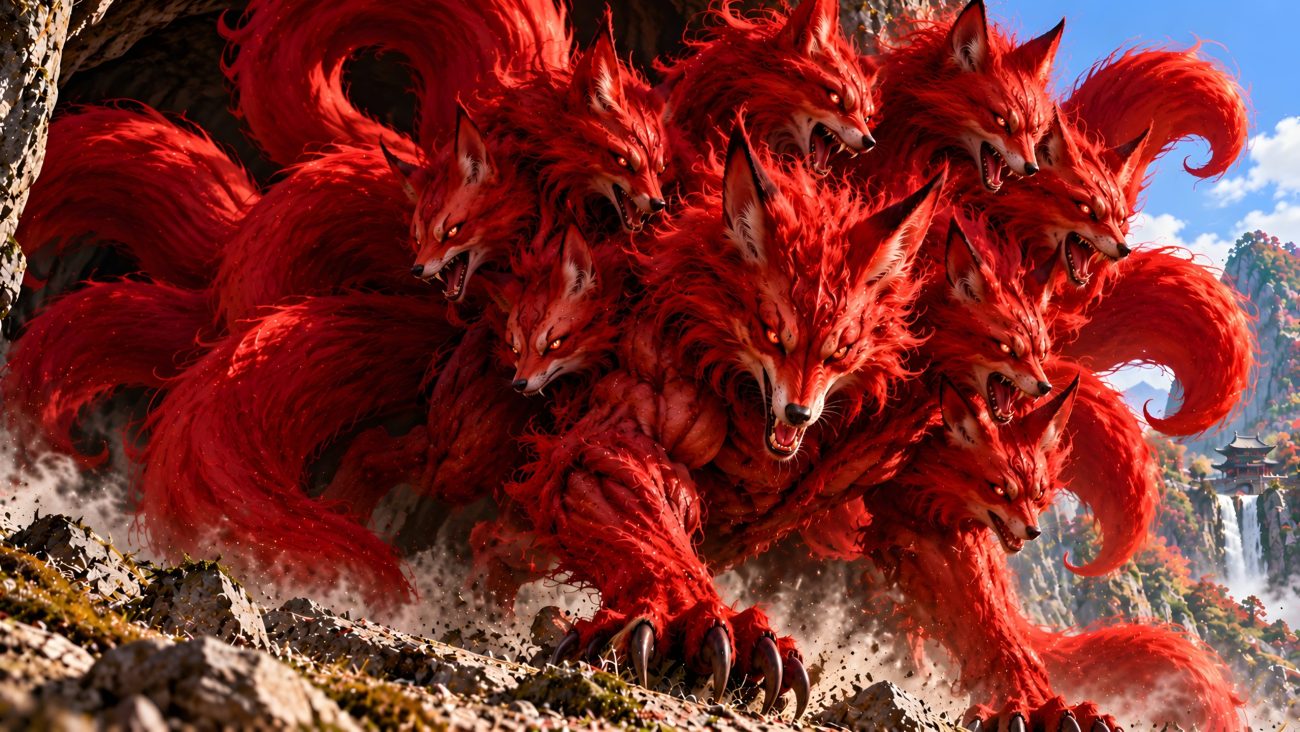
Longzhi is a monstrous fox-like creature with nine heads and nine tails. Its paws resemble those of a tiger, giving it the claws and appearance of a formidable predator. Despite its foxlike body, the creature has a terrifying voice that sounds like the cries of a human baby, making its presence especially unsettling.

Longzhi is a dangerous man-eating beast that attacks and devours humans. Its nine heads and nine tails distinguish it from ordinary foxes and other supernatural animals, while its tiger-like claws make it a fearsome hunter. The creature combines the cunning appearance of a fox with the strength and ferocity of a predator, making it a particularly monstrous being in Chinese mythology.


Sources

“蠪姪 (Lóngzhí).” Chinese Wikipedia. Wikimedia Foundation. Accessed October 12, 2026. https://zh.wikipedia.org/wiki/%E8%A0%AA%E5%A7%AA


Sky Fox

Tradition: Chinese Mythology
Alternative Names: Celestial Fox, Tian Hu (天狐), Thousand-Year Heavenly Fox, Tenko
Category: Fox


The Myth

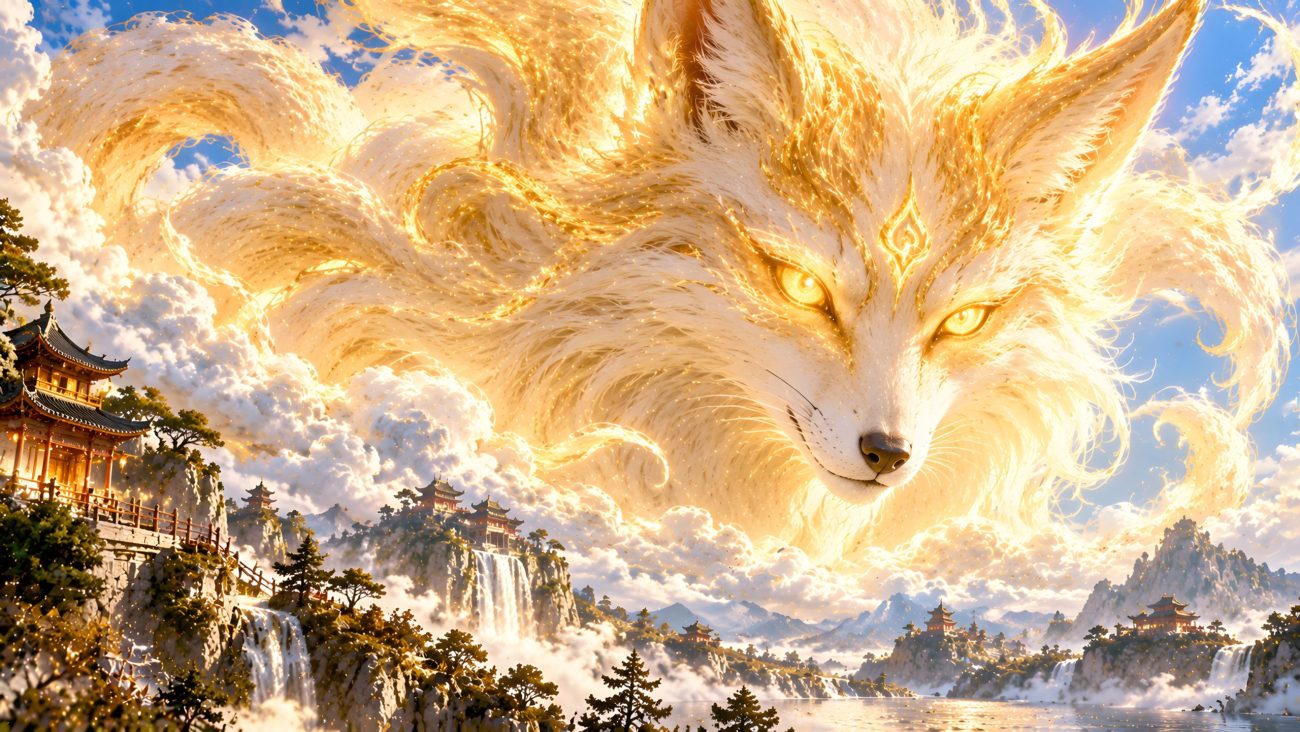
The Sky Fox is an exceptionally powerful celestial fox spirit that emerges after a fox has cultivated its supernatural abilities for a thousand years and developed nine tails. Upon reaching this stage, its fur turns golden, and it ascends to the heavens, becoming a divine beast of extraordinary power. Its celestial transformation grants it the ability to see a thousand li into the distance, allowing it to perceive events far beyond the reach of ordinary creatures. The Sky Fox represents the highest stage of a fox spirit’s cultivation, possessing wisdom, magical abilities, and a place among the celestial beings.

Fox spirits develop their powers through several paths. Some gain wisdom by accidentally swallowing treasures from heaven and earth, while others cultivate their spiritual virtues in places rich in yin energy, drawing upon the essence of the moon. Some learn directly from Taoist monks and masters. Every hundred years, a fox faces a supernatural catastrophe; if it survives, it develops another tail. Many foxes perish or abandon their cultivation before reaching the later stages, making the nine-tailed Sky Fox exceptionally rare. Upon completing a thousand years of cultivation, the fox receives recognition from the Heavenly Court and attains immortal rank.

Despite their divine status, Sky Foxes do not always behave benevolently toward humans. Some descend into the mortal world and cause chaos, requiring Taoist priests to subdue them. Because of their celestial nature, they are generally spared execution and instead punished through beatings or exile. One such Sky Fox, Liu Cheng, was banished to the ancient Korean kingdom of Silla after causing disorder in China. The people of Silla eventually came to revere him as a deity. Another legend describes a Sky Fox possessing a heavenly book containing powerful magical techniques. Humans who attempt to steal this treasure often suffer disastrous consequences, although the Korean hero Jeon Woo-chi succeeds in taking the book and mastering its secrets.

The Sky Fox is also associated with Japanese and Korean traditions. In Japan, the celestial fox is linked to the highest ranks of kitsune, above other supernatural foxes such as kūko, kiko, and yako. Some traditions connect the celestial fox with the tengu, while others describe fox spirits as divine messengers of Inari Ōkami rather than the deity itself. In Korea, the nine-tailed fox known as the kumiho shares several characteristics with the Sky Fox, including golden fur, nine tails, and a heavenly book. These traditions portray the Sky Fox as a rare and formidable being whose supernatural cultivation allows it to cross the boundary between the mortal world and the heavens.


Sources

“Sky Fox (mythology).” Wikipedia: The Free Encyclopedia. Wikimedia Foundation. Accessed October 12, 2026. https://en.wikipedia.org/wiki/Sky_Fox_(mythology)


Hu Meiniang

Tradition: Chinese Mythology
Alternative Names: Hu Meiniang, Hu Mei Niang
Category: Fox


The Myth

Hu Meiniang is a powerful fox spirit who can transform herself into a beautiful woman. She is described as an ancient fox demon with a thousand years of cultivation, originally known as the old fox spirit of the northern gate of Xinzheng. Through her supernatural abilities, she assumes a human appearance and becomes involved in the legendary tale of the White Snake.

In one account, Hu Meiniang approaches Xu Xian and warns him that a demon has impersonated her. She urges him to report the supposed impostor and cautions him not to trust the figure claiming to be Bai Suzhen. Xu Xian believes Hu Meiniang’s explanation and goes to confront Bai Suzhen. However, Hu Meiniang’s deception eventually comes to an end when she is struck by thunder and lightning. She dies in a marketplace, and her human body transforms into the corpse of a fox, revealing her true nature.

Hu Meiniang also appears as the central character of The Tale of Hu Meiniang, a separate story included in the collection Jiandeng Yuhua. Her appearances in these tales portray her as a fox spirit whose beautiful human disguise conceals her supernatural identity.


Sources

“胡媚娘 (Hú Mèiniáng).” Chinese Wikipedia. Wikimedia Foundation. Accessed October 12, 2026. https://zh.wikipedia.org/wiki/%E8%83%A1%E5%AA%9A%E5%A8%98


Tōkō

Tradition: Japanese Mythology, Chinese Mythology
Alternative Names: Tenghuang, Chenghuang, Feihuang, Guhuang, Cuihuang
Category: Fox


The Myth

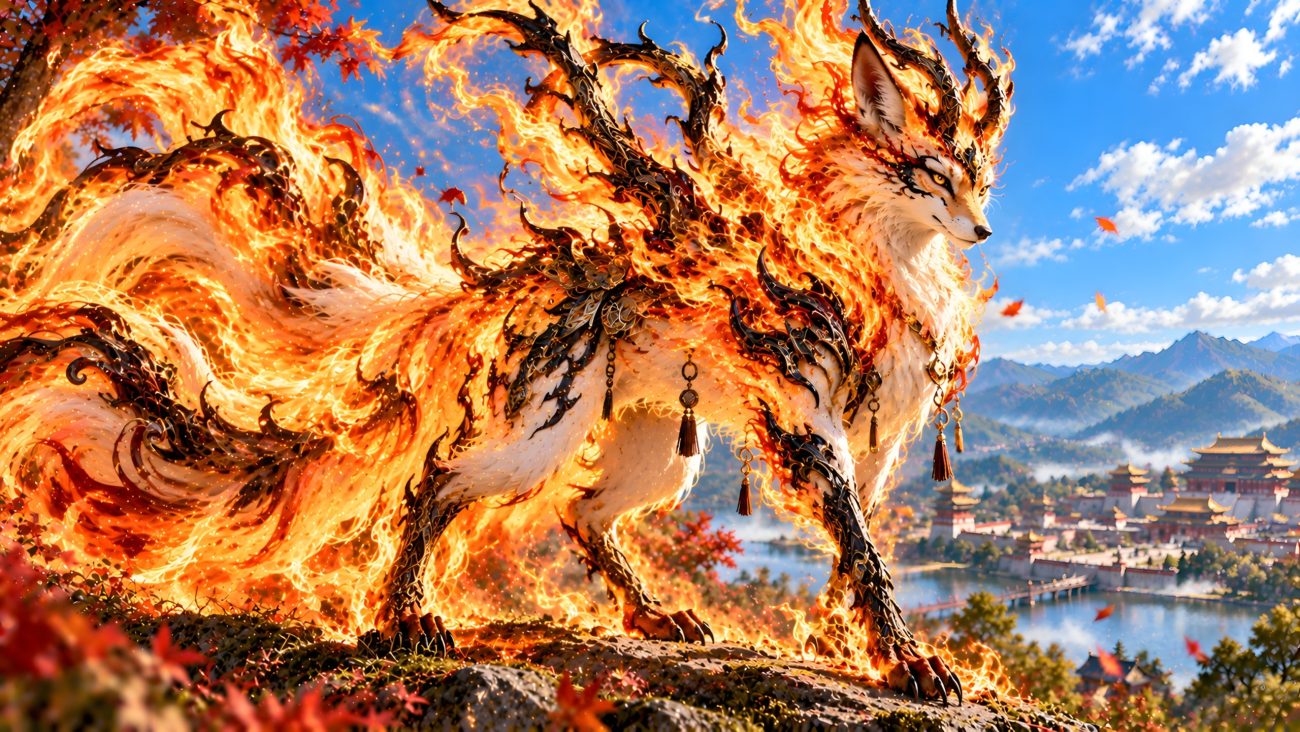
Tōkō is a rare mythical beast resembling a fox, with flames surrounding its shoulders, two horns growing from its back, and a long tail. According to legend, it has existed in Japan since the age of the gods, surviving for two thousand years before travelling to Tang China. Its unusual appearance combines the form of a fox with fiery features and hornlike protrusions, distinguishing it from ordinary animals and marking it as a creature of extraordinary power.

In China, Tōkō became the mount of the Yellow Emperor, who rode upon its back while travelling throughout the land. During these journeys, the emperor taught people how to ride horses for the first time. One tradition suggests that the famous account of the Yellow Emperor travelling across the world on an eight-winged dragon actually describes Tōkō. The beast was therefore associated with imperial journeys, ancient wisdom, and the spread of knowledge among humanity.

Tōkō is connected with other mythical beasts described in Chinese traditions, including Chenghuang, a foxlike creature with horns on its back. According to legend, riding Chenghuang grants a lifespan of two thousand years. Other creatures, known as Feihuang, Guhuang, and Cuihuang, have also been associated with Tōkō because of their similar supernatural characteristics. Tōkō’s image was even included among the mythical beasts embroidered on ceremonial decorations displayed beneath the eaves of the Japanese imperial palace when the emperor ascended the throne.


Sources

“東光 (Tōkō).” 新版TYZ 妖怪図鑑 (New TYZ Yokai Encyclopedia). https://tyz-yokai.blog.jp/archives/1063271583.html


Guixiang and Yunxiang

Tradition: Chinese Mythology
Alternative Names: Gui Xiang, Yun Xiang
Category: Fox


The Myth

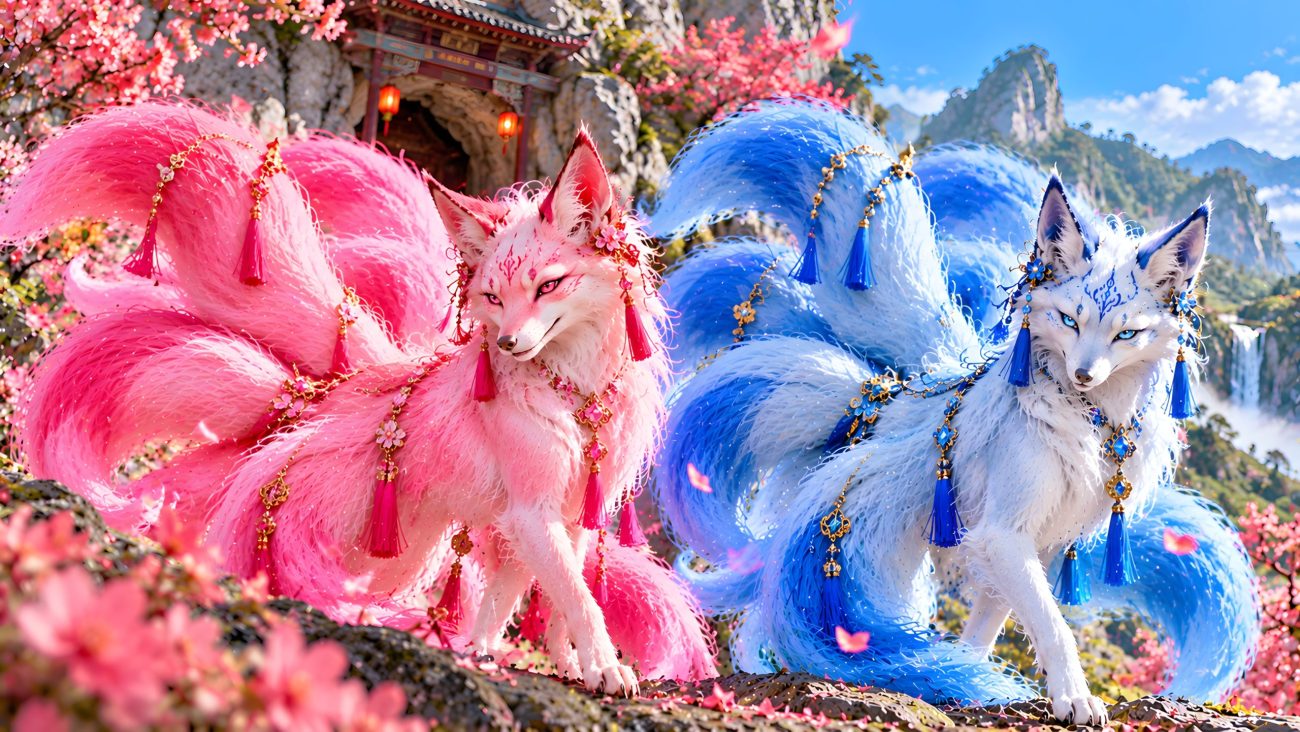
Guixiang and Yunxiang are two female fox demons who inhabit Peach Blossom Cave on Green Peak Ridge, approximately thirty li from a city in Jiangxi, China. Both have cultivated their supernatural powers for more than a hundred years, allowing them to transform themselves into beautiful women. They specialize in absorbing the yang essence of men to strengthen their magical abilities. One day, after hearing that a theatrical performance would take place during a temple festival at Puning Temple, the two fox spirits disguise themselves as beautiful women and travel to the city to enjoy the festivities.

During their adventures, the fox demons encounter Chun Mingmei, a wealthy young man from Jiangxi. After finding him unconscious, they revive him and carry him back to their cave. There, Guixiang and Yunxiang both become involved with the young man, with Guixiang eventually withdrawing while Yunxiang remains with him. Their supernatural powers and alluring human disguises allow them to ensnare the young man within their hidden dwelling.

Eventually, the Thunder God discovers the fox demons and captures them, allowing Chun Mingmei to leave the cave. On his journey home, he encounters Yue Su, a benevolent fox immortal who rescues him and escorts him back. Yue Su is herself an ancient supernatural fox, having once been a great black fox that lived five hundred years earlier and was wounded by a hunter’s arrow. Unlike Guixiang and Yunxiang, whose powers are used to ensnare men, Yue Su acts as a protector and rescuer.


Sources

“桂香和云香 (Guìxiāng hé Yúnxiāng).” Chinese Wikipedia. Wikimedia Foundation. Accessed October 12, 2026. https://zh.wikipedia.org/wiki/%E6%A1%82%E9%A6%99%E5%92%8C%E4%BA%91%E9%A6%99


Huli Jing

Tradition: Chinese Mythology
Alternative Names: Fox Spirit, Huxian, Hushen, Husheng, Huwang, Huyao, Huzu, Jiuweihu, Nine-Tailed Fox
Category: Fox


The Myth

Huli Jing are supernatural fox spirits capable of transforming themselves into different shapes, most famously beautiful young women, but also men and other human forms. Their powers grow with age, and ancient fox spirits can become extraordinarily powerful beings. Some are benevolent and bring good fortune, while others are malicious, using sorcery, deception, possession, and enchantment to mislead people. The most powerful fox spirits may develop nine tails, golden fur, and celestial abilities, eventually ascending to heaven as immortal foxes. Nine-tailed foxes can appear as auspicious signs of peace, prosperity, and abundant descendants, but other tales portray them as dangerous man-eaters.

Fox spirits are said to gain the ability to assume human form as they grow older. A fifty-year-old fox can transform into a woman, while one a hundred years old may become a beautiful woman, a spirit medium, or an adult man. Such beings can perceive events taking place far away, bewilder people through supernatural powers, poison them with sorcery, or possess their bodies. After reaching a thousand years of age, a fox may ascend to heaven and become a celestial fox. One tale describes foxes attempting to transform by placing skulls upon their heads and worshipping the Big Dipper, trying different skulls until they find one that remains in place. Celestial foxes are described as golden and nine-tailed, serving in the Palace of the Sun and Moon and possessing powers that allow them to transcend the forces of yin and yang.

One of the most infamous Huli Jing was a nine-tailed fox spirit who possessed Daji, the wife of the tyrant king Di Xin. The spirit served the goddess Nüwa, who sought vengeance after the king offended her. Entering Daji’s body and driving out her soul, the fox spirit assumed her identity and became the king’s wife. Under the guise of the beautiful Daji, she encouraged the ruler’s cruelty and devised horrific tortures, including forcing righteous officials to embrace red-hot metal pillars. Her wickedness helped provoke rebellion against the Shang dynasty. Eventually, Jiang Ziya drove the fox spirit out of Daji’s body, and Nüwa condemned the spirit for her excessive cruelty.


Sources

“正木狐 (Masaki Kitsune).” 新版TYZ 妖怪図鑑 (New TYZ Yokai Encyclopedia). https://tyz-yokai.blog.jp/archives/1072119352.html


Zhu Nuo

Tradition / Region: Chinese mythology
Alternate Names: Guan Guan, Crested Beast
Category: Fox


The Myth

In the mountains described in ancient records, there was said to live a strange creature known as the Crested Ibis Beast.

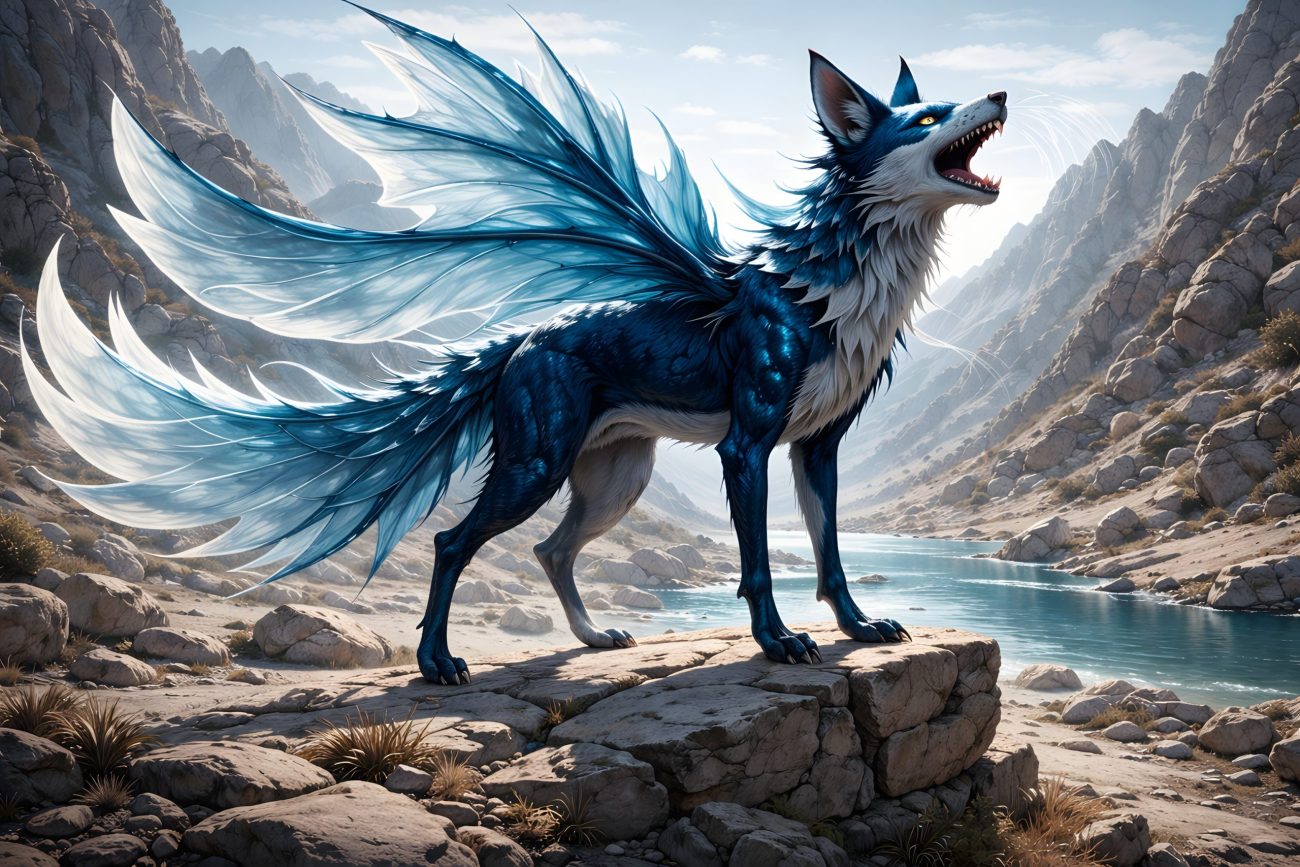
It was shaped like a fox, but its body was not entirely of the land. From its sides grew wings like those of a fish, strange and otherworldly, as though it belonged partly to the waters as well as the mountains. The creature dwelled in barren places where few trees grew, among blue waters and rocky slopes where great snakes also lived.

When it cried out, it spoke its own name. The sound carried far across the mountains, and people believed that when this call was heard, unrest and fear would soon spread through the land. Its appearance was taken as an omen, a sign that something troubling was about to happen.

Thus the fox-winged beast of the mountains was remembered as a herald of disturbance — a creature neither wholly of sky nor earth, whose voice alone could unsettle a country.


Sources

Wikipedia contributors. (n.d.). 朱獳. In Wikipedia. Retrieved March 1, 2026, from https://zh.wikipedia.org/wiki/%E6%9C%B1%E7%8D%B3.