Sedna

Tradition / Region: Inuit Mythology, Greenlandic Mythology, Canadian Mythology
Alternate Names: Nuliajuk, Sassuma Arnaa, Nerrivik, Arnakuagsak, Arnapkapfaaluk
Category: Mermaid, Goddess


The Myth

Long ago, there lived a young woman named Sedna, daughter of a man who could not find a husband worthy of her—or, in some tellings, a maiden who refused every suitor who came.

At last a stranger arrived, promising riches and plenty of food. Sedna’s father agreed to the marriage, and she went away with the man. But once she reached his home, she discovered the truth: he was not a man at all, but a great bird spirit. She lived in misery among the cliffs and the screaming birds until her father returned to rescue her.

They fled together in his kayak across the sea. But the bird-spirit raised a terrible storm. Waves rose high, and the sea roared around them. Terrified that the boat would sink, Sedna’s father pushed her overboard.

She clung to the side of the kayak, begging for help. In fear for his life, her father took a knife or axe and cut off her fingers one by one. As they fell into the water, her fingers became the creatures of the sea—seals, walruses, whales, and all the animals hunted by humans.

Sedna sank beneath the waves and fell to the bottom of the ocean. There she did not die. Instead she became the great mistress of the deep, ruler of the undersea world and guardian of all marine animals.

From that time on, the people believed that the success of every hunt depended on her will. When she was angered by human wrongdoing, she kept the animals hidden, and famine followed. Shamans would then journey in spirit to her underwater dwelling, where Sedna sat with tangled hair she could not comb because she had no fingers. The shaman would soothe her, wash and braid her hair, and calm her anger so she would release the animals again.

And so Sedna remains beneath the sea, watching over the creatures of the deep and deciding whether the hunters above will live or starve.


Sources

Wikipedia contributors. (n.d.). Sedna (mythology). In Wikipedia, The Free Encyclopedia. Retrieved February 14, 2026, from https://en.wikipedia.org/wiki/Sedna_(mythology)


Mami Wata

Tradition / Region: Congo Mythology
Alternate Names: Mammy Water, Mami Muntu, Mamba Muntu, Papi Wata (male counterpart in some traditions)
Category: Mermaid, Deity


The Myth

In the rivers, lakes, and ocean shores of Africa, there is said to dwell a powerful spirit of the waters known as Mami Wata.

She appears most often as a woman of striking beauty, sometimes with the lower body of a fish, sometimes entirely human, sometimes adorned with serpents coiled about her body. Her hair is long, her gaze mesmerizing, and her presence both alluring and dangerous. She is a being of wealth, mystery, and deep water.

Mami Wata rises from rivers or from the sea to encounter humans. She may appear to travelers at night, to fishermen on the water, or to those who wander too close to sacred pools. Those she favors may be drawn into her world beneath the water, where she offers them riches, power, or secret knowledge.

Some who are taken by her return to the world of the living with sudden fortune, beauty, or spiritual gifts. Others never return at all.

She is known to demand devotion from those she chooses. Shrines are raised to her beside water, decorated with mirrors, combs, perfumes, bright cloth, and foreign objects she is said to love. Those who honor her properly may receive protection, healing, prosperity, or children.

But she is not always gentle. If neglected or angered, she may bring misfortune, illness, poverty, or madness. She may wreck boats, claim lovers, or pull the unwary beneath the water.

In some traditions she is accompanied by a male spirit, sometimes called Papi Wata, who shares her watery domain.

Thus Mami Wata is remembered as a spirit of beauty and danger, wealth and temptation—
a queen of the waters who gives blessings to the devoted,
and whose depths remain beyond human control.


Sources

Wikipedia contributors. (n.d.). Mami Wata. In Wikipedia, The Free Encyclopedia. Retrieved February 14, 2026, from https://en.wikipedia.org/wiki/Mami_Wata


Akshit

Tradition / Region: Egyptian mythology
Alternate Names:
Category: Cow, Deity


The Myth

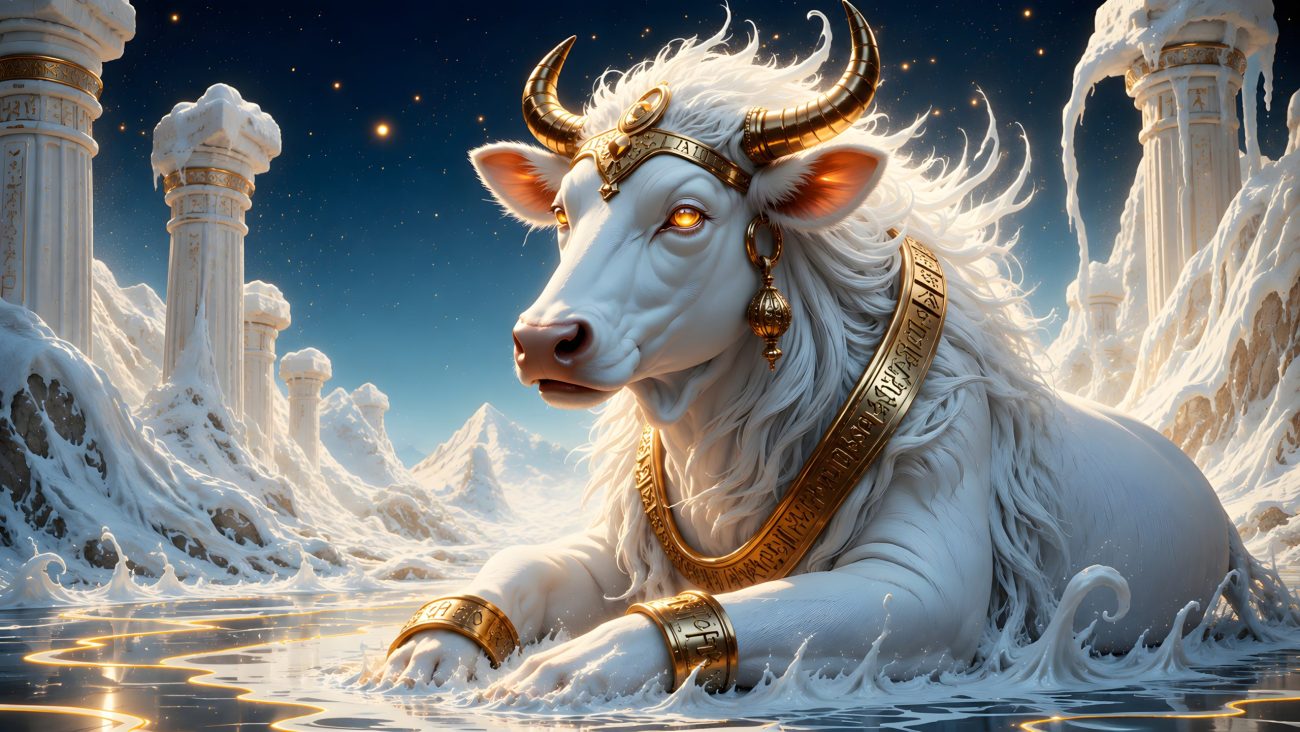
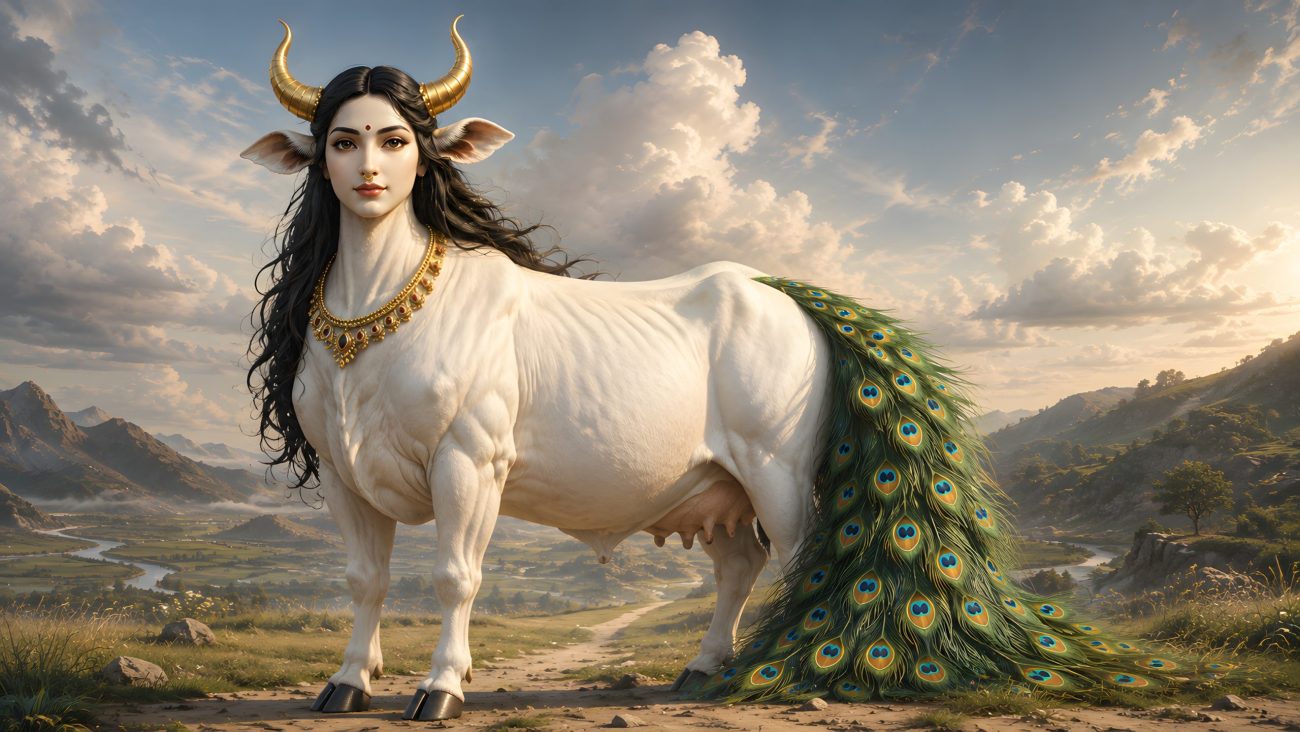
In the city of Oxyrhynchus there was honored a quiet goddess named Akshit, a sacred cow whose destiny was bound to the gods themselves. From her body was born Apis, the holy bull, chosen to walk among humans as a living sign of divine power.

Akshit nurtured her son knowing he was more than a calf. Within him lived fertility, strength, and the will of the gods. As Apis grew, he became the center of reverence: temples rose for him, offerings were brought, and the people watched his movements for meaning. Through him, the gods spoke without words.

Akshit remained in the background of this sacred life, yet everything depended on her. Without her care, the divine bull could not exist. As his mother, she guarded the passage by which divine force entered the world in living form.

Thus Akshit was remembered not for command or spectacle, but for creation itself—the sacred mother who gave the gods a body through which they could dwell among humankind.


Sources

Budge, E. A. W. (1920). An Egyptian hieroglyphic dictionary : with an index of English words, king list and geological list with indexes, list of hieroglyphic characters, coptic and semitic alphabets, etc. (p. 95) J. Murray.


Báihǔ

Tradition / Region: Chinese mythology
Alternative names: –
Category: Tiger, Deity


The Myth

Báihǔ, the White Tiger, is the celestial guardian of the western sky and one of the Four Symbols that structure the cosmos in ancient Chinese thought. More than a constellation, Báihǔ is a living spirit of heaven, born from early star worship and later integrated into Daoist cosmology. In classical texts it is known by many sacred titles—Jianbing, Dijun, Shengjiang, Shenjiang, and Buguijiang—each emphasizing its role as commander, judge, and enforcer of cosmic order.

The White Tiger governs the west, the element of metal, and the season of autumn, embodying discipline, justice, and controlled violence. Its form is mapped across seven constellations—Kui, Lou, Wei, Mao, Bi, Zi, and Shen—which together were understood as a celestial army. These stars did not merely mark time; they represented moral law, hierarchy, and readiness to act when order was threatened.

Báihǔ is revered as a god of war and punishment, overseeing weapons, soldiers, and righteous conflict. It protects those who act with virtue and courage, while striking down evildoers who disrupt harmony. Though fierce and terrifying, the White Tiger is not a force of chaos. It is both shield and blade: capable of averting disasters, granting prosperity, blessing marriages, and guarding the just—yet merciless toward corruption and moral decay.

Its worship flourished during the Han dynasty, when shrines were raised in places such as Weiyang, and specific festival days were dedicated to honoring its power. Long before imperial China, tribes such as the Qiang and Rong venerated the White Tiger, and later peoples—including the Yi, Bai, Buyi, and Tujia—claimed descent from it. In these traditions, Báihǔ descends to earth as a celestial king, fathering seven sons and seven daughters, anchoring human lineages to the heavens.

To behold Báihǔ in the western sky was never a neutral act. It was both reassurance and warning. Its presence affirmed that justice was being watched, that virtue had cosmic backing, and that imbalance would be corrected. Striped across the heavens and mirrored in human conduct, the White Tiger stands as an eternal reminder that order is maintained not only through mercy, but through the disciplined force that defends it.


Sources

Wikipedia contributors. (n.d.). 白虎. In Wikipedia, from https://zh.wikipedia.org/wiki/%E7%99%BD%E8%99%8E


Centzon Tōtōchtin

Tradition / Region: Aztec Mythology, Mexcian Mythology
Alternate Names: Centzontōtōchtin (“Four Hundred Rabbits”)
Category: Rabbit, deity


The Myth

In Mexica mythology, the Centzon Tōtōchtin are a great company of divine rabbits known as the Four Hundred Rabbits. They are gods associated with pulque, the fermented drink made from the maguey plant, and they are said to gather frequently for feasts and drunken celebrations. The number four hundred does not signify a precise count, but rather an uncountable multitude.

The Centzon Tōtōchtin are the children of Mayahuel, the goddess of the maguey plant, and Patecatl. Mayahuel was believed to nourish her children with the sap of the maguey, which became pulque. Through this parentage, the rabbits are bound to the plant and its intoxicating drink.

Each of the Centzon Tōtōchtin embodies a different aspect of drunkenness and behavior brought on by pulque. Among them are Tepoztecatl, Texcatzonatl, Colhuatzincatl, and Macuiltochtli, whose name means “Five Rabbit.” Tepoztecatl is often described as their leader and is closely associated with ritual calendars and sacred festivals.

The rabbits are said to assemble together, drinking pulque and celebrating noisily. In these gatherings, they represent the many forms intoxication can take, from joy and laughter to disorder and excess. Their presence explains why different people react differently when they drink, each one being touched by a different rabbit god.

The Centzon Tōtōchtin appear in myths surrounding the discovery and ritual use of pulque. In some stories, a rabbit is involved in revealing the maguey’s hidden properties, linking the animal directly to the sacred drink. Shrines and temples, including those dedicated to Tepoztecatl, honored these gods through offerings of pulque during festivals and ceremonies.

Thus, the Centzon Tōtōchtin remain remembered as a divine multitude of rabbit gods, born from the maguey, gathering endlessly in celebration, and inseparably bound to pulque and its effects among gods and humans alike.


Interpretive Lenses

Religious Readings
Philosophical Readings
Psychological Readings
Esoteric Deep Dive
Political / Social Readings
Other