Flidais

Tradition / Region: Irish Mythology
Alternative names: Flidas, Fliodhais, Fliodhas, Foltchaín
Category: Cow, Deity


The Myth

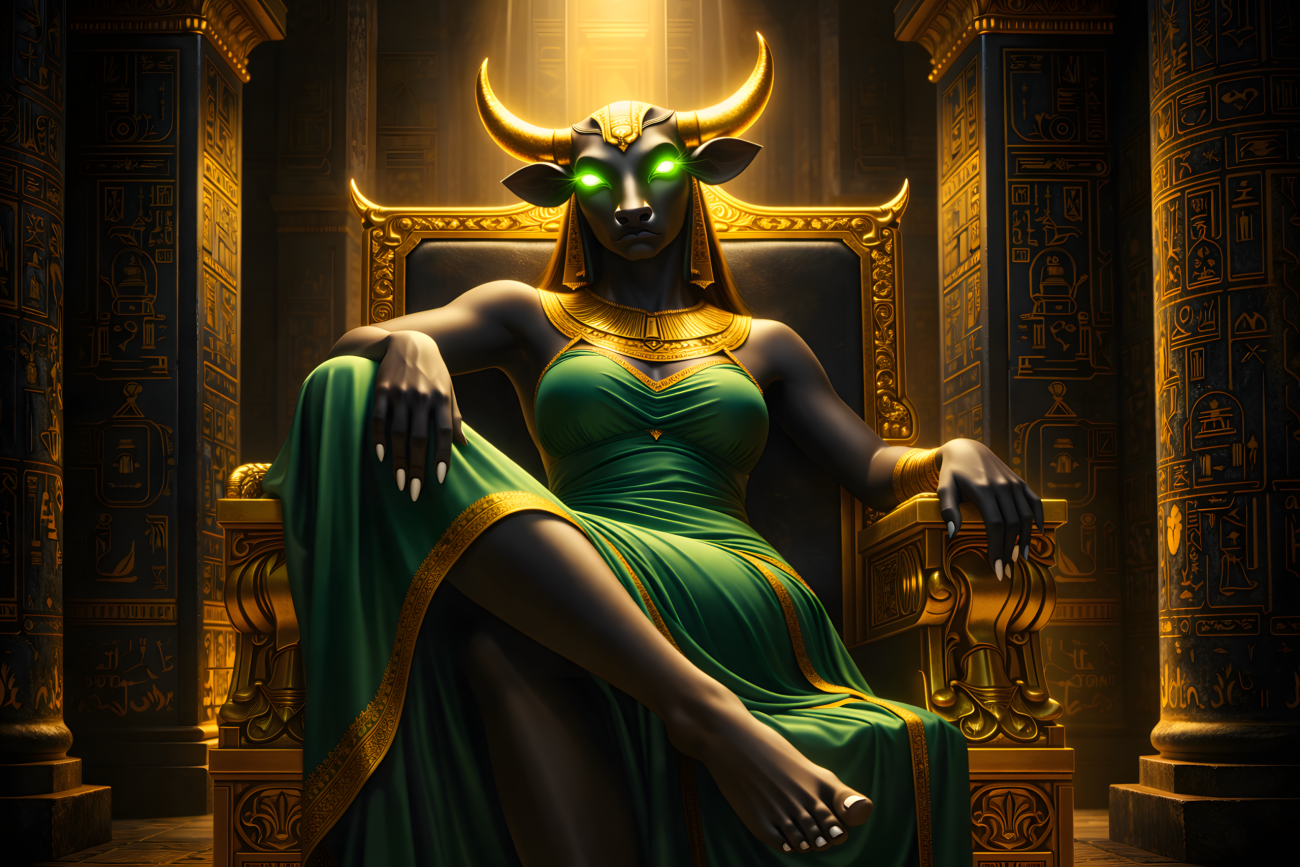
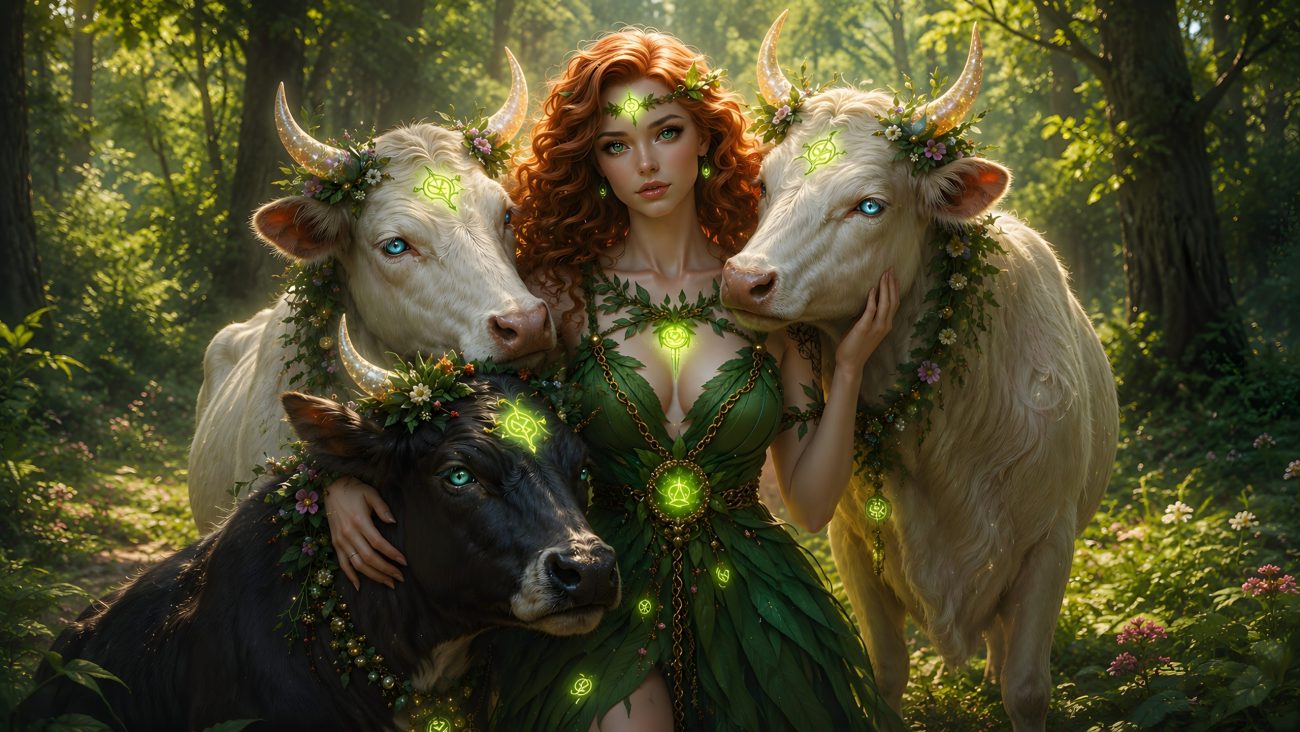
Flidais is a beautiful-haired female figure associated with cattle, fertility, and the abundance of milk. She possesses a magical herd of cattle, and her connection with cattle and milking appears throughout the stories in which she is mentioned.

Flidais is a central figure in Táin Bó Flidhais, where she is the wife of Ailill Finn and the lover of Fergus mac Róich. Fergus carries Flidais and her cattle away from her husband, taking her with him to Erris.

Her cattle possess extraordinary powers. During the Táin Bó Cúailnge, Flidais stays in the tent of Ailill mac Máta, king of Connacht, and her herd provides enough milk to feed the entire army once every seven days.

In Táin Bó Flidhais, Flidais possesses a particularly remarkable white cow known as the Maol. A single night’s milking from this cow is said to provide enough milk to feed three hundred men.

Flidais is also the mother of Nia Segamain, who inherited a supernatural connection with animals from her. Through the power received from his mother, Nia Segamain was able to milk wild deer as though they were domestic cows.

Flidais is also named as the mother of several daughters, including Dinand and Bé Chuille. Dinand and Bé Chuille are described as female farmers in one tradition and as witches in the story of the Second Battle of Moytura, where they enchant trees, stones, and pieces of earth so that they become an armed host.


Sources

“Flidais.” Wikipedia: The Free Encyclopedia. Wikimedia Foundation. Accessed August 15, 2026. https://en.wikipedia.org/wiki/Flidais
Hesat

Tradition / Region: Egyptian mythology
Alternative names: Hesat, Hesat-Hathor
Category: Cow, Deity


The Myth

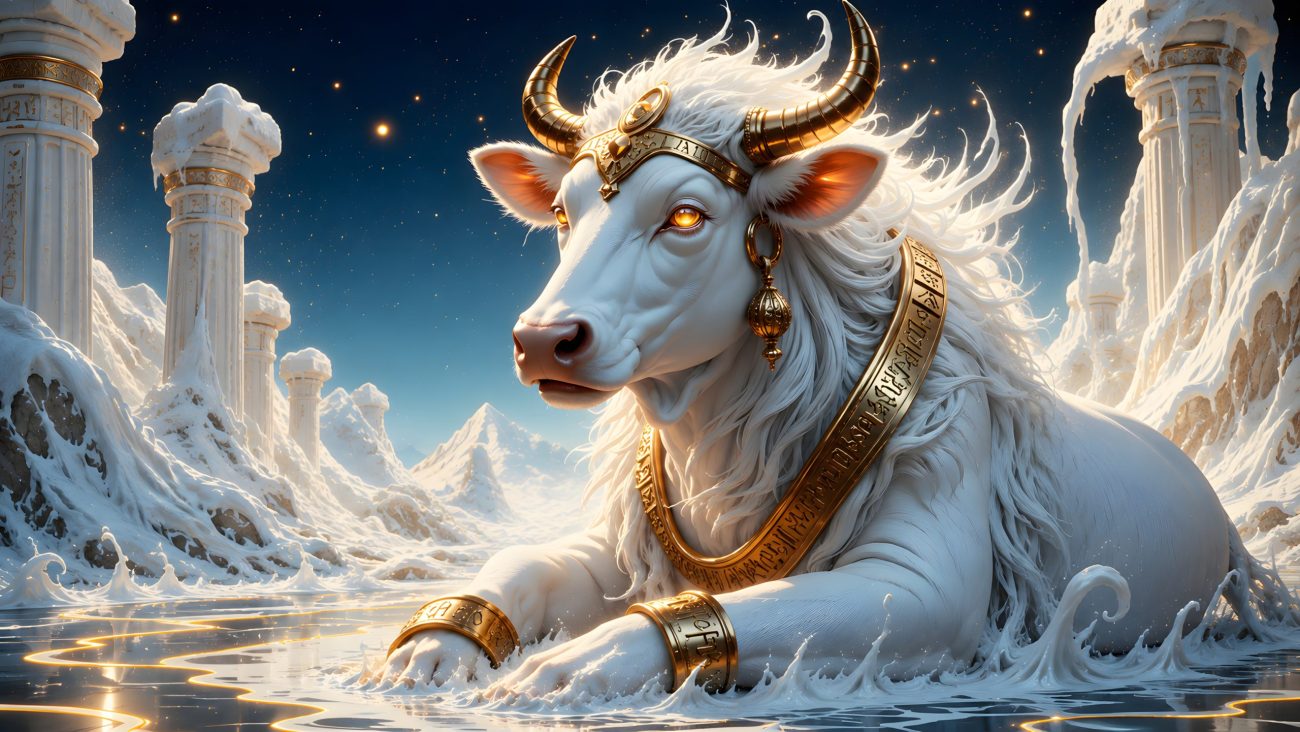
Hesat is a divine cow who provides milk to humanity, the pharaoh, and the sacred bull gods. Her milk was called the beer of Hesat and was regarded as a source of nourishment and life. She was especially connected with Mnevis, the sacred bull of Heliopolis, whose mothers were buried in a cemetery dedicated to Hesat.

In the Pyramid Texts, Hesat is described as the mother of Anubis and of the deceased king. She was regarded as a manifestation of Hathor and was commonly represented as a white cow, associated with purity and the life-giving milk she provides.

During the Ptolemaic period, Hesat became closely associated with Isis.


Sources

“Hesat.” Wikipedia: The Free Encyclopedia. Wikimedia Foundation. Accessed August 15, 2026. https://en.wikipedia.org/wiki/Hesat


Bastet

Tradition / Region: Egyptian Mythology
Alternative names: Bast, Ubasti, Ailuros
Category: Cat, Deity


The Myth

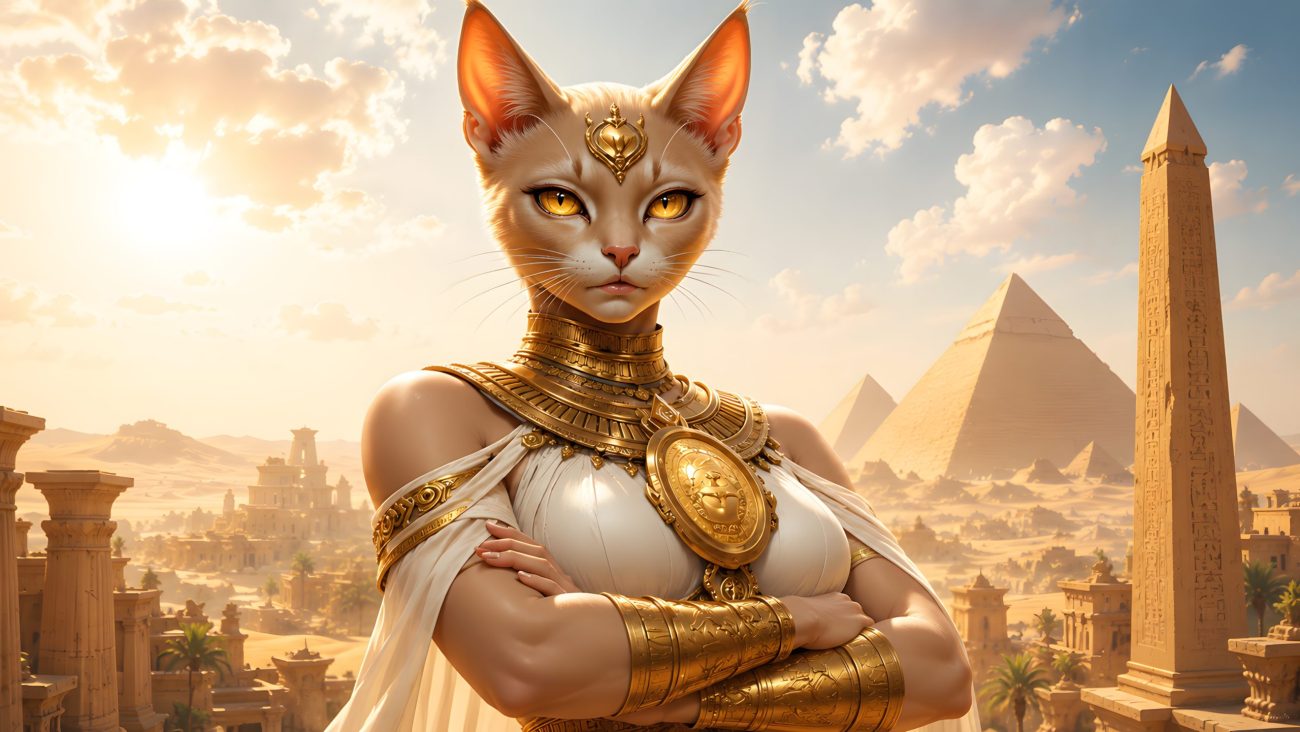
Bastet was first worshipped as a fierce lioness goddess who defended the sun god Ra and protected the king of Lower Egypt. She was a warrior who fought the serpent Apep, the great enemy of Ra, and stood as one of the divine guardians of the sun.

Over time, Bastet came to be represented as a domestic cat or a woman with the head of a cat while retaining her role as a powerful protector. She was believed to guard homes against evil spirits and contagious diseases and was also associated with pregnancy, childbirth, and motherhood. As the daughter of Ra and Isis and the consort of Ptah, she was also regarded as the mother of the lion-headed god Maahes.

Bastet’s chief sanctuary stood in the city of Bubastis, where countless pilgrims gathered to celebrate her festivals. During these celebrations, people traveled by boat, singing, dancing, drinking wine, and offering sacrifices in her honor. The temple was famous for its sacred cats, many of which were mummified and buried there after death.

One tradition tells that the fierce lioness aspect of the goddess was calmed by the sacred waters surrounding her temple, transforming her from a wrathful guardian into the gentle cat goddess who watched over homes, families, and the people of Egypt.


Sources

“Bastet.” Wikipedia: The Free Encyclopedia. Wikimedia Foundation. Accessed July 28, 2026. https://en.wikipedia.org/wiki/Bastet


Epona

Tradition / Region: Roman Mythology, French Mythology (Gauls)
Alternative names: –
Category: Horse, Deity


The Myth

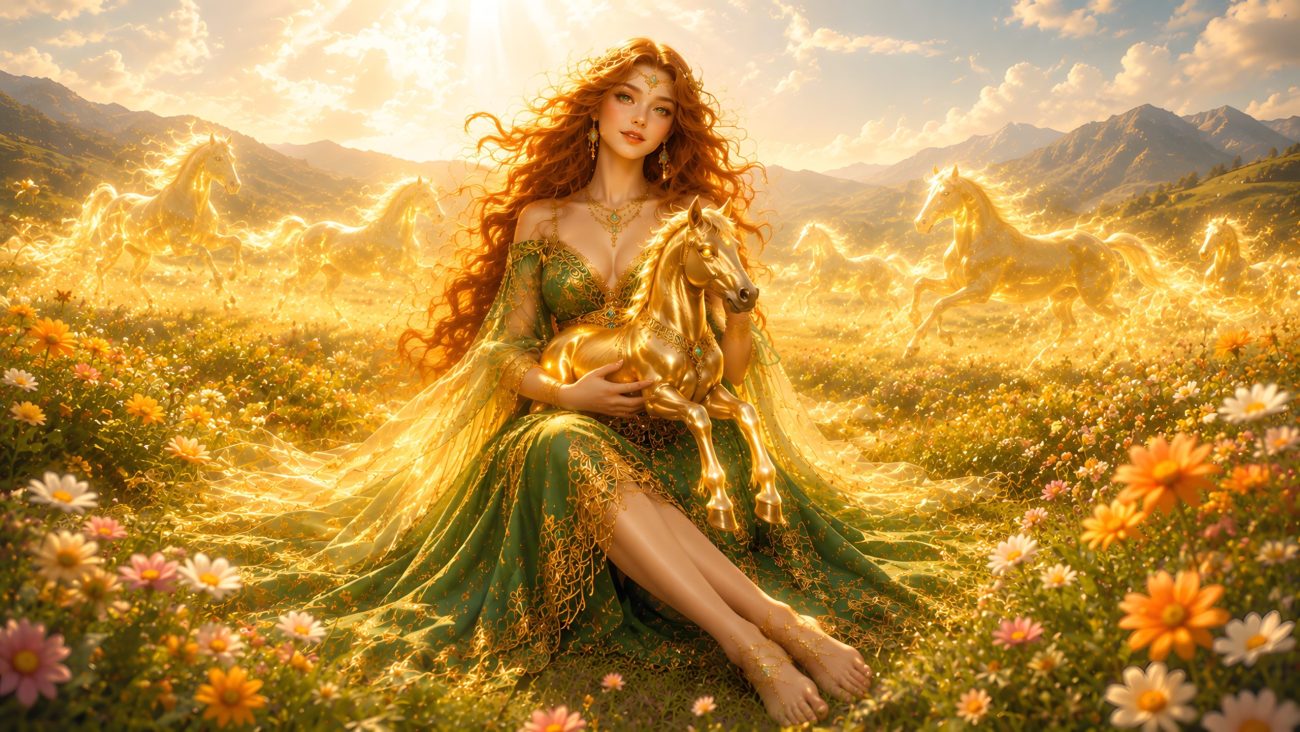
Epona was the Gallo-Roman goddess of horses, ponies, and their riders. She was also revered as a goddess of fertility, motherhood, abundance, and protection, making her one of the most widely worshipped Celtic deities in the Roman Empire.

She was commonly portrayed riding a horse, seated beside foals, or enthroned while holding symbols of prosperity such as a cornucopia, fruit, bread, grain, or a libation bowl. Her close association with mares and foals emphasized her role as a guardian of horses and their fertility.

Epona was believed to protect not only horses but also cavalry soldiers, stable workers, breeders, muleteers, merchants, and travelers who depended upon horses for transport. Shrines dedicated to her were frequently placed in stables throughout the Roman Empire, where people prayed for the safety and well-being of both horses and riders.

Some traditions also associate Epona with death and the afterlife. She and her horses were believed by some worshippers to guide the souls of the dead on their journey to the next world, giving her both nurturing and funerary aspects.

Unlike many Celtic deities whose worship remained local, Epona’s cult spread across much of the Roman Empire. She became the patron goddess of cavalry units and was honored even in the city of Rome itself, making her the only Celtic deity to receive widespread official worship there.


Sources

Wikipedia contributors. (n.d.). Epona. In Wikipedia. Retrieved June 29, 2026, from https://en.wikipedia.org/wiki/Epona


Ginseng

Tradition / Region: Japanese Mythology
Alternate Names: Ninjin no Kami, Ginseng Deity
Category: Plant, Deity


The Myth

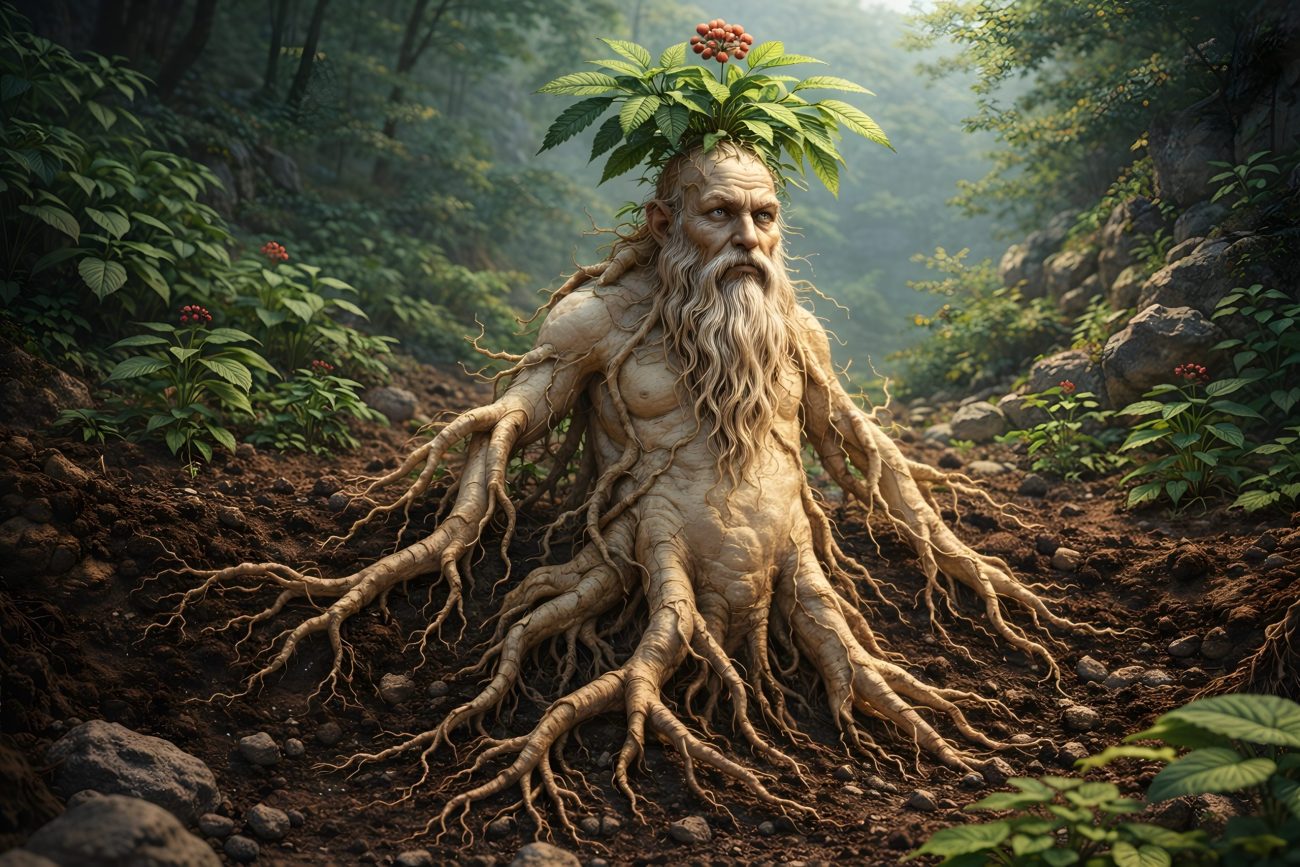
In old illustrated books of curious gods, there is mention of a strange deity known simply as the Carrot.

This being was said to have come from Korea and to dwell in the form of a precious medicinal root. It was believed that the true plant possessed great power, able to cure even illnesses thought impossible to heal. Apothecaries prized it, and those who obtained it treated it almost like a divine object.

The deity was imagined with a human face bearing a foreign beard, while its body was formed from roots. Bundles of carrot-like tendrils served as its arms and legs, giving it the appearance of a spirit grown directly from the soil.

People also spoke of another plant with the same name found at ordinary greengrocers. This one, however, had no power at all. Though it looked similar, it was merely a vegetable and brought no blessings to those who ate it.

Thus the Carrot Deity was remembered as a spirit of the rare medicinal root — a being whose strength lay hidden in the earth, revered when genuine, but easily mistaken for the humble plant that shared its name.


Sources

Tyz-Yokai Blog. (n.d.). Ginseng. Retrieved March 1, 2026, from https://tyz-yokai.blog.jp/archives/1076296170.html


Am-heh

Tradition / Region: Egyptian Mythology
Alternate Names: —
Category: Dog


The Myth

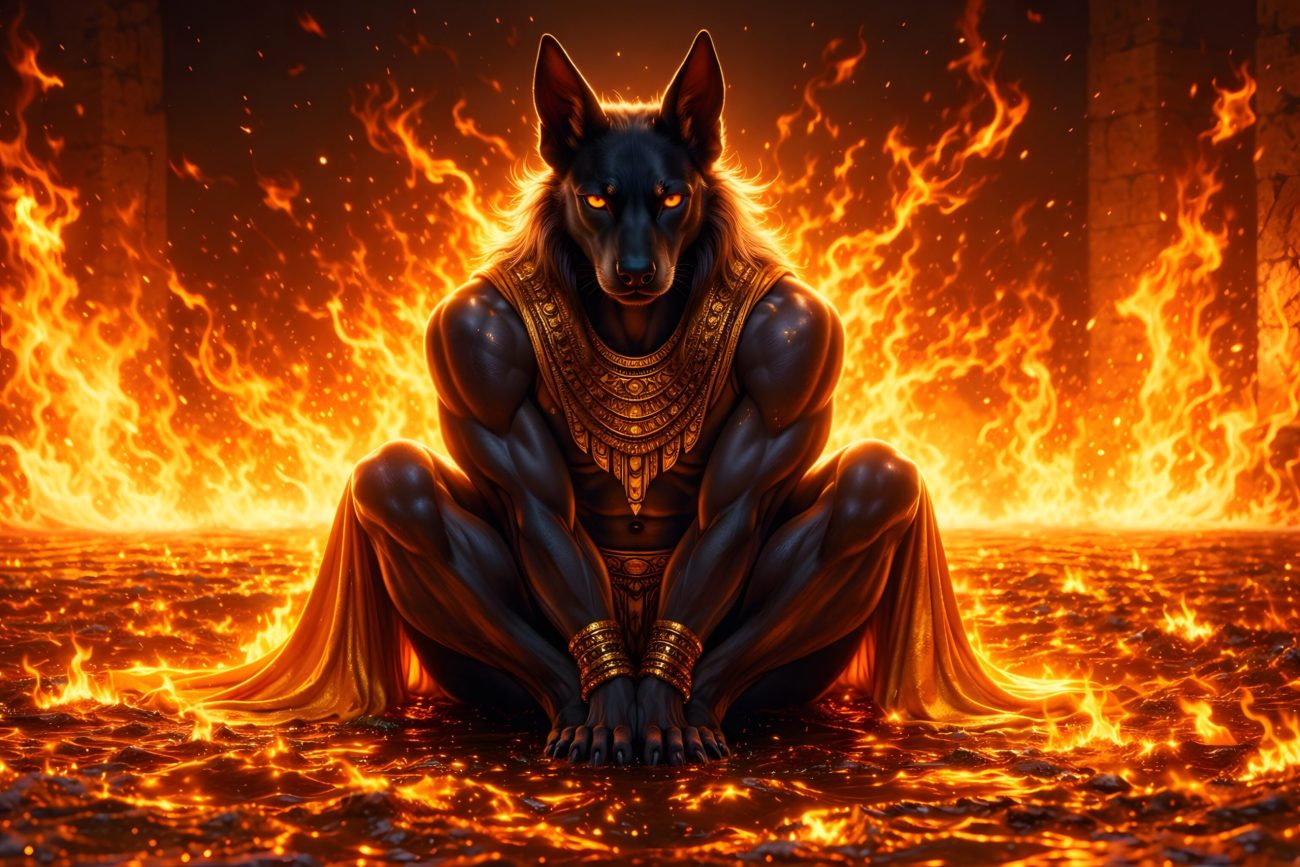
Am-heh was a feared being of the Egyptian underworld.

His name was said to mean “Devourer of Millions” or “Eater of Eternity,” and he was imagined as a powerful and dreadful presence among the spirits of the dead. He was depicted with the body of a man and the head of a hunting dog, marking him as one of the dangerous beings that dwelled beyond the world of the living.

Am-heh was believed to reside in a lake of fire deep in the underworld. From this burning place he threatened the souls who passed through the realm of the dead, and his presence was associated with punishment, destruction, and divine retribution. In some traditions he was connected with other devouring beings who judged or consumed the wicked.

Though terrifying, he was not beyond control. It was said that only the creator god Atum possessed the power to repel him and keep his destructive force in check.

Thus Am-heh was remembered as a fiery devourer of the underworld — a dog-headed god who lurked in the burning depths, waiting among the spirits of the dead.


Sources

Wikipedia contributors. (n.d.). Am-heh. In Wikipedia, from https://en.wikipedia.org/wiki/Am-heh


Chiyou

Tradition / Region: Chinese mythology
Alternate Names: —
Category: Cow, Deity


The Myth

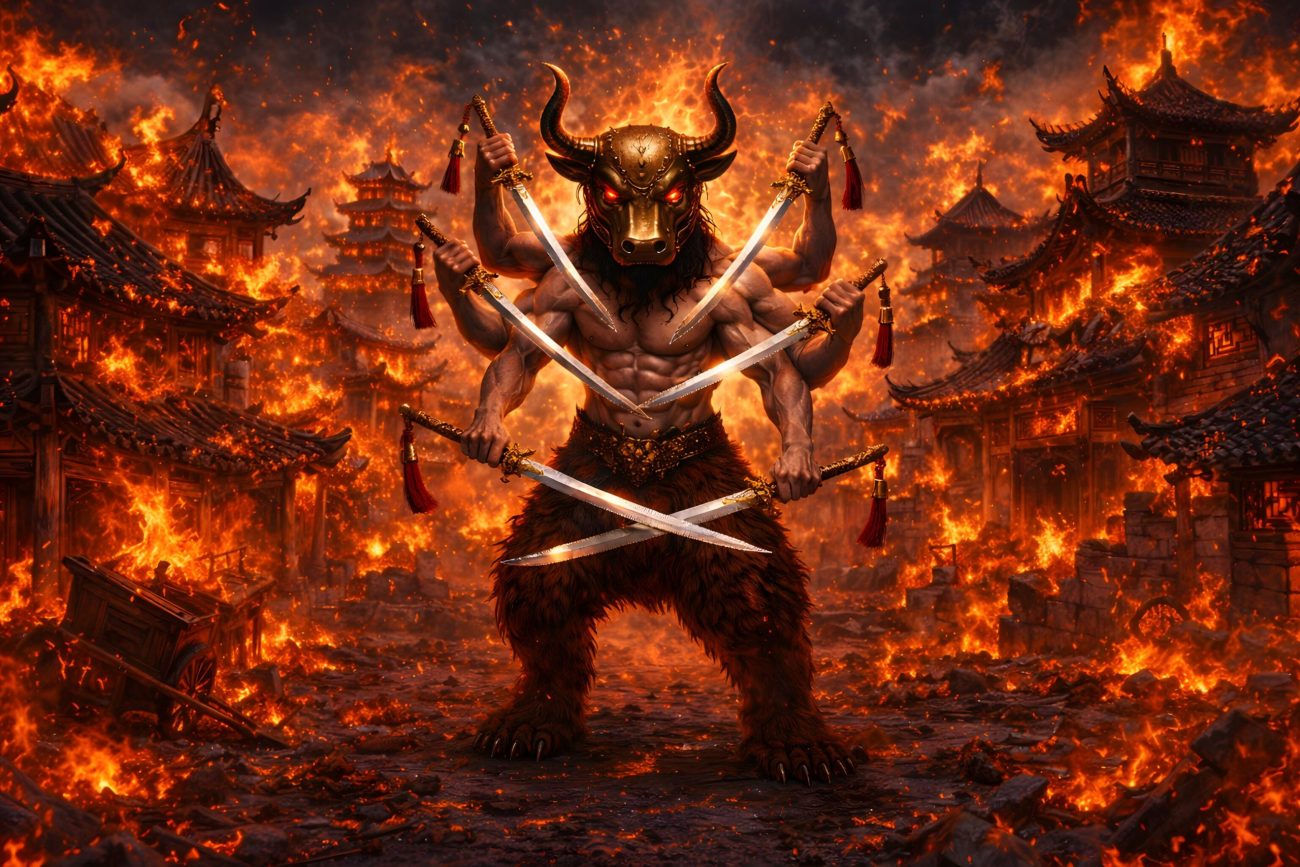
In the ancient age before the rise of dynasties, when the tribes of the world still fought for dominion, there ruled a powerful leader named Chiyou, chief of the Nine Li.

From birth he was unlike other men. His body was human, but his head was that of a bull, crowned with great horns. His brow was said to be as hard as bronze or iron, and his strength was immense. Some said his limbs were like those of a beast, and that he carried many weapons, wielding them with unstoppable force. Wherever he marched, it was as though a great animal thundered across the land.

Chiyou led his people into battle as a bull lowers its head before the charge. He possessed knowledge of ancient magic and commanded the powers of wind and storm. In war he called down rain and thick, blinding fog that swallowed entire armies.

At the great Battle of Zhuolu, he used this power against the Yellow Emperor. A vast mist covered the battlefield so that soldiers wandered helplessly, unable to find their way. Under this shroud Chiyou fought fiercely, supported by his many followers, whether counted as eighty-one brothers or eighty-one tribes bound to him.

Yet in the end the Yellow Emperor overcame him through skill and divine aid. Chiyou fell, and the power of his people was broken.

Though defeated, he was not forgotten. In later times warriors honored him as a spirit of battle, remembering the bull-headed lord whose strength shook the earth and whose fury in war was like that of a charging ox.


Sources

Wikipedia contributors. (n.d.). Chiyou. In Wikipedia, The Free Encyclopedia, from https://en.wikipedia.org/wiki/Chiyou


Sedna

Tradition / Region: Inuit Mythology, Greenlandic Mythology, Canadian Mythology
Alternate Names: Nuliajuk, Sassuma Arnaa, Nerrivik, Arnakuagsak, Arnapkapfaaluk
Category: Mermaid, Goddess


The Myth

Long ago, there lived a young woman named Sedna, daughter of a man who could not find a husband worthy of her—or, in some tellings, a maiden who refused every suitor who came.

At last a stranger arrived, promising riches and plenty of food. Sedna’s father agreed to the marriage, and she went away with the man. But once she reached his home, she discovered the truth: he was not a man at all, but a great bird spirit. She lived in misery among the cliffs and the screaming birds until her father returned to rescue her.

They fled together in his kayak across the sea. But the bird-spirit raised a terrible storm. Waves rose high, and the sea roared around them. Terrified that the boat would sink, Sedna’s father pushed her overboard.

She clung to the side of the kayak, begging for help. In fear for his life, her father took a knife or axe and cut off her fingers one by one. As they fell into the water, her fingers became the creatures of the sea—seals, walruses, whales, and all the animals hunted by humans.

Sedna sank beneath the waves and fell to the bottom of the ocean. There she did not die. Instead she became the great mistress of the deep, ruler of the undersea world and guardian of all marine animals.

From that time on, the people believed that the success of every hunt depended on her will. When she was angered by human wrongdoing, she kept the animals hidden, and famine followed. Shamans would then journey in spirit to her underwater dwelling, where Sedna sat with tangled hair she could not comb because she had no fingers. The shaman would soothe her, wash and braid her hair, and calm her anger so she would release the animals again.

And so Sedna remains beneath the sea, watching over the creatures of the deep and deciding whether the hunters above will live or starve.


Sources

Wikipedia contributors. (n.d.). Sedna (mythology). In Wikipedia, The Free Encyclopedia. Retrieved February 14, 2026, from https://en.wikipedia.org/wiki/Sedna_(mythology)


Mami Wata

Tradition / Region: Congo Mythology
Alternate Names: Mammy Water, Mami Muntu, Mamba Muntu, Papi Wata (male counterpart in some traditions)
Category: Mermaid, Deity


The Myth

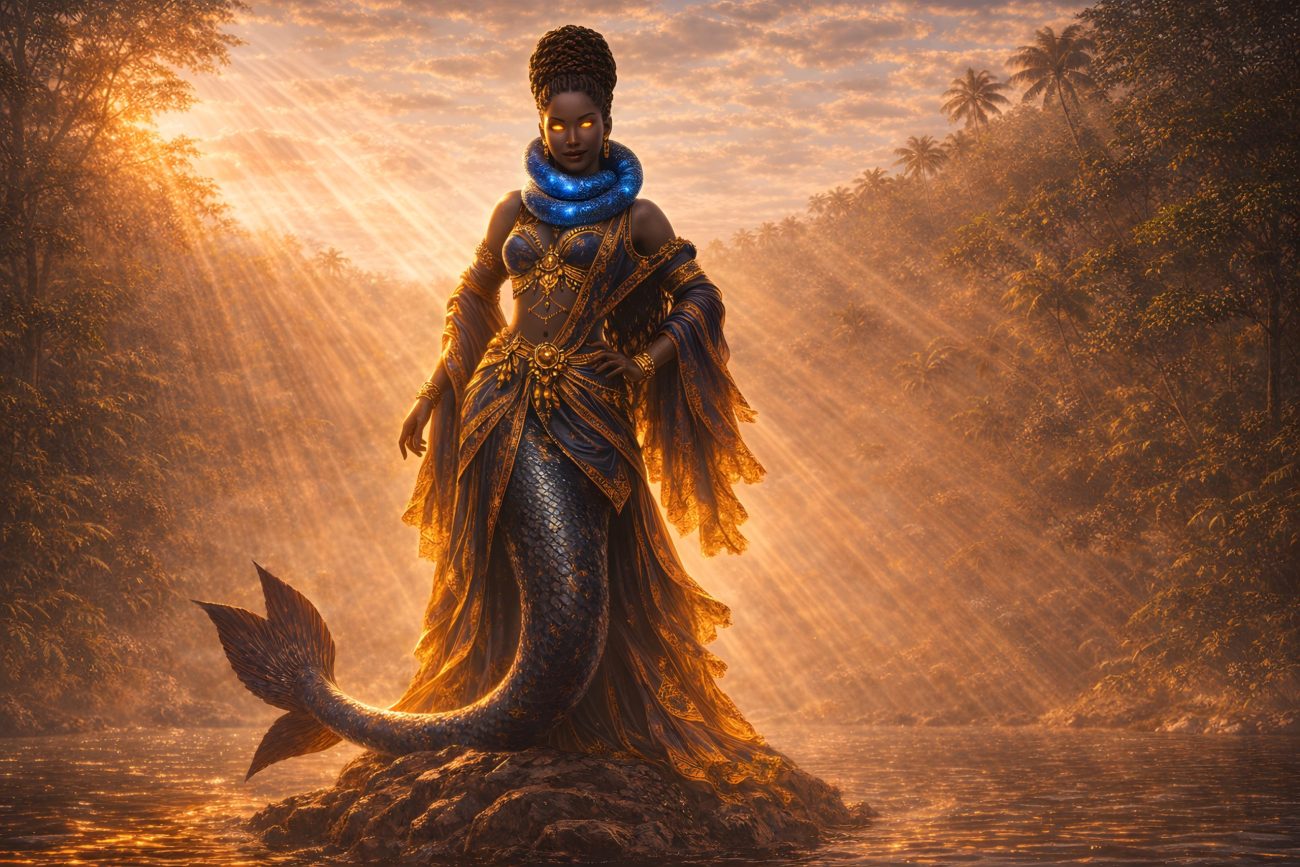
In the rivers, lakes, and ocean shores of Africa, there is said to dwell a powerful spirit of the waters known as Mami Wata.

She appears most often as a woman of striking beauty, sometimes with the lower body of a fish, sometimes entirely human, sometimes adorned with serpents coiled about her body. Her hair is long, her gaze mesmerizing, and her presence both alluring and dangerous. She is a being of wealth, mystery, and deep water.

Mami Wata rises from rivers or from the sea to encounter humans. She may appear to travelers at night, to fishermen on the water, or to those who wander too close to sacred pools. Those she favors may be drawn into her world beneath the water, where she offers them riches, power, or secret knowledge.

Some who are taken by her return to the world of the living with sudden fortune, beauty, or spiritual gifts. Others never return at all.

She is known to demand devotion from those she chooses. Shrines are raised to her beside water, decorated with mirrors, combs, perfumes, bright cloth, and foreign objects she is said to love. Those who honor her properly may receive protection, healing, prosperity, or children.

But she is not always gentle. If neglected or angered, she may bring misfortune, illness, poverty, or madness. She may wreck boats, claim lovers, or pull the unwary beneath the water.

In some traditions she is accompanied by a male spirit, sometimes called Papi Wata, who shares her watery domain.

Thus Mami Wata is remembered as a spirit of beauty and danger, wealth and temptation—
a queen of the waters who gives blessings to the devoted,
and whose depths remain beyond human control.


Sources

Wikipedia contributors. (n.d.). Mami Wata. In Wikipedia, The Free Encyclopedia. Retrieved February 14, 2026, from https://en.wikipedia.org/wiki/Mami_Wata


Akshit

Tradition / Region: Egyptian mythology
Alternate Names: —
Category: Cow, Deity


The Myth

In the city of Oxyrhynchus there was honored a quiet goddess named Akshit, a sacred cow whose destiny was bound to the gods themselves. From her body was born Apis, the holy bull, chosen to walk among humans as a living sign of divine power.

Akshit nurtured her son knowing he was more than a calf. Within him lived fertility, strength, and the will of the gods. As Apis grew, he became the center of reverence: temples rose for him, offerings were brought, and the people watched his movements for meaning. Through him, the gods spoke without words.

Akshit remained in the background of this sacred life, yet everything depended on her. Without her care, the divine bull could not exist. As his mother, she guarded the passage by which divine force entered the world in living form.

Thus Akshit was remembered not for command or spectacle, but for creation itself—the sacred mother who gave the gods a body through which they could dwell among humankind.


Sources

Budge, E. A. W. (1920). An Egyptian hieroglyphic dictionary : with an index of English words, king list and geological list with indexes, list of hieroglyphic characters, coptic and semitic alphabets, etc. (p. 95) J. Murray.