Sango the Eagle

Tradition / Region: Ghana Mythology
Alternative names: Sango, Sango the Bird
Category: Bird


The Myth

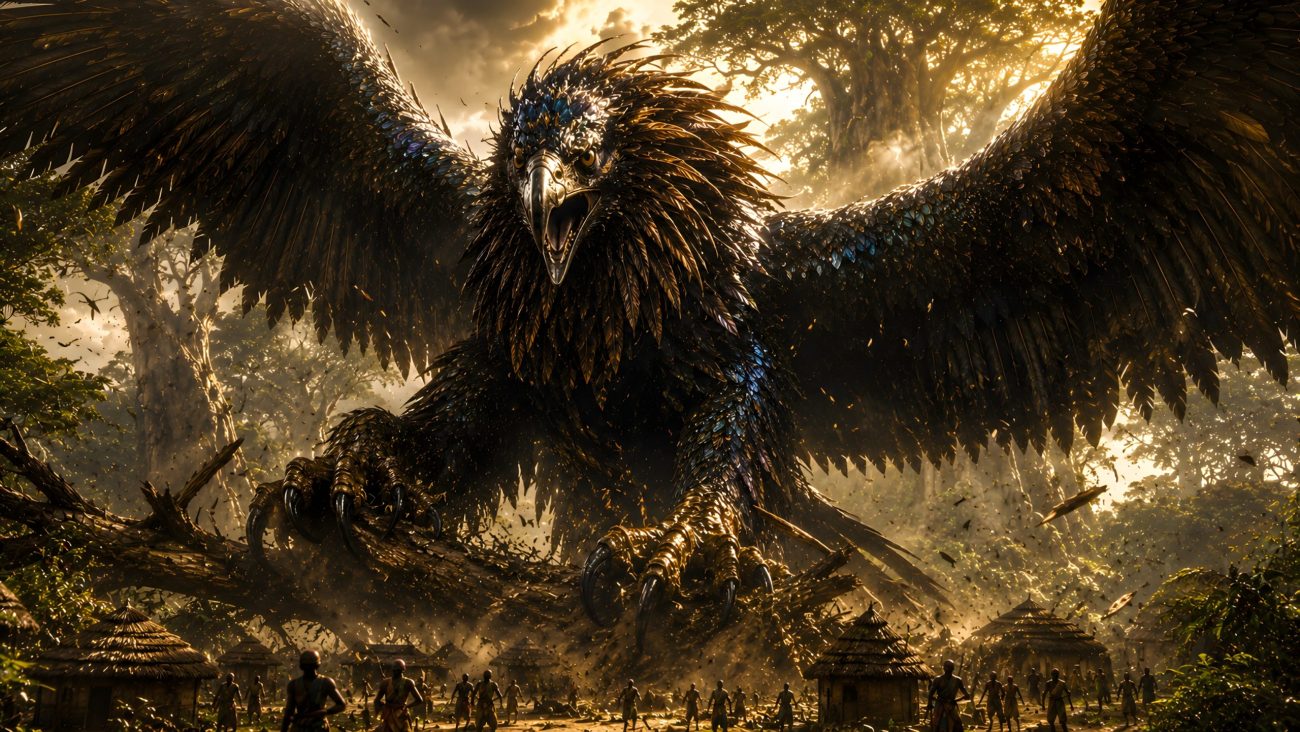
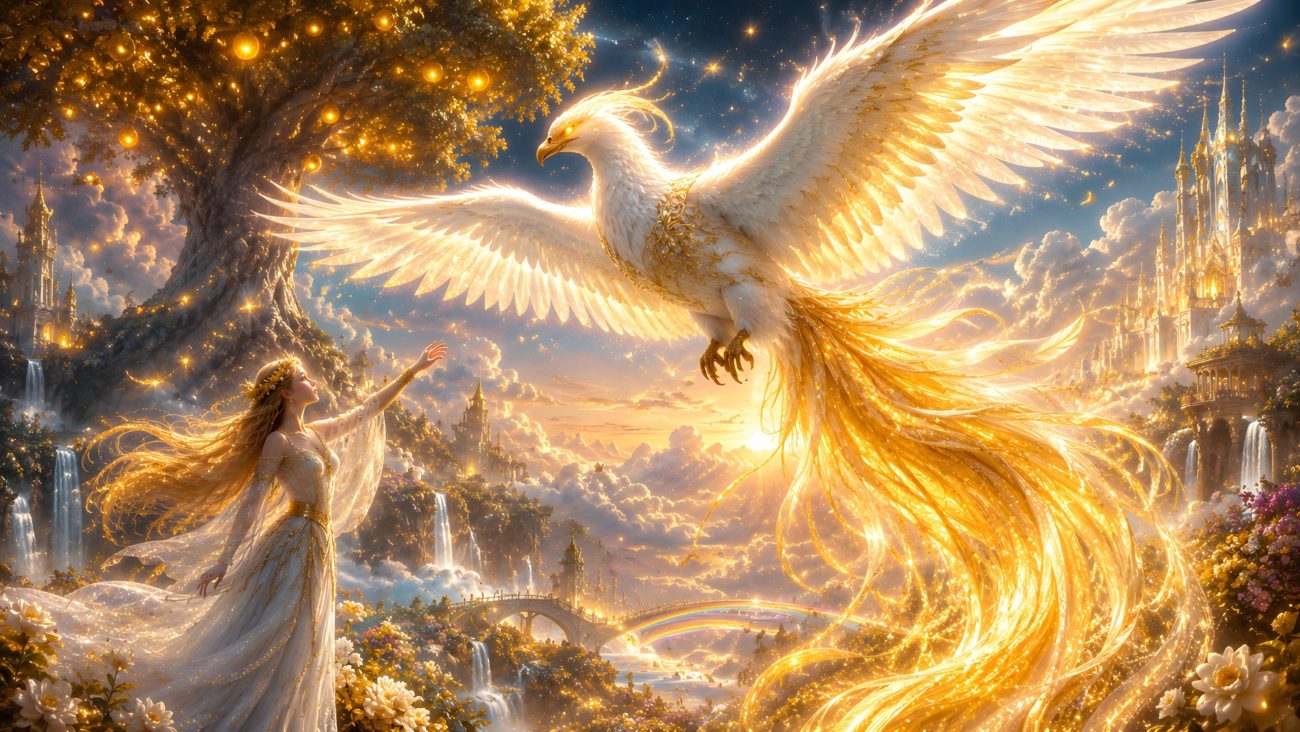
Sango was a powerful magical eagle known for supernatural abilities and terrifying vengeance. She could heal wounds, transform the land itself, restore forests, destroy entire villages, and command reality with spoken words.

One story tells of Sango meeting an old woman suffering from a terrible sore on her leg. The eagle healed the wound instantly with magic. She then transformed the empty land around the woman into farms, houses, and finally an enormous town. In return for all this, Sango asked only for a silk-cotton tree where she could build her nest.

The old woman agreed, and Sango settled there, laying two eggs in the great tree. After hatching her children, she left to search for food. While she was gone, the old woman’s grandchild demanded to eat the eagle’s young. The child cried and screamed until the old woman ordered the villagers to cut down the silk-cotton tree and seize the eaglets.

As the axes struck the tree, one of the young eagles climbed to the edge of the nest and cried out desperately for its mother:

“Sango, the bird!
Sango, come back!”

Sango heard the cries and rushed back through the sky. Using her magic word “Sanguri,” she restored the nearly-fallen tree and swallowed the attackers within it. After feeding her children, she warned them and left once more.

But the villagers returned again. This time Sango was too far away to hear the cries. The silk-cotton tree crashed down, and the villagers captured the eaglets. One escaped, but the other was roasted and eaten by the old woman’s grandchild.

When Sango returned and learned what had happened, she flew to the village in fury. She spoke her magic again:

“Sanguri.”

At once the people vanished. Again she spoke, and every house collapsed. Again the village became wilderness. Finally, the old woman’s terrible sore returned to her leg exactly as before.

Sango then declared that kindness must be repaid with kindness, not betrayal and cruelty.


Sources

Rattray, R. S. (1930). Akan-Ashanti folk-tales. Oxford: Clarendon Press.


Silver Bird of Dzialandze

Tradition / Region: Comoros Mythology
Alternative names: The Birds of Dzialandze, The Jinn’s Birds
Category: Bird


The Myth

The Silver Birds of Dzialandze are mystical creatures said to inhabit the enchanted lake of Dzialandze on Anjouan. They are described as elegant birds with feathers that shimmer like polished silver beneath the sunlight and moonlight alike. Their songs are soft, haunting, and strangely melodic, echoing across the lake and forest like voices from another world.

According to local tradition, the birds serve the jinn who dwell within the sacred waters of Dzialandze. The lake itself is believed to possess supernatural purity: no fallen leaf, branch, or speck of dirt is ever allowed to rest upon its surface. Whenever something falls from the surrounding forest canopy, the silver birds descend instantly, snatching it away before it can touch the water.

The people of Anjouan believe the birds are not ordinary animals but spiritual guardians bound to the lake by an ancient pact with the unseen world. Their endless vigilance preserves the sacred balance between nature, spirits, and humanity.

One of the most famous legends surrounding the birds tells of a curious boy named Hani. Fascinated by stories of the lake, he secretly traveled there at dawn to witness the miracle for himself. Hidden among the bushes, he watched in amazement as a single falling leaf was caught midair by a flash of silver wings before it touched the water.

Overcome with curiosity, Hani threw handfuls of leaves into the air to test the birds. They darted through the sky with supernatural speed, catching every leaf before it landed. But as they did, mist rose from the lake and a luminous jinn emerged from the waters.

The spirit warned Hani that the lake was sacred and remained pure because of the harmony between the jinn and the silver birds. Disturbing that balance, the jinn explained, could invite chaos into the world.

Humbled and frightened, Hani apologized. The jinn forgave him and instructed him to teach others to respect the mysteries of Dzialandze rather than seek to control or challenge them.

From that day onward, the Silver Birds became symbols of sacred balance, spiritual guardianship, and the invisible forces protecting the natural world. Even today, stories persist of travelers hearing strange songs near the lake at dusk or glimpsing flashes of silver wings moving silently through the mist above the water.


Sources

Hichamou, P. (n.d.). Prince tales of the Comoros: Legends, mysteries & enchantments from the Isles of the Moon.


Passadinha

Tradition / Region: Cape Verde Mythology
Alternative names: Passadinha, Little Blue Bird
Category: Bird


The Myth

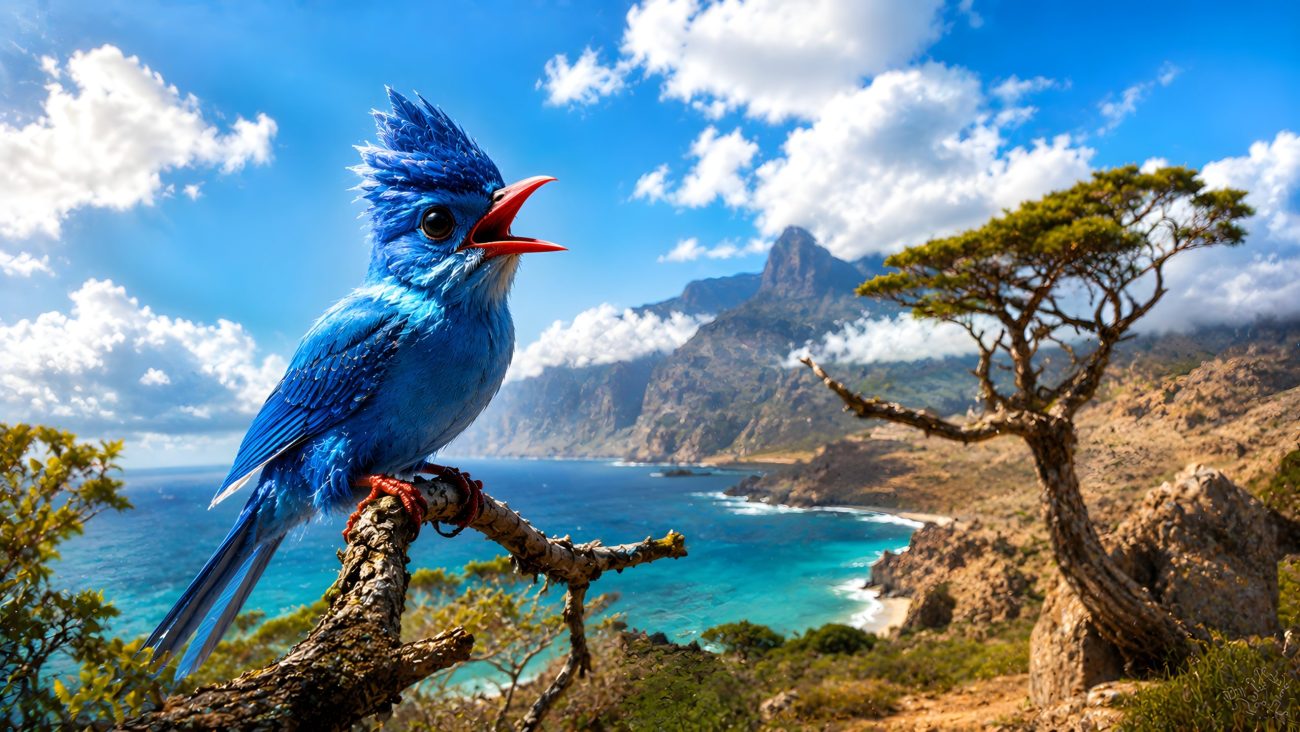
Passadinha is a mysterious little blue bird from Cape Verde folklore, remembered for its bright red mouth, mocking intelligence, and connection to the downfall of Lob the Wolf. Though physically small and seemingly harmless, Passadinha acts as a supernatural trickster figure that humiliates greedy or foolish characters. In the tales, the bird is often associated with the sky, unreachable places, and deceptive appearances. Its red mouth is sometimes mistaken for meat by the starving Lob, emphasizing the bird’s strange, almost magical nature.

In one story, Lob learns from his clever nephew Tobinh’ about an enchanted fig tree that obeys spoken commands. By saying special words, the tree bends down to the ground, allowing someone to climb aboard before rising high into the air. Lob uses the tree to gorge himself on fruit, but in his greed he forgets the command needed to descend.

Instead of bringing him back to earth, the tree continues rising higher and higher until it reaches heaven itself.

There Lob encounters God, who gives him pieces of leather to wash so a drum can be made for him. But Lob is so hungry and gluttonous that he repeatedly eats the leather instead. Eventually God sends an angel to watch him, and a drum is finally completed. Lob is lowered back toward earth hanging from a string attached to heaven itself. God instructs him to beat the drum once he safely reaches the ground so the string can be cut.

As Lob descends through the sky, he sees Passadinha flying nearby. The bird carries something red in its mouth which Lob mistakes for meat. Desperate with hunger, he begs the bird for food.

Passadinha refuses unless Lob plays the heavenly drum.

Lob knows that if he beats the drum too early, God will cut the string and he will fall to his death. But his greed overwhelms him once again. Hoping to survive the fall, he shouts for Tobinh’ to prepare mattresses and hay below.

Instead, Tobinh’ gathers knives, razors, broken glass, pins, and every sharp object he can find.

Lob finally plays the drum.

God cuts the string.

Lob crashes down onto the deadly trap below and is killed.

In the tale, Passadinha functions as more than an ordinary bird. It acts almost like a sky-spirit or supernatural tester whose presence exposes greed, impatience, and foolishness. Small, mocking, and untouchable, the bird represents cunning intelligence triumphing over brute appetite — a recurring theme throughout Cape Verdean Lob stories.


Sources

Parsons, E. C. (1923). Folk-lore from the Cape Verde Islands. Part I. Cambridge, MA & New York: American Folk-Lore Society.


Aunt Ganga

Tradition / Region: Cape Verde Mythology
Alternative names: Ganga
Category: Bird


The Myth

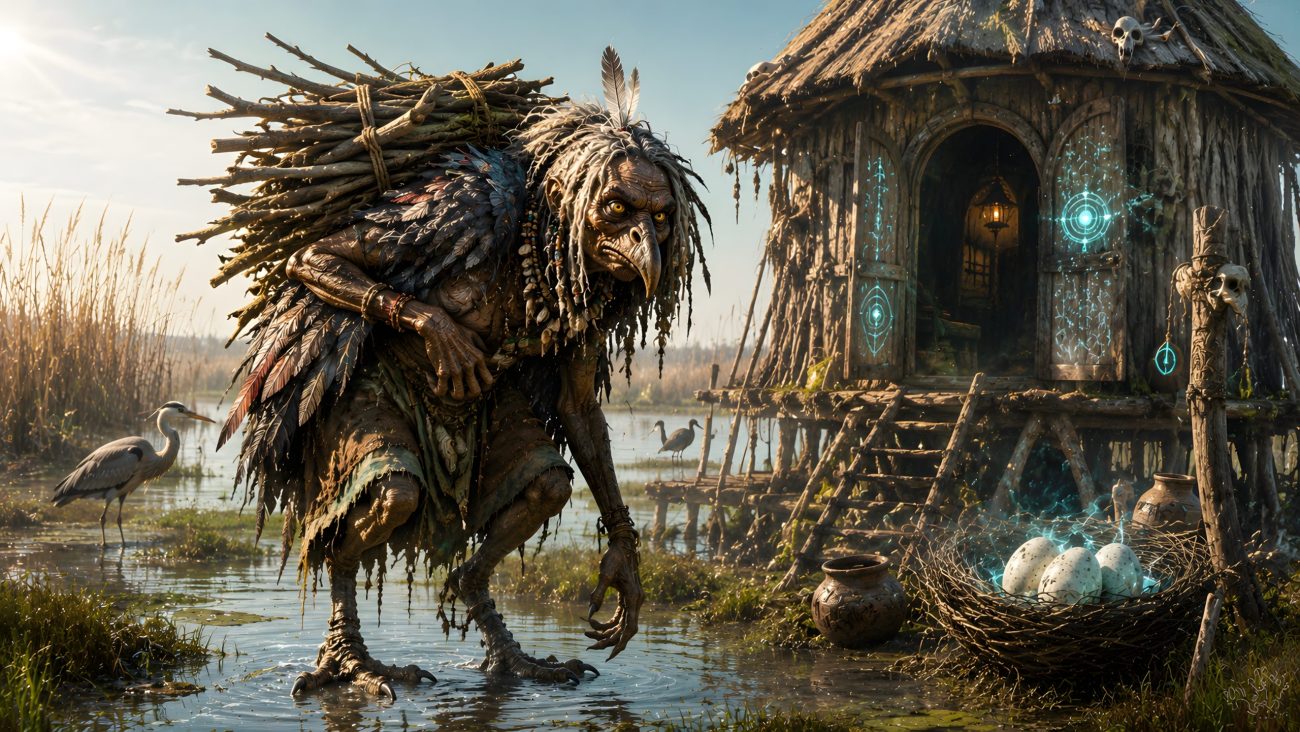
Aunt Ganga is a strange and frightening being from Cape Verde folklore, associated with a water-fowl but portrayed more like a supernatural old woman or monstrous bird spirit. She lives alone in an isolated house protected by a magical talking door that opens only with secret words. She is connected with huge stores of eggs, bundles of firewood, ashes, and dark magical power. In the tale, she appears as an elderly female figure with immense strength and an intimidating presence, carrying enormous loads of wood through the wilderness by herself. Though not described in precise physical detail, she is imagined as something between a giant bird and an old crone: harsh, dangerous, solitary, and feared.

In the story, Lob the Wolf becomes jealous after noticing how fat and healthy his clever nephew has grown. The nephew finally reveals that he has secretly been stealing eggs from Aunt Ganga’s hidden house, but he warns Lob that she is extremely dangerous and unlucky visitors do not survive encounters with her.

Lob insists on going anyway.

Before entering the house, the nephew teaches Lob the magical words needed to open the enchanted door:

“Door toboc tobac!”

But he deliberately gives Lob the wrong phrase for leaving the house, ensuring he will become trapped inside once Aunt Ganga returns.

Inside the house, Lob becomes consumed by greed. He devours enormous numbers of Aunt Ganga’s eggs while continuing to eat even after his nephew warns him she is approaching. Outside, the nephew watches Aunt Ganga returning through the landscape carrying a huge bundle of gathered wood. As she approaches, songs are exchanged between Lob trapped inside the house, the mocking nephew outside, and Aunt Ganga herself advancing toward the door.

When Aunt Ganga reaches the house, Lob mistakenly repeats the false password and the magical door refuses to open. Suspicious, Aunt Ganga commands the door repeatedly until it finally bursts open on its own.

Lob hides beneath the bed while Aunt Ganga calmly enters, prepares coffee, and lies down to rest. But when she breaks wind, Lob insults her from beneath the bed, calling her filthy. Realizing something is hiding in the room, Aunt Ganga searches until she discovers him.

Lob leaps upward and clings desperately to a roof beam while Aunt Ganga savagely beats him. Eventually exhausted, he falls into a pile of ashes where he hides in silence.

When the nephew later arrives, Aunt Ganga explains that Lob somehow disappeared. The nephew tricks Lob into exposing himself by claiming that members of Lob’s kind never die without breaking wind.

Hearing this, Lob foolishly breaks wind loudly from inside the ashes, revealing his hiding place.

Aunt Ganga immediately kills him.

In the tale, Aunt Ganga functions as a supernatural guardian of hidden food and secret places. She punishes greed, intrusion, and gluttony, while her magical house and enchanted door give her the qualities of a witch, ogress, or spirit-being rather than an ordinary woman.


Sources

Parsons, E. C. (1923). Folk-lore from the Cape Verde Islands. Part I. Cambridge, MA & New York: American Folk-Lore Society.


Fire Hawk

Tradition / Region: Burkina Faso Mythology
Alternative name: Giant Hawk
Category: Bird


The Myth

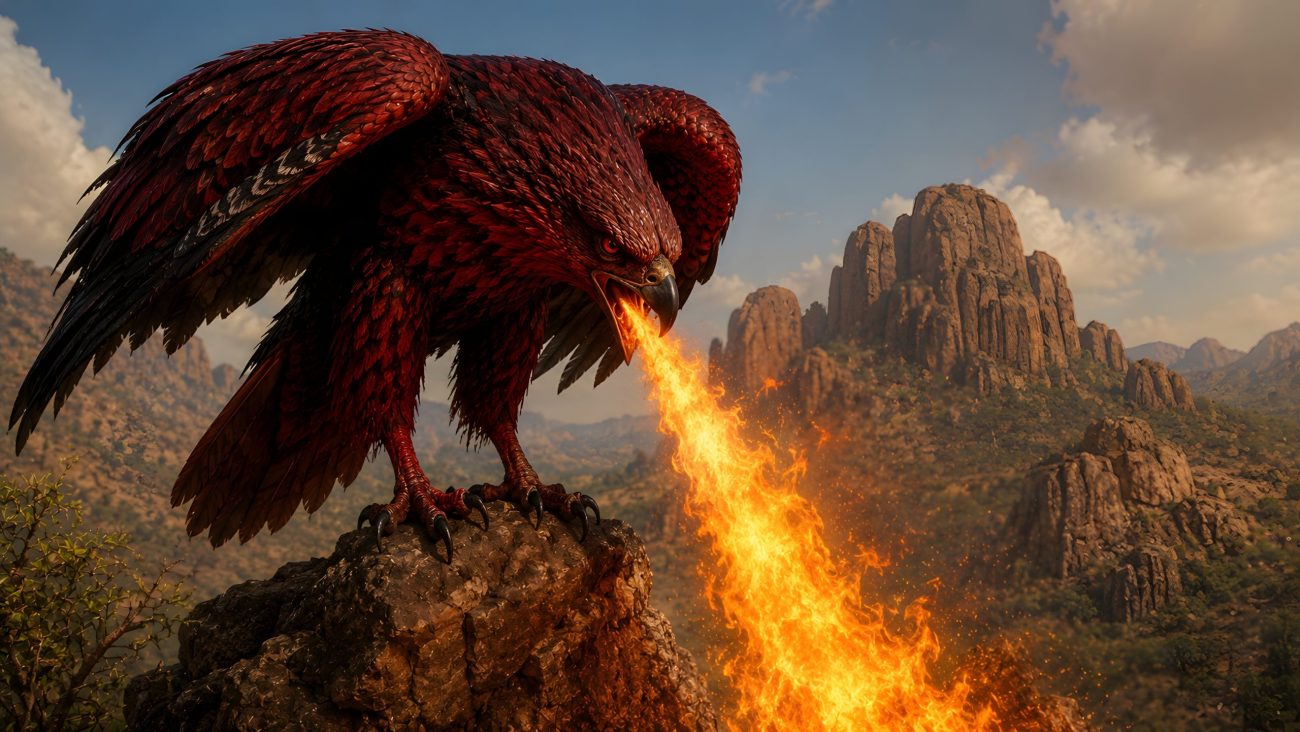
The Fire Hawk is a gigantic supernatural bird from Moose folklore in Burkina Faso. It is remembered as a terrifying creature that descended from the sky to attack villages and devour people.

According to the legend, the monster appeared every seven days. Entire communities lived in fear of it, knowing that sooner or later the hawk would return to claim more victims. People eventually gathered together, preparing to sacrifice themselves all at once so the nightmare would finally end.

The hawk was said to land on a massive rock before attacking. When it opened its beak, fire burst out, scorching the ground and terrifying everyone nearby. Its arrival was associated with destruction, panic, and death.

The hero Raôgo confronted the creature after hearing of the suffering it caused. Armed with a heavy iron club, he faced the giant hawk alone. During the battle, the hawk repeatedly rose after being struck down, but Raôgo continued attacking until he finally killed the monster.

After the death of the Fire Hawk, the people celebrated their freedom from the creature’s terror. In some versions of the story, the defeat of the hawk becomes linked to storms and thunder, with Raôgo later ascending into the sky alongside his sister Poko.


Sources

Sissao, A.-J. (2010). Folktales from the Moose of Burkina Faso. African Books Collective.


Huma

Tradition / Region: Iranian Mythology, Persian Mythology
Alternative Name: –
Category: Bird


The Myth

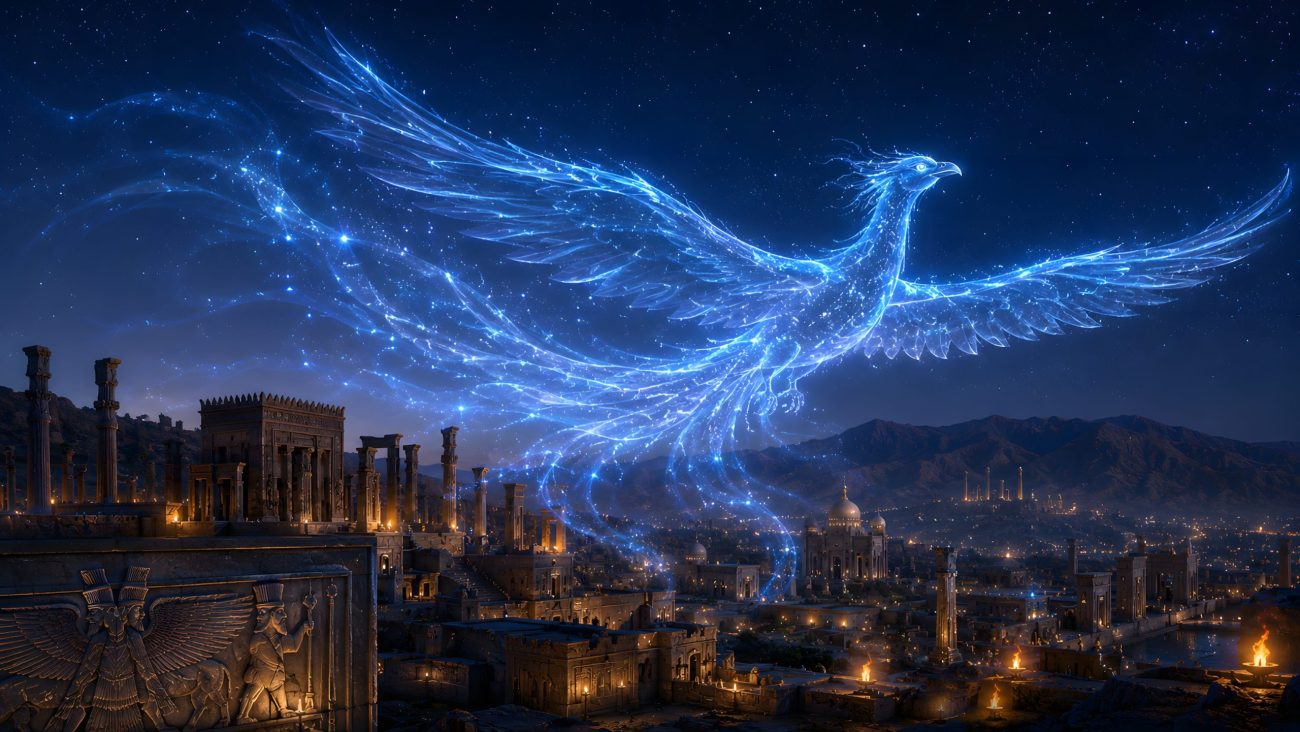
The Huma is a legendary bird from Persian mythology said to live its entire life flying high above the earth without ever landing. In many legends, the bird is invisible to humans and is believed to never touch the ground.

The Huma is often described as a bird of fortune and divine blessing. Seeing its shadow or catching even a brief glimpse of it is believed to bring happiness, luck, or greatness for the rest of a person’s life. In some traditions, the bird’s shadow falling upon someone foretells that they will become a ruler or king.

Certain legends describe the Huma as similar to a phoenix, burning itself in fire after many centuries before rising again from its ashes. Some stories also say the creature possesses both male and female qualities within a single body.

In Persian and Sufi traditions, the Huma became a symbol of spiritual elevation, destiny, and unreachable perfection. The bird was believed to be impossible to capture, and legends warned that anyone who killed a Huma would die within forty days.

The Huma later appeared in Ottoman, Mughal, and Central Asian traditions, where it continued to symbolize kingship, fortune, and heavenly blessing.


Sources

Wikipedia contributors. (n.d.). Huma bird. In Wikipedia. Retrieved May 10, 2026, from https://en.wikipedia.org/wiki/Huma_bird


Dilmun Griffin

Tradition / Region: Dilmun Mythology, Bahrain Mythology, Qatari Mythology
Alternate Names: None Recorded
Category: Bird


The Myth

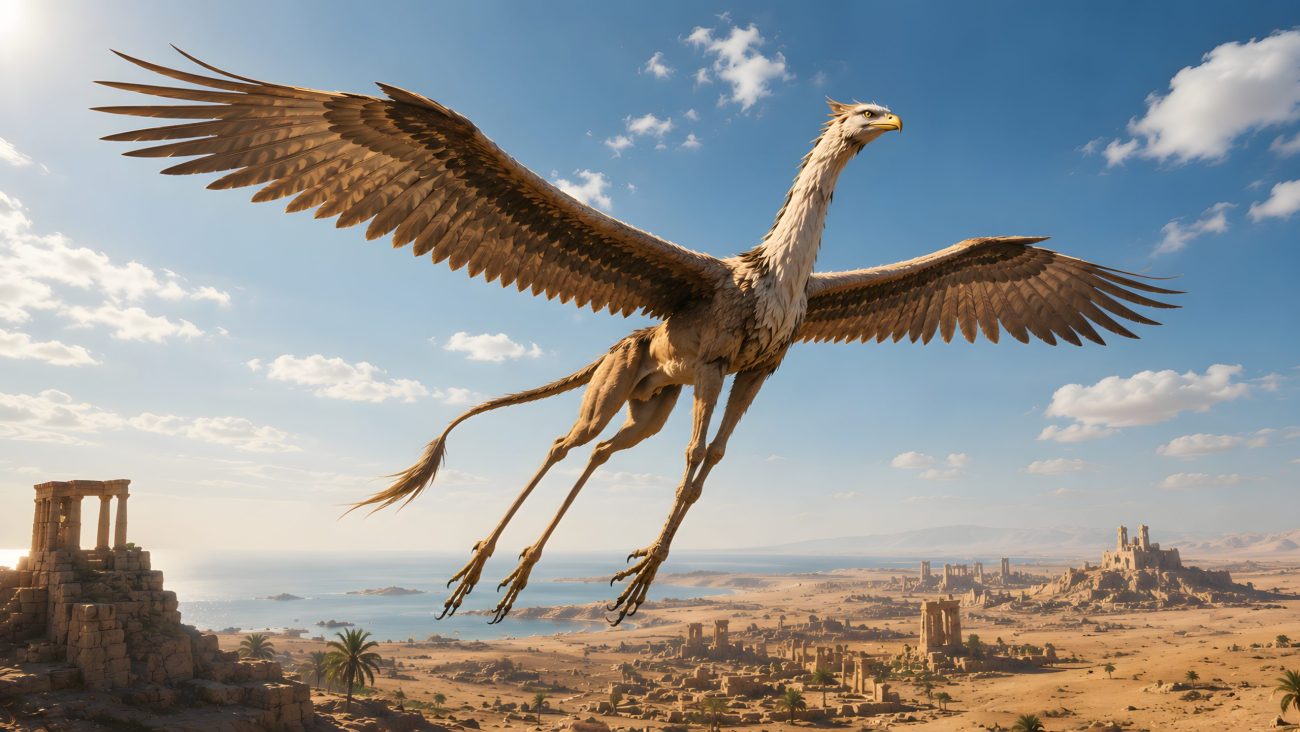
The Dilmun Griffin is a rare chimeric creature appearing on ancient Dilmun seals from the Bronze Age civilization of Dilmun. It is shown as part of a mythological battle scene in which a humanoid or divine figure leads several beasts against a great serpent or dragon.

The griffin-like creature appears beside a bull, lion, and ibex as they confront the serpent. It is depicted as one of the creatures accompanying the divine champion during the battle. In other seal scenes, the same griffin-like being appears again beside the humanoid figure, suggesting it belonged to the same mythological motif.

Very little survives about the creature itself, and no detailed myths describing its origin or nature remain. The surviving imagery only shows it participating in the sacred conflict against the serpent-dragon alongside the other beasts.


Sources

Laursen, S. T. (n.d.). Dilmun boats on seals, horned figureheads, and the serpent/dragon slaying myth, c. 2050–1500 BC, p. 7-8.


Byangoma & Byangomi

Tradition / Region: Bengali MythologyIndian Mythology
Alternate Names: Byangoma, Byangomi
Category: Bird


The Myth

The Byangoma and Byangomi are legendary birds from Bengali folklore, most famously appearing in the tales of Thakurmar Jhuli. They are mysterious human-faced birds said to dwell far beyond the world of ordinary people, at the edge of Tepantorer Math — the “Field of Three Horizons,” a vast and dangerous expanse crossed only during great journeys and quests.

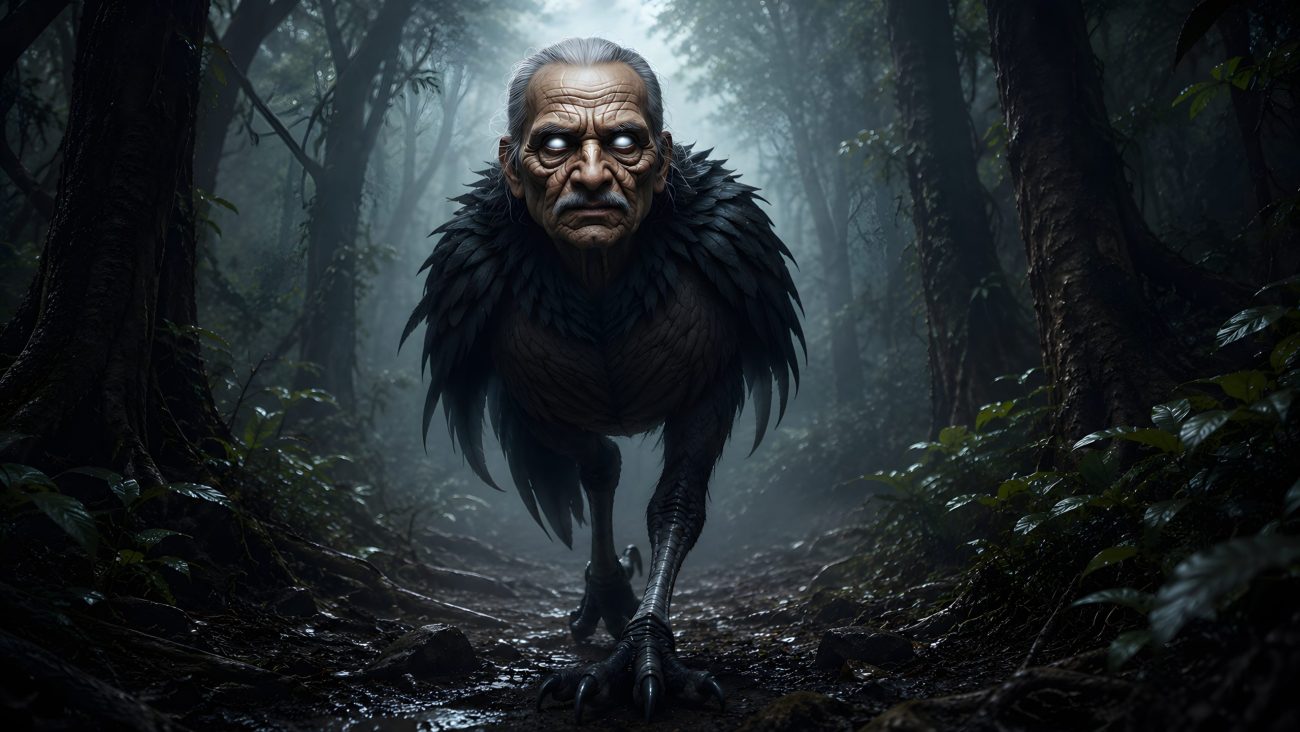
Though their bodies are those of birds, they possess human faces and the ability to speak like humans. They are regarded as wise beings with knowledge of distant lands, hidden dangers, and the paths travelers must follow. The birds rarely reveal themselves openly and are usually encountered only by those who have endured long hardships to reach their remote dwelling.

According to the stories, the Byangoma are born blind. Their young remain sightless until another living being willingly offers a few drops of blood. Only then do their eyes open and their true vision awaken. Once awakened, the birds gain the wisdom and supernatural sight for which they are known.

The Byangoma are also described as immensely powerful despite their strange appearance. In the tale Lalkamal Neelkamal, the princes reach the great tree where the birds live after crossing many dangers. The Byangoma then carry the princes upon their backs and fly them safely across the endless Tepantorer Math, a distance impossible for humans to travel alone. In this role the birds act as guides and helpers, aiding only those who prove themselves worthy through courage and endurance.

Unlike many creatures in folklore, the Byangoma are not evil spirits or monsters. They are mysterious watchers who exist between the human world and distant unknown realms. They do not alter fate or fight battles themselves, but instead reveal hidden paths and help travelers continue journeys they could never complete alone.

After guiding those they choose to help, the Byangoma return once more to their solitary tree at the edge of the world, remaining distant guardians of forgotten roads and impossible horizons.


Sources

Wikipedia contributors. (n.d.). Ghosts in Bengali culture. In Wikipedia, from https://en.wikipedia.org/wiki/Ghosts_in_Bengali_culture


Guguli

Tradition / Region: Georgian Mythology
Alternate Names:
Category: Bird, Hybrid


The Myth

The Guguli are a strange people encountered by Mindia after he escaped from captivity and lost his way, arriving in their land instead of returning home. They questioned him about his origin and why he had come, and he told them his story.

Among them was a one-eyed Guguli who reproached Mindia, reminding him that as a child he had thrown a stone and blinded him, even though he was the one who brought spring to the land. Mindia remembered this and asked for forgiveness.

The Guguli lived in houses made of small dry branches. One day they became alarmed and began strengthening their homes, saying that an enemy army was approaching. Soon a black host attacked their land and began destroying it. Mindia took a stick and fought them off, killing the attackers.

After this, the Guguli became fond of Mindia and told him they would grant whatever he wished. He asked them to take him back to his homeland.

They then prepared a meal and brought forth a flock of white snakes. One of the snakes was killed in his honor. Mindia was afraid and reluctant, but was persuaded to eat it. After eating, he became unwell and restless.

The Guguli women prepared three beds for him and told him to lie on each in turn until he found rest. On the third bed he recovered. When he awoke, he found swellings under his arms. The Guguli instructed him to cut them open, and many biting creatures came out. After this, he became light, so much so that he had to carry a stone with him so the wind would not carry him away.


Sources

Tsanava, A. (1992). ქართული მითოლოგია [Georgian Mythology]. In Tbilisi: Merani P. 28.


Valravn

Tradition / Region: Danish Mythology
Alternate Names: Valravnen
Category: Bird, Wolf


The Myth

The Valravn is a supernatural raven connected with death, transformation, and dark power. It is often described as either a human turned into a raven or a raven that gains human nature through consuming the dead.

In the central ballad tradition, the Valravn appears as a cursed knight in raven form. He encounters a maiden and offers to carry her to her betrothed, but demands a price: the first son she will bear. The woman accepts, and after she is reunited and later gives birth, the raven returns to claim the child.

No bargain or wealth can stop him. When the child is brought forth, the Valravn pierces the boy and drinks his heart’s blood. Through this act, the curse is broken—the raven transforms back into a human knight.

After the transformation, the child is restored to life, and the danger passes. Yet the event reveals the cost of the change: the Valravn’s return to humanity requires blood and sacrifice.

Another tradition presents a different origin. Ravens that feed on the bodies of fallen kings or warriors—especially consuming the heart—gain human intelligence and supernatural abilities. These creatures can harm people, alter forms, and possess unnatural strength.

The Valravn represents a darker transformation motif:
a being caught between animal and human, whose return to humanity is achieved through violence, death, and the crossing of natural boundaries.


Sources

Wikipedia contributors. (n.d.). Valravn. In Wikipedia, from https://en.wikipedia.org/wiki/Valravn