Moyang Lang Kuit

Tradition / Region: Malaysian Mythology
Alternative names:
Category: Bird


The Myth

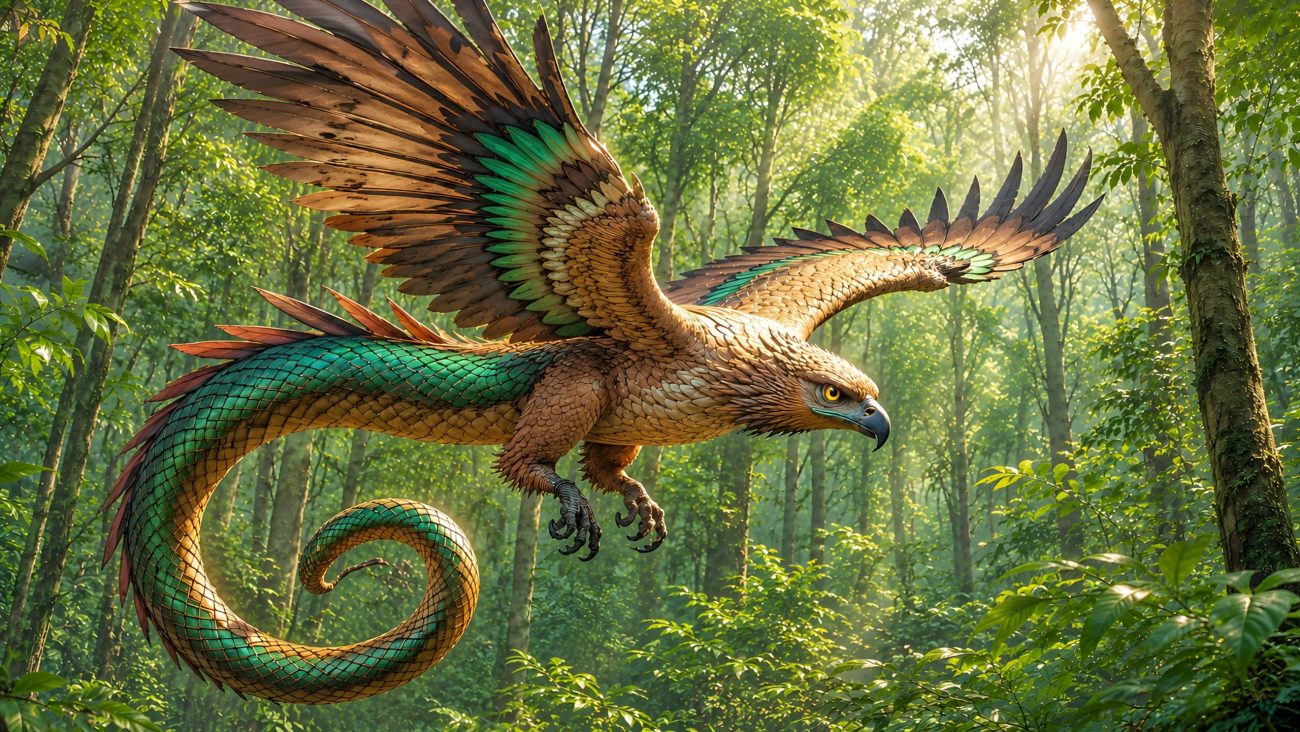
Moyang Lang Kuit is a supernatural serpent-eagle spirit in the folklore of the Mah Meri people of western Peninsular Malaysia.

It appears as a fearsome creature with the body of a great serpent and the upper form of a powerful eagle. Unlike many mythical beasts, it is not known for attacking people directly. Instead, its appearance is considered a terrible omen.

To see the Moyang Lang Kuit is believed to foretell the death of a person. In some traditions, its appearance predicts an even greater disaster—that an entire village will soon be abandoned, leaving its homes empty.

For this reason, the serpent-eagle is regarded as a harbinger of misfortune whose arrival warns that tragedy or the end of a community is near.


Sources

Bestiary.us. (n.d.). Moiang Lang Kuit. In New Bestiary: Encyclopedia of Imaginary Beings. Retrieved June 29, 2026, from https://www.bestiary.us/moiang-lang-kuit/en


Onmoraki

Tradition / Region: Japanese Mythology
Alternative names:
Category: Bird


The Myth

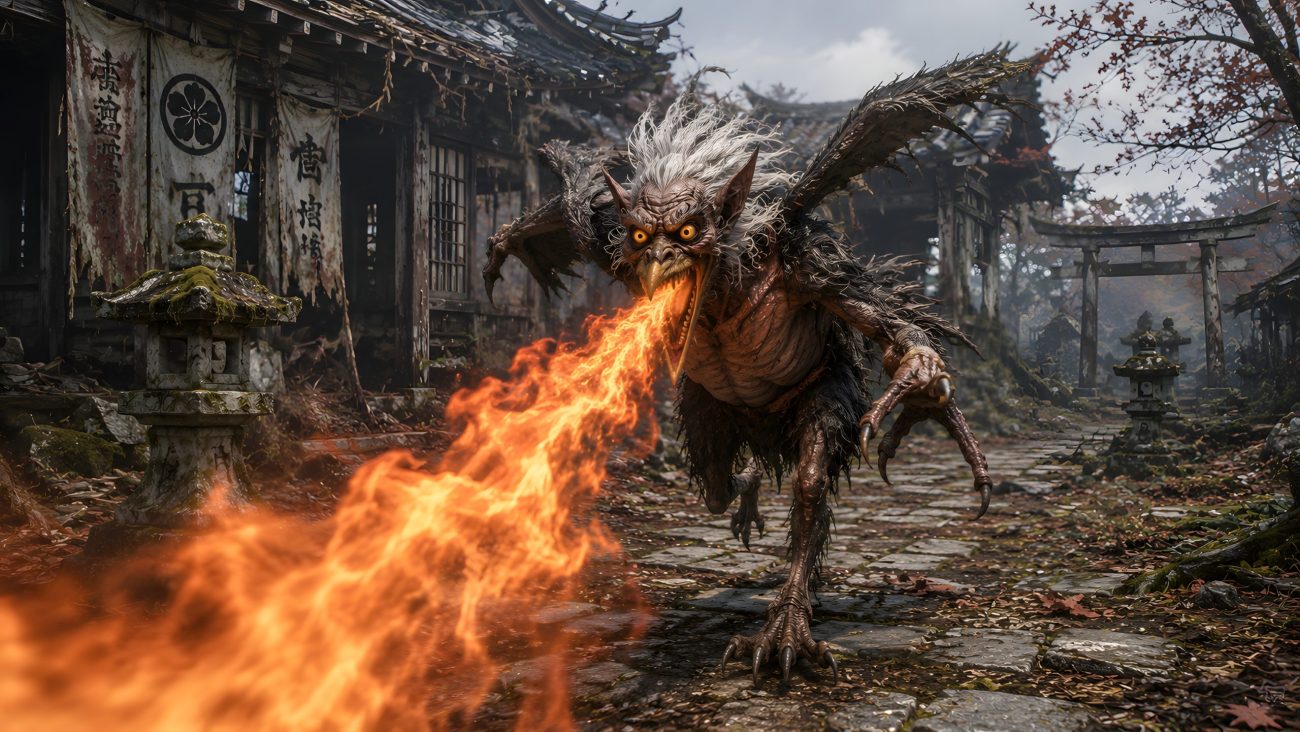
The Onmoraki is a grotesque bird-like yōkai born from the bodies of the recently deceased when they are not given sufficient memorial prayers. Unable to find peace, the lingering life force transforms into this demonic creature.

It appears as a large black bird covered in dark feathers, with a ghastly human face and brilliant eyes that glow like lanterns. It is also an excellent mimic, capable of perfectly imitating human voices while letting out shrill, terrifying cries.

Onmoraki haunt temples, especially those where priests have neglected their religious duties. They creep up to sleeping priests and, using the priest’s own voice, scold them for their failures. When the startled priest awakens and flees in terror, the Onmoraki disappears into the darkness, leaving only its eerie cries behind.

The creature serves as a supernatural reminder that the dead must be properly honored, for neglected memorial rites can give rise to demons instead of allowing the departed soul to find peace.


Sources

Meyer, M. (n.d.). Onmoraki. Yokai.com: The Illustrated Database of Japanese Folklore. Retrieved June 29, 2026, from https://yokai.com/onmoraki/.


Kryzhatik

Tradition / Region: Belarusian Mythology
Alternative names: Kryzhatsik
Category: Bird


The Myth

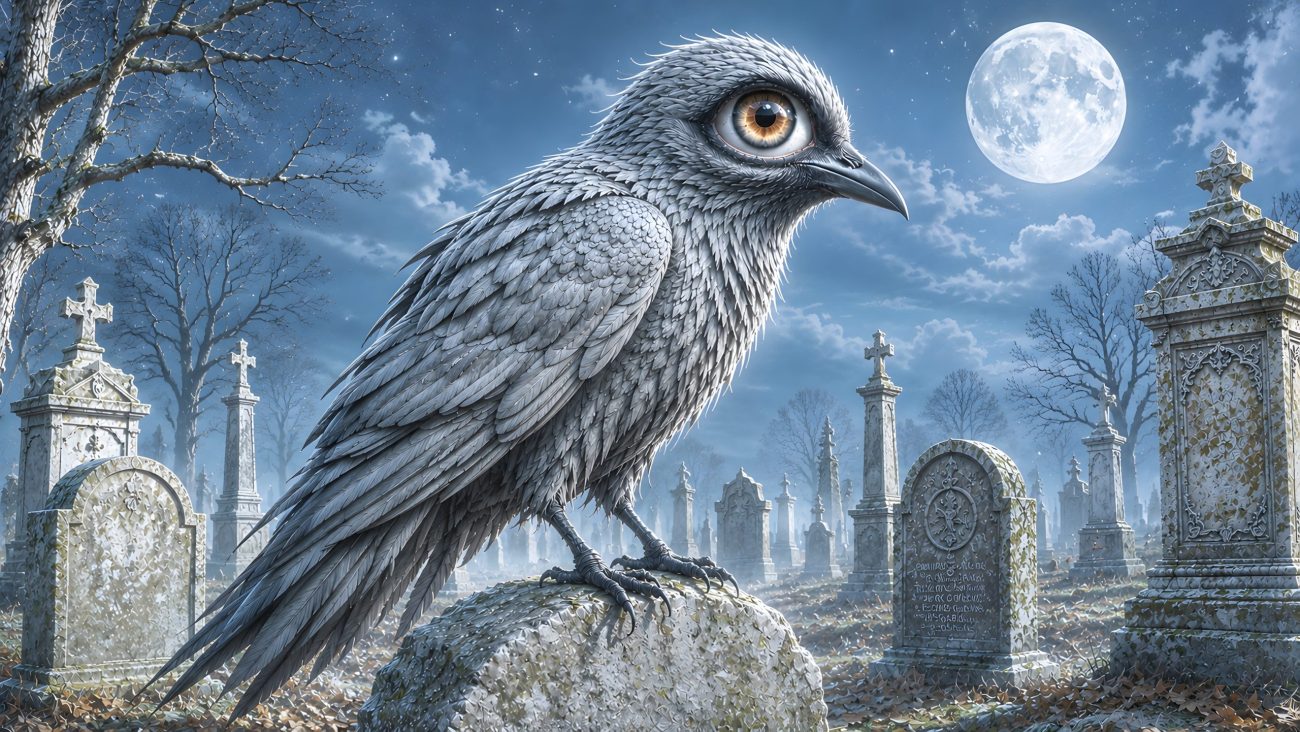
The Kryzhatik is a restless spirit that dwells within the boundaries of a cemetery. It is believed to be the soul of a deceased person whose grave, or more often whose grave cross, has been damaged before the proper period of remembrance has passed.

It usually appears as a gray raven with human eyes, although in some traditions it may also take the form of an old raven with faded feathers, a white beak, and a human gaze. It moves among the cemetery crosses, watching over the graves.

Unlike many cemetery spirits, the Kryzhatik is generally not hostile. It is said to attack only those who show disrespect for the dead, such as vandals who damage crosses or people who behave irreverently within the cemetery. It is also believed to drive away evil forces, including demons and drunken troublemakers who enter the graveyard.

According to Belarusian belief, the Kryzhatik is not afraid of holy places or the sign of the cross, since the cemetery itself is sacred ground. During the nights before Radunitsa, when many people visit the graves of their ancestors, its power is believed to become especially strong as it silently guards the cemetery and ensures that no harm comes to the resting place of the dead.


Sources

Bestiary.us. (n.d.). Kryzhatik. In New Bestiary: Encyclopedia of Imaginary Beings. Retrieved June 29, 2026, from https://www.bestiary.us/Kryzhatik


Kamikiri

Tradition / Region: Japanese Mythology
Alternative names: Hair-Cutting
Category: Bird


The Myth

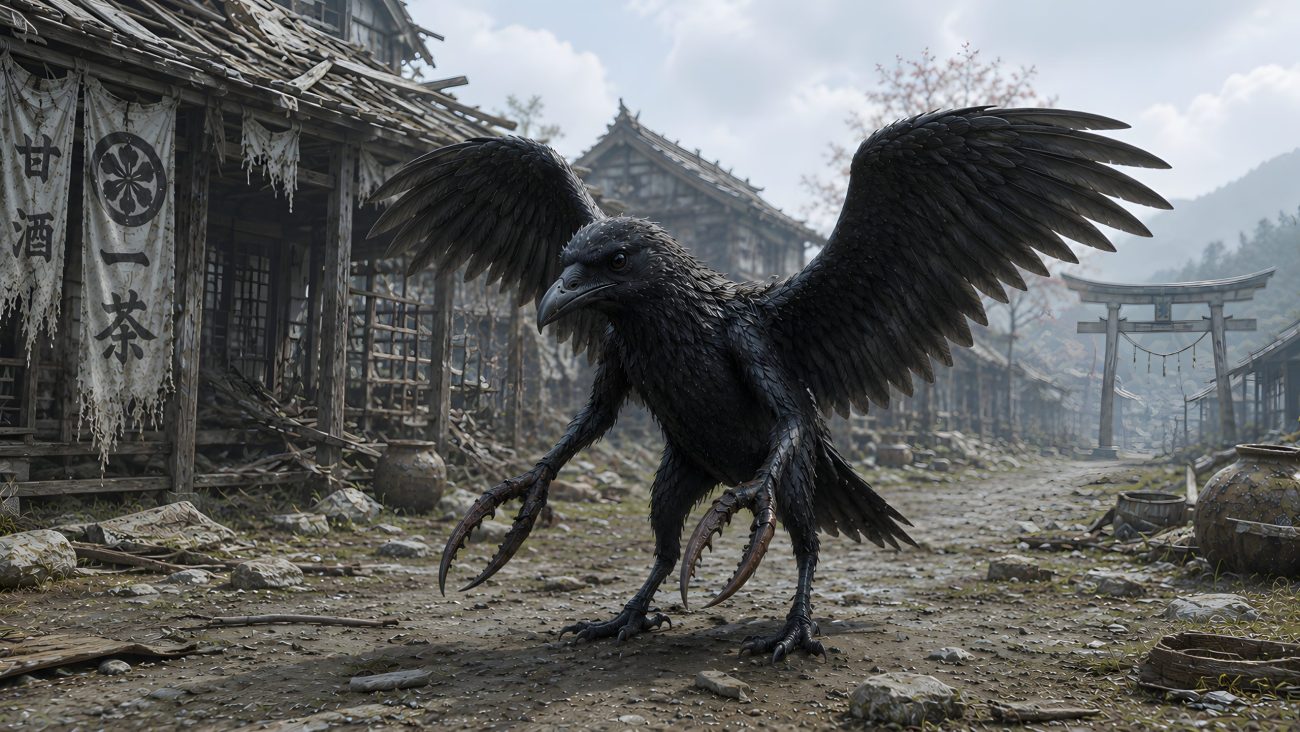
The Kamikiri is a mysterious yōkai blamed for the unexplained cutting of a person’s hair without them noticing. Victims would suddenly discover that part of their hair had been neatly cut away, even though no one had been seen approaching them.

Different traditions attributed these incidents to invisible hair-cutting insects, foxes, badgers, or the Kamikiri itself. In yōkai picture scrolls such as the Hyakkai Zukan, the Kamikiri is depicted as a tengu-like creature with enormous scissors in place of its hands, using them to silently snip the hair of unsuspecting people.

The Kamikiri later inspired the related yōkai known as the Amikiri (“Net-Cutter”), which first appeared in later illustrated collections of Japanese monsters.


Sources

TYZ. (n.d.). 神木 (Kamiki). In 新版TYZ 妖怪図鑑. Retrieved June 29, 2026, from https://tyz-yokai.blog.jp/archives/1010653484.html


Aosagibi

Tradition / Region: Japanese Mythology
Alternative names: Goi no Hikari (“Night Heron Light”)
Category: Bird


The Myth

The Aosagibi is a mysterious yōkai created when an old heron—most commonly a black-crowned night heron—lives long enough to gain supernatural powers. These transformed birds appear around rivers, marshes, and reed-filled wetlands, especially on cool autumn nights.

As the heron ages, shining scales form upon its breast. With every breath, it exhales a fine yellow powder that drifts through the air. At night, its body glows with a bluish-white radiance, and the powder bursts into floating blue fireballs that drift over rivers, through the trees, or across the night sky.

Although these ghostly flames appear supernatural, they produce no heat and burn nothing they touch. Eventually, they fade away into the wind.

Despite their eerie appearance, Aosagibi are harmless. Like ordinary herons, they remain shy and avoid people, silently disappearing into the darkness when disturbed. Their glowing blue flames are often mistaken for other supernatural lights, but they are simply the strange manifestation of an ancient magical bird.


Sources

Yokai.com. (n.d.). Aosagibi. In Yokai.com: The Illustrated Database of Japanese Folklore. Retrieved June 29, 2026, from https://yokai.com/aosagibi/


Aiy-toyon

Tradition / Region: Yakut Mythology, Russian Mythology
Alternative names: Ayy-toyon
Category: Bird


The Myth

Aiy-toyon is a mighty two-headed eagle that dwells in the ninth heaven according to Yakut belief. Revered as a sacred celestial being, it is regarded as the teacher of shamanism, having bestowed shamanic knowledge upon humanity.

Because of this divine role, the image of Aiy-toyon was traditionally displayed on the garments and drums of shamans, symbolizing its protection, wisdom, and connection between the human world and the highest heavens.

When asked why Aiy-toyon possessed two heads, the Yakuts simply replied that “he is too clever.”


Sources

Bestiary.us. (n.d.). Aiy-toion. In New Bestiary: Encyclopedia of Imaginary Beings. Retrieved June 29, 2026, from https://www.bestiary.us/aiy-toion


Põhjakotkas

Tradition / Region: Estonian Mythology
Alternative names: Northern Eagle
Category: Bird


The Myth

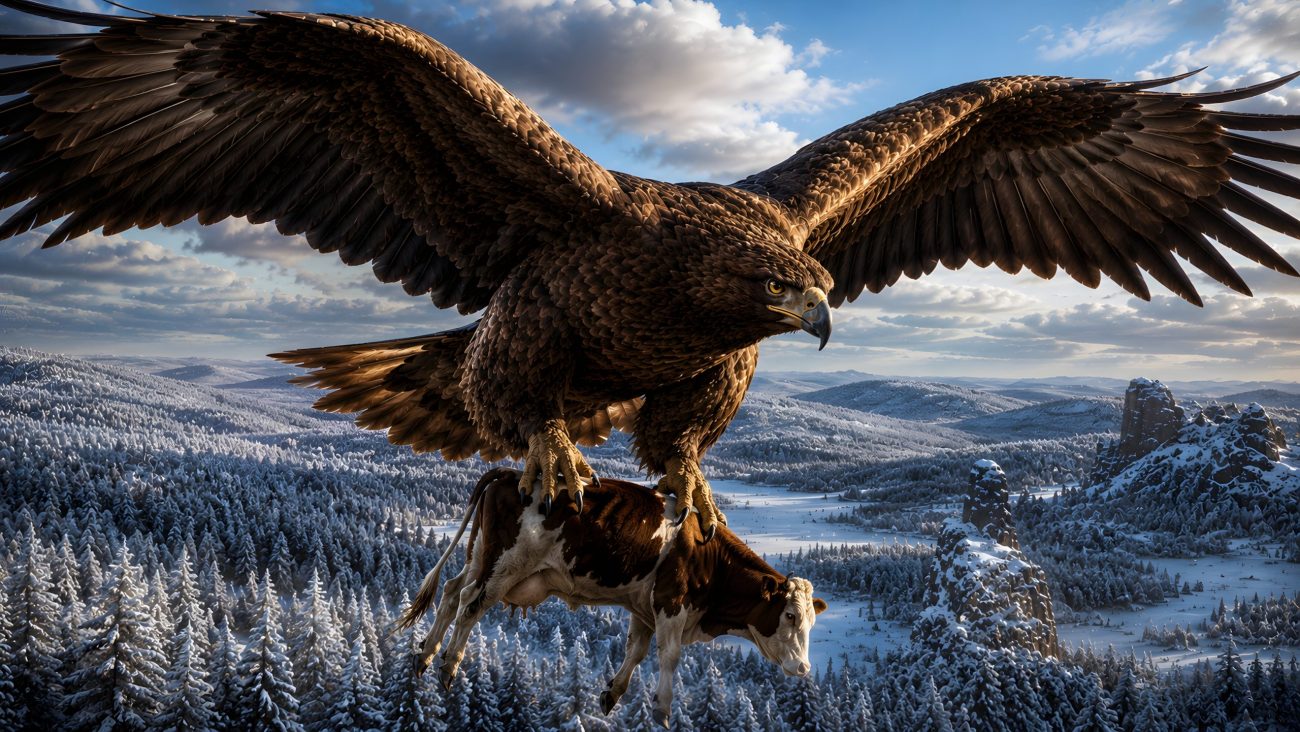
The Põhjakotkas, or Northern Eagle, is a powerful mythical bird mentioned in the Estonian national epic Kalevipoeg. It appears in the first story, telling of the coming of Kalev.

According to the epic, three mighty brothers grew up on a northern farm beside the sacred oak forest of Taara. One traveled to Russia, another to Turjamaa, while the third, Kalev, climbed onto the back of the Põhjakotkas.

Carrying Kalev upon its wings, the Northern Eagle flew across the Finnish Sea, glided over the Baltic Sea, and crossed the Viru Sea. Finally, guided by fate and divine will, the eagle descended onto a high cliff and set Kalev down upon the shores of Viru, where his journey continued.


Sources

Wikipedia contributors. (n.d.). Põhjakotkas (mütoloogia). In Vikipeedia. Retrieved June 29, 2026, from https://et.wikipedia.org/wiki/P%C3%B5hjakotkas_(m%C3%BCtoloogia)


Ubume

Tradition / Region: Japanese Mythology
Alternative names: Ubume, Ubugame, Guhuo Bird (姑獲鳥)
Category: Ghost, Bird


The Myth

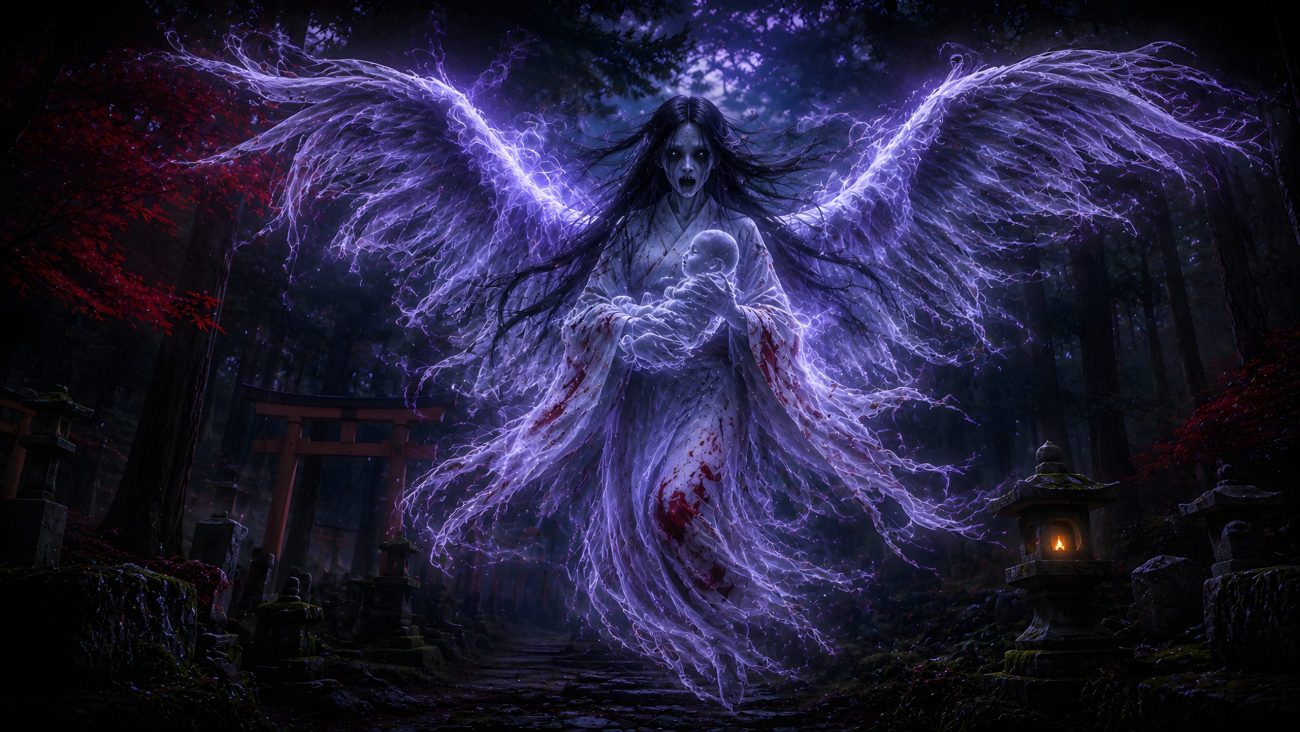
The Ubume is the restless spirit of a woman who died during childbirth. She appears at night along lonely roads, bridges, and riverbanks, carrying an infant in her arms. Dressed in blood-stained clothing, she weeps and asks passersby to hold her child for a moment while she fixes her hair or prays for salvation.

Anyone who accepts the baby soon discovers that it grows heavier and heavier. In some tales, the child eventually transforms into a stone or a bundle wrapped around a straw hammer. Other stories say that a person who fulfills the Ubume’s request and faithfully carries the child receives extraordinary physical strength as a reward. In Akita Prefecture, this supernatural power was known as Obōjikara.

The Ubume is one of Japan’s oldest ghostly beings and was already known during the time when the Konjaku Monogatari-shū was compiled. During the Edo period, it became closely associated with the Chinese Gu Huo Bird, since both were believed to originate from women who had died while pregnant or giving birth. Because of this connection, the two creatures gradually became confused with one another.

Most depictions portray the Ubume as a sorrowful woman holding a baby while wearing blood-soaked garments. Some illustrations, however, give her bird-like features, with wing-shaped arms wrapped protectively around the child.

Though feared, the Ubume is not considered a malicious spirit. She is remembered as a tragic mother unable to abandon her child, forever wandering the night and seeking someone willing to carry the burden she herself could no longer bear.


Sources

TYZ. (n.d.). Ubume [産女]. In 新版TYZ 妖怪図鑑. Retrieved June 20, 2026, from https://tyz-yokai.blog.jp/archives/1010652594.html


Dragon Eagle

Tradition / Region: Bulgarian Mythology
Alternative names: Eagle Dragon / Dragon Eagle
Category: Dragon, Bird


The Myth

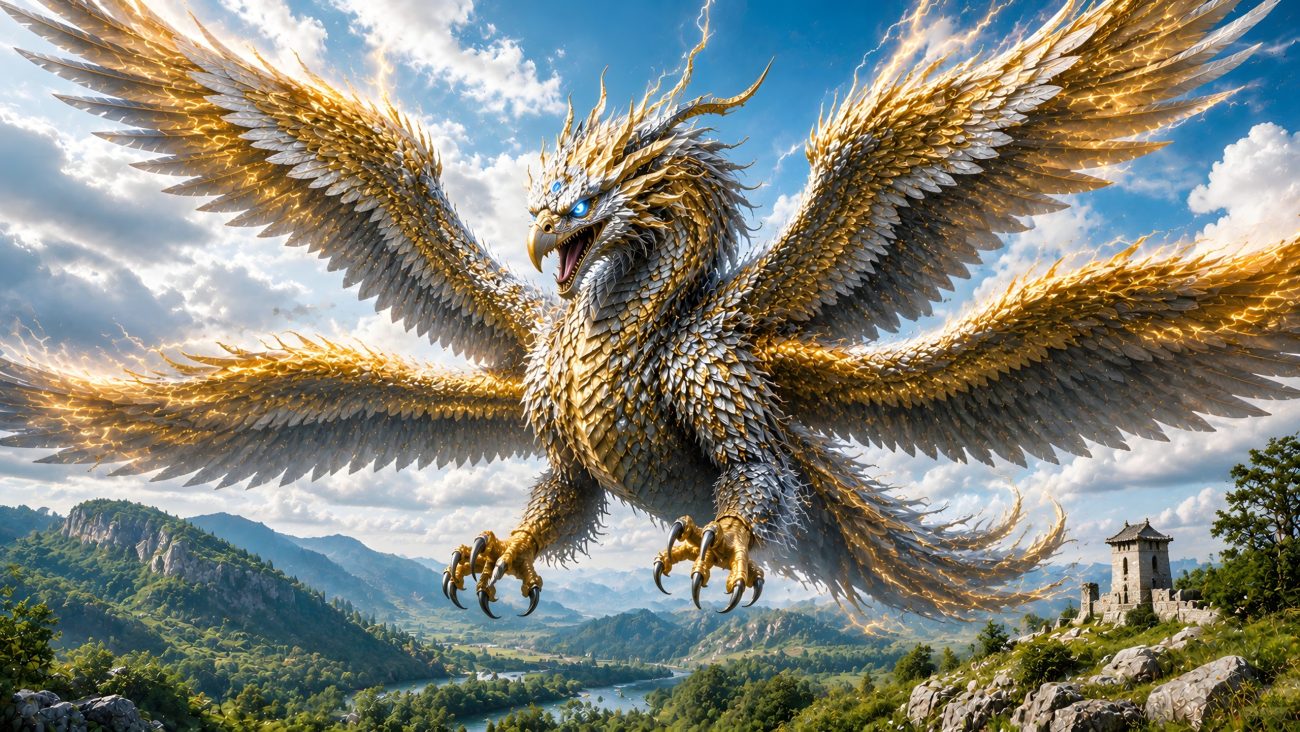
High above the mountains of Bulgaria there lived a supernatural eagle connected to storms, dragons, and the powers of the sky. It nested on remote peaks, flew above the clouds where violent winds raged, and was believed to travel between the world of the living and the underworld. Unlike ordinary creatures, the eagle never grew old because it drank from a hidden lake of life-giving water at the edge of the world.

The Dragon Eagle was feared and respected as a guardian of villages and farmlands. In the Pirin mountains it was said to build its nest in giant sycamore trees overlooking the countryside. From there it defended the land against destructive hailstorms and black storm clouds. As storms approached, the eagle flew directly against them, battling the clouds in the sky and driving them away before they could ruin crops.

People believed the eagle’s powers were almost identical to those of the dragon. In parts of Western Bulgaria, the Rhodopes, and Serbia, dragons and eagles were sometimes considered the same kind of supernatural being. The Dragon Eagle was said to possess four invisible wings and to create winds merely by flying. Some traditions claimed it could even become human or take human form, much like dragon-men in Balkan folklore.

The eagle was also connected with sacred trees, especially the oak, the tree of thunder. It symbolized both heavenly and earthly power. Folk songs described giant eagles battling in forests while rivers of blood flowed beneath them. In older traditions, the Dragon Eagle was seen not only as a storm fighter but as a guardian spirit and protector of clans, villages, and rulers.

One of the oldest images linked to the creature was the battle between the eagle and the serpent. This struggle appeared in medieval art and stories across Bulgaria, where the eagle represented heavenly force and the serpent represented darkness, evil, or destructive powers. Because of this, images of eagle-like dragon beings were carved onto churches, doors, jewelry, and protective objects to ward away danger.


Sources

Georgieva, I. (1985). Bulgarian mythology. Sofia: Svyat Publishers.

White Bird with the Golden Tail

Tradition / Region: Moldova Mythology
Alternative names: The White Bird, Golden-Tailed Bird
Category: Bird


The Myth

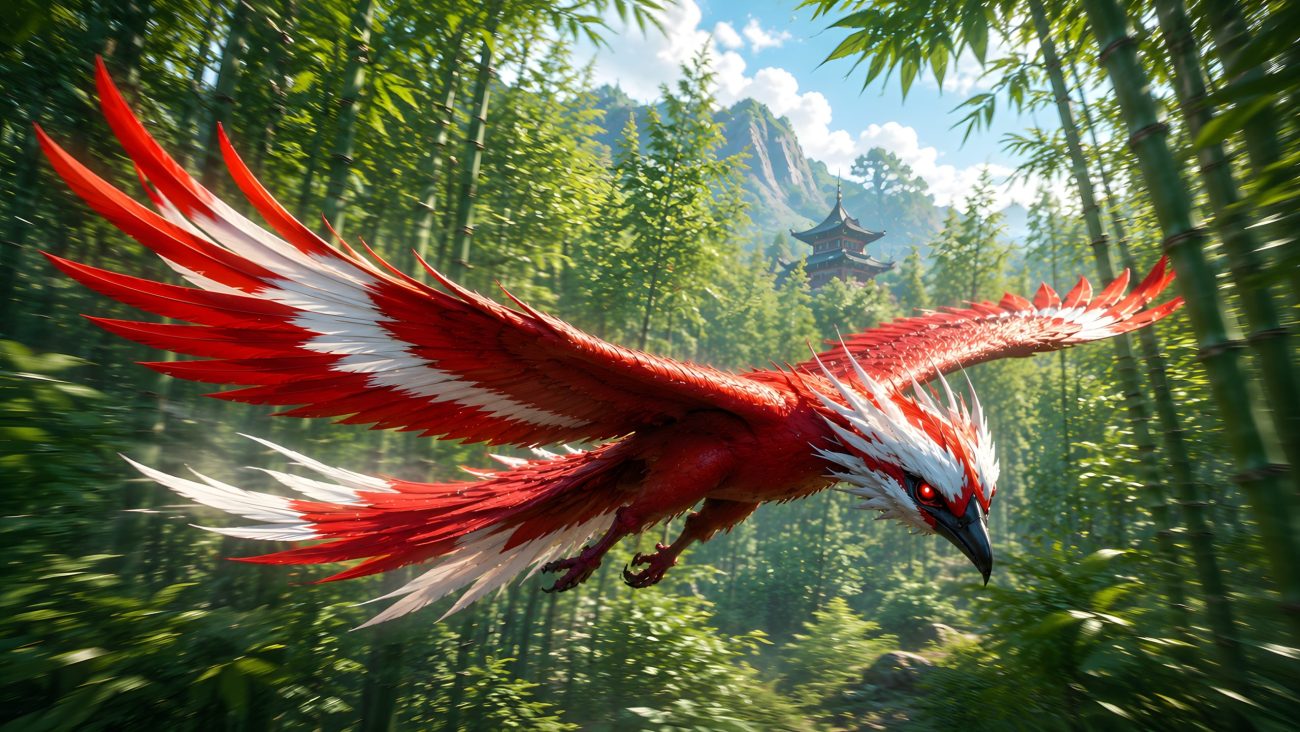
The White Bird with the Golden Tail is a mysterious supernatural creature from Moldovan folklore connected with enchanted trees, magical kingdoms, and distant otherworldly realms. It appears first as a radiant white bird with a shining golden tail, but later reveals its true form as a beautiful fairy-like maiden.

The story begins with an Emperor and Empress who longed for a child. After the Empress walked through the Blue Grey Wood at dawn along an untouched path wet with dew, she gave birth to a miraculous son named Break-of-Day. At the same time, an enormous tree began growing in the imperial garden, rising so high that its top disappeared into the sky. At its summit grew three golden apples.

Many warriors tried to climb the tree and failed, but Break-of-Day spent twelve years climbing until he finally reached the top. There he discovered the White Bird with the Golden Tail descending from the sky to eat the apples. Before the creature could devour the last one, Break-of-Day seized the bird by the tail. The bird escaped, leaving behind a golden feather while the prince saved the final apple.

Determined to find the strange being, Break-of-Day journeyed through magical lands and eventually learned from the Black Arab — a powerful supernatural ruler and shapeshifter — that the bird was not truly a bird at all, but a maiden of extraordinary beauty living beyond deadly enchanted barriers.

Her realm was protected by poisonous gardens, magical walls, and powerful curses. When Break-of-Day finally reached her palace, he captured her by the waist while she slept, just as the Black Arab had instructed. But his curiosity awakened ancient powers and brought him into conflict with devils, underworld rulers, and supernatural horse guardians.

Throughout the tale, the White Bird remains connected to gold, light, and transformation. Her palace and gardens could be turned into golden apples, and when the Devil who controlled her finally died, the bird itself transformed completely into a beautiful maiden. She then traveled beside Break-of-Day as his companion and future bride.

The tale presents the White Bird with the Golden Tail as both an elusive sky-creature and an enchanted woman tied to magical kingdoms, impossible journeys, and supernatural trials. She belongs to the distant world above the clouds and beyond mortal lands, appearing first as a radiant bird feeding upon golden fruit high at the top of a tree that touched the heavens.


Sources

Botezatu, G. (1986). Moldavian folk-tales (2nd rev. & enl. ed.). Kishinev: Literatura Artistikă.