Aerico

Tradition / Region: Albanian Mythology
Alternate Names: Aërico
Category: Goblin


The Myth

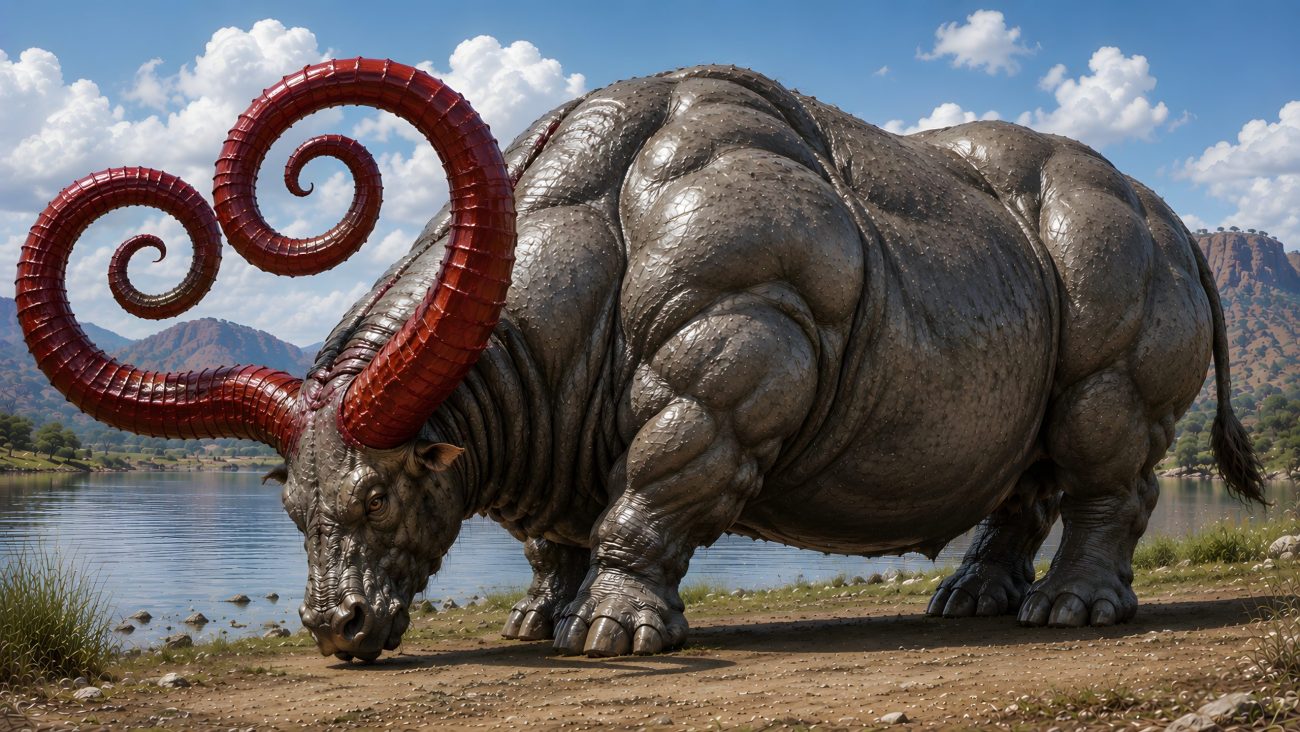
The Aerico is a solitary and malevolent goblin said to dwell in trees, particularly ancient cherry trees. It is fiercely territorial and hostile toward humans, defending its domain with harmful effects on those who come too close.

The creature inhabits old trees, favoring those that have stood for generations. It does not tolerate intrusion and reacts aggressively to any human presence near its dwelling. According to the tradition, even standing within the shadow of the tree it inhabits can bring harm. Those affected may experience swelling in their hands, feet, or other parts of the body.

The Aerico is described as deeply hostile to humans, acting without provocation simply due to proximity. Its presence is not tied to any specific narrative event but exists as a localized belief tied to particular places and trees.

In later interpretations, the physical effects attributed to the Aerico—especially swelling of limbs—have been associated with real illnesses, such as Elephantiasis. The myth itself, however, persists as part of older rural traditions, though it is now largely diminished.


Sources

fr-academic contributors. (n.d.). Aërico. In fr-academic, from https://fr-academic.com/dic.nsf/frwiki/56435


Sun Stag

Tradition / Region: Albanian Mythology
Alternate Names: —
Category: Deer


The Myth

The Sun Stag is a benevolent animal associated with the sun, summoned to safely carry a maiden back to her home. It is distinguished from more dangerous creatures by its peaceful nature and willingness to help.

After being taken by the sun, a maiden longed to return to her mother. The sun told her to summon an animal to carry her home. First came the Kulshedra, which admitted it would devour her, and so it was rejected. Then the maiden summoned a stag. When asked what it would eat and drink, the stag replied that it would eat fresh grass and drink cold water. Satisfied, the sun chose the stag to escort her.

The stag carried the maiden on its antlers. Along the journey, it paused and told her to climb a tree while it searched for food, warning her not to come down for anyone else. When a Kulshedra approached and tried to lure her down, the maiden refused. The stag returned in time, took her again upon its antlers, and carried her safely home.

Before departing, the stag had asked that the maiden’s mother provide fresh hay in return for its help.


Sources

Albanian Literature contributors. (n.d.). Folktale 22. In Albanian Literature, from http://www.albanianliterature.net/folktales/tale_22.html

Dozon, A. (1879). Manuel de la langue chkipe ou albanaise: Grammaire, vocabulaire, chrestomathie. In Paris: Ernest Leroux (reprinted in Folklor shqiptar 1, Proza popullore, 1963). Translated by Elsie, R.


Sisters of the Sun

Tradition / Region: Albanian Mythology
Alternate Names: –
Category: Spirit


The Myth

The Sun Sisters are supernatural maidens encountered beneath the earth who possess knowledge and provide guidance. They are associated with fire, ovens, and acts of labor, and reward kindness with assistance.

A young woman searching for her lost husband was told to descend into the earth. There she encountered the younger sister of the sun, who was baking bread and cleaning the oven with her bare hands and breasts. The young woman took pity on her and found tools to ease her work. In return, the sister directed her to the elder sister.

She then found the elder sister of the sun, who was also cleaning an oven in the same manner. Again, the young woman helped her by bringing proper tools. In return, the elder sister gave her a walnut, a hazelnut, and an almond, and told her to continue on her path, informing her where her husband could be found.


Sources

Albanian Literature contributors. (n.d.). Folktale 23. In Albanian Literature, from http://www.albanianliterature.net/folktales/tale_23.html

von Hahn, J. G. (1864). Das Schlangenkind. In Griechische und albanesische Märchen (pp. 116–124). Leipzig: Engelmann. Translated by Elsie, R.


Dream Black Wolf

Tradition / Region: Albanian Mythology
Alternate Names: —
Category: Sheep


The Myth

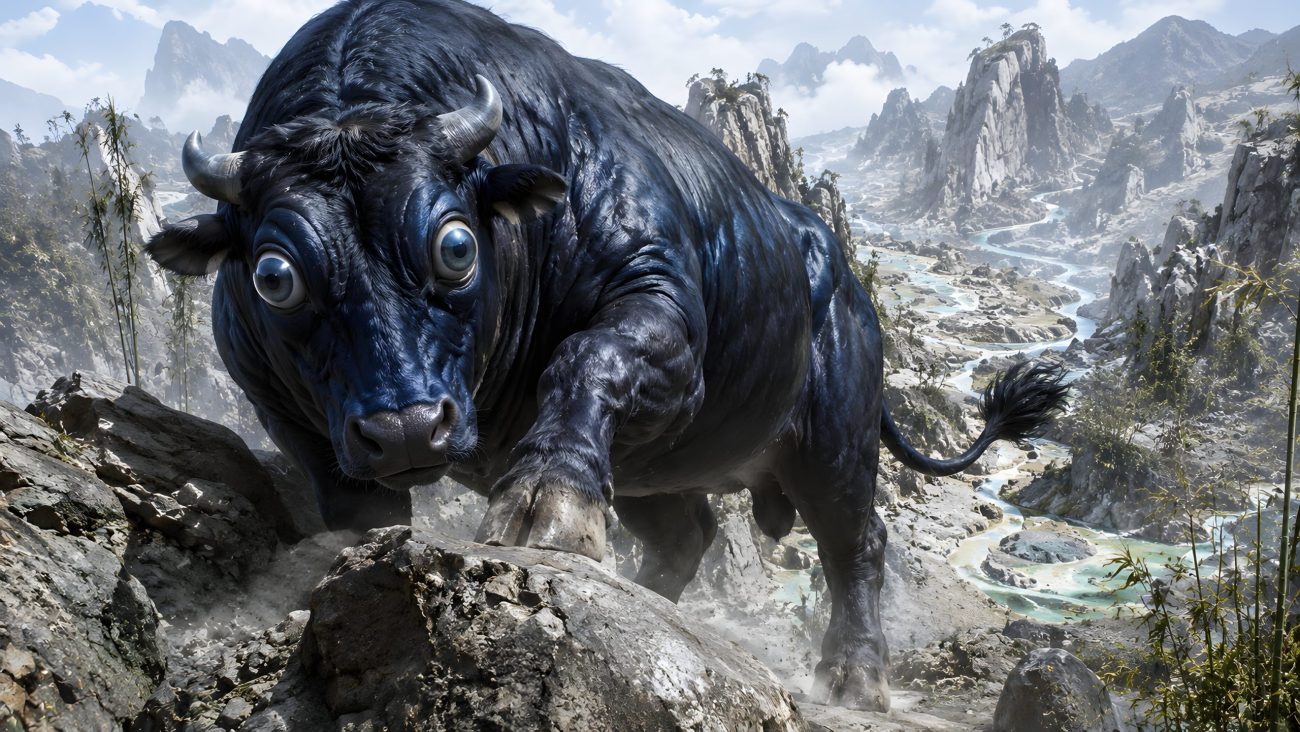
The Dream Black Wolf is a figure seen in a queen’s nightmare, appearing among a flock of sheep. It is described as resembling a large black ram and is associated with an ominous vision preceding events involving Halili and Tanusha.

In the city of Kotor, the queen suffered a troubling dream. She saw a great herd of sheep, three hundred in number, and among them stood a black wolf. The wolf resembled a large black ram as it moved within the flock. Disturbed by what she had seen, the queen rose in fear and went to the king.

She told him of the dream and urged him to act. The king prepared at once and rode out. When he reached the river, he counted the maidens and found one too many among them. This discovery led to the uncovering of Halili, who had been disguised among the maidens.


Sources

Albanian Literature contributors. (n.d.). Oral verse: Frontier Warriors (Këngë Kreshnikësh). In Albanian Literature, from http://www.albanianliterature.net/oralverse/verse_09_05.html

Palaj, B., & Kurti, D. (1937). Visaret e Kombit, vol. II (pp. 23–41); Haxhihasani, Q. (1966). Folklor shqiptar II, Epika legjendare (Cikli i kreshnikëve), Vëllimi i parë (pp. 71–86). In Tirana. Translated by Elsie, R., & Mathie-Heck, J. (2004), Songs of the Frontier Warriors (Këngë Kreshnikësh): Albanian Epic Verse.


Earthly Beauty

Tradition / Region: Albanian Mythology
Alternate Names: —
Category: Fairy


The Myth

The Earthly Beauty is a supernatural maiden with the power to transform beings and grant wishes. She appears in a garden and is associated with the transformation of a skull into a living man.

A maiden, married to a skull, was troubled because her sisters wished to see her husband. While in distress, she followed a black cat into a garden where she saw a girl and a boy sleeping under a rose bush, with a baby lying in the sun. She covered the baby and carefully freed the girl’s hair from the thorns.

When the girl awoke, she called for the one who had helped her and promised to grant any wish. The maiden came forward and asked to see her husband as he had been before. The girl revealed that the man beside her was the maiden’s husband and that she had turned him into a skull. At that moment, the skull was transformed back into a living man.


Sources

Albanian Literature contributors. (n.d.). Folktale 11. In Albanian Literature, from http://www.albanianliterature.net/folktales/tale_11.html

Frashëri, S. (1936). Folklor shqipëtar. In Durrës (reprinted in Folklor shqiptar 1, Proza popullore, 1963). Translated by Elsie, R.


Eagle Maiden

Tradition / Region: Albanian Mythology
Alternate Names: —
Category: Bird, Nymph


The Myth

The Eagle Maidens are beings who take the form of eagles and transform into maidens by bathing in water. They are encountered by a traveler during his search for Gjizar the nightingale and possess knowledge of its location.

A youth traveling through a wilderness came upon a house where an old woman lived. She warned him that her daughters would return and devour him, then hid him in a closet with a hole through which he could see. After some time, three eagles arrived, each one wounded. They entered through the window, bathed in a bowl of water, and became maidens. They spoke with their mother and then ate.

The old woman asked what they would do if a man were present, and each maiden swore not to harm the one who had wounded her. The youth was then revealed, and he told them he was the one who had injured them. The maidens did him no harm and asked his purpose. He told them he was searching for Gjizar the nightingale. They said they knew where it was and that he could not reach it on foot.

They told him to remain with them for three months. After this time, they took him to the place where the nightingale was and left him there.


Sources

Albanian Literature contributors. (n.d.). Folktale 14. In Albanian Literature, from http://www.albanianliterature.net/folktales/tale_14.html

Pedersen, H. (1895). Albanesische Texte mit Glossar. In Abhandlungen der philologisch-historischen Classe der Königl. Sächsischen Gesellschaft der Wissenschaften, Vol. 15 (reprinted in Folklor shqiptar 1, Proza popullore, 1963). Translated by Elsie, R.


Healing Snake

Tradition / Region: Albanian Mythology
Alternate Names: —
Category: Snake


The Myth

The healing snake is a serpent that attends the wounded hero Mujo, possessing restorative abilities. It is described as having remedies beneath its tongue and tending wounds directly, aiding in recovery and easing pain.

Mujo lay gravely wounded in his home, his body pierced and weakened. At his side were three beings: an ora at his head, a serpent upon his wounds, and a wolf at his feet. The serpent moved over his injuries and treated them. Under its tongue were nine kinds of ointments, which it used to cleanse his wounds three times a day. When the pain grew too strong, the serpent would sing a strange song. As it sang, Mujo’s pain faded and he fell into sleep. In this sleep, he saw himself whole again, hunting and resting in the mountains and waters. When he awoke, the pain had lessened.

The serpent remained with him, continuing its care, and was regarded as a source of help placed there to assist him in his suffering.


Sources

Albanian Literature contributors. (n.d.). Oral verse: Frontier Warriors (Këngë Kreshnikësh). In Albanian Literature, from http://www.albanianliterature.net/oralverse/verse_09_17.html

Palaj, B., & Kurti, D. (1937). Visaret e Kombit, vol. II. In Tirana, from Songs of the Frontier Warriors (Këngë Kreshnikësh): Albanian Epic Verse (Elsie, R., & Mathie-Heck, J., 2004)


Minotaur

Tradition / Region: Greek Mythology
Alternate Names: Asterion, Minotauros
Category: Cow, Hybrid


The Myth

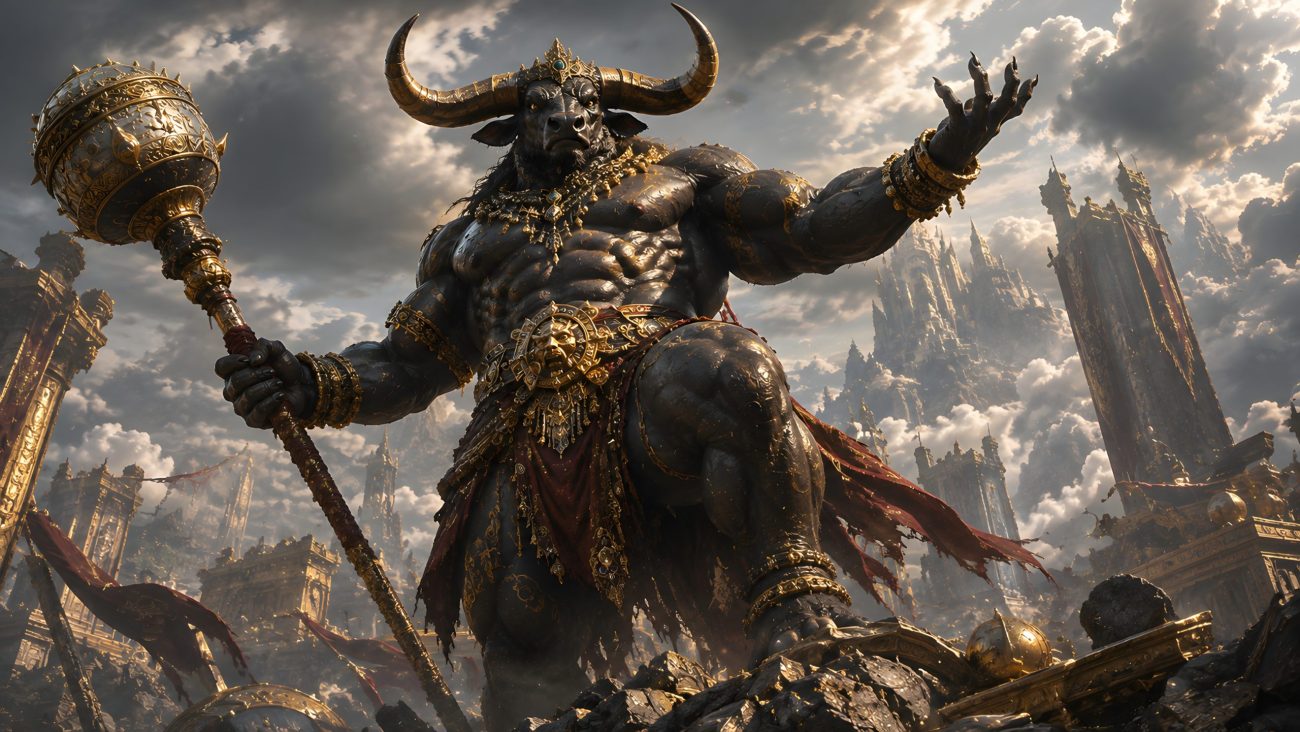
The Minotaur is a creature born from Pasiphaë, wife of King Minos of Crete, and a divine bull sent by Poseidon. It possessed the body of a man and the head of a bull and was confined within a labyrinth constructed by Daedalus, where it was fed human victims sent from Athens.

After Minos became king of Crete, he prayed to Poseidon for a sign of divine favor. The god sent a white bull, which Minos was meant to sacrifice, but he kept it instead. As punishment, Poseidon caused Pasiphaë to fall in love with the bull. With the help of Daedalus, she entered a wooden cow and mated with it, giving birth to Asterius, called the Minotaur. The creature grew large and ferocious and fed on humans. Minos, following an oracle, had Daedalus build a labyrinth to contain it.

After the death of Minos’s son Androgeus, Athens was forced to send seven youths and seven maidens as tribute to be devoured by the Minotaur. When the time came again, Theseus volunteered to go. In Crete, Ariadne helped him by giving him a thread to navigate the labyrinth. Theseus entered, found the Minotaur, and killed it. He then used the thread to escape and led the others out.


Sources

Theoi Project contributors. (n.d.). Minotauros (Minotaur). In Theoi Greek Mythology, from https://www.theoi.com/Ther/Minotauros.html

Wikipedia contributors. (n.d.). Minotaur – Creation myth. In Wikipedia, from https://en.wikipedia.org/wiki/Minotaur#Creation_myth


Haspelvrouwtje

Tradition / Region: Dutch Mythology
Alternate Names:
Category: Gnome


The Myth

The Haspelvrouwtje is a small female kabouter-like being from Brabant folklore, known for its helpful role within the household, particularly toward women.

It is described as a tiny, human-like female spirit that assists with domestic and intimate tasks. It helps women in childbirth, cares for sick women, and completes unfinished work for those who are exhausted or overworked.

Despite its benevolent nature, the Haspelvrouwtje can become dangerous if offended. When angered, it may scratch a person’s skin with its sharp nails or abduct them to its underground dwelling.

It represents a dual-natured household spirit: protective and supportive when respected, but vengeful when mistreated.


Sources

Abe de Verteller. (n.d.). Van aardmannetje tot zwarte juffer: Een lijst van Nederlandse en Vlaamse elfen en geesten. Retrieved March 1, 2026, from https://abedeverteller.nl/van-aardmannetje-tot-zwarte-juffer-een-lijst-van-nederlandse-en-vlaamse-elfen-en-geesten/


Nis Puk

Tradition / Region: Danish Mythology, German Mythology
Alternate Names: Nis; Niß; Puk; Nispuk; Niskepuk; Nisebuk; Hauspuk
Category: Gnome


The Myth

The Nis Puk is a small kobold-like household spirit combining traits of the Nordic nisse and the Germanic puck. It appears as a child-sized figure with a large head, long arms, bright eyes, and typically wears a red cap, red stockings, and simple work clothes.

It dwells in farms, barns, lofts, or within the wooden structure of a house, often hiding in beams, corners, or small cavities. Its presence is strongly tied to prosperity: where a Nis Puk lives, livestock thrive, chores are completed overnight, and the household flourishes.

The Nis Puk performs domestic labor such as feeding animals, preparing grain, cleaning, and maintaining the farm. It may also protect property, but often acquires resources by stealing from neighboring farms. Some versions describe it as bringing wealth or goods, while others portray a darker aspect, where it behaves like an infernal spirit bound to its owner.

Its behavior depends on how it is treated. If respected and rewarded—typically with porridge, milk, or butter—it remains helpful. If neglected, mocked, or overworked, it becomes aggressive, disturbing the household, tormenting its owner, or sabotaging work.

In some traditions, the Nis Puk is bound to a person or property and cannot easily be rid of. More dangerous variants demand the owner’s soul after death, especially if acquired through unnatural means. Its presence can thus be both a blessing and a long-term curse.


Sources

Wikipedia contributors. (n.d.). Nis Puk. In Wikipedia. Retrieved March 1, 2026, from https://en.wikipedia.org/wiki/Nis_Puk.