Jetins

Tradition / Region: French Mythology, Brittany Mythology
Alternate Names: Possibly related to Crions
Category: Gnome


The Myth

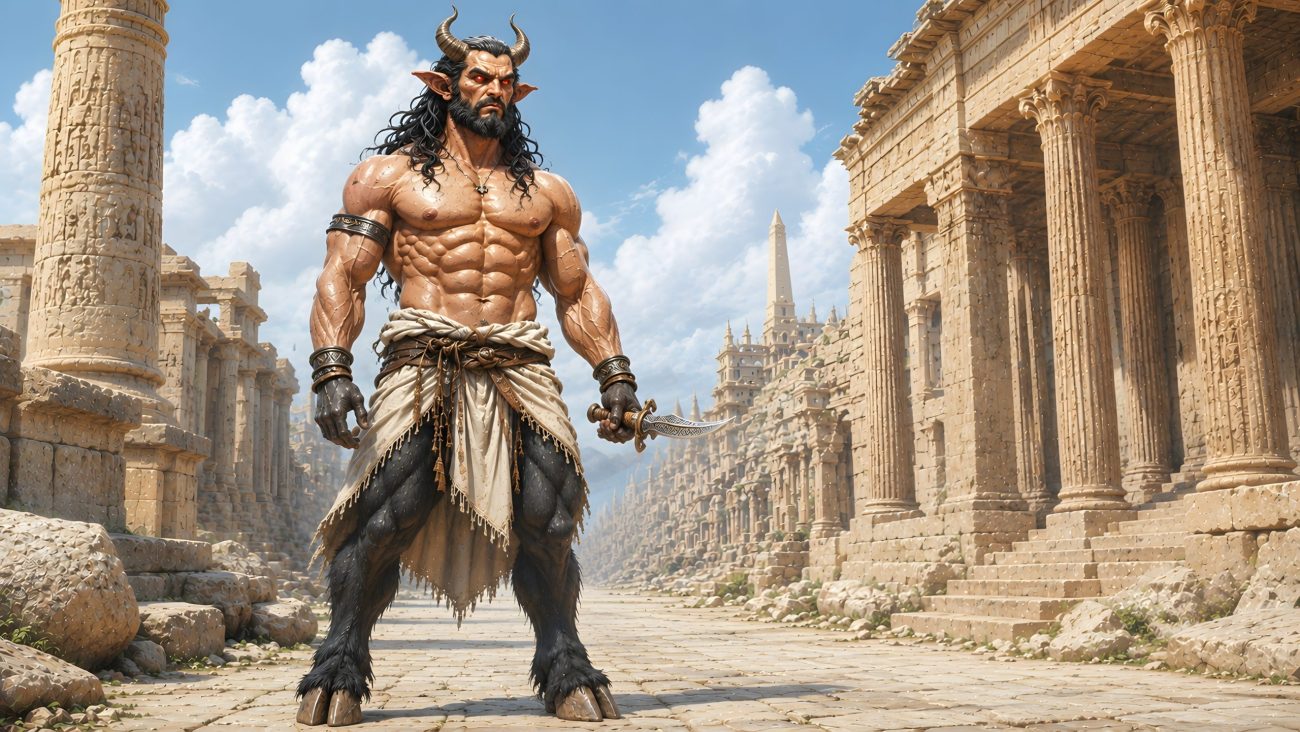
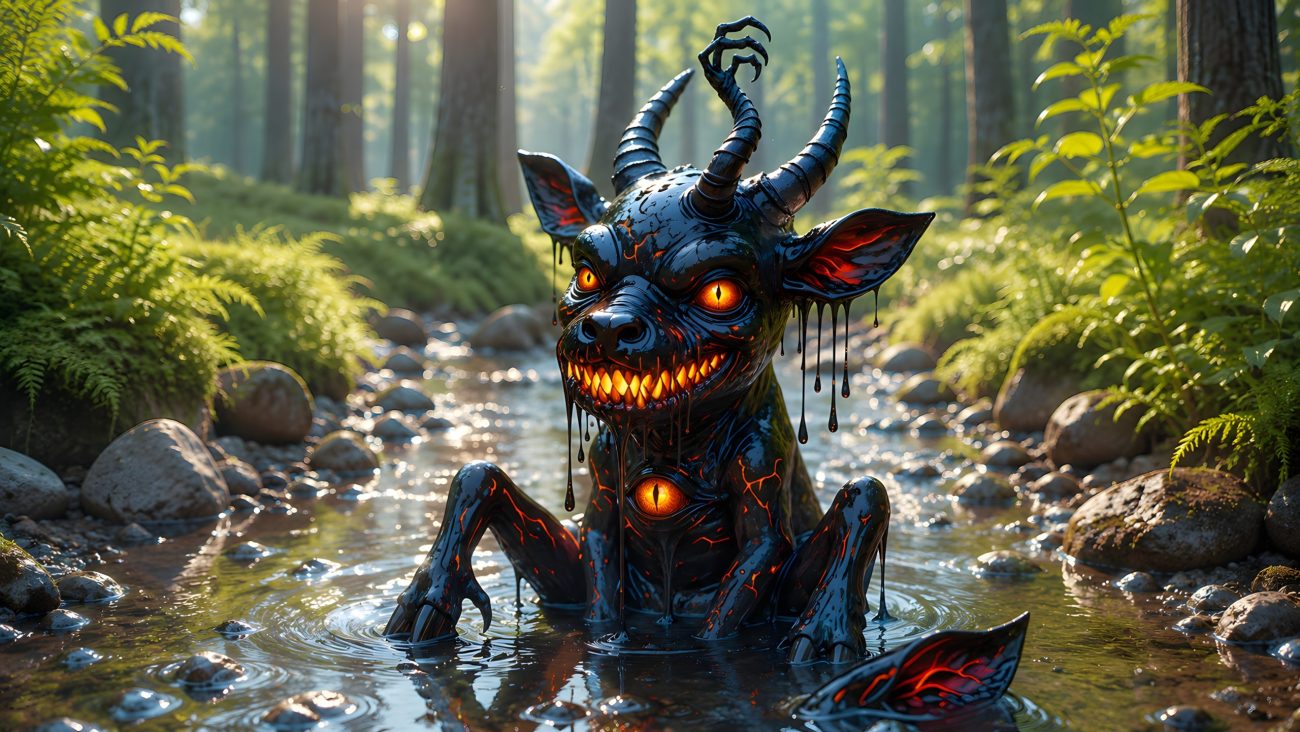
Jetins are tiny fairy-like beings from the seaside caves of Brittany, known for their immense strength and mischievous behavior. Despite ranging in size from as small as a thumb to about 1.5 feet tall, they possess the ability to lift and throw massive stones.

They are described as rough, possibly hairy creatures, sometimes said to wear silver shoes. Jetins delight in displaying their strength by hurling boulders over great distances, and many standing stones and megaliths are attributed to their activity, treated as mere playthings.

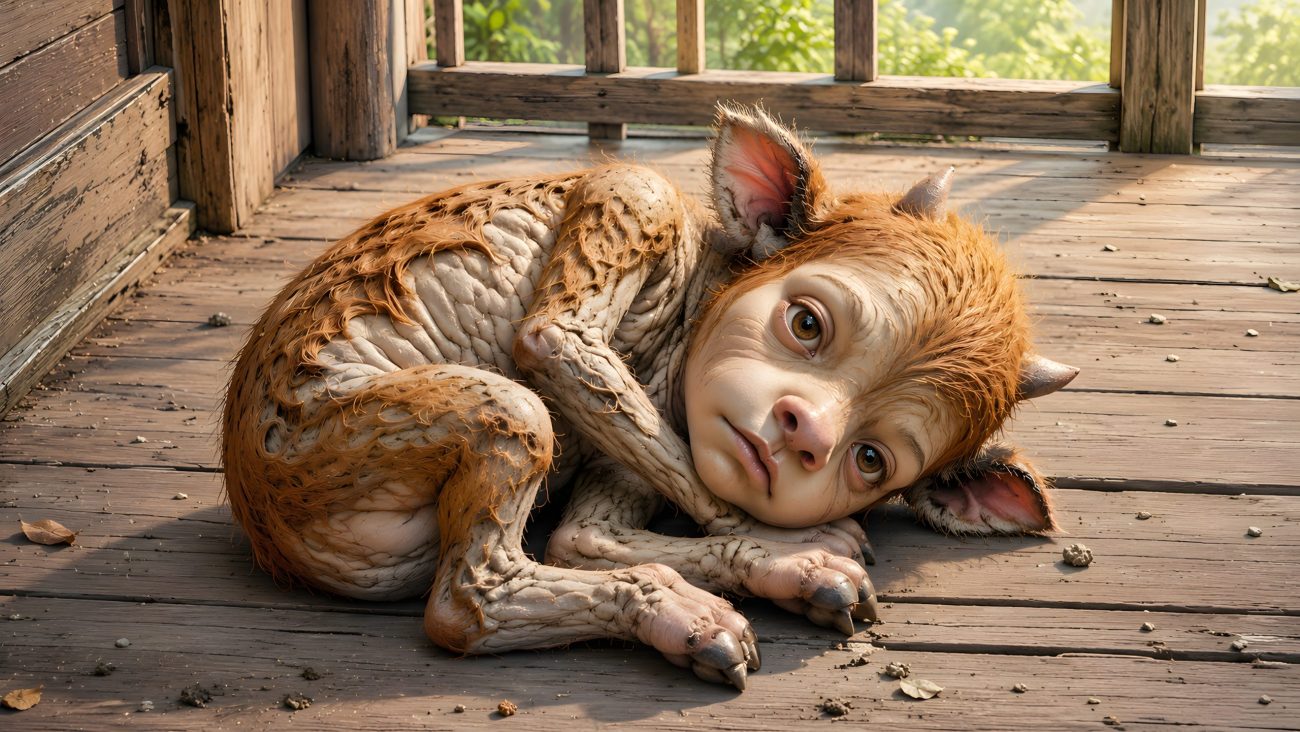
Beyond stone-throwing, jetins engage in typical fairy mischief. They tie knots in horse tails, release livestock, and are known for abducting human infants, leaving behind changelings—ugly, wrinkled substitutes that never grow or develop. These stolen children can be recovered by threatening the changeling near a jetin dwelling, forcing the creatures to return the human child.

Jetins are said to share their coastal habitats with other small beings such as the Fions and the Fées des Houles, the latter being more benevolent. Similar roles of stone-throwing in folklore are sometimes attributed to larger beings like giants, but in Brittany, this function belongs to the small yet powerful jetins.


Sources

A Book of Creatures. (n.d.). Jetin. Retrieved March 1, 2026, from https://abookofcreatures.com/2015/04/29/jetin/.


Black Guardian

Tradition / Region: Czech Mythology
Alternate Names:
Category: Dog


The Myth

The Black Guardian appears in Czech folklore as a small black dog connected to hidden treasure. It is not merely an animal, but often understood as a suffering or enchanted soul bound to guard riches beneath the beneath the earth.

In one tale, a herdsman driving his cattle on Palm Sunday saw a tiny flame burning near a roadside cross. Digging at the spot, he uncovered a pot filled with ancient coins. Beneath it lay a small black dog, which leapt out joyfully, wagging its tail and affectionately looking at him.

The herdsman, however, cared only for the treasure. He pushed the dog away and cursed it. Instantly, the dog vanished as if swallowed by the earth, and the treasure sank back into the ground. It is said that had he shown kindness—such as kissing the dog—he would have freed a tormented soul and gained the treasure.

In another account, a traveler noticed a blue flame by the roadside and used it to light his pipe. Later, when he emptied the pipe, an old coin fell out, suggesting a link between ghostly fire and hidden wealth.

The Black Guardian thus represents both a protector of treasure and a test of human character: greed leads to loss, while compassion could bring both riches and redemption.


Gallery


Sources

SAGEN.at. (n.d.). Brennende Schätze. Retrieved March 1, 2026, from https://www.sagen.at/texte/sagen/tschechien/watzlik/brennendeschaetze.html.


Interpretive Lenses

Religious Readings
  • Christian Ascetic Deep Dive
Philosophical Readings
  • Nietzschean Deep Dive
Psychological Readings
  • Jungian Deep Dive
Esoteric Deep Dive
  • Hermetic Deep Dive
Political / Social Readings
  • Marxist Deep Dive

Kaukas

Tradition / Region: Lithuanian mythology
Alternate Names: Kaukutis; Kukas; Pūkis; Tranas; Vyrukas; Kūdikis; Aniuolikas
Category: Gnome, House dweller


The Myth

The Kaukas is a small mythological being in Lithuanian mythology, regarded as a spirit of fertility, harvest, and wealth. It appears as a small human-like figure, sometimes described wearing green, blue, or red clothing, and is associated with homesteads.

Kaukai may be male or female, though they are чаще described as male. They live in or visit farm buildings such as barns, granaries, or storage rooms, and increase the household’s goods. They are seen at night in moonlight or during misty days.

They may be invited or arrive on their own. When first appearing, they bring small, seemingly worthless items such as chips, hay, or splinters. If the хозяин accepts these, the kaukai begin to appear regularly.

Kaukai are mortal and can be destroyed by fire or struck by Perkūnas. They are fed with agricultural products such as bread, milk, and ritual beer, and in return they bring goods. They do not bring money, but objects and resources found in unused places or gathered from fields, as well as riches from beneath the earth.

They are connected to spring festivals later known as Užgavėnės, where masked rituals were performed. Kaukai are also associated with other similar beings such as barstukai and bezdukai, and are sometimes described as underground or dwelling beneath water, emerging to help good people.


Sources

Wikipedia contributors. (n.d.). Kaukas. In Wikipedia. Retrieved March 1, 2026, from https://lt.wikipedia.org/wiki/Kaukas.


Menehune

Tradition / Region: Hawaiian Mythology, American Mythology
Alternate Names:
Category: Dwarf, Gnome


The Myth

The Menehune are described as a race of small, dwarf-like people living in the deep forests and hidden valleys of the Hawaiian Islands. They are known as skilled builders and craftsmen who work at night and remain unseen by most humans.

The Menehune are said to have lived in Hawaiʻi before settlers from Polynesia arrived. They dwell far from human settlements, in forests and caves, and sustain themselves on forest plants, bananas, and fish. They are described as being about two feet tall.

They are known for their craftsmanship, building temples, fishponds, roads, canoes, and houses. These works are said to be constructed during the night, and if the work is not completed before dawn, it is left unfinished. They appear only at night, and only their children or humans connected to them are able to see them.


Gallery


Sources

Wikipedia contributors. (n.d.). Menehune. In Wikipedia. Retrieved March 1, 2026, from https://en.wikipedia.org/wiki/Menehune.


Interpretive Lenses

Religious Readings
  • Christian Ascetic Deep Dive
Philosophical Readings
  • Nietzschean Deep Dive
Psychological Readings
  • Jungian Deep Dive
Esoteric Deep Dive
  • Hermetic Deep Dive
Political / Social Readings
  • Marxist Deep Dive

Klabautermann

Tradition / Region: German Mythology, Dutch Mythology
Alternate Names: Kalfater; Klabautermännchen; Kaboutermanneken
Category: Gnome


The Myth

The Klabautermann is a water kobold associated with ships, appearing as a small humanlike figure or sometimes as a ship’s carpenter. It is linked to the wood of the vessel and is rarely seen, as its appearance is considered an ill omen.

The Klabautermann lives within the wood of a ship and assists sailors and fishermen with their duties. It may pump water from the hold, arrange cargo, repair damage, and work at night to fix broken objects. It is often said to sit beneath the capstan. Its presence protects the ship from danger such as illness, fire, or attack, and ensures the vessel remains seaworthy.

It appears only rarely to humans, and seeing it is considered bad luck. It may be seen as a small figure with a pipe, wearing a sailor’s cap and a red or grey jacket, though descriptions vary. It can also appear in the form of the ship’s carpenter.

The spirit reacts to the behavior of the crew. If treated with respect, it continues its helpful work. If angered, it creates disturbances, tangles ropes, makes noise, and damages objects. When the ship is beyond saving, the Klabautermann becomes restless, making loud sounds, running through the ship, or leaving it. Its departure signals that the vessel is doomed to sink.


Sources

Wikipedia contributors. (n.d.). Klabautermann. In Wikipedia. Retrieved March 1, 2026, from https://en.wikipedia.org/wiki/Klabautermann.


St. Mamerten Hound

Tradition / Region: Liechtenstein Mythology
Alternate Names:
Category: Dog


The Myth

The St. Mamerten Hound appears as a dog with fiery eyes that sits upon a chest of gold inside the church of St. Mamerten, preventing it from being taken.

One evening, a young man from Triesen went into the church of St. Mamerten to pray. Suddenly, a spirit appeared to him and said that if he wanted to become rich, he should return at midnight with two other young men. He would see a chest full of gold, and on it would sit a dog. If they threw the dog down, all the gold would belong to them.

The next evening, the young man returned with two friends, and they knelt one behind the other in the pews. When the church bell struck midnight, the chest with the dog appeared. The young man in the front pew stood up and tried to throw the animal down, but it leaped up, stared at him with fiery eyes, barked and howled, and jumped from one side of the chest to the other. He called for help, and the second came, but he also failed. They then called the third, but he said in a trembling voice that he was afraid.

At that moment, they heard a piercing scream, and the dog and the chest disappeared. The spirit that had first appeared returned, wept, and cried out that he must now wait another hundred years before he could ask someone for help again.

It became completely dark in the church, and the friends could not move and had to remain inside until the sexton came to ring the morning bell.


Sources

Tyz-Yokai Blog. (n.d.). Beaked Dog. Retrieved March 1, 2026, from https://tyz-yokai.blog.jp/archives/1069207156.html


Witch as Fox

Tradition / Region: Swiss Mythology
Alternate Names: Fox-Witch, Witch in Fox Form
Category: Fox, witch


The Myth

Hunters in the mountains often warned that not every fox in the snow was truly an animal.

Once, several hunters from Reutte went together to the Fuchspasse on the heights between Reutte and Heiterwang. They had neglected to bless their weapons before setting out. After a long search they finally saw a fox and fired at it. The shot struck true, and the fox fell, but it soon leapt up again and fled.

The hunters followed its trail in the snow. At first the prints were clearly those of a fox, but as they continued, the tracks grew larger. Soon they began to resemble human footprints, and at last they looked like the marks of slippers.

Realizing something was wrong, the hunters followed the trail until it led to a house in the upper part of Reutte. Inside lay an old woman in bed, wounded by a gunshot.

Another tale tells of a hunter from Betzigau who chased a fox for a long time through the fields. Each time he fired, the fox ignored the shots and even seemed to mock him. The hunter then suspected the creature was no ordinary animal. He took his rosary, cut the cord, and used one of its beads in place of a bullet.

When he fired again, the fox was struck at once. It fled, bleeding heavily, and the hunter followed the trail. The tracks led him to a house, where he learned that the woman of the house lay in bed with a badly injured foot.

From such stories people said that witches sometimes took the form of foxes to wander the night. And if a hunter wounded such a fox, the mark would be found later on the body of the witch who had worn its shape.


Sources

SAGEN.at. (n.d.). Die Garmina-Hexen. Retrieved March 1, 2026, from https://www.sagen.at/texte/sagen/schweiz/st_gallen/garmina_hexen.html.


Onchú

Tradition / Region: Irish Mythology
Alternate Names: Enfield, Alphyn
Category: Fox


The Myth

In old Irish tradition there is a strange creature called the Onchú, known in later times by the names Enfield or Alphyn. It is said to be a beast of mixed form, combining the traits of several animals into one powerful body.

Many describe it with the head of a fox, the chest of a hound, the talons or forelimbs of a bird of prey, and the hindquarters of a wolf or lion. It moves with the speed of a hunter and the strength of a great beast, carrying the cunning of the fox, the bravery of the hound, and the ferocity of the wolf.

Stories say the Onchú dwells near water or in lonely places where land meets lake or sea. In ancient times, one such creature lived between Loch Con and Loch Cuilinn and killed many men who crossed its path. A warrior named Muiredach pursued it into the water and slew it, earning a title for his bravery afterward.

Another tale links the creature to the battlefield. When the warrior Tadhg Mór Ua Ceallaigh fell at the battle of Clontarf, it is said that a strange beast rose from the sea and guarded his body, keeping it safe until his kin recovered it. Because of this, the creature later appeared on the family’s crest, remembered as a protector as well as a monster.

Thus the Onchú was remembered both as a fearsome beast of land and water and as a guardian spirit of warriors — a fox-headed creature whose form blended many animals, and whose presence could mean either danger or protection depending on the tale.


Sources

A Book of Creatures. (n.d.). Onchú. Retrieved March 1, 2026, from https://abookofcreatures.com/2017/04/03/onchu/.

Wikipedia contributors. (n.d.). Onchú. In Wikipedia. Retrieved March 1, 2026, from https://en.wikipedia.org/wiki/Onch%C3%BA.


Skoffín

Tradition / Region: Icelandic Mythology
Alternate Names: none firmly fixed; related beings include Skuggabaldur, Urdarköttur, and Modyrmi
Category: Fox


The Myth

In Icelandic lore there is a dreadful creature called the Skoffín, born from the unnatural union of an Arctic fox and a house cat. It carries the cunning of the fox and the cruelty of the cat, and its very existence is considered a sign of evil.

The Skoffín resembles both parents at once. Its fur may change with the seasons like a fox’s coat, and some say its body bears bare patches of skin. Yet its most feared power lies in its eyes. The creature’s gaze is said to bring instant death to anything it looks upon, whether human or animal.

It is said that Skoffín kittens are born with their eyes already open. If they are not destroyed at once, they sink into the ground and vanish, only to emerge again after three years, fully grown and dangerous. Because of this, people once took great care to destroy such kittens before they could escape into the earth.

When grown, the Skoffín roams farms and wilderness alike, killing livestock and sometimes people simply by fixing its eyes upon them. The safest way to deal with one is from afar, with a bullet blessed by prayer or made of silver. Some stories say that even hardened sheep dung can serve as a missile against it.

Yet the creature is not invincible. If a Skoffín sees another of its kind, both die instantly from the meeting of their deadly gazes. Mirrors also defeat it, for if it sees its own reflection, it perishes at once. One tale tells of a Skoffín that perched upon a church roof, causing people to die as they stepped outside. A clever man raised a mirror toward it on a long pole, and the monster died the moment it saw itself.

The Skoffín belongs to a family of similar hybrid beasts — foxes, cats, and other creatures twisted into monstrous forms. But among them all, the Skoffín is remembered as one of the most feared: a creature whose eyes alone could end a life, and whose birth was taken as an omen of darkness in the land.


Sources

A Book of Creatures. (n.d.). Skoffín. Retrieved March 1, 2026, from https://abookofcreatures.com/2015/11/06/skoffin/.


Nguruvilu

Tradition / Region: Mapuche mythology, Chilean Mythology, Argentinian Mythology
Alternate Names: Guruvilu, Guirivilu, Ngarrafilu, Fox-Serpent
Category: Fox


The Myth

Among the Mapuche people there is a feared creature of the waters known as the Nguruvilu, whose name means “fox-serpent.” It is said to dwell in rivers, lakes, and dark channels where the current slows and deepens.

The creature is described as having the head of a fox or wildcat, with the body of a serpent or a small animal stretched long and thin. Its most terrible feature is its tail, long and powerful, tipped with claws. With this tail it snatches those who wade into the water, dragging them beneath the surface to drown or drink their blood.

People say the Nguruvilu waits in hidden places such as whirlpools, backwaters, or river crossings. Sometimes it makes the water seem shallow and safe, tempting travelers and herds to cross. But when they step into the river, the monster coils around them or their horses and pulls them down into the depths.

Stories tell of riders who scoffed at warnings and lost their animals in the river, barely escaping with their lives. Others say the creature grips people as though holding reins, controlling them like a rider controls a horse. Only with a sharp knife and great strength can one cut free from its grasp.

In some places it is said that the spirit of evil itself can take the form of the Nguruvilu. In others, it is believed the creature’s life rests in its tail, and that if the tail is cut off, the monster will die.

Because of this, people once avoided bathing or fording rivers where it was thought to dwell, choosing instead to cross by boat. Thus the Nguruvilu was remembered as a guardian of dangerous waters — a fox-headed serpent that waits beneath the surface, turning quiet rivers into places of fear.


Gallery


Sources

Wikipedia contributors. (n.d.). Nguruvilu. In Wikipedia. Retrieved March 1, 2026, from https://en.wikipedia.org/wiki/Nguruvilu.


Interpretive Lenses

Religious Readings
  • Christian Ascetic Deep Dive
Philosophical Readings
  • Nietzschean Deep Dive
Psychological Readings
  • Jungian Deep Dive
Esoteric Deep Dive
  • Hermetic Deep Dive
Political / Social Readings
  • Marxist Deep Dive