Khalkotauroi

Tradition / Region: Greek Mythology
Alternative names: Colchis Bulls, Bronze Bulls, Tauroi Khalkeoi
Category: Cow


The Myth

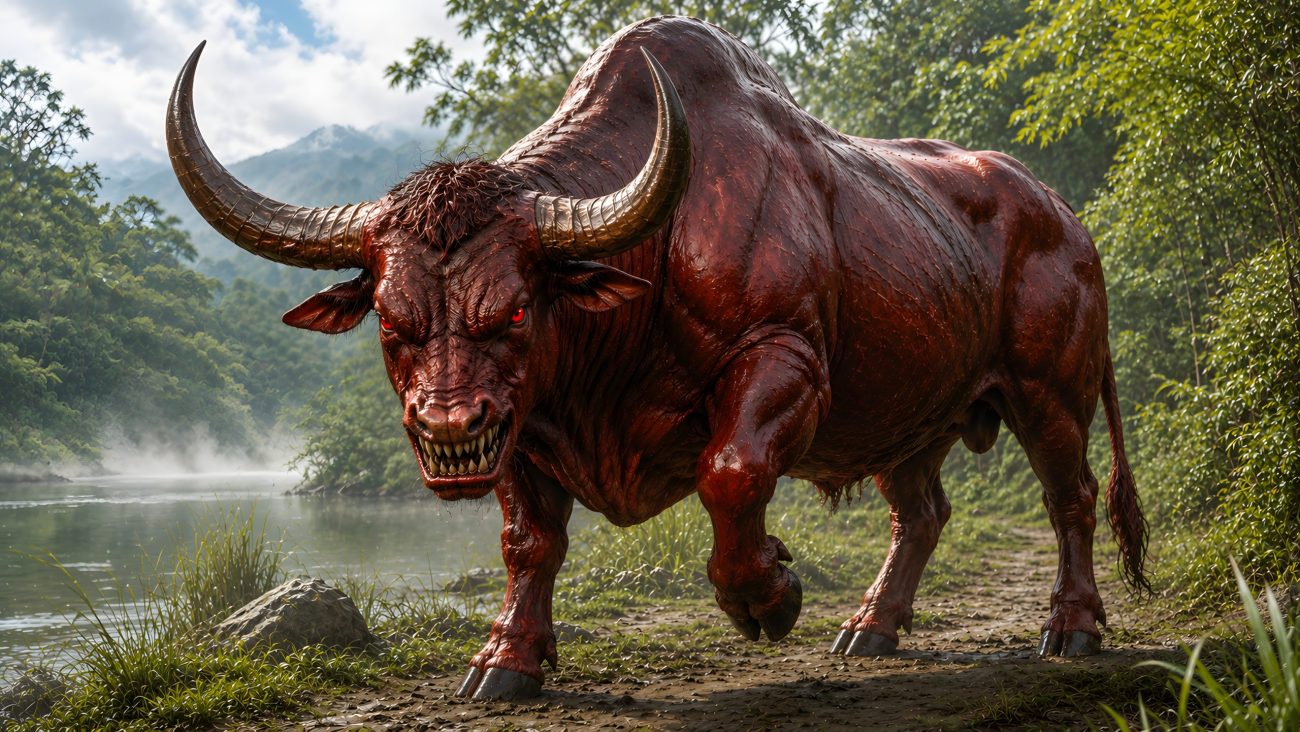
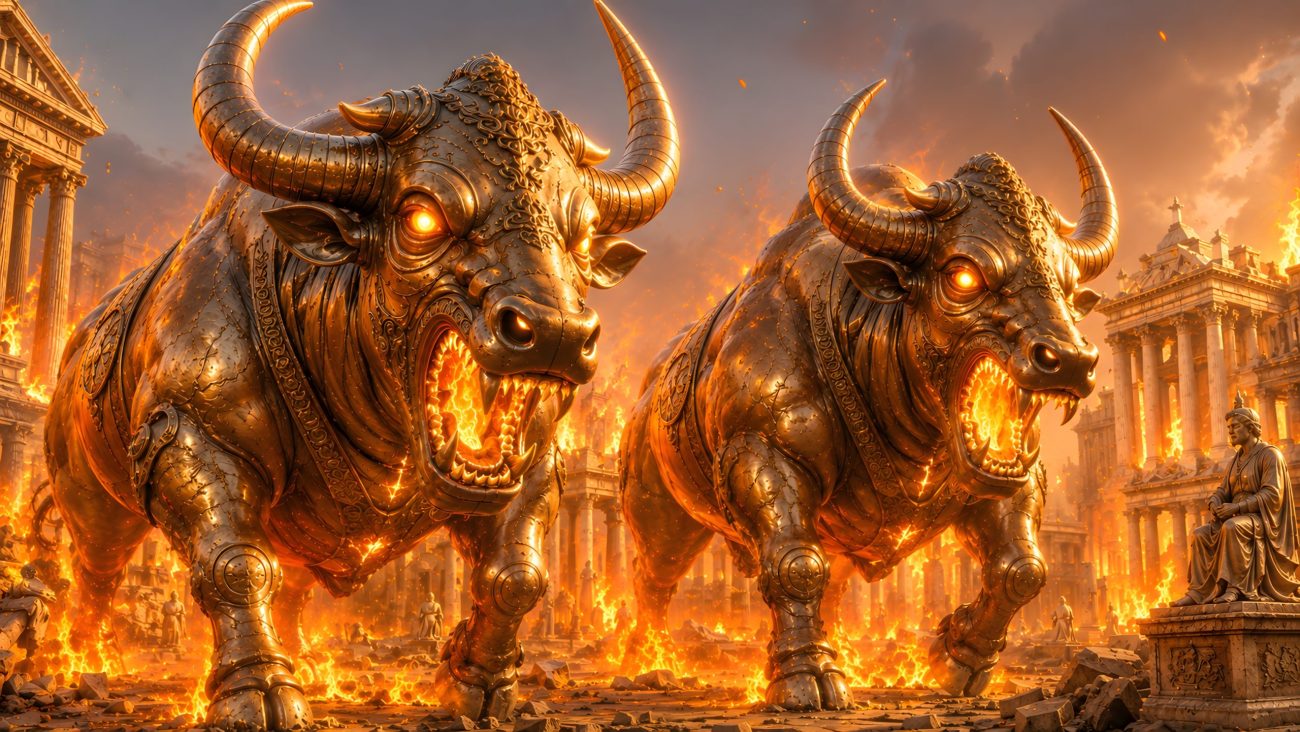
The Khalkotauroi are two enormous bulls with bronze hooves and bronze mouths. Flames pour from their mouths, making them dangerous even before they begin to charge.

The bulls were forged by Hephaestus, the divine blacksmith, and given to King Aeetes of Colchis. Aeetes guarded the Golden Fleece and set the creatures as one of the impossible tasks that Jason had to complete.

Aeetes promised Jason the Golden Fleece if he could yoke the two bronze bulls and use them to plough a field. Afterward, Jason was required to sow the freshly ploughed earth with dragon’s teeth.

The heat of the bulls made the task nearly impossible. Their fiery breath could burn anyone who approached them, but Medea, the daughter of Aeetes, had fallen in love with Jason and secretly gave him a magical potion that protected his body from the flames.

Protected by Medea’s potion, Jason approached the Khalkotauroi, endured their fire, yoked the enormous bulls, and forced them to plough the field.


Sources

“Khalkotauroi.” Wikipedia: The Free Encyclopedia. Wikimedia Foundation. Accessed August 16, 2026. https://en.wikipedia.org/wiki/Khalkotauroi


Kettetsu

Tradition / Region: Chinese Mythology, Japanese Mythology
Alternative names: Kettetsu, Gnawing Iron
Category: Cow


The Myth

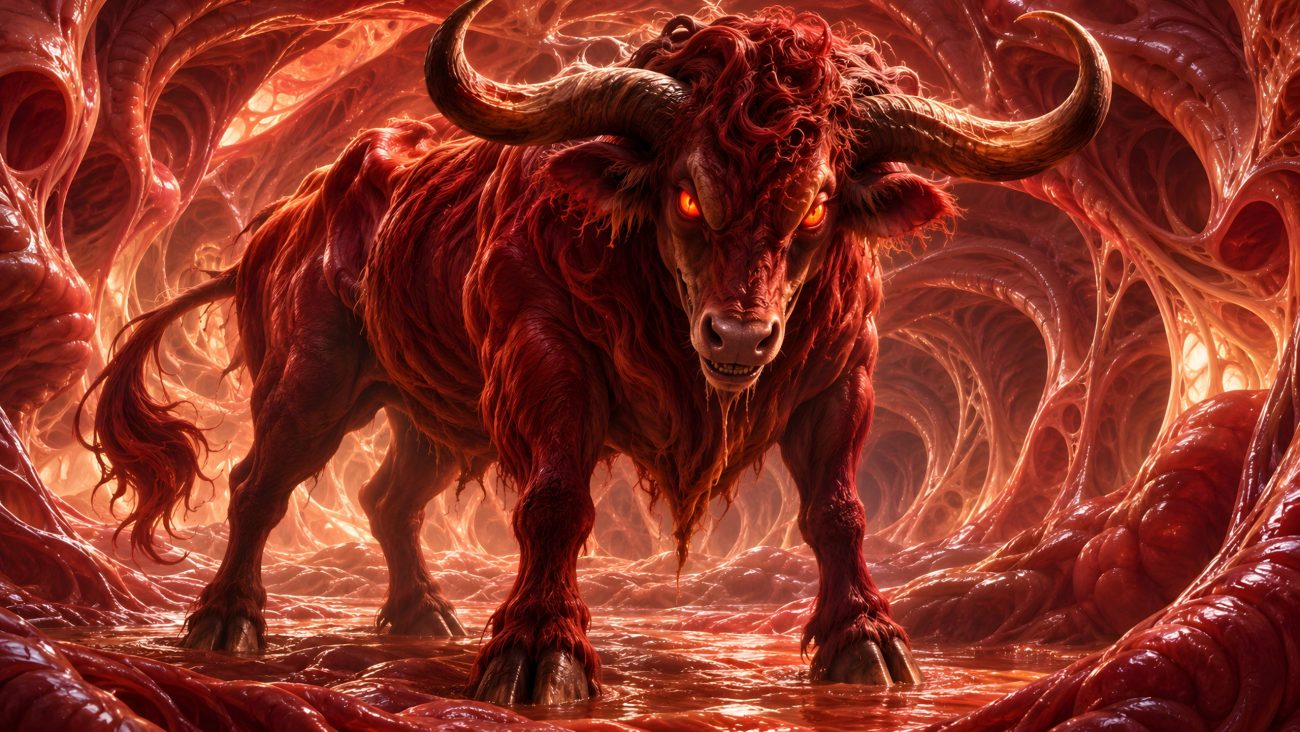
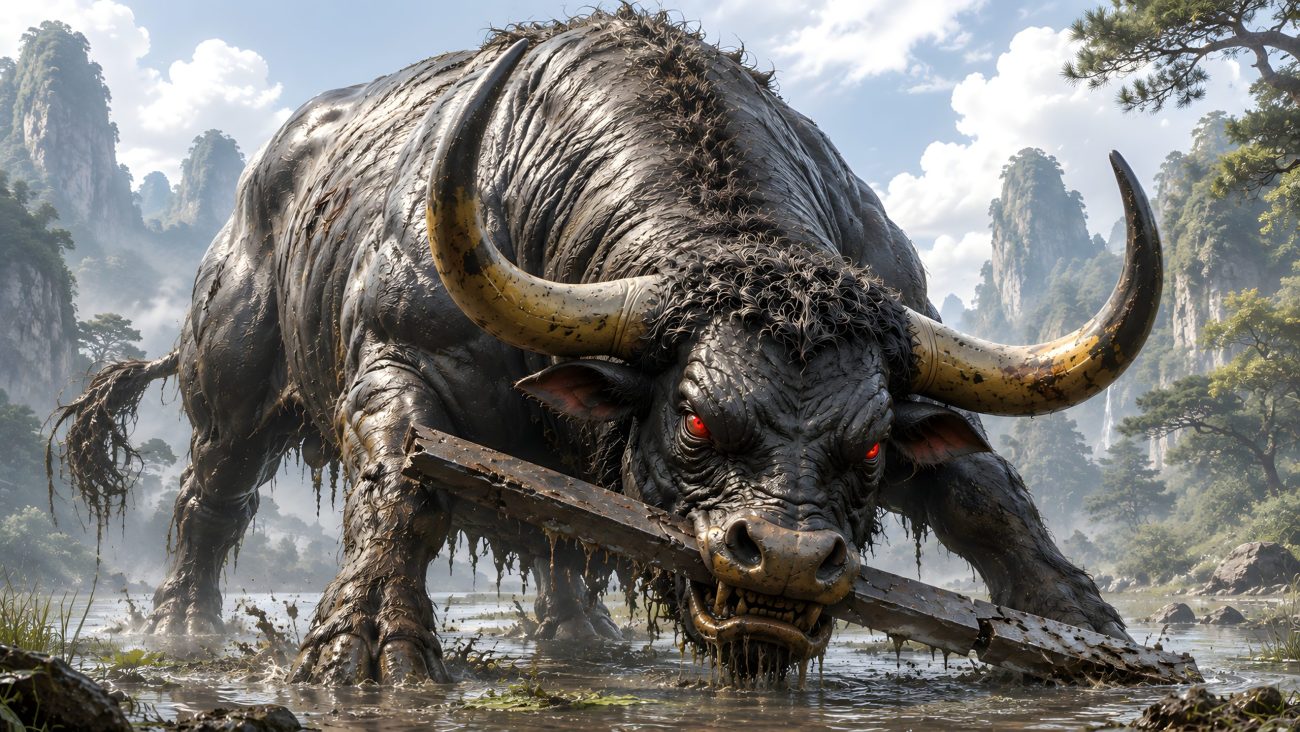
Kettetsu is a strange beast from the southern regions, described with the horns and feet of a water buffalo and a body covered in jet-black fur. Its name means gnawing or eating iron.

The creature feeds on iron and drinks water. According to ancient accounts, its feces were harder than ordinary metal and could be used by people to make sharp weapons.

Descriptions of Kettetsu appear in the Shenyi Jing and later Chinese works such as the Bencao Gangmu. Japanese encyclopedias, including the Wakan Sansai Zue, also recorded the creature from these earlier accounts.

Some traditions placed Kettetsu among a group of iron-eating beasts associated with the baku. The baku itself was sometimes described as a creature capable of eating copper and iron, and in some accounts the two creatures were identified with one another.

In later interpretations, the legend of iron-eating beasts may have developed from ancient descriptions of pandas. An animal originally described as eating bamboo may have been misunderstood as eating the arrows and other objects made from bamboo, copper, and iron, eventually producing the strange tradition of a beast that consumed iron.


Sources

Takahashi, Toshihiro. “囓鉄 (Kettetsu).” 新版TYZ 妖怪図鑑 (New TYZ Yokai Encyclopedia). June 27, 2021. Accessed August 16, 2026. https://tyz-yokai.blog.jp/archives/1078437874.html


Jingjing

Tradition / Region: Chinese Mythology
Alternative names: Jingjing
Category: Cow


The Myth

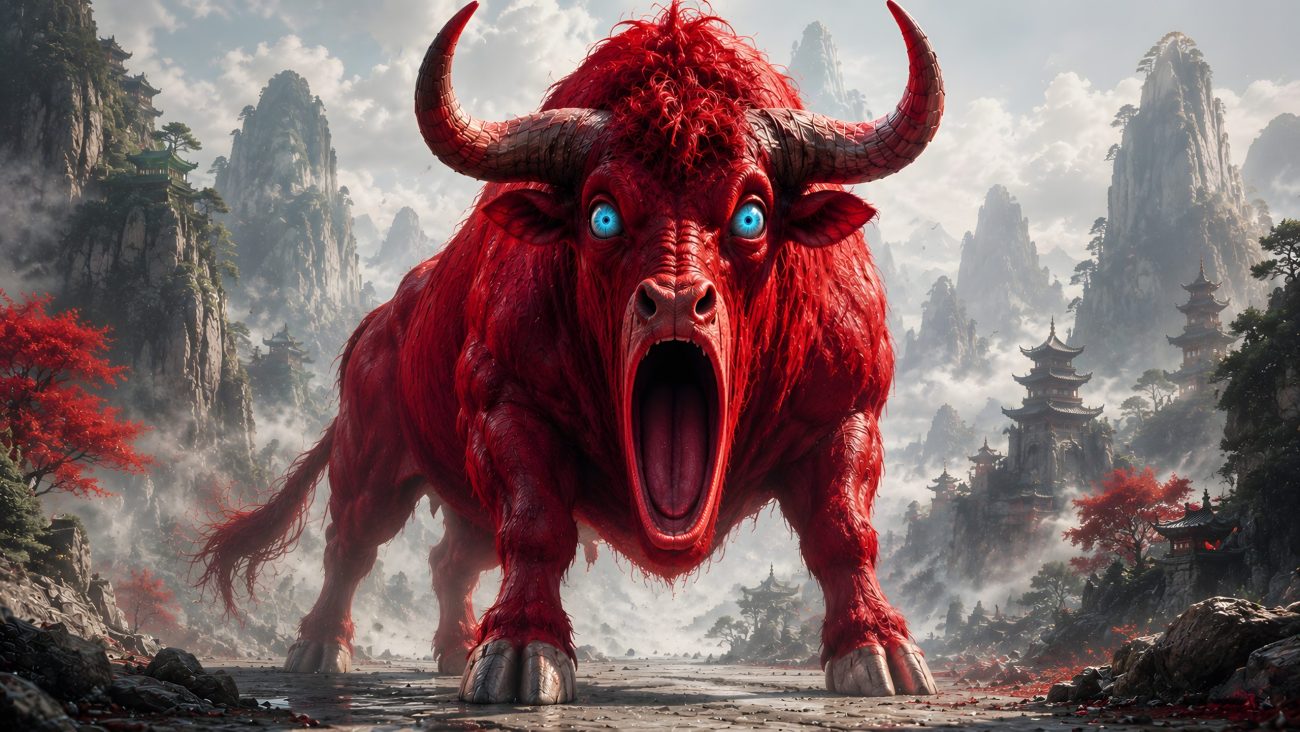
The Jingjing is a powerful ox-like creature that lives on Mount Minyu, a distant mountain surrounded by forests, red earth, metal, and jade. Its body resembles that of a mighty ox, while its rear ends in a long, flowing horse’s tail.

The Jingjing moves through the forests and mountain slopes of Minyu. Its distinctive call echoes through the valleys, repeating its own name: jingjing, jingjing.


Sources

Strassberg, R. E. (2002). A Chinese bestiary: Strange Creatures from the Guideways Through Mountains and Seas. Univ of California Press, p. 140.


Kao

Tradition / Region: Indian Mythology
Alternative names: Kao Phaba, Khambana Kao Phaba, Kau Phaapa
Category: Cow


The Myth

Kao was a powerful divine bull that terrorized the people of the Khuman kingdom, killing those who came near the waters where it lived. Its enormous strength and dangerous horns made it impossible for ordinary people to capture.

A wealthy nobleman named Kongyamba wanted the bull captured, but instead of facing it himself, he tricked the brave Khuman warrior Khamba into accepting the task. Kongyamba claimed that the god Thangjing demanded the bull as an offering and told the king that Khamba had promised to capture it. The king then declared that Khamba would be allowed to marry Princess Thoibi if he succeeded.

A great gathering was arranged between the kingdoms, and an enormous enclosure was built for the capture of Kao. On the day of the contest, Khamba faced the charging bull and seized it by the horns. Kao carried him deep into the forest, but Khamba remembered the secret given to him by his sister Khamnu.

She had revealed that Kao had once belonged to their father’s herd. Khamba spoke their father’s name to the bull and showed it a silk rope. At once, the furious beast became calm and gentle.

Khamba began leading Kao back toward the gathering. Kongyamba intercepted them and falsely claimed that he had captured the bull himself. When the dispute could not be settled, Kongyamba was ordered to face Kao inside the enclosure. Terrified, he climbed away from the bull, while Khamba once again confronted the beast and successfully captured it.

The capture of Kao became one of the celebrated episodes of the Khamba Thoibi epic, remembered as Kao Phaba, the taking or capture of the sacred bull.


Sources

“Kao (bull).” Wikipedia: The Free Encyclopedia. Wikimedia Foundation. Accessed August 16, 2026. https://en.wikipedia.org/wiki/Kao_(bull)


Kamadhenu

Tradition / Region: Indian Mythology
Alternative names: Surabhi, Surabhī, Kamaduh, Kamaduha, Sabala, Kapila
Category: Cow, Deity


The Myth

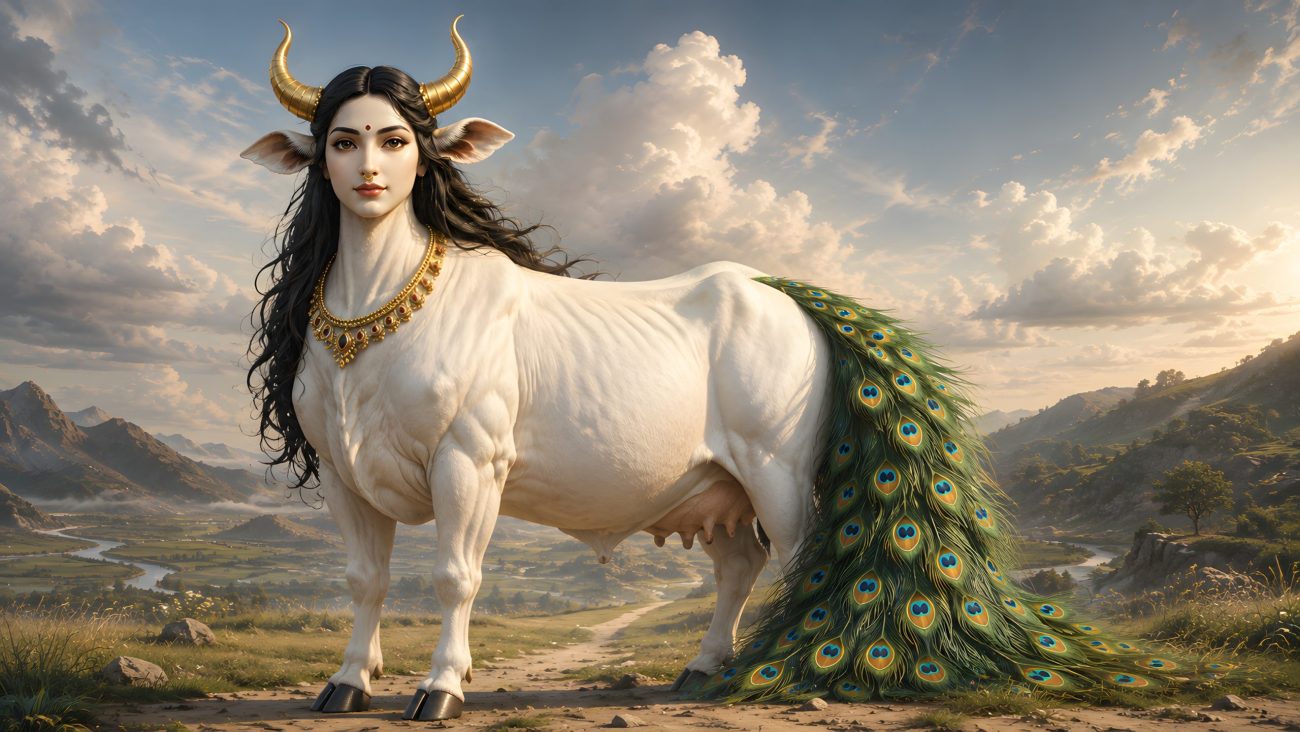
Kamadhenu is a miraculous white cow who provides whatever is desired and is regarded as the mother of all cows. She is associated with milk, prosperity, fertility, and the sacred rituals of the sages. She is sometimes depicted with the head and breasts of a woman, the wings of a bird, and the tail of a peacock, or with numerous gods represented within her body.

Different Hindu scriptures give different accounts of her origin. In the Mahabharata, Kamadhenu-Surabhi emerged from the churning of the cosmic ocean and was given to the great sages. Brahma commanded her to provide milk and ghee for ritual sacrifices.

In other traditions, Surabhi was born from Daksha, from Brahma, or from the divine act of creation. She became the mother of countless cattle and was associated with Goloka, the realm of the cows, as well as Patala.

Kamadhenu was closely connected with the sages who possessed her. She could provide enormous quantities of food and milk and, when threatened, could even produce warriors to defend her master.

One famous story concerns the sage Vashishtha and his miraculous cow Sabala. King Vishvamitra arrived at the sage’s hermitage with his army, and Vashishtha welcomed them with a great feast produced entirely through Sabala’s supernatural power.

Amazed by the cow’s abilities, Vishvamitra offered the sage thousands of ordinary cattle, elephants, horses, and jewels in exchange for her. Vashishtha refused, explaining that Sabala was essential to his religious duties.

Vishvamitra then attempted to take her by force. Sabala returned to Vashishtha and was ordered to defend him. From her body she produced armies of supernatural warriors, who fought Vishvamitra’s forces and destroyed his army.

Another tradition tells of Kamadhenu living with the sage Jamadagni. King Kartavirya Arjuna attempted to seize the divine cow and her calf. After the conflict led to Jamadagni’s death, his son Parashurama took revenge upon the king and eventually destroyed the Kshatriya warriors twenty-one times.

Kamadhenu is also associated with Nandini, another miraculous cow of plenty who lived with Vashishtha. In some traditions Nandini is Kamadhenu’s daughter, while in others the names Kamadhenu, Surabhi, and Nandini overlap.

When Kamadhenu’s son, a bullock, was cruelly overworked and beaten by a farmer, she wept over his suffering. Her tears were seen by Indra, who was moved by her grief and sent rain to stop the torment.

Kamadhenu remains a divine source of cattle, milk, prosperity, and protection, while her miraculous ability to provide nourishment and warriors makes her one of the most powerful supernatural cows in Hindu mythology.


Sources

“Kamadhenu.” Wikipedia: The Free Encyclopedia. Wikimedia Foundation. Accessed August 16, 2026. https://en.wikipedia.org/wiki/Kamadhenu
Guallipén

Tradition / Region: Argentine Mythology, Chilean Mythology
Alternative names: Waillepeñ, Huallepén, Huallepenyú, Huaillepenyí, Wayfü
Category: Cow


The Myth

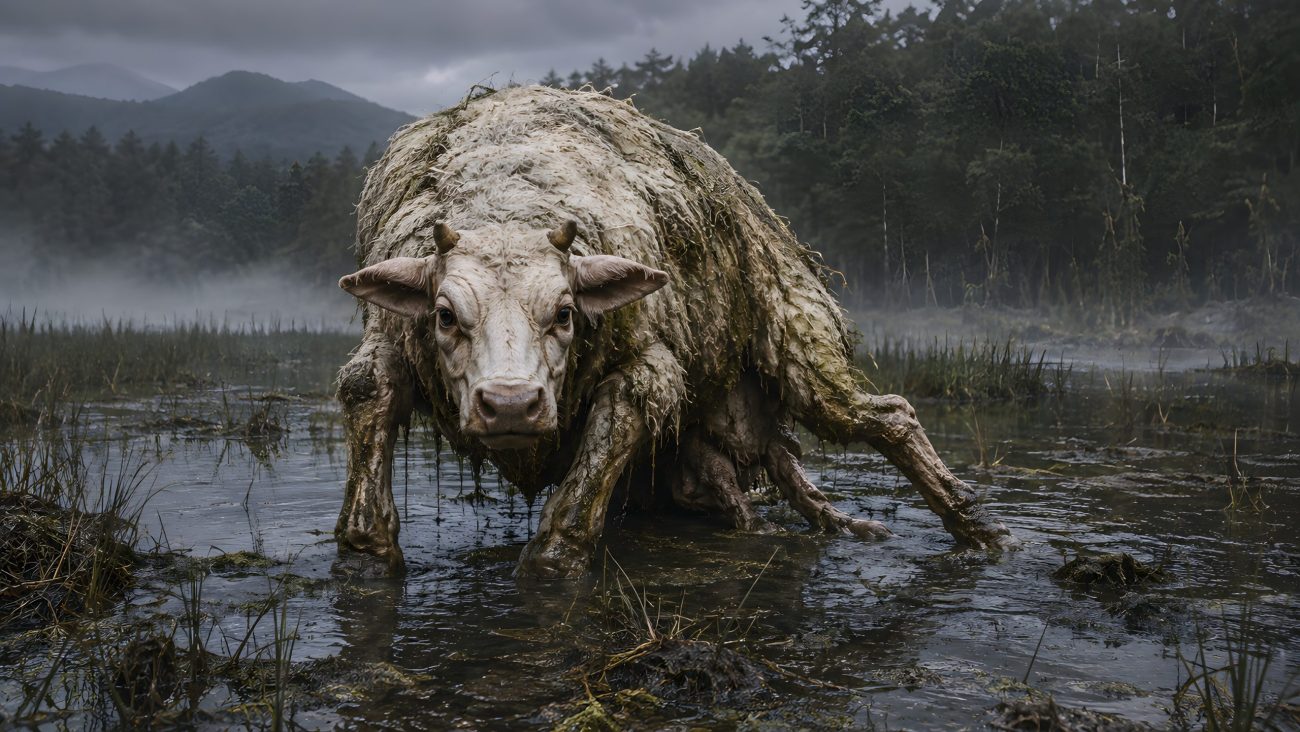
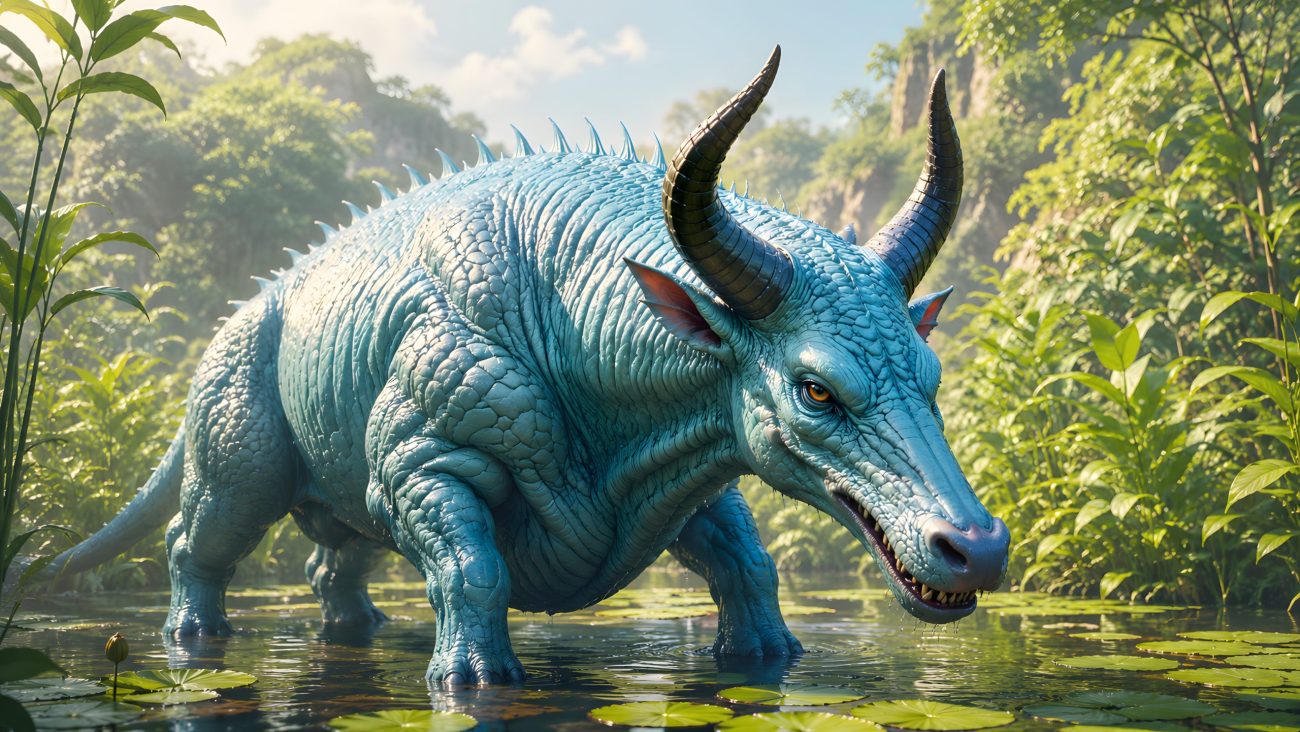
The Guallipén is a strange animal with the body of a sheep and the head of a calf. It has four crooked legs, poor-looking wool, and makes a bleating sound like a sheep.

The Guallipén lives in low, humid places near bodies of water, especially swamps known in Mapuche tradition as münoko. It moves by pushing itself forward with its front legs while dragging its hind legs behind it.

On land, the Guallipén is said to be harmless, but in the water it becomes dangerous and attacks fiercely. When it encounters livestock, it can mate with them and cause their offspring to be born with deformities.

A pregnant woman who sees a Guallipén in a perimontu, a supernatural vision, receives a terrible omen concerning her unborn child. Depending on the tradition, the child may be born with deformed or atrophied limbs, rickets, an intellectual disability, or without bones.

Because of this danger, sexual relations near wetlands were traditionally regarded as taboo. A child believed to have been conceived after such an encounter could be described as a wallipeñ kulliñ, an incarnation of the Guallipén.


Sources

“Guallipén.” Wikipedia: La enciclopedia libre (Spanish Wikipedia). Wikimedia Foundation. Accessed August 16, 2026. https://es.wikipedia.org/wiki/Guallip%C3%A9n


Hiromushime

Tradition / Region: Japanese Mythology
Alternative names: Tanaka no Mahito Hiromushime, Hiromushi-onna
Category: Cow


The Myth

Hiromushime was a wealthy woman from Sanuki Province who possessed cattle, horses, slaves, rice, money, and farmland. She was extremely miserly and exploited those around her through dishonest trade and harsh lending practices.

When selling sake, she diluted it with water to increase her profits. When lending rice and other goods, she used small measures and scales, but when collecting repayment she used larger ones. Some of her debtors were forced to abandon their homes and flee to other provinces.

In 776, Hiromushime became seriously ill. Shortly before her death, she told her husband and sons about a dream in which she had been brought before King Yama. She was shown three offenses: taking things belonging to temples and monks without repayment, adulterating sake for profit, and using different measures when lending and collecting debts.

Hiromushime died that same day. Her family decided to pray for her rather than cremate her body, gathering monks and ascetics to perform religious rites for nine days.

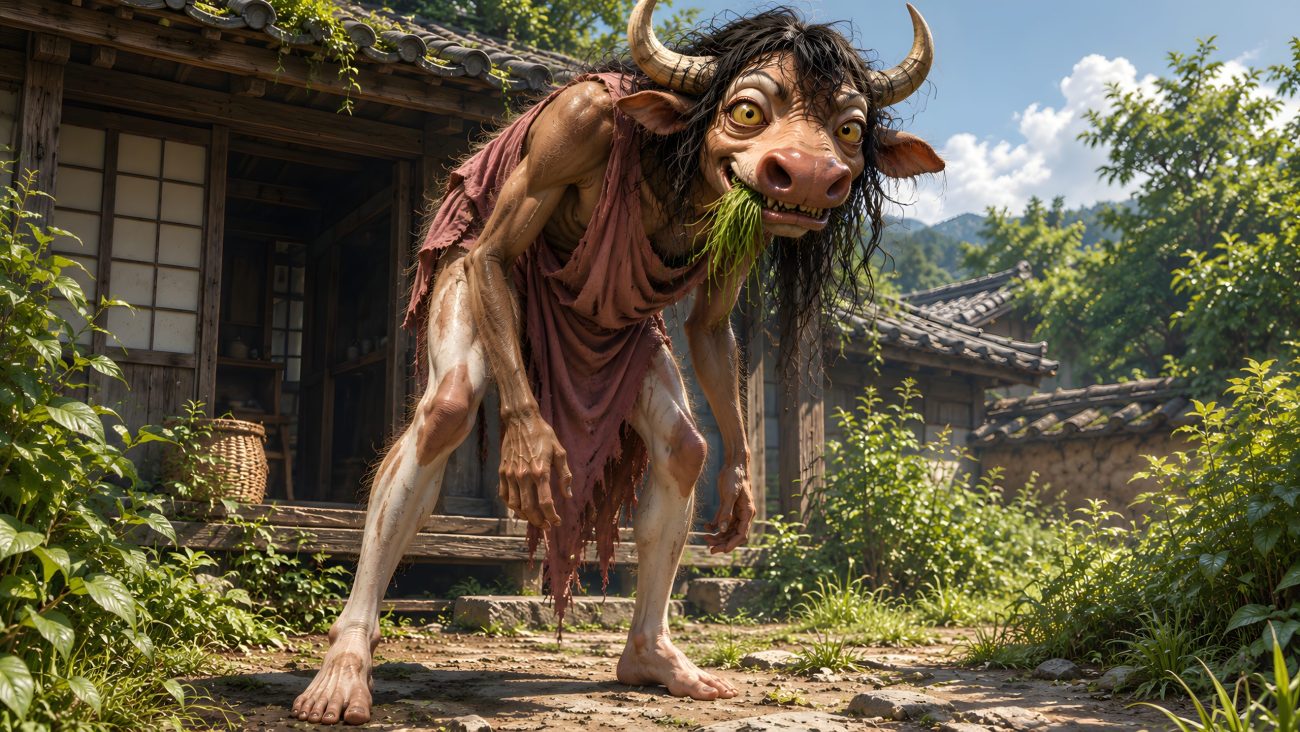
On the seventh day, Hiromushime suddenly returned to life and opened her coffin. Her body had been horribly transformed. Her upper body had become that of a cow, a horn had grown from her forehead, and her hands had become hooves. Only the lower half of her body retained its human form.

She no longer wanted ordinary food and instead ate grass, chewing it repeatedly and spitting it out before eating it again. She also lived without clothing and showed no concern for where she slept or defecated.

News of the transformation spread, and crowds gathered from surrounding areas to see her. Her family was filled with shame and grief and began making religious vows to atone for her wrongdoing.

They donated large amounts of property to temples, including seventy cows, thirty horses, rice fields, and thousands of bundles of rice. They also forgave all the debts owed by the people from whom Hiromushime had previously demanded repayment.

Five days later, while the provincial authorities were preparing their report about the strange event, Hiromushime died for a second time.


Sources

Takahashi, Toshihiro. “広虫女 (Hiromushime).” 新版TYZ 妖怪図鑑 (New TYZ Yokai Encyclopedia). April 19, 2014. https://tyz-yokai.blog.jp/archives/1010655084.html?


Gyūkan

Tradition / Region: Japanese Mythology
Alternative names: Kiukan
Category: Cow


The Myth

Gyūkan is a strange disease-causing entity believed to develop inside the human body. It is depicted as a cow with black horns and was understood as a mass that forms within the lungs.

According to the Shinmonsho, when the Gyūkan develops, it causes severe illness. When the afflicted person attempts to eat, the condition can trigger a sudden seizure and loss of consciousness.

The Gyūkan was considered difficult to treat once it had fully developed, although the Shinmonsho describes various acupuncture treatments that could be used against it. The creature is illustrated alongside other disease-causing beings in the sixteenth-century medical manual.


Sources

Takahashi, Toshihiro. “牛癇 (Gyūkan).” 新版TYZ 妖怪図鑑 (New TYZ Yokai Encyclopedia). June 27, 2021. Accessed August 16, 2026. https://tyz-yokai.blog.jp/archives/1078437904.html


Hira

Tradition / Region: Malian Mythology
Alternative names: Hira
Category: Cow


The Myth

The Hira is a gigantic and ferocious buffalo known for its immense strength and brutality. It appears in the epic traditions of the Songhai people, particularly among the Bozo communities who lived along the Niger River.

According to the legend of Moussa Gname, a woman once fell asleep beneath a tree inhabited by a spirit and became pregnant by the spirit. Her son was named Moussa, or Mousa-Djinni, and his spirit father later taught him the magical knowledge needed for hunting.

When the Hira began ravaging the countryside, Moussa and his fiancée confronted the monster. Both were skilled in hunting magic, and together they succeeded in defeating the Hira.

A second Hira later appeared and proved equally difficult to kill. A diviner revealed that the monster could only be defeated through the help of a female elephant. The chief’s girlfriend secretly took the form of a female elephant and waited near a pond.

When the Hira came to the pond to drink, he approached the disguised elephant and began licking her. While he was distracted, she pulled four hairs from his tail and secretly gave them to Moussa.

The following day, Moussa confronted the Hira. Instead of fighting the enormous buffalo, he simply showed the monster the hairs taken from its tail. The Hira immediately lay down, allowing Moussa to kill it.


Sources

“Hira (mythical monster).” Wikipedia: The Free Encyclopedia. Wikimedia Foundation. Accessed August 16, 2026. https://en.wikipedia.org/wiki/Hira_(mythical_monster)


Geumdoktae

Tradition / Region: Korean Mythology
Alternative names: Golden Calf, Geumsongaji, Geumsongajijeon, Prince Geumdok
Category: Cow


The Myth

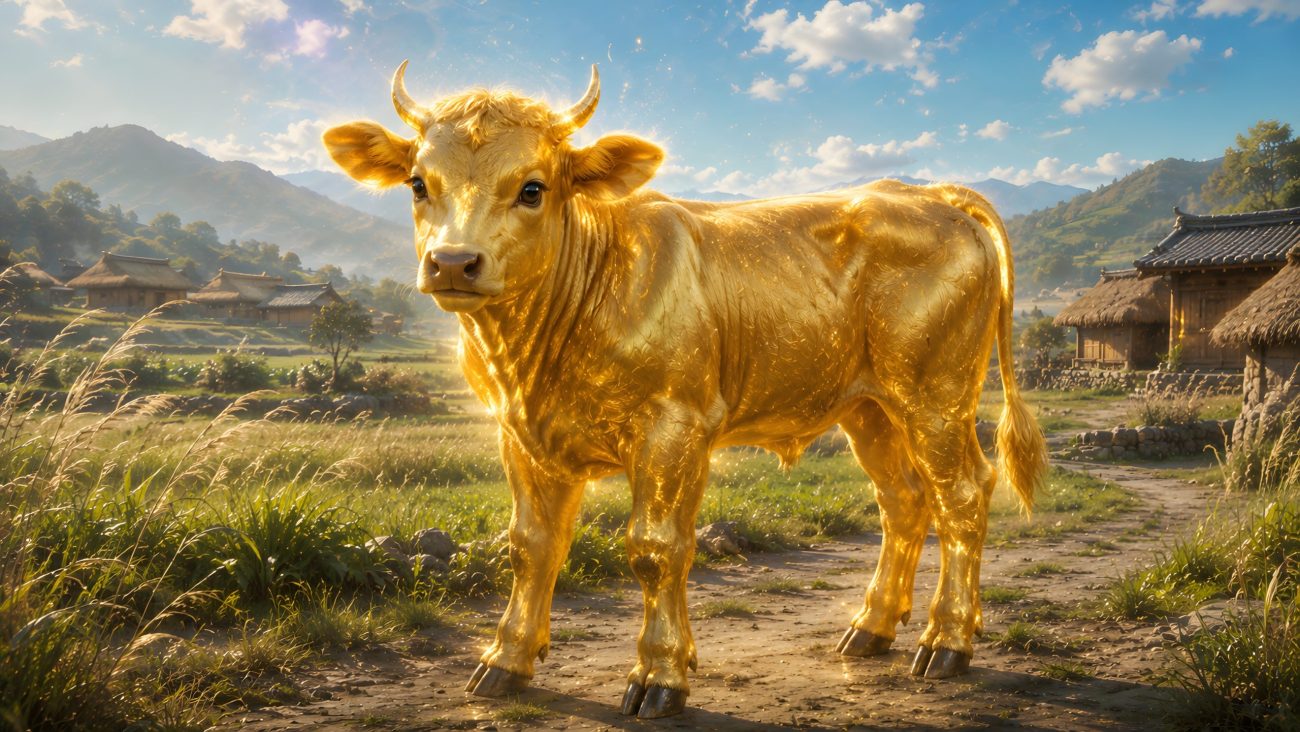
Geumdoktae is a magical golden calf born from a cow after a newborn child is secretly given to the animal. It later transforms between human and animal forms and eventually becomes a handsome man.

According to the tale, a man takes a concubine because he wants a son. While he is away, his wife gives birth to a boy. Jealous of the child, the other wife secretly gives the baby to a cow, which eats it.

When the man returns, the cow gives birth to a golden calf. He becomes deeply attached to the unusual animal and treats it with great affection.

The jealous wife then pretends to become ill and claims that she can only recover by eating the golden calf’s liver. The man orders a butcher to kill the calf and bring him its liver.

The butcher takes pity on the calf and secretly releases it. Instead of killing it, he brings back the liver of a dog.

The golden calf escapes and travels to Seoul. There it encounters a notice announcing that whoever can beat a straw drum will be allowed to marry the daughter of a nobleman. The golden calf approaches the drum and beats it, becoming the nobleman’s son-in-law.

The calf eventually sheds its animal form and becomes a handsome man. He returns to his father together with his wife and reveals the truth about what happened to him. His biological mother is rescued, and the family is reunited.

The golden calf then remains in human form and lives happily with his wife.


Sources

“암소 (Amso).” Encyclopedia of Korean Folk Culture. National Folk Museum of Korea. Accessed August 16, 2026. https://folkency.nfm.go.kr/topic/detail/5748?