Gozu

Tradition / Region: Japanese Mythology
Alternative names: Gozuki, Ox-Head Demon
Category: Cow


The Myth

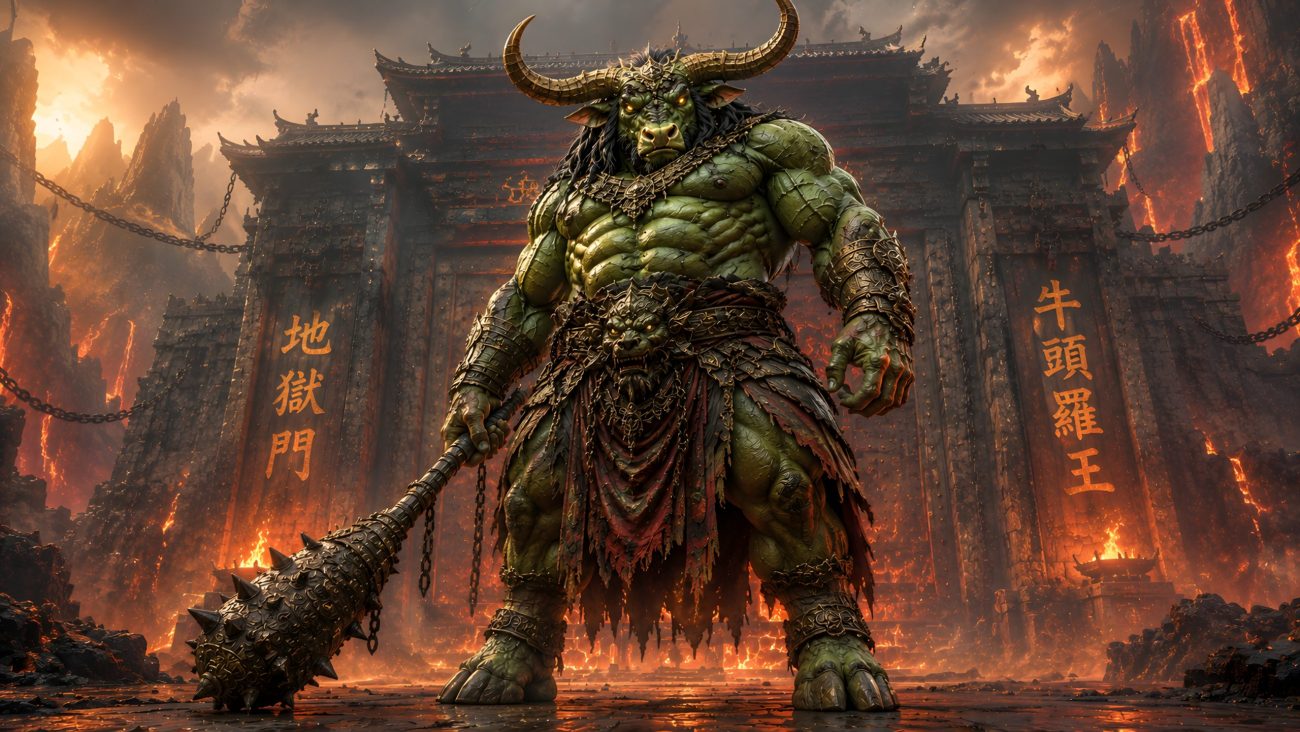
Gozu appears as a terrifying oni with the head of an ox and the body of a powerful demon. He is one of the great guardians of Meido and Jigoku, where he serves Great King Enma, the ruler of the underworld. His companion Mezu has the head of a horse, while Gozu has the head of an ox.

Gozu and Mezu stand at the gates of hell and are among the first demons encountered by the dead when they enter Jigoku. They oversee the punishment of wicked souls and serve among Enma’s chief torturers.

The two demons possess immense strength, said to be powerful enough to move mountains. They operate the torture chambers of Jigoku and supervise the punishment of countless condemned souls.

If a soul manages to escape from hell, Gozu and Mezu are sent out to find the fugitive and drag it back into the underworld.

Gozu and Mezu are not the only animal-headed demons serving Enma. Other powerful guardians are said to possess the heads of deer, tigers, lions, and boars, and they hold high positions among the demons who guard and operate the tortures of Jigoku.

The tradition of Gozu and the other animal-headed guardians ultimately comes from Indian Buddhist mythology and entered Japanese tradition along with Buddhism through China.


Sources

Meyer, Matthew. “Gozu.” Yokai.com: The Illustrated Database of Japanese Folklore. Accessed August 15, 2026. https://yokai.com/gozu/
Gurzil

Tradition / Region: Berber Mythology, Moroccan Mythology
Alternative names: Gurzil
Category: Cow, Deity


The Myth

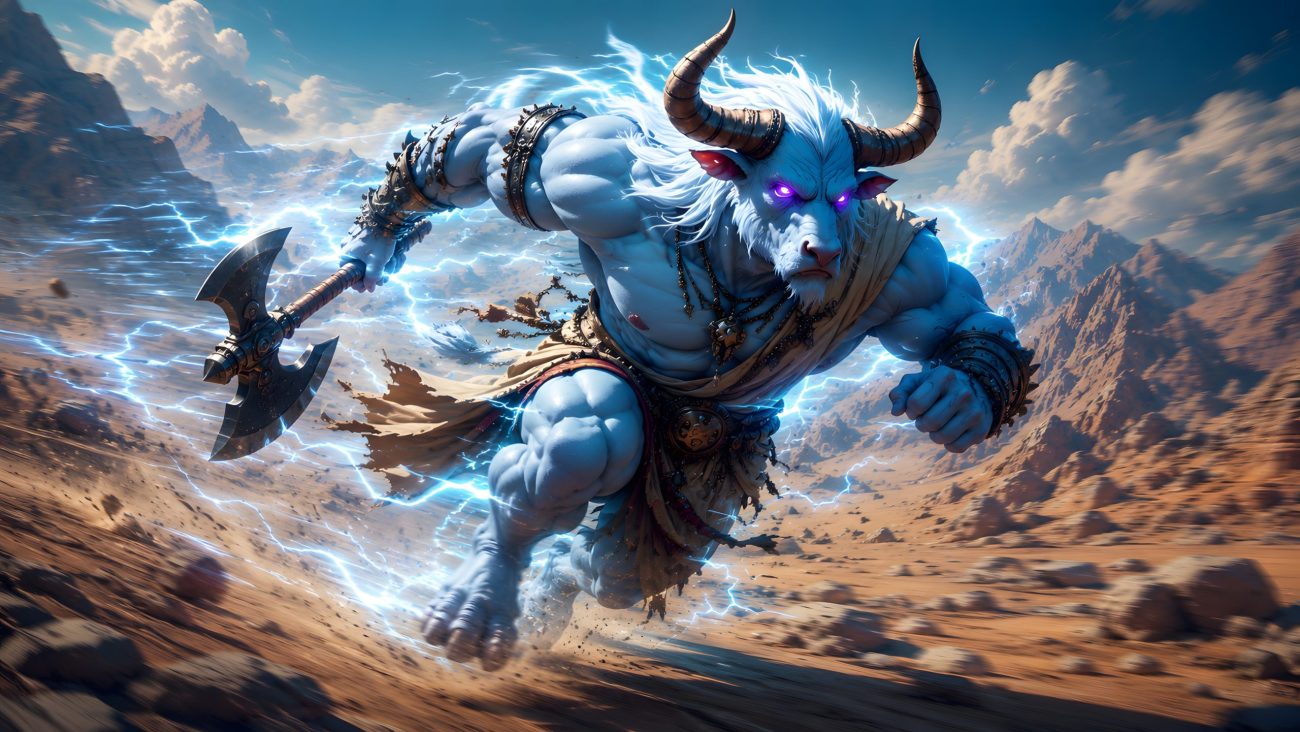
Gurzil was an ancient Berber deity associated with the Laguatan people of Tripolitania. He was described as the son of the god Ammon and a cow. One of his known representations was a bull, and his image was carried into battle as a sacred object.

In the sixth century, the Laguatan rebelled against the Byzantine Romans. Their leader and priest of Gurzil, Ierna, carried an image of the god in the form of a bull into battle. The warriors placed great faith in Gurzil and Ammon during the fighting.

After several battles, the Laguatan and their allies were defeated. Ierna was killed while attempting to rescue Gurzil’s image, which was destroyed by the Romans.

Gurzil may also have had a sanctuary at Ghirza in Roman Tripolitania. Archaeological remains there include a temple, votive altars, and evidence of cattle sacrifice, including an inscription recording the sacrifice of fifty-one cattle and a relief depicting a bull being sacrificed.

Some traditions identify Gurzil specifically as a bull god, while others interpret his connection with cattle more generally. His exact nature remains uncertain, and possible connections with other animals, including horses and rams, have also been proposed.


Sources

“Gurzil.” Wikipedia: The Free Encyclopedia. Wikimedia Foundation. Accessed August 15, 2026. https://en.wikipedia.org/wiki/Gurzil


Gopatshah

Tradition / Region: Iranian Mythology, Persian Mythology
Alternative names: Gopatshah, Gopadshah
Category: Cow


The Myth

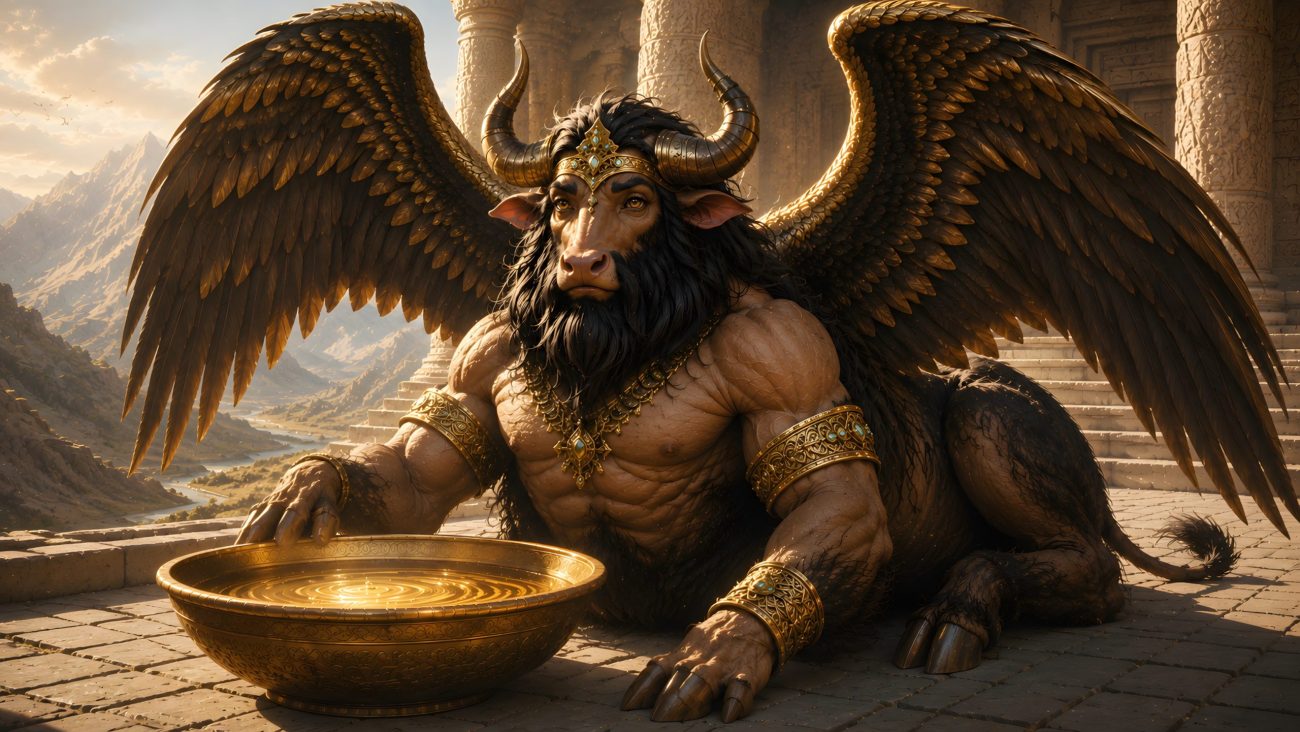
Gopatshah is a royal bull with the torso of a human and the body of a bull. He is associated with Eranvez, the promised land of Iranian mythology, in the region of Hvaniras. He is described as a powerful sacred being who serves the gods along the coast.

Gopatshah is associated with several primordial and legendary figures. He is equated with Gayomarth, the primordial man, as well as Gilshah, the clay king of the earth, and Garshah, the mountain king. He is also identified with Agrerata, the legitimate brother of Afrasiaba.

The figure of Gopatshah reflects the importance and reverence given to the bull in ancient Iranian tradition.


Sources

“Gopatshah.” Wikipedia: Die freie Enzyklopädie (German Wikipedia). Wikimedia Foundation. Accessed August 15, 2026. https://de.wikipedia.org/wiki/Gopatshah


Kin-ushi

Tradition / Region: Japanese Mythology
Alternative names: The Golden Ox, Bekoko, Kin-ushi
Category: Cow


The Myth

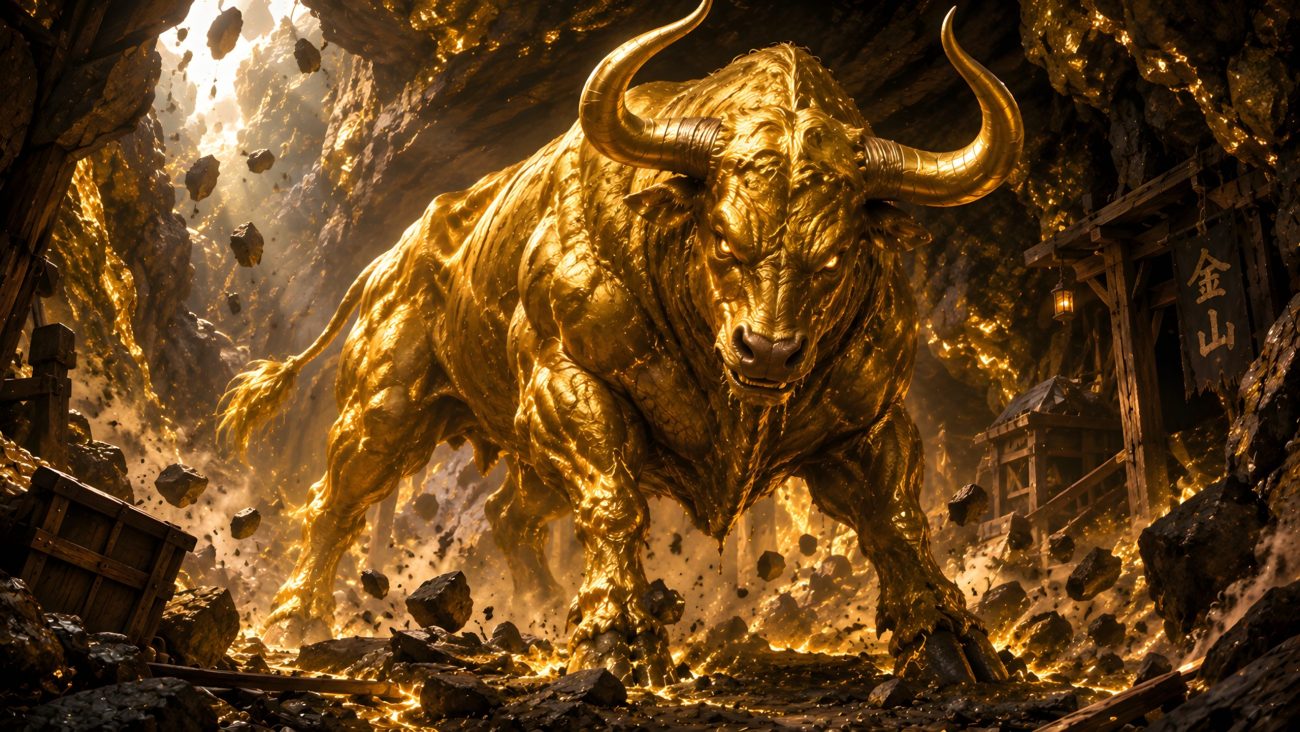
The Kin-ushi is a golden ox associated with the gold-mining regions of Tōhoku. It appears as a golden lump of gold in the shape of an ox and is connected with the discovery and sudden collapse of a gold mine.

Long ago, in the village of Otomo in Tōno, a wealthy man employed an eccentric servant who spent his free time digging the earth with a hoe, claiming that he was searching for potatoes. One New Year’s Eve, the servant discovered gold in a valley called Hiseki.

The discovery made him wealthy, and he became known as Komatsu-dono. He employed many miners and began working the site as a gold mine. For the next one or two years, however, almost no gold was found, and people mocked Komatsu-dono for returning to his old habit of digging for potatoes.

He continued the mining despite the ridicule. On New Year’s Eve of the third year, the miners finally uncovered a piece of gold in the shape of an ox. Komatsu-dono was delighted and held a great banquet that lasted through the night.

On New Year’s Day, he held a ceremony to celebrate the opening of the mine. A brocade rein was fastened to the horns of the golden ox, and the miners attempted to pull it from the mine while singing that they wanted to pull the golden ox themselves.

The ox would not move. When the miners pulled harder, its horns broke away. They then fastened the rope around its neck and tried again. After the golden ox appeared to move several steps, the mine suddenly collapsed with a tremendous crash, killing seventy-five miners.

Among the miners was a cook known as Usotoki. He was an honest and dutiful man who cared for his blind elderly mother. He was also known for sharing grains of spilled rice with crows, although the miners mocked him for his simple and kind nature.

When the golden ox was being brought out of the mine, Usotoki entered the shaft to help pull it. Suddenly he heard someone calling his name near the entrance. He released the rope and ran outside, but found nobody there.

He returned to the mine, only to hear his name called again. Once more he went outside, but there was still nobody there. Puzzled, he entered the mine again.

A third time the voice called out to him, this time more loudly. Usotoki ran toward the entrance as quickly as he could. The moment he stepped outside, the mine shaft collapsed.

Usotoki was the only one among the miners to survive the disaster, saved by the mysterious voice that had repeatedly called his name.


Sources

Takahashi, Toshihiro. “金の牛 (Golden Ox).” 新版TYZ 妖怪図鑑 (New TYZ Yokai Encyclopedia). April 22, 2019. Accessed August 15, 2026. https://tyz-yokai.blog.jp/archives/1074400117.html


White Cow of Bollendorf

Tradition / Region: Luxembourgish Mythology
Alternative names:
Category: Cow


The Myth

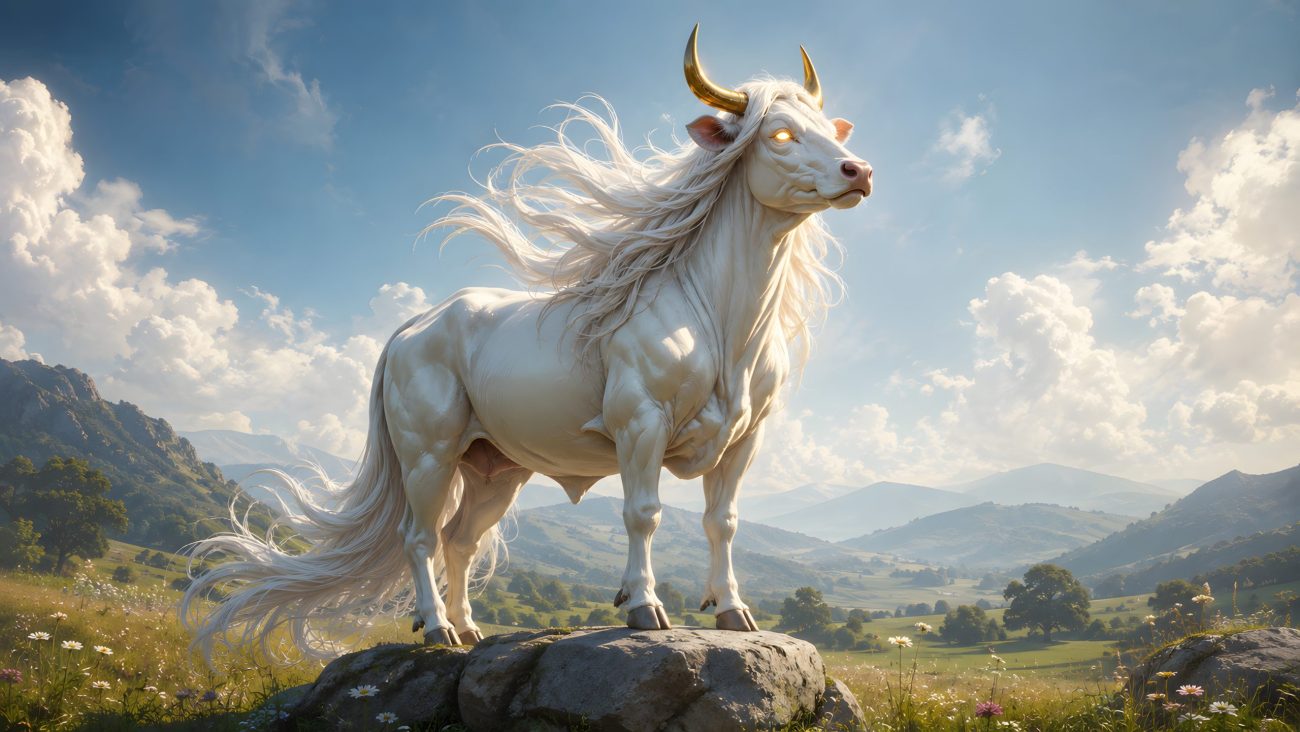
The White Cow of Bollendorf is a supernatural white cow with golden horns that emerges from the forest and joins the village cattle. She appears when the villagers neglect their meadows and allow their cattle to graze for too little time.

According to the legend, the cow would quietly enter the pasture and graze among the village herd. Her presence caused the other cattle to remain in the meadow and feed properly. When the herdsman tried to bring them home in the evening, the white cow refused to move, and none of the other cattle would leave without her.

No shouting or attempts to drive her away could make her yield. The herdsman was forced to remain in the meadow until the mysterious cow decided that it was time to return to the forest.

The white cow continued to appear day after day, always arriving and leaving according to her own will. She never harmed the cattle, but her presence ensured that the herd remained in the meadow long enough to feed properly.

One evening, the herdsman followed her as she returned toward the forest. The cow eventually disappeared into a cleft in the rocks. Inside the grotto he discovered a strange dwarf who guarded the hidden place.

The herdsman demanded payment for the time he had spent watching the cow. The dwarf told him that the cow had not come for his benefit and had never required his care. She had appeared of her own accord and remained only as long as necessary.

Nevertheless, the dwarf opened a chest filled with gold and silver and took out a single worthless coin. This was the payment he gave the herdsman for his service.

After that night, the white cow with golden horns never returned to Bollendorf. The herdsman thereafter took greater care of the meadow, rising earlier and keeping the cattle there longer.


Sources

Gredt, Nikolaus. “Das Wichtlein zu Bollendorf und die Kuh mit goldenen Hörnern.” In Sagenschatz des Luxemburger Landes. Luxembourg, 1883. Reproduced by SAGEN.at. Accessed August 15, 2026. SAGEN.at source


Fuwch Gyfeilior

Tradition / Region: Welsh Mythology
Alternative names: Fuwch Gyfeiliorn, The Stray Cow, Milk-White Cow
Category: Cow


The Myth

The Fuwch Gyfeilior was a beautiful milk-white cow belonging to the Gwragedd Annwn, the fairy women who lived around Llyn Barfog near Aberdyfi. The fairy women were said to appear at dusk dressed in green and accompanied by milk-white hounds and herds of supernatural white cattle.

One day, a poor farmer living near Dyssyrnant discovered that one of the fairy cows had wandered away from the lake and joined his own herd. He managed to catch her and kept her among his cattle.

The cow transformed the farmer’s fortunes. Her milk was extraordinarily abundant, and the butter and cheese made from it were better than anything previously seen in the region. Her calves were equally remarkable, and the farmer soon became wealthy and possessed a great herd of cattle.

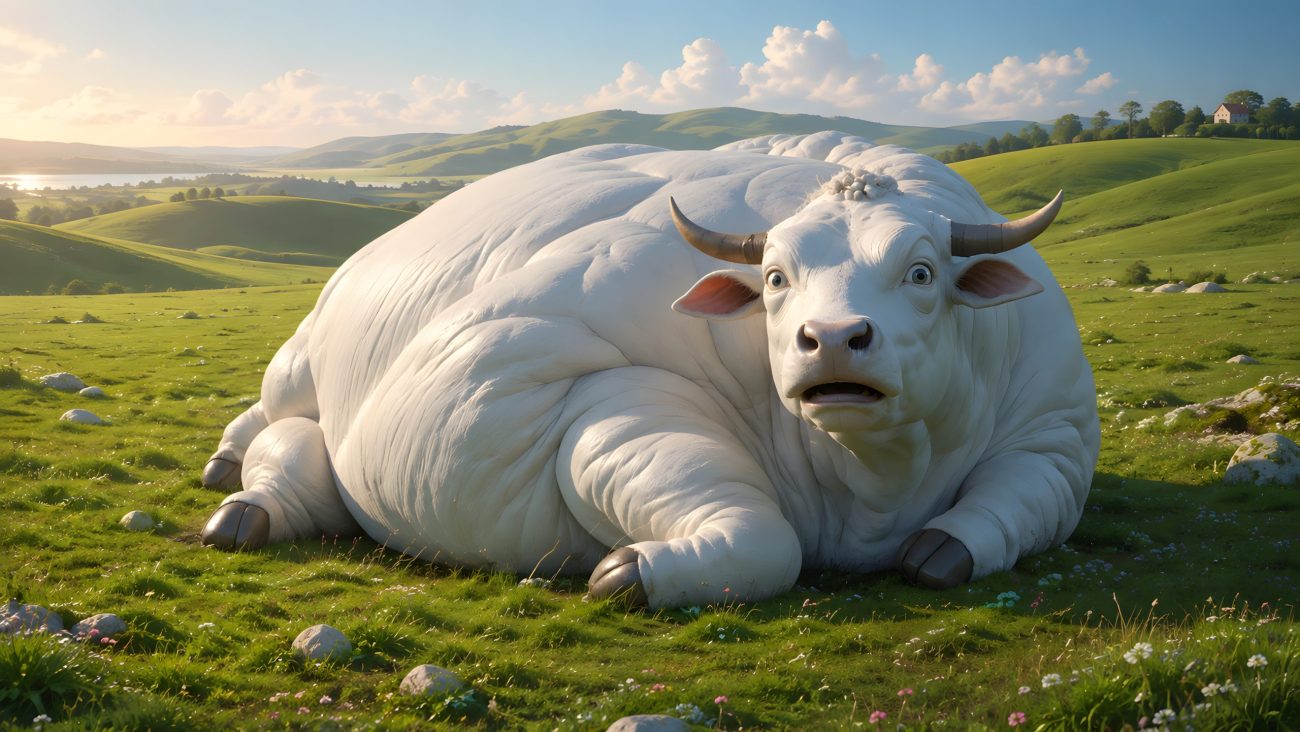
As the Fuwch Gyfeilior grew older, however, the farmer decided that she had become too old to keep. He resolved to fatten her for slaughter. The cow became enormously fat, and when the day of her killing arrived, neighbors gathered to watch the enormous animal being butchered.

The cow was tied down while the butcher prepared to strike. Despite her mournful cries, the farmer ordered him to continue. The butcher raised his club and struck the cow between the eyes.

At that moment, a terrible cry rang across the hills. The blow passed through the cow’s supernatural body and knocked down nine men standing nearby, while the butcher was thrown into a frantic spin.

High above the lake, a green fairy woman appeared upon a rocky crag. She called out to the enchanted cow and summoned her back to the lake. The Fuwch Gyfeilior immediately rose and returned to the fairy women.

Her descendants followed her. All of the cow’s offspring from the third and fourth generations vanished from the farmer’s herd and disappeared over the hills with her.

Only one cow remained. The animal, once milk-white, had mysteriously turned completely black. The farmer, having lost his entire fortune, was overcome with despair and drowned himself in Llyn Barfog.

The black cow remained behind and became the ancestor of the Welsh Black cattle.

Another tradition tells of a miraculous milk-white cow that could provide milk for everyone who asked for it, no matter how many times she was milked. Those who drank her milk were healed of illness and became wiser and happier. The cow traveled throughout Britain, leaving calves wherever she went, until people in the Vale of Towy attempted to kill her for her meat. Before they could do so, she vanished from their hands and was never seen again.


Sources

Sikes, W. (2017). British Goblins: Welsh Folk-Lore, Fairy Mythology, Legends and Traditions (Classic Reprint), Forgotten Books, p. 37.


Foha

Tradition / Region: Greek Mythology
Alternative names: Fohi, Sea Bull
Category: Cow


The Myth

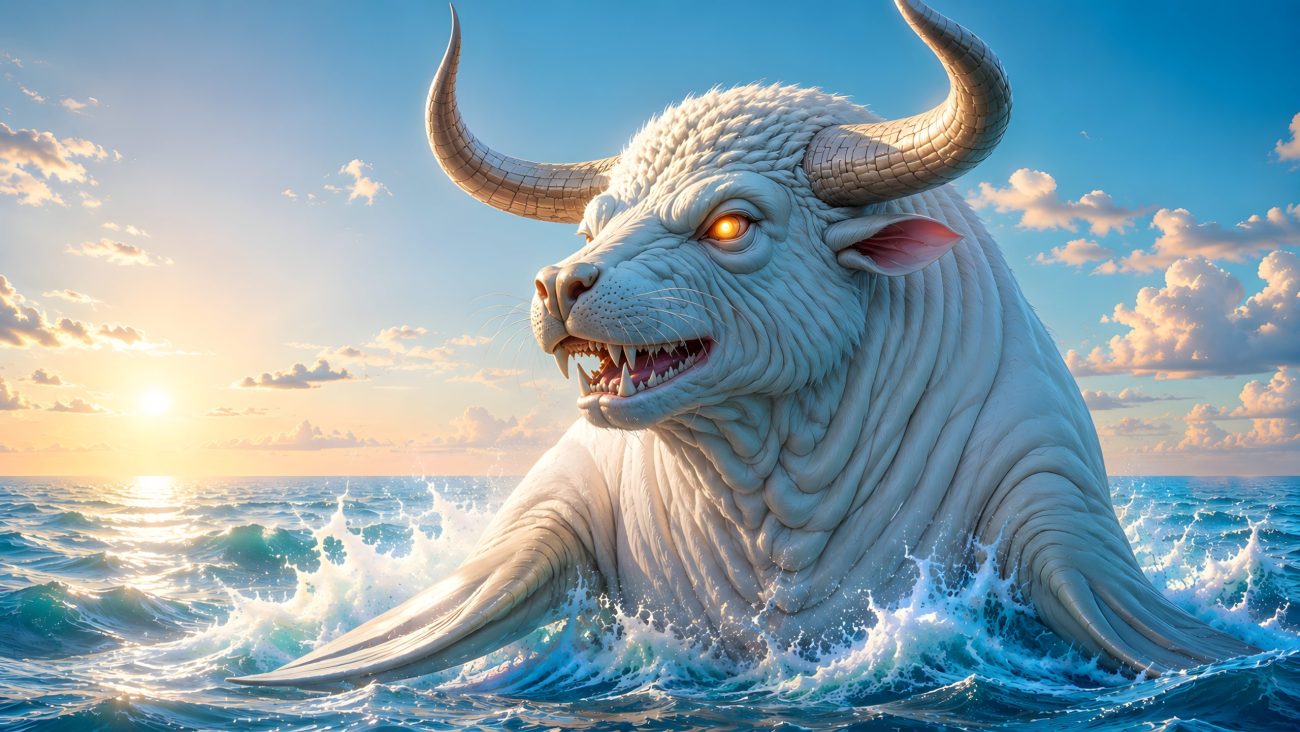
The Foha is an enormous sea bull of legendary strength. It is known for its sedentary nature and tends to remain in one place rather than roaming through the sea. Despite its immense size, it is also said to come onto land in herds to feed on grass without harming people or livestock.

According to the legend, the Foha is exceptionally irascible, especially toward its own kind. Aristotle recorded that these creatures would fight fiercely among themselves, particularly the females.

When a male Foha killed a female during one of these battles, it would seek out another female and continue the same brutal behavior. This succession of violent encounters could continue until the male eventually killed all the females it encountered.

In one account, the Foha is described as a creature with the face of a calf and human-like hands.

Despite its appearance as a gigantic sea bull, the creature was ultimately said to be nothing more than a seal.


Sources

“Фоха (Foha).” New Bestiary (Bestiary.us). Accessed August 15, 2026. https://www.bestiary.us/foha


Forest Bull

Tradition / Region: Roman Mythology, Italian Mythology
Alternative names: Ethiopian Bull, Ethiopian Forest Bull, Taurus Aethiopicus, Taurus Aethiopicus Sylvestris
Category: Cow


The Myth

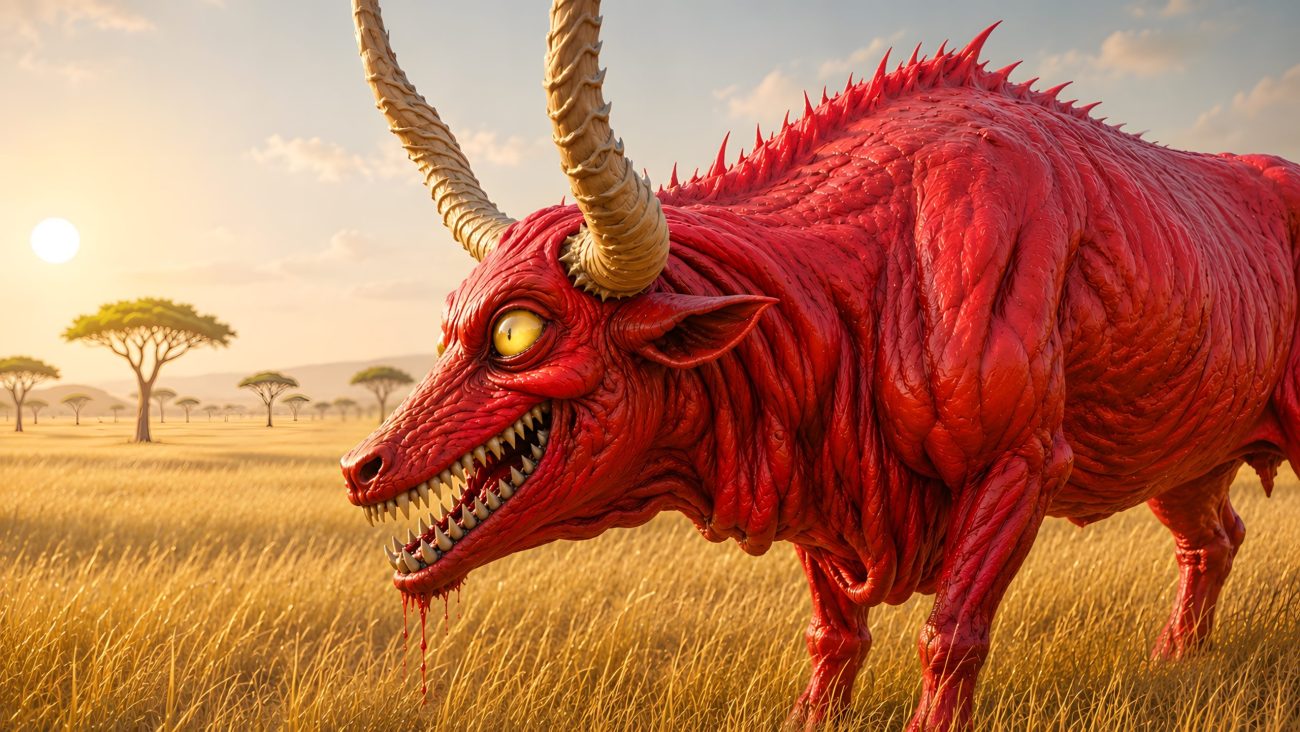
The Forest Bull is a gigantic, tawny-colored breed of wild cattle said to live in the forests of Ethiopia. It is twice the size of an ordinary bull, with red hair, an enormous mouth that opens almost to its ears, and horns capable of turning in any direction. Once raised for combat, its horns remain fixed in that position.

According to ancient accounts, the Forest Bull is one of the fiercest and most savage animals in the world. It is a flesh-eater that hunts herds of wild animals and horses. It is also extraordinarily fast and possesses such great strength that no ordinary weapon can injure it. Spears and arrows are unable to penetrate its hide, while iron weapons are said to rebound from its body.

The Forest Bull uses its movable horns as weapons when fighting. It raises them before attacking and can face an opponent from almost any direction.

Herdsmen living in regions inhabited by the Forest Bulls devised a way to protect their livestock. They dug deep ditches in the ground and allowed the animals to fall into them. Once trapped, the furious bulls were unable to escape and eventually choked on their own rage.

The Troglodytae, a neighboring people who lived in caves, regarded the Forest Bull as the king of beasts. They considered it worthy of the title because it possessed the courage of a lion, the speed of a horse, the strength of a bull, and a hide stronger than iron.


Sources

“Forest Bull.” Wikipedia: The Free Encyclopedia. Wikimedia Foundation. Accessed August 15, 2026. https://en.wikipedia.org/wiki/Forest_Bull


Flidais

Tradition / Region: Irish Mythology
Alternative names: Flidas, Fliodhais, Fliodhas, Foltchaín
Category: Cow, Deity


The Myth

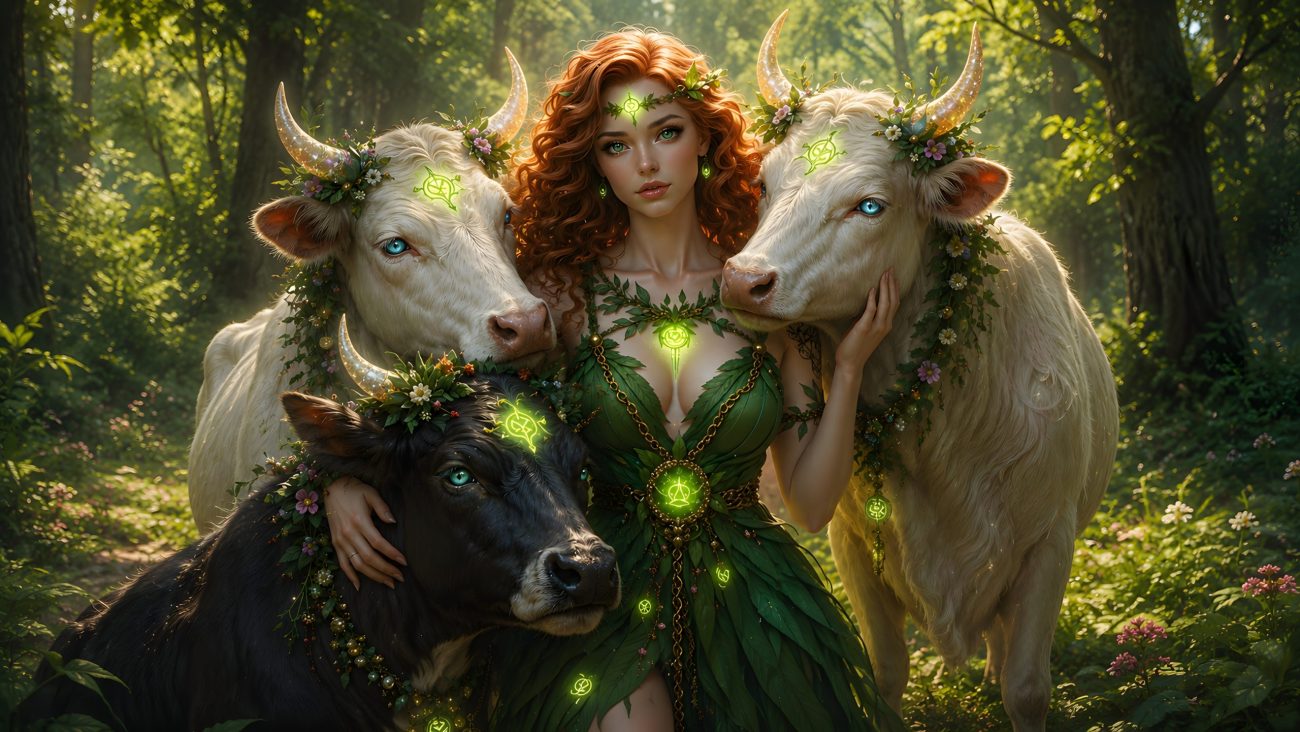
Flidais is a beautiful-haired female figure associated with cattle, fertility, and the abundance of milk. She possesses a magical herd of cattle, and her connection with cattle and milking appears throughout the stories in which she is mentioned.

Flidais is a central figure in Táin Bó Flidhais, where she is the wife of Ailill Finn and the lover of Fergus mac Róich. Fergus carries Flidais and her cattle away from her husband, taking her with him to Erris.

Her cattle possess extraordinary powers. During the Táin Bó Cúailnge, Flidais stays in the tent of Ailill mac Máta, king of Connacht, and her herd provides enough milk to feed the entire army once every seven days.

In Táin Bó Flidhais, Flidais possesses a particularly remarkable white cow known as the Maol. A single night’s milking from this cow is said to provide enough milk to feed three hundred men.

Flidais is also the mother of Nia Segamain, who inherited a supernatural connection with animals from her. Through the power received from his mother, Nia Segamain was able to milk wild deer as though they were domestic cows.

Flidais is also named as the mother of several daughters, including Dinand and Bé Chuille. Dinand and Bé Chuille are described as female farmers in one tradition and as witches in the story of the Second Battle of Moytura, where they enchant trees, stones, and pieces of earth so that they become an armed host.


Sources

“Flidais.” Wikipedia: The Free Encyclopedia. Wikimedia Foundation. Accessed August 15, 2026. https://en.wikipedia.org/wiki/Flidais


Fei

Tradition / Region: Chinese Mythology
Alternative names:
Category: Cow


The Myth

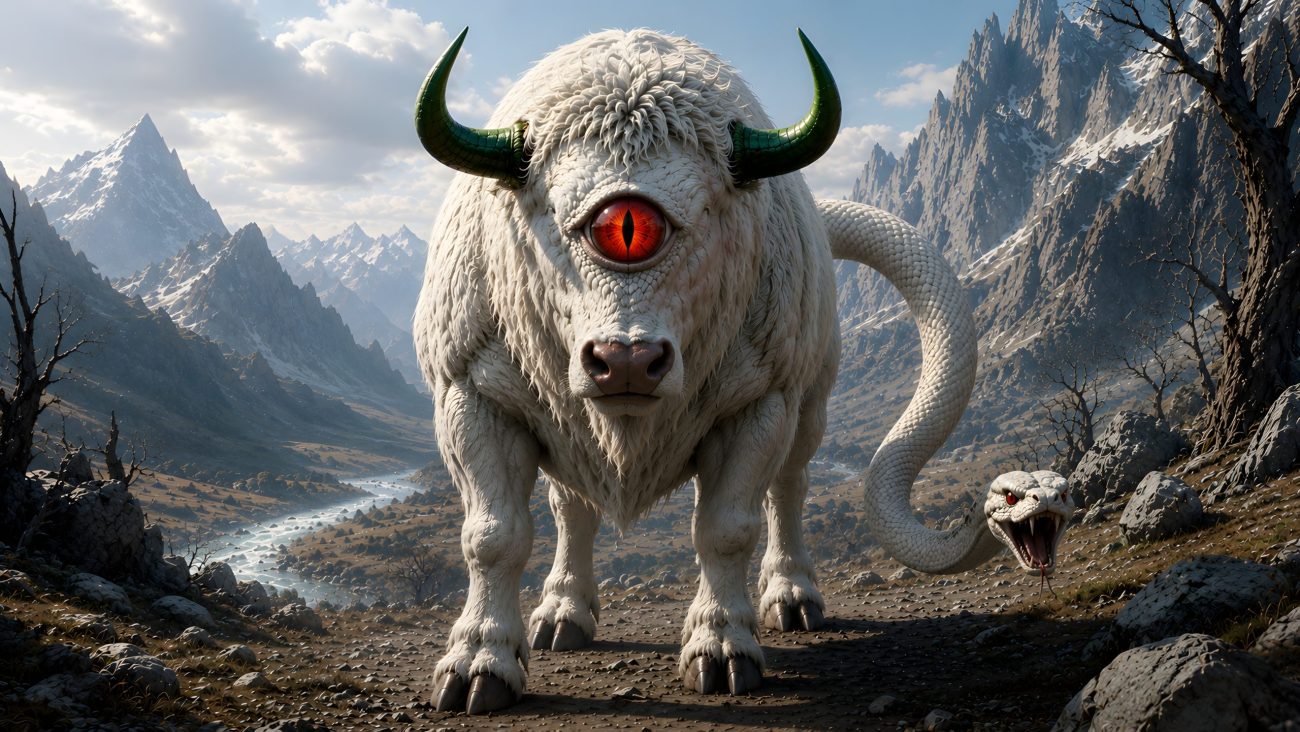
The Fei is a strange beast that resembles an ox with a white head, a single eye, and the tail of a snake. It lives on Mount Tai, a mountain rich in gold, jade, and precious trees.

According to the Classic of Mountains and Seas, the appearance of the Fei brings drought and destruction to the surrounding land. Water sources dry up and vegetation withers wherever the creature is found.


Sources

“蜚 (Fěi).” Chinese Wikipedia. Wikimedia Foundation. Accessed August 15, 2026. https://zh.wikipedia.org/wiki/%E8%9C%9A