Knights of Ålleberg

Tradition: Swedish Mythology
Alternative Names: The Twelve Knights of Ålleberg, The Sleeping Knights of Ålleberg
Category: Ghost


The Myth

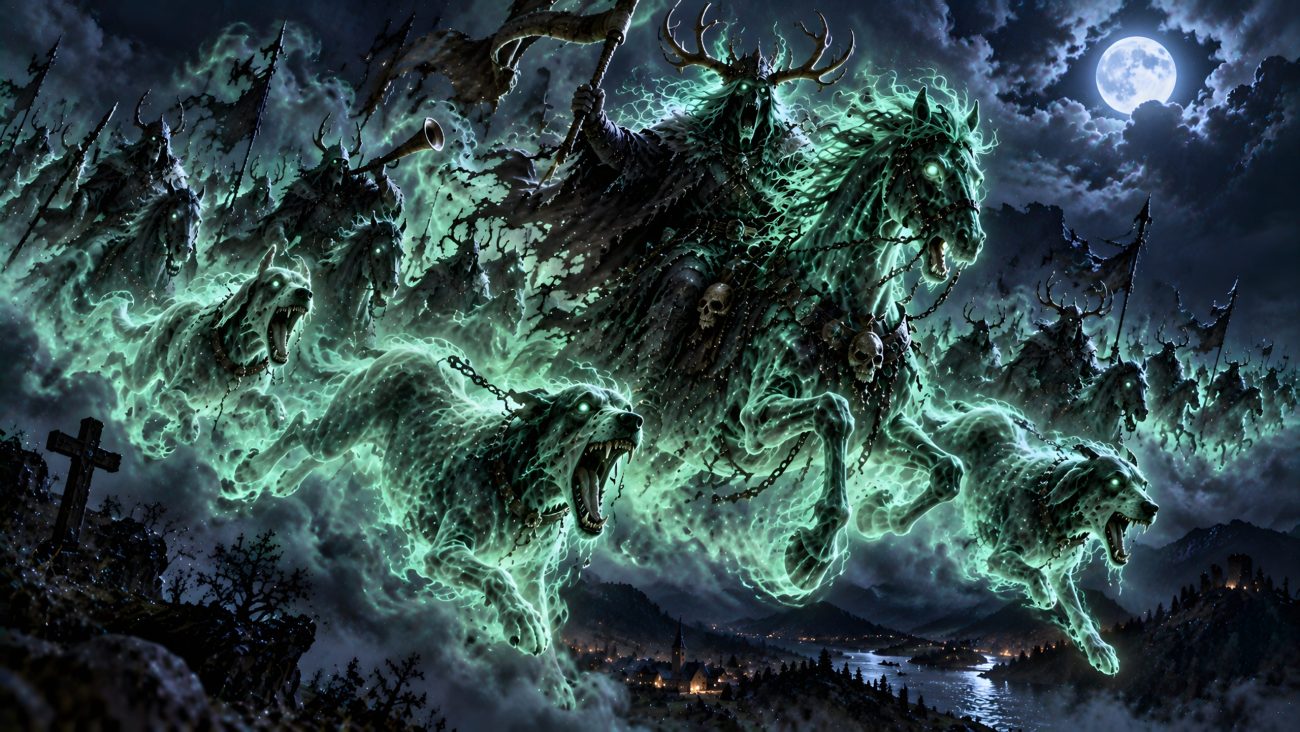
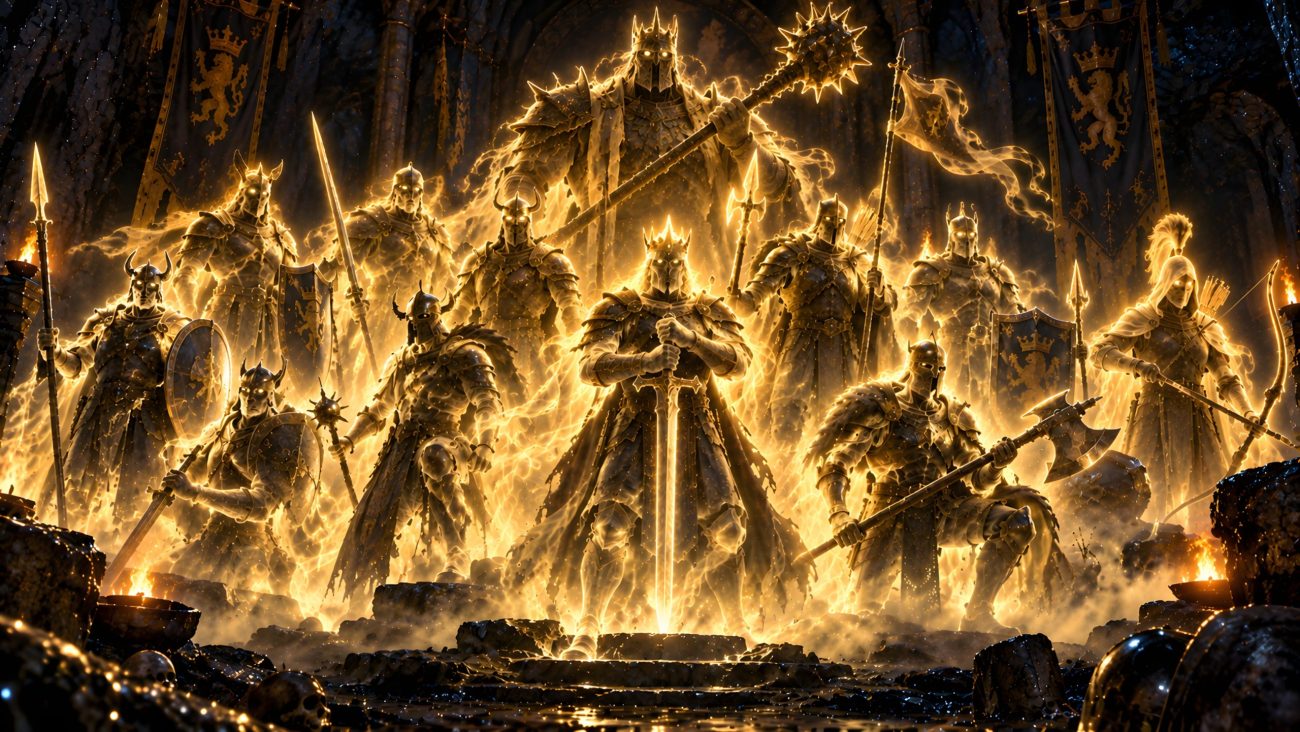
The Knights of Ålleberg are twelve legendary warriors whose spirits are said to sleep within Ålleberg Mountain in Sweden. According to tradition, they died at the Battle of Åsle, also known as the Battle of Falköping, fought in 1389 between the forces of Albert, King of Sweden, and Margaret I of Denmark. Rather than finding their final rest, the knights remain hidden inside the mountain, waiting for the day when a new war threatens their homeland.

The legend belongs to the widespread folkloric motif of the sleeping king or hero concealed within a mountain, awaiting the moment when the country needs him again. The twelve knights are believed to awaken when war returns, emerging from their mountain refuge to fight and defend Sweden. Their presence gives Ålleberg the character of a supernatural stronghold where the dead remain ready to answer a future call to battle. The mountain is also associated with trolls, adding to its reputation as a place inhabited by mysterious beings.

In nineteenth-century accounts from the nearby town of Falköping, local peasants claimed that the knights had worn golden coats of armour and that their spirits could sometimes be encountered after nightfall, particularly when war was approaching. One version tells of a young man who entered the mountain at the invitation of a mysterious gentleman. Inside, he discovered a vast chamber where sleeping knights lay around the walls, with golden armour hanging above their heads. From nearby stables came the sounds of horses moving in the darkness. Although the young man tried to walk quietly in his iron-nailed shoes, some of the warriors stirred and asked, “Is the hour yet come?” Their question suggested that they remained asleep only until the time arrived for them to rise and fight once more.


Sources

“Knights of Ålleberg.” Wikipedia: The Free Encyclopedia. Wikimedia Foundation. Accessed October 16, 2026. https://en.wikipedia.org/wiki/Knights_of_%C3%85lleberg
Takaluma

Tradition: American Mythology
Alternative Names: Takaluma, the Phantom Chief, The Ghost of the Saline River
Category: Ghost


The Myth

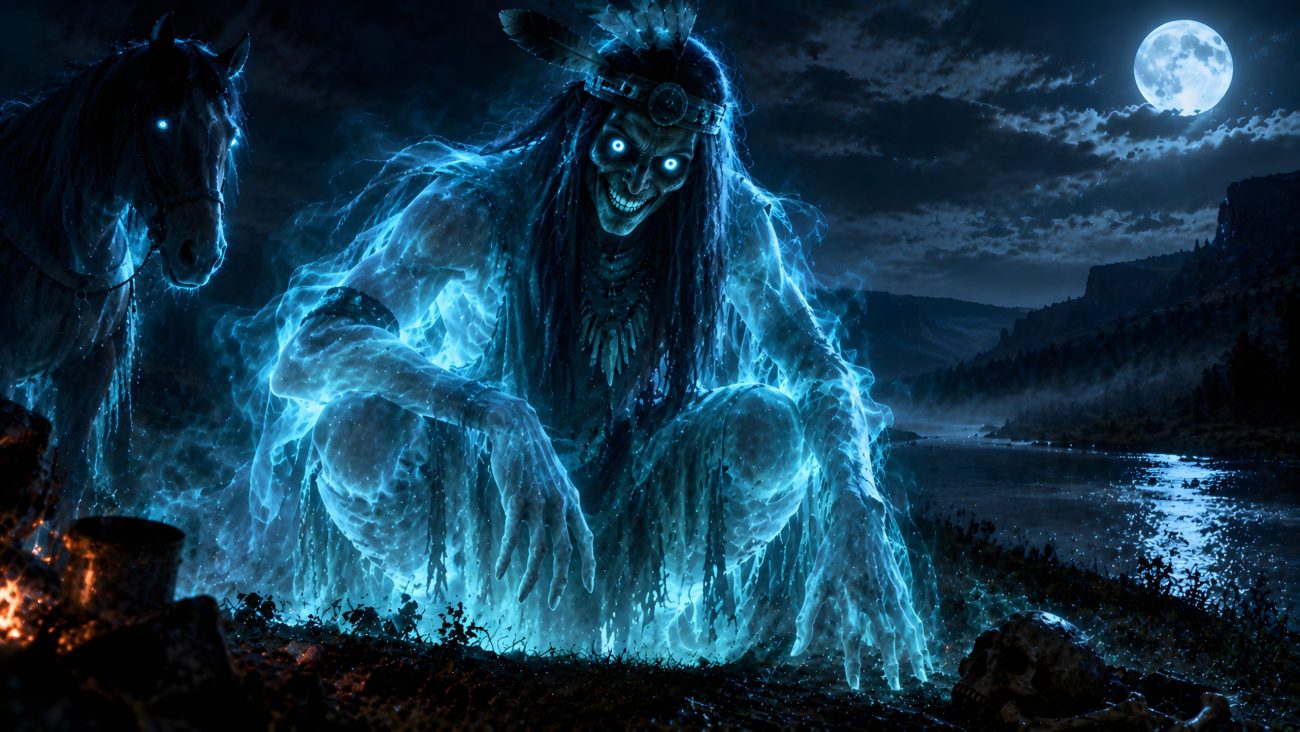
Takaluma is the ghost of an ancient Indigenous chief who haunts the valley of the Saline River in Ellis County, Kansas. According to a tale recorded by Floyd Benjamin Streeter, the phantom appears as a powerful, imposing man whose physical presence is accompanied by a terrible, otherworldly yell. Although he can be seen clearly, he is not bound by the physical laws of the living: bullets pass harmlessly through him, and anyone attempting to touch his hand finds only empty space. He identifies himself as Takaluma, a great chief of the Inciennes, and claims to have wandered beside the river for more than a thousand years.

The encounter begins when a cowboy herding cattle along the Saline River travels back toward his camp late at night. At a river crossing below a settler’s claim, his horse suddenly refuses to move. A horrifying yell breaks the midnight silence, and the rider sees a powerful Indigenous man standing before him. The cowboy instinctively draws his revolver and fires, but the apparition remains unharmed. Laughing mockingly, Takaluma speaks in fluent English and explains that no mortal bullet can injure his spirit. The cowboy, initially terrified, becomes curious and dismounts to build a fire while the phantom tells his story.

Takaluma recounts that his people came from the west in ancient times, crossing a great body of water that he says was once only a narrow stream. They traveled east for many moons before discovering the beautiful valley of the Saline River. Finding abundant game and a landscape suited to settlement, they built their homes there. Their prosperity did not last: a terrible pestilence swept through the community and carried its people away to the Happy Hunting Grounds. Their dwellings decayed, leaving no visible trace of the people who had once lived in the valley. Their rest remained undisturbed until white settlers arrived and disturbed their burial mounds with plows.

The phantom reveals that his restless wandering began after someone unearthed his father’s bones and carried away the skull. Since then, Takaluma has been compelled to search for it for an hour each night. Although he knows who committed the desecration, he claims that he cannot enter human dwellings to retrieve the stolen remains. He therefore asks the cowboy to use his influence to have the skull returned to its resting place. Takaluma warns that if it is not restored within two months, another spirit will be sent to search for it, one powerful enough to enter any building. When his allotted hour ends, the phantom bids farewell and returns to his damp burial mound. The story closes with the hope that the stolen skull will be returned, allowing the dead to rest and preventing further supernatural disturbances.


Sources

Sackett, Samuel John. Kansas Folklore. Lincoln: University of Nebraska Press, 1961. https://archive.org/search.php?query=creator%3A%22Sackett%2C+Samuel+John%22


Lady Rokujo

Tradition: Japanese Mythology
Alternative Names: Rokujo no Miyasundokoro, Lady Rokujo’s Living Spirit, Rokujo’s Vengeful Spirit
Category: Ghost


The Myth

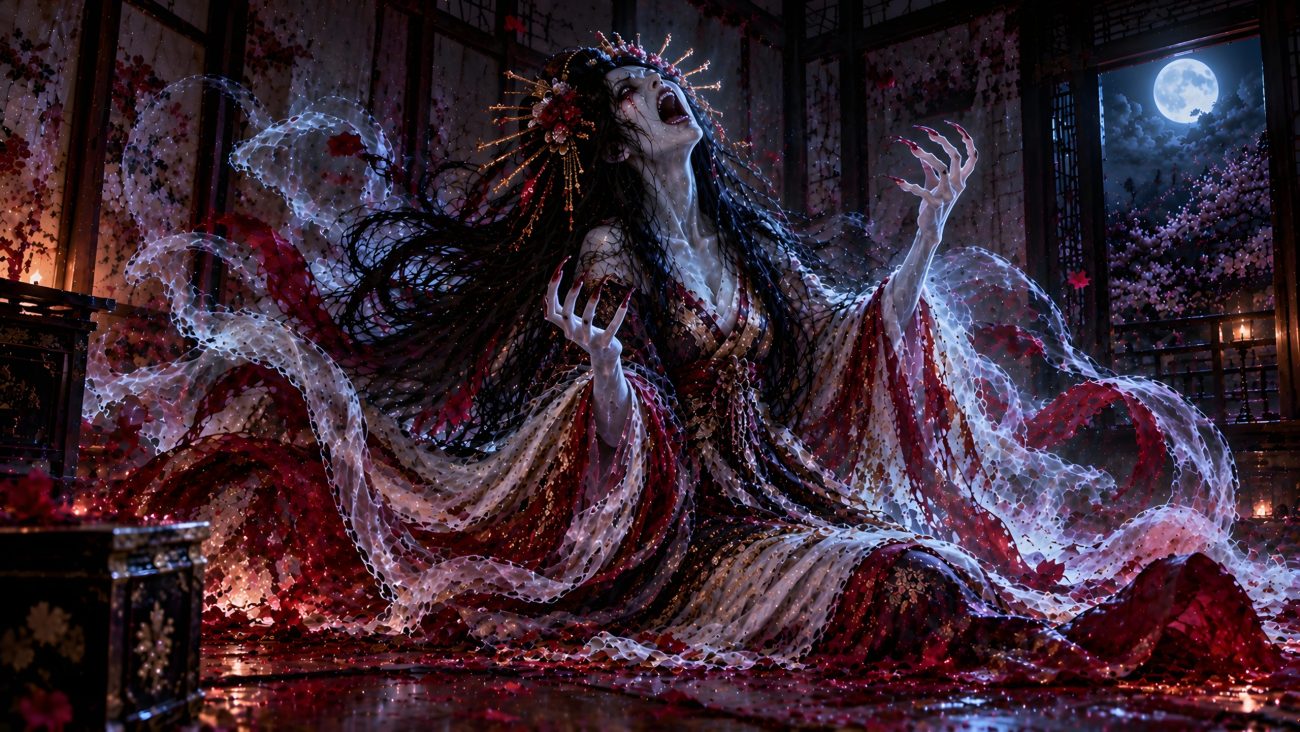
Lady Rokujo is a noblewoman from The Tale of Genji, a classic work of Japanese literature, who becomes infamous for the destructive power of her jealous and vengeful spirit. The daughter of a minister, she became the consort of a Crown Prince at the age of sixteen and gave birth to a daughter. After the Crown Prince died when she was twenty, she began a relationship with Hikaru Genji, a younger nobleman. Lady Rokujo was proud, educated, and dignified, but she also struggled with her age and status in relation to Genji. Her intense and complicated affection overwhelmed him, and he gradually distanced himself from her.

In the chapter known as Aoi, Lady Rokujo’s resentment erupts after she is publicly humiliated during a dispute over the placement of carriages at the Kamo Festival. A servant of Aoi, Genji’s principal wife, treats her disrespectfully, leaving Lady Rokujo consumed by shame and anger. Although she remains physically unaware of what is happening, her living spirit leaves her body and torments the pregnant Aoi. After a difficult labor, Aoi gives birth to a son, but her condition deteriorates and she dies a few days later. Lady Rokujo realizes that her spirit has been acting independently when she notices the scent of poppies, used in prayers and rituals, clinging to her clothing. Genji also witnesses her living spirit while attending to Aoi. Horrified by what she has become, Lady Rokujo decides to end her relationship with Genji. She later bids him farewell at Nonomiya and travels to Ise with her daughter, who serves as an imperial princess at the Ise Shrine.

Lady Rokujo eventually returns to Kyoto, entrusts her daughter’s guardianship to Genji, and dies of illness. Yet her attachment to Genji appears to persist beyond death. Her spirit subsequently torments Murasaki no Ue and Onna San no Miya, directing hateful words toward Genji and demonstrating that her jealousy has not been extinguished. Her daughter grieves over rumors that her mother’s spirit has not found peace, and a memorial service is performed at Genji’s urging.

Lady Rokujo’s transformation into a vengeful spirit became especially influential in Japanese theatre and demon imagery. In the Noh play Aoi no Ue, she appears first as a suffering woman and then transforms into a terrifying spirit and demon, while Aoi herself is represented onstage by a kimono. Her story is also associated with the hannya mask, which represents a woman consumed by jealousy and resentment. The mask’s connection to Lady Rokujo was explained through a legend in which the recitation of the Prajnaparamita Sutra frightens away her vengeful spirit. The artist Toriyama Sekien connected this episode to the name hannya, while also depicting the supernatural oboroguruma, inspired by the carriage dispute at the Kamo Festival. Lady Rokujo thus became one of the most enduring literary examples of how jealousy, humiliation, and unresolved attachment could transform a woman into a terrifying supernatural being.


Sources

“六条御息所 [Rokujo no Miyasudokoro].” 新版TYZ 妖怪図鑑 (New TYZ Yokai Encyclopedia). https://tyz-yokai.blog.jp/archives/1059982793.html


Goryō

Tradition: Japanese Mythology
Alternative Names: Goryō, Mitama, Honored Ghost
Category: Ghost


The Myth

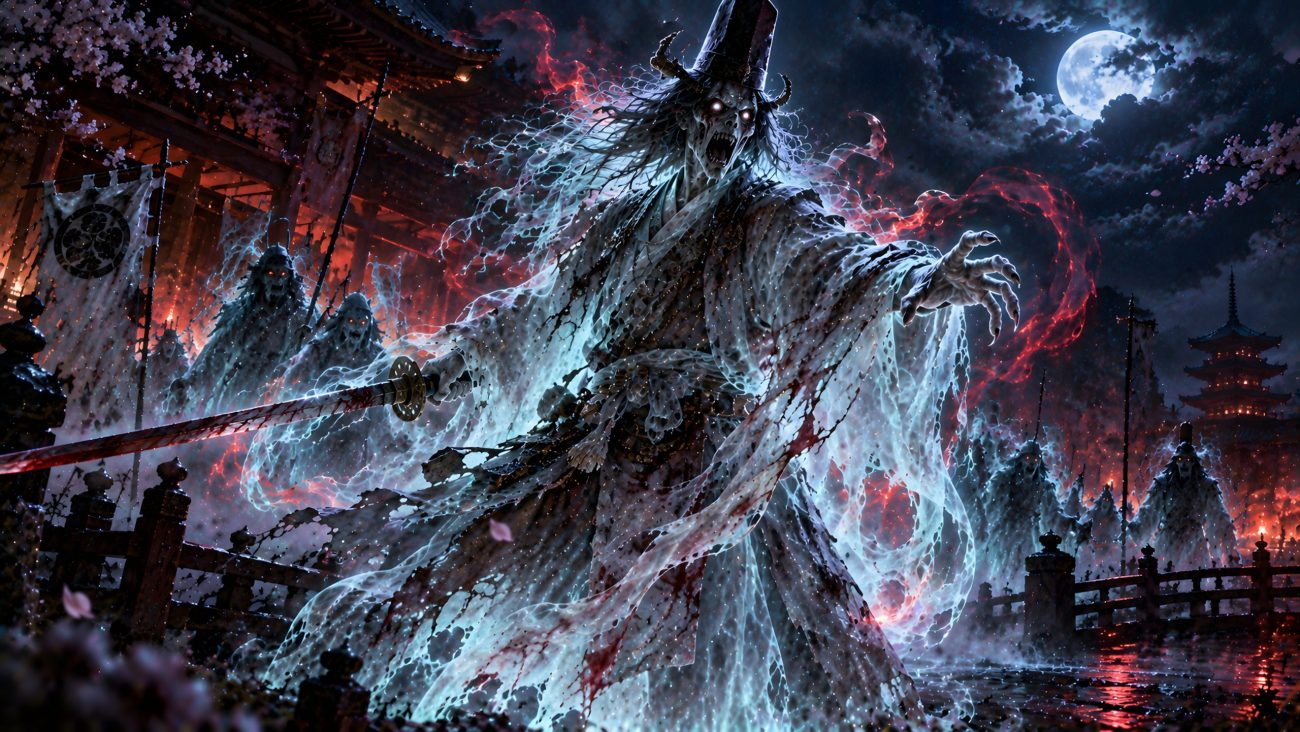
Goryō are the vengeful ghosts of ancient Japanese warriors and nobles who suffered horrible, agonizing deaths. Returning from the dead as dreadful spirits of vengeance, they are closely associated with onryō, ghosts that seek retribution against those who wronged them during their lives. Their name, written 御霊, can be translated as “honored ghost,” reflecting their association with the spirits of people who held status or importance in life.

The wrath of a goryō can bring terrible calamities upon its enemies and the wider community. Fires, wars, plagues, droughts, floods, and violent storms may all be interpreted as manifestations of their vengeance. Even the deaths of members of the imperial family could be attributed to their supernatural anger. Such disasters were understood as curses inflicted by the spirits of those who had been unjustly treated, disgraced, or killed.

Because a ghost could not simply be killed to end its revenge, the living sought to pacify these dangerous spirits and transform them into peaceful, benevolent beings. Priests and onmyōji, practitioners associated with Japanese divination and esoteric rites, performed religious ceremonies intended to appease them. These practices formed part of goryō shinkō, the religious tradition of venerating and pacifying vengeful spirits. Through such rites, a spirit feared for its power to spread calamity could instead be honored and reconciled with the living.


Sources

“Goryō.” Yokai.com. https://yokai.com/goryou/


Zaraza

Tradition: Polish Mythology
Alternative Names: Czarny Mór, Morawica, Mór, Morowce Powietrzne, Powietrze, Czarna Śmierć, Pomór, Pomorek, Przymorek
Category: Ghost


The Myth

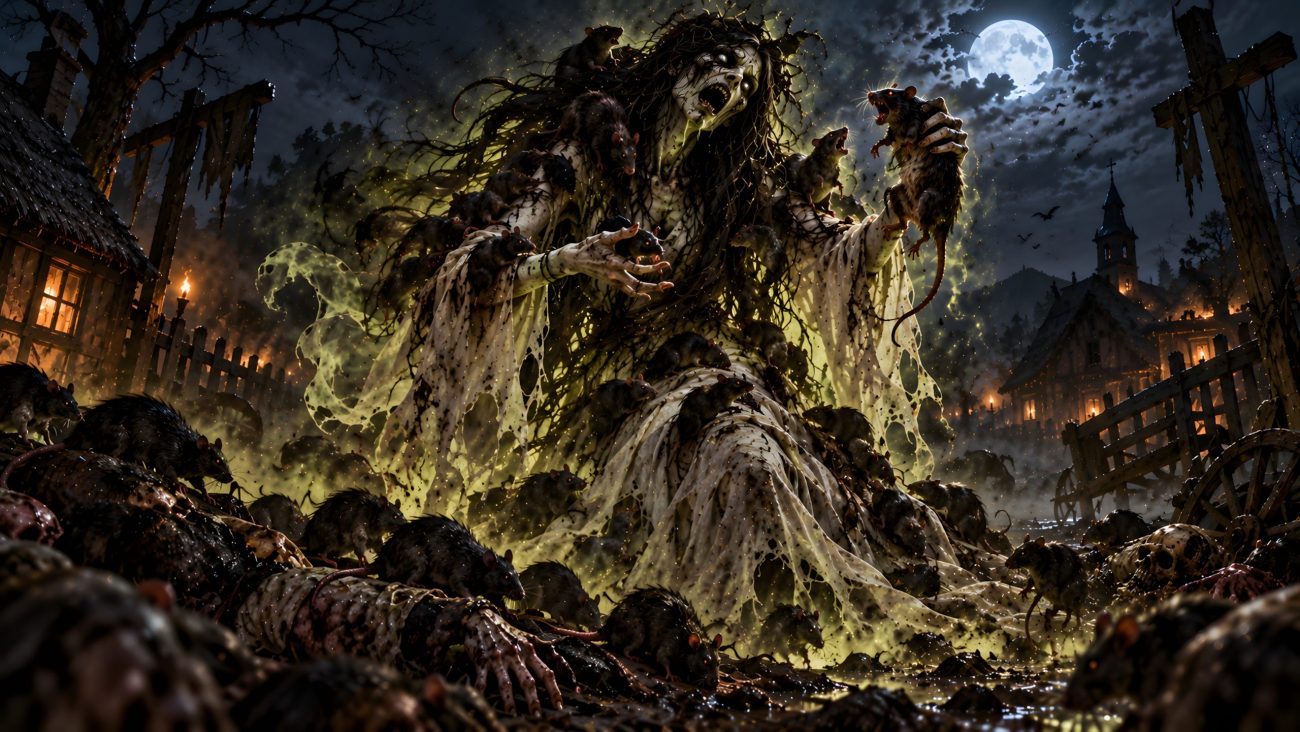
Zaraza is a personification of deadly epidemic diseases in Slavic mythology, representing the terrifying forces of plague and widespread illness. She is depicted as a gloomy female apparition, unnaturally thin, with disheveled hair and clothing that is either white or black. In some accounts, she wanders through villages in the form of a pale, gaunt woman wrapped in a bedsheet, bringing the threat of sickness wherever she appears. Her dark appearance reflects the fear of contagious diseases that could devastate entire communities.

Beliefs surrounding Zaraza were recorded in Poland, where people sought ways to drive the spirit of disease away from the sick. In the nineteenth century, in the Sandomierz region, when someone fell ill with typhus, people sometimes attempted to frighten Zaraza out of the room by firing guns into the four corners of the ceiling above the patient. Such practices reflected the belief that epidemic illness could be caused or embodied by a supernatural presence that might be expelled through ritual action.

During a cholera epidemic in 1888 in Machów, near Tarnobrzeg, a local woman reportedly recounted that several men standing guard had seen the apparition of the disease itself. They described a tall, black-clad woman with disheveled hair walking through the village. The sight was interpreted as a manifestation of Zaraza, giving a visible form to the invisible threat of contagion. The figure also survives in Polish expressions invoking the plague, such as “May the plague take you!” and “Damn the plague!” These sayings preserve the memory of Zaraza as an embodiment of sickness, calamity, and communal fear.


Sources

“Zaraza (demon).” Wikipedia, wolna encyklopedia. Wikimedia Foundation. Accessed October 16, 2026. https://pl.wikipedia.org/wiki/Zaraza_(demon)


Hemann

Tradition: German Mythology
Alternative Names: Emann, Homann, Hoymann, Hoimann, Jochhoimann, Hejkadlo, Hehmann, Ropenkerl
Category: Ghost


The Myth

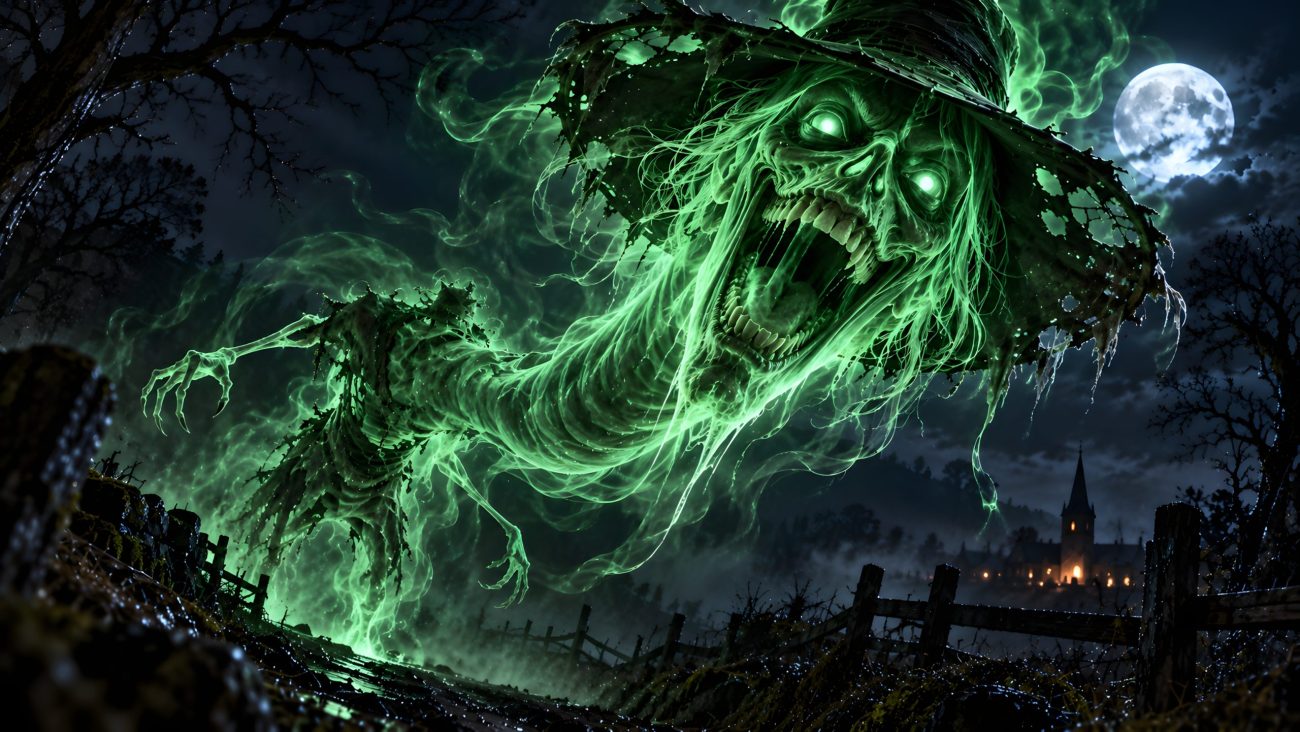
The Hemann is a mysterious spirit from German folklore known primarily for its frightening cries, which echo through the darkness and terrify people who hear them. Usually invisible, it announces its presence with strange shouts such as “he he,” “he helfts,” or other distinctive calls that vary between regions. The creature is recorded in traditions from former German-speaking areas of Bohemia and Silesia, as well as the Upper Palatinate, the Fichtel Mountains, the Vogtland, Westphalia, and parts of Baden-Württemberg. In Bohemia, it is also known by the Czech name Hejkadlo.

The Hemann often pursues people with its cries, seemingly chasing them without ever quite catching up. However, anyone who dares to imitate its call risks a much more dangerous encounter. The spirit may leap onto the person’s back, forcing them to carry it, a supernatural attack known in German tradition as aufhocken. Depending on the regional version, it may also lead people astray or strike them in the face. The Hemann is not always understood as the same kind of being: it may be the ghost of a sinner condemned to haunt a boundary that they unlawfully moved during life, a field spirit associated with the final sheaf of the harvest, or occasionally a household spirit. Some accounts connect its cries to the calls of owls, eagle owls, hoopoes, nightjars, and ravens.

Regional traditions give the Hemann a variety of appearances and behaviors. In the Upper Palatinate, the related Hoymann or Hoimann haunts mountain forests, where its rough, manlike voice or owl-like cry can be heard from a considerable distance. Although it is usually invisible, it may appear as a tall hunter wearing a broad-brimmed hat, a giant reaching toward the clouds, or a figure dressed in a smock-frock. It is sometimes identified as a restless soul or even the Devil. The Hoymann punishes those who steal wood from the forest, and it is also associated with the Wild Hunt. In Lower Lusatia, the Homann cries at noon, serving as a natural time signal for local people. In Northern Bohemia, the Hehmann hides in cornfields and leaps onto anyone who imitates its shrill call.

Other related figures appear in neighboring traditions. In Switzerland, the invisible Egelsee-Hüper cries “hüp hüp” around midnight near Lake Egelsee. In Westphalia, the Ropenkerl’s cry is considered an omen of bad weather. The Heitmännchen appears as a small blue flame, punishes those who imitate its voice, but may help with the harvest if offered a sandwich. The Homännchen briefly appears as a tiny man in a grey camisole among a herd of cattle before vanishing. In the Lechrain region, the Hojemännlein are tiny green kobolds inhabiting forests and abandoned farms. During Advent, they shout “hoje,” perform somersaults, and play mischievous tricks. Their cries sound like sorrowful weeping, and although they can behave playfully, they punish anyone who imitates their calls. Across these regional variations, the Hemann tradition combines eerie nocturnal cries, warnings against trespassing or theft, and the danger of answering supernatural voices.


Sources

“Hemann.” Wikipedia: The Free Encyclopedia. Wikimedia Foundation. Accessed October 16, 2026. https://en.wikipedia.org/wiki/Hemann


Butcher of Imst

Tradition: Austrian Mythology
Alternative Names: The Ghost of the Butcher of Imst, The Condemned Butcher of Imst
Category: Ghost


The Myth

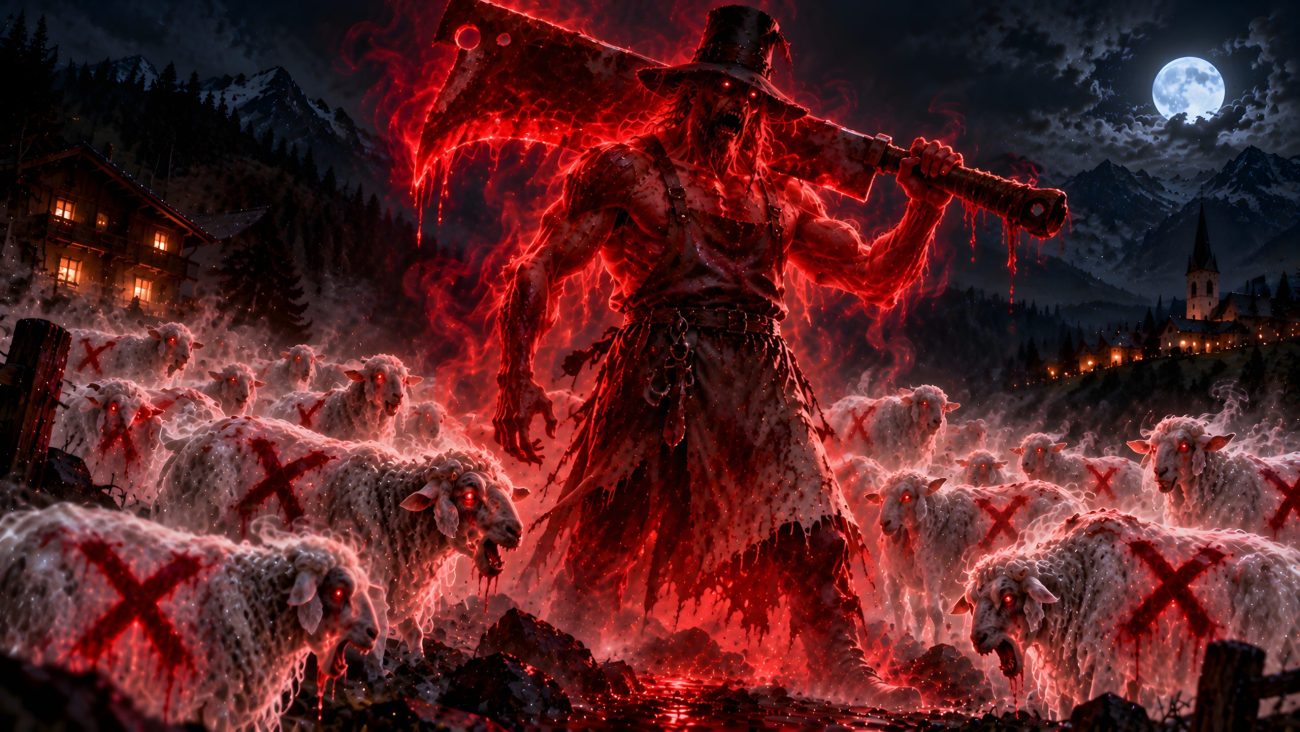
The Butcher of Imst was a dishonest butcher who lived in the Tyrolean town of Imst in Austria. He made a habit of stealing other people’s sheep in the mountains, altering their identifying marks, and allowing them to mingle with his own flock. After some time, he would either slaughter the stolen animals or sell them alive. His deception succeeded for years, but his death brought no peace. Soon afterward, a terrifying ghost began appearing in his house, frightening his family so badly that they were forced to abandon it until the Church could arrange for the spirit to be exorcised.

One pitch-dark night, as the night-watchman of Strad announced midnight, two Capuchin monks appeared on the road, each carrying a burning candle. One of them also carried a massive book beneath his arm. Walking between them was the dead butcher, dressed in black, with his familiar high-crowned hat pulled tightly down over his eyes and his arms crossed before him. The monks signaled for the watchman to move aside, and he obeyed in terror as the strange procession passed through the village.

The three figures continued along the road toward Nassereit, reaching the inn known as Zum Döllinger without entering it. Instead, they turned toward the Gurgl Valley and proceeded to a narrow gorge through which the Klammbach torrent rushed down from the Andelsberg. This chasm was said to be a place where numerous ghosts from the area around Imst had been condemned. In the stillness of the night, terrible cries could frequently be heard coming from the gorge: “Help us! Hoi—hoiiih!” The butcher’s spectral escort suggested that his spirit, like those of other local wrongdoers, was being led to a place of supernatural punishment.


Sources

Von Günther, Amalia, Countess. Tales and Legends of the Tyrol. London: Chapman and Hall, 1874.


Cóiste Bodhar

Tradition: Irish Mythology
Alternative Names: Silent Coach, Death Coach, Cóiste na Marbh
Category: Ghost


The Myth

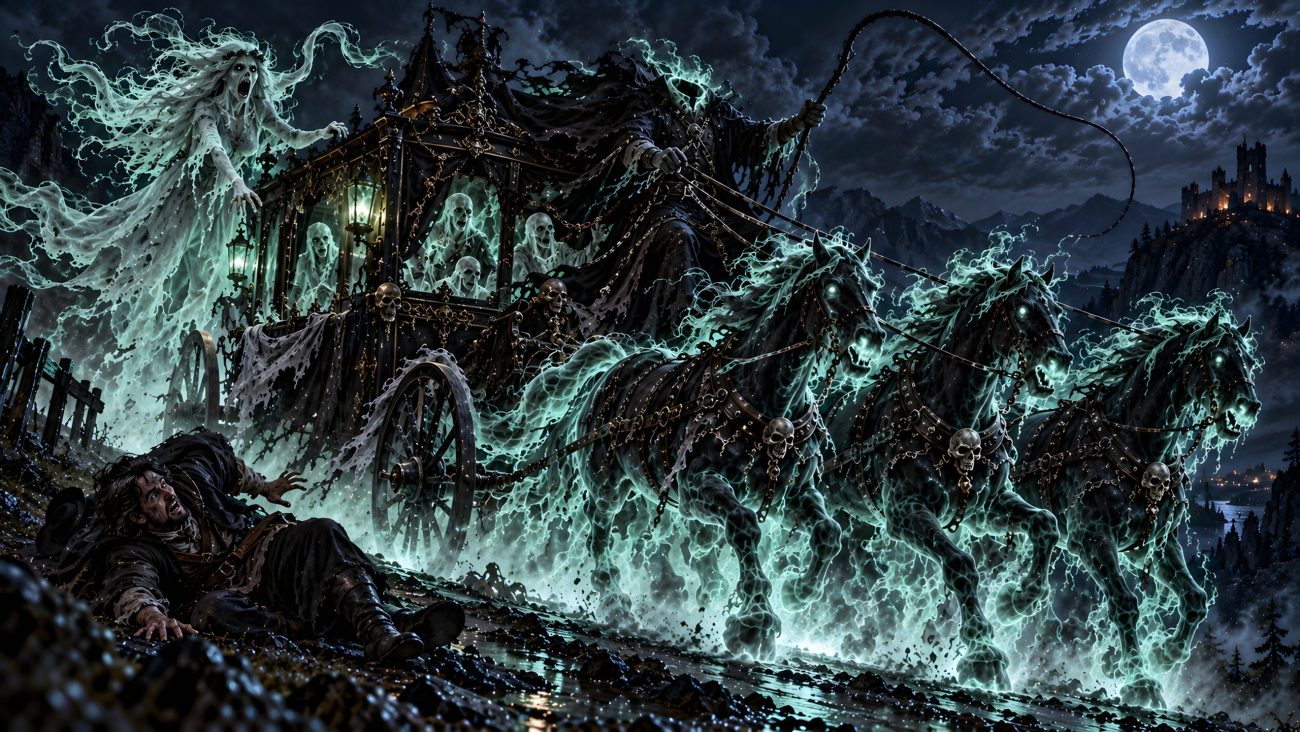
The Cóiste Bodhar is a supernatural death coach from Irish mythology whose appearance or sound foretells an approaching death. Its name is commonly translated as “silent coach,” although it is also known as the death coach. It is usually described as a black carriage driven or led by the Dullahan, a terrifying headless horseman. The banshee, another supernatural herald of death, is also associated with the coach and is sometimes said to accompany it on its journeys.

The sight or sound of the Cóiste Bodhar warns that someone is destined to die soon. The threatened person may be the witness themselves or a close relative. According to Irish belief, once the death coach arrives in the earthly world, it can never return empty. Its appearance therefore signals a death that cannot be prevented by mortal intervention, as the fate of the doomed individual has already been decided by a higher power.

Related traditions occur elsewhere in the British Isles. In Scottish folklore, a death coach is said to appear along Edinburgh’s Royal Mile, where it collects the souls of the dead. Another supernatural vehicle, known as the Hell Wain, is reportedly seen moving through the night sky. Similar stories of phantom coaches and spectral riders also occur in British and American culture, where they serve as ominous reminders of approaching death.


Sources

“Death coach.” Wikipedia: The Free Encyclopedia. Wikimedia Foundation. Accessed October 16, 2026. https://en.wikipedia.org/wiki/Death_coach


Hänsken met de Hond

Tradition: Dutch Mythology
Alternative Names: Wilde Jager, Jakko, Dirk met de Beer, Beerneken van Galen, the Eternal Jew, Hubertus, Hakkelberend, Hänsken met de Hond, Lodewijk van Nassau, Duvelsbender
Category: Ghost


The Myth

The Wild Hunter is the restless spirit of a man, often someone of high social standing, who was punished for insisting on hunting even on Sundays. Condemned to hunt eternally through the sky, he rides with a supernatural retinue of hunters and hounds, forming the terrifying procession known as the Wild Hunt. His passage is announced by a hellish uproar: dogs barking, hunting horns blaring, and hunters shouting and howling as they race through the air.

Encountering the Wild Hunter is considered extremely dangerous. Those who cross his path may be forced to join the eternal hunt, while others risk having their necks twisted around. His spectral procession is therefore more than a frightening spectacle; it is a deadly supernatural force that threatens anyone unfortunate enough to encounter it.

The Wild Hunter is also associated with strange occurrences on Christmas night. According to local traditions, he may take away anything left loose in a farmyard or move it somewhere else. His identity varies between regions, where he is known by numerous names, including Jakko, Dirk met de Beer, Beerneken van Galen, Hubertus, Hakkelberend, Hänsken met de Hond, and Lodewijk van Nassau. Some traditions also identify him with the Eternal Jew or call him the Duvelsbender. Despite these different identities, the stories share a central theme: a hunter condemned to pursue his quarry forever as punishment for violating sacred time.


Sources

Van der Veen, Abe. “Van aardmannetje tot zwarte juffer: Een lijst van Nederlandse en Vlaamse elfen en geesten.” Abe de Verteller. https://abedeverteller.nl/van-aardmannetje-tot-zwarte-juffer-een-lijst-van-nederlandse-en-vlaamse-elfen-en-geesten/


Mleika

Tradition: Maltese Mythology
Alternative Names: Meika, Mejka, Little Queen, Ghost Queen of Gozo
Category: Ghost


The Myth

Mleika is a ghost queen in the folklore of the Maltese island of Gozo. Her name, also recorded in the Latin spelling Mejka, is associated with a Maltese Christian spirit of good fortune and literally means “little queen.” She visits homes on New Year’s Eve, bringing either good luck or misfortune to the household depending on its cleanliness and tidiness.

Mleika is one of two supernatural Christmas figures in Gozitan tradition. The other is the gavgav, a man who transforms into a monster on Christmas Eve and frightens passers-by. While the gavgav inspires fear outside the home, Mleika enters houses to judge the conditions within them.

According to the tradition, Mleika is accompanied by a distinctive sense of smell. If she enters a house and the milkmaid smells the aroma of flowers and the scent of cooking food, she brings good luck to the household for the coming year. If these pleasant smells are absent, misfortune awaits the family. Her visit therefore makes the cleanliness and atmosphere of the home a sign of the fortune that its inhabitants can expect in the year ahead.


Sources

“Mleika.” New Bestiary (Bestiary.us). https://www.bestiary.us/mleika