Mikoshi Nyūdō

Tradition: Japanese Mythology
Alternative Names: 見越入道, みこしにゅうどう, Mikoshi, Miage Nyūdō, Taka Bōzu, Anticipating Priest
Category: Giant


The Myth

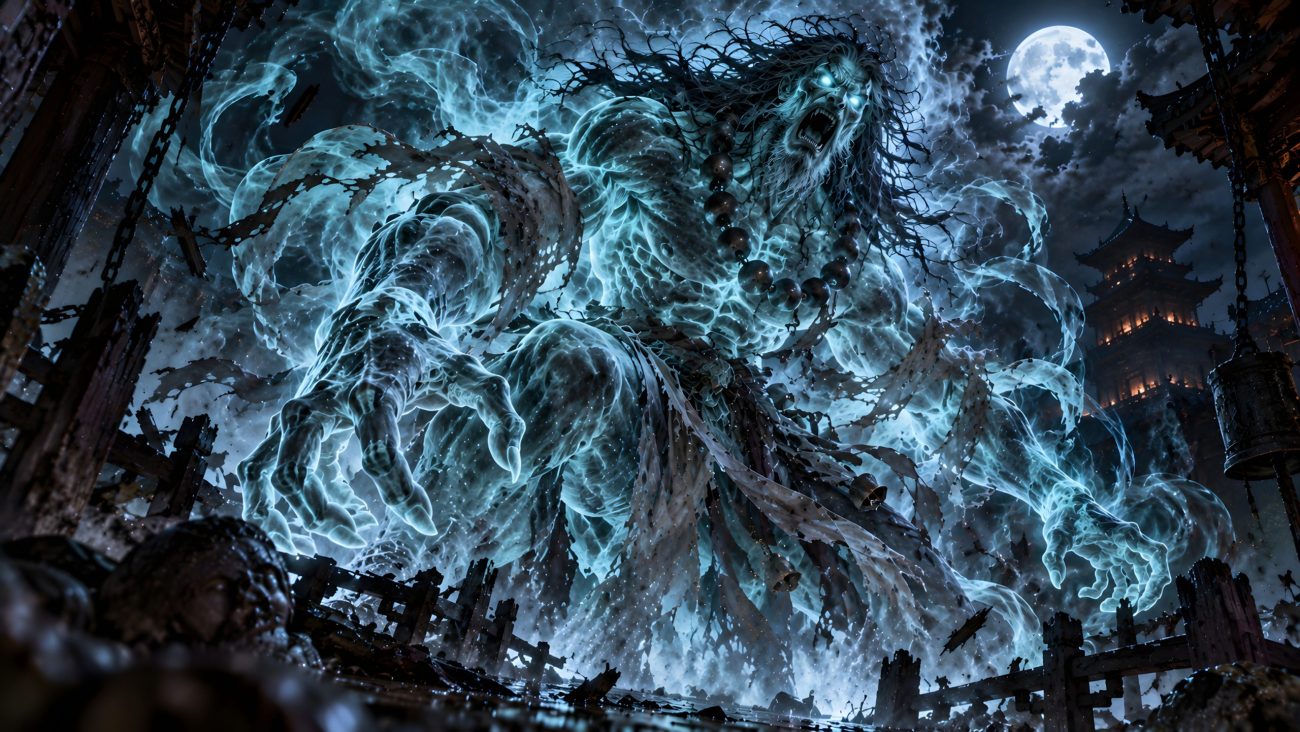
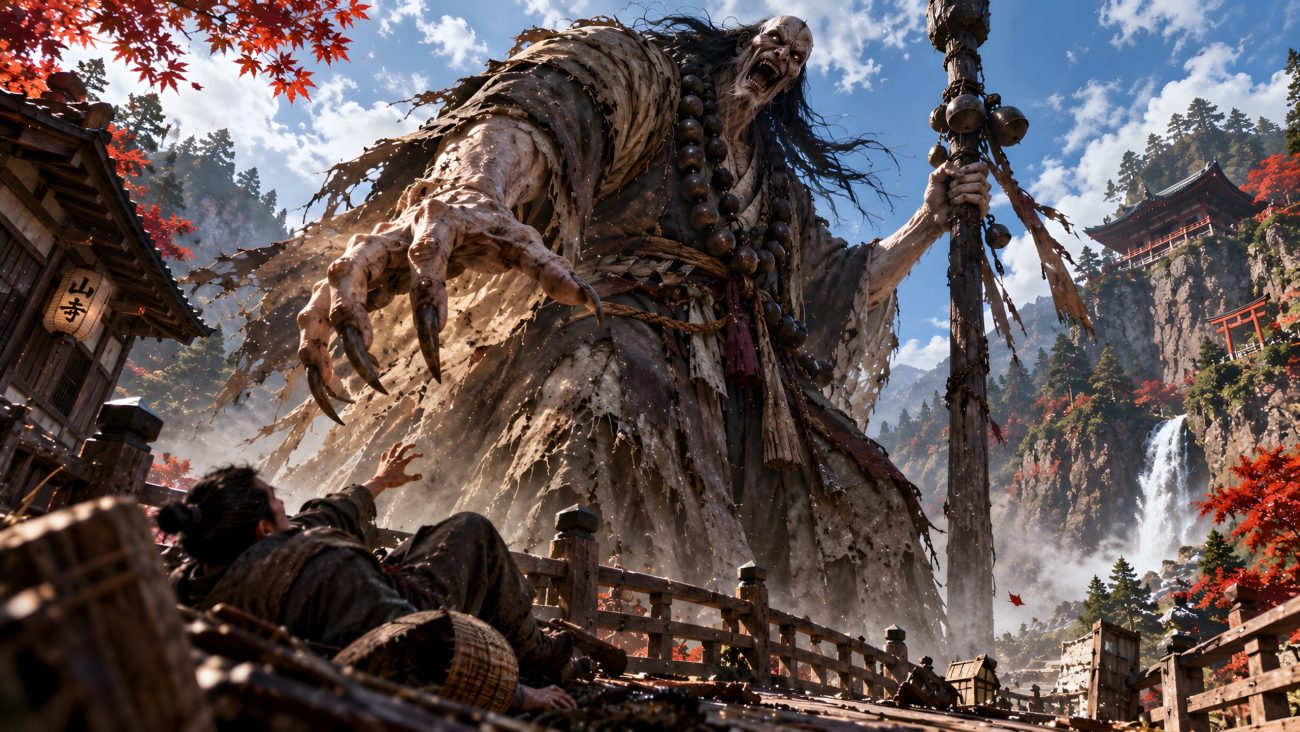
Mikoshi nyūdō are fearsome Japanese yōkai that appear to lone travelers on deserted roads, at crossroads, and on bridges, particularly at night. They initially resemble ordinary Buddhist priests or monks, seemingly harmless and no taller than an average person. However, when someone looks directly at them, they begin to grow at an unnatural speed. As they increase in height, their appearance becomes increasingly monstrous, with long claws and hair resembling that of a wild beast.

The mikoshi nyūdō grows as high as its observer can raise their eyes, compelling the unfortunate traveler to look upward in an attempt to follow its towering form. This sudden movement can cause the victim to lose their balance and fall backward, giving the giant an opportunity to attack. It lunges at fallen travelers and may bite their throats with its teeth. Those who encounter this cruel yōkai rarely survive. Attempting to ignore it or walk past can provoke the giant to crush the traveler or impale them with bamboo spears and branches. Running away is equally dangerous, while those who remain frozen in fear may simply drop dead in its terrifying presence.

The only way to escape is to anticipate the giant’s trick, which explains the meaning of its name, Anticipating Priest. A traveler must face the mikoshi nyūdō directly, meet its gaze without fear, and look downward from its head to its feet rather than beginning at the feet and looking upward. If performed correctly, this reverses the creature’s advantage and drains its ability to grow. Declaring, “You lost! I anticipated your trick!” can cause the giant to vanish in anger, allowing the traveler to continue safely. The encounter therefore demands courage, composure, and the ability to recognize the yōkai’s deception before it gains the upper hand.

Mikoshi nyūdō can also be the transformed forms of certain animals, particularly itachi (weasels) and tanuki (raccoon dogs), which assume the shape of these giants to hunt humans. Kitsune (foxes) and mujina (badgers or other badger-like animals) may occasionally take this form as well. Unlike other mikoshi nyūdō, those created through shapeshifting often carry an object such as a bucket or lantern. This object contains the shapeshifter’s true body and sustains its disguise. If a traveler manages to seize it before the giant attacks, the transformation is broken, leaving the yōkai vulnerable to its captor.


Sources

“Mikoshi Nyūdō.” Yokai.com. https://yokai.com/mikoshinyuudou/

Papinijuwari

Tradition: Tiwi Mythology, Australian Mythology
Alternative Names: Papinijuwaris
Category: Giant


The Myth

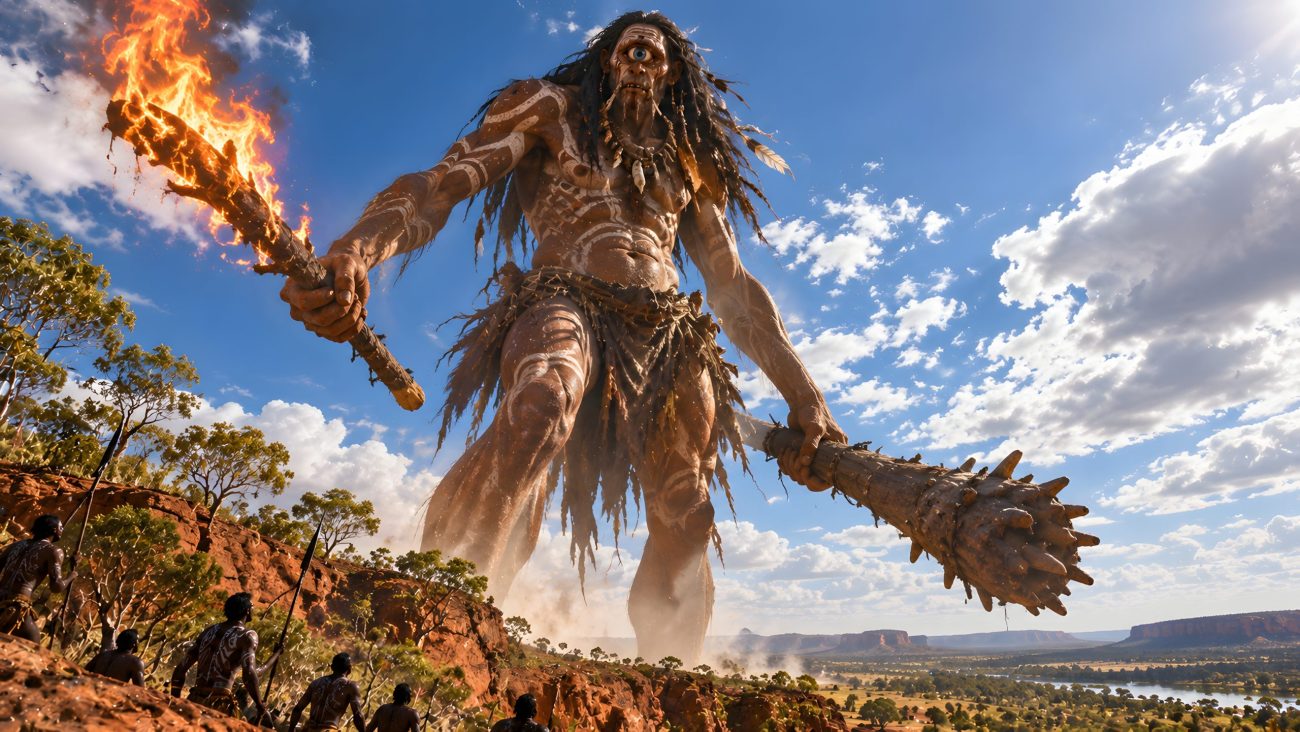
Papinijuwari are one-eyed giants in the mythology of the Tiwi people of northern Australia. They live in a great hut located where the sky ends, beyond the familiar world. These fearsome beings are associated with shooting stars, which are believed to represent Papinijuwari stalking across the heavens. As they travel through the sky, they carry a burning firestick in one hand and a fighting club in the other.

Papinijuwari feed on the bodies of the dead and the blood of the sick. They possess an extraordinary sense of smell that allows them to detect illness and track down vulnerable people. Upon finding a sick person, a Papinijuwari makes itself invisible and secretly sucks the victim’s blood without leaving any visible wound. The victim gradually grows weaker as the giant continues to feed.

As the sick person approaches death, the Papinijuwari becomes small enough to enter the victim’s body through the mouth. Once inside, it drinks the remaining blood from within, completing its gruesome feeding. These giants are therefore associated with sickness, death, and the mysterious loss of blood, while their appearance as shooting stars connects their predatory activity to movements across the night sky.


Sources

“Papinijuwari.” Wikipedia: The Free Encyclopedia. Wikimedia Foundation. Accessed October 16, 2026. https://en.wikipedia.org/wiki/Papinijuwari


Mashurdaly

Tradition: Romanian Mythology, Hungarian Mythology
Alternative Names: Mashurdalo, Mashurdalov, Mashurdals, Mashurdalo (Latin spelling)
Category: Giant


The Myth

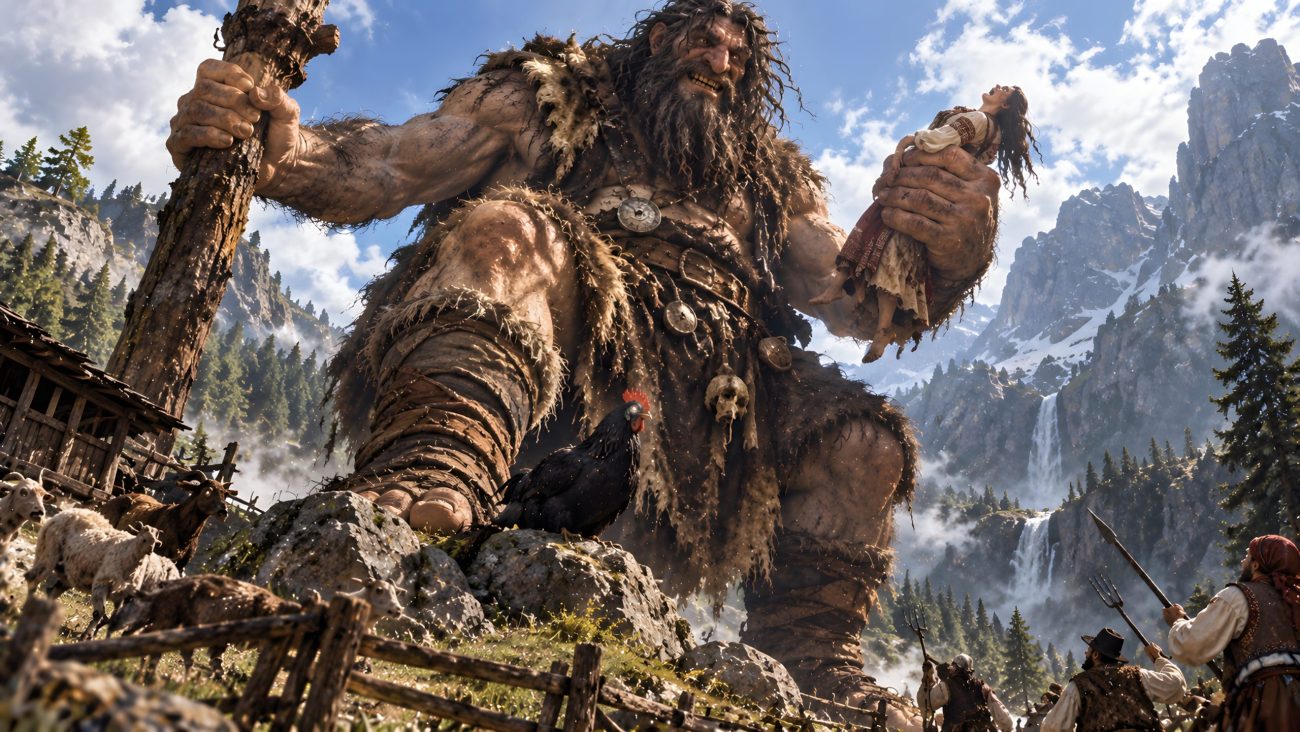
Mashurdaly are foolish mountain giants in Romani folklore, particularly in traditions associated with Hungarian, Romanian, and Balkan Romani’s. They inhabit mountains, forests, and wastelands, where they wait for animals or people to pass by. They are described as stupid and easily deceived, often kidnapping women and children or stealing livestock. Their lack of intelligence makes them vulnerable to cunning humans, who can trick them, rob them, or even kill them.

Each Mashurdal has a giant wife and several children, and every member of the family possesses a magical black chicken. Each chicken holds the life and health of its owner within its own body. If a Mashurdal is injured or killed, its chicken swallows an egg laid by a black hen, restoring the giant to health. To defeat one permanently, a person must first find and destroy its black chicken. Although this weakness makes the giants vulnerable, discovering it requires considerable cunning, since the Mashurdaly are dangerous despite their stupidity.

Mashurdaly are also associated with strange magical transformations. A Mashurdal’s wife can transform into a thin, swift horse if a magical bridle is placed around her neck. Anyone who drinks the blood of a Mashurdal gains immense strength. In one tale, a Mashurdal gives his helpful guest a heroic horse with a bridle made from a magical vine, whose growth is guarded by nine black dogs and a dragon called the Ushap. The Mashurdal’s family also owns the egg of a thousand-year-old owl, which contains a worm of happiness.

Stories about these giants sometimes portray them as both dangerous and strangely vulnerable to ordinary tricks. One account describes a family of Mashurdaly whose father has hair that shines like the Sun. When questioned about it, he explains that it burns day and night and takes away his sight. In another story, a Mashurdal lives in a dark forest with a magical iron cave, sleeps on a sheepskin rug, and speaks only in grunting sounds. Some traditions say that Mashurdaly visit villages at night to inspect people’s homes, although dogs can sense their presence and cause them to flee.


Sources

“Mashurdaly.” New Bestiary (Bestiary.us). https://www.bestiary.us/mashurdaly


Clíodhna

Tradition: Irish Mythology
Alternative Names: Clídna, Clíodna, Clíona, Cleena, Clíodna of Carrigcleena
Category: Ghost


The Myth

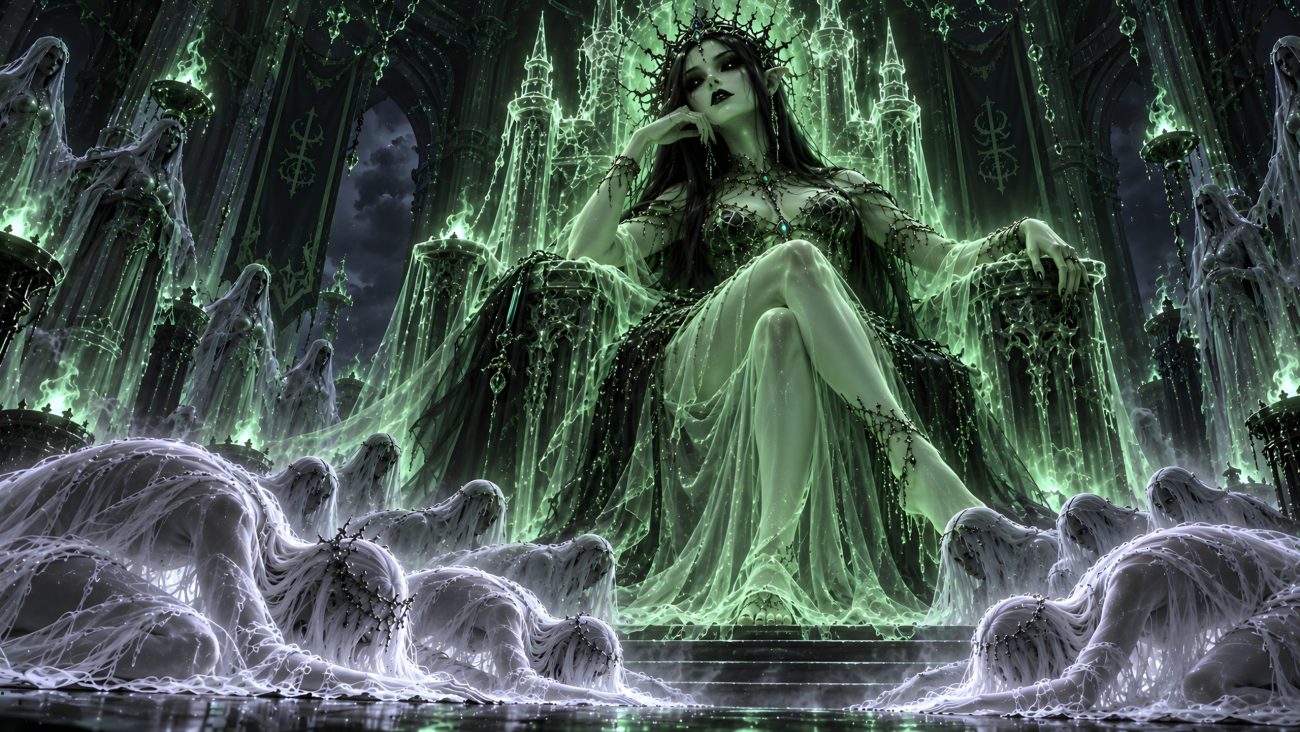
Clíodhna is a powerful supernatural woman in Irish mythology, associated particularly with southern Munster, or Desmond, where she rules as queen over the sióga, the fairies. Known as Clíodna of Carrigcleena, she is regarded in some traditions as a queen of the banshees, while others portray her as a goddess of love and beauty and a benefactor of County Cork. Her palace lies among a great pile of rocks near Mallow, at a place known as Carrig-Cleena. She is closely associated with several old Irish families, including the MacCarthys, O’Keeffes, O’Donovans, and FitzGeralds, and appears in numerous local legends.

One of the best-known stories about Clíodhna concerns her love for Ciabhan of the Curling Hair, recounted in the medieval Irish work Acallam na Senórach, or Colloquy of the Ancients. Clíodhna was the daughter of Gebann, a chief druid in the otherworldly land of Tír Tairngire, ruled by Manannán. When she saw Ciabhan, she fell in love with him and agreed to leave the otherworld with him. They sailed to Ireland and reached Teite’s Strand, where Ciabhan went ashore to hunt, leaving her in their boat. People sent after them from Manannán’s realm played enchanting music that lulled Clíodhna to sleep. A tremendous wave then swept her away. The place became known as Tonn Chlíodhna, or “Clíodhna’s Wave,” near Glandore Harbour. Different versions of the legend disagree about whether she drowned.

Clíodhna is also associated with three brightly coloured birds that feed on apples from an otherworldly tree. Their sweet singing is said to heal sickness. In another tradition preserved in the Book of Lismore, she gives Teigue, the son of Cian, three magical birds to guide his warriors and provide music during their voyage, as well as an emerald cup that transforms water into wine. She warns Teigue that losing the cup will bring about his death. With the birds and cup, Teigue and his warriors eventually return home victorious after rescuing their captured people.

Other legends portray Clíodhna as a powerful enchantress whose jealousy can bring terrible consequences. In one tale, she and her younger sister Aoivil both fall in love with a prince named Caiov. When he chooses Aoivil, Clíodhna curses her sister, causing her to lose her beauty and appear dead. She then secretly carries Aoivil to a cave at Castlecor, transforms her into a white cat, and enchants the cave into a palace filled with treasure. Aoivil remains trapped there, returning to human form for only one week each year at midsummer. Clíodhna eventually marries Caiov, but when the truth is revealed, their relationship is shattered. She retires to her fairy palace at Carrigcleena, where she continues to visit her enchanted sister.

Clíodhna also appears in tales of mortals taken into Fairyland. In one story, she abducts the chieftain Fitz-Gerald, whom she desires, but releases him after his beloved Ellen O’Brien travels to Carrigcleena and pleads for his return in poetry. Another legend concerns the Blarney Stone: when Cormac Laidir MacCarthy faced a lawsuit, Clíodhna advised him to kiss the first stone he found on his way to court. He followed her advice and delivered his case with such eloquence that he won. The stone was later incorporated into Blarney Castle and became associated with the gift of persuasive speech. Across these traditions, Clíodhna appears as a figure of beauty, magic, desire, jealousy, and otherworldly power, capable of helping mortals but also drawing them into dangerous encounters with the fairy realm.


Sources

“Clíodhna.” Wikipedia: The Free Encyclopedia. Wikimedia Foundation. Accessed October 16, 2026. https://en.wikipedia.org/wiki/Cl%C3%ADodhna


Kohada Koheiji

Tradition: Japanese Mythology
Alternative Names: Koheiji Obata, Kohada Koheiji, Ghost Koheiji, The Vengeful Spirit of Asaka Marsh
Category: Ghost


The Myth

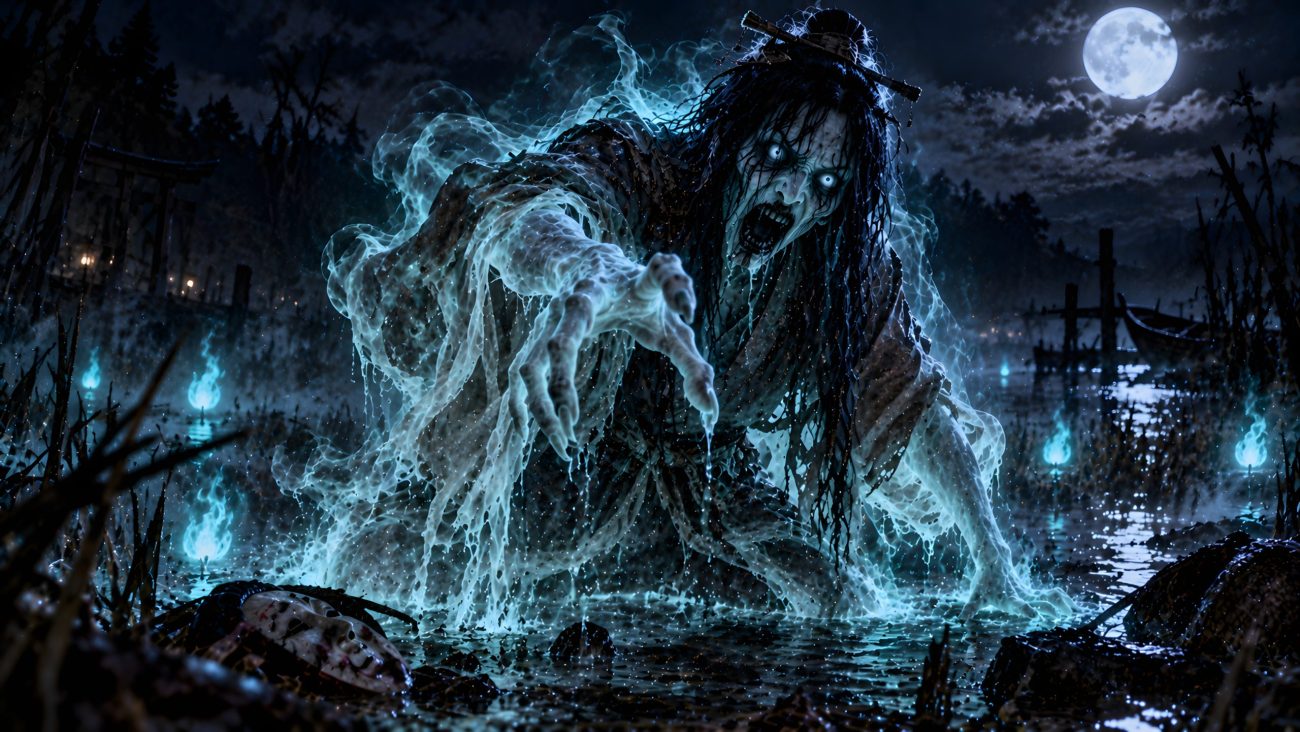
Kohada Koheiji is a famous vengeful ghost figure in Japanese ghost stories of the Edo period. His tale is told in Fukushū Kidan Asaka Numa, one of the earliest stories about his supernatural revenge. In life, Koheiji was an actor from Edo who performed in rural theatres throughout Japan. His acting was generally considered poor, earning him the mocking name “Kohada,” after the small fish, although he excelled at ghost plays and was sometimes called Ghost Koheiji. His first wife died after giving birth to their son, Kotaro. His second wife, Otsuka, was cruel to her stepson and secretly involved with Adachi Sakuro, a drummer and acquaintance of Koheiji.

Sakuro conspired with his criminal associates to murder Koheiji so that he could take Otsuka as his wife. Under the pretext of a fishing trip, Koheiji was taken by boat to Asaka Marsh and thrown into the water. His death was treated as an accidental drowning, and the search for his body was soon abandoned. At a hideout, Sakuro found Koheiji’s corpse, covered in mud and foam. He stole five gold coins sewn into the dead actor’s collar and mocked him for being too foolish to recognize the betrayal that had led to his death. As Sakuro prepared to leave, Koheiji’s cold hand suddenly gripped his wrist. The corpse opened its eyes, terrifying Sakuro so badly that his accomplice cut off the hand to free him, eventually severing the fingers that remained embedded in his arm.

When Sakuro returned to Edo and told Otsuka what had happened, she claimed that Koheiji had already returned home sick and was resting behind a screen. A thin, blue hand emerged from behind it and held the screen shut. When Sakuro forced it open, the room was empty, and a faint flame escaped through the window. The rotten fingers left behind were unmistakably those cut from Koheiji’s corpse. Otsuka showed little fear, declaring that such hatred was to be expected. Sakuro nevertheless married her and took possession of Koheiji’s house. For a time, the couple lived peacefully, but Koheiji’s spirit continued to torment them. Sakuro began seeing a mysterious man lying beside Otsuka, and later believed he had caught her with another lover. When he attacked the figure with his sword, it vanished, leaving only mocking laughter from the roof. Otsuka lost the fingers of one hand while gripping the blade and soon fell seriously ill, her mind and body breaking under the relentless haunting.

A Shinto priest warned Sakuro that his house was cursed by the dead and gave him a talisman, instructing him to keep the doors closed and maintain ritual purity for thirty-two days. Each night, Koheiji’s ghost patrolled the house, appearing as a shadowy fire and threatening to take Sakuro’s life. On the thirty-second night, Sakuro believed the danger had passed and opened a window. A gust of wind carried the ghostly flame inside, and a scream came from the bedroom. Otsuka had vanished, leaving blood on the wall and long strands of hair on the eaves. Sakuro later sought protection from a Zen monk, who warned that his life was in danger and gave him a sealed packet that supposedly contained gold and would protect him for three days. After the period had passed, Sakuro discovered that the gold was counterfeit. When he confronted the monk, the man beat him with an iron staff. Sakuro returned home badly injured, developed a high fever, and died in delirium, imagining that he was being dragged into water and forced to drink as though he were drowning.

The tale attributes the disasters that befell Sakuro and Otsuka to Koheiji’s vengeful spirit. His soul remained at Asaka Marsh, tormenting people who encountered the place, and the story became so feared that theatrical performers reportedly avoided discussing it. Even those involved in the murder who escaped the ghost’s immediate vengeance eventually met their deaths. In the end, however, Koheiji’s spirit was said to have attained Buddhahood through the teachings of the Zen master Ryōzen, bringing the hauntings to an end. The marsh was later converted into rice fields known as Koheiji Shinden. His son Kotaro grew up to become a successful actor, but was deeply saddened by his father’s transformation into a vengeful spirit and devoted himself to Buddhist prayer.


Sources

“Kohei Obata.” 新版TYZ 妖怪図鑑 (New TYZ Yokai Encyclopedia). https://tyz-yokai.blog.jp/archives/1010654425.html


Misho Misho

Tradition: Japanese Mythology
Alternative Names: Mi-Mi, “Show Me, Show Me”
Category: Ghost


The Myth

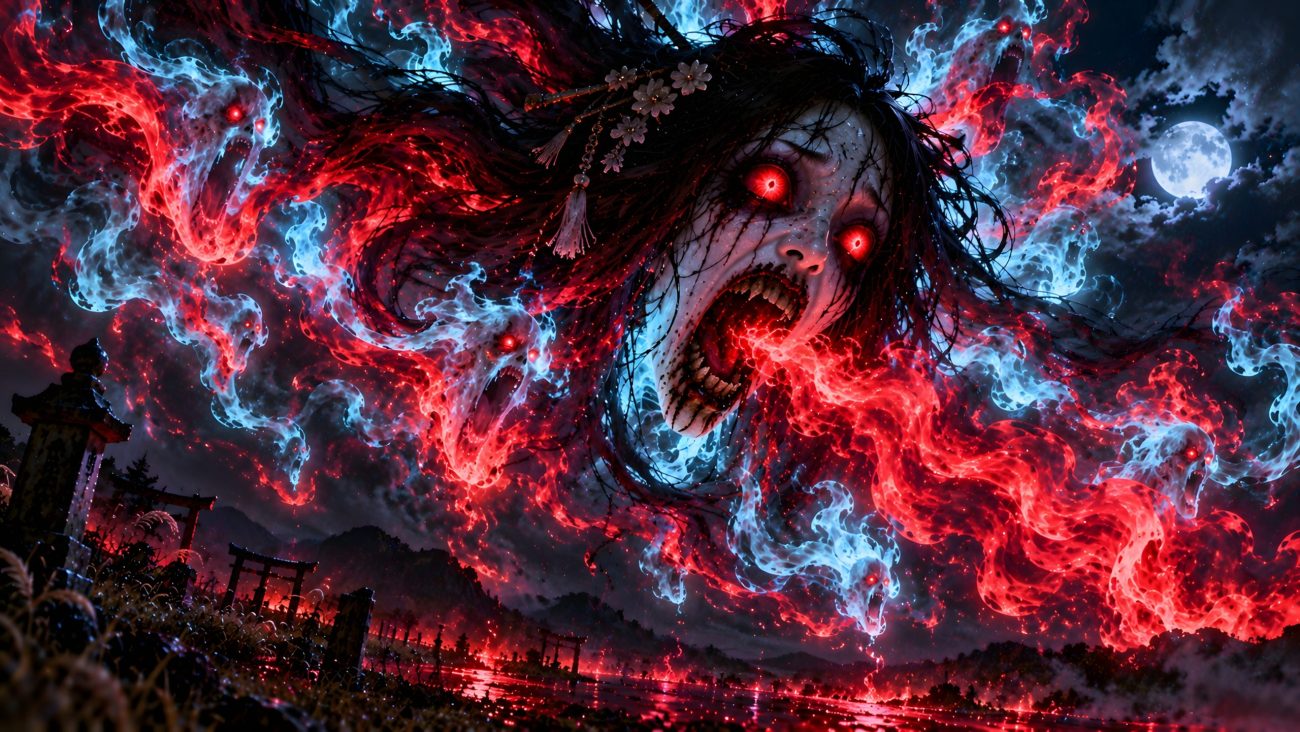
Misho Misho is a mysterious supernatural creature described in New Tales of One Hundred Ghost Stories. It appears as a woman’s severed head that floats above the ground, accompanied by eerie flames and mournful cries. Its name is associated with the repeated words “Look, look,” which it speaks as it passes unsuspecting travelers.

The creature appears in a tale about Risuke, a bookseller from Samegai Street in Kyoto who regularly traveled to Nara to sell books purchased in Kyoto and Osaka. One year, after recovering from an illness, Risuke decided to make the journey alone for the first time in a long while. An errand delayed his departure, however, and he was forced to continue along the road after nightfall. As he passed a remote cemetery on the Nara Road, a cold wind swept across the fields, and the darkness of the starless night filled him with unease.

Ahead of him, Risuke spotted a wavering light that was neither foxfire nor the glow of a lantern. As it approached, he heard a woman’s cries. He quickly hid behind a large stone pagoda beside the road and watched as a woman’s head emerged from the darkness, its hair disheveled and its teeth blackened. The head floated about a foot above the ground as though carried by the wind. Passing by with a mournful voice, it repeatedly uttered the words “Look, look,” each time releasing flames from its mouth.

Risuke watched the apparition until it had traveled several dozen feet away, but he soon became dizzy and lost consciousness. He did not recover his senses until just before dawn. When he finally reached Nara and recounted the encounter to his innkeeper, he was still trembling with fear. The tale leaves the nature and purpose of Misho Misho unexplained, presenting it as a terrifying apparition encountered on a lonely road after dark.


Sources

“Misefumisu.” 新版TYZ 妖怪図鑑 (New TYZ Yokai Encyclopedia). https://tyz-yokai.blog.jp/archives/1070141379.html


Yang Wulang Ghost

Tradition: Chinese Mythology
Alternative Names: 楊五郎鬼, Yang Wulang Gui, The Ghost of Yang Wulang
Category: Ghost


The Myth

The Yang Wulang Ghost is a monstrous spirit recorded in the Chinese supernatural collection Yijian Zhi (夷堅志), specifically in the third collection, volume six, chapter four, under the title “The Ghost of Yang Wulang.” The creature is described as enormous and powerfully built, standing approximately one zhang tall, a traditional Chinese unit of length. Its two arms are as thick as human thighs, giving it a formidable appearance, yet it is also remarkably agile and capable of leaping and moving with surprising speed.

The ghost is covered in black hair across its entire body. One account describes how, when its flesh is boiled in hot oil, it dissolves into black liquid that flows away. This disturbing detail emphasizes its unnatural physical nature and distinguishes it from an ordinary human spirit.

The tale centers on a man who kills a ghost, presenting Yang Wulang as a dangerous supernatural adversary that can nevertheless be overcome. The figure’s name has also been connected to the possible inspiration for the fictional Buddhist monk Lu Zhishen, the formidable “Flowery Monk” from Water Margin. According to the account, performers who developed Lu Zhishen’s character may initially have drawn inspiration from Yang Wulang, a monk associated with Mount Wutai. This connection is presented as a possibility rather than a confirmed origin.


Sources

“楊五郎.” Chinese Wikipedia. Wikimedia Foundation. Accessed October 16, 2026. https://zh.wikipedia.org/wiki/%E6%A5%8A%E4%BA%94%E9%83%8E


Guimu

Tradition: Chinese Mythology
Alternative Names: 鬼母, Ghost Mother, Ghost Goddess, Guigu Shen, Tiger-Dragon Feet, Python Eyes, Dragon-Eyebrows
Category: Ghost


The Myth

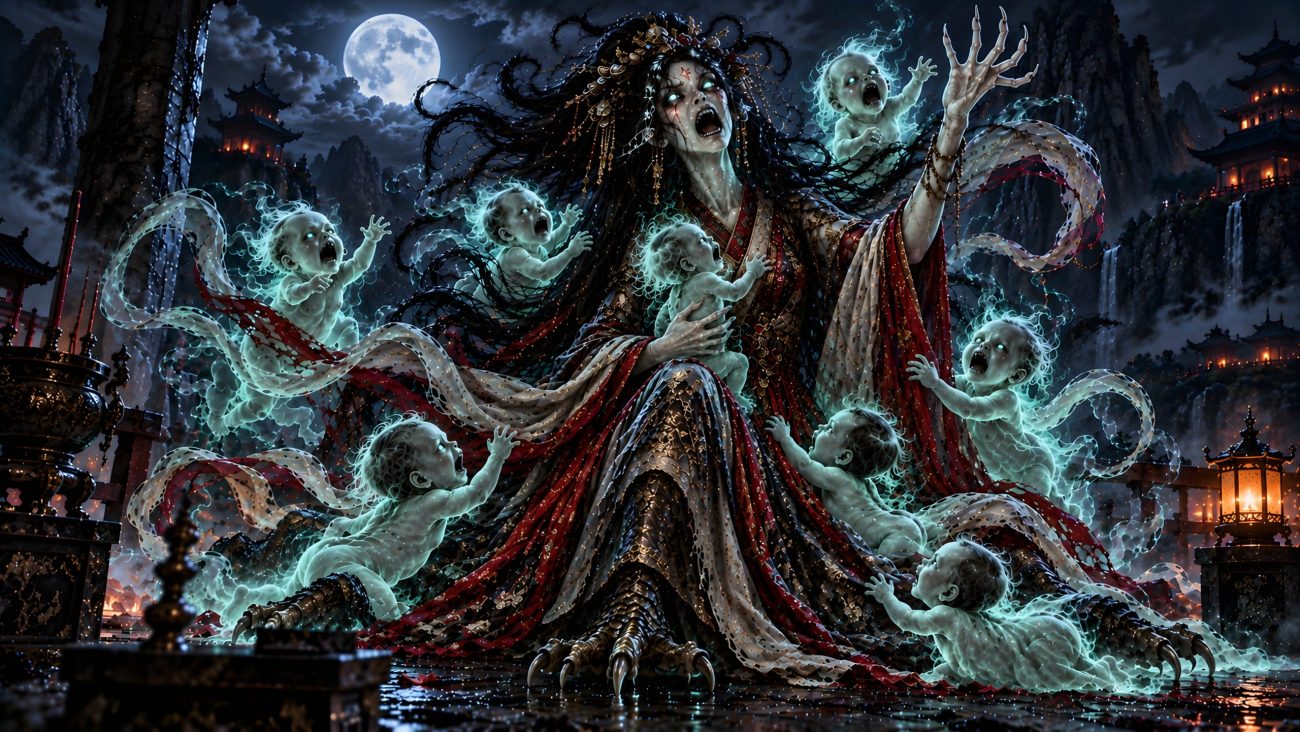
Guimu, whose Chinese name 鬼母 means “Ghost Mother,” is a strange and powerful supernatural being in Chinese mythology. According to the Shuyi Ji (述异记), she lives on the small mountain of Yushan in the South Sea. She is also known as Guigu Shen, or Ghost Aunt Goddess, and is described through unusual features and names associated with tiger-dragon feet, the round eyes of a python, and eyebrows resembling those of a dragon. Her appearance is portrayed as extraordinary and bizarre, reflecting her supernatural nature.

Guimu possesses immense powers, with the Shuyi Ji attributing to her the ability to produce Heaven, Earth, and ghosts. She can give birth to ten ghosts in a single birth, making her a formidable maternal figure associated with the origins and generation of spirits. Her role connects motherhood with the supernatural world, presenting her as a being capable of producing numerous ghosts through her extraordinary powers.

Guimu also appears in other Chinese literary traditions. In Strange Tales from a Chinese Studio (Liaozhai Zhiyi), the character Yingning is described as having been born from a fox but raised by Guimu. In Hou Xiyou Ji (The Later Journey to the West), Princess Iron Fan, after attaining spiritual fulfillment, enables the Bull Demon King to become a Ghost King. The Bull Demon King then revives Princess Jade-Faced as the Rakshasa Ghost Mother. The Bull Demon King and the Ghost Mother later have a son named Prince Lixin, also known as Black Child. These accounts portray Guimu and related ghost-mother figures in different literary contexts, connecting them with the raising, creation, and lineage of supernatural beings.


Sources

“鬼母.” Chinese Wikipedia. Wikimedia Foundation. Accessed October 16, 2026. https://zh.wikipedia.org/wiki/%E9%AC%BC%E6%AF%8D


Knights in Lake Ägeri

Tradition: Swiss Mythology
Alternative Names: The Ghostly Knights of Lake Ägeri, The Knights of Morgarten, The Red Waters of Ägeri
Category: Ghost


The Myth

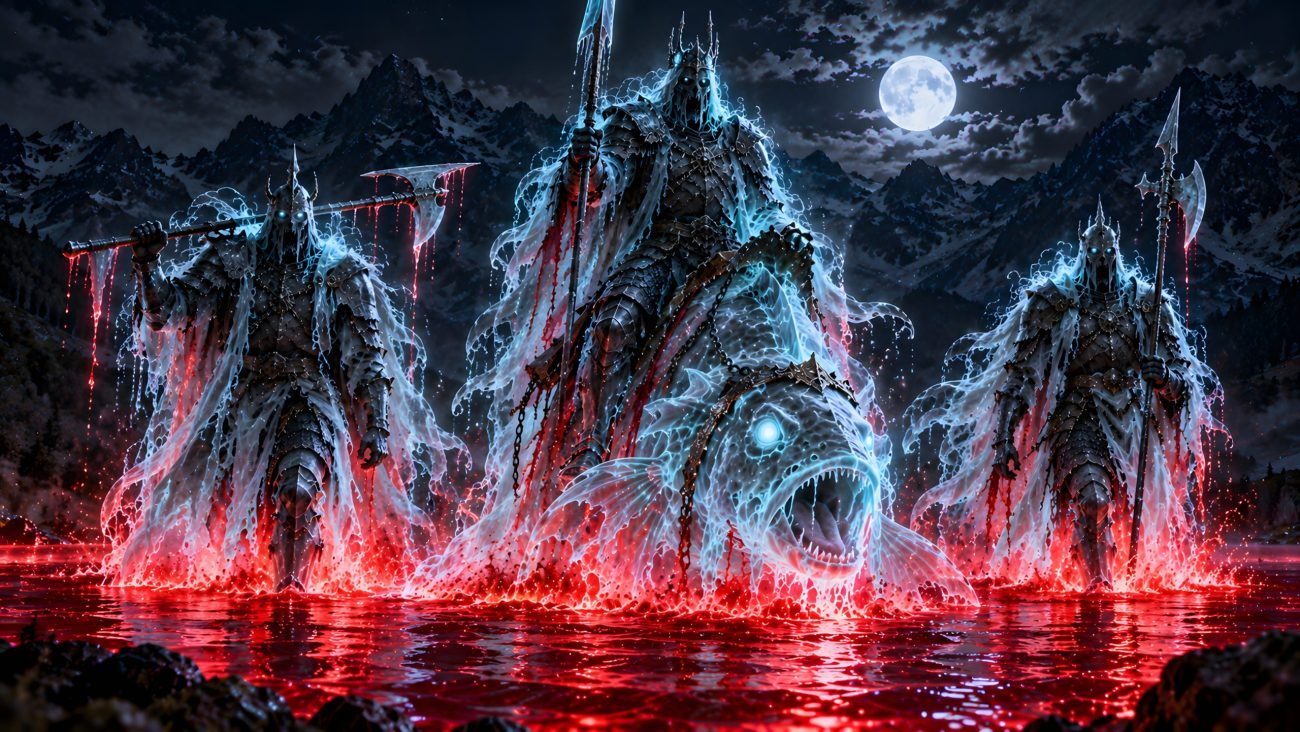
The Knights in Lake Ägeri are the restless spirits of Austrian warriors who perished during the Battle of Morgarten. Many knights were killed by Swiss halberds during the battle, while others who escaped the fighting drowned in the cold waters of Lake Ägeri. Their deaths bound them to the lake, where they remain until the anniversary of their defeat, when the dead return to haunt its shores.

On that fateful anniversary, the lake begins to churn like a boiling cauldron, and its waters turn blood red. From the crimson waves emerges a vast host of armed knights mounted on warhorses. At the head of the spectral army rides the Black Death, carrying an hourglass and a scythe. Together, the ghostly warriors charge along the shoreline at a terrifying gallop, forming a supernatural procession that recalls the violence and slaughter of the ancient battle.

The spectral host continues its furious ride until the church of Oberägeri announces the first hour of night. At that moment, the knights are compelled to return to the lakebed, where they must remain until the anniversary of their deaths comes around again. Their annual appearance serves as a supernatural remembrance of the Battle of Morgarten, while the blood-red waters and the presence of the Black Death transform the lake into a place of terror and lingering death.


Sources

“Der Ägerisee.” SAGEN.at – Zuger Sagen. Reproduced by SAGEN.at. https://www.sagen.at/texte/sagen/schweiz/zug/aegerisee.html


Ghost of Abraham Lincoln

Tradition: American Mythology
Alternative Names: Lincoln’s Ghost, The White House Ghost, The Phantom President
Category: Ghost


The Myth

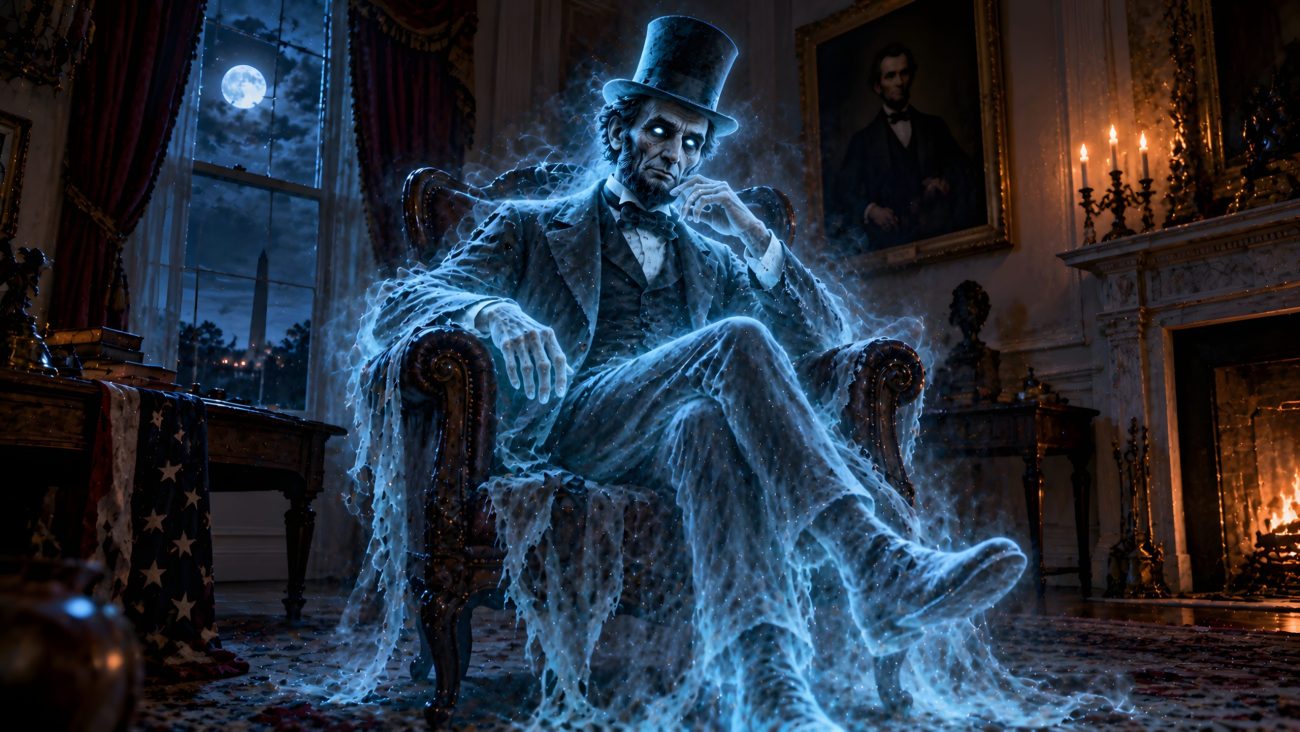
The ghost of Abraham Lincoln, the sixteenth president of the United States, is one of the best-known spirits in American folklore. According to legend, Lincoln’s ghost has haunted the White House since his assassination in 1865. He is most often associated with the Lincoln Bedroom and the corridors of the presidential residence, where witnesses have claimed to see his figure, hear his footsteps, or sense his presence. He is typically described as resembling Lincoln in life, wearing his characteristic dark frock coat and tall stovepipe hat. Stories of his apparition have become part of the White House’s reputation for supernatural activity.

One of the earliest reported sightings came from First Lady Grace Coolidge, who said she saw Lincoln standing at a window in the Yellow Oval Room in 1927, gazing toward the Potomac River. Other prominent visitors have supposedly encountered his spirit. Queen Wilhelmina of the Netherlands reportedly heard a knock on her bedroom door in 1942 and, upon opening it, saw Lincoln standing before her in his familiar clothing. In another popular story, British Prime Minister Winston Churchill emerged from his bath and encountered Lincoln beside a fireplace. Churchill greeted the apparition with a witty remark about being at a disadvantage, whereupon Lincoln allegedly smiled and vanished. These accounts vary in their details, but repeatedly portray the former president appearing unexpectedly to visitors staying in the White House.

Other reports describe unexplained sounds and less direct manifestations. Residents and staff have claimed to hear footsteps outside the Lincoln Bedroom, knocks at its door, or the sound of someone moving inside. Mary Eben, a secretary to Eleanor Roosevelt, reportedly saw Lincoln sitting on the bed and pulling on his boots, while other witnesses claimed to have seen him lying on the bed or seated in a chair. Eleanor Roosevelt said she had repeatedly felt Lincoln’s presence, although she did not claim to have seen him herself. President Harry S. Truman reportedly heard mysterious knocks while staying in the Lincoln Bedroom, and several members of Franklin D. Roosevelt’s administration also claimed to have encountered signs of the ghost.

The haunting is not limited to the White House. Lincoln’s spirit has reportedly appeared at former residences and locations associated with his life, including his law office in Springfield, Illinois. Other legends describe a phantom train traveling along the route taken by his funeral train in April, as well as apparitions near his grave. Reports of supernatural activity have also involved Lincoln’s son, Willie, who died of typhoid fever in the White House in 1862. Staff members during the administration of Ulysses S. Grant reportedly saw Willie’s ghost, and later accounts included a claim by Lynda Bird Johnson Robb that she had seen and spoken with the boy’s spirit. Together, these stories have made the White House Ghost a lasting part of American ghost lore, linking the nation’s presidential history with tales of the dead returning to places deeply connected to their lives.


Sources

“Lincoln’s Ghost.” Wikipedia: The Free Encyclopedia. Wikimedia Foundation. Accessed October 16, 2026. https://en.wikipedia.org/wiki/Lincoln%27s_ghost