Whirlwind Ghost

Tradition: Pawnee Mythology, American Mythology
Alternative Names: Ghost-Man, Whirlwind Spirit
Category: Ghost


The Myth

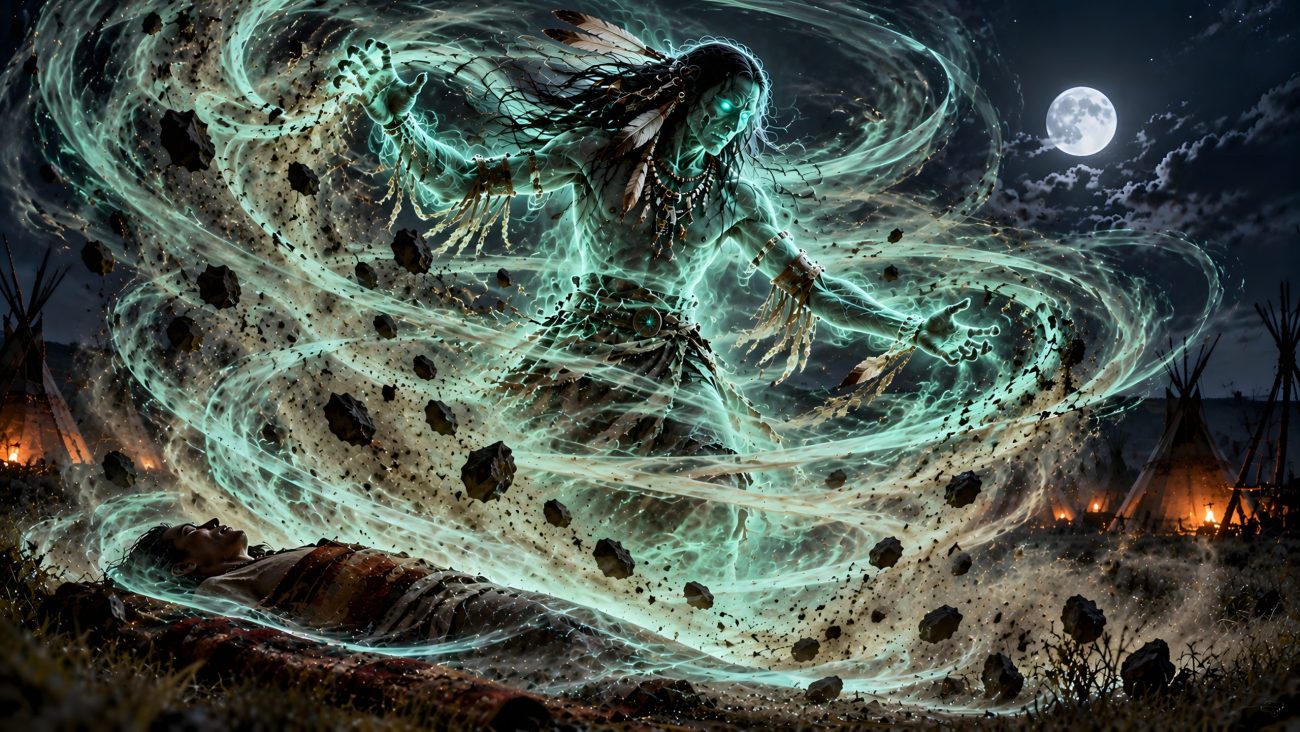
Ghost-Man was a mysterious man who lived among graveyards and rarely stayed at home. Whenever he entered a village, whirlwinds appeared around him, rising beside him before suddenly disappearing. People suspected that he was a ghost because of his strange connection to these swirling winds. Despite his frightening nature, Ghost-Man possessed the power to heal those whose spirits were threatened by supernatural forces.

When a man became gravely ill because a ghost or whirlwind was trying to steal his spirit, Ghost-Man offered to help. Sitting beside the sick man, he gathered dust and threw it into the air, creating a whirlwind that enveloped the patient. The sick man recovered, and Ghost-Man returned home without demanding any payment. He continued healing others who suffered from the same mysterious illness. On another occasion, he was summoned to treat a man who had fallen ill after dreaming of the dead.

This time, Ghost-Man did not throw dust into the air. Instead, he spun around and transformed his own body into a whirlwind that surrounded the sick man and restored his health. However, Ghost-Man made a terrible mistake: he failed to transform himself back into human form. When the whirlwind subsided, only a skeleton remained on the ground. Terrified, the people fled from the lodge, but the recovered man stayed behind, gathered the bones, and buried them. From this strange event came the belief that whirlwinds are ghosts or spirits, and the story serves as a warning about the mysterious and dangerous powers of those who practise spiritual healing.


Sources

Dorsey, George A. The Pawnee: Mythology (Part I). Collected under the auspices of the Carnegie Institution of Washington. Washington, D.C.: Carnegie Institution of Washington, 1906.
Ghost Town Ghost

Tradition: Tlingit Mythology, American Mythology
Alternative Names: Ghost House
Category: Ghost


The Myth

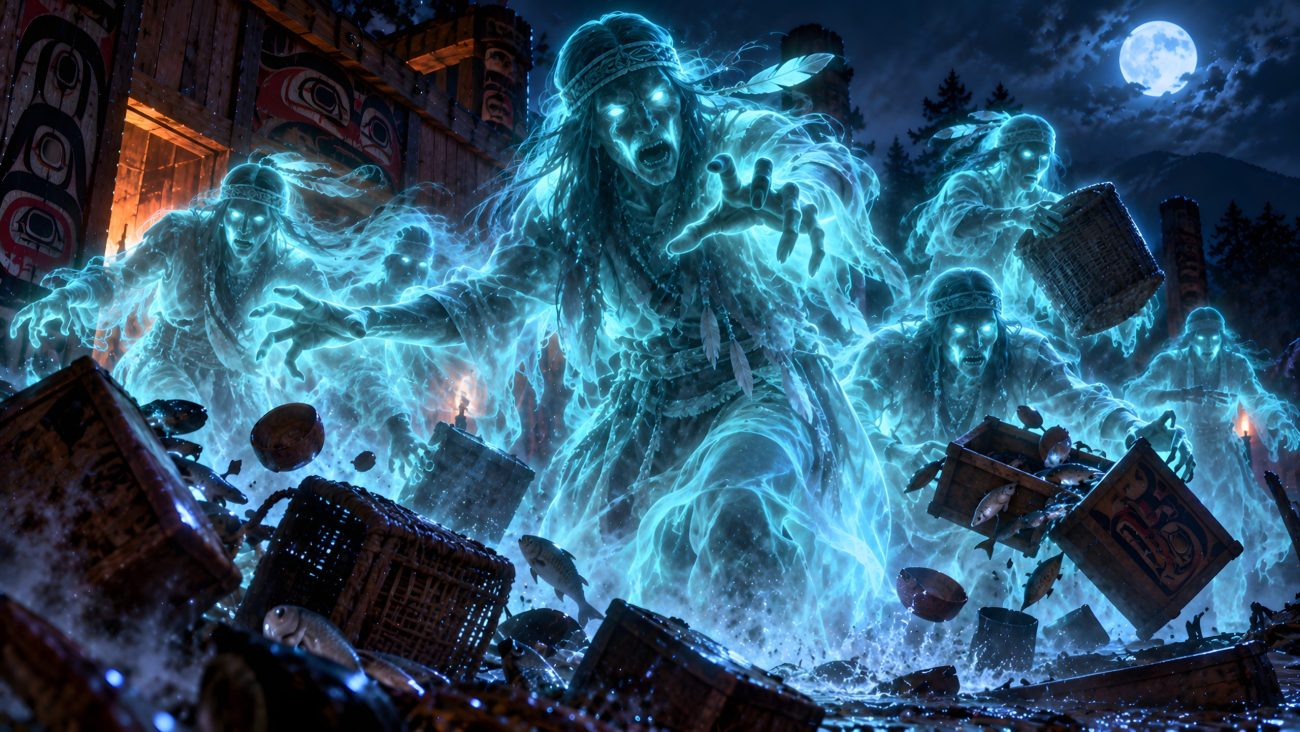
Ghost Town is a deserted settlement inhabited by invisible spirits. When Raven arrives, he finds a large town where everyone appears to have died. He enters the largest house, but an unseen presence continually pushes him away, even though he cannot see anyone inside. Realizing that the house is haunted, Raven discovers that the apparently empty town is not as deserted as it seems.

Raven decides to take provisions from the empty houses, loading them into his canoe before paddling away. However, he does not notice that a long rope connects the stern of his canoe to a tree on the shore. Once he reaches the end of the rope, the canoe is abruptly pulled back to the beach, and all the provisions are returned to the houses. Despite these mysterious actions, Raven cannot see anyone responsible.

The invisible inhabitants then retaliate by dropping a large stone onto Raven’s foot, leaving him badly lame. Although the town appears empty, its ghostly residents can move objects, prevent outsiders from taking their possessions, and inflict physical harm on those who disturb their settlement.


Sources

Judson, Katharine Berry, ed. Myths and Legends of Alaska. Illustrated. Chicago: A. C. McClurg & Co., 1911.


Slag Pile Annie

Tradition: American Mythology
Alternative Names: Annie
Category: Ghost


The Myth

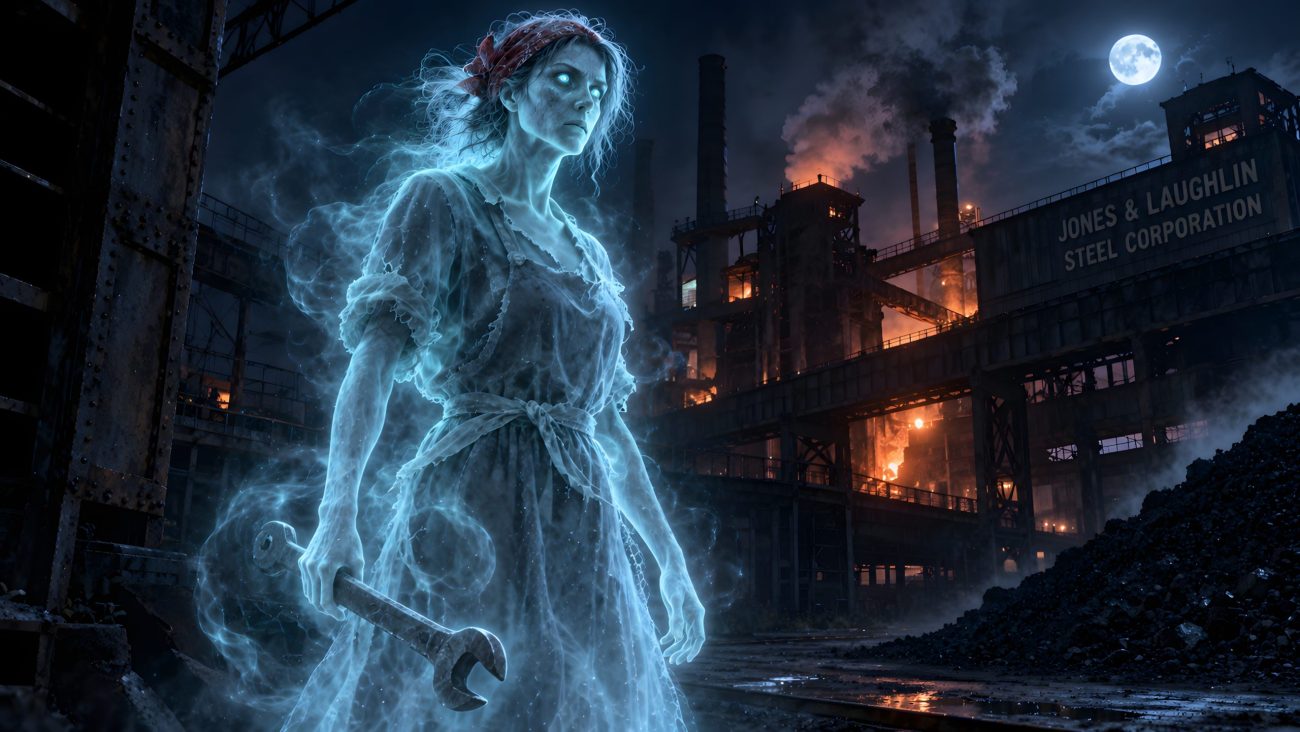
Slag Pile Annie is a ghost said to haunt the former Jones and Laughlin Steel Corporation mill in Pittsburgh, Pennsylvania. She appears as a rough-looking woman wearing a red bandana, resembling a steelworker dressed for a hard day’s labour. Her apparition is often seen working or standing alone in remote, difficult-to-reach areas of the mill, where workers might not expect to encounter anyone.

According to the legend, steelworkers sometimes came across Annie while working in dangerous parts of the factory. Believing her to be a living woman, they would warn her about the hazards surrounding her and urge her to be careful. Annie would calmly respond, “I can’t get killed, I’m already dead.” Her chilling reply revealed that the woman they had encountered was not alive, and the apparition became known as Slag Pile Annie.

The legend may have originated from the experiences of women who worked in dangerous jobs in Pittsburgh’s steel mills during the Second World War. Slag Pile Annie remains a ghostly figure associated with the hardships and hazards of industrial labour, appearing among the machinery and slag heaps of a steel mill where workers risked their lives every day.


Sources

“Slag Pile Annie.” Wikipedia: The Free Encyclopedia. Wikimedia Foundation. Accessed October 15, 2026. https://en.wikipedia.org/wiki/Slag_Pile_Annie