Tęsknica

Tradition: Polish Mythology
Alternative Names: Tęsknota, Osmętnica
Category: Ghost


The Myth

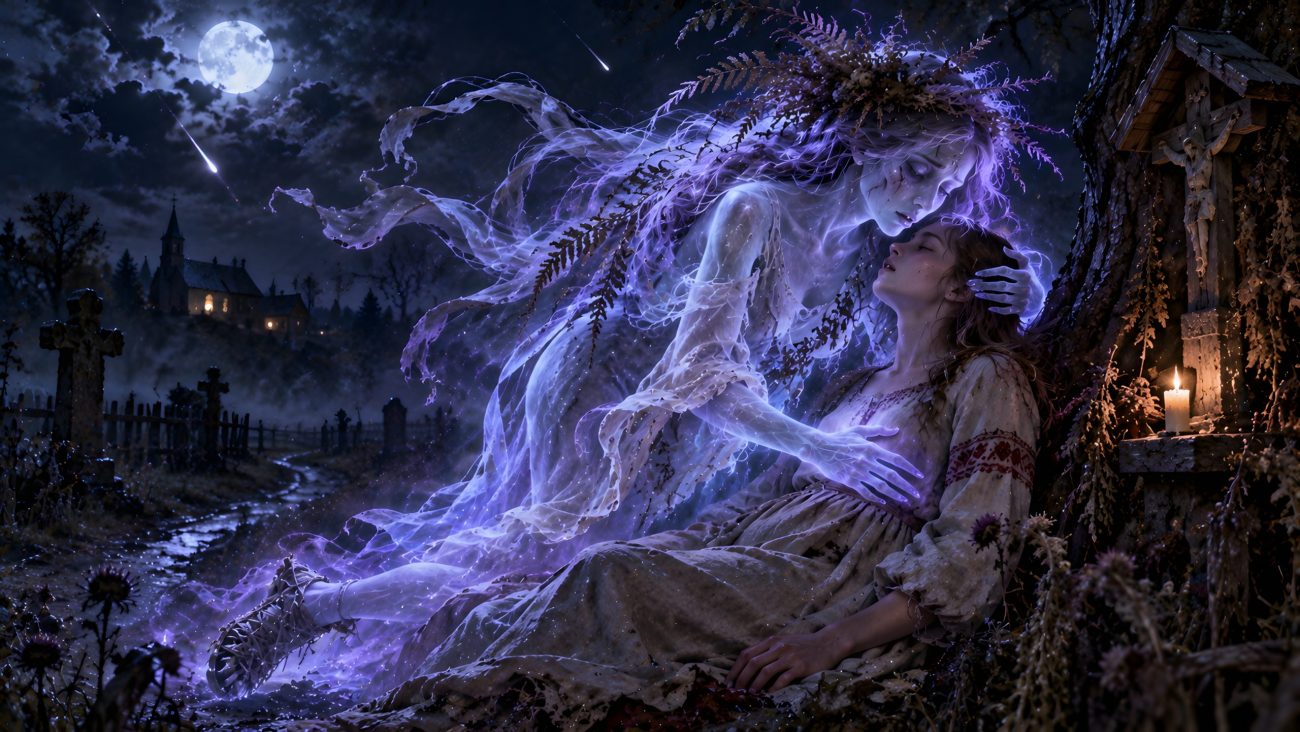
Tęsknica is a female demon in Slavic mythology, appearing as a pale, ghostly woman who embodies deep longing, sorrow, and a state of melancholy. She descends from the sky alongside falling stars, emerging from a black storm cloud. A wreath of dried ferns rests upon her head, and she wraps herself in a grey cloth taken from beneath the bed of a dead person. On her feet, she wears clogs woven by her own hands from green reeds pulled from a lake or from vines growing beside the water. She walks slowly with her head bowed, often sitting near cemeteries or beside roadside shrines at crossroads.

Tęsknica seeks out sorrowful, lonely, and weeping girls. When she finds one, she sits beside her, embraces her with thin, wasted arms, kisses her on the lips, and lays a heavy hand upon her heart. She most often targets young women who have not yet had children. Her touch leaves no wounds or visible marks, but it drains the victim of her strength and vitality. The afflicted girl loses her appetite and thirst, suffers from sleeplessness, and gradually becomes weak and motionless. Those touched by Tęsknica usually die not long afterward.

The only hope of salvation comes with the arrival of the Three Women, invisible angels of God who descend from heaven to help the afflicted. Until their intervention, Tęsknica’s victim remains trapped in sorrow and longing, slowly wasting away under the demon’s supernatural influence.


Sources

“Tęsknica.” Wikipedia, wolna encyklopedia (Polish Wikipedia). Wikimedia Foundation. Accessed October 15, 2026. https://pl.wikipedia.org/wiki/T%C4%99sknica

Gnieciuch

Tradition: Polish Mythology
Alternative Names: Gniot, Gniotek, Gnietek, Gnocek, Gnotek, Wiek
Category: Ghost


The Myth

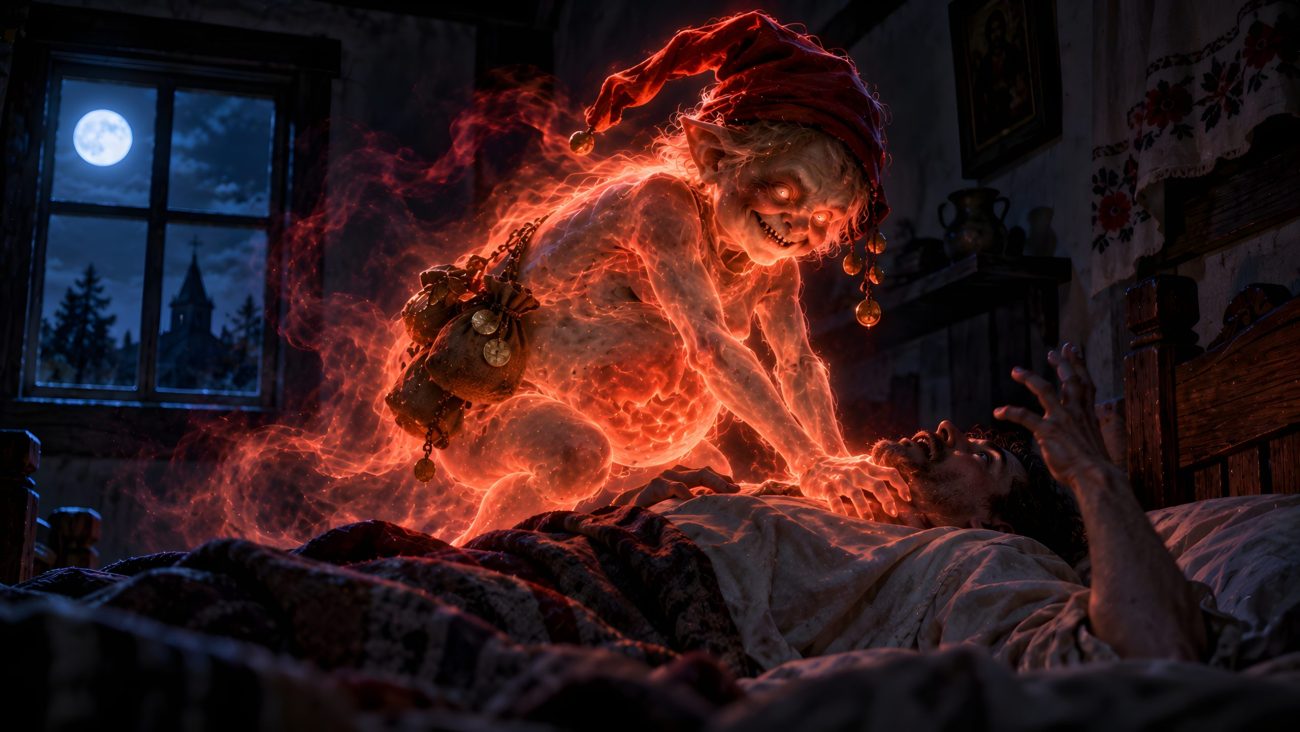
The Gnieciuch is a terrifying demon in Polish mythology that attacks people while they sleep, crushing their bodies beneath its enormous weight and strangling them in their beds. In Lesser Poland, it appears as a small, fat boy with a huge belly, a red cap, and considerable wealth. Despite its childlike appearance, the creature is dangerously heavy. Before strangling its victim, it removes the intestines from its own belly so that its weight will not crush the person to death too quickly. In the region around Ropczyce, the Gnieciuch is imagined as a silent, perpetually cold little boy who smacks his lips as he approaches someone to torment them.

The Gnieciuch’s appearance varies between regions. Among the Lasowiacy, the related Gniotek is described as a small but extraordinarily heavy creature with a large belly, thin arms and legs, and long fingers ending in crooked claws. Its hideous head has large ears, bulging eyes, and a wide mouth filled with protruding teeth. Other accounts describe it as a little boy with a distended belly, a crooked red cap, and pockets full of money. In Ocice, it resembles a heavy little doll wearing a golden cap and shoes and carrying three bags of money. The people of Mielec believed that its red cap contained wealth beyond measure.

The Gnieciuch is also associated with strange bargains and dangerous temptations. Anyone who manages to steal its red cap may be offered as much money as the cap can hold in exchange for returning it. However, the demon may instead take revenge on the thief. Although its wealth promises great riches, obtaining it is considered practically impossible.

The creature is said to hide in the hallways of houses, particularly in the recesses where millstones are kept. It listens to household conversations and may cause disturbances even during the day. When it enters a room through a knot in the ceiling, it leaves its intestines behind before beginning its nocturnal attack. It first settles on the sleeper’s legs, then slowly crawls upward until it reaches the chest. There, it pins the victim down with its hands and legs and grips the throat, leaving the person almost completely helpless. If the sleeper fails to awaken in time, the Gnieciuch may strangle them to death. In some accounts, it first presses against the stomach and chest before sucking away the victim’s blood and vital strength, leaving the person weak upon waking.

The Gniotek is particularly associated with tormenting drunkards and is believed to be invisible to sober people. Other traditions describe Gnieciuchy as the restless souls of deceased family members, people who were wronged during their lives, those who died suddenly or without confession, and the damned. These spirits return to trouble the living, appearing as small but heavy beings whose oppressive presence turns sleep into a struggle for survival.


Sources

“Gnieciuch.” Wikipedia, wolna encyklopedia (Polish Wikipedia). Wikimedia Foundation. Accessed October 15, 2026. https://pl.wikipedia.org/wiki/Gnieciuch