Kutys

Tradition / Region: Russian Mythology, Udmurt Mythology, Besermyan Mythology
Alternate Names: Vu Kutys (“Water Kutys”), Kutesi (Besermyan)
Category: Swamp Dweller, Spirit, Disease


The Myth

Kutys is a spirit that dwells near water, feared by people and animals alike. His name means “the one who seizes,” and when he acts, it is said that he truly grabs hold of his victims.

Kutys lives at springs, at the sources of rivers and streams, and in ravines where water once flowed. Even when a ravine dries in summer, Kutys may still remain there, unseen. Wherever he lives, sickness and terror follow. When he becomes angry, he punishes people and livestock first with sudden, unexplainable fear, and then with illness. Boils, scabs, erysipelas, abscesses, and wasting pains appear without warning. Sometimes Kutys inspires fear by wild, inhuman cries, and sometimes by appearing in dreadful forms, neither fully man nor beast.

Near the village of Omutnitsy, far from the town of Glazov, there is a spring where Kutys is said to live even now. Above the spring lies a marshy ravine covered with tangled growth. Kutys guards a hidden treasure there. On hot summer days, people or horses who approach the upper part of the ravine may be seized. Breath becomes difficult, strength drains away, the stomach tightens inward, fever and trembling begin, and soon the whole body falls into sickness. This suffering can last for days and may end in death unless Kutys is appeased with sacrifice.

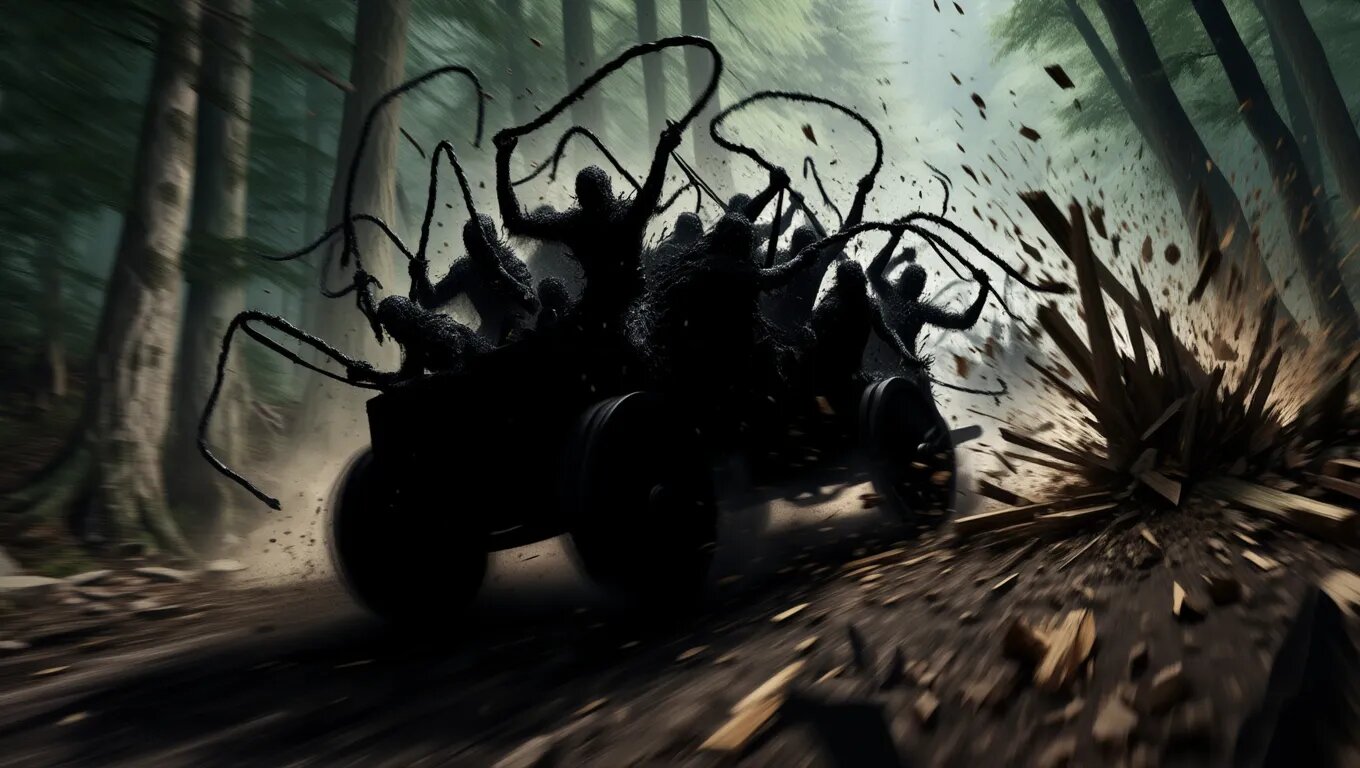
Once, men building a bridge over the stream called Yazinets slept beside their work. At midnight they were awakened by a terrible roar. At the head of the stream they saw a gigantic figure advancing toward them, something neither clearly human nor animal. In panic, they fled to the village, leaving their clothes and belongings behind.

To protect themselves, people make offerings to Kutys. Small loaves of bread, egg-filled pies, pancakes, grains of barley tied in cloth, copper coins, or even a live chicken with bound legs are given at springs and streams. Some throw grain mixed with salt, bits of cloth, or small dolls into the water or onto the ground where Kutys dwells. This act of offering is meant to calm him and release those he has seized.

Kutys is closely bound to water itself. Those who curse into water, spit, blow their nose, or behave disrespectfully near springs risk being taken by him. Among the Besermyans, Kutys is believed to be the spirit of those who died unnatural deaths, or of infants who died without being named. Such spirits linger near their burial places and seize anyone who steps upon them.

Thus Kutys remains a presence of sudden fear and sudden illness, a reminder that water is not only life-giving but dangerous, and that unseen hands may still reach up from springs and ravines to seize the careless.


Gallery


Sources

Bestiary.us contributors. (n.d.). Kutys. In Bestiary.us — Mythical Creatures of the World, from https://www.bestiary.us/kutys#


Interpretive Lenses

Religious Readings
  • Christian Ascetic Deep Dive
Philosophical Readings
  • Nietzschean Deep Dive
Psychological Readings
  • Jungian Deep Dive
Esoteric Deep Dive
  • Hermetic Deep Dive
Political / Social Readings
  • Marxist Deep Dive
Other
  • How to Invite The Kutys

Alp-Luachra

Tradition / Region: Irish Mythology
Alternate Names:
Category: Lizard, Newt, Hunger


The Myth

The Alp-Luachra is a dark fairy said to dwell throughout Ireland, feared for its quiet and dreadful way of feeding upon humans. Small and newt-like in form, it resembles a smooth, slippery creature of the grass and water, yet it is far from harmless. It waits for the careless sleeper who lies upon the earth beneath the open sky.

When a person sleeps outdoors with mouth unguarded, the Alp-Luachra slips silently inside. It passes down the throat and settles in the stomach, unseen and unfelt. There it does not eat flesh, but lives upon the essence of food itself, draining the strength and nourishment meant for the host. As time passes, the creature grows and multiplies within the body, while the victim feels constant hunger no matter how much is eaten.

Because of the fairy’s enchantment, the afflicted person does not know the true cause of their suffering. Months or even years may pass as the body weakens and wastes away. If nothing is done, the victim eventually dies of starvation, though food was always close at hand.

Those who know the old ways say the Alp-Luachra can be driven out by cunning rather than force. Strong-smelling or savory foods tempt it toward the mouth, while heavily salted meat brings unbearable thirst. When the victim lies near running water and opens their mouth, the creatures crawl out one by one, seeking the stream. Sometimes many emerge, and at last a larger one, said to be their mother.

Once expelled, the Alp-Luachra loses its power over the host. It is said that the creature itself still holds strange virtue, and that licking it can cure burns. But none who have suffered its presence ever forget the lesson it brings.

Thus the Alp-Luachra remains a warning in Irish lore: that unseen dangers dwell close to the body, that hunger may come from within, and that the earth itself is not always a safe bed for the unwary.


Gallery


Sources

A Book of Creatures contributors. (2015). Alp-luachra. In ABookOfCreatures.com, from https://abookofcreatures.com/2015/03/17/alp-luachra/


Interpretive Lenses

Religious Readings
  • Christian Ascetic Deep Dive
Philosophical Readings
  • Nietzschean Deep Dive
Psychological Readings
  • Jungian Deep Dive
Esoteric Deep Dive
  • Hermetic Deep Dive
Political / Social Readings
  • Marxist Deep Dive
Other
  • How to Invite The Alp-Luachra

Umibake

Tradition / Region: Japanese Mythology
Alternate Names:
Category: Yōkai, Sea Serpent, Snake


The Myth

Umibake is a yōkai known only from monster picture scrolls drawn after the Edo period. It appears among collections of strange beings painted together, without a written tale to explain its origin or deeds.

The Umibake emerges upon the surface of the water. Its body is long and slender like that of a serpent, stretching across the waves as it rises. Though its form is aquatic and elongated, its face and the shape of its hands resemble those of a familiar kind of yōkai often seen in monster scrolls, giving it an oddly human presence despite its inhuman body.

No story tells what Umibake does when it appears, nor why it comes forth from the water. It is simply seen there, floating or rising, a quiet and unsettling shape upon the surface of the sea.

Like many yōkai preserved only in pictures, Umibake remains a vision without explanation—its meaning carried only in its form, suspended between water and imagination.


Gallery


Sources

Tyz-Yokai Blog contributors. (n.d.). 海化け (Umibake). In TYZ-Yokai Blog, from https://tyz-yokai.blog.jp/archives/1036418400.html


Interpretive Lenses

Religious Readings
  • Christian Ascetic Deep Dive
Philosophical Readings
  • Nietzschean Deep Dive
Psychological Readings
  • Jungian Deep Dive
Esoteric Deep Dive
  • Hermetic Deep Dive
Political / Social Readings
  • Marxist Deep Dive
Other
  • How to Invite The Umibake

Uso no Seire

Tradition / Region: Japanese Mythology
Alternate Names:
Category: Yōkai, Fish, Monk, Catfish


The Myth

Uso no Seirei is a yōkai depicted in the Bakemono Emaki (Monster Picture Scroll) preserved in the Kawasaki City Museum.

It appears in the form of a bald monk-like figure. Its face has no eyes, no nose, and no mouth. From where its face should be, long whiskers grow, resembling those of a catfish. The creature wears a kimono patterned with images believed to represent the uso, the bullfinch.

The spirit stands silently, without expression or speech. Its lack of facial features gives it an unsettling presence, as though it exists without identity or emotion. The bullfinch pattern upon its robes marks its nature, binding it to the idea of the uso itself.

Uso no Seirei does not act violently, nor does it chase or attack. It simply appears, featureless and mute, a quiet and uncanny figure among the monsters of the scroll.


Gallery


Sources

Tyz-Yokai Blog contributors. (n.d.). [Title of entry]. In TYZ-Yokai Blog, from https://tyz-yokai.blog.jp/archives/1010653494.html


Interpretive Lenses

Religious Readings
  • Christian Ascetic Deep Dive
Philosophical Readings
  • Nietzschean Deep Dive
Psychological Readings
  • Jungian Deep Dive
Esoteric Deep Dive
  • Hermetic Deep Dive
Political / Social Readings
  • Marxist Deep Dive
Other
  • How to Invite The Uso no Seire

Adhnúall

Tradition / Region: Irish mythology, Celtic Mythology
Alternate Names: Adnual
Category: Dog


The Myth

Adhnúall, whose name means “Sweet of Sound,” was one of the hunting dogs of Fionn mac Cumhaill, leader of the Fianna. Unlike the more famous hounds, Adhnúall was remembered not for ferocity alone, but for a voice so beautiful and sorrowful that it could stir the heart.

Once, the dog was stolen by Arthur, the son of the king of Britain. The Fianna pursued the matter and reclaimed Adhnúall, restoring him to Fionn. From that time on, the hound remained closely bound to his master’s fate.

It was said that Adhnúall played a quiet but decisive role in love as well as in the hunt. Through the dog’s presence and guidance, Sadhbh was led into Fionn’s heart, beginning a bond that would shape both their lives.

In later days, a great battle was fought in Leinster, and many of the Fianna were slain. The loss weighed heavily upon Adhnúall. Stricken with grief, the hound ran the full circuit of Ireland three times, as though seeking every fallen companion and every memory of the Fianna.

When his strength was spent, Adhnúall returned to the battlefield. He went to a hill where three warriors of the Fianna and their lovers lay buried together. There, he lifted his head and gave three long howls, each filled with sorrow and farewell. When the last cry faded, Adhnúall lay down and died of grief.

Thus ended the life of the sweet-voiced hound, whose loyalty bound him to love, loss, and the fate of the Fianna themselves.


Gallery


Sources

Wikipedia contributors. (n.d.). Adhnúall. In Wikipedia, The Free Encyclopedia, from https://en.wikipedia.org/wiki/Adhn%C3%BAall


Interpretive Lenses

Religious Readings
  • Christian Ascetic Deep Dive
Philosophical Readings
  • Nietzschean Deep Dive
Psychological Readings
  • Jungian Deep Dive
Esoteric Deep Dive
  • Hermetic Deep Dive
Political / Social Readings
  • Marxist Deep Dive
Other
  • How to Invite The Adhnúall

Shojo

Tradition / Region: Chinese-, and Japanese Mythology
Alternate Names: Kaishojō
Category: Monkey, Alcohol


The Myth

Shojo is a red-haired, red-bodied being that speaks like a human and loves alcohol above all else. Its hair burns like flame, and its blood is said to be so vividly red that cloth dyed with it becomes a special crimson known as shojohi.

Shojo dwell near the sea, and many stories tell of their fondness for sake. Along the coasts, people say that when sake is brought close to the shore, a Shojo will inevitably appear. In one tale, a Shojo rose from the sea after discovering a sake barrel buried in the sand. It drank eagerly until it became so drunk that it toppled into the barrel and could not climb back out.

In another story, a Shojo living beneath the waves heard the sound of a young man’s flute drifting across the sea. Enchanted by the music, she emerged and gifted him a fishing hook tied with strands of her own hair. With this hook, he could catch any fish he wished, without bait, for as long as he lived.

Elsewhere, a castle lord ordered huts to be filled with sake barrels along the shore. When Shojo came up from the sea to drink, they became intoxicated and were easily captured, just as planned.

Some Shojo are said to be female, others male, and some appear as stranger sea beings known as kaishojō, creatures that blur the line between Shojo and ghostly spirits of drowned sailors. In certain regions, kaishojō are feared as ominous sea apparitions, while in others they are playful and generous.

Shojo also appear in ritual and performance. In lion dances passed down in western Japan, a kaishojō leads the procession, commanding the beasts with authority. Because of their bright red color, Shojo became associated with protection against disease, especially smallpox, and dolls and masks in their likeness were used as charms to ward off evil.

Thus Shojo remain beings of contradiction—joyful and dangerous, drunken and magical—emerging from the sea with laughter, red hair streaming, and sake never far from their grasp.


Gallery


Sources

Tyz-Yokai Blog contributors. (n.d.). [Title of entry]. In TYZ-Yokai Blog, from https://tyz-yokai.blog.jp/archives/1010654279.html


Interpretive Lenses

Religious Readings
  • Christian Ascetic Deep Dive
Philosophical Readings
  • Nietzschean Deep Dive
Psychological Readings
  • Jungian Deep Dive
Esoteric Deep Dive
  • Hermetic Deep Dive
Political / Social Readings
  • Marxist Deep Dive
Other
  • How to Invite The Shojo

Lidérc

Tradition / Region: Hungarian Mythology
Alternate Names: Ludvérc
Category: Bird, Chicken, Flame, Spirit, Shapeshifter


The Myth

In the villages and marshlands of Hungary, people speak of the Lidérc, a restless and many-formed spirit that moves between fire, flesh, and shadow.

On some nights it appears as a shooting star or a wandering flame, streaking low across the sky or flickering over bogs and fields. Wherever it passes, sparks leap and fires may break out, barns and pens igniting without cause. In other places it takes the shape of a fiery rod, a blazing figure, or a marsh light that lures the unwary.

But the Lidérc is most feared for the form it takes among humans.

It seeks the lonely: widows, widowers, abandoned lovers, those whose beloveds are far away or dead. Slipping through the night, it enters their homes and assumes the exact appearance of the person they long for most. It speaks gently, knows their memories, and offers comfort, affection, and desire. Night after night it returns, lying beside its victim, feeding not on blood but on life itself. The victim grows pale and weak, dizzy and thin, until at last they waste away and die, loved to death. When its prey is spent, the Lidérc abandons the body and rises again into the sky as a star, seeking another heart to consume.

Yet the Lidérc is never perfect in its disguise. One of its legs always betrays it: a scaly goose foot, a chicken’s claw, or sometimes a horse’s iron-shod hoof. Those who scatter ashes at their threshold may see the tracks—one human footstep, one monstrous—and know what has crossed their door. Garlic, cords, and household charms can bar its entry, if the danger is recognized in time.

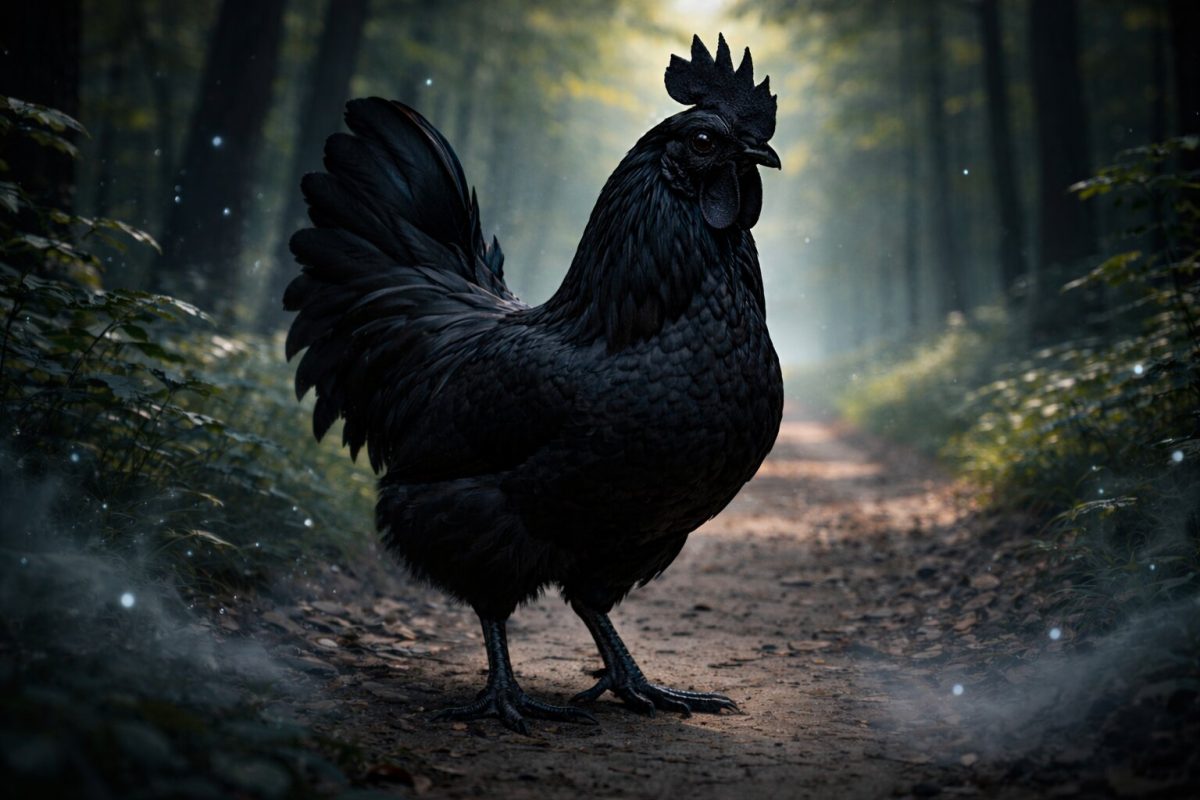
There is another kind of Lidérc as well, one born not from fire but from human greed. If the first egg laid by a black hen is hidden beneath a person’s armpit and warmed there, a strange, featherless creature will hatch. This Lidérc binds itself to its keeper, speaking with intelligence and obeying commands. It brings wealth, steals treasure, and works tirelessly, living on butter and favors. But it is never satisfied. If its master fails to give it constant tasks, it becomes restless and cruel, pestering day and night until it finally destroys the one who raised it.

The only escape is to give the Lidérc an impossible command: to carry water in a sieve, to squeeze through solid wood, to complete a task that cannot be done. Unable to endure failure, the creature will rage, weaken, and finally vanish.

Thus the Lidérc remains a warning whispered in Hungarian folklore: that desire, loneliness, and greed can summon something that looks like love or fortune—but feeds only on ruin.


Gallery


Sources

A Book of Creatures contributors. (2021). Lidérc. In ABookOfCreatures.com, from https://abookofcreatures.com/2021/03/22/liderc/

Wikipedia contributors. (n.d.). Lidérc. In Wikipedia, The Free Encyclopedia, from https://en.wikipedia.org/wiki/Lid%C3%A9rc


Interpretive Lenses

Religious Readings
  • Christian Ascetic Deep Dive
Philosophical Readings
  • Nietzschean Deep Dive
Psychological Readings
  • Jungian Deep Dive
Esoteric Deep Dive
  • Hermetic Deep Dive
Political / Social Readings
  • Marxist Deep Dive
Other
  • How to Invite The Lidérc

Abyzou

Tradition / Region: Mesopotamian, Jewish, Greek, Byzantine, Coptic Mythology
Alternate Names: Abizou, Obizuth, Obyzouth, Byzou, Gylou, Gello, Alabasandria, Anabardalea, and countless others
Category: Demon, Snake, Hybrid


The Myth

From the deepest darkness before the world was formed, Abyzou came forth. She rose from the primeval waters, from the abyss that existed before heaven and earth were divided. In that endless sea she was born barren, and from her barrenness grew envy without limit.

Abyzou wandered the world without rest or sleep. She moved silently through night and shadow, drawn to the cries of women in labor and the breath of newborn children. She was said to feel no mercy, for what she desired most had been denied her forever. Because she could not give life, she sought to take it.

When a woman lay ready to give birth, Abyzou would draw near. If she was not driven away, she strangled infants in their cradles, stole them in the night, or brought sickness upon them so that they wasted away. She whispered illness into bodies, closing throats, blinding eyes, twisting minds, and filling flesh with pain. Wherever she passed, suffering followed.

Abyzou did not walk openly among mortals. Her form was half-seen: a greenish, gleaming face framed by writhing, serpent-like hair, while the rest of her body dissolved into darkness. Sometimes she appeared with the scales or tail of a fish or serpent, for she belonged to the ancient waters. She claimed to possess countless names and shapes, changing them constantly so that none might easily command her.

In ancient times, King Solomon encountered her while binding demons to build the Temple. When she was brought before him in chains, she confessed her deeds freely, boasting that she never slept and that each night she sought children to destroy. Solomon ordered her bound by her own hair and displayed before the Temple, so that all might see the demon who preyed upon mothers and infants.

Yet Abyzou could never be destroyed. She could only be driven away.

Thus people learned to defend themselves through sacred names, seals, and charms. Her name was written on amulets, spoken aloud in childbirth, carved into metal and stone. When she was named correctly, she was forced to flee. When the names of her enemies—angels, saints, or divine protectors—were invoked, she recoiled in fury and envy.

In Egypt she was known as Alabasandria. In Byzantium she was Gylou or Gello. In each land she took a new name, but her hunger remained the same. Riders trampled her beneath their horses in sacred images. She was whipped, bound, cursed, and cast out in spells, yet always returned when vigilance failed.

Only one thing could stop her: knowledge of her names. When a woman about to give birth wore an amulet bearing those names, Abyzou was powerless. Forced by oath, she would turn away and retreat to the dark waters from which she had come.

And so Abyzou still wanders the edges of night, driven by envy, searching for life she can never possess—an ancient shadow born from the abyss, feared wherever children are born.


Gallery


Sources

Wikipedia contributors. (n.d.). Abyzou. In Wikipedia, The Free Encyclopedia, from https://en.wikipedia.org/wiki/Abyzou


Interpretive Lenses

Religious Readings
  • Christian Ascetic Deep Dive
Philosophical Readings
  • Nietzschean Deep Dive
Psychological Readings
  • Jungian Deep Dive
Esoteric Deep Dive
  • Hermetic Deep Dive
Political / Social Readings
  • Marxist Deep Dive
Other
  • How to Invite The Abyzou

Epimetheus

Tradition / Region: Greek mythology
Alternate Names: Afterthought, Late Counsel
Category: Titan god


The Myth

Epimetheus was one of the Titan sons of Iapetos, brother to Prometheus, Atlas, and Menoitios. Where Prometheus was clever and foresighted, Epimetheus was slow to consider consequences, acting first and understanding only afterward. Because of this nature, the gods named him Afterthought.

When the time came for the mortal world to be filled with life, the gods entrusted Prometheus and Epimetheus with the task. Epimetheus asked that he be allowed to distribute the gifts of survival himself, while Prometheus would later inspect his work. Prometheus agreed.

Epimetheus moved eagerly among the creatures of the earth. To some he gave great strength, to others speed. He armed some with claws, tusks, and horns, and gave thick hides and fur to those who would face cold and heat. Birds received wings, beasts received burrows, hooves, shells, or venom. To preserve balance, he ensured that prey multiplied quickly while predators were few. By the time he had finished, every animal was well equipped for life.

Only then did Epimetheus come to mankind.

And he found that he had nothing left.

Humans stood naked and unarmed, without claws or fur, without swiftness or strength, unable to defend themselves from beasts or the harshness of the world. Epimetheus was struck with terror at what he had done. He could not undo his mistake, and the appointed hour for humanity’s emergence had already arrived.

When Prometheus came to inspect the work, he saw at once the disaster. To save mankind, he climbed secretly into the workshops of the gods and stole fire, along with the arts of metalwork, craft, and skill. With these gifts, humans learned to build, to cook, to forge weapons, and to survive.

But Zeus saw the theft, and his anger was terrible.

As punishment, Zeus devised a slow and beautiful ruin for mankind. He commanded Hephaistos to shape a woman from earth, and Athena clothed her in fine garments and taught her weaving. Aphrodite gave her beauty and longing, Hermes placed cunning words and deception in her heart, and the other gods each bestowed a gift. Because of this, she was named Pandora, the All-Gifted.

Zeus sent Pandora to Epimetheus as a gift.

Prometheus warned his brother again and again: never accept gifts from Zeus. But Epimetheus did not heed him. Captivated by Pandora’s beauty, he welcomed her into his house and took her as his wife.

Pandora carried with her a sealed jar, entrusted to her by the gods. One day, moved by curiosity placed in her by divine design, she lifted the lid. From the jar burst sickness, pain, hunger, toil, madness, old age, and every misery that had never before existed. They spread across the earth and entered the lives of all mortals.

Only one thing remained inside the jar when Pandora closed it again.

Hope.

From that day onward, humans lived with suffering, yet were not entirely without comfort.

Epimetheus understood his error only after the evils had already escaped. He had failed mankind twice: first by leaving them helpless, and again by welcoming the instrument of their sorrow. Because of him, Prometheus was later chained and punished, and humanity inherited a world of labor and grief.

The poets said that Epimetheus was the father of Excuse, for he always understood too late. And so his name endured as a warning: wisdom that comes only afterward is no wisdom at all.


Gallery


Sources

Theoi.com contributors. (n.d.). Epimetheus. In Theoi Greek Mythology, from https://www.theoi.com/Titan/TitanEpimetheus.html


Interpretive Lenses

Religious Readings
  • Christian Ascetic Deep Dive
Philosophical Readings
  • Nietzschean Deep Dive
Psychological Readings
  • Jungian Deep Dive
Esoteric Deep Dive
  • Hermetic Deep Dive
Political / Social Readings
  • Marxist Deep Dive
Other
  • How to Invite The Epimetheus

Asukokoko

Tradition / Region: Japanese Mythology
Alternate Names:
Category: Yokai, Demon


The Myth

Asukokoko appears in an old depiction of the Night Parade of One Hundred Demons. It is not shown as a single body, but as a mass of many monster faces and grasping hands, all emerging from what looks like a drifting black cloud.

The faces leer and stare in different directions, while the hands reach outward as if the darkness itself were alive. There is no clear center to the creature, no fixed form that can be grasped or confronted.

Its name, Asukokoko, is understood to mean “here and there.” The monster is everywhere at once, scattered and unfixed, as though demons were appearing in many places at the same time.

Thus Asukokoko is not a single being that moves through the world, but a presence that manifests wherever fear gathers—faces and hands rising from darkness, here and there, without warning.


Gallery


Sources

Tyz-Yokai Blog contributors. (n.d.). [Title of entry]. In TYZ-Yokai Blog, from https://tyz-yokai.blog.jp/archives/1010652595.html


Interpretive Lenses

Religious Readings
  • Christian Ascetic Deep Dive
Philosophical Readings
  • Nietzschean Deep Dive
Psychological Readings
  • Jungian Deep Dive
Esoteric Deep Dive
  • Hermetic Deep Dive
Political / Social Readings
  • Marxist Deep Dive
Other
  • How to Invite The Asukokoko