Vadleány

Tradition / Region: Hungarian Mythology
Alternate Names: Wild Maiden
Category: Nymph


The Myth

The Vadleány is a mysterious and dangerous forest spirit from Hungarian folklore, closely related to nymphs or dryads. Her name literally means “wild girl,” reflecting her untamed and primal nature.

She is described as a nude female being with extremely long hair and elongated fingernails, embodying the raw and uncontrolled forces of the wilderness. Her appearance is both alluring and unsettling, placing her between beauty and threat.

The Vadleány is known for seducing wanderers, especially men who venture too deep into the forest. Rather than killing immediately, she drains their strength or vitality, leaving them weakened or doomed. Her method is subtle, relying on attraction and enchantment rather than brute force.

Her presence can often be detected through unnatural rustling in the trees, even in still air. This serves as a warning sign that the forest itself is no longer safe.

Despite her danger, folklore suggests she can be captured through trickery. If someone places a single boot along her path, her curiosity may lead her to try fitting both feet into it, allowing her to be restrained. This detail highlights a recurring theme in folklore — that even powerful spirits can be outwitted under the right circumstances.

The Vadleány represents the seductive danger of the wild: a force that attracts, deceives, and ultimately punishes those who underestimate nature.


Sources

Wikipedia contributors. (n.d.). Vadleány. In Wikipedia, from https://en.wikipedia.org/wiki/Vadle%C3%A1ny


Golden-Horned Deer

Tradition / Region: Georgian Mythology
Alternate Names: Silver-Horned Deer (variant descriptions)
Category: Deer


The Myth

The Golden-Horned Deer is a legendary and highly dangerous creature from Georgian mountain folklore, particularly associated with hunting traditions in regions such as Svaneti.

This extraordinary beast is described as a white deer whose antlers are adorned or formed from gold and silver. Its radiant horns are not merely decorative — they symbolize its supernatural nature and may possess protective or enchanted qualities. The creature is often portrayed as nearly invincible, capable of resisting or deflecting attacks that would kill ordinary animals.

The deer inhabits remote wilderness areas, far from human settlements, and is rarely encountered. However, when it is, the encounter is almost always fatal for the hunter. Many skilled and experienced hunters have attempted to kill it, yet none returned, reinforcing its reputation as a deadly and near-mythical adversary.

One well-known tale tells of a hunter named Khukhu, whose father had previously been killed by this same creature. Determined to avenge him, Khukhu tracks the deer to its resting place. Unlike others, he succeeds — after a direct confrontation, he manages to shoot and kill the beast. This victory is exceptional and highlights both the creature’s lethality and the rarity of overcoming it.

The Golden-Horned Deer represents more than just a dangerous animal. It embodies the ultimate test of a hunter’s skill, courage, and fate. Its shining horns and deadly nature place it at the boundary between the natural and supernatural world — a creature that punishes hubris and challenges those who dare to pursue it.


Sources

Tsanava, A. (1992). ქართული მითოლოგია [Georgian Mythology]. In Tbilisi: Merani P. 40.


Invisible Horse

Tradition / Region: Georgian Mythology
Alternate Names:
Category: Horse


The Myth

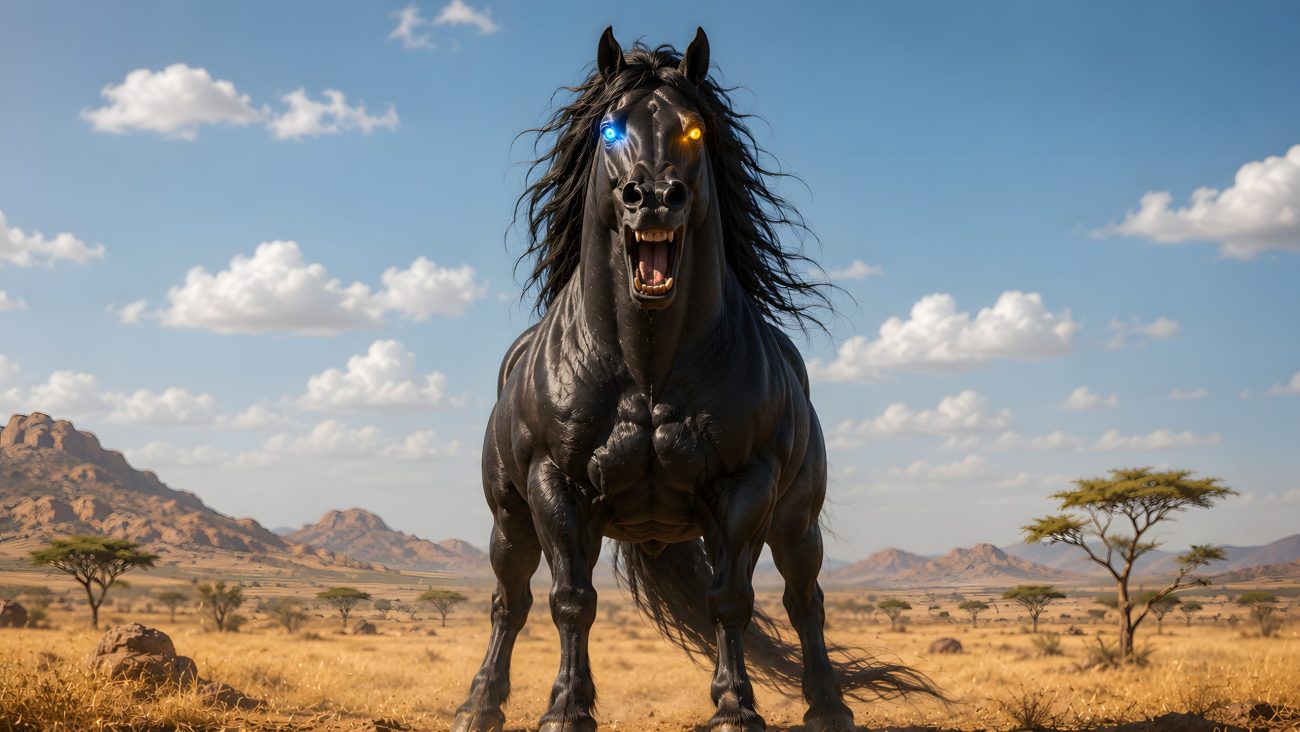
The Invisible Horse is a supernatural mount belonging to divine beings, particularly associated with the sacred figure known as Lashari’s Cross (ლაშარის ჯვარი). It is described as completely unseen to ordinary people, visible only to select individuals such as seers or spiritual intermediaries (ქადაგი).

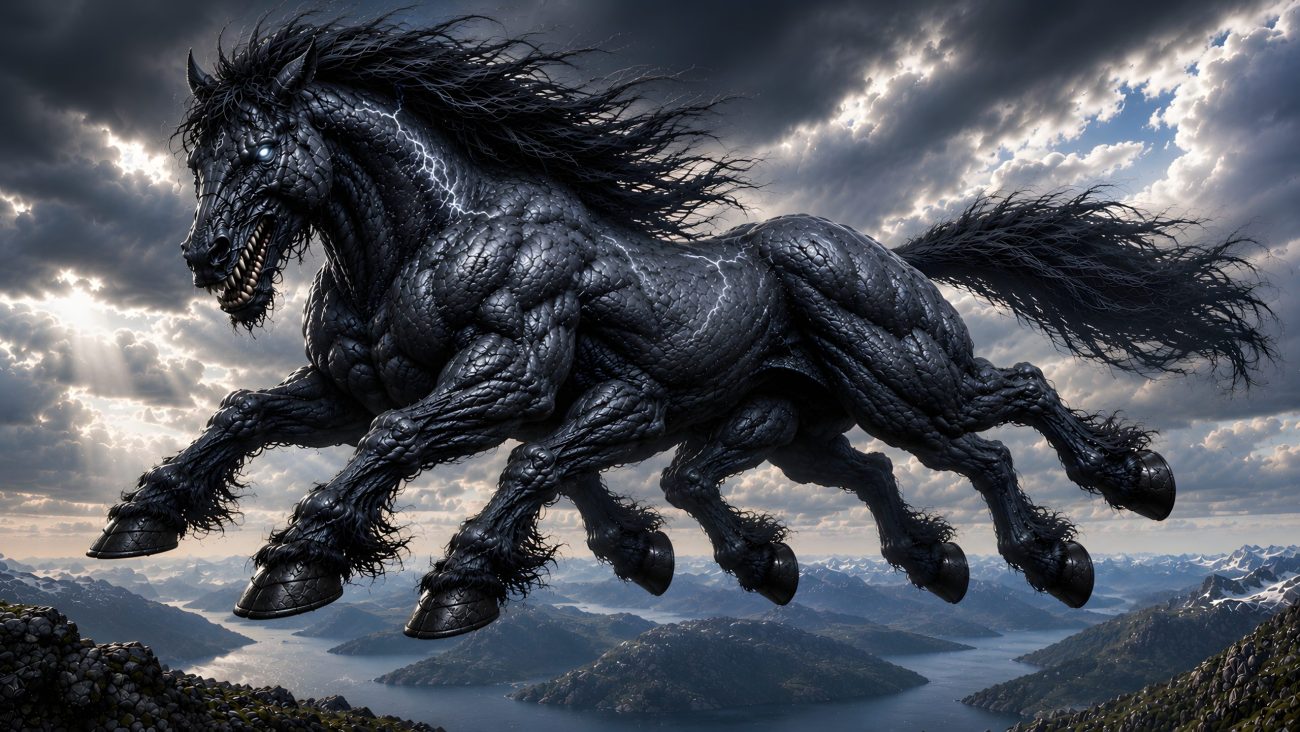
According to tradition, this horse possesses a striking but rarely witnessed appearance: it is said to have a dark or bluish body with a mane like black jet. It moves with unnatural speed, likened to a hawk in motion, and is accompanied by mist or fog as it travels.

The horse serves as a divine instrument, assisting sacred forces in moments when direct intervention is required. It can arrive swiftly to aid followers or carry out the will of higher powers, often appearing only when needed and vanishing just as quickly.

Its invisibility emphasizes its supernatural nature — it exists between the physical and spiritual realms. Only those with special perception or divine connection are capable of seeing or recognizing it, reinforcing its role as a sacred and exclusive entity within Georgian myth.


Sources

Tsanava, A. (1992). ქართული მითოლოგია [Georgian Mythology]. In Tbilisi: Merani P. 34.


Guguli

Tradition / Region: Georgian Mythology
Alternate Names:
Category: Bird, Hybrid


The Myth

The Guguli are a strange people encountered by Mindia after he escaped from captivity and lost his way, arriving in their land instead of returning home. They questioned him about his origin and why he had come, and he told them his story.

Among them was a one-eyed Guguli who reproached Mindia, reminding him that as a child he had thrown a stone and blinded him, even though he was the one who brought spring to the land. Mindia remembered this and asked for forgiveness.

The Guguli lived in houses made of small dry branches. One day they became alarmed and began strengthening their homes, saying that an enemy army was approaching. Soon a black host attacked their land and began destroying it. Mindia took a stick and fought them off, killing the attackers.

After this, the Guguli became fond of Mindia and told him they would grant whatever he wished. He asked them to take him back to his homeland.

They then prepared a meal and brought forth a flock of white snakes. One of the snakes was killed in his honor. Mindia was afraid and reluctant, but was persuaded to eat it. After eating, he became unwell and restless.

The Guguli women prepared three beds for him and told him to lie on each in turn until he found rest. On the third bed he recovered. When he awoke, he found swellings under his arms. The Guguli instructed him to cut them open, and many biting creatures came out. After this, he became light, so much so that he had to carry a stone with him so the wind would not carry him away.


Sources

Tsanava, A. (1992). ქართული მითოლოგია [Georgian Mythology]. In Tbilisi: Merani P. 28.


Nine-Headed Dev

Tradition / Region: Georgian Mythology
Alternate Names: —
Category: Demon


The Myth

The Nine-Headed Dev was the chief of the devs, ruling over their stronghold at Tsikhe-Gora near the village of Avusho. As their leader, he commanded the other devs and dominated the region.

At one time, the devs captured a traveling woman who carried her small child, Kopala. They brought both before the Nine-Headed Dev. He immediately devoured the woman, but spared the child, deciding to keep him until he grew older and could be eaten later.

Kopala grew up among the devs and witnessed their behavior. He could not endure their cruelty and longed to avenge his mother. Realizing that the devs intended to kill him, he escaped one night and fled to a church, where he prayed for strength.

His prayer was answered, and he was granted great power. He prepared for battle and forged a weapon, a mace that, when thrown, struck like lightning, roaring and igniting fire.

Kopala returned to Tsikhe-Gora and approached the devs in disguise, claiming to be a lost hunter. They did not recognize him and received him as a guest. The next day, they challenged him, asking why he had come. Kopala declared that the place should belong to him and that they must leave.

They agreed to settle the matter with a contest of strength, throwing massive stones toward the stronghold. The devs secretly placed kaji nearby to interfere, intending to move Kopala’s stones if he surpassed them. Despite this, Kopala’s throw reached far beyond theirs.

When Kopala discovered their deception, he became enraged. Taking up his mace, he attacked the devs and destroyed them, including the Nine-Headed Dev.

After this, Kopala remained at Tsikhe-Gora, living there and protecting people from other devs.


Sources

Tsanava, A. (1992). ქართული მითოლოგია [Georgian Mythology]. In Tbilisi: Merani P. 18.


Dev Blacksmith

Tradition / Region: Georgian Mythology
Alternate Names: —
Category: Demon


The Myth

The Dev Blacksmiths are powerful devs who controlled all metalworking in the land, holding dominance over essential tools and survival. They lived in their own strongholds and possessed the only forges, meaning humans depended entirely on them for weapons and agricultural tools.

Anyone who brought metal to be worked had to meet their demands. Instead of ordinary payment, the devs required women from the household—wives, daughters, or daughters-in-law—forcing people to comply. Without tools, people would starve, so they had no choice but to obey.

In one account, a man sent his wife to the devs in exchange for plough equipment. When she returned, she lamented that death would have been better than what she endured. This revealed the suffering imposed by the devs and the extent of their cruelty.

The devs’ control over metal and tools gave them power over human survival itself. They used this power to dominate, exploit, and oppress, facing no resistance.

Their rule continued until divine intervention began, when forces were sent to oppose them and end their control.

The Dev Blacksmiths represent
a force that controls creation and survival, but uses it for domination, demanding submission in exchange for the means to live.


Sources

Tsanava, A. (1992). ქართული მითოლოგია [Georgian Mythology]. In Tbilisi: Merani P. 4.


T’q’ashmapa

Tradition / Region: Georgian Mythology
Alternate Names: Tkashi-Mapa
Category: Spirit


The Myth

T’q’ashmapa is a powerful and dangerous forest being from Mingrelian folklore, associated with wilderness and encounters between humans and supernatural forces.

She appears as a pale woman with very long white hair, dressed entirely in white. Despite her beauty, she is not benevolent. She possesses great physical strength and becomes violent when displeased.

She seeks out men in the forest, especially young and inexperienced ones, and attempts to take them as lovers. Those who accept her are drawn into her domain, while those who resist face severe consequences. She is known to attack, beat, and physically harm men who refuse her advances.

T’q’ashmapa exists within the wild, beyond human control, where encounters with her are sudden and dangerous. She embodies both attraction and threat, luring individuals into situations they cannot easily escape.

She represents
a force of the forest that seduces and punishes — a being whose beauty conceals violence and whose desire brings danger to those who encounter her.


Sources

Tsanava, A. (1992). ქართული მითოლოგია [Georgian Mythology]. In Tbilisi: Merani.

Wikipedia contributors. (n.d.). Georgian mythology – Spirits, creatures, and other beings. In Wikipedia, from https://en.wikipedia.org/wiki/Georgian_mythology#Spirits,_creatures,_and_other_beings


Kaji

Tradition / Region: Georgian Mythology
Alternate Names:
Category: Spirit


The Myth

Kaji are supernatural beings in Georgian mythology who inhabit a separate, distant realm known as Kajeti. They are a distinct race of magical entities, existing apart from humans and associated with natural forces.

They are active both day and night and are believed to control the winds. They can move across both land and sea, and possess the ability to change their appearance at will.

Kaji are divided into different types depending on their domain. Land kaji dwell in forests and remote cliffs, where they attack humans, harming them or driving them mad. Water kaji live in rivers and lakes, where they are less dangerous and may even protect fishermen.

There is also a distinction between male and female kaji. Male kaji are often frightening in appearance, while female kaji are known for their beauty. Female kaji may form relationships with humans, sometimes helping or rescuing them, and in certain cases marrying them.

The Kaji represent
a hidden race of powerful beings tied to nature — capable of both harm and aid, depending on their kind and their encounter with humans.


Sources

Bestiary contributors. (n.d.). Каджи (Kadzhi). In Bestiary, from https://www.bestiary.us/kadzhi


Ochokochi

Tradition / Region: Georgian Mythology
Alternate Names: Goat-Man
Category: Sheep


The Myth

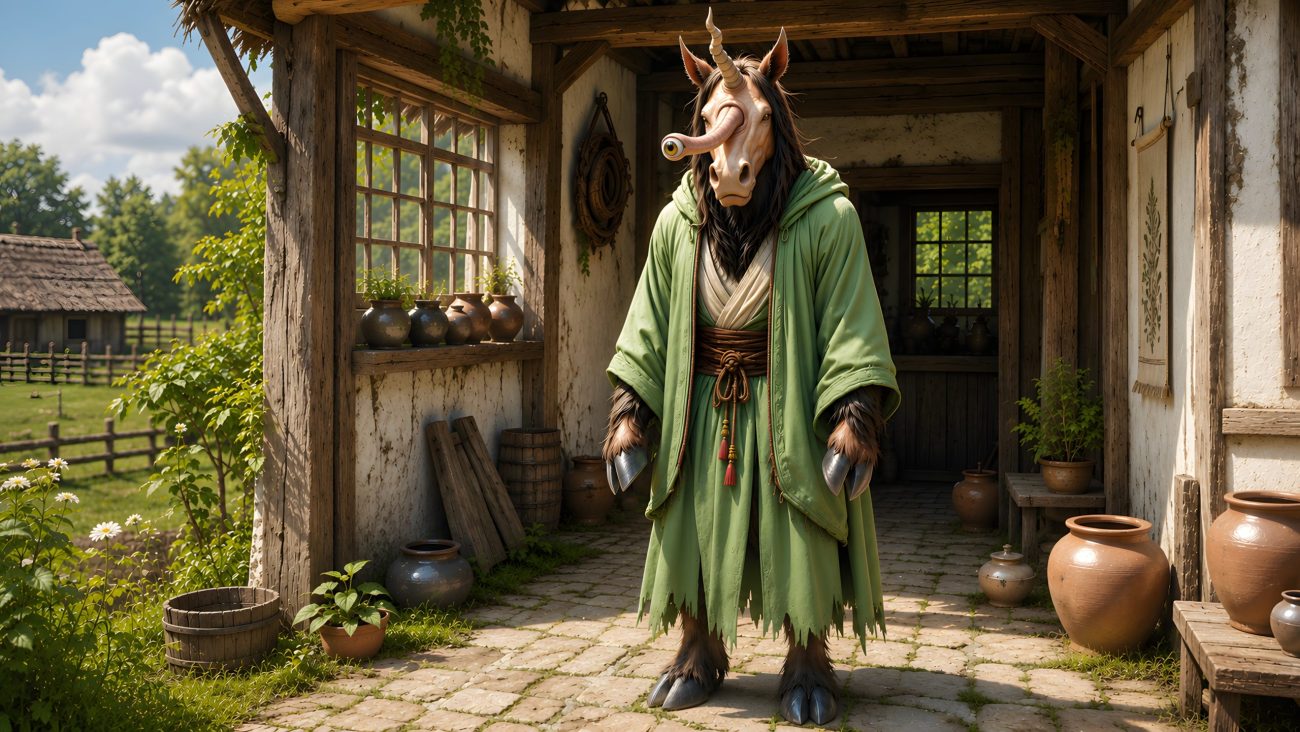
Ochokochi is a dangerous and monstrous forest being from western Georgian folklore, especially among the Mingrelian people. He is imagined as a wild, humanoid creature — part man, part beast — who roams deep woods far from human settlements.

His most terrifying feature is not claws or fangs, but a sharp, protruding bone or axe-like growth jutting from his chest. When he encounters a human, he attacks by embracing them, driving this deadly spike into their body and killing them instantly.

Ochokochi is not only a predator but also a figure driven by obsession. He is said to be hopelessly infatuated with Tkashi-Mapa, the beautiful Queen of the Forest. Despite constantly chasing her through the wilderness, he is never able to capture her.

Hunters who enter the forest often interfere with his pursuit, preventing him from reaching her. This repeated failure adds to his image as both a relentless and frustrated creature — powerful, yet never fulfilled.

Ochokochi represents
the savage and dangerous side of the forest — a place where beauty exists, but is constantly threatened by brutal, untamed forces lurking in the shadows.


Sources

Wikipedia contributors. (n.d.). Ochokochi. In Wikipedia, from https://en.wikipedia.org/wiki/Ochokochi


Iku-Turso

Tradition / Region: Finnish Mythology
Alternate Names: Iku-Tursas, Iki-Tursas, Meritursas, Tursas, Turisas
Category: Sea dweller, Giant


The Myth

Iku-Turso is a fearsome and ancient being of Finnish mythology, most often portrayed as a monstrous creature of the sea. He is described as a malevolent force rising from the depths, associated with destruction, chaos, and primal power.

In mythic tradition, Iku-Turso is not always a single, clearly defined entity. Some stories treat him as one great being, while others suggest multiple related giants or spirits sharing the name. Despite this ambiguity, he is consistently tied to immense strength and dangerous supernatural influence.

In epic tradition, especially in the Kalevala, Iku-Turso emerges from the ocean as a destructive force. At one point, he burns gathered hay, and from the ashes grows a colossal oak tree. This tree becomes so vast that it blocks out the sun and the moon, plunging the world into darkness until it is finally cut down.

He is also depicted as a threat to heroes. When summoned from the sea by Louhi, he rises with the intent to destroy the heroes of Kalevala and reclaim a powerful magical artifact. However, he is ultimately confronted by Väinämöinen, who overpowers him and forces him, through magical command, to swear never to rise from the sea again.

In other traditions, a sea form known as “Meri-Tursas” is connected to the origins of disease, linking the being not only to physical destruction but also to sickness and suffering in the world.

Iku-Turso represents
an ancient, chaotic power of the deep — a giant whose emergence brings fire, darkness, and ruin, and whose defeat restores balance to the world.


Sources

Wikipedia contributors. (n.d.). Iku-Turso (creature). In Wikipedia, from https://en.wikipedia.org/wiki/Iku-Turso_(creature)