Sihuanaba

Tradition / Region: El Salvador Mythology, Guatemala Mythology, Honduras Mythology, Nicaragua Mythology, Costa Rica Mythology, Mexican Mythology
Alternate Names: Siguanaba, Cegua, Cigua, Sihuehuet, Macihuatli
Category: Horse


The Myth

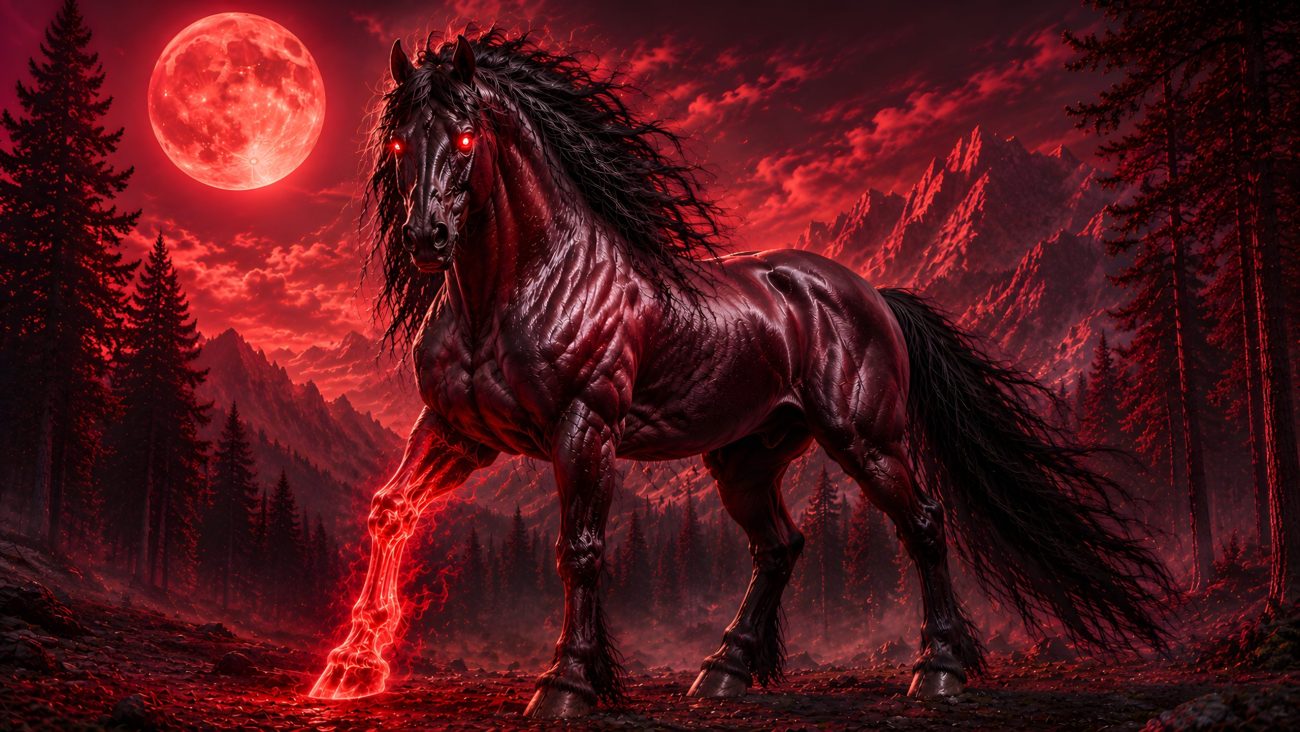
The Sihuanaba is a supernatural shapeshifter that manifests as a beautiful woman, almost always seen from behind, with long hair covering her face. She appears at night in liminal places—riverbanks, crossroads, forest paths, ravines, and empty roads—where people are isolated and vulnerable.

Her primary method is seduction through illusion. She presents herself as desirable, approachable, and often familiar. To some men, she appears as a stranger bathing or washing clothes; to others, she may resemble a lover or someone they know. She moves just ahead of her target, encouraging pursuit without ever fully revealing her face.

She specifically targets men who are morally compromised—drunkards, womanizers, unfaithful husbands, or those wandering at improper hours. These individuals follow her willingly, often believing they are in control of the situation.

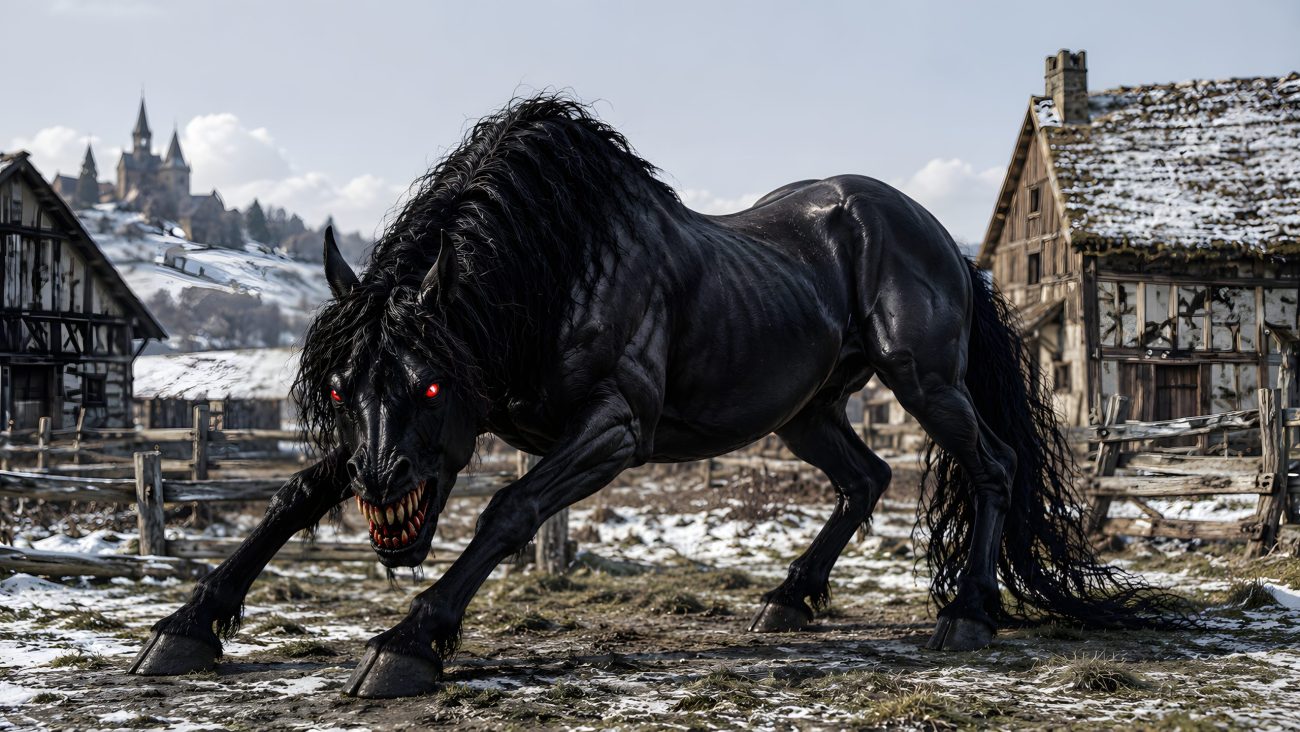
Once the victim is sufficiently isolated—deep in a forest, near a ravine, or far from any path—she reveals her true form. Her face transforms into something grotesque: most commonly the head of a horse, but also described as a skull, a rotting face, or another distorted horror. The transformation is sudden and overwhelming.

The outcome varies but is always destructive. Some victims die instantly from terror. Others lose their sanity, becoming permanently disturbed or disoriented. Many are simply never seen again, having been led too far into wilderness or danger to return.

The Sihuanaba is not limited to one form of deception. She can adapt her appearance depending on the victim. Lovestruck men may see the woman they desire most. Children may see their own mother. In all cases, the illusion is tailored to lower suspicion and ensure the victim follows.

She does not attack physically at first—her power lies in manipulation and psychological control. The victim chooses to follow, and that choice seals their fate. Only at the final moment does she reveal her monstrous nature.

In some traditions, there are ways to resist or repel her, such as invoking sacred symbols or performing specific actions, which break her hold and dispel the illusion. However, these defenses only work if the victim recognizes the danger in time, which is rare.

Across regions, her behavior remains consistent even if details vary: she appears alone, lures through beauty, conceals her face, isolates the victim, and then reveals a horrific truth that leads to death, madness, or disappearance.


Sources

Wikipedia contributors. (n.d.). Sihuanaba. In Wikipedia, from https://en.wikipedia.org/wiki/Sihuanaba


Cheval Mallet

Tradition / Region: French Mythology
Alternate Names: Malet Horse
Category: Horse


The Myth

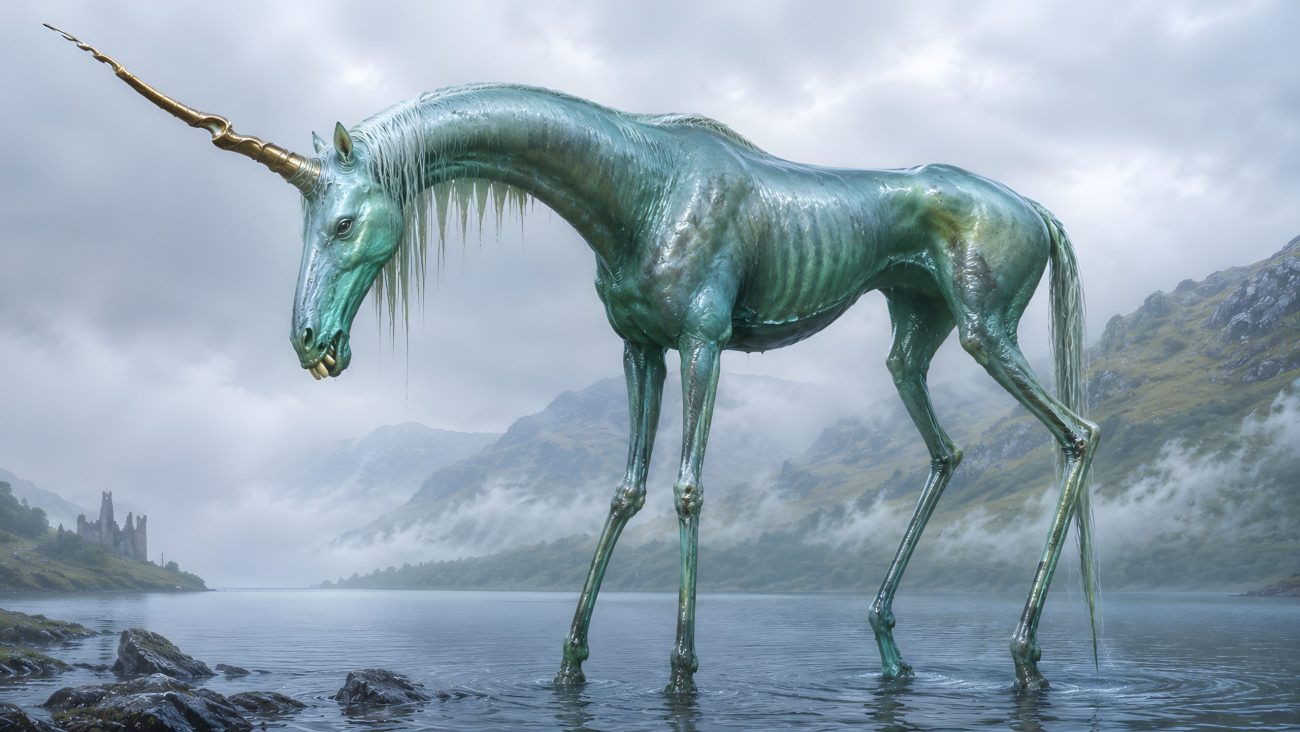
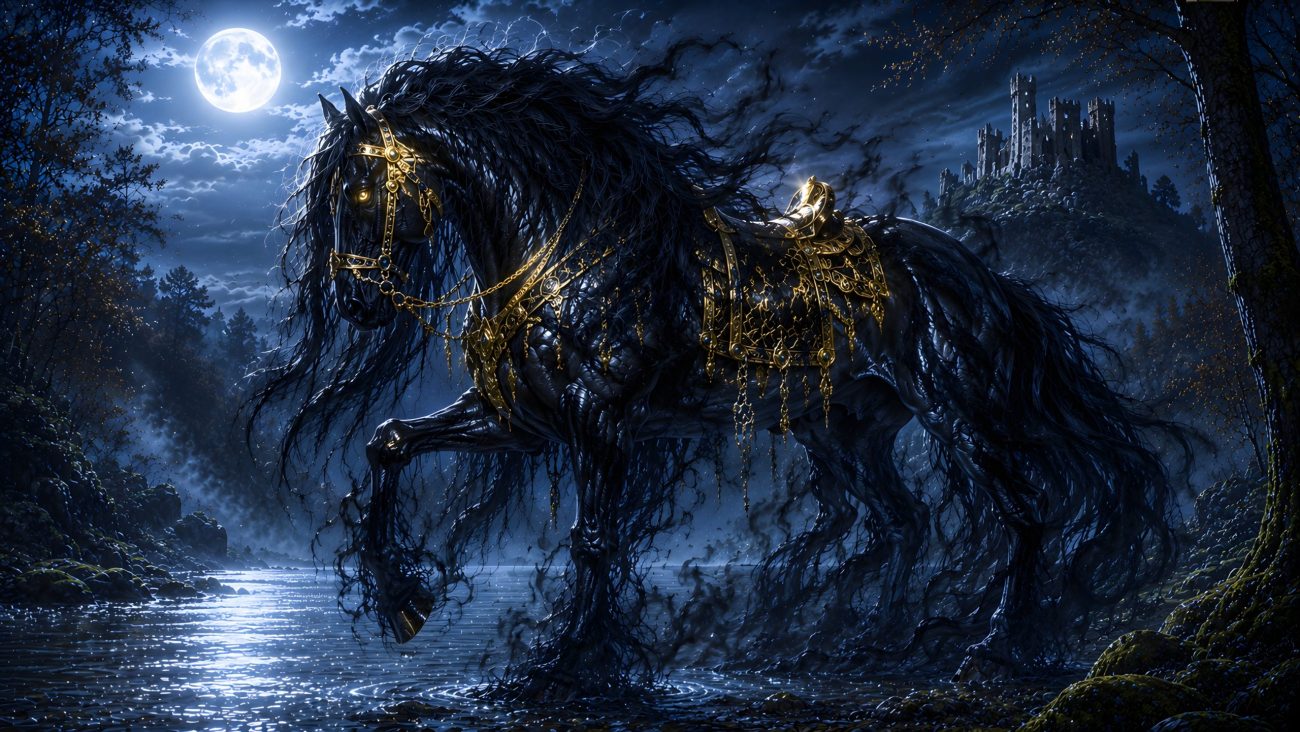
The Cheval Mallet is a sinister supernatural horse from western French folklore, especially associated with the marshlands and rural paths near Lac de Grand Lieu. It typically appears at night as a beautiful, well-equipped horse—either white or black, already saddled and bridled.

It preys on exhausted travelers. After long journeys, when a person is most vulnerable, the horse presents itself as an easy means of transport. Those who accept the offer and mount it seal their fate.

Once ridden, the Cheval Mallet reveals its true nature. It carries its rider away at unnatural speed, often into dangerous or unreachable places such as marshes, deep waters, or unknown distances. Most victims are never seen again.

In some versions, survival is possible but rare. Protection may come from carrying a sacred object, such as a medal of Saint Benedict, or by offering something in return—suggesting the creature follows certain supernatural rules or conditions.

The horse is not merely a beast but a trap: it does not chase or attack directly. Instead, it relies on temptation—offering help, then turning that choice into destruction.


Sources

Wikipedia contributors. (n.d.). Garmr. In Wikipedia, from https://en.wikipedia.org/wiki/Garmr


Cheval Gauvin

Tradition / Region: French Mythology, Swiss Mythology
Alternate Names: Gauvin Horse, Gauvain Horse, tchevâ Gâvïn
Category: Horse


The Myth

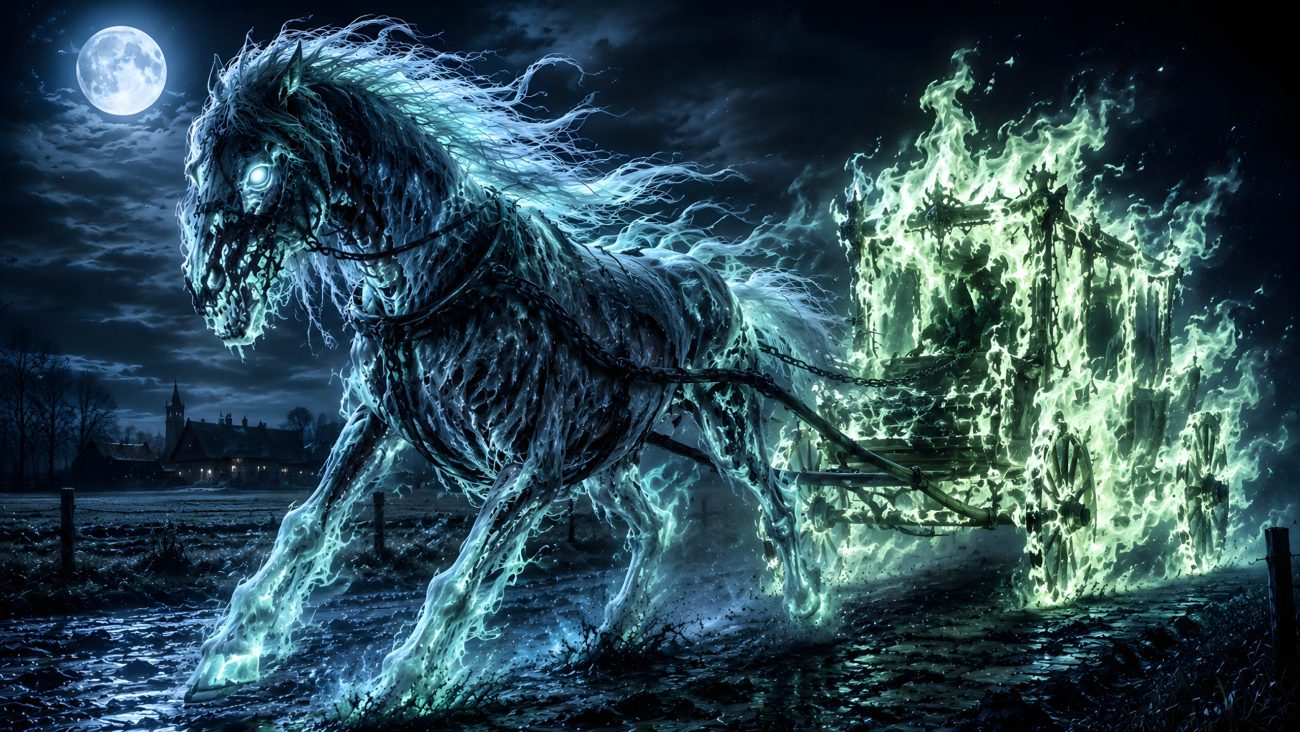
The Cheval Gauvin is a malevolent supernatural horse from the folklore of eastern France and western Switzerland, particularly the Jura region. It is described as a wandering entity that appears near rivers, forests, graveyards, and isolated paths.

Unlike ordinary animals, the Cheval Gauvin actively seeks human victims. It lures people—especially travelers—into mounting it, only to kill them afterward. Its methods vary: it may throw riders into abysses, drag them into deep waters to drown, or carry them away to their deaths. In Swiss variations, it is said to abduct young girls as it runs through villages.

The creature is strongly associated with death and misfortune. Encounters with it are often interpreted as omens, and its presence signals danger or impending doom. Because of this, it functioned in folklore as a warning figure, particularly used to frighten children away from dangerous places.

Historically, the legend was first formally recorded in 1854 by Désiré Monnier, though similar stories existed across multiple towns such as Chamblay, Montbarrey, Dole, and into the Swiss Jura. The consistency of the myth across regions suggests a deeply rooted shared tradition.

Some versions link the horse to Amauri III de Joux, portraying it as his cursed or spectral mount. Others interpret it as a transformed goblin or hobgoblin, placing it within a broader category of shapeshifting or deceptive spirits.


Sources

Wikipedia contributors. (n.d.). Cheval Gauvin. In Wikipedia, from https://en.wikipedia.org/wiki/Cheval_Gauvin


Viesulis

Tradition / Region: Latvian Mythology
Alternate Names: Whirlwind Spirit
Category: Spirit


The Myth

Viesulis is a destructive whirlwind entity from Latvian epic tradition, most notably appearing in the works of Andrejs Pumpurs. It is not merely natural wind, but a supernatural force associated with chaos, divine conflict, and demonic influence.

Viesulis manifests as a violent, living storm — a spiraling whirlwind capable of reshaping the land. In the myth, it is sent by dark forces (the devil or opposing powers) as a weapon, descending from the sky with destructive intent. It is not random: it acts with purpose, targeting specific places.

When it appears, it brings catastrophic consequences. In one account, a whirlwind descends upon the Burtnieki lands, and through human interference and misjudgment, it causes a lake to collapse into the earth, burying a castle beneath it. This shows that Viesulis is not only destructive by nature, but also amplifies the consequences of human actions.

Unlike witches or sorcerers, Viesulis does not speak, scheme, or deceive. Its power lies in raw force — wind, pressure, and motion — acting as an instrument of higher supernatural will rather than an independent thinker.

Viesulis exists between natural and supernatural realms, embodying the idea that storms are not just weather, but manifestations of unseen powers. It represents sudden disaster, divine punishment, or chaos unleashed upon the world.


Sources

AILAB contributors. (n.d.). Pumpurs – Lāčplēsis (3. daļa). In AILAB, from https://web.archive.org/web/20060131100844/http://www.ailab.lv/Teksti/Senie/Pumpurs/3.dala.html

Pumpurs, A. (1888). Lāčplēsis (Bearslayer), III Song: Kangar and Dieterich – The War with the Estonians – The Sunken Castle of the Witches. In Latvian national epic poetry.


Līkcepure

Tradition / Region: Latvian Mythology
Alternate Names: Nagcepure
Category: Sorcerer


The Myth

Līkcepure is described as the chief of witches, a powerful supernatural figure distinguished by a crooked hat with a brim made from human cut nails, and referred to as lame.

In the story, during the witches’ gathering inside the devil’s pit, Līkcepure appears after the others have performed their rituals. He emerges hissing and is identified as the leader among the witches. He asks whether everything is prepared, and upon confirmation, strikes a block with an axe. The room fills with fire, and the block transforms into a golden chariot, while the axe becomes a dragon harnessed to it.

He rides with the old witch and takes part in the gathering where the dragon breathes sparks and smoke. When a man named Kangars is brought before him, Līkcepure declares that his time has come and orders that he be thrown into the dragon’s throat. After Kangars begs for more time, Līkcepure offers to spare him if he agrees to certain conditions. Kangars accepts, and Līkcepure grants him additional years.

After this, Līkcepure announces that the matter is finished, departs with the witch, and disappears as fire fills the chamber again.


Sources

AILAB contributors. (n.d.). Pumpurs – Lāčplēsis (2. daļa). In AILAB, from https://web.archive.org/web/20060131100630/http://www.ailab.lv/Teksti/Senie/Pumpurs/2.dala.html

Pumpurs, A. (1888). Lāčplēsis (Bearslayer), II Song: The Bear-World’s First Heroic Deed. In Latvian national epic poetry.


Uguns pūķis

Tradition / Region: Latvian Mythology
Alternate Names:
Category: Dragon


The Myth

The Uguns pūķis appears as a fire-associated dragon connected to witches and magical activity, seen carrying goods through the night.

In the story, as Lāčplēsis follows Spīdola and enters the dark supernatural setting, dragons with tails are seen moving through the night. These dragons carry money and belongings while flying, and fiery sparks come from them as they move. They appear together with witches and other supernatural beings in the same environment.

Later, a dragon is also seen in connection with the witches’ gathering, where it is bound to a transformed object and breathes out sparks and smoke. It remains present as part of the witches’ actions and surroundings.


Sources

AILAB contributors. (n.d.). Pumpurs – Lāčplēsis (2. daļa). In AILAB, from https://web.archive.org/web/20060131100630/http://www.ailab.lv/Teksti/Senie/Pumpurs/2.dala.html

Pumpurs, A. (1888). Lāčplēsis (Bearslayer), II Song: The Bear-World’s First Heroic Deed. In Latvian national epic poetry.


Giant Bat

Tradition / Region: Latvian Mythology
Alternate Names:
Category: Bat


The Myth

The Giant Bat appears in the underworld setting of the Devil’s Pit, where unnatural creatures inhabit a dark subterranean space entered by Lāčplēsis while following witches.

As Lāčplēsis descends into the pit, deep darkness surrounds him and large bats fly around his head. They move through the air within the underground space together with other creatures such as snakes, owls, and toads. The bats remain present in the smoky, dimly lit environment as he continues deeper into the place where the witches gather.


Sources

AILAB contributors. (n.d.). Pumpurs – Lāčplēsis (2. daļa). In AILAB, from https://web.archive.org/web/20060131100630/http://www.ailab.lv/Teksti/Senie/Pumpurs/2.dala.html

Pumpurs, A. (1888). Lāčplēsis (Bearslayer), II Song: The Bear-World’s First Heroic Deed. In Latvian national epic poetry.


Ördög

Tradition / Region: Hungarian Mythology
Alternate Names: Ürdüng (Old Hungarian)
Category: Demon


The Myth

The Ördög is a shape-shifting demonic being in Hungarian mythology, representing dark and destructive forces. In earlier traditions, he was not purely identical to the Christian devil, but after Christianization he became directly associated with the concept of Satan.

In some accounts, the Ördög even plays a role in the creation of the world, acting as a helper or counterpart to God. This reflects an older dualistic belief system where opposing forces both contributed to existence.

He is commonly described as a humanoid creature with goat-like features: horns, cloven hooves, and a tail, resembling a satyr or faun. His body is often depicted as black, and he may carry a pitchfork. However, he is not limited to this form and is known for his ability to shapeshift.

When appearing among humans, the Ördög may take the form of a fox, a dark flame, or even a human—often a shepherd with unsettling, glowing eyes. He is said to hide within walls, making strange, high-pitched noises to disturb or influence people.

The Ördög is strongly associated with the underworld, known as Pokol, where he stirs a great cauldron filled with the souls of sinful humans. However, this idea may be influenced by later Christian beliefs, as earlier traditions did not necessarily describe the underworld strictly as a place of punishment.

A defining trait of the Ördög is his tendency to make bargains or bets with humans. Through these deals, he attempts to corrupt individuals and claim their souls. His ultimate goal is the accumulation of human souls, making him a persistent and dangerous adversary in Hungarian folklore.


Sources

Wikipedia contributors. (n.d.). Ördög. In Wikipedia, from https://en.wikipedia.org/wiki/%C3%96rd%C3%B6g


Tündér

Tradition / Region: Hungarian Folklore
Alternate Names:
Category: Fairy


The Myth

The tündér is a supernatural being in Hungarian folklore, often appearing as a beautiful woman with magical abilities, including granting wishes.

A poor couple lived together and loved each other, but they were very poor and sometimes argued because of it. One evening, the husband returned home and told his wife that on the road he had encountered a beautiful woman sitting in a golden carriage pulled by black dogs. The carriage had been stuck in the mud, and he helped her out. The woman then revealed that she was a tündér and promised to grant three wishes to his wife.

At home, the husband told his wife to try wishing for something. She wished for a sausage, and immediately a large sausage appeared in a pot from the chimney. They were happy and began planning how to use the remaining wishes wisely. While preparing to eat, the husband accidentally knocked the pot into the fire. The wife, upset, wished that the sausage would grow onto her husband’s nose. At once, the sausage appeared hanging from his nose.

They argued about what to do. The husband did not want to cut it off, and after a long dispute, they used their final wish to return the sausage to the pot. With this, all three wishes were gone, and they remained as poor as before.

They ate the sausage and realized that their arguing had caused them to waste the wishes. After that, they decided to live in peace and stopped quarreling. Over time, through work and thrift, they improved their lives.


Sources

László, B. (ed.). (1982). Hungarian Folktale Catalog 3: Types of Hungarian legendary tales (AaTh 750–849). In Budapest: MTA Ethnographic Research Group.


Sárkány

Tradition / Region: Hungarian Mythology
Alternate Names:
Category: Dragon


The Myth

The sárkány is a large and powerful mythical creature, typically described as a reptilian being with magical or spiritual properties. In Hungarian tradition, it may also appear as a humanoid figure and often has multiple heads.

Creatures identified as dragons appear in many cultures and likely do not share a single origin. Similar beings are found in ancient mythologies such as Mesopotamian and Akkadian traditions, where serpent-like or dragon-like creatures already existed. In European and Persian traditions, dragons are generally hostile, while in other cultures they may be benevolent.

In Hungarian belief, the meaning of the word sárkány changed over time. During earlier periods it could refer to a title or role, but later became associated with the monstrous dragon known from Western-Christian traditions.

In folklore and fairy tales, the sárkány is commonly a dangerous, multi-headed enemy. It is often connected with storms or whirlwinds and may appear together with violent weather. Many stories describe encounters between humans and such creatures, where the sárkány proves deadly and difficult to defeat.


Sources

Wikipedia contributors. (n.d.). Sárkány (mitológia). In Wikipedia, from https://hu.wikipedia.org/wiki/S%C3%A1rk%C3%A1ny_%28mitol%C3%B3gia%29