Camazotz

Tradition / Region: Maya Mythology, Guatemala Mythology
Alternative names: Cama-Zotz, Sotz, Zotz
Category: Bat


The Myth

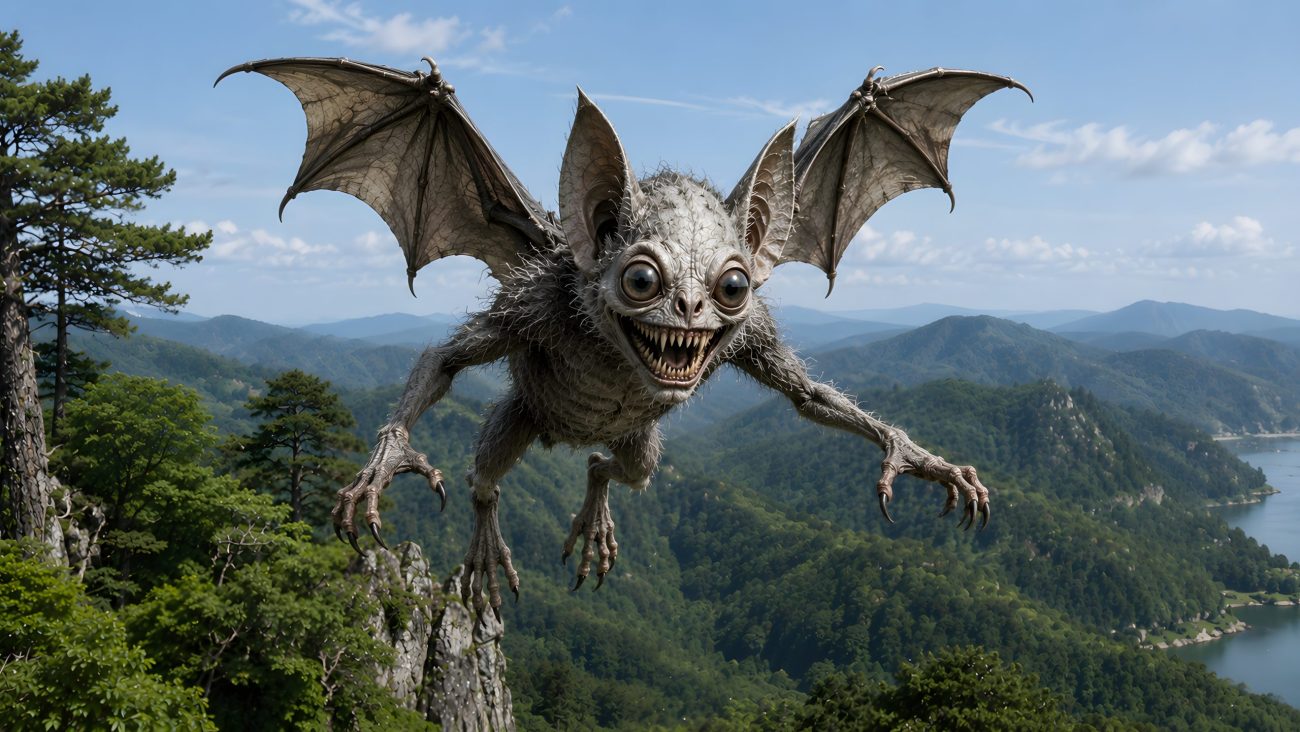
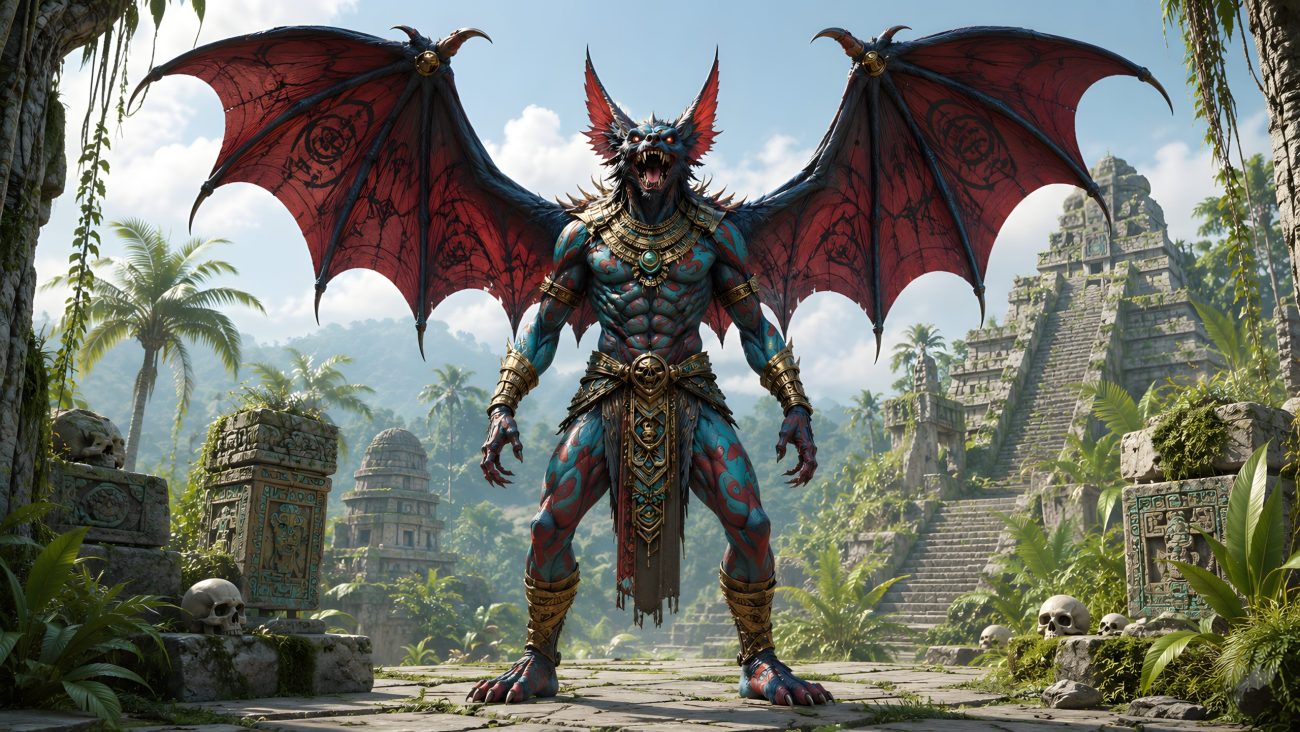
Camazotz, whose name means “Death Bat,” is a bat spirit that serves the lords of Xibalba, the Maya underworld. It is closely associated with the night, death, and sacrifice.

According to the Popol Vuh, the Hero Twins Hunahpu and Xbalanque encountered Camazotz during their trials in the underworld. One of the ordeals required them to spend the night in the House of Bats, a chamber inhabited by deadly bat spirits. To protect themselves, the twins hid inside their hollow blowguns while the bats circled around them.

Before dawn, Hunahpu cautiously poked his head out to see whether the sun had risen. Camazotz immediately swooped down, severed his head, and carried it away. The bat spirit placed the head on the ballcourt, where it was used as the ball for the underworld gods’ sacred ballgame.

Camazotz is portrayed as a fearsome supernatural bat whose sudden attack became one of the greatest trials faced by the Hero Twins on their journey through Xibalba.


Sources

Wikipedia contributors. (n.d.). Camazotz. In Wikipedia. Retrieved June 29, 2026, from https://en.wikipedia.org/wiki/Camazotz
Garkain

Tradition / Region: Australian Mythology
Alternative names:
Category: Bat


The Myth

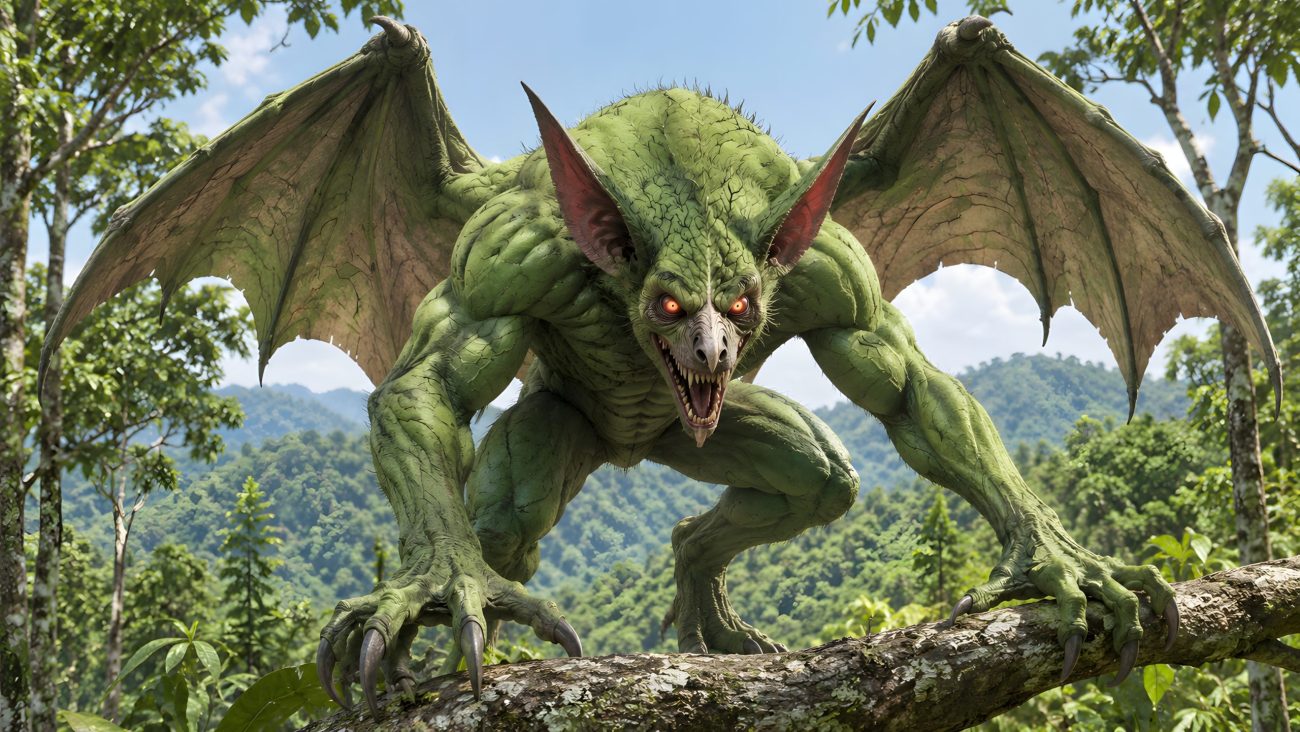
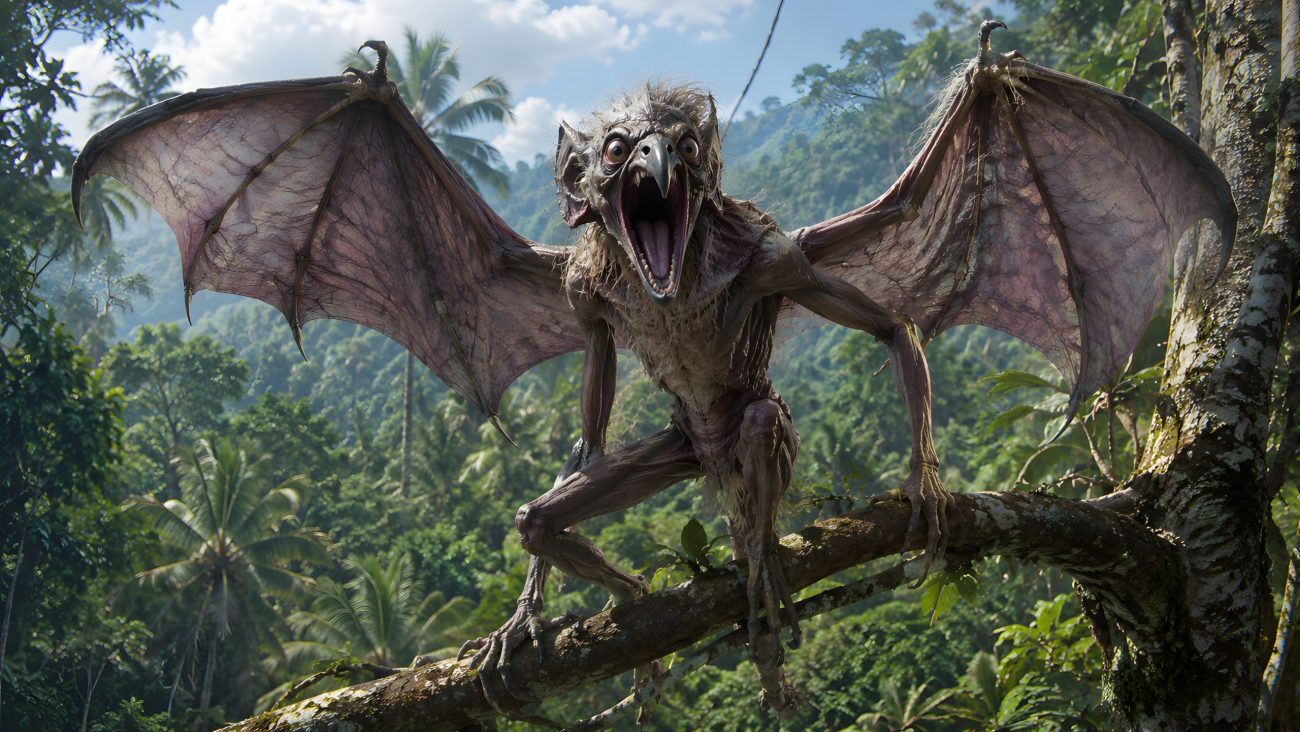
Garkain is a spirit-man from the Aboriginal mythology of Arnhem Land who is said to inhabit the dense jungle of Magurlipun near the mouth of the Liverpool River. About the size of an Aboriginal man, he is able to both walk and fly, but cannot speak and does not know how to make fire or tools.

Because he lacks weapons, Garkain hunts with his bare hands and eats his prey raw. He is a nocturnal creature that sleeps during the day beneath piles of leaves on the jungle floor before emerging after dark to search for victims.

Travellers who wander into his territory are said to be in great danger. Rather than using claws or teeth, Garkain kills by wrapping the loose folds of skin hanging from his arms and legs around his victims, smothering them to death.

Traditional depictions portray Garkain with broad flaps of skin extending from his limbs, enabling him to fly. Although he shares similarities with another spirit being known as Warraguk, Garkain was regarded as less fearsome than other supernatural beings of Arnhem Land, such as the Namarakain and the Nabudi.


Sources

Wikipedia contributors. (n.d.). Garkain. In Wikipedia. Retrieved June 29, 2026, from https://en.wikipedia.org/wiki/Garkain


Ekek

Tradition / Region: Philippine Mythology
Alternative names: Ek Ek
Category: Bat


The Myth

The Ekek is a winged, human-like creature that hunts at night in Philippine folklore. It feeds on human flesh and blood and is often compared to the Manananggal because of its appearance. Unlike the Manananggal, however, the Ekek cannot split its body in two.

By night, the Ekek transforms into a gigantic bird or bat and prowls in search of victims. It is especially known for preying upon sleeping pregnant women. Using an unusually long proboscis, it reaches into the womb to drain the blood of the unborn child, killing the fetus.

The creature is closely associated with the Wak Wak, as the two share many characteristics. The principal difference is that the Ekek possesses a bird-like bill, while the Wak Wak does not.

Its name comes from the eerie “ek-ek-ek” sound it makes while hunting. According to tradition, the cry is deceptive: when the sound seems faint and distant, the creature is actually very close to its intended victim.


Sources

Wikipedia contributors. (n.d.). Ekek. In Wikipedia. Retrieved June 29, 2026, from https://en.wikipedia.org/wiki/Ekek


Lyadashtsik

Tradition / Region: Belarusian Mythology
Alternative names: Lyadashtsik, Lyadashchik, Shevredz, Pusten
Category: Bat


The Myth

Lyadashtsik is an evil spirit from Belarusian folklore that is said to corrupt people. It is regarded as one of the most hostile spirits toward humans and is especially feared by women, as many illnesses and seizures affecting women were traditionally attributed to it.

The spirit was believed to attack by making people sick, driving them into madness, or causing them to transform into various animals. Those believed to have been afflicted by Lyadashtsik were sometimes described as foolish or half-witted.

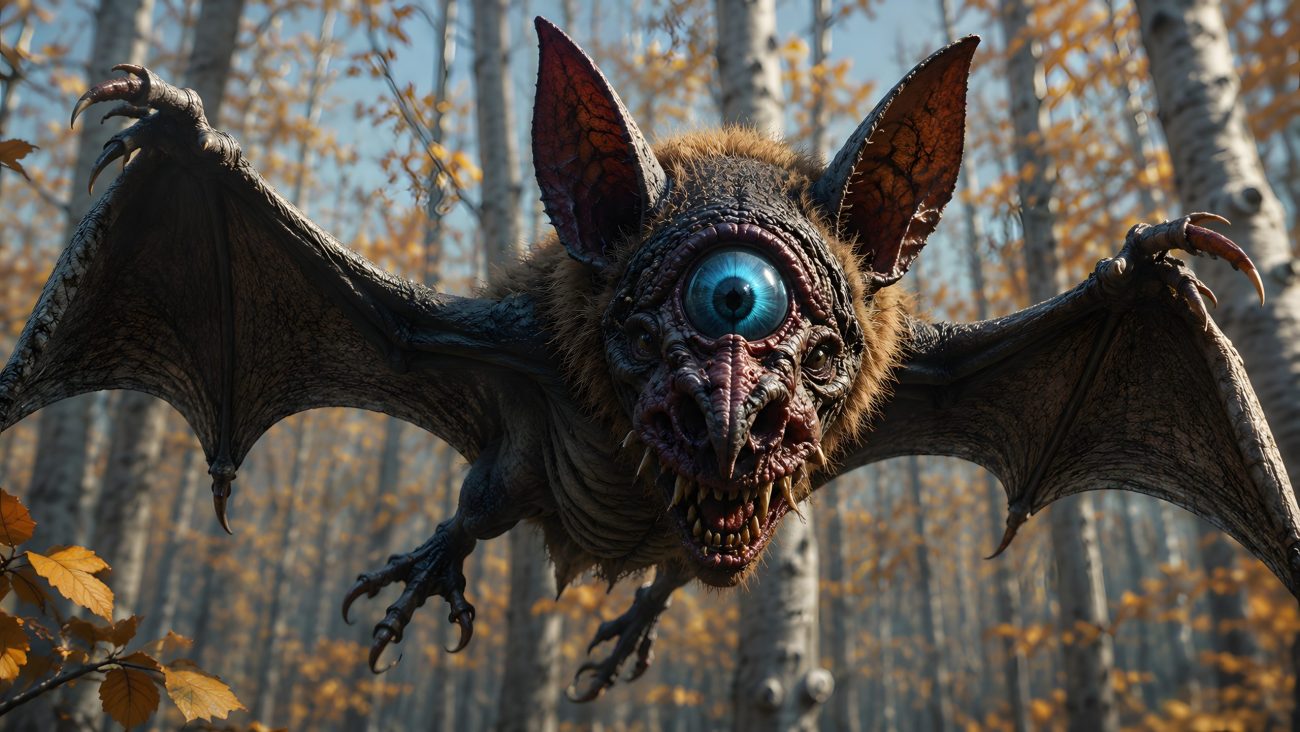
Lyadashtsik was imagined as a hideous monster covered in red hair. It possessed wings, a single eye in the middle of its forehead, and was said to resemble a monstrous bat. In some traditions it was also described with the body of a frog and hairy wings.

The creature was known under different names in various parts of Belarus. In some districts it was called Shevredz, while in others it was known as Pusten. Folk sayings warned that a person who had dealings with Lyadashtsik had “Lyadashtsik’s eye,” meaning they had become mad or half-witted.


Sources

Bestiary.us. (n.d.). Lyadashtsik. In New Bestiary: Encyclopedia of Imaginary Beings. Retrieved June 29, 2026, from https://www.bestiary.us/Lyadashtsik


Kōmori-ba

Tradition / Region: Japanese Mythology
Alternative names:
Category: Bat


The Myth

The Kōmori-ba is a bat-like yōkai that appears in the eighteenth-century illustrated collection Yōkai Chakutōchō. It is depicted among a gathering of supernatural creatures alongside a red oni and a skeleton monster.

Unlike an ordinary bat, the Kōmori-ba does not have wings formed by membranes stretching between its limbs. Instead, it possesses a pair of large wings that grow directly from its back, giving it a more monstrous appearance.

According to the illustration’s description, the Kōmori-ba attacks by targeting the eyes of its victims. Although little else is recorded about the creature, it is presented as one of the many strange yōkai that inhabit the supernatural world of Japanese folklore.


Sources

TYZ. (n.d.). 蝙蝠場 (Kōmori-ba). In 新版TYZ 妖怪図鑑. Retrieved June 29, 2026, from https://tyz-yokai.blog.jp/archives/1065732607.html


Minyades

Tradition / Region: Greek Mythology
Alternative names: Alcathoe, Leucippe (Leuconoe), Arsippe (Arsinoë, Aristippe)
Category: Bat


The Myth

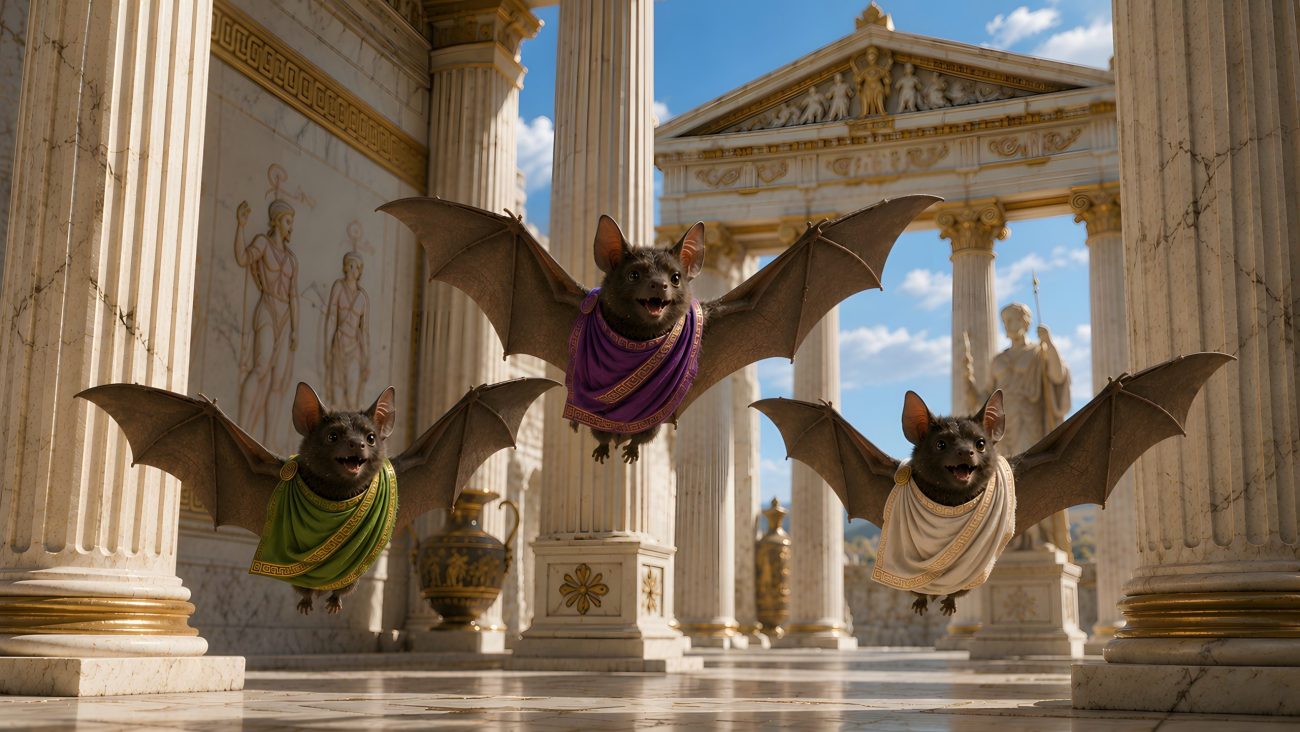
The Minyades were the three daughters of King Minyas of Orchomenus. While the other women of Boeotia celebrated the rites of Dionysus, the sisters refused to honor the god. Instead, they remained at home, weaving and tending to their daily tasks, believing their work to be more important than the sacred festival.

Offended by their refusal, Dionysus appeared before them disguised as a young maiden and invited them to join his mysteries. When they ignored him, he revealed his divine power, transforming first into a bull, then a lion, and finally a leopard. At the same time, miraculous signs filled their home as milk and nectar flowed from their looms.

Driven mad by the god’s punishment, the sisters cast lots to determine who should make a sacrifice. The lot fell upon Leucippe, whose son Hippasus was torn to pieces by the three women as an offering to Dionysus. Consumed by divine frenzy, they abandoned their home and wandered through the mountains like Bacchantes.

At last, Hermes took pity on them and transformed the sisters into flying creatures. In the most common version of the myth, all three became bats, forever avoiding the light of the sun. Other traditions say that one became a bat, another an owl, and the third an eagle owl, but all remained creatures of the night as a lasting reminder of the punishment for rejecting Dionysus.


Sources

Wikipedia contributors. (n.d.). Minyades. In Wikipedia. Retrieved June 29, 2026, from https://en.wikipedia.org/wiki/Minyades.


Dragon of Wyl

Tradition / Region: Swiss Mythology
Alternative names: Dragon Reed
Category: Crocodile, Dragon


The Myth

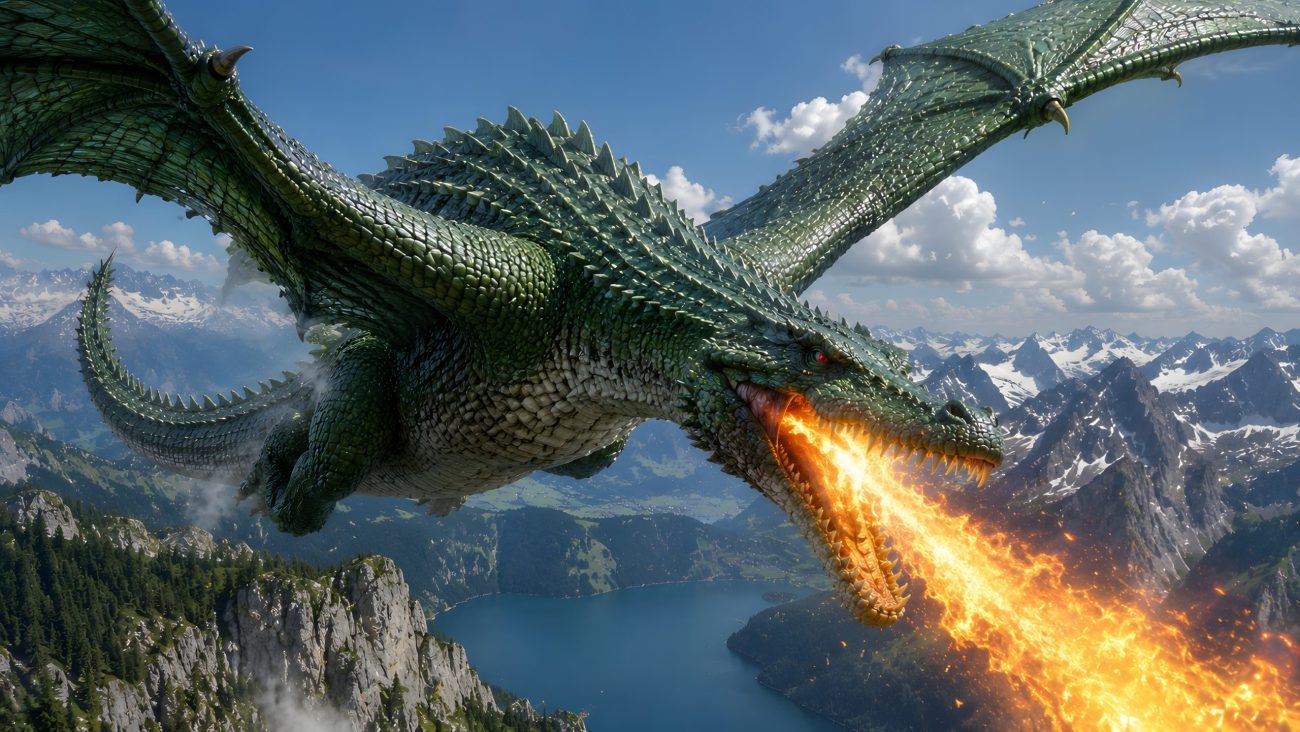
According to a legend from Unterwalden, a terrible dragon once lived in a cave above the village of Wyl on the shores of Lake Lucerne. The monster was described as a hideous lindworm covered in scales with razor-sharp claws. When it flew through the air, it resembled a gigantic flying crocodile, and it could breathe fire from its jaws.

The dragon devastated the surrounding countryside, devouring livestock and shepherds alike. No one was safe from its attacks, and even children and young women gathering food in the fields lived in constant fear. The destruction became so severe that the village earned the name Ödwyl, meaning “Desolate Wyl.”

A banished knight named Struthan Winkelried offered to slay the beast in exchange for permission to return to his homeland. Desperate for deliverance, the people accepted his offer.

Struthan confronted the dragon wearing chainmail and carrying a lance wrapped in thorn bushes. When the fire-breathing monster charged, it hurled itself onto the thorn-covered lance. After a fierce struggle, the dragon was slain.

As the knight withdrew his weapon, some of the dragon’s blood ran onto his bare arm. Although he immediately washed it away, the poisonous blood proved fatal, and he died soon afterward.

The people mourned the hero who had freed them from the dragon’s terror and built a memorial chapel on the place where he had defeated the monster.


Sources

SAGEN.at. (n.d.). Das Drachenried. In Traditionelle Sagen. Retrieved June 29, 2026, from https://www.sagen.at/texte/sagen/schweiz/allgemein/drachenried.html


Ninki Nanka

Tradition / Region: Gambia Mythology
Alternative names:
Category: Crocodile


The Myth

The Ninki Nanka is one of the most feared creatures in the folklore of The Gambia. It is a powerful river or swamp monster said to inhabit marshes, rivers, dense forests, caves, and creeks. Many communities believed that encountering the creature was an omen of death, causing people to avoid otherwise fertile wetlands.

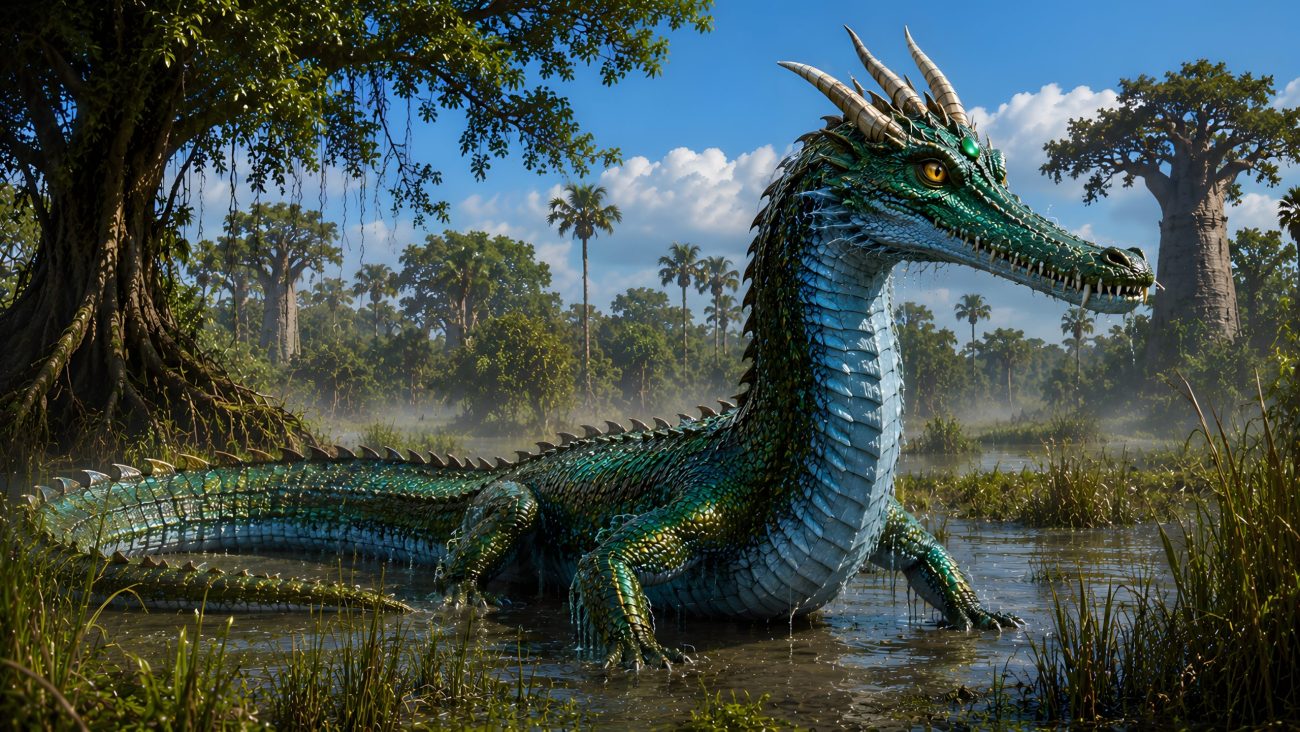
Descriptions of the Ninki Nanka vary, but it is consistently portrayed as a gigantic reptilian beast. It has been described as a dragon with a large body and small legs, a crowned serpent, or a monster with the head of a crocodile and the body of another large animal. Some traditions give it the long neck of a giraffe, a horse-like head with three horns, or even wings and the ability to breathe fire.

The creature’s most dreaded ability is its fatal gaze. According to legend, seeing the body of the Ninki Nanka brings severe illness, while meeting its eyes or seeing its crown results in instant death. Some traditions advise carrying a mirror to deflect its deadly stare. It is also said to possess shimmering scales that allow it to camouflage itself and to draw supernatural power from a magical gem hidden within its head.

In Mandinka tradition, the Ninki Nanka is regarded as a dangerous supernatural being associated with misfortune. It has also been blamed for bringing droughts and famine, reinforcing its reputation as one of the most terrifying spirits of West African folklore.


Sources

Wikipedia contributors. (n.d.). Ninki Nanka. In Wikipedia. Retrieved June 29, 2026, from https://en.wikipedia.org/wiki/Ninki_Nanka


Thuồng Luồng

Tradition / Region: Vietnamese Mythology
Alternative names: Giao Long, Giao Xà
Category: Crocodile


The Myth

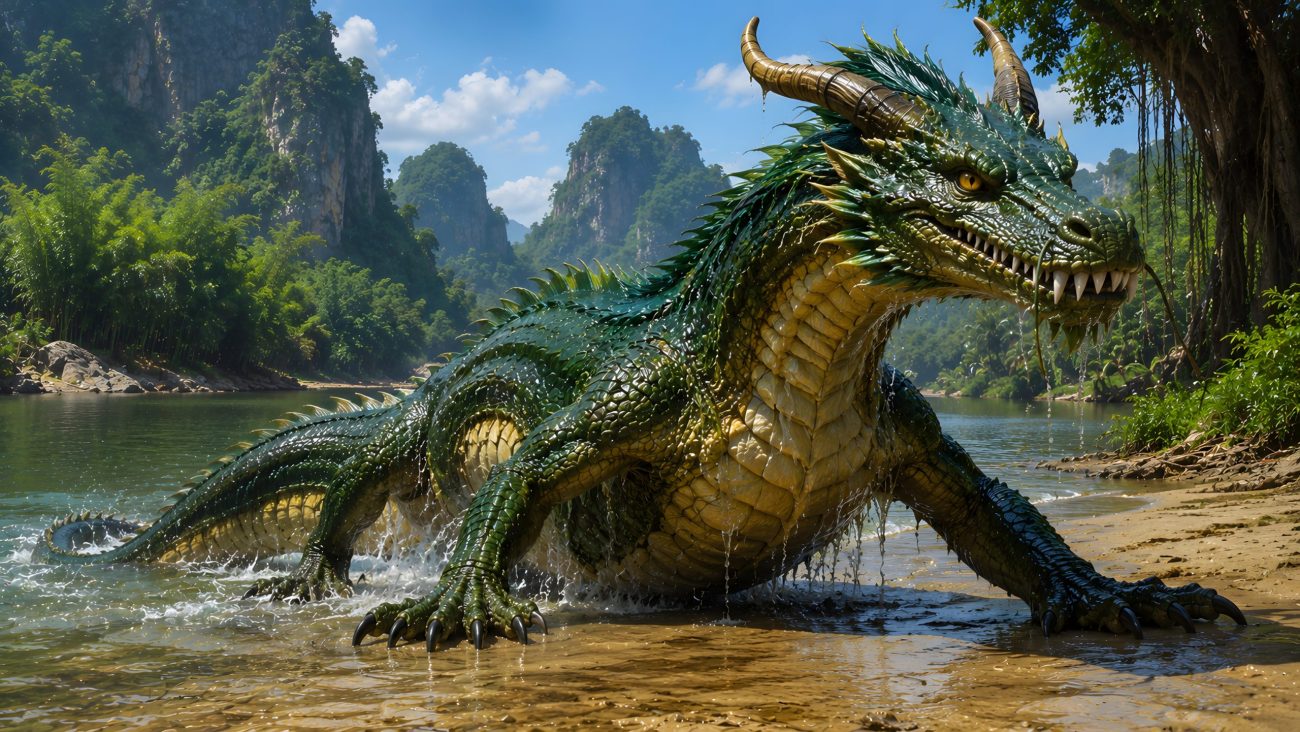
The Thuồng Luồng is a fearsome aquatic monster of Vietnamese folklore, often described as a dragon-like reptile that inhabits rivers and other large bodies of water. It possesses a long, serpentine body, with or without legs, and is commonly said to have horns or a crest upon its head, along with a mouth filled with sharp fangs. Its name Giao Long (“Hybrid Dragon”) reflects its dragon-like appearance while emphasizing that it is not a true dragon.

In popular tradition, the Thuồng Luồng is regarded as a powerful water beast capable of swallowing large animals and even people. Ancient descriptions portray it as resembling a gigantic four-legged serpent covered in thick scales, while later interpretations often compare it to an enormous crocodile. Temples dedicated to the Thuồng Luồng once stood along the great rivers of northern Vietnam, where it was revered as a river deity.

Classical Chinese texts also recount encounters with similar creatures. One legend tells of the warrior Thứ Phi, who leapt into the Yangtze River and slew two Giao Long that had attacked a boat, saving everyone aboard. Another account describes Emperor Wu of Han shooting a Giao Long while traveling by boat. Ancient commentators described the creature as having the body of a snake with four legs, a narrow neck, large scales, and the ability to swallow humans whole.

Over time, some traditions came to associate the Thuồng Luồng with enormous softshell turtles inhabiting the Red River. These giant reptiles were said to bask on sandbanks, lay vast numbers of eggs, and occasionally attack large animals that entered the water. As sightings of these creatures became increasingly rare, stories of the Thuồng Luồng likewise faded, though the monster remains an enduring symbol of the dangers hidden beneath Vietnam’s rivers.


Sources

Wikipedia contributors. (n.d.). Thuồng luồng. In Wikipedia, bách khoa toàn thư mở. Retrieved June 29, 2026, from https://vi.wikipedia.org/wiki/Thu%E1%BB%93ng_lu%E1%BB%93ng


Kagewani

Tradition / Region: Japanese Mythology
Alternative names: Shadow Crocodile
Category: Crocodile


The Myth

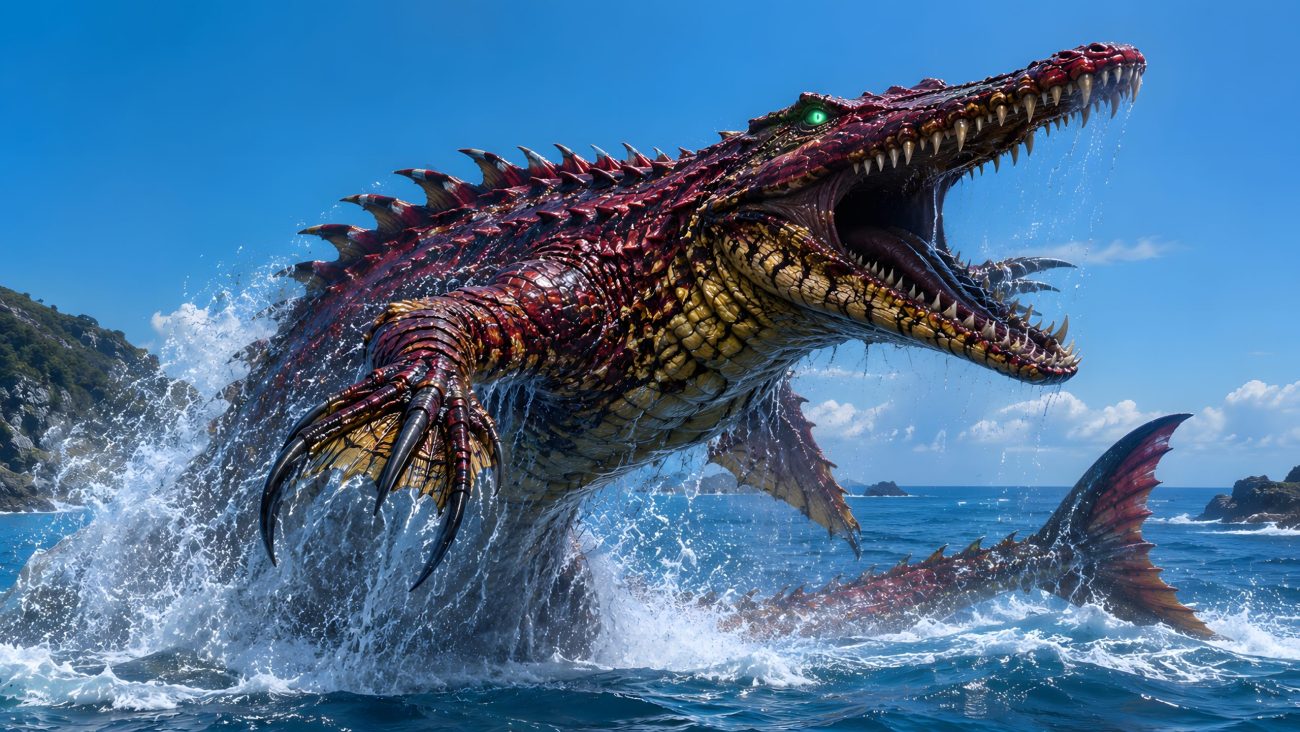
Kagewani is a yōkai from the folklore of Yunotsu in Shimane Prefecture. Although its name means “Shadow Crocodile,” it is actually described as a supernatural shark.

According to legend, the creature swims beneath ships and watches the shadows of sailors reflected on the surface of the sea. If the Kagewani swallows a sailor’s shadow, that person is doomed to die.

One tale tells of a sailor who succeeded in shooting and killing a Kagewani while at sea. However, after returning home, he was walking along the beach when a fish bone pierced the sole of his foot. The wound proved fatal.

Later, the bone was identified as having belonged to the slain Kagewani, and the sailor’s death was regarded as the creature’s final act of vengeance.


Sources

TYZ. (n.d.). 影鰐 (Kagewani). In 新版TYZ 妖怪図鑑. Retrieved June 29, 2026, from https://tyz-yokai.blog.jp/archives/1010654388.html