Jiāochóng

Tradition: Chinese Mythology
Alternative Names: Jiaochong; Youjiao Clan Deity
Category: Insect


The Myth

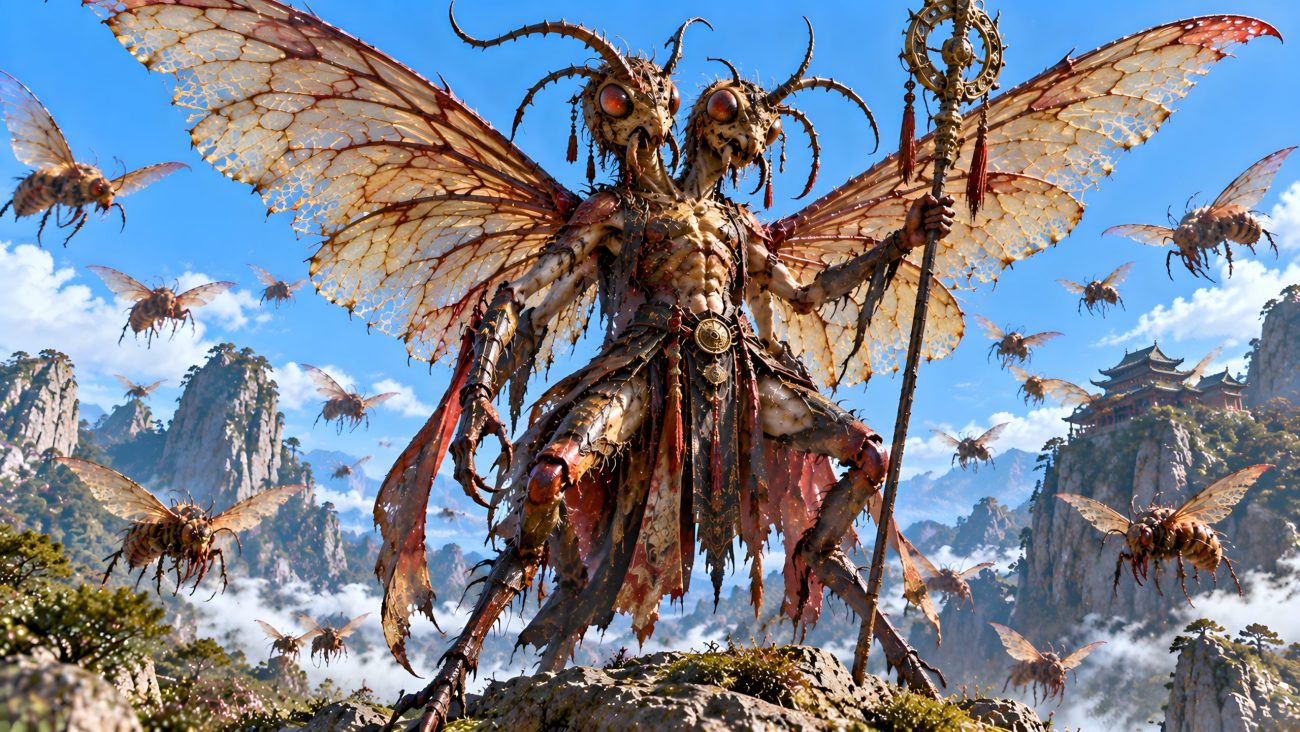
Jiāochóng is a supernatural being recorded in the Classic of Mountains and Seas (Shanhaijing). It has a human-like body with two heads and is described as the leader of stinging insects. The deity is associated with bees and other insects capable of stinging, and its presence is connected to the relationship between people and these creatures.

Jiāochóng is said to dwell on Mount Pingfeng, a barren mountain described as having no grass, trees, or water, but abundant sand and stone. From the mountain, one can look south toward the Yi and Luo rivers and east toward Mount Gucheng. Despite the desolate surroundings, the mountain is home to this unusual two-headed deity, which is associated with the nests or dwelling places of bees and other stinging insects.

The people worshipping Jiāochóng performed a ritual using a male chicken as an offering. However, the chicken was not to be killed: it was used to ward off misfortune during the ceremony and then released afterward. This ritual reflects the deity’s connection to stinging insects and the belief that it could be approached through a specific form of propitiation.

Jiāochóng was also associated with the totemic beliefs of the clan living around Mount Pingfeng, known as the Youjiao clan. The creature is mentioned in other traditional Chinese works, including the Shenyi Dian. The Shuowen Jiezi also records the character jiāo as meaning an insect, further connecting the name with the insect world.


Sources

“骄虫.” 维基百科,自由的百科全书. Wikimedia Foundation. Accessed October 18, 2026. https://zh.wikipedia.org/wiki/%E9%AA%84%E8%99%AB
Xuánfēng

Tradition: Chinese Mythology
Alternative Names: Black Bee; Dark Bee
Category: Insect


The Myth

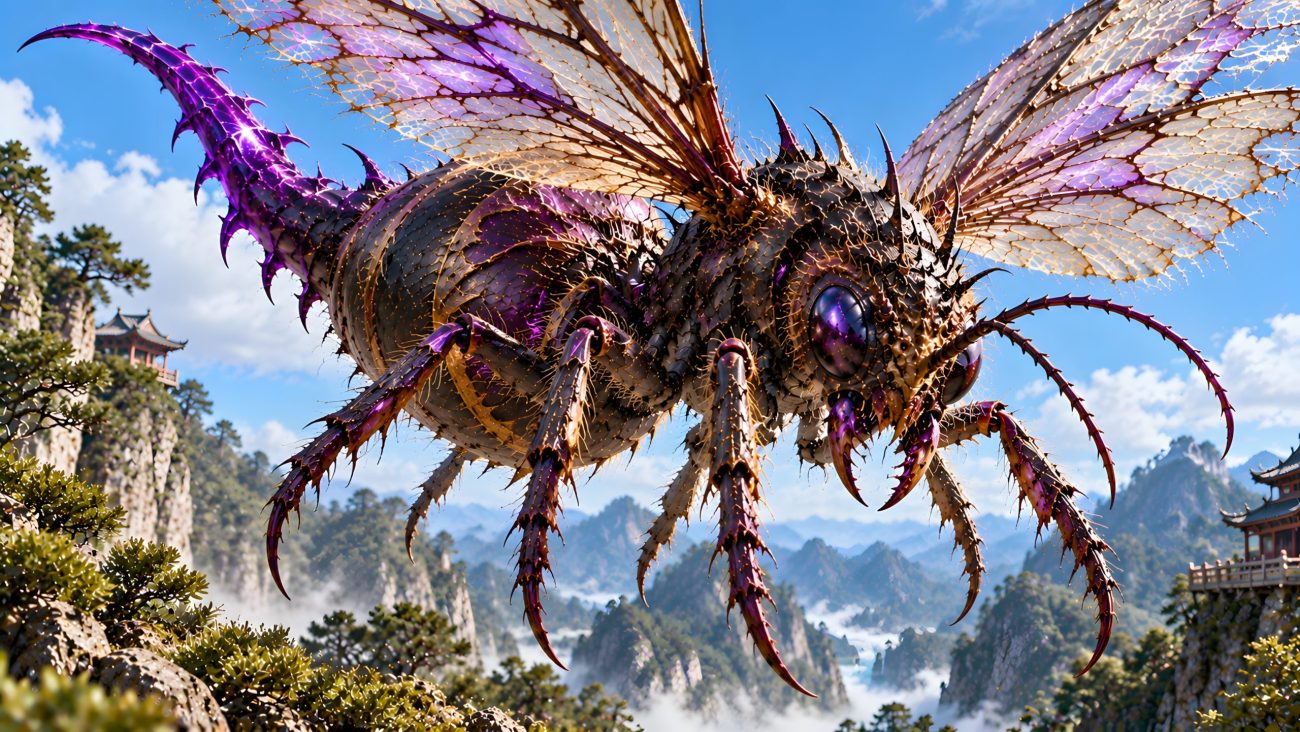
The Xuánfēng is a gigantic bee-like creature recorded in ancient Chinese literature. It resembles a large grasshopper, with an enormous abdomen as big as a pot. Despite its unusual appearance, it is a dangerous insect that attacks people with its sting.

The Xuánfēng’s sting is poisonous and can kill a person, making the creature a deadly monster rather than an ordinary bee. It appears in two classical Chinese works: the Classic of Mountains and Seas (Shanhaijing), in the section known as Hainei Beijing, and the Songs of Chu (Chuci), in the poem Zhaohun.


Sources

“玄蜂.” 维基百科,自由的百科全书. Wikimedia Foundation. Accessed October 18, 2026. https://zh.wikipedia.org/wiki/%E7%8E%84%E8%9C%82


Qinyuan

Tradition: Chinese Mythology
Alternative Names: Qinyuan-bird, Yuanyuan, Zhiyuan
Category: Insect


The Myth

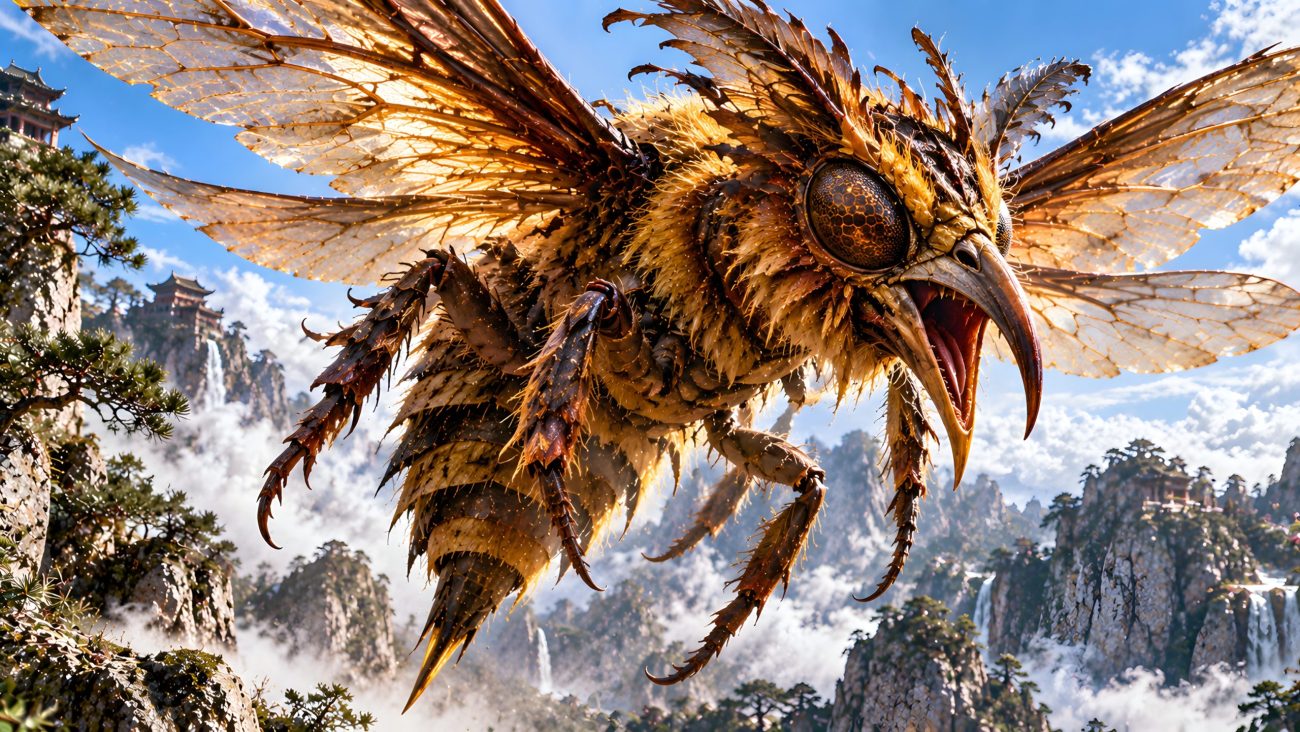
The Qinyuan is a strange and dangerous creature that inhabits Mount Kunlun, the legendary Pillar of Heaven. Although it is classified as a bird, it resembles a bee and is said to be as large as a mandarin duck. Its appearance combines the familiar shape of a stinging insect with the extraordinary size of a bird.

The Qinyuan possesses a highly venomous sting capable of killing other animals and causing trees to wither. Despite its size, it is therefore a formidable creature, able to bring death to living beings and destruction to vegetation with its venom.

Mount Kunlun, where the Qinyuan dwells, is a sacred mountain associated with immense spiritual energy and a brilliant, fiery aura. Four great rivers—the Black, Red, Yellow, and Oceanic Rivers—flow from the mountain. Its administration is attributed to the god Luwu, while later traditions associate it with Xi-Wangmu, the Queen Mother of the West. The Qinyuan is one of the many extraordinary birds and beasts said to inhabit this remarkable place.

Despite its traditional classification as a bird, the Qinyuan may be better understood as a gigantic supernatural insect. Its bee-like appearance and deadly sting distinguish it from ordinary birds, making it one of the unusual creatures inhabiting the mythological landscape of Mount Kunlun.


Sources

“Qinyuan.” A Book of Creatures, June 12, 2017. https://abookofcreatures.com/2017/06/12/qinyuan/


Jiuchong

Tradition: Chinese Mythology
Alternative Names: Wine Worm, Alcohol Worm
Category: Insect


The Myth

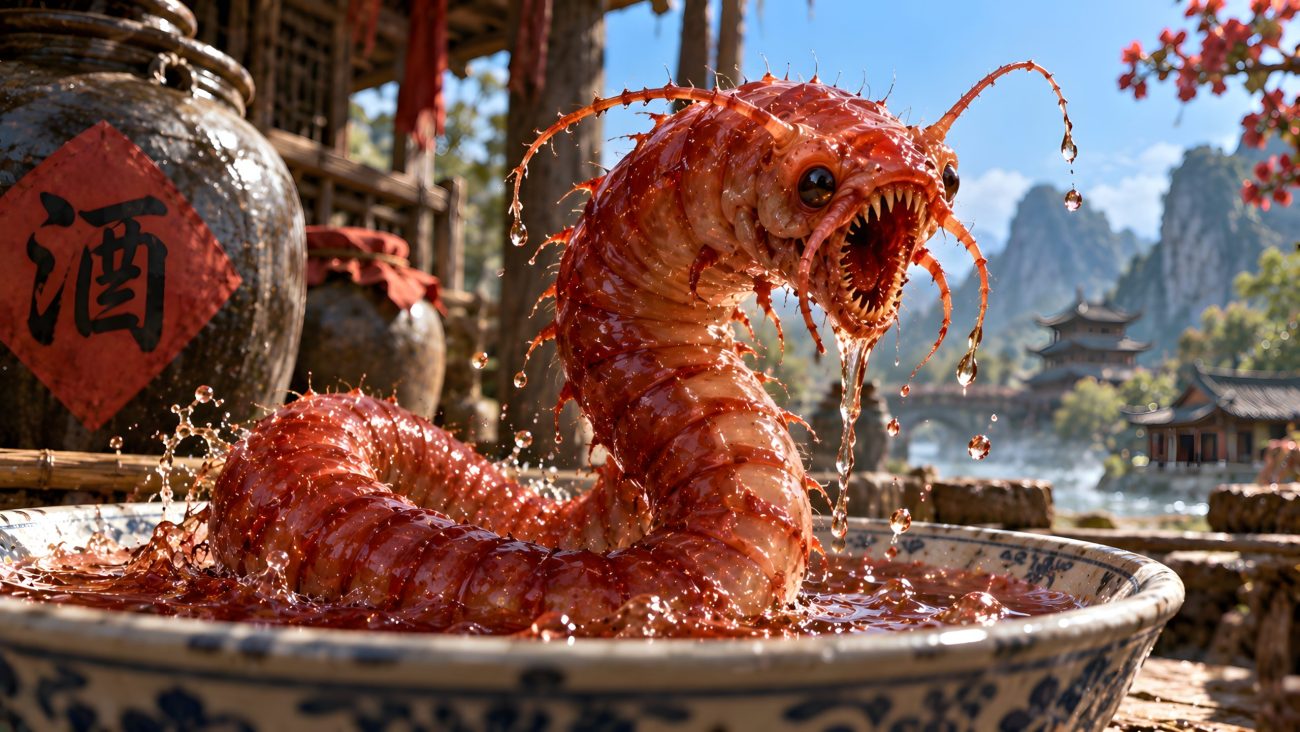
The Jiuchong is a small, red, worm-like creature that lives inside a human body and creates an insatiable desire for alcohol. It is described as a fleshy creature approximately three inches long, with a mouth and eyes, wriggling like a fish in water. Its presence allows its host to consume enormous quantities of wine without becoming drunk, while leaving them with a constant need to drink.

The creature appears in Strange Tales from a Chinese Studio (Liaozhai Zhiyi), in the story of Liu, a wealthy man from Changshan who was exceptionally fond of drinking. Whenever he drank alone, he could finish an entire wine jar. He was so devoted to alcohol that he planted half of his three hundred mu of farmland with millet used for brewing. Although he drank heavily, his wealth meant that this habit did not initially cause him financial difficulties.

A foreign Buddhist monk eventually recognized that Liu’s unusual drinking ability was caused by a wine worm living inside him. The monk offered to remove it without medicine. Liu was made to lie face down in the midday sun, with his hands and feet tied, while a vessel of fine wine was placed just beyond his reach. As thirst and the smell of wine became unbearable, Liu suddenly felt an intense itching in his throat and vomited the creature into the wine. The red worm wriggled in the vessel, and Liu was finally freed from its influence.

The monk refused payment in gold but asked to keep the wine worm. He explained that it was the essence of wine and possessed a remarkable ability: when placed in a jar of water and stirred around, it could transform the water into excellent wine. Liu tested this claim and found it to be true. Yet after the worm was removed, he developed an intense aversion to alcohol. His body gradually grew thinner, his wealth dwindled, and eventually his household became too poor to provide sufficient food.

The story ends with a reflection on Liu’s strange reversal of fortune. When he drank an enormous amount of wine, his wealth remained intact; after he stopped drinking, poverty overtook him. The tale leaves open whether the wine worm had truly been a disease or whether it had been the source of Liu’s former prosperity. The Jiuchong is therefore both a parasitic creature that controls a person’s appetite and a supernatural source of wine, whose removal changes its host’s life in unexpected ways.


Sources

“酒虫.” 维基百科,自由的百科全书. Wikimedia Foundation. Accessed October 18, 2026. https://zh.wikipedia.org/wiki/%E9%85%92%E8%99%AB