Tradition: Yup’ik mythology, American Mythology
Alternative Names: Păl-raí-yûk
Category: Crocodile
The Myth
The Păl-raí-yûk is a large and dangerous water monster said to have haunted the waterways between the Yukon and Kuskokwim rivers. In ancient times, these rivers were believed to have been much warmer than they are today, with shorter winters and snow melting as early as February. The warmer climate created extensive creeks, lakes, and marshes where the creatures lived, particularly around the temperate Kuskokwim. Păl-raí-yûk fed on both humans and animals.
The Păl-raí-yûk was one of Raven’s many creations. It would lie submerged beneath the water, waiting for people or animals to approach the shore before attacking them. It was also known to attack boats that entered its territory. Because of this danger, Raven warned First Man to be careful when approaching lakes and rivers.
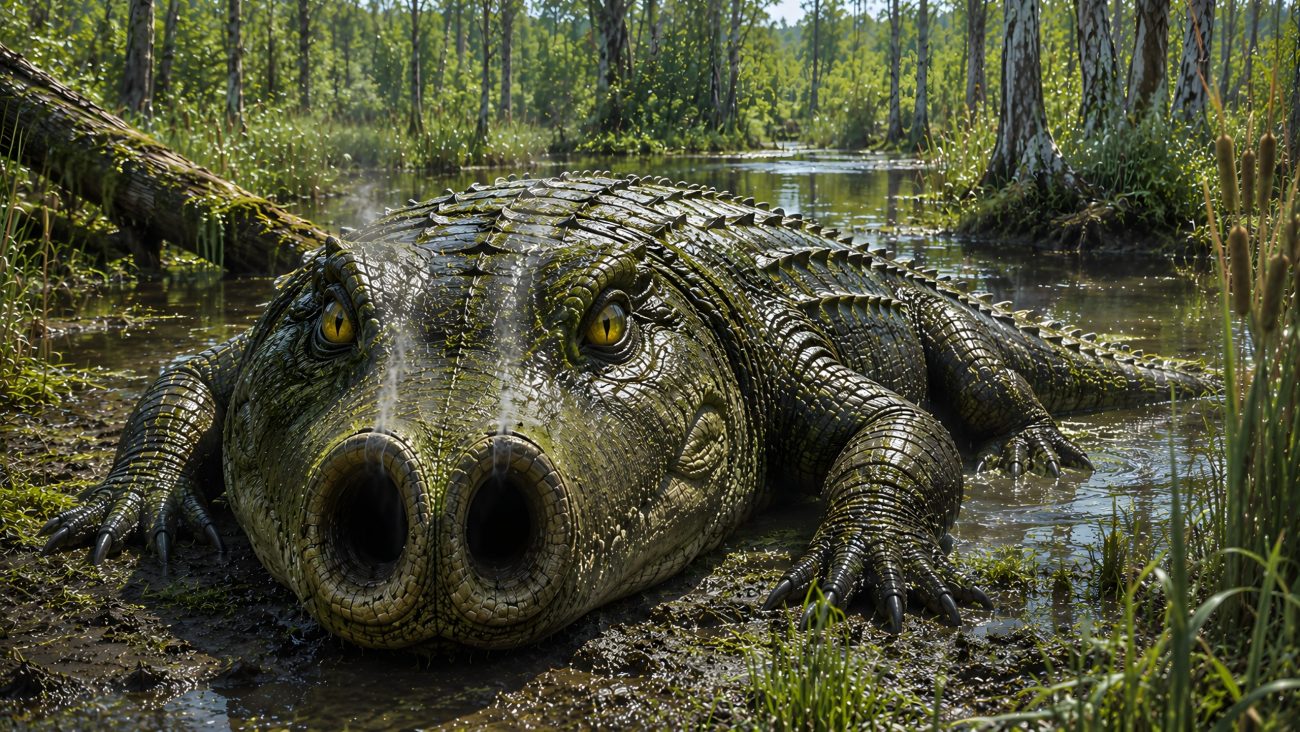
The Păl-raí-yûk resembles a crocodile or alligator in both appearance and behavior, but it also possesses features associated with the muskox. It is commonly represented on umiaks, masks, and dishes as an elongated, stylized reptilian creature with a long, narrow head and six legs. Depictions sometimes show human remains within its body, emphasizing the grisly nature of its meals.
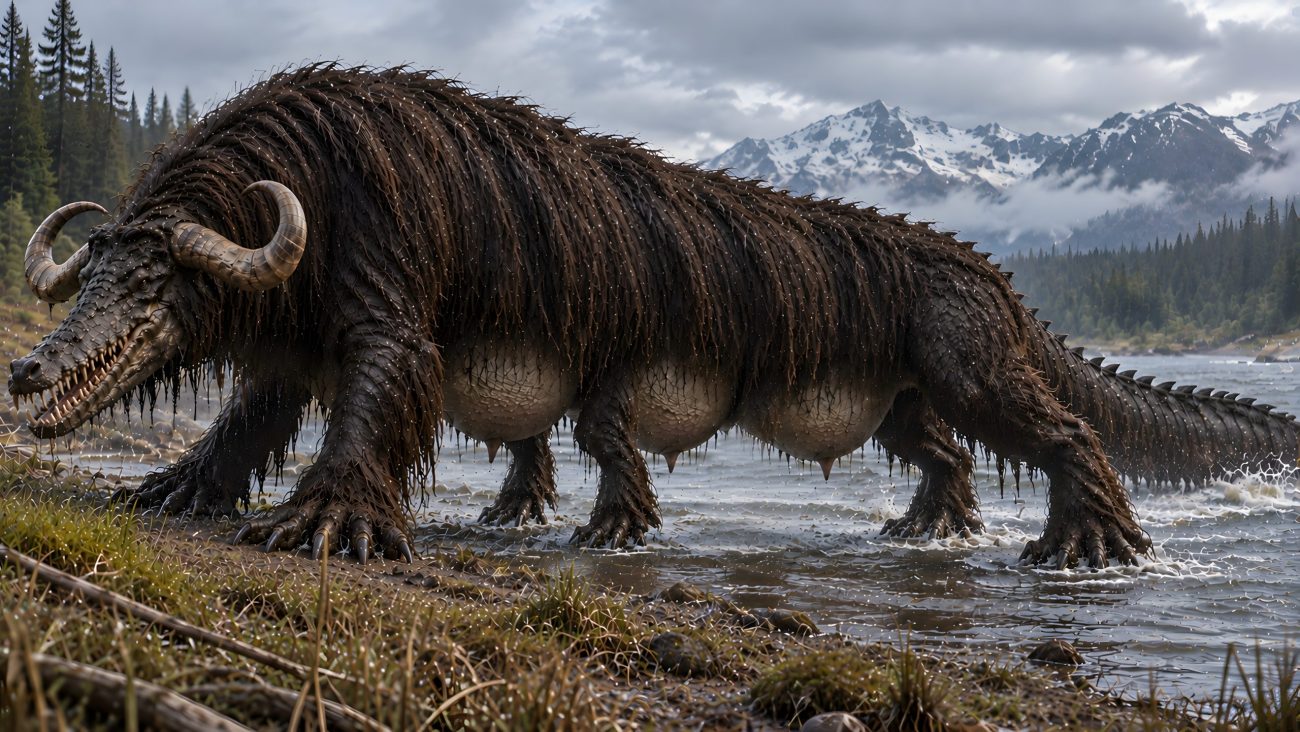
One Păl-raí-yûk killed by the Sky People had six legs: the hind legs were long, the forelegs were short, while the smaller middle legs hung from its abdomen. It had small eyes and a body covered in fine, dense, very dark fur like that of a shrew. The fur was longest around its feet. A pair of horns grew from its head, extending forward and outward before curving back.
Păl-raí-yûk were large and bulky creatures, yet they were said to be capable of lying upon grass without bending the stems. After death, however, their bodies became extraordinarily heavy and would sink into the ground unless they were supported. Killing one therefore required several hunters, who would hold the creature down with logs while smashing its head with clubs.
The last known Păl-raí-yûk was killed by a hunter after the creature attacked and ate his wife while she was fetching water from a lake.
Sources
Countess Sica. “Păl-raí-yûk.” A Book of Creatures. October 30, 2015. https://abookofcreatures.com/2015/10/30/pal-rai-yuk