Tabibitoma

Tradition / Region: Japanese Mythology
Alternative names: Traveler’s Horse
Category: Horse


The Myth

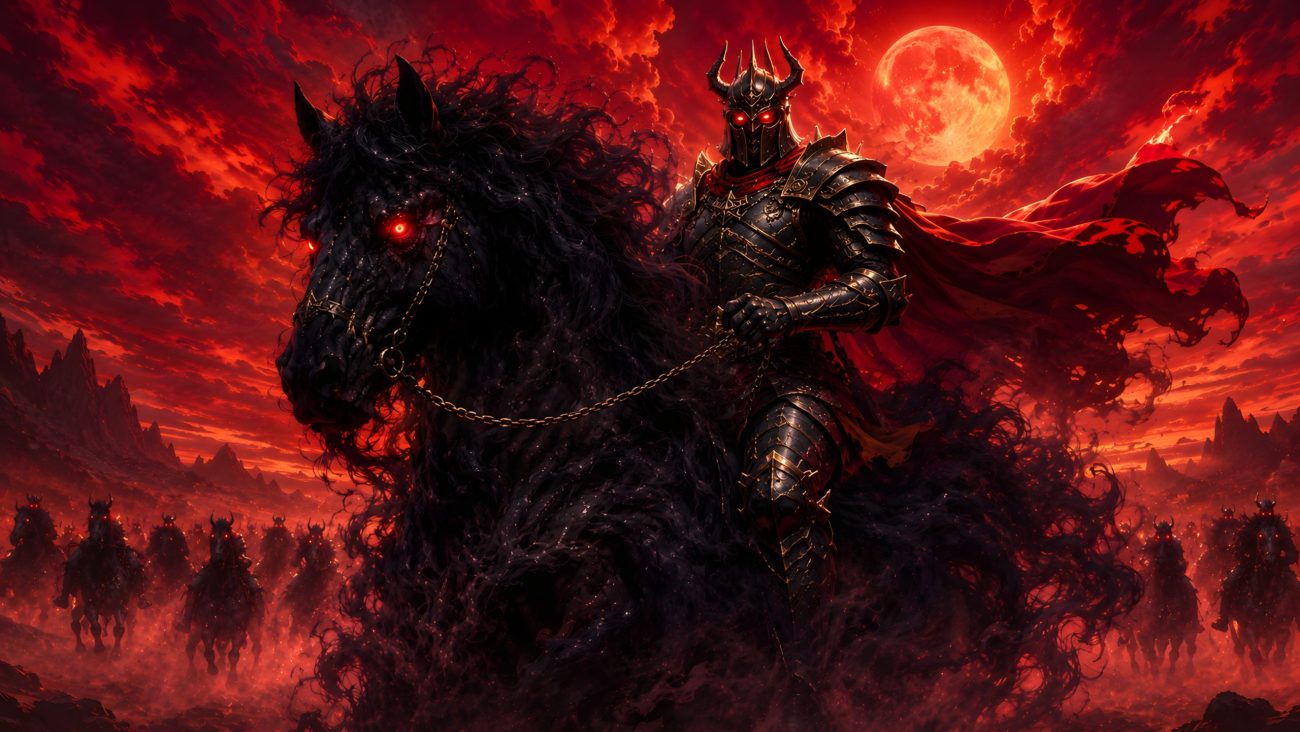
The Tabibitoma is a folktale told in several regions of Japan, including Kyushu and the San’in region.

The story tells of two close friends, one the son of a wealthy family and the other from a poor household. Although their backgrounds differed, they set out together on a journey. When night fell, they found lodging in a stranger’s house.

During the night, the poor boy secretly watched the woman of the house behaving strangely beside the hearth. After raking the ashes, she sowed rice seeds into them. The rice instantly grew to maturity, and she harvested it to make dumplings.

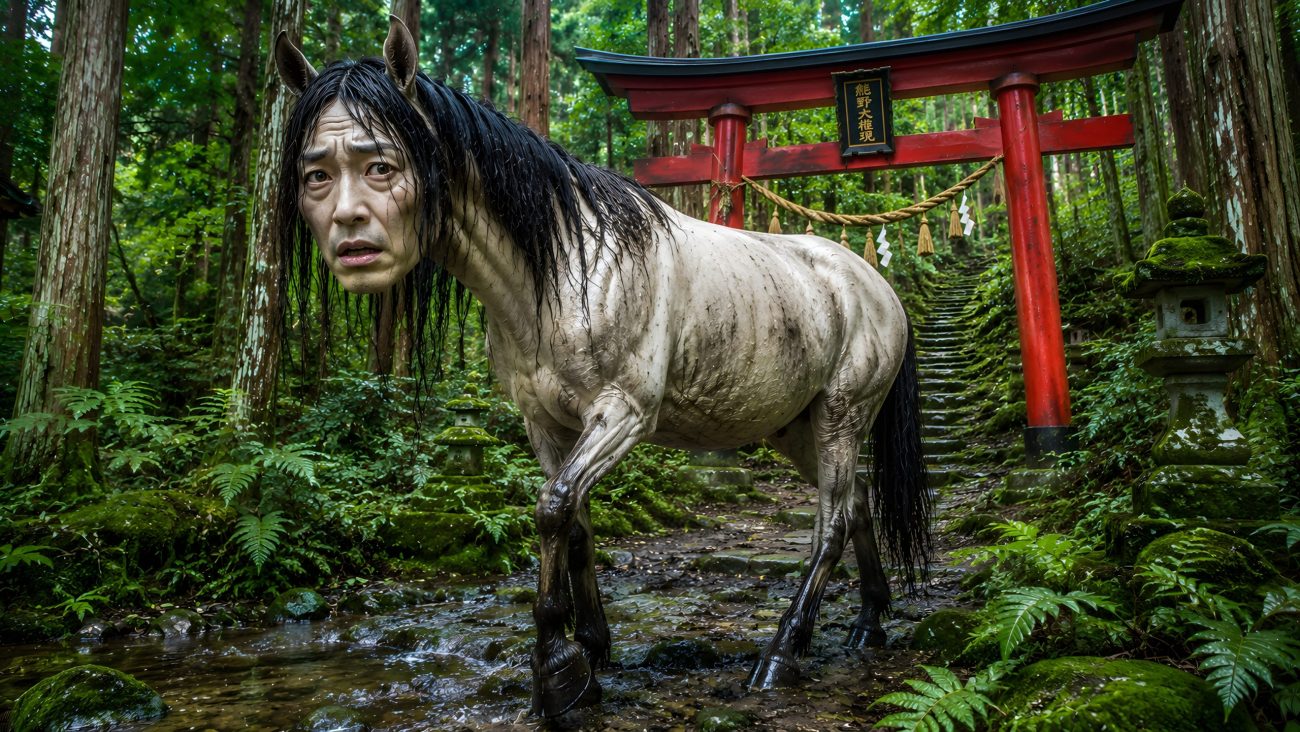
The following morning, the travelers were served the dumplings. Despite his friend’s warnings not to eat them, the wealthy boy tasted one. The moment he swallowed it, he was transformed into a horse.

The woman placed a bridle on the transformed boy and led him away to work as a horse, while the poor traveler escaped. Along the road he met an old man, who listened to his story and revealed that an eggplant tree bearing seven eggplants facing east could reverse the enchantment. If one of those eggplants were fed to the horse, it would become human again.

After searching for several days, the poor boy finally found the magical tree. He returned to the house, where his friend had become weak and emaciated from hard labor in the fields. He forced the seven eggplants into the horse’s mouth, and the spell was immediately broken.

The two friends returned home and told their families what had happened. Deeply moved by the poor boy’s loyalty and courage, the wealthy boy’s father bestowed his fortune upon him. The two friends then lived happily together for the rest of their lives.


Sources

TYZ. (n.d.). 旅人馬 (Tabibitoma). In 新版TYZ 妖怪図鑑. Retrieved June 29, 2026, from https://tyz-yokai.blog.jp/archives/1010655044.html
Shoopiltee

Tradition / Region: Scottish Mythology
Alternative names: Cabyll-ushtey
Category: Horse


The Myth

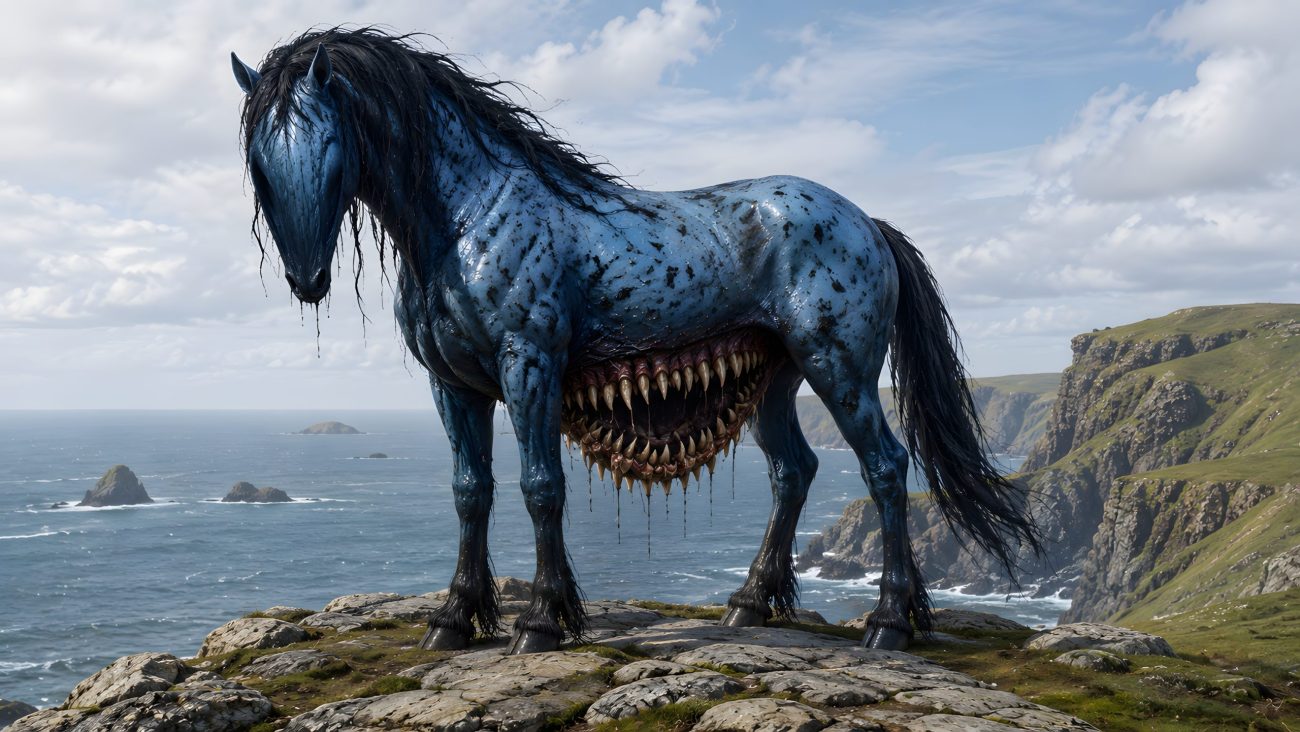
Shoopiltee is a water spirit from the folklore of the Shetland Islands. It appears in the form of a beautiful little horse.

The creature attempts to entice people into mounting its back. Once a rider climbs on, the Shoopiltee suddenly gallops into the sea, carrying its victim with it.


Sources

Bestiary.us. (n.d.). Shupilti. In New Bestiary: Encyclopedia of Imaginary Beings. Retrieved June 29, 2026, from https://www.bestiary.us/shupilti/en


Sagari

Tradition / Region: Japanese Mythology
Alternative names:
Category: Horse


The Myth

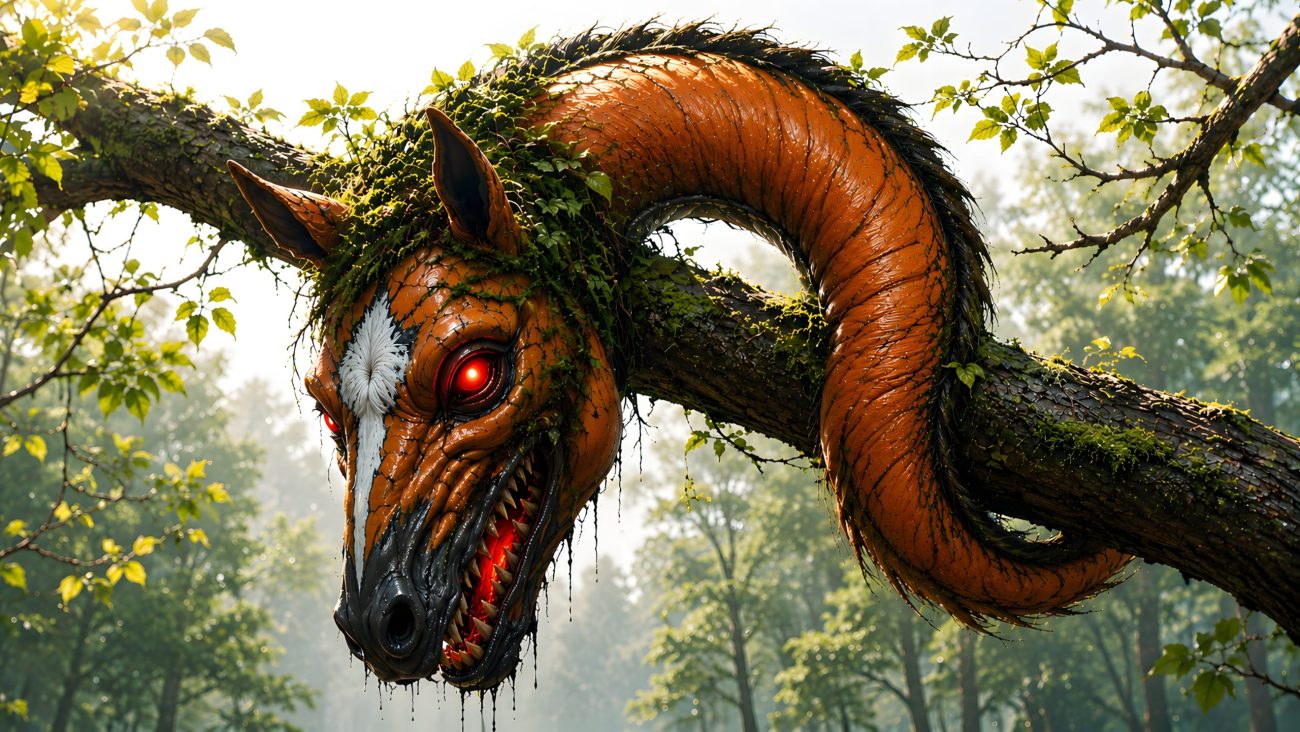
Sagari is a yōkai found in the folklore of western Japan, particularly in Okayama and Kumamoto prefectures. It appears as the grotesque severed head of a horse hanging from the branches of hackberry trees.

The apparition suddenly drops down in front of travelers passing beneath the trees, startling them with its horrifying appearance. It does little else besides hanging from the branches, screaming and neighing with an unnatural cry.

Those who hear the Sagari’s eerie whinnying are said to be afflicted with a terrible fever.

According to tradition, the Sagari originates from the spirits of horses that die on the roadside and are abandoned where they fall. As the souls of these horses rise from their bodies, some become trapped in nearby hackberry trees. Unable to pass on to the next world, they transform into the yōkai known as Sagari.


Sources

Foster, M. D. (n.d.). Sagari. In Yokai.com: The Illustrated Database of Japanese Folklore. Retrieved June 29, 2026, from https://yokai.com/sagari/


Polkan

Tradition / Region: Russian Mythology
Alternative names: Palkan
Category: Horse


The Myth

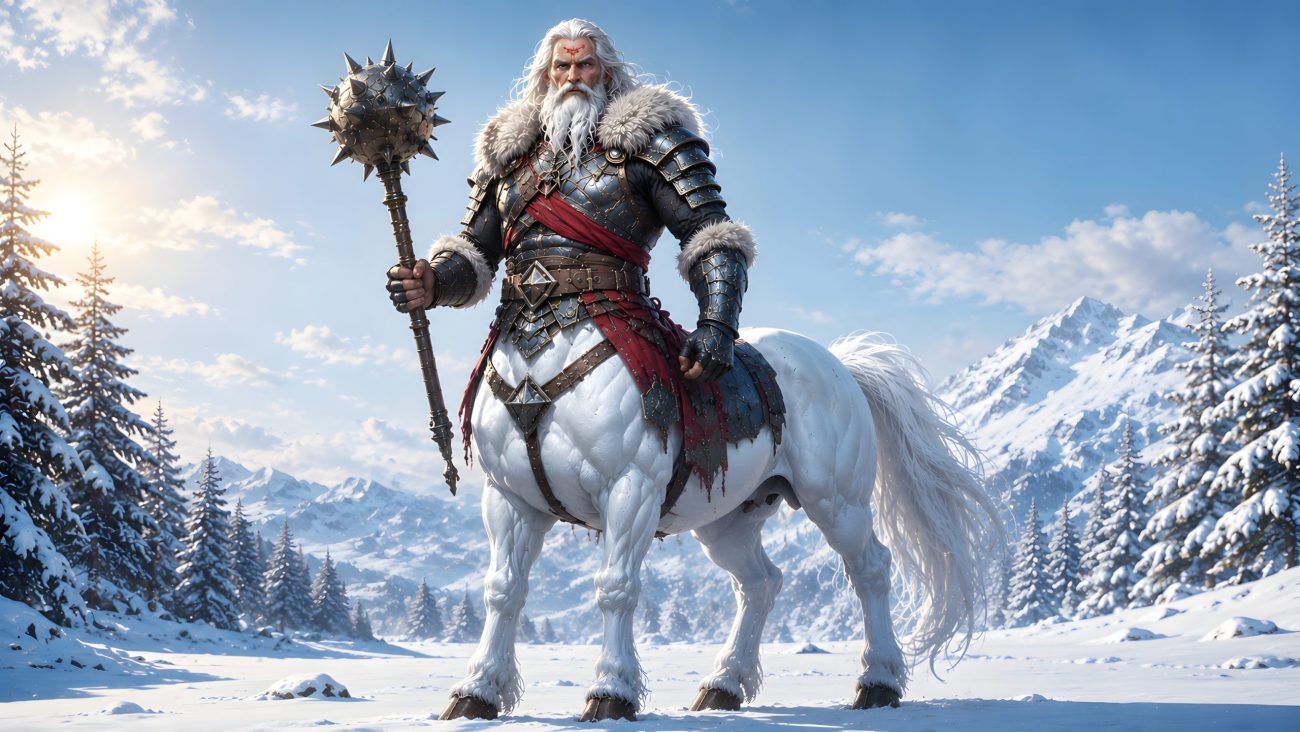
Polkan is a legendary creature from Russian folktales with the upper body of a man and the lower body of a horse. In some versions of the legend, he instead possesses the body of a dog. He is renowned for his immense strength and extraordinary speed.

Polkan first appears as the enemy of the hero Bova Korolevich. After battling the prince, however, he becomes Bova’s loyal companion and faithful ally, fighting alongside him in later adventures.

His story ends tragically when he sacrifices himself to protect Bova’s wife and children. During this defense, Polkan is killed while battling lions.

The Russian Polkan ultimately derives from the Italian character Pulicane, a half-dog creature from Andrea da Barberino’s I Reali di Francia. Through Slavic prose adaptations of the poem, Pulicane gradually transformed into the half-horse hero of Russian folklore. Folk tradition later reinterpreted his name as polukon, meaning “half-horse.”


Sources

Wikipedia contributors. (n.d.). Polkan. In Wikipedia. Retrieved June 29, 2026, from https://en.wikipedia.org/wiki/Polkan


Pirwa

Tradition / Region: Hittite Mythology, Syrian Mythology, Turkish Mythology
Alternative names: Perwa, Peruwa
Category: Horse


The Myth

Pirwa was a god worshiped by the Hittites and Luwians in ancient Anatolia. He was closely associated with horses and was also regarded as a warlike deity.

The connection between Pirwa and horses is well attested in both religious texts and descriptions of his iconography. He was depicted as a male figure standing upon a horse. He was also associated with eagles and lions. Among his epithets was parḫant, meaning “chasing,” “hunting,” or “galloping,” which may reflect his equine character.

Pirwa first appears in documents from Kanesh, where a priest served in his cult. He remained closely connected with that city throughout later Hittite tradition and was eventually worshiped in numerous other settlements, including Hattusa, Šippa, Zipariwa, Ḫaššuwa, Tenizidaša, Ikšunuwa, Nenišankuwa, and Duruwaduruwa. Temples dedicated to him are known from Šippa and Wijanawanta.

In Hittite offering lists, Pirwa frequently appears alongside deities associated with Kanesh, including Aškašepa, Maliya, Ḫašamili, Ḫaššušara, and Kamrušepa. His connection with Ḫaššušara was especially close, and in some places the two were worshiped together as a divine pair. He also appears with Aškašepa in Luwian rituals and occasionally forms part of a triad with Kataḫḫa.

A possible later reference to Pirwa occurs in a Neo-Assyrian text from the reign of Ashurbanipal, where a deity named Birua is listed among the gods worshiped in Arbela. Some scholars identify Birua with Pirwa, although others consider the name to be a scribal error, making this identification uncertain.


Sources

Wikipedia contributors. (n.d.). Pirwa. In Wikipedia. Retrieved June 29, 2026, from https://en.wikipedia.org/wiki/Pirwa


Pira-Nũ

Tradition / Region: Argentine Mythology
Alternative names:
Category: Horse, Fish


The Myth

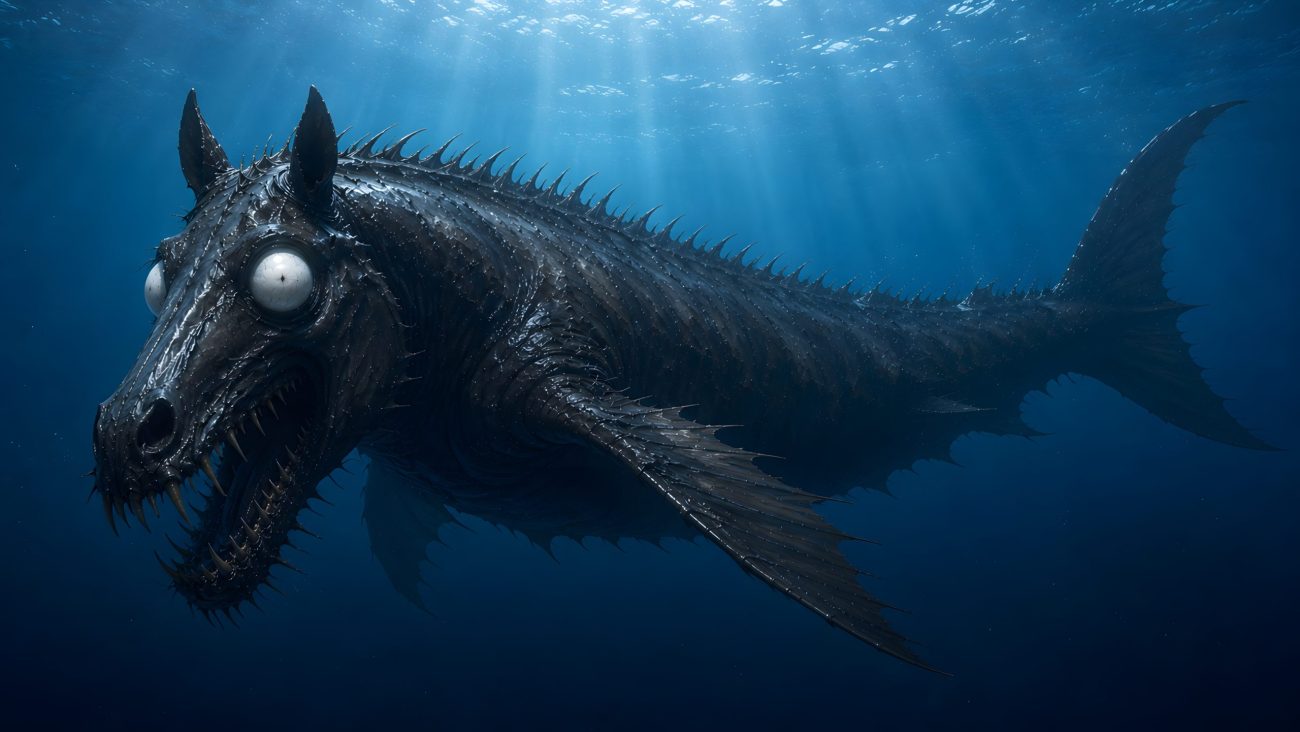
Pira-Nũ, meaning “Black Fish,” is a water phantom from the Misionera region.

It is described as an enormous fish with a head resembling that of a horse, in which two exceptionally large eyes are set.

According to tradition, the creature was formed from the remains of old dugout canoes made from timbó wood that were lost in the rapids of the rivers.

The Pira-Nũ swims just beneath the surface of the water, waiting for boats to pass so that it can devour the people and animals traveling in them.


Sources

Colombres, A. (1984). Seres sobrenaturales de la cultura popular argentina (Vol. 1, Biblioteca de Cultura Popular). Ediciones del Sol.


Pegasus

Tradition / Region: Greek Mythology
Alternative names: Pegasos
Category: Horse


The Myth

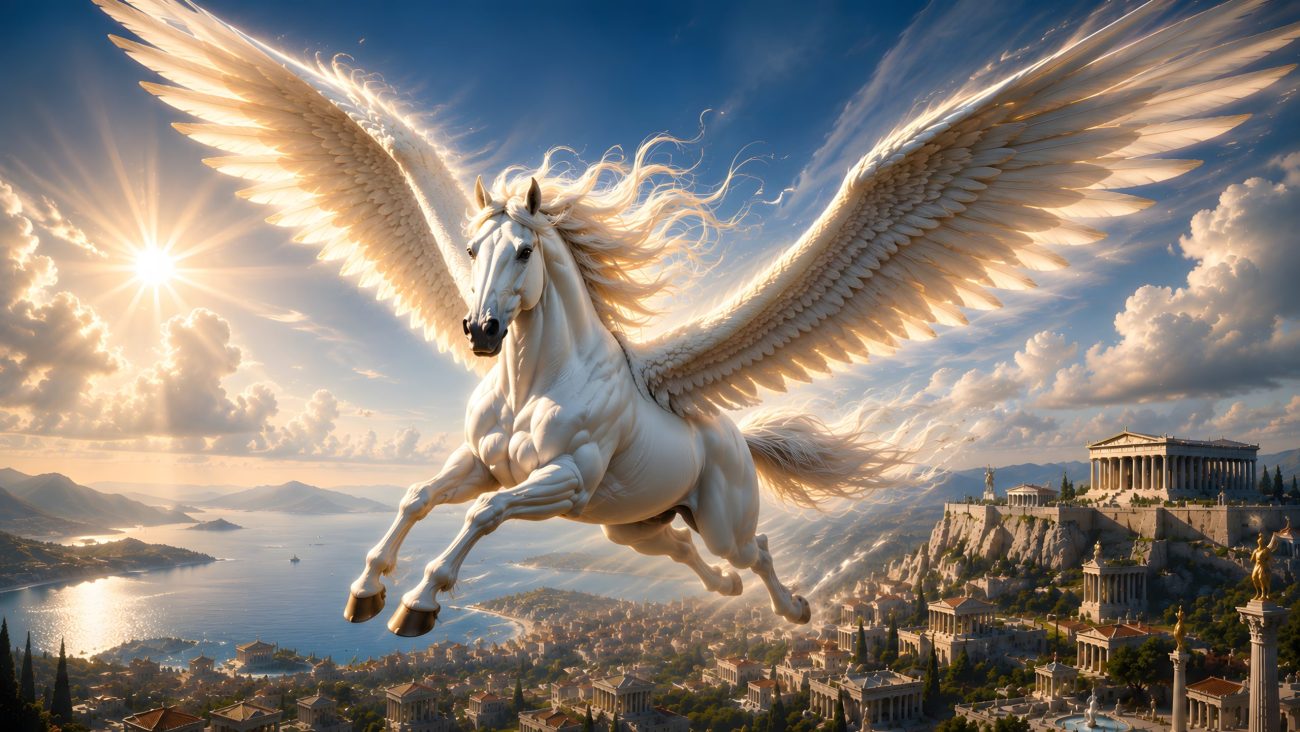
Pegasus is the famous winged horse of Greek mythology, usually depicted as a white stallion. He was sired by Poseidon in his role as the horse-god and was born together with his brother Chrysaor from the blood of the Gorgon Medusa after she was beheaded by Perseus. Some traditions instead state that the brothers arose when Medusa’s blood fell upon the earth, while others connect their birth to the mingling of her blood with sea foam.

After his birth, Pegasus flew to the heavens and became a servant of Zeus, carrying the god’s thunderbolts and thunder from Olympus.

Pegasus was also associated with miraculous springs. Wherever he struck the ground with his hoof, a spring burst forth. The most famous of these was Hippocrene on Mount Helicon, created by Pegasus’ hoof. Another sacred spring connected with him was located at Troezen.

The hero Bellerophon captured Pegasus near the spring of Peirene. Following Athena’s instructions, Bellerophon slept in her temple, where the goddess appeared in a dream and presented him with a golden bridle. The following morning he found Pegasus drinking at the spring and used the bridle to tame the winged horse with the help of Athena and Poseidon.

Mounted upon Pegasus, Bellerophon defeated the monstrous Chimera and accomplished many other heroic deeds. Eventually, however, he attempted to ride Pegasus to Mount Olympus. For this act of pride he fell from the horse. Some traditions say that both Bellerophon and Pegasus died by the will of Zeus for attempting to reach Olympus, while others state that Pegasus alone continued to Olympus, where he remained in the service of Zeus, bearing his thunderbolts.

Pegasus was later honored as a constellation and became one of the most enduring figures of Greek mythology, frequently appearing in ancient Greek art and later Renaissance paintings and sculptures.


Sources

Wikipedia contributors. (n.d.). Pegasus. In Wikipedia. Retrieved June 29, 2026, from https://en.wikipedia.org/wiki/Pegasus


Murioshe

Tradition / Region: Breton Mythology, French Mythology
Alternative names: Mourioche
Category: Horse, Demon


The Myth

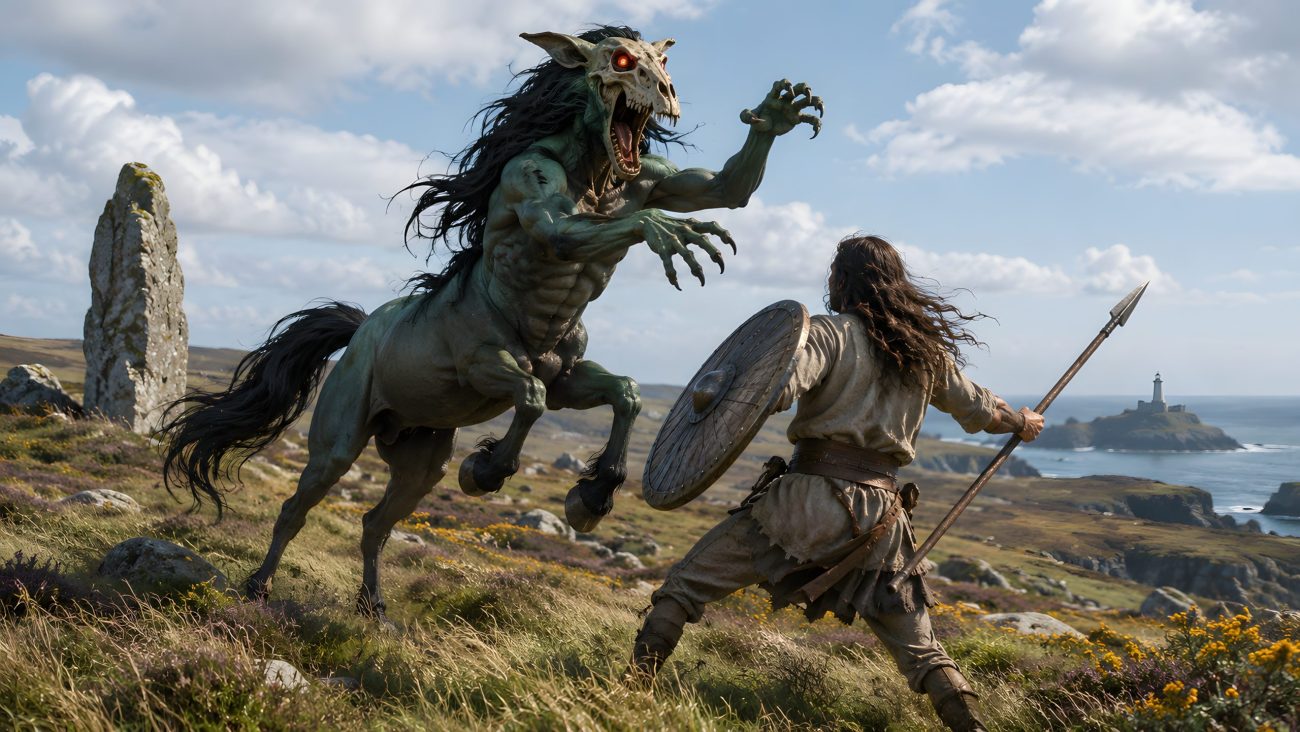
The Murioshe is a harmful demon of Breton folklore that can apparently transform into almost any animal. It has long been feared along the coast of the Côtes-d’Armor and around Jugon-le-Lac. Although it can assume many forms, it most commonly appears as a water horse or as a werewolf. It may also take the shape of a donkey, bull, pig, ox, sheep, or even a pair of human arms.

The Murioshe hunts at night, stalking lonely travelers. It sometimes appears as a horse standing quietly beside the road, waiting for someone to ride it. Once mounted, the victim finds the creature’s spine stretching beneath the saddle while it gallops into a lake, laughing as it drowns its rider. At other times it seizes travelers with its muscular arms and throws them into muddy ditches, or leaps onto a person’s back and forces them to carry it until they collapse from exhaustion.

One tale tells of a farmer from Saint-Cast who repeatedly found livestock missing from his barn. Each morning he discovered that a different animal had vanished, only to find another species in its place. After realizing all of his animals had been slaughtered, he armed himself with a shotgun, but the Murioshe destroyed his barn and kidnapped his three children, who were never seen again. Despite its cruelty, the creature left behind a gold necklace.

People believed the Murioshe could sometimes be driven away through cleverness rather than force. One story tells of a rider who escaped after threatening to cut off the ears of the werewolf-like horse with scissors.

The Murioshe was also used to frighten misbehaving children. Parents warned them, “If you don’t listen, a Murioshe will come for you!”

The creature’s true origin is uncertain. Some traditions claim it was once a Breton man or woman who practiced dark arts and sold their soul to the Devil. Others identify it as the Devil himself, while some describe it simply as a werewolf unable to control its transformations. Another tradition recorded by Pierre Dubois says that the Murioshe was once the court jester of the underwater king before being exiled for bad behavior.


Sources

Bestiary.us. (n.d.). Murioshe. In New Bestiary: Encyclopedia of Imaginary Beings. Retrieved June 29, 2026, from https://www.bestiary.us/murioshe


Muladona

Tradition / Region: Catalan Mythology, Spanish Mythology
Alternative names: Donamula
Category: Horse


The Myth

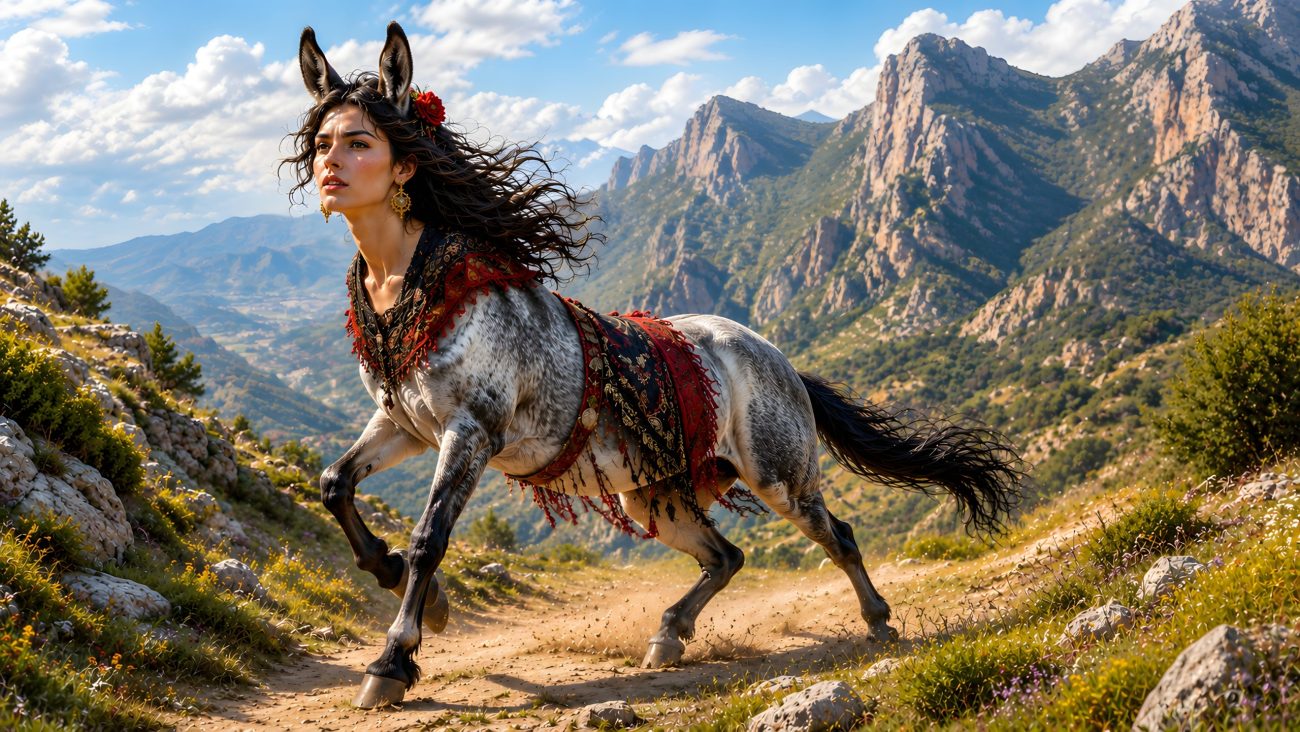
The Muladona is a monstrous creature from Catalan folklore with the body of a female mule and the head of a human woman. According to legend, it was once a young woman who was cursed by her community for being irreverent and irreligious, transforming her into this unnatural form.

After her transformation, the Muladona wandered through the mountains, especially at night, where she joined trains of mules. Her presence terrified the animals, causing them to panic, stampede into ravines, and perish.

The creature has the body of a mule, but its mane resembles a woman’s hair and its face is unmistakably human despite retaining some animal features. It is always depicted with the four legs of a mule, although some traditions show its front legs connected to a human-like torso where a mule’s neck would normally be. It is also consistently portrayed with breasts, emphasizing its female nature.

To protect their animals, muleteers fed their mules small pieces of bread shaped like the Muladona, believing this charm would prevent them from being frightened. They also carefully counted the mules in their caravans, fearing that the Muladona might secretly mingle among them and bring disaster if it went unnoticed.


Sources

Wikipedia contributors. (n.d.). Muladona. In Wikipedia. Retrieved June 29, 2026, from https://en.wikipedia.org/wiki/Muladona


Miramas

Tradition / Region: Persian Mythology, Iranian Mythology
Alternative names: Mir Amas
Category: Horse


The Myth

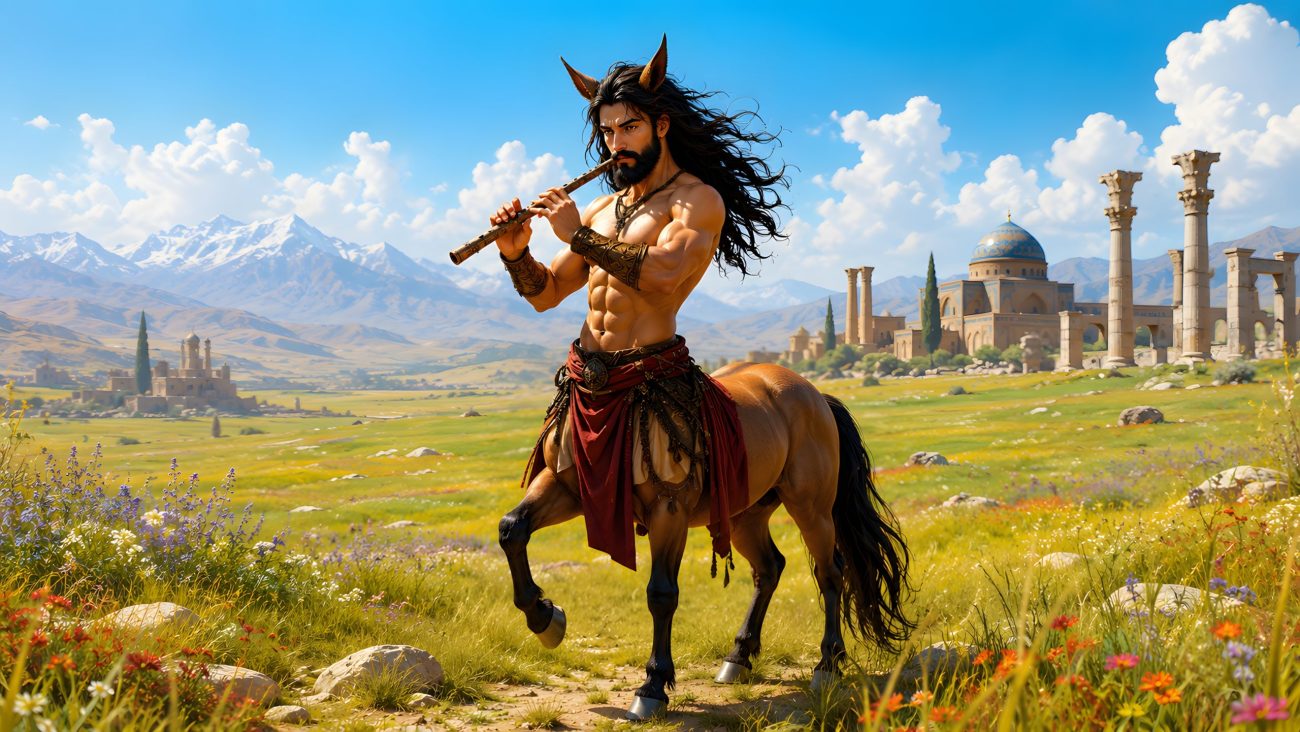
Miramas is a legendary half-man, half-horse creature described in classical Persian texts. It is said to dwell in the far west, beyond the inhabited world, where Persian sources identify its homeland with the western sea.

From the head to the waist, Miramas resembles a human, while its lower body is that of a horse.

Miramas is renowned for its beautiful singing. Its melodies are so enchanting that every living creature nearby loses consciousness upon hearing them. If no living being is present, Miramas itself is overcome by its own song and falls unconscious.

The creature is mentioned in the Book of Wonders (Aja’ib-nameh), particularly in the section Al-Bahria, attributed to Fazuni Astarabadi. Beyond this account, little is recorded about Miramas, and no further traditions concerning its origin or role in Persian mythology are known from the surviving sources.


Sources

Bestiary.us. (n.d.). Miramas. In New Bestiary: Encyclopedia of Imaginary Beings. Retrieved June 29, 2026, from https://www.bestiary.us/miramas/en