Omoshiroi zo

Tradition / Region: Japanese Mythology
Alternate Names: Omoshiroi zo
Category: Mountain dweller


The Myth

This strange incident is said to have happened in the youth of an old man named Kikuchi Yanosuke.

One night, under a faint, pale moon, Yanosuke and several companions were crossing Sakaiki Pass, a mountain path leading toward the coast. Yanosuke was known as a skilled flute player, and as they traveled, he played his flute while walking.

As they passed through a place called Ōyachi, they entered a deep valley. White birch trees grew thickly there, and below the path ran a marshy ravine filled with reeds and tall grasses.

While they were crossing this valley, a high, piercing voice suddenly rose from the depths below. From the darkness of the ravine, something unseen cried out:

Omoshiroi zo—!
(“This is interesting!”)

At the sound of the voice, everyone turned pale with fear. Without seeing any figure or source, the group fled in terror, abandoning the path and running from the valley.

Later in his life, Yanosuke experienced another unsettling event deep in the mountains, when he heard the scream of a woman echoing through the forest. It was later discovered that, at the very same time, his sister had been killed by her own son.

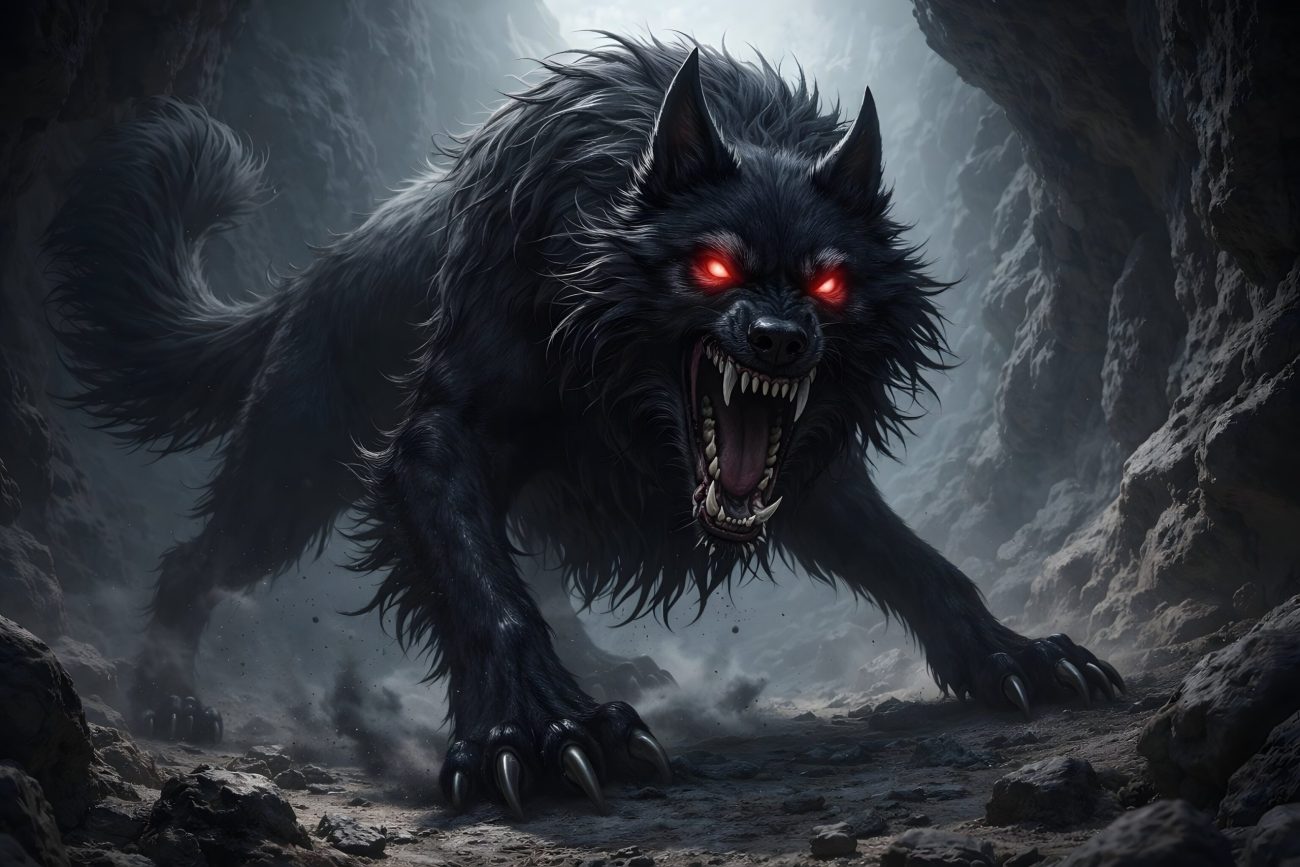
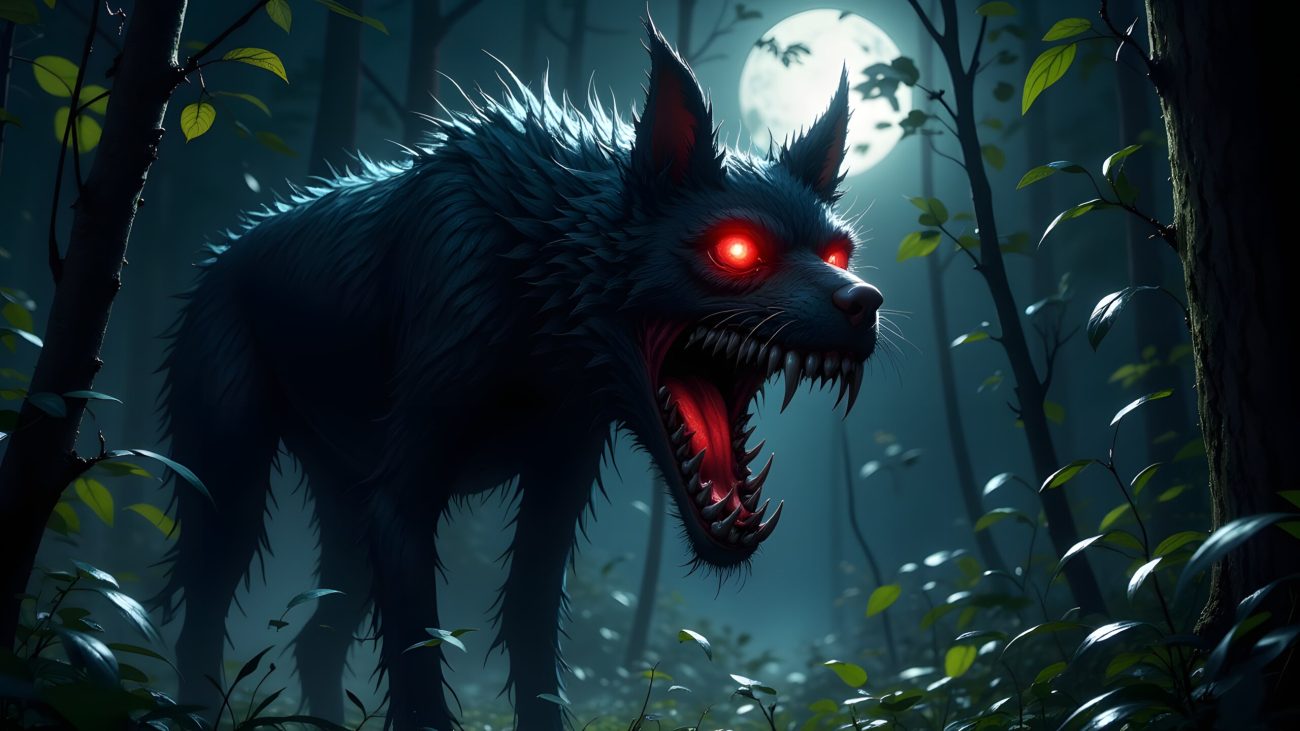
The voice calling “Omoshiroi zo” was never explained, and no form was ever seen. It remains remembered as one of the many eerie, disembodied presences said to dwell in the mountains and valleys of the region.


Gallery


Sources

TYZ-Yokai Blog contributors. (n.d.). 面白いぞ (Omoshiroi zo). In TYZ-Yokai Blog, from https://tyz-yokai.blog.jp/archives/1074589312.html


Interpretive Lenses

Religious Readings
  • Christian Ascetic Deep Dive
Philosophical Readings
  • Nietzschean Deep Dive
Psychological Readings
  • Jungian Deep Dive
Esoteric Deep Dive
  • Hermetic Deep Dive
Political / Social Readings
  • Marxist Deep Dive
Other
  • How to Invite The Omoshiroi zo

The Monster of Hiroshima Tenmacho

Tradition / Region: Japanse Mythology
Alternate Names: Hiroshima Tenmacho Kaibutsu
Category: House dweller


The Myth

In Tenmacho, Hiroshima, it is said that a strange monster was born to the wife of a horseman named Yukimatsu. The birth took place in February, in an area associated with the land of the dead.

The creature was described as about eighteen inches tall, with very short limbs measuring only three to four inches. It possessed three legs instead of two. Its body was entirely red and horse-like in form. One of its most disturbing features was an enormous scrotum, said to be as wide around as the creature was tall.

The being did not resemble any known animal or human. It was regarded as an unnatural birth and was spoken of simply as a monster, remembered for its unusual shape and disturbing appearance rather than for any actions it took.

The story survives as an account of a bizarre and unsettling creature that briefly entered the human world and became part of local memory.


Gallery


Sources

TYZ-Yokai Blog contributors. (n.d.). 広島伝馬町の怪物 (Hiroshima Tenmachō no Kaibutsu). In TYZ-Yokai Blog, from https://tyz-yokai.blog.jp/archives/1062856281.html


Interpretive Lenses

Religious Readings
  • Christian Ascetic Deep Dive
Philosophical Readings
  • Nietzschean Deep Dive
Psychological Readings
  • Jungian Deep Dive
Esoteric Deep Dive
  • Hermetic Deep Dive
Political / Social Readings
  • Marxist Deep Dive
Other
  • How to Invite The The Monster of Hiroshima Tenmacho

Eksitaja

Tradition / Region: Estonian Mythology
Alternate Names:
Category: Forest dweller, Swamp dweller, Spirit


The Myth

Eksitaja is an evil spirit known for causing people to lose their way in forests and bogs. Those who encounter Eksitaja become confused and disoriented, unable to recognize familiar paths or landmarks. Even places well known to the traveler can suddenly seem strange and misleading.

The spirit does not attack directly, but instead leads people astray, drawing them deeper into wilderness areas such as dense forests or marshy bogs. Victims may wander for long periods, sometimes until exhaustion or danger overtakes them.

Eksitaja embodies the fear of becoming lost in nature, where direction fails and the landscape itself seems to turn against those who travel through it.


Gallery


Sources

Wikipedia contributors. (n.d.). Estonian mythology. In Wikipedia, The Free Encyclopedia, from https://en.wikipedia.org/wiki/Estonian_mythology


Interpretive Lenses

Religious Readings
  • Christian Ascetic Deep Dive
Philosophical Readings
  • Nietzschean Deep Dive
Psychological Readings
  • Jungian Deep Dive
Esoteric Deep Dive
  • Hermetic Deep Dive
Political / Social Readings
  • Marxist Deep Dive
Other
  • How to Invite The Eksitaja

Petrykivka Mara

Tradition / Region: Ukrainian Mythology
Alternate Names: Petrikov Mara
Category: Plant, Forest dweller


The Myth

The Petrykivka Mara is a strange and grotesque figure from the folklore of Eastern Polesia. Unlike many beings called mara in Slavic traditions—where the name usually refers to a dangerous or demonic entity—this mara is considered harmless, though deeply unsettling in appearance and presence.

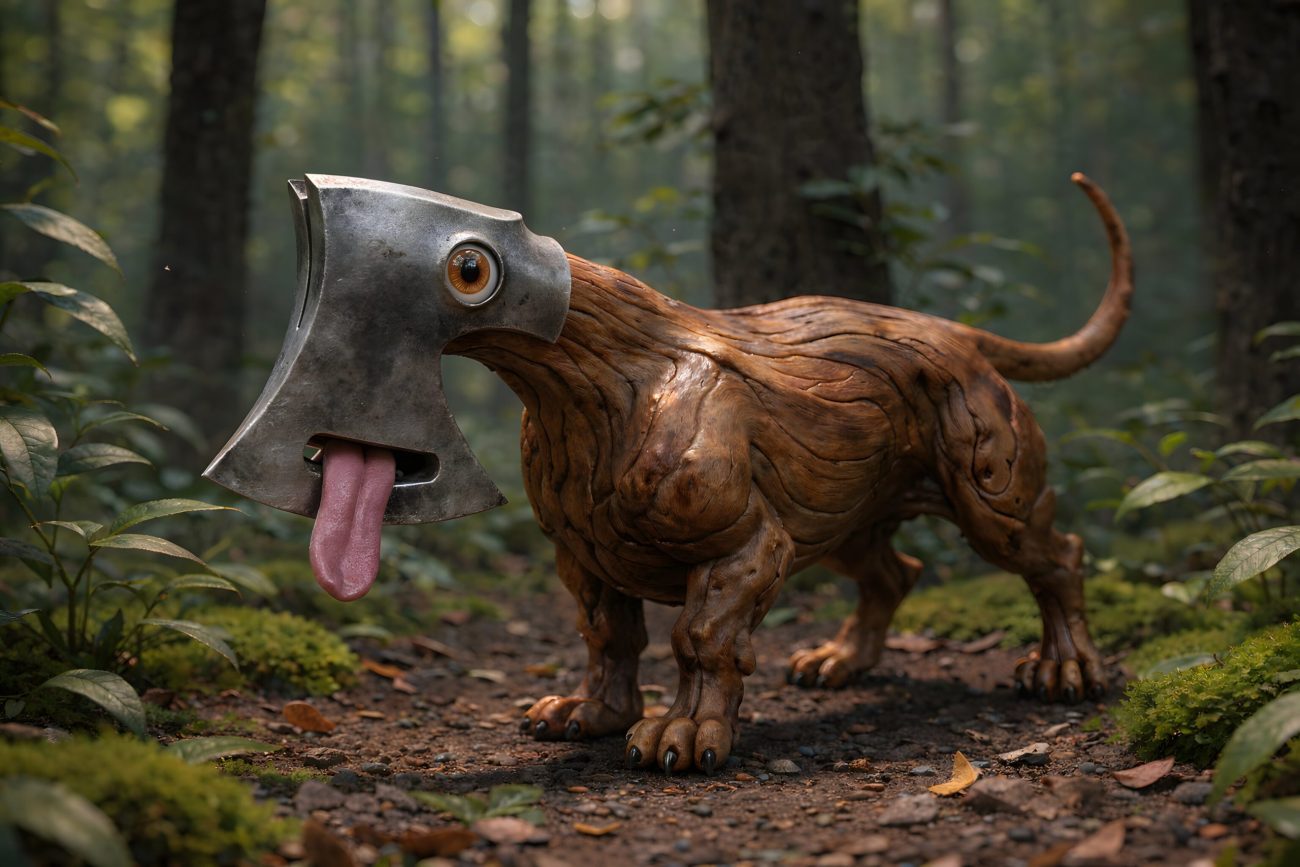
She is described as resembling a thick, upright log or resinous stump, standing vertically on very short legs shaped like badger paws. Her body is massive and heavy-looking, while her legs are disproportionately small. She is always described as black in color. Though frightening to look at, she does not attack or harm people. At most, she startles children or causes confusion and fear, sometimes even becoming a hazard simply by standing in the way.

When the mara moves, she emits metallic sounds, compared to distant blows on a cast-iron cauldron. These noises announce her presence before she is fully seen. Despite her intimidating size, she is said to be terrified of children, reacting to them with fear rather than aggression.

In later times, the mara came to be represented as a straw scare figure, dressed in rags. In this form, she appears suddenly, stands motionless, or slowly follows people who are walking. She never commits any harmful act, but her presence is described as oppressive, filling those who encounter her with a heavy sadness, as if their heart were being clawed at and their soul weighed down.

One well-known story comes from the town of Petrikov, where during the summer months, at dawn each day, a mara appeared at the entrance to the town. She took the form of a log twice the height of a man, standing on short badger-like legs. She would remain motionless, moaning with a human voice, and vanish again at dawn. How the people eventually rid themselves of her is unknown.

The memory of this being lived on not only in stories but also in speech. A saying arose that later became a proverb. When someone is annoying or persistently clinging, people say:
“I’m tired of you like the Petrikov mara. Why are you clinging to me like the Petrikov mara? Get off me, Petrikov mara.”

In this way, the Petrykivka Mara remains in folklore as a figure of silent oppression and strange persistence, frightening not through violence, but through her unsettling presence alone.


Gallery


Sources

Bestiary.us contributors. (n.d.). Mara Petrikovskaya. In Bestiary.us, from https://www.bestiary.us/mara-petrikovskaya


Interpretive Lenses

Religious Readings
  • Christian Ascetic Deep Dive
Philosophical Readings
  • Nietzschean Deep Dive
Psychological Readings
  • Jungian Deep Dive
Esoteric Deep Dive
  • Hermetic Deep Dive
Political / Social Readings
  • Marxist Deep Dive
Other
  • How to Invite The Petrykivka Mara

Urhins

Tradition / Region: British Mythology
Alternate Names: Hurhins, Urchins
Category: Hedgehog, Spirit


The Myth

Urhins are small bogies or pixies in British folklore that take the form of hedgehogs. The name urhin or hurhin comes from a dialect word meaning “hedgehog,” and reflects both their appearance and their low, ground-dwelling nature.

These beings are imagined as small, prickly spirits, moving quietly through fields, gardens, and the edges of settlements. Though tiny, they are mischievous and capable of causing discomfort or fear, especially when encountered unexpectedly. Their hedgehog form allows them to remain unnoticed until they choose to reveal themselves.

Urhins are associated with trickery and torment, particularly toward humans who stray into places where such spirits dwell. They are not grand or powerful beings, but persistent and irritating, more likely to harass than to harm outright. Their presence is felt through unease, sudden disturbances, or the sense of being watched from low to the ground.

In English folklore and storytelling, urhins are grouped alongside other small supernatural beings such as fairies and sprites. They are part of the hidden population of the land, creatures that exist just beyond ordinary perception and whose behavior reflects the unpredictable nature of the unseen world.

Over time, the word “urchin” came to be used for mischievous children, echoing the playful yet troublesome qualities once attributed to these hedgehog-like spirits. Though their supernatural meaning has faded in everyday language, the image of the urhin remains rooted in folklore as a small, prickly trickster lurking close to the earth.


Gallery


Sources

Bestiary.us contributors. (n.d.). Urhiny. In Bestiary.us, from https://www.bestiary.us/Urhiny


Interpretive Lenses

Religious Readings
  • Christian Ascetic Deep Dive
Philosophical Readings
  • Nietzschean Deep Dive
Psychological Readings
  • Jungian Deep Dive
Esoteric Deep Dive
  • Hermetic Deep Dive
Political / Social Readings
  • Marxist Deep Dive
Other
  • How to Invite The Urhins

Lugovichok

Tradition / Region: Russian Mythology
Alternate Names: Meadow-goose (regional beliefs)
Category: Forest dweller, Gnome


The Myth

In Slavic mythology, Lugovichok is known as the spirit of the meadows. He is described as a small green man, clothed in grass and vegetation, and is considered one of the children of the field worker, a spirit connected with cultivated land and agricultural labor.

Lugovichok is believed to move swiftly through the meadows, catching birds and bringing them as food to his parent. During haymaking, he may secretly help people, ensuring that the work goes smoothly when it is done properly and at the right time.

However, Lugovichok is easily angered by neglect or improper behavior. When people delay mowing or fail to tend the meadow correctly, he may cause the grass to grow wildly and become tangled, braiding it so tightly that it cannot be cut or torn. In some cases, he is said to dry the grass at the root, ruining the hay altogether. If mowers arrive at the wrong time, Lugovichok can dull their scythes instantly or even break them completely, bringing work to a halt.

The name “Lugovichok” itself is rare and is recorded mainly in northwestern Russia. In other regions, related beliefs appear under different names. Peasants in the Tula province, for example, believed in shaggy meadow beings—alongside the field-goose and well-goose—who lived underground in burrows and emerged only at midday and just before sunset. At these times, such beings were considered dangerous and were thought capable of bringing illness or fever to humans.

Through these beliefs, Lugovichok represents both the helpful and harmful forces of the meadow—rewarding proper care and timing, but punishing neglect, impatience, or disrespect toward the land.


Gallery


Sources

Bestiary.us contributors. (n.d.). Lugovichok. In Bestiary.us, from https://www.bestiary.us/Lugovichok


Interpretive Lenses

Religious Readings
  • Christian Ascetic Deep Dive
Philosophical Readings
  • Nietzschean Deep Dive
Psychological Readings
  • Jungian Deep Dive
Esoteric Deep Dive
  • Hermetic Deep Dive
Political / Social Readings
  • Marxist Deep Dive
Other
  • How to Invite The Lugovichok

Lesavki

Tradition / Region: Belarusian Mythology
Alternate Names: Lesavkas
Category: Forest dweller, Spirit


The Myth

Lesavki are described as small forest spirits in East Slavic folklore. According to some accounts, they are said to be the children of the Leshy and the Kikimora; in other versions, they are described as the Leshy’s grandfather and grandmother, reflecting differing traditions about their origin and place within the forest world.

In appearance, lesavki are said to be very small, gray, and hedgehog-like, resembling little shaggy balls of hair. They live hidden among last year’s fallen leaves on the forest floor, where they are easily overlooked. Their presence is more often sensed than seen.

Their period of activity lasts from late summer until mid-autumn. During this time, lesavki are constantly in motion: they revel, dance in circles, lift leaves, rustle, and scurry about, filling the forest with quiet movement and soft, restless sounds. After exhausting themselves, they are said to wash and then fall into a long sleep, remaining dormant for an extended period.

Lesavki are known for their mischievous behavior toward humans. They may lead travelers astray, sprinkle dust onto their heads, or wrap them in cobwebs, causing confusion and disorientation in the forest. Those who wander carelessly may suddenly lose their way, unaware that lesavki are nearby, quietly playing their tricks.

Through these stories, lesavki appear as small but active spirits of the forest floor, embodying its hidden life, movement, and playful danger, and reminding humans that the woods are never truly empty or still.


Gallery


Sources

Bestiary.us contributors. (n.d.). Lesavki. In Bestiary.us, from https://www.bestiary.us/Lesavki


Interpretive Lenses

Religious Readings
  • Christian Ascetic Deep Dive
Philosophical Readings
  • Nietzschean Deep Dive
Psychological Readings
  • Jungian Deep Dive
Esoteric Deep Dive
  • Hermetic Deep Dive
Political / Social Readings
  • Marxist Deep Dive
Other
  • How to Invite The Lesavki

Kushkaftar

Tradition / Region: Dagestan Mythology, Russian Mythology
Alternate Names: Kashkaftar
Category: Forest dweller, Spirit, Demon


The Myth

In the folklore of several peoples of Dagestan, Kushkaftar is an evil forest spirit feared for her terrifying appearance and cruelty. She belongs to the realm of lower mythology and is known among the Tabasarans, Lezgins, Rutuls, Tsakhurs, Laks, and others.

Most commonly, Kushkaftar is described as an ugly old woman. She has sharp fangs protruding from her mouth, fiery eyes, and long, tangled hair that hangs unkempt around her body. Her breasts are described as unusually large, further marking her as unnatural and frightening. According to belief, she lives deep in the forest together with her daughter.

At night, Kushkaftar is said to abduct children, carrying them away into the forest where she devours them. Because of this, she is regarded as a particular danger to families and a figure of terror used to explain disappearances and warn against wandering after dark.

Among the Rutuls, Kushkaftar—often called Kashkaftar—is described in a very different but equally frightening form. In these accounts, she appears as a strange, glowing creature, shining like phosphorus. She walks on two legs and possesses a single enormous eye, flat and plate-like, covering her entire face. From her mouth hangs a bright red tongue, and instead of ears she has burning lanterns, which glow in the darkness.

Despite differences in appearance across regions, Kushkaftar remains consistently portrayed as a malevolent forest being, associated with night, fear, and the consumption of children, embodying the dangers believed to lurk beyond the safety of the village.


Gallery


Sources

Bestiary.us contributors. (n.d.). Kushkaftar. In Bestiary.us, from https://www.bestiary.us/Kushkaftar


Interpretive Lenses

Religious Readings
  • Christian Ascetic Deep Dive
Philosophical Readings
  • Nietzschean Deep Dive
Psychological Readings
  • Jungian Deep Dive
Esoteric Deep Dive
  • Hermetic Deep Dive
Political / Social Readings
  • Marxist Deep Dive
Other
  • How to Invite The Kushkaftar

Karango

Tradition / Region: Philippines Mythology
Alternate Names: Carango
Category: Spirit, Forest dweller


The Myth

In the folklore of the Ibanag people of northern Luzon, karangos are small nature spirits who dwell throughout the landscape. They inhabit the earth itself, as well as hills, forests, and cultivated fields. These beings are not tied to villages or human structures, but to the land in its natural state.

Karangos are regarded as the true owners of the land. Humans may live, farm, and travel across these places, but the spirits are believed to possess them in a deeper and older sense. Because of this, respect toward the land is essential, and careless or disruptive behavior is considered dangerous.

When summoned by a shaman, karangos are said to answer with a whistling sound, signaling their presence. This sound serves as their form of response rather than speech, marking a boundary between the human and spirit worlds.

Although small, karangos are not harmless. They are known to cause harm to those who disturb their dwellings, whether by damaging the land or failing to observe proper conduct. Their punishment is not described in detail, but their role as guardians of the land makes them figures to be feared as well as respected.

The name Carango appears as a Latinized spelling, but it refers to the same beings known among the Ibanag as karangos—spirits bound to the soil, unseen but ever-present, enforcing the unseen laws of the land they claim as their own.


Gallery


Sources

Bestiary.us contributors. (n.d.). Karango. In Bestiary.us, from https://www.bestiary.us/Karango


Interpretive Lenses

Religious Readings
  • Christian Ascetic Deep Dive
Philosophical Readings
  • Nietzschean Deep Dive
Psychological Readings
  • Jungian Deep Dive
Esoteric Deep Dive
  • Hermetic Deep Dive
Political / Social Readings
  • Marxist Deep Dive
Other
  • How to Invite The Karango

Efimon

Tradition / Region: Russian Mythology
Alternate Names:
Category: Bogeyman, House dweller


The Myth

In the Arkhangelsk region of northern Russia, Efimon is known as a frightening figure used to warn and restrain children on the eve of Great Lent. Parents and elders would invoke his name to signal the end of carefree winter pleasures and the arrival of a strict, joyless time.

Children were told that while sledding and play were still allowed today, tomorrow Lent would arrive—and with it, Efimon. Adults would say that once Efimon began to walk, there would be no more games or fun. In this way, Efimon became a figure associated with restraint, silence, and the loss of festive freedom.

The origin of Efimon lies not in folklore alone, but in Christian ritual. In church tradition, Efimon is the name of an evening service held during Lent, derived from the Hebrew phrase meaning “God is with us.” Over time, this liturgical term entered popular speech and was transformed into a personified image of Lent itself.

Unlike the lively and celebratory Maslenitsa, Lent was seen as dull, strict, and unwelcome. This contrast is reflected in sayings in which people symbolically drive Efimon away, sending him to distant places. In this sense, Efimon represents the oppressive side of fasting—the quiet, discipline, and abstinence that follow carnival excess.

Among many European peoples, the transition from carnival to fasting is marked by ritualized opposition between two characters. Maslenitsa or carnival figures are often defeated, expelled, or destroyed, while Lent always emerges victorious. Similar traditions appear across Europe: among the Czechs, Maslenitsa ends with the burial of Myasopust; among the Serbs, Lent is personified as Baba Korizma; in England, a ragged figure called Jack-o’-Lent was paraded and abused throughout the fasting season. Medieval Europe also preserved stories of symbolic battles between Don Carnal and Doña Cuaresma, representing excess and abstinence.

Within East Slavic folklore, however, such personifications of Lent are rare. Efimon stands as a limited but notable example of this tradition. Earlier records from the Mezen region, dating to 1839, show Efimon in a less frightening role. At that time, boys gathered on the church porch at the end of the Efimon service, tossing their caps into the air and chanting for Efimon to leave, marking the nearing end of fasting. In these early accounts, Efimon is not yet a monster, but a ritual figure tied closely to church practice.

Over time, as the original religious meaning faded, Efimon’s image shifted. His role became simplified and generalized, turning him into a vague but unsettling presence—a figure of warning rather than worship. This transformation, from sacred ritual term to household bogeyman, reflects a common process in folklore, where abstract concepts gradually take on human or monstrous form in popular imagination.

Efimon thus survives not as a detailed creature, but as a name filled with meaning: the arrival of Lent, the end of play, and the quiet authority of discipline looming just beyond the threshold of childhood freedom.


Gallery


Sources

Bestiary.us contributors. (n.d.). Eterari. In Bestiary.us, from https://www.bestiary.us/eterari/


Interpretive Lenses

Religious Readings
  • Christian Ascetic Deep Dive
Philosophical Readings
  • Nietzschean Deep Dive
Psychological Readings
  • Jungian Deep Dive
Esoteric Deep Dive
  • Hermetic Deep Dive
Political / Social Readings
  • Marxist Deep Dive
Other
  • How to Invite The Efimon