Akhlis

Tradition: German Mythology
Alternative Names: Achlis, Alces, Ahlkis
Category: Elk, Deer


The Myth

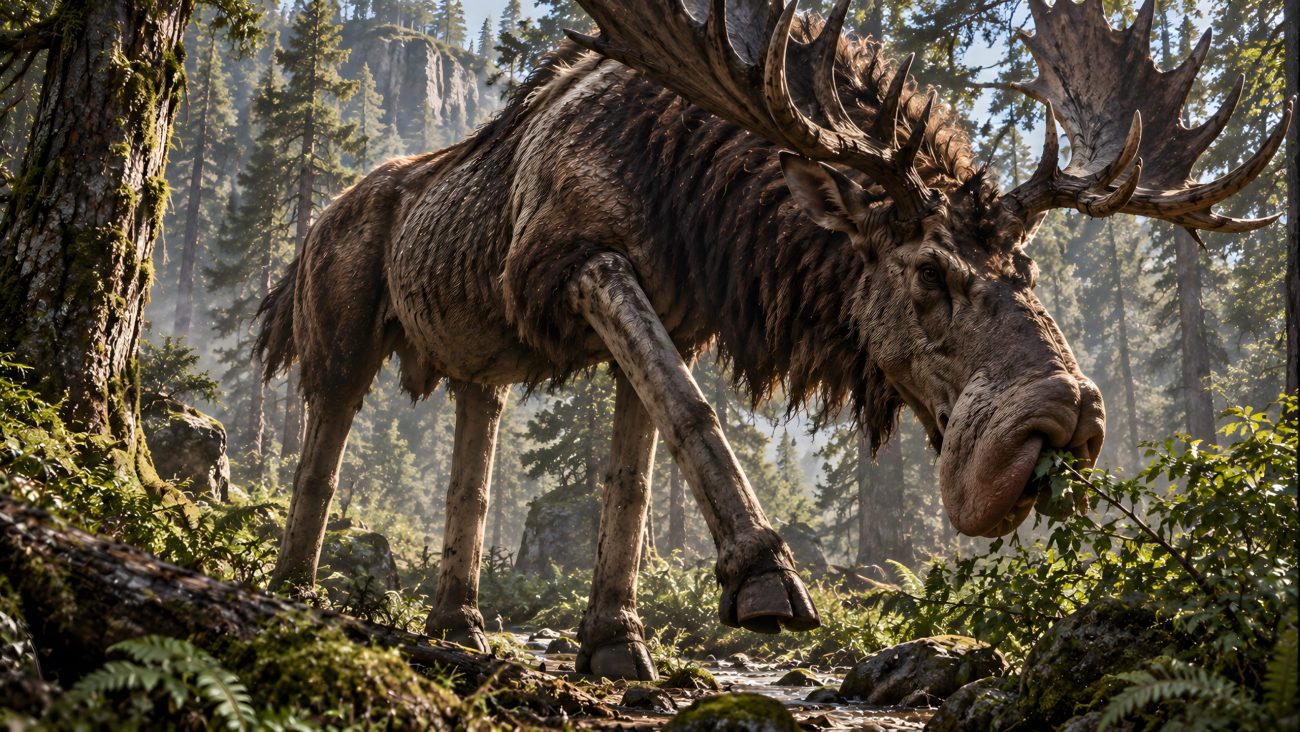
The Akhlis is a strange animal described as resembling an elk, but possessing several unusual features. It has stiff legs without joints or ligaments and a large upper lip that hangs down. Because of the construction of its legs, it is said to be unable to lie down and, if it falls, unable to rise again. Instead, it rests by leaning against trees.

According to Gaius Julius Caesar, the Akhlis was found in the great forests of the north, particularly the Hercynian Forest. He described animals called alces that resembled goats in their build and markings but were considerably larger. They had blunt antlers and legs without joints, preventing them from lying down. When they needed to sleep, they leaned against trees, and hunters could supposedly discover their usual resting places by following their tracks.

The Akhlis was also said to have an unusual way of feeding. According to Pliny the Elder, it resembled an elk and lived on the island of Scandinavia. Its upper lip was so large that it could only graze by walking backwards, preventing it from moving forward while feeding.

Later writers repeated and expanded these descriptions. Solinus described another elk-like animal with a hanging upper lip, saying that it could only graze while walking backwards and that its legs were so straight and stiff that it was difficult to stop once it began running. These accounts closely resemble Caesar’s earlier description of the alces.

The ancient descriptions are therefore unusual because they appear to combine a real northern animal—the elk—with fantastical characteristics. Caesar’s account is generally recognizable as a description of an elk, while the strange details concerning its stiff legs, inability to lie down, and backwards grazing became attached to the creature in later retellings.

The Akhlis was eventually forgotten, surviving mainly in ancient and medieval writings about the animals of the far north. Its name and description were later compared with other legendary elk-like creatures, although the original accounts present it primarily as a mysterious northern animal rather than a supernatural monster.


Sources

Sergey Ksaverov. “Ахлис (Achlis).” New Bestiary (Bestiary.us). Accessed September 5, 2026. https://www.bestiary.us/Akhlis

Bai Lu

Tradition: Chinese Mythology
Alternative Names: White Deer
Category: Deer


The Myth

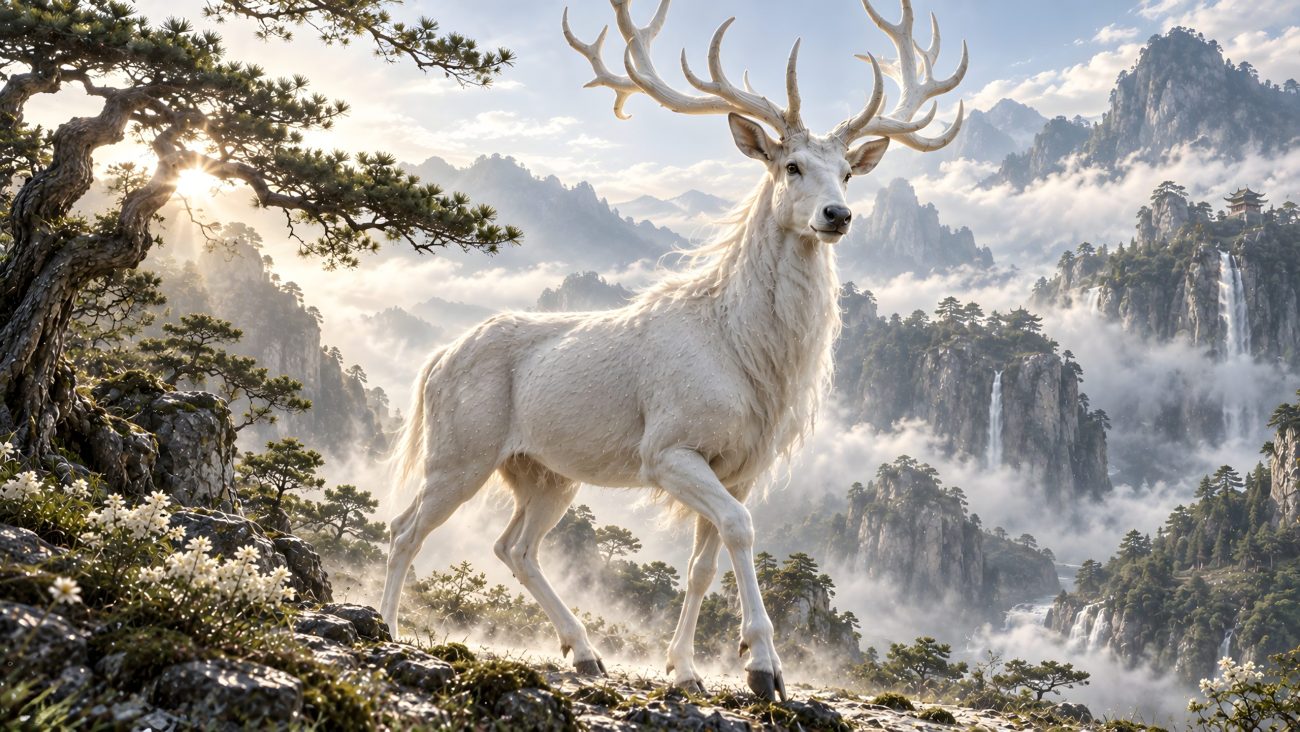
The White Deer is a white-colored deer regarded in Chinese tradition as an auspicious and extraordinary animal. Since ancient times, it was associated with good omens and supernatural significance. Legends tell of immortals and recluses riding white deer, while white deer also appear as mounts and companions of supernatural beings. The White Deer is notably featured in Journey to the West, where a white deer spirit appears as a supernatural being, and in stories concerning the King of Bhikkhu Kingdom. It is also associated with the North Star, which is said to have the white deer as its mount.

Ancient Chinese writings record appearances of white deer as extraordinary omens. The Guoyu records the appearance of white deer, while the Records of the Grand Historian describes a white deer appearing before the Son of Heaven, with its white hide being treated as something of great value. The Book of Han likewise records a white deer among unusual and auspicious phenomena.

White deer continued to appear in later Chinese literature and historical records. Tang-era poetry also refers to white deer, while Ming-era writings record further sightings of them as remarkable creatures and auspicious signs. In one recorded incident during the Ming dynasty, a white deer was presented to the imperial court as an extraordinary omen.

Because of their rarity and their association with immortals, celestial beings, longevity, and favorable omens, white deer came to occupy a special place in Chinese imagination. They could appear as ordinary animals of unusual color, but in legends and religious stories they could also become supernatural beings, mounts of immortals, or spirits possessing extraordinary powers.


Sources

“白鹿 (Báilù; White Deer).” Chinese Wikipedia. Wikimedia Foundation. Accessed September 5, 2026. https://zh.wikipedia.org/wiki/%E7%99%BD%E9%B9%BF


Kushikiroku

Tradition: Japanese Mythology
Alternative Names: Nine-Colored Deer,
Category: Deer


The Myth

The Nine-Colored Deer is a remarkable deer with nine-colored fur and antlers as white as snow. It lived hidden from humans in a mountain in India, where it was rarely seen. A crow also lived near the river at the foot of the mountain and had a deep bond with the deer.

One day, a man was swept away by the river and was close to drowning. Clinging desperately to a branch, he cried out to the mountain god, tree god, heavenly beings, and dragon god, asking why none of them would save him.

Hearing his cries, the Nine-Colored Deer came to the riverbank. It told the man not to be afraid and instructed him to climb onto its back and hold onto its antlers. The deer then carried him safely to land.

The man wept with gratitude and asked how he could ever repay the deer. The deer asked for only one thing: that the man never reveal that it lived on the mountain.

The deer explained that its nine-colored body and snow-white antlers were unlike anything else in the world. If people discovered it, they would surely kill it for its beautiful fur and antlers. Because of this, it had hidden itself deep within the mountains. Yet when it heard the man’s cries, pity overcame its fear and it came to rescue him.

The man promised never to reveal the deer’s whereabouts and returned home.

Some time later, the queen of the country dreamed of a deer with nine-colored fur and snow-white antlers. She became captivated by the creature and developed such a strong desire to possess its fur and antlers that she fell ill and was confined to her bed. She begged the king to find the deer, convinced that such a creature truly existed.

The king announced a great reward of gold, silver, and other treasures for anyone who could capture the Nine-Colored Deer.

The man who had been rescued knew exactly where the deer lived. At first, he kept the secret. But when he heard of the king’s reward, greed overcame his gratitude. He revealed the deer’s hiding place to the king, forgetting that the creature had saved his life.

The king immediately gathered many soldiers and took the man with him as their guide. They surrounded the valley where the deer lived.

The crow saw what was happening and flew to the cave where the Nine-Colored Deer was sleeping. It cried out a warning, telling the deer that the king had come with an army seeking its rare fur and that the valley had been surrounded.

The deer awoke and came out of its cave, but by then the king and his soldiers were already directly before it. There was nowhere left to escape.

Rather than flee, the deer walked fearlessly toward the king’s palanquin. The soldiers prepared to shoot it with arrows, but the king was moved by the creature’s fearless approach and ordered them to stop.

The deer knelt before the king and asked how he had discovered its hiding place. The king answered that the man standing beside him had led him there.

The deer looked at the man. A bruise had appeared on his face, perhaps as punishment for breaking his promise.

The deer then reminded him of what had happened. It had risked its own life to rescue him from the river, and he had promised never to reveal its existence. Yet he had forgotten the kindness shown to him and had betrayed the deer in exchange for a reward.

The man was unable to answer.

Seeing this, the king understood the man’s ingratitude. He issued a decree forbidding the killing of deer anywhere in his kingdom. Anyone who violated the decree would be executed, and their family would also be destroyed. The king then withdrew his soldiers and returned to his palace.

The Nine-Colored Deer had escaped death. It returned joyfully to its mountain, and afterwards the country prospered. Moderate rains fell, there were no destructive winds or epidemics, the harvests were abundant, and nobody lived in poverty.

The story concludes by contrasting human ingratitude with the kindness of animals: forgetting kindness is found among humans, while helping humans is found among animals. Such things, the story says, have happened both in the past and in the present.

The Nine-Colored Deer is also identified with the Buddha in one of his previous lives. The crow is identified with Ananda, the queen with Sundari, and the ungrateful drowned man with Devadatta. The Nine-Colored Deer Sutra additionally tells that the king scolded the man after learning the truth, and that thousands of deer gathered around the departing Nine-Colored Deer and followed it.


Sources

Takahashi, Toshihiro. “九色鹿 [くしきろく] (Kushikiroku).” 新版TYZ 妖怪図鑑 (New TYZ Yokai Encyclopedia). December 31, 2019. https://tyz-yokai.blog.jp/archives/1076296180.html


Siéhnam

Tradition: Chorote mythology, Argentinian Mythology
Alternative Names: Siéhnam
Category: Deer


The Myth

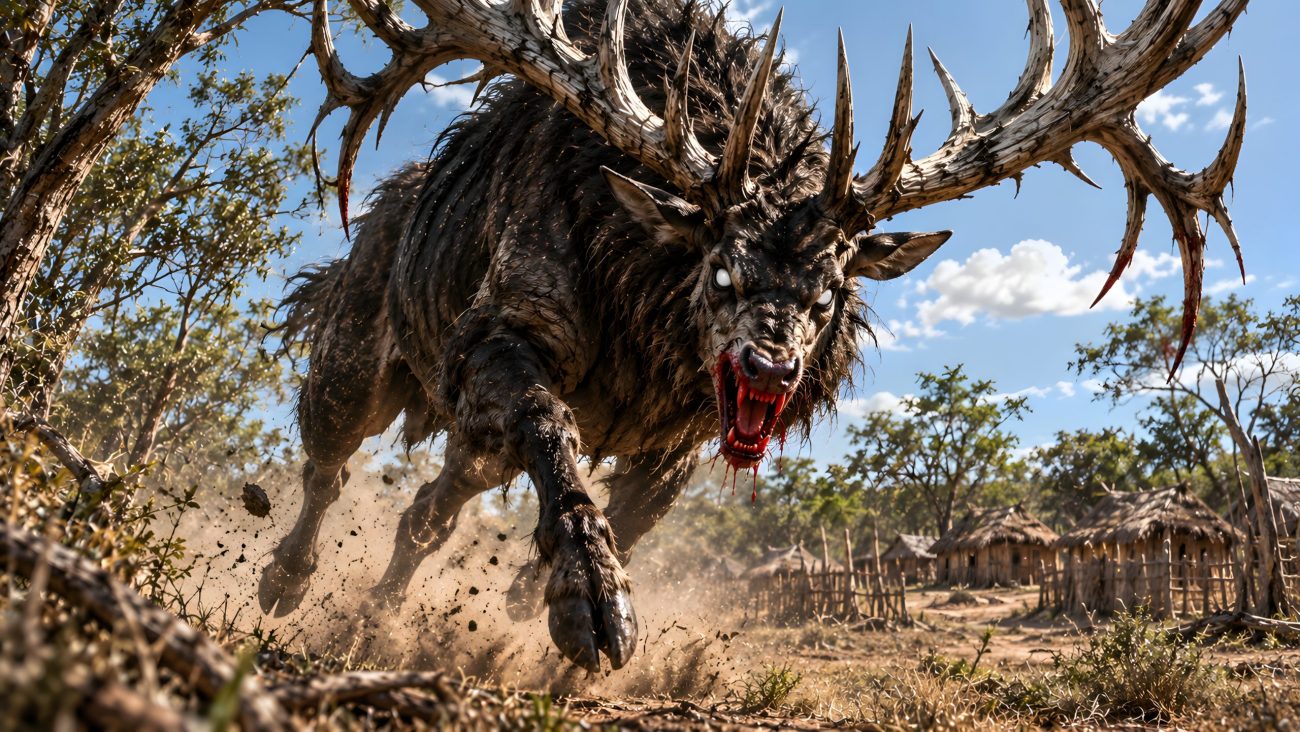
Siéhnam is a terrifying deer that once brought terror to the Chorote people of Argentina. He attacked villages at night, appearing after midnight to hunt people.

Siéhnam killed his victims with his large antlers, stabbing them when he found them. If he discovered someone sleeping on their back, he would bite their throat. He killed four people every night, causing the Chorote to suffer terrible losses.

Eventually, the people became desperate and asked their shaman for help. They asked him, “What is it that comes at night?”

The shaman stayed awake and woke just before midnight. As the hour approached, he heard Siéhnam coming. When the deer appeared, the shaman confronted him: “Now I have caught you! I thought it was someone else, but it was you. You and I will fight!”

The shaman and Siéhnam fought, until eventually the shaman threw the deer to the ground. After this defeat, Siéhnam never returned.

The following day, the shaman brought the good news to the village. He told the people that they could now sleep peacefully, believing that the creature that had been tormenting them would not come back.


Sources

Countess Sica. “Siéhnam.” A Book of Creatures. February 8, 2021. https://abookofcreatures.com/2021/02/08/siehnam/


Bulan

Tradition: Turkic Mythology, Kyrgyzstan Mythology
Alternative Names: Bulan
Category: Deer


The Myth

The Bulan is a strange animal described in Turkic folklore as a large creature hunted in the lands of the Kipchaks. It possesses a single horn shaped like a cup. The horn is carved and raised toward the sky, allowing the creature to collect snow and water in it.

The Bulan uses this unusual horn in connection with its partner. The female bends her horn toward the male, while the male bends down toward the water that the female carries in hers. In this way, the two animals are described as sharing the water collected in their extraordinary horns.

The exact identity of the animal described as the Bulan is uncertain. The word appears in the eleventh-century dictionary of Turkic dialects, where it is difficult to determine precisely which animal the name referred to. In Turkic languages, the word can refer to animals such as a moose, deer, onager, or wild horse. It has also been suggested that the word may have originated from the ancient Chinese bai, referring to a type of deer, and lin, associated with the unicorn.


Sources

“Bulan.” New Bestiary (Bestiary.us). Accessed September 5, 2026. https://www.bestiary.us/Bulan


Hippocervus

Tradition: Italian Mythology
Alternative Names: Hippocervus
Category: Horse, Deer


The Myth

The Hippocervus is a fantastical hybrid creature combining the nature of a horse and a deer. Its forepart is that of a horse, while its hind part is that of a stag.

A curious Hippocervus was reportedly presented in 1534 by Frederick, Duke of Mantua, to Francis the Great. The creature could be saddled and bridled, but it would always throw off its rider and trample him.

The Hippocervus is also described symbolically as representing a person who is extremely indecisive and absent-minded. It constantly struggles between its horse and deer natures, unable to settle upon one or the other.

The creature therefore serves as a symbol of a cowardly and hesitant person who rushes toward uncertain paths without thinking and soon loses his way. One description compares it to a man who throws himself without reflection into uncertain paths, only to despair after having lost himself in them.


Sources

“Gipocerv.” New Bestiary (Bestiary.us). Accessed September 5, 2026. https://www.bestiary.us/gipocerv

“Griffin, or Gryphon.” Encyclopædia Britannica, Ninth Edition. 1879. Reproduced by Wikisource. Accessed September 5, 2026. https://en.wikisource.org/wiki/Encyclop%C3%A6dia_Britannica%2C_Ninth_Edition/Griffin


Păl-raí-yûk

Tradition: Yup’ik mythology, American Mythology
Alternative Names: Păl-raí-yûk
Category: Crocodile


The Myth

The Păl-raí-yûk is a large and dangerous water monster said to have haunted the waterways between the Yukon and Kuskokwim rivers. In ancient times, these rivers were believed to have been much warmer than they are today, with shorter winters and snow melting as early as February. The warmer climate created extensive creeks, lakes, and marshes where the creatures lived, particularly around the temperate Kuskokwim. Păl-raí-yûk fed on both humans and animals.

The Păl-raí-yûk was one of Raven’s many creations. It would lie submerged beneath the water, waiting for people or animals to approach the shore before attacking them. It was also known to attack boats that entered its territory. Because of this danger, Raven warned First Man to be careful when approaching lakes and rivers.

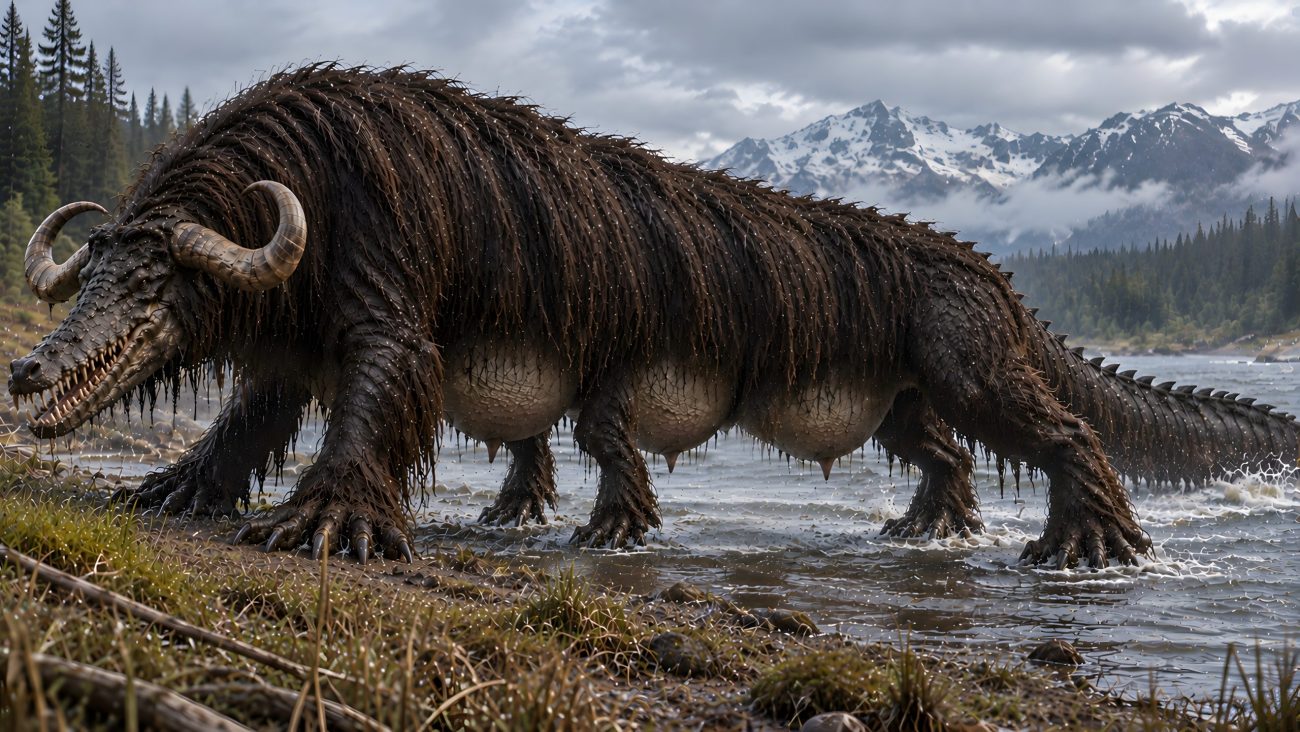
The Păl-raí-yûk resembles a crocodile or alligator in both appearance and behavior, but it also possesses features associated with the muskox. It is commonly represented on umiaks, masks, and dishes as an elongated, stylized reptilian creature with a long, narrow head and six legs. Depictions sometimes show human remains within its body, emphasizing the grisly nature of its meals.

One Păl-raí-yûk killed by the Sky People had six legs: the hind legs were long, the forelegs were short, while the smaller middle legs hung from its abdomen. It had small eyes and a body covered in fine, dense, very dark fur like that of a shrew. The fur was longest around its feet. A pair of horns grew from its head, extending forward and outward before curving back.

Păl-raí-yûk were large and bulky creatures, yet they were said to be capable of lying upon grass without bending the stems. After death, however, their bodies became extraordinarily heavy and would sink into the ground unless they were supported. Killing one therefore required several hunters, who would hold the creature down with logs while smashing its head with clubs.

The last known Păl-raí-yûk was killed by a hunter after the creature attacked and ate his wife while she was fetching water from a lake.


Sources

Countess Sica. “Păl-raí-yûk.” A Book of Creatures. October 30, 2015. https://abookofcreatures.com/2015/10/30/pal-rai-yuk


Sobek

Tradition: Egyptian mythology
Alternative Names: Suchus, Souk
Category: Crocodile, Deity


The Myth

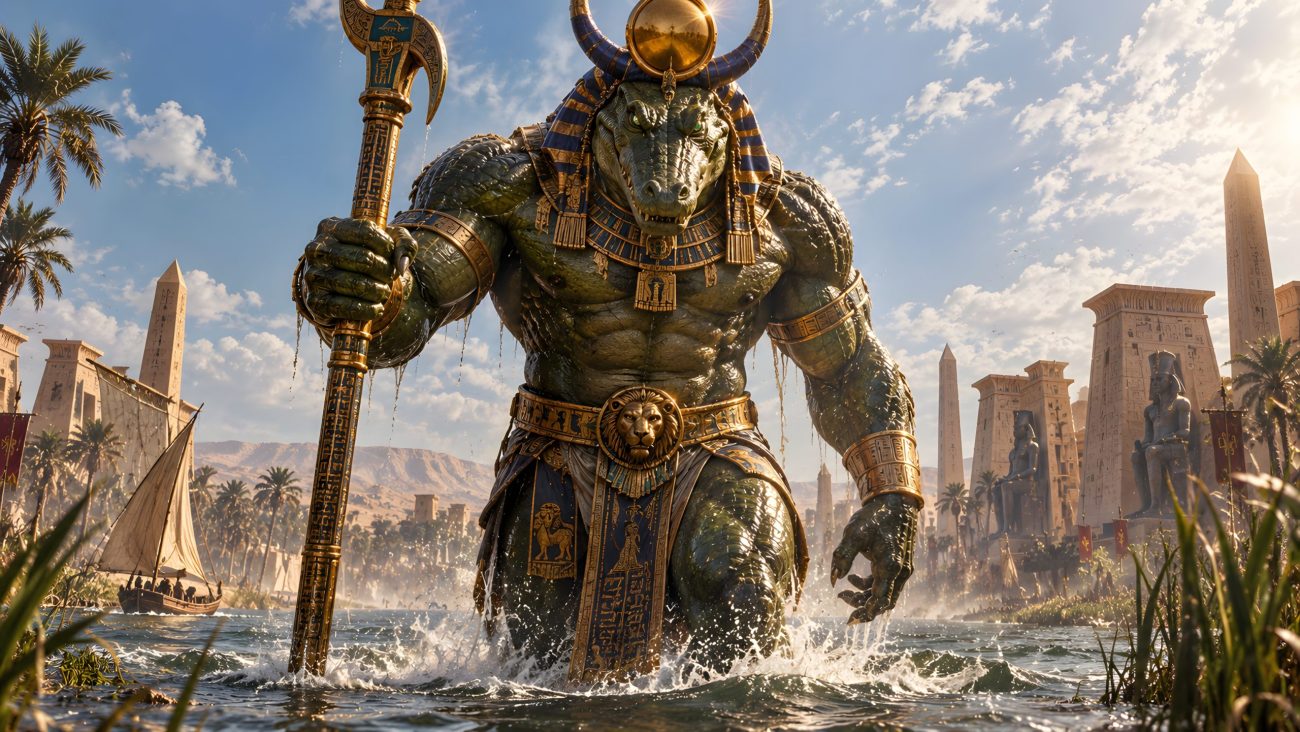
Sobek is an ancient Egyptian deity associated with the Nile crocodile. He is usually represented either as a crocodile or as a human figure with the head of a crocodile. He was associated with pharaonic power, fertility, military prowess, and protection, particularly protection from the dangers of the Nile.

Sobek was worshipped from the Old Kingdom through the Roman period, but became especially prominent during the Middle Kingdom. He was strongly associated with the Faiyum, where crocodiles were worshipped as living manifestations of the god. Crocodiles were raised at temples dedicated to Sobek, and after their deaths they were mummified and presented as sacred manifestations of the deity.

Sobek possessed a fierce and aggressive nature reflecting that of the crocodile. Some of his epithets describe him as one who loves robbery, one who eats while he mates, and one who is sharp of teeth. Yet this dangerous character was accompanied by a protective nature. His fierceness could be directed against evil while defending the innocent, making him a powerful protective deity.

Sobek also became connected with Horus and, through this association, with Osiris and Isis. In this role he was associated with the healing of the dead Osiris after his murder by Set. Some interpretations of Sobek’s name connect it with the idea of impregnating, while another interpretation associates it with uniting or restoring the dismembered limbs of Osiris. His association with healing strengthened his role as a protective deity.

In the Old Kingdom, Sobek already appeared in the Pyramid Texts. One spell praises the pharaoh as an incarnation of the crocodile god, presenting him in the form and power of Sobek. The god later became associated with the sun through his connection with Horus, eventually producing the composite deity Sobek-Ra, who combined the crocodile god with the great Egyptian sun god Ra.

The Faiyum was the principal center of Sobek’s worship. His most prominent form there was Sobek Shedety, the patron deity of Shedet, the region’s capital. Other communities worshipped localized forms of the god, and temples maintained priests whose duties included caring for sacred crocodiles and their bodies.

Sobek’s cult continued into the Ptolemaic and Roman periods. During this time, crocodiles were frequently preserved as mummies and offered at his cult centers. Some crocodile mummies were found with young crocodiles in their mouths or on their backs, emphasizing the protective and nurturing aspect of the otherwise fierce god.

Sobek was therefore a deity of contrasts: an aggressive crocodile god associated with violence, fertility, kingship, and military power, but also a healer and protector. His frightening nature was itself part of his protective power, allowing him to ward off evil and defend those under his protection.


Sources

“ Sobek.” Wikipedia: The Free Encyclopedia. Wikimedia Foundation. Accessed September 5, 2026. https://en.wikipedia.org/wiki/Sobek


Xochitonal

Tradition: Aztec mythology, Mexican Mythology
Alternative Names: Xochitónal
Category: Crocodile


The Myth

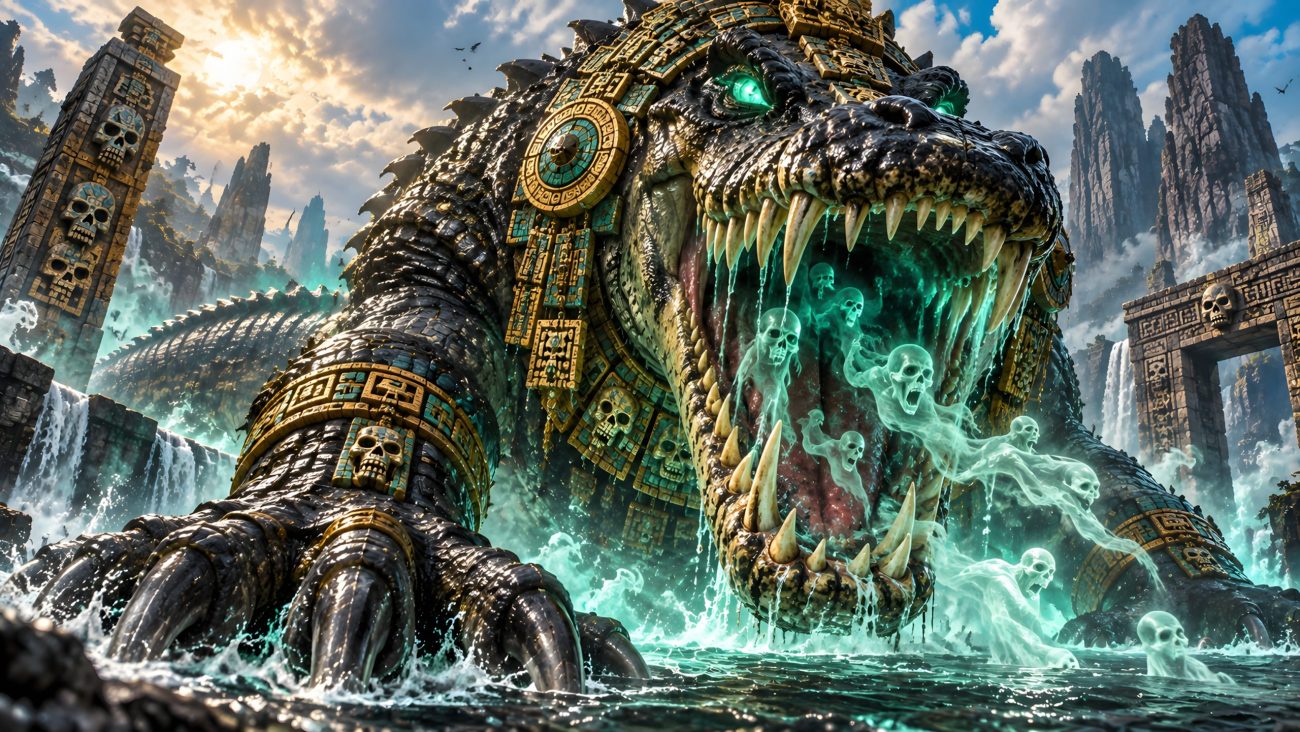
Xochitónal is a gigantic reptilian creature that guards one of the passages through which the souls of the dead must travel on their journey to Mictlan, the realm of the dead. It is described in different traditions as a gigantic iguana or lizard, while representations commonly give it the form of a caiman or alligator.

The creature is said to dwell in the black waters of Apanuiayo, an immense body of dark water that forms one of the obstacles confronting the dead. Xochitónal guards the passage across these waters and prevents the souls of the dead from reaching the other side. Souls must therefore evade or overcome the creature in order to continue their journey.

The journey begins with the dead person being given a sheaf of javelins so that the soul will not have to face the dangers of the Other-world completely defenseless. The spirit first passes between two enormous mountains that may fall together and crush it if it cannot escape them. A terrible serpent then blocks its path, and after overcoming this monster, the soul encounters the fierce Xochitónal.

After passing the waters guarded by Xochitónal, the journey is still far from complete. The hapless spirit must cross eight deserts and a corresponding number of mountains, while also enduring a whirlwind sharp as a sword that can cut through solid rocks.

Accompanied by the shade of its favorite dog, the exhausted soul continues through the Other-world and encounters further terrifying beings, including Izpuzteque, a demon with the backward-bent legs of a cock, and Nextepehua, the fiend who scatters clouds of ashes.

Eventually, after overcoming these many dangers, the soul reaches the gates of the Lord of the Dead, Mictlantecuhtli. There it pays reverence before him, and after completing the trials of the underworld, it is finally able to reach the realm of the dead and join those who have gone before.


Sources

“Xochitónal.” Wikipedia, la enciclopedia libre (Spanish Wikipedia). Wikimedia Foundation. Accessed September 5, 2026. https://es.wikipedia.org/wiki/Xochit%C3%B3nal

Spence, Lewis. The Myths of Mexico and Peru. London: George G. Harrap & Co., 1913.


Wabodame

Tradition: Papua New Guinea Mythology
Alternative Names: –
Category: Crocodile


The Myth

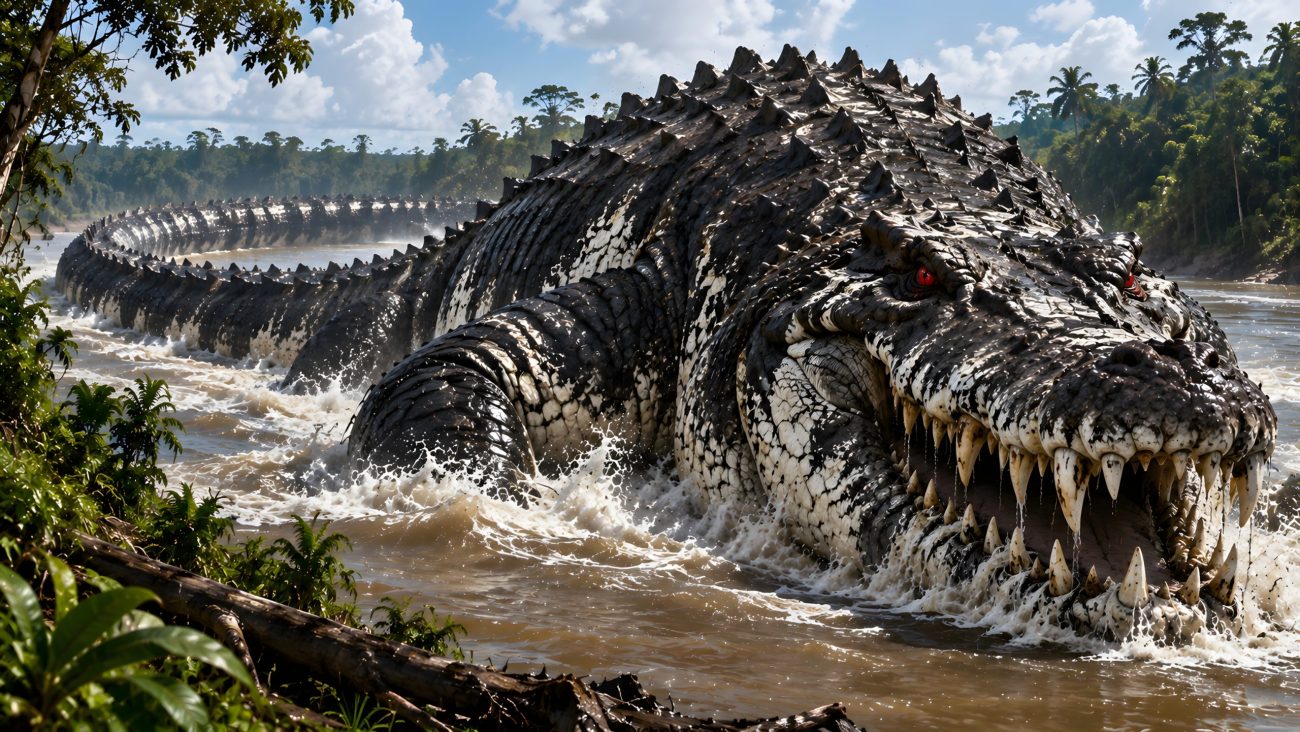
Wabodame was a famous old crocodile of enormous size who lived in the Binaturi River. The young crocodiles that lived there were said to bring parts of the people they caught to the old monster.

Wabodame was not merely a dangerous crocodile, however, but a powerful spirit associated with secret knowledge. When people wished to learn about hidden or secret matters, they would send a young boy who had not yet learned to be afraid to sleep in a place where Wabodame had previously slept, marked by the impression left by the crocodile’s body in the ground. During the boy’s sleep, the spirit of the crocodile would appear to him in a dream and give him the information that was required. When the boy awoke, he would tell the man who had sent him everything he had learned.

Eventually, Wabodame was shot and killed by a man from Dirimo who wanted to take revenge upon the whole people because of an injury he had suffered. After the crocodile had been killed, a boy was again sent to sleep in the place where it had rested. There, Wabodame’s spirit appeared to him and warned him that a great sickness was going to spread across the country.

The warning proved true. Men, women, and children began to die, and two people were sometimes buried in each grave. The people were forced to flee from their villages, and several tribes were entirely wiped out by the sickness.

Wabodame was also associated with sorcery and the supernatural killing of enemies. Sorcerers were said to appeal to the old crocodile when they wished to cause someone’s death. One method involved placing a croton twig in a creek and speaking a spell, causing the twig to transform into a crocodile that would seize the person whose name had been spoken.

Another method used the edible root called auhi to create a fictitious crocodile. A crocodile’s tooth was inserted into a suitable part of the root to represent its mouth, and medicine was spat onto it. The sorcerer then invoked Wabodame, saying, “Wabodame, you send devil belong you go catch that man,” and naming the intended victim.

The auhi was then placed in the river, where it transformed into a real crocodile. The crocodile went to the person named by the sorcerer, killed him, and brought his body back to the place. Afterwards, it returned to the form of an auhi.

When the sorcerer came back, he removed the crocodile tooth from the auhi and kept it, while the root itself was replanted in the garden. In some cases, the root would begin to grow again. Whenever this method was used, the auhi was taken from the same garden.


Sources

Landtman, Gunnar. The Kiwai Papuans of British New Guinea: A Nature-Born Instance of Rousseau’s Ideal Community. New York: Johnson Reprint Corp., 1970. https://archive.org/details/kiwaipapuansofbr0000land