Fu Zhu

Tradition: Chinese Mythology
Alternative Names: 夫诸
Category: Deer


The Myth

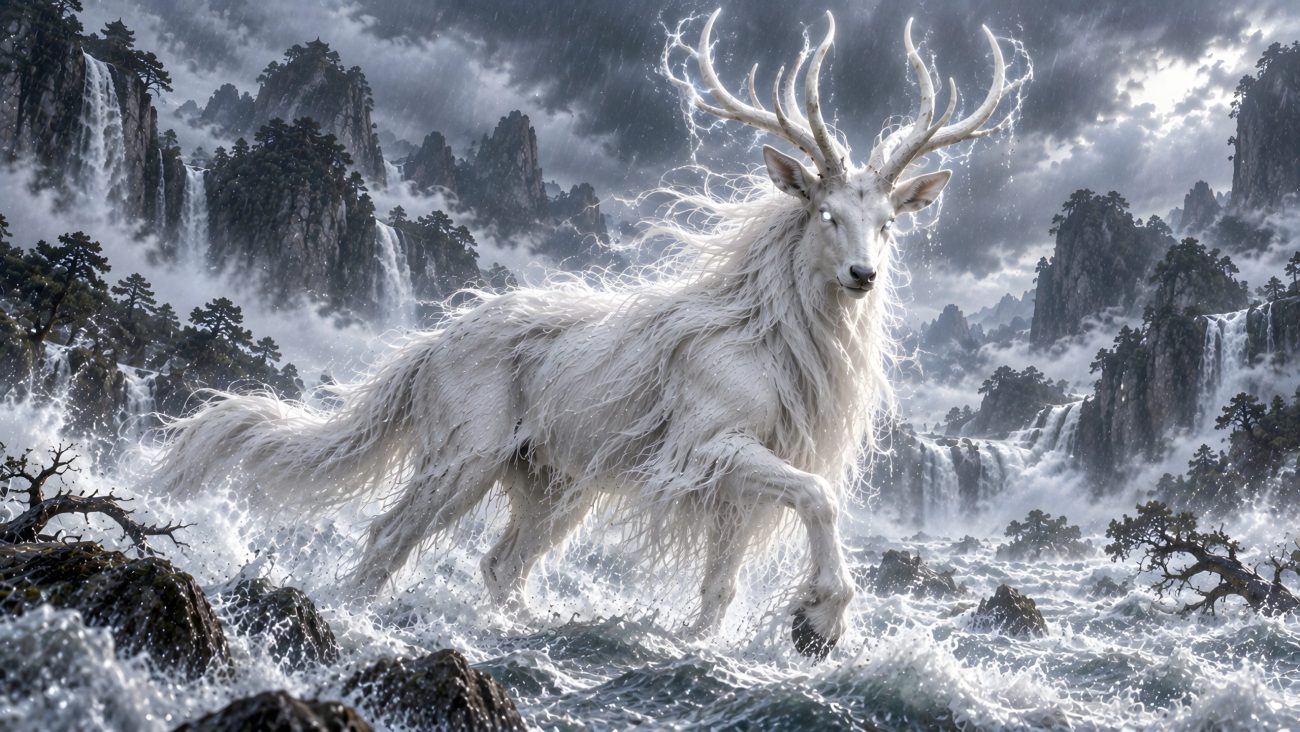
Fu Zhu is a strange white deer with four horns. It is described as resembling an ordinary white deer, except for its four antlers. The creature is associated with water and is regarded as an omen of great floods.

The earliest records of Fu Zhu appear in the Classic of Mountains and Seas. In the Central Mountains Classic, a strange beast is described as having the appearance of a white deer with four horns. It is associated with water and is called Fu Zhu.

The Classic of Mountains and Seas records that Fu Zhu appeared on a mountain in the Central Mountains region. When the creature appeared, it was regarded as a warning that a great flood would soon occur.

According to the tradition, the appearance of a Fu Zhu was therefore not a favorable sign. When one was seen, the settlement in its vicinity could expect a great inundation.


Sources

“夫諸 (Fūzhū).” Chinese Wikipedia. Wikimedia Foundation. Accessed September 5, 2026. https://zh.wikipedia.org/wiki/%E5%A4%AB%E8%AB%B8
Sanjiaoshou

Tradition: Chinese Mythology
Alternative Names: Three-Horned Beast
Category: Deer


The Myth

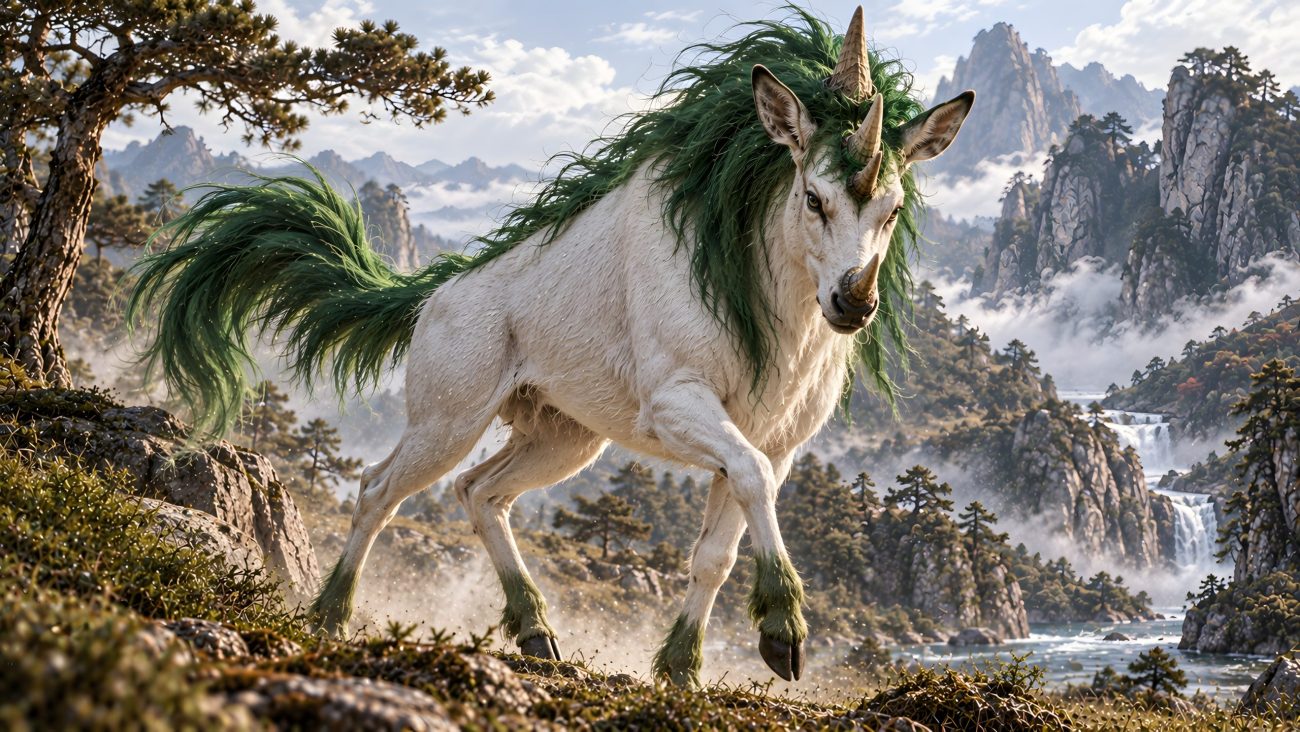
The Three-Horned Beast is a strange creature from Chinese legend with three horns: one on its head, one on its forehead, and one on its nose. It has a red body and red feet.

The creature is recorded in several ancient Chinese texts. In the Yuan Shi·Yupufu, the Three-Horned Beast is described as having a red body, red feet, a horn on its head, a horn on its forehead, and a horn on its nose, with a white belly and a green back. The Sancai Tuhui describes it as a deer with three horns.

According to the Sancai Tuhui, a Three-Horned Beast appeared on Mount Xishan. It was regarded as an auspicious creature, appearing during the reign of a virtuous ruler who had successfully cultivated the Way of the sages.

The Song Shi·Fuzhi Zhi likewise records the Three-Horned Beast as an auspicious sign associated with the successful cultivation of the teachings of the sages.

The Tianjian states that when a ruler inherited and successfully practiced the Way of the sages without losing it, the Three-Horned Beast would appear.


Sources

“三角兽 (Sānjiǎo shòu; Three-Horned Beast).” Chinese Wikipedia. Wikimedia Foundation. Accessed September 5, 2026.
https://zh.wikipedia.org/wiki/%E4%B8%89%E8%A7%92%E5%85%BD


Tianlu

Tradition: Chinese Mythology
Alternative Names: 天鹿
Category: Deer


The Myth

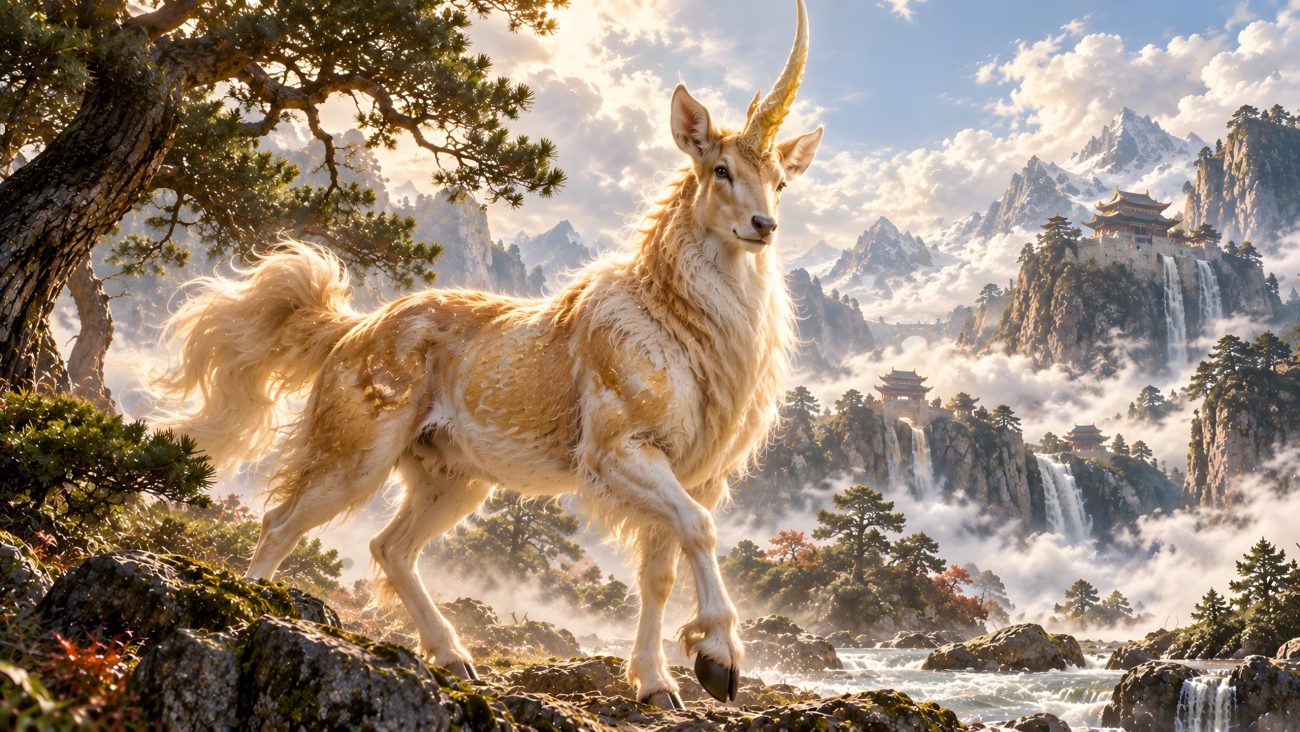
Tianlu is a legendary creature described as a deer with a single horn. In ancient China, it was regarded as an auspicious animal and a favorable omen.

The Book of Song records Tianlu among auspicious creatures, describing it as a beast of good omen whose appearance was associated with the virtue and prosperity of a ruler. Its body was said to possess a brilliant coloration, and its appearance before a king was considered a favorable sign.

The Yiwenzu Lei likewise records Tianlu in its discussion of auspicious phenomena, describing it as a pure and benevolent beast. Its appearance was connected with virtuous rule and the manifestation of heavenly approval.

Because of its extraordinary appearance and association with auspicious signs, Tianlu was regarded as one of the supernatural deer of ancient Chinese tradition. It represented a favorable omen appearing during the reign of a virtuous ruler.


Sources

“天鹿 (Tiānlù; Heavenly Deer).” Chinese Wikipedia. Wikimedia Foundation. Accessed September 5, 2026. https://zh.wikipedia.org/wiki/%E5%A4%A9%E9%B9%BF


Bai Lu

Tradition: Chinese Mythology
Alternative Names: White Deer
Category: Deer


The Myth

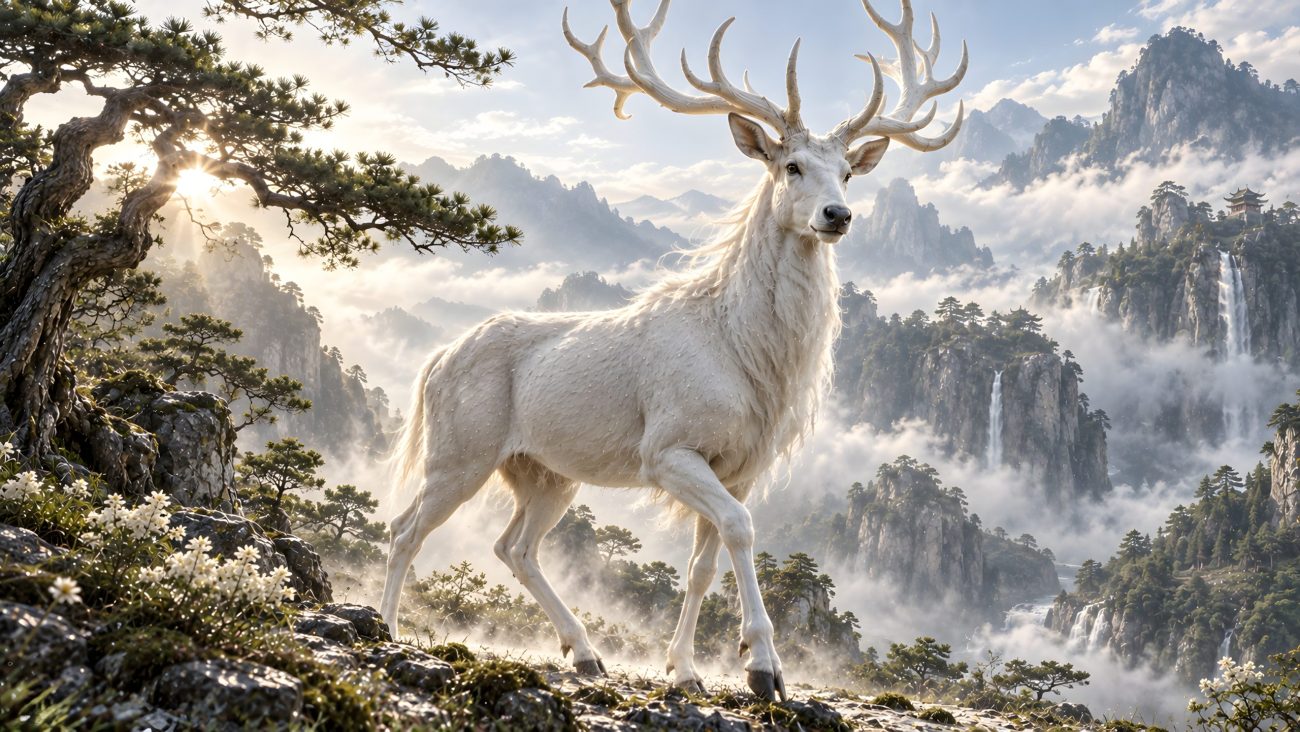
The White Deer is a white-colored deer regarded in Chinese tradition as an auspicious and extraordinary animal. Since ancient times, it was associated with good omens and supernatural significance. Legends tell of immortals and recluses riding white deer, while white deer also appear as mounts and companions of supernatural beings. The White Deer is notably featured in Journey to the West, where a white deer spirit appears as a supernatural being, and in stories concerning the King of Bhikkhu Kingdom. It is also associated with the North Star, which is said to have the white deer as its mount.

Ancient Chinese writings record appearances of white deer as extraordinary omens. The Guoyu records the appearance of white deer, while the Records of the Grand Historian describes a white deer appearing before the Son of Heaven, with its white hide being treated as something of great value. The Book of Han likewise records a white deer among unusual and auspicious phenomena.

White deer continued to appear in later Chinese literature and historical records. Tang-era poetry also refers to white deer, while Ming-era writings record further sightings of them as remarkable creatures and auspicious signs. In one recorded incident during the Ming dynasty, a white deer was presented to the imperial court as an extraordinary omen.

Because of their rarity and their association with immortals, celestial beings, longevity, and favorable omens, white deer came to occupy a special place in Chinese imagination. They could appear as ordinary animals of unusual color, but in legends and religious stories they could also become supernatural beings, mounts of immortals, or spirits possessing extraordinary powers.


Sources

“白鹿 (Báilù; White Deer).” Chinese Wikipedia. Wikimedia Foundation. Accessed September 5, 2026. https://zh.wikipedia.org/wiki/%E7%99%BD%E9%B9%BF