Wanne Thekla

Tradition: Belgian Mythology
Alternative Names: Wanne Thekla
Category: Fairy


The Myth

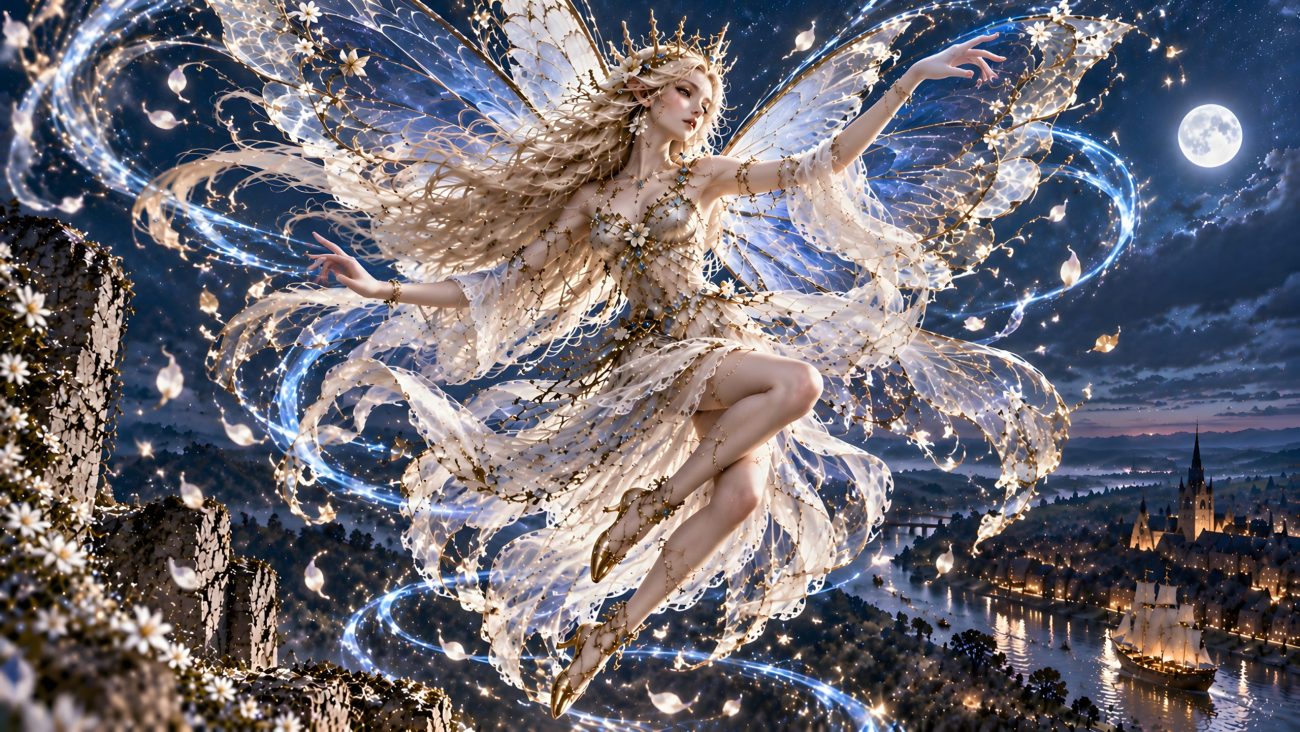
Wanne Thekla is the queen of the elves, witches, and spirits of the air in Flemish folklore. During the night, she descends from the supernatural world to the earth, where she dances and leaps beneath the darkness.

During her nocturnal visits, Wanne Thekla drinks at the Pottelberg. When morning approaches, she leaves the earthly world once again, sailing away aboard a magnificent ship that carries her along the River Leie.


Sources

“Van aardmannetje tot zwarte juffer: Een lijst van Nederlandse en Vlaamse elfen en geesten.” Abe de Verteller.
https://abedeverteller.nl/van-aardmannetje-tot-zwarte-juffer-een-lijst-van-nederlandse-en-vlaamse-elfen-en-geesten/


Ly Erg

Tradition: Scottish Mythology
Alternative Names: Ly-erg
Category: Fairy


The Myth

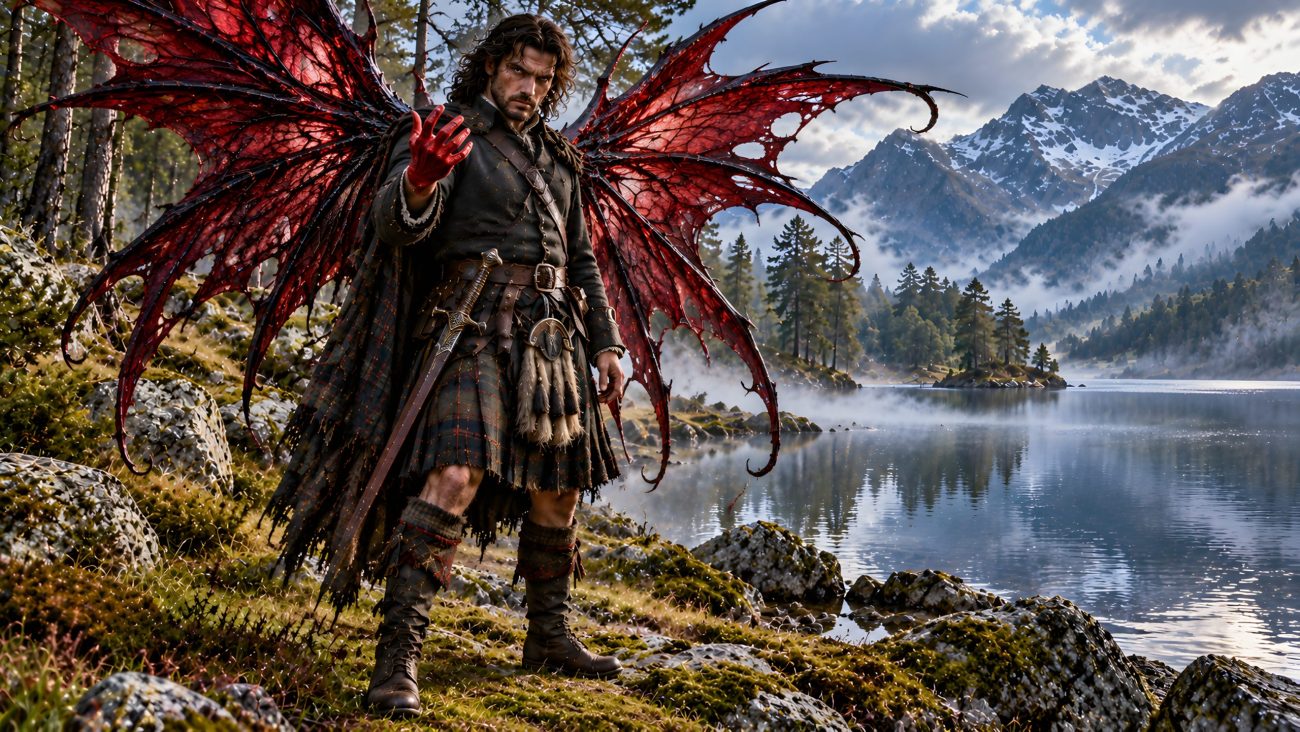
The Ly Erg is a dangerous fairy of Scottish folklore, particularly associated with the Glenmore Forest. It appears dressed as a soldier and can scarcely be distinguished from an ordinary human warrior, except for its right hand, which is permanently red as though stained with the blood of its victims. While wandering through the countryside, the Ly Erg approaches bodies of water and waits for travelers to pass.

When someone comes near, the creature raises its red right hand and challenges them to single combat. The challenge is impossible to survive: anyone who accepts and fights the Ly Erg will die within a fortnight, regardless of whether they defeat the fairy or are defeated themselves. The red hand is therefore a warning of the fate awaiting anyone who accepts its challenge.

One tale tells of three brothers who encountered the Ly Erg and chose to fight it. All three engaged the supernatural warrior in combat, and each died immediately after the encounter. The Ly Erg consequently became a terrifying figure of the Scottish wilderness, appearing like an ordinary soldier until its blood-red hand reveals the supernatural danger behind its challenge.


Sources

“Ly Erg.” Wikipedia: The Free Encyclopedia. Wikimedia Foundation. Accessed October 5, 2026.
https://en.wikipedia.org/wiki/Ly_Erg


Aos Sí

Tradition: Irish Mythology
Alternative Names: Aos Sídhe, Daoine Sí, Daoine Uaisle, Daoine Maithe, Sídhfir, Fair Folk
Category: Fairy


The Myth

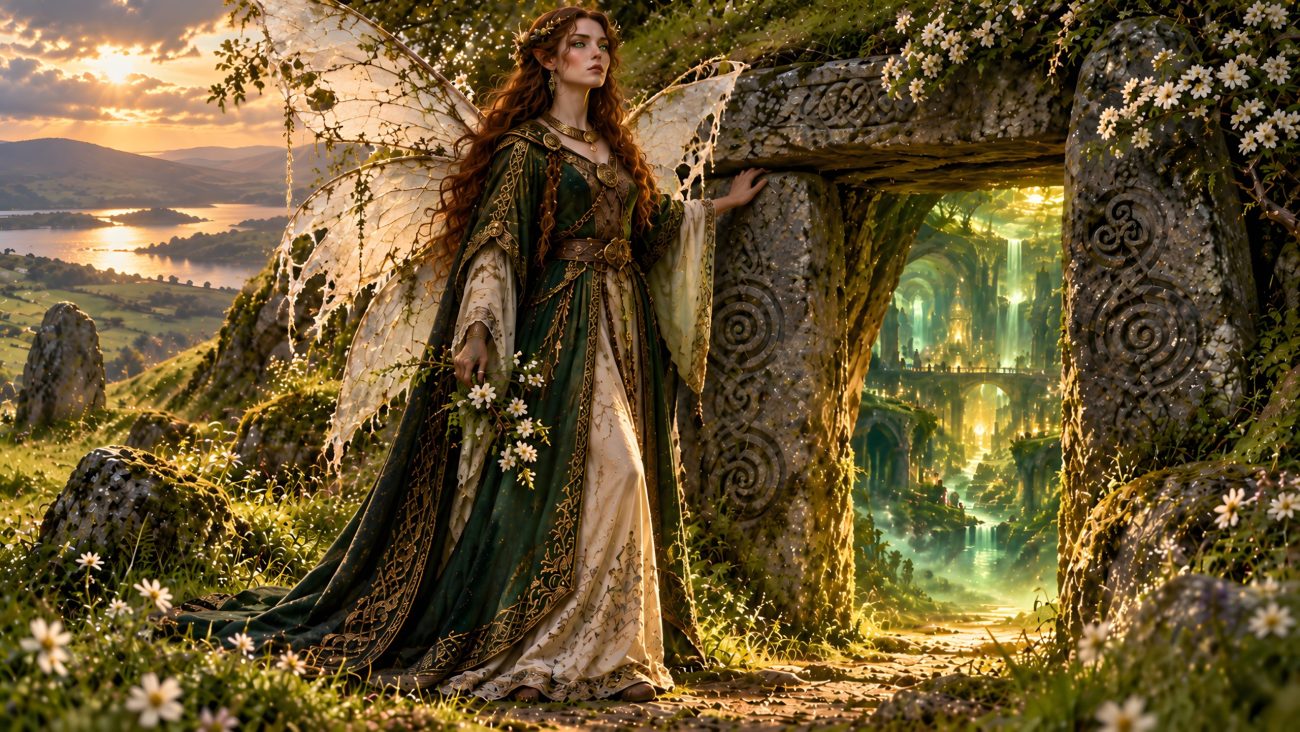
The Aos Sí are a supernatural people of Irish folklore, traditionally associated with the mysterious mounds and hills known as sí or sídhe. They are often described as extraordinarily beautiful beings, although they can also appear terrible or hideous. Their nature varies across tradition: they may be understood as descendants of the Tuatha Dé Danann, spirits of nature, divine beings, ancestors, or, in another tradition, fallen angels whose sins were not great enough to send them to Hell. In stories connecting them to the Tuatha Dé Danann, they withdrew into the Otherworld after the arrival of the Milesians and came to dwell beneath the earth in their hidden halls and fairy mounds.

The Aos Sí inhabit fairy hills, ancient mounds, fairy rings, sacred trees such as whitethorns, lakes, and forests. These places are their homes and are fiercely protected, and people who disturb them may suffer supernatural retaliation. They can drive intruders away, kidnap humans, or take children and replace them with changelings. Their presence is especially associated with liminal moments such as dusk and dawn, when the Otherworld is believed to come closest to the human world, as well as festivals such as Samhain, Bealtaine, and Midsummer. People therefore traditionally avoided offending them and left offerings to win their goodwill, often referring to them indirectly as the “Good Neighbours,” the “Fair Folk,” or simply “the Folk.”

The Aos Sí encompass many different supernatural beings and manifestations. The bean sídhe, or banshee, is a woman of the fairy mound whose wailing announces an approaching death, while other related beings include the fairy lover leanan sídhe, the fairy cat cat-sìth, the fairy dog cù-sìth, and the supernatural hosts known as the sluagh sídhe. The sídhe themselves are the mounds, halls, courts, or residences of these beings rather than the name of the people who inhabit them. Across Irish folklore, the Aos Sí therefore form a vast supernatural community inhabiting a hidden Otherworld that exists alongside the human world, capable of granting blessings and gifts but also bringing illness, misfortune, madness, or death when their boundaries are violated.


Sources

“Aos Sí.” Wikipedia: The Free Encyclopedia. Wikimedia Foundation. Accessed October 5, 2026. https://en.wikipedia.org/wiki/Aos_S%C3%AD


Sântoaderi

Tradition: Romanian Mythology
Alternative Names: Sântoader
Category: Sheep


The Myth

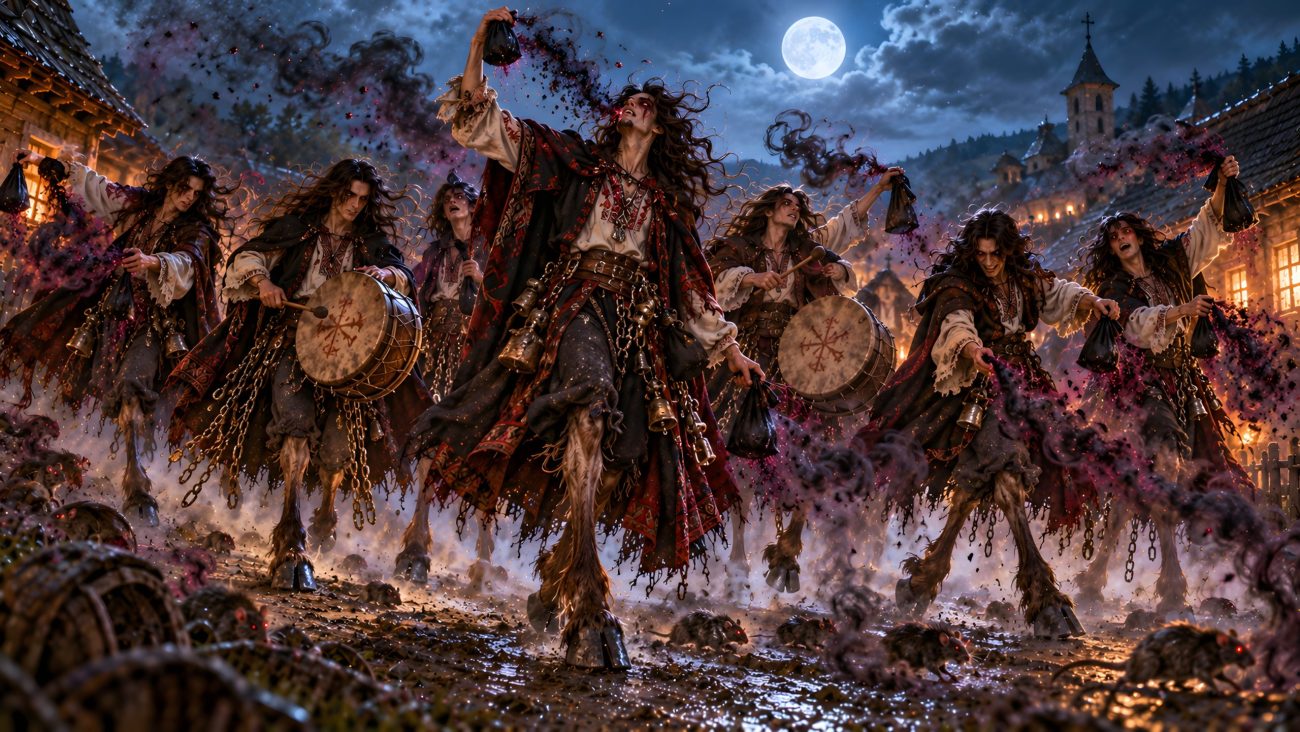
The Sântoaderi were a group of seven or nine supernatural young men, recognizable by their unusually long feet and hooves and by the capes they wore. They were said to appear mysteriously in villages as a supernatural procession, announcing their arrival with singing, drums, and the pounding of hooves. Their presence was feared because they could bring illness to those who encountered them, wrapping victims in chains that caused rheumatism or stamping upon their bodies.

When villagers heard the music and the sound of hooves approaching, they were advised to remain inside their homes, where they would be safe. Anyone who remained outside risked being seized by the Sântoaderi and carried away as part of their nocturnal procession. Those taken by the supernatural riders did not all suffer the same fate. Some eventually returned healthy and carrying gifts, while others came back sick, dying, or insane.

The Sântoaderi were also associated with the zîne, Romanian fairy-like beings who likewise traveled through the night in dancing processions. According to the folklore, twenty-four days after Easter the zîne and Sântoaderi could meet together to play, and people offered them bouquets of flowers. Their name comes from a regional name for Saint Theodore, whose feast day was considered a particularly likely time for the Sântoaderi to appear.


Sources

“Sântoaderi.” Wikipedia: The Free Encyclopedia. Wikimedia Foundation. Accessed October 5, 2026.
https://en.wikipedia.org/wiki/S%C3%A2ntoaderi


Samodiva

Tradition: Bulgarian Mythology, Macedonian Mythology
Alternative Names: Samovila, Vila, Samodivi, Yuda, Juda
Category: Fairy


The Myth

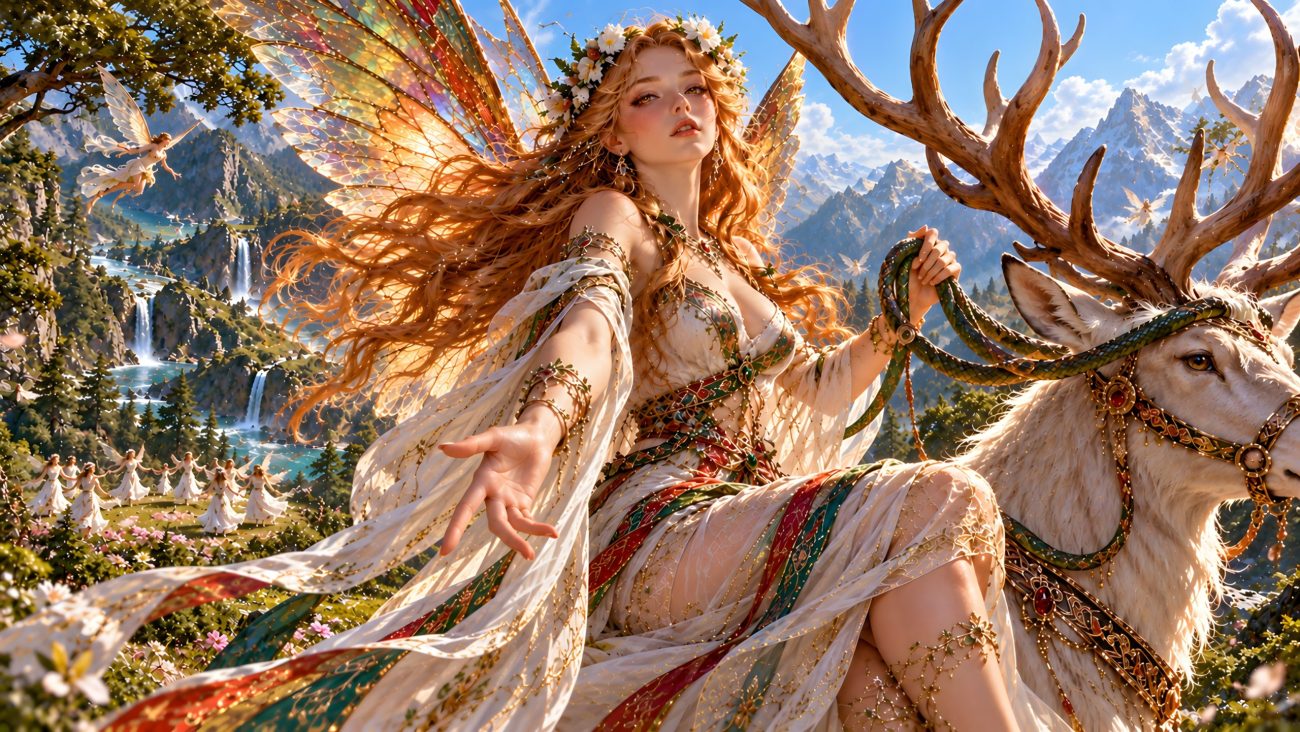
The Samodiva was a beautiful supernatural woman, usually tall and pale-skinned, with long flowing blonde or red hair and fiery eyes. She wore white garments with green or rainbow-colored sashes, and sometimes possessed wings that allowed her to fly through the air. Her clothing, veil, and wreath were sources of supernatural power, and a human who managed to steal one of these could render her powerless and sometimes force her into marriage. Samodivi were also said to ride light-colored stags, controlling them with serpents as reins, and could carry bows and arrows. Some traditions gave them wings beneath their arms, while others described them with goat-like hooves or as taking the form of a storm or whirlwind.

The Samodivi lived in wild and remote places, especially mountain springs, lakes, rivers, caves, forests, gorges, and ancient trees. Their favorite places included enchanted clearings where they gathered to dance in circles, leaving dark or scorched patches of grass behind. They were particularly dangerous at night, when travelers might accidentally enter their territory. A person who disturbed them could be struck with illness, blindness, madness, or death, while some unfortunate humans were abducted and forced to serve the fairies as musicians, nurses, laborers, or builders. Terrifying traditions even claimed that human beings were used as the materials for their castles, with men forming foundations, maidens becoming mortar, brides forming roofs, and infants serving as pillars. Samodivi were also associated with the souls of young women who had died violently or prematurely, as well as certain unbaptized children.

Yet the Samodivi were not purely malicious. They were closely associated with nature and possessed great knowledge of plants and healing. They could cure wounded heroes, restore the dead with living water, grant supernatural strength, bestow gifts upon newborn children, and help humans who earned their favor. They loved music and dancing and sometimes challenged shepherds and musicians to contests, with victory bringing rewards such as marriage to a young fairy or freedom from tribute. They could also fall in love with mortal men and become their wives, although such relationships could be dangerous or forced. At night they travelled in fairy processions, dancing the horo to bagpipes and drums, while some traditions said they returned during winter to a distant “dragon village” at the edge of the world. Their nature was therefore deeply ambivalent: the Samodiva could bring healing, strength, prosperity, and love, but could just as easily bring madness, destruction, abduction, and death to those who violated the boundaries of her supernatural world.


Sources

“Samodiva (folklore).” Wikipedia: The Free Encyclopedia. Wikimedia Foundation. Accessed October 5, 2026.
https://en.wikipedia.org/wiki/Samodiva_(folklore)

Trottes-vieilles

Tradition: French Mythology
Alternative Names: Trottes-vieilles
Category: Fairy


The Myth

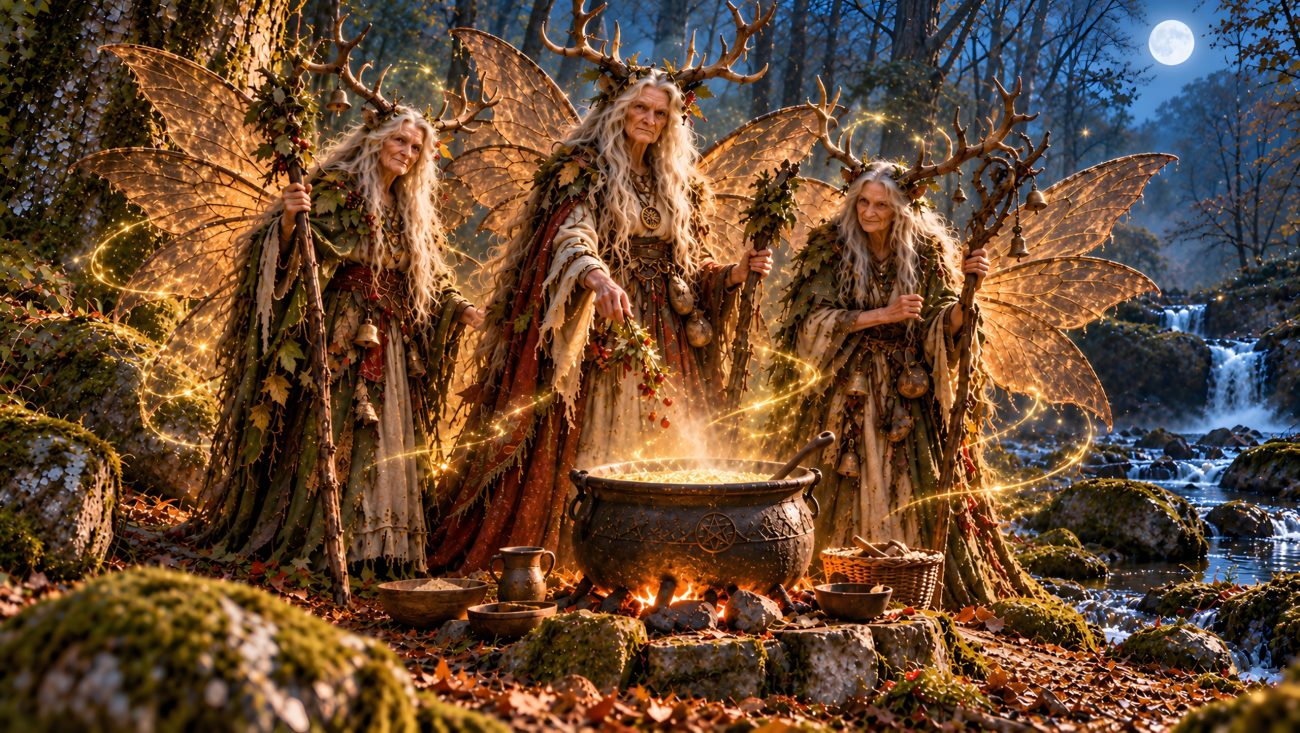
The Trottes-vieilles are three ancient fairies, said to be several thousand years old and to wear deer antlers upon their heads. They are described as daughters of the Gaulish god Cernunnos, giving them a close connection with the ancient supernatural world of the forest and wild animals. Their presence is particularly associated with the folklore of Saulnot in Haute-Saône.

At Christmas, the Trottes-vieilles watch over children and distinguish the well-behaved from the disobedient. Good children are rewarded, while naughty children are threatened with a terrible fate: the three fairies seize them, carry them away, and throw them into the nearest stream. Their warning describes how they impale the children upon their hard antlers before carrying them to the river and drowning them in its rushing waters. Despite this frightening role, their visit could also bring happiness to a household when they were properly welcomed.

Before nightfall, families traditionally prepared a large cauldron of milky porridge called paipai for the Trottes-vieilles. Leaving this offering was believed to win their favor, and a household visited by the three ancient fairies was considered fortunate. Thus the Trottes-vieilles could appear both as terrifying punishers of naughty children and as supernatural visitors whose presence brought prosperity and happiness to those who respected them.


Sources

“Trottes-vieilles.” Wikipédia, l’encyclopédie libre (French Wikipedia). Wikimedia Foundation. Accessed October 5, 2026.
https://fr.wikipedia.org/wiki/Trottes-vieilles


Denfil

Tradition: Maltese Mythology
Alternative Names: Dolphin King, Sultan il-Ħut
Category: Fish


The Myth

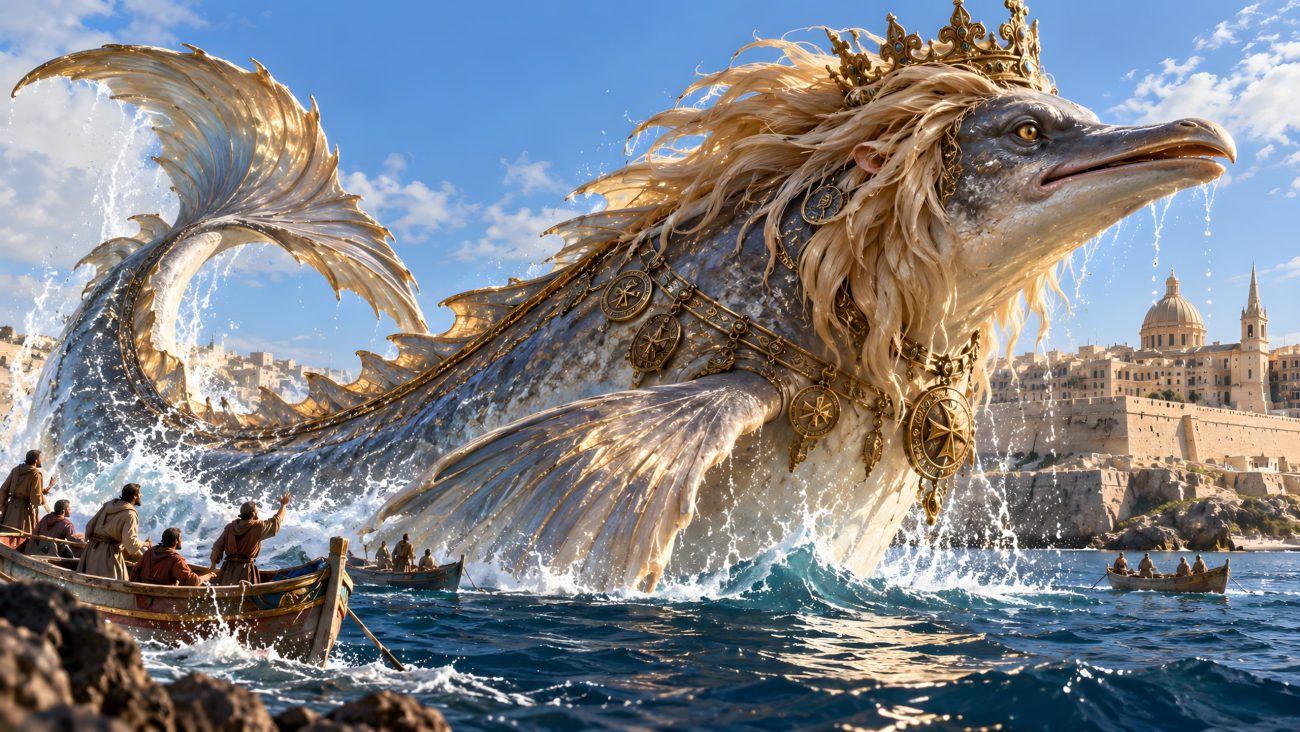
The Fish King, known as Sultan il-Ħut, is a powerful aquatic being in Maltese mythology, depicted not as a dolphin but as a fish with a large head and back. He rules over the inhabitants of the deep, commanding authority comparable to that of terrestrial rulers over lions, birds, and other creatures. Like a sovereign protecting his subjects, the Fish King is associated with benevolence and the safeguarding of those who dwell within his underwater realm.

Dolphins accompany boats and ships, where they are regarded as good omens. They protect vessels and their crews from malevolent beings of the deep, acting as guardians of sailors and the sea. Stone statues of dolphins adorn many Maltese homes and gardens, serving as protectors of households. Brass dolphin ornaments are also traditionally placed near fountains, ponds, staircases, and other parts of the home. These figures are more than simple decorations: they are believed to ward off evil and protect the household from harmful supernatural forces. Ancient Jewish tradition likewise held that fish were immune to the effects of the evil eye, while Sephardic Jewish households in Malta used dolphin-shaped amulets to guard against it.

Dolphins are generally regarded as benevolent toward humans, and stories tell of sailors rescued from drowning by these intelligent sea creatures. Maltese folklore also contains darker accounts in which dolphins attack and kill women in the water. Such stories suggest that dolphins may be more dangerous to women than to men, with some accounts associating them with supernatural powers that allow them to recognize and target women believed to possess the evil eye.


Sources

Mifsud, S. D. (2014). The Maltese bestiary: An illustrated guide to the mythical flora and fauna of the Maltese Islands.


Ahès

Tradition: French Mythology
Alternative Names: Ahez, Ahès-la-fée, Gwrac’h Ahes
Category: Fairy, Giant


The Myth

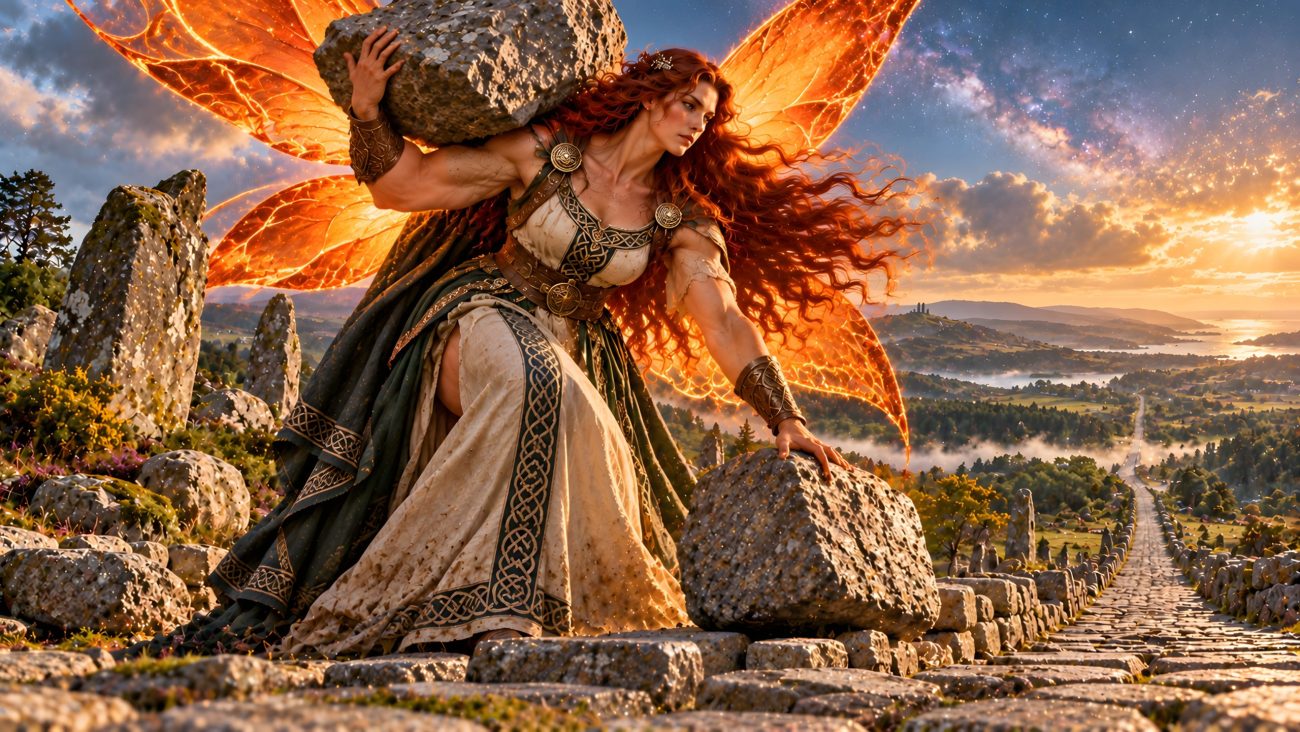
Ahès was a mysterious female figure of Breton legend who could appear as a princess, a fairy, or a giantess. She was especially associated with the construction of roads across Brittany and was said to have carried the enormous stones needed to build them. Many ancient roads were consequently known as the “Paths of Ahès” (Hent Ahès), while other routes bore related names such as Fossé-Ahès. Her supernatural reputation was so strong that her name also became attached to the Milky Way, known as the “Path of Ahès,” and the constellation of the Little Bear, called the “Chariot of Ahès.” A giantess named Ahès was also said to lie buried beneath a dolmen at Prat in Trégor.

Ahès became particularly associated with Carhaix, whose name was traditionally interpreted as Ker-Ahès, the city or village of Ahès. In this tradition she was regarded as the founder of the settlement and the builder of the great roads leading toward it. The legendary builder Ahès was compared with the fairy Mélusine, another supernatural woman associated with monumental construction. Breton traditions preserve numerous roads attributed to her, including routes near Quimper, Carhaix, Vannes, Corseul, and the Bay of the Dead. A related tale from La Chanson d’Aiquin speaks of a giant named Ohès who constructed a great road as far as Carhaix.

Ahès was sometimes confused with Dahut, the daughter of King Gradlon in the legend of Ys. Later traditions even identified Ahès as Gradlon’s daughter and portrayed her as a sinful princess who founded Ker-Ahès. However, Ahès and Dahut appear as distinct figures in other traditions, and Ahès’s older legendary identity is primarily that of the supernatural woman associated with roads, stonework, and the Breton landscape. She therefore survives in folklore not only as a fairy or giantess, but through the many ancient paths, bridges, and places that bear her name.


Sources

“Ahès.” Wikipédia, l’encyclopédie libre (French Wikipedia). Wikimedia Foundation. Accessed October 5, 2026.
https://fr.wikipedia.org/wiki/Ah%C3%A8s


Malgven

Tradition: French Mythology
Alternative Names: Malgwen, Malgwenn
Category: Fairy


The Myth

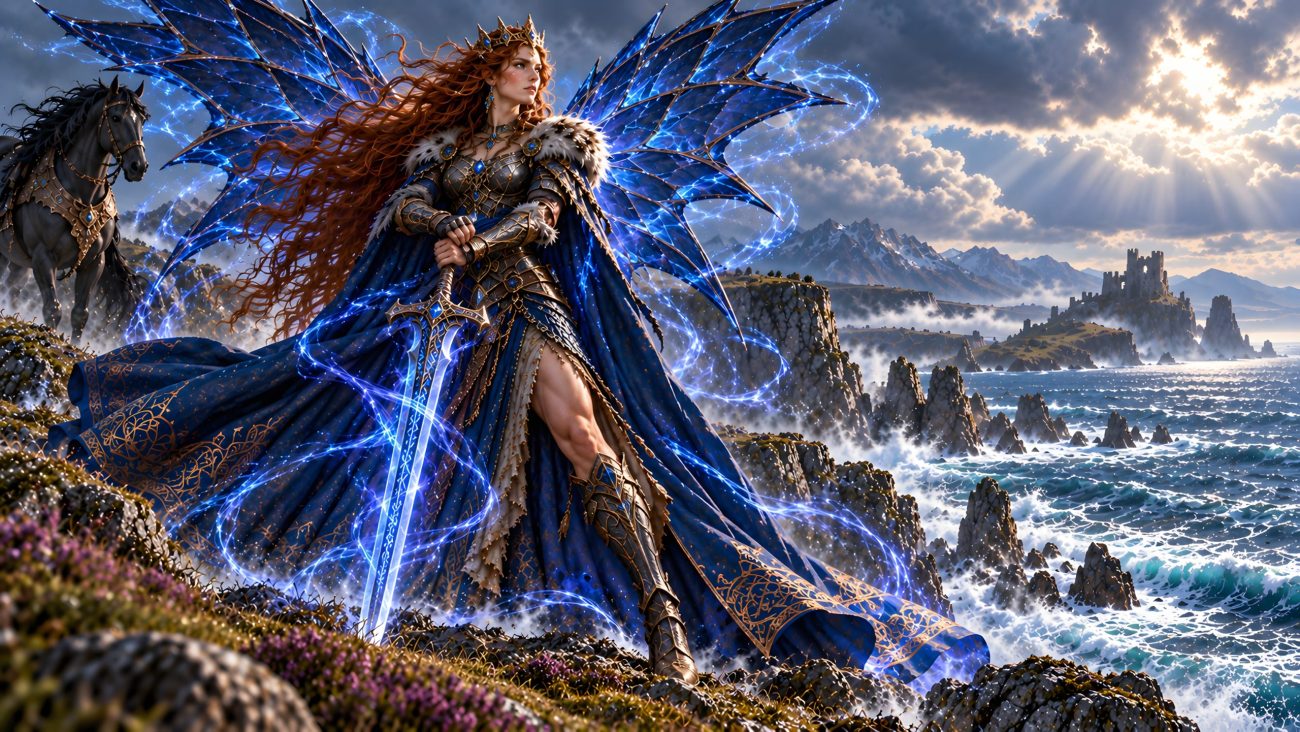
Malgven was the beautiful and formidable Queen of the North, portrayed as a warrior woman wearing shining armor and a steel chainmail corset, with a golden diadem and long flowing hair. Her hair is described as either golden or red, while her eyes were deep blue and possessed an enchanting quality. In the best-known version of her story, she was the wife of the aging King Harold and ruled a northern kingdom associated variously with Ireland, Norway, or Denmark. She was also portrayed as a Valkyrie or fairy of the North, combining supernatural beauty with the character of a powerful warrior queen.

Malgven encountered King Gradlon while he was raiding her kingdom and fell in love with him. She persuaded him to kill her husband, King Harold, and flee with her. The two escaped together on Malgven’s magical horse, Morvarc’h, riding toward Gradlon’s lands in Brittany. Their journey lasted an entire year, and during it Malgven became pregnant and gave birth to a daughter, Dahut. Malgven did not survive the birth and died, leaving Gradlon to return to Brittany with their daughter.

Malgven’s story provides the supernatural origin of Dahut in the later form of the legend of Ys. She is therefore remembered as the mysterious northern mother of the princess who would become central to the fate of the drowned city. The surviving tradition presents Malgven as a powerful otherworldly woman whose arrival brings a magical and tragic element to Gradlon’s story, joining the king of Brittany to a supernatural queen from the distant North.


Sources

“Malgven.” Wikipedia: The Free Encyclopedia. Wikimedia Foundation. Accessed October 5, 2026.
https://en.wikipedia.org/wiki/Malgven


Shtojzovalle

Tradition: Albanian mythology
Alternative Names: Shtojzorreshta, Shtozote
Category: Fairy


The Myth

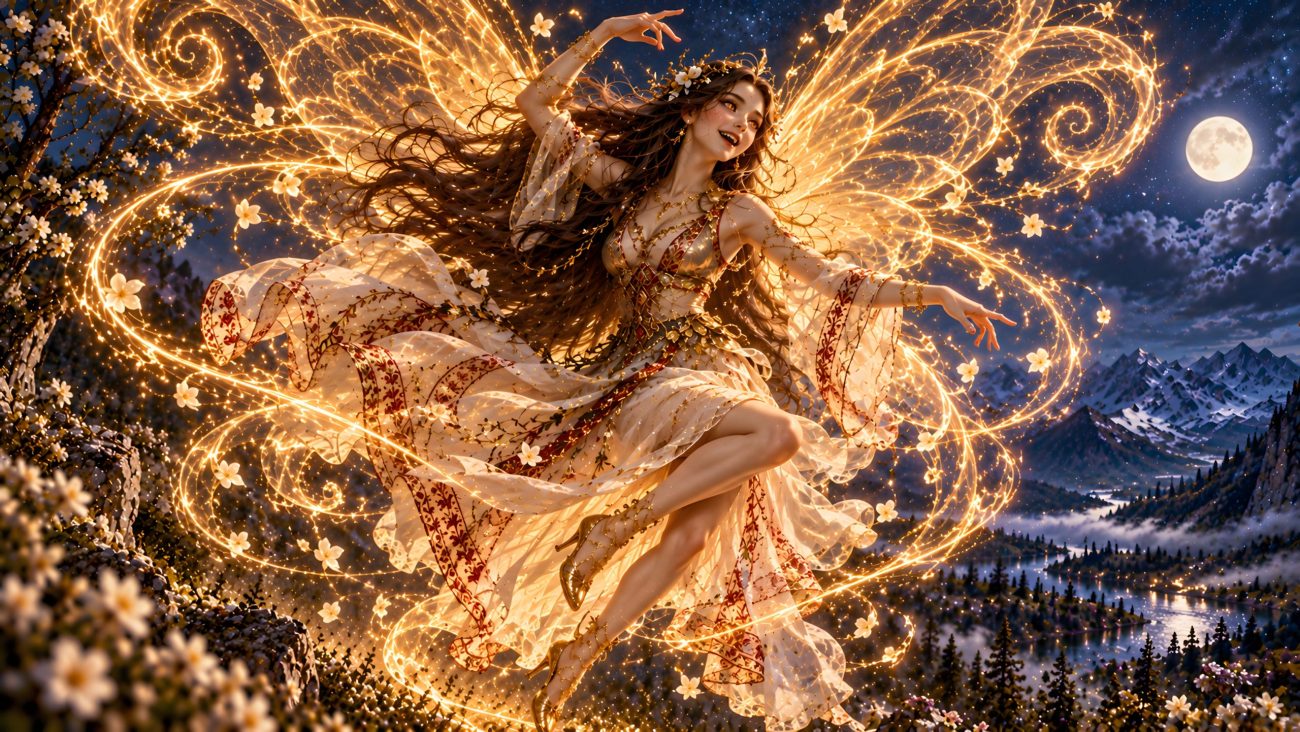
The Shtojzovalle were small supernatural beings of extraordinary beauty who lived in forests and open pastures. Both male and female, they were normally invisible to humans and could only rarely be seen. They possessed the ability to fly and spent much of their time singing and dancing. At night they were said to spin the thread of human existence, connecting them with the mysterious forces that governed human life. A person could see them only if the invisible veil before their eyes was lifted.

The Shtojzovalle could sometimes form relationships with humans, and human men were occasionally said to marry Shtojzovalle maidens. A man could keep such a fairy as his wife only if he gave her his own clothes to wear. Their presence could also become dangerous when humans disturbed their territory. If someone built a house on land inhabited by Shtojzovalle, the supernatural inhabitants would haunt it by shaking heavy iron chains. A person walking through their territory could even step on one of the invisible creatures and be devoured.

In northern Albanian Christian tradition, particularly among Catholics of Albania and Malësia, the Shtojzovalle were given another origin. When the Archangel Michael fought Satan, the angels who remained neutral were transformed into Shtojzovalle. They regretted their neutrality and wandered the forests singing and dancing while weeping over their sin. Their tears were dangerous: if a tear fell upon a human, that person would die. This belief became associated with the Albanian expression i ka rënë pika, meaning that a drop had fallen upon someone and, figuratively, that the person had died.


Sources

“Shtojzovalle.” Wikipedia: The Free Encyclopedia. Wikimedia Foundation. Accessed October 5, 2026.
https://en.wikipedia.org/wiki/Shtojzovalle