Barlemanje

Tradition: Dutch Mythology
Alternative Names: Barele Man, Brandend Manje, Brandend Zeigertje
Category: Flame


The Myth

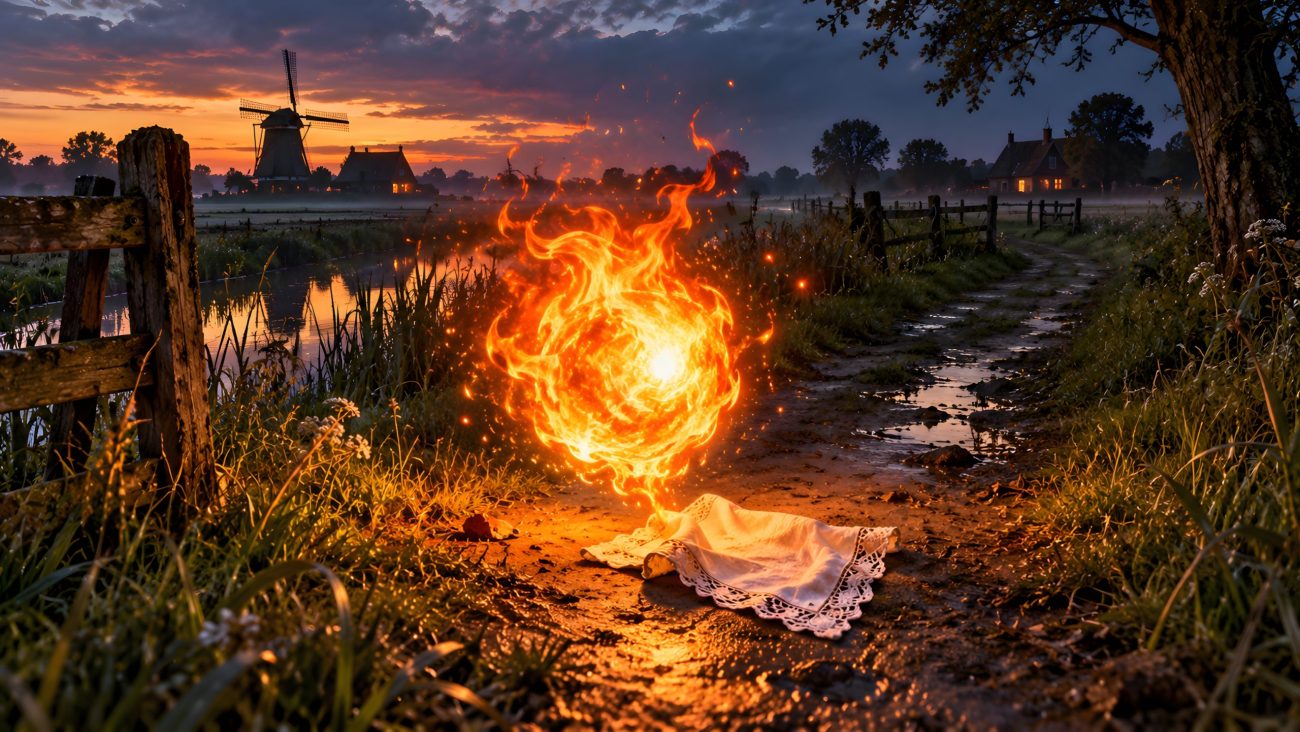
The Barlemanje is a mysterious fire spirit from Holland, appearing as a small ball of fire or a wandering light. It travels from place to place as a glowing flame, an eerie sight in the darkness.

The Barlemanje is known for pursuing people who encounter it. According to tradition, someone being chased by this fiery apparition could escape by throwing a handkerchief onto the ground. The Barlemanje would then settle upon the handkerchief, allowing the pursued person to get away.


Sources

Abe de Verteller. (2014). Van aardmannetje tot zwarte juffer: Een lijst van Nederlandse en Vlaamse elfen en geesten. In AbeDeVerteller.nl, from https://abedeverteller.nl/van-aardmannetje-tot-zwarte-juffer-een-lijst-van-nederlandse-en-vlaamse-elfen-en-geesten/


Onibi

Tradition: Japanese Mythology
Alternative Names: Ghost Fire, Onibi
Category: Flame


The Myth

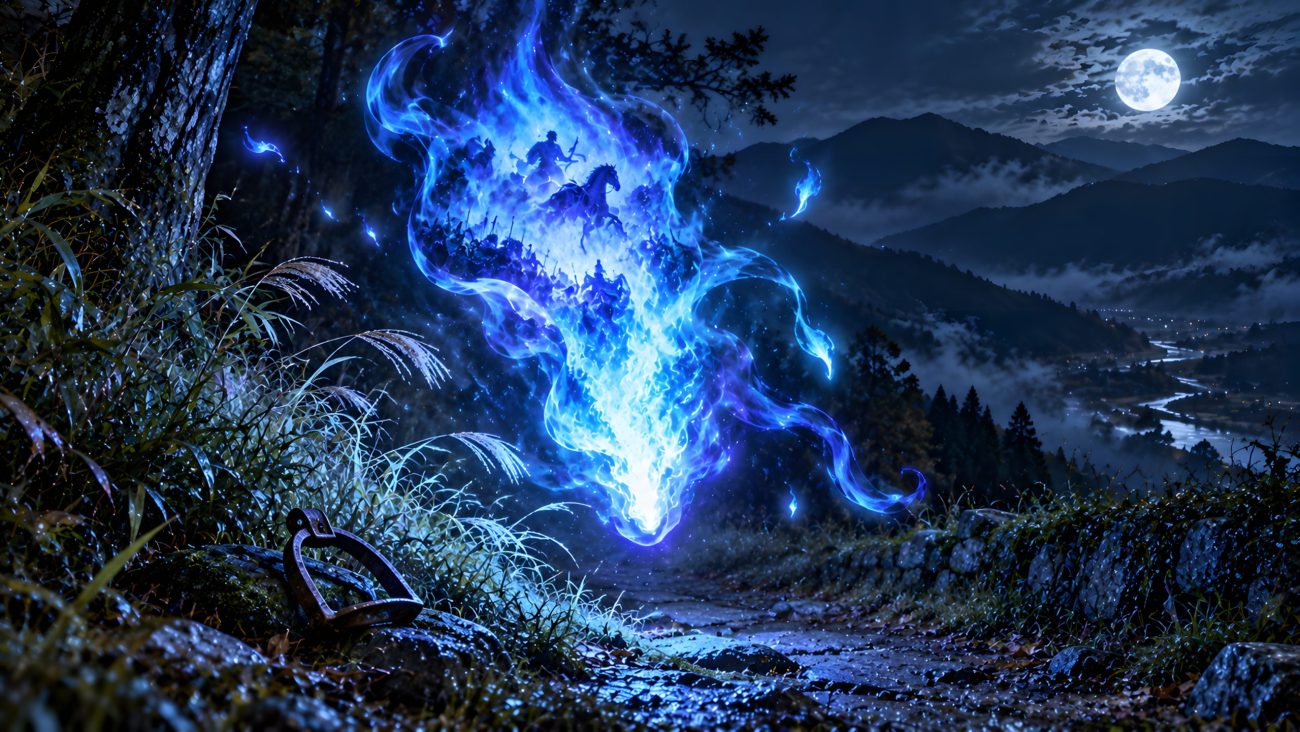
Onibi, meaning ghost fire, is a mysterious supernatural flame said to appear in various regions of Japan. It is most often described as a blue fire, sometimes resembling a burning torch, although accounts also describe flames of other colours. These strange lights appear without an ordinary source and are associated with spirits and the lingering presence of the dead.

According to the Wakan Sansai Zue, which cites the Chinese Bencao Gangmu, onibi are formed from the blood of fallen soldiers or cattle and horses that seeps into the earth and transforms over time. This account distinguishes them from will-o’-the-wisps and shadow fires, which are also described as transformations of spirits. Onibi are said to gather together and separate as they approach people, absorbing their life force. However, they can reportedly be made to disappear by producing a sound, such as striking them with a horse’s stirrups.

The name onibi is also used more broadly for mysterious flames of uncertain origin. Depending on the account, it may refer to foxfire, fires born from the resentment of the dead, or other unexplained supernatural lights. These varying descriptions make onibi a broad category of eerie flames associated with spirits, death, and mysterious occurrences.


Sources

“鬼火 [おにび] (Onibi).” 新版TYZ 妖怪図鑑 (New TYZ Yokai Encyclopedia). https://tyz-yokai.blog.jp/archives/1010652578.html


Nojukubi

Tradition: Japanese Mythology
Alternative Names: –
Category: Flame


The Myth

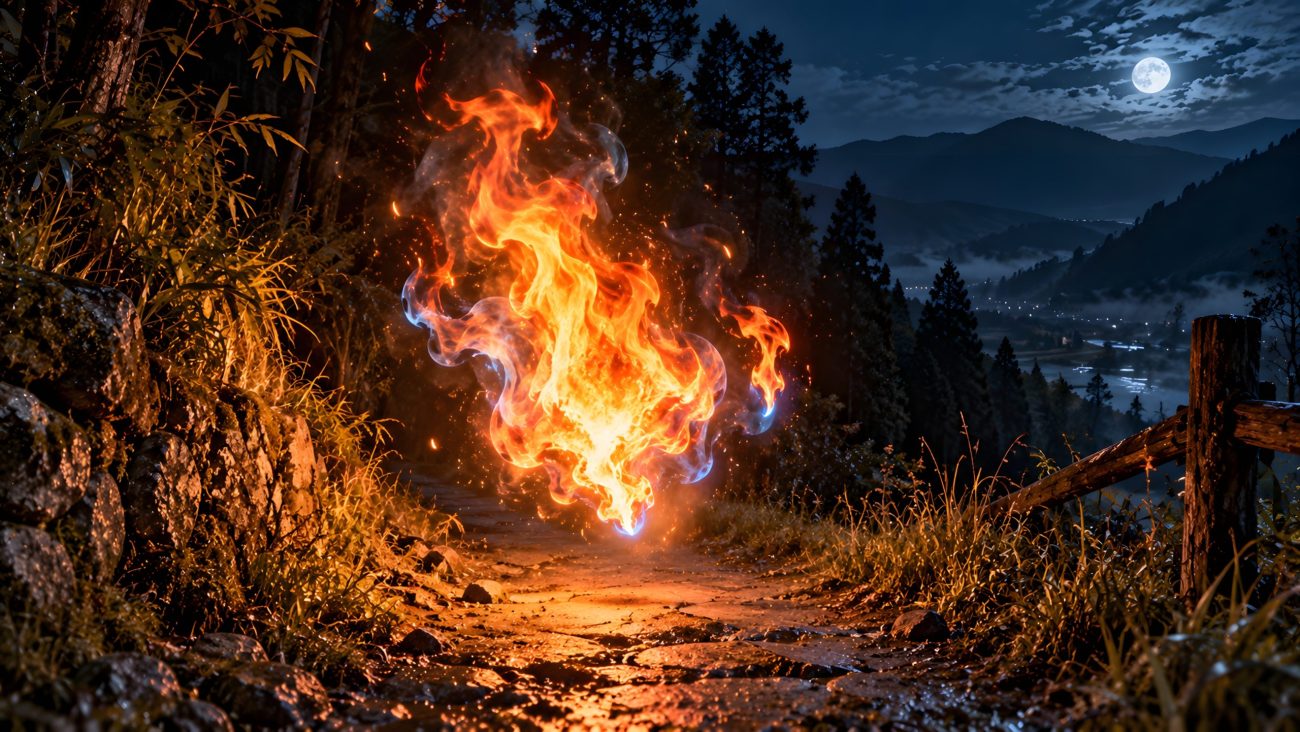
Nojukubi is a mysterious supernatural fire that appears along country roads, highways, and in the mountains of Japan. It manifests in places where no people are present, burning briefly before suddenly going out, only to appear again somewhere nearby. Unlike ordinary fires, it seems to arise without any visible cause, illuminating lonely and deserted places before vanishing into the darkness.

The Nojukubi is distinguished from foxfire and other natural-looking mysterious flames. Its appearances are unpredictable, and it is sometimes accompanied by strange sounds, including the noise of people talking excitedly or singing. These unexplained voices, heard alongside the flickering flames, give the phenomenon an eerie quality, as though an unseen gathering were taking place in the wilderness.


Sources

“Nojukubi.” 新版TYZ 妖怪図鑑 (New TYZ Yokai Encyclopedia). https://tyz-yokai.blog.jp/archives/1010653472.html


Sânziană

Tradition: Romanian Mythology
Alternative Names: Sânziene, Sânziana
Category: Fairy


The Myth

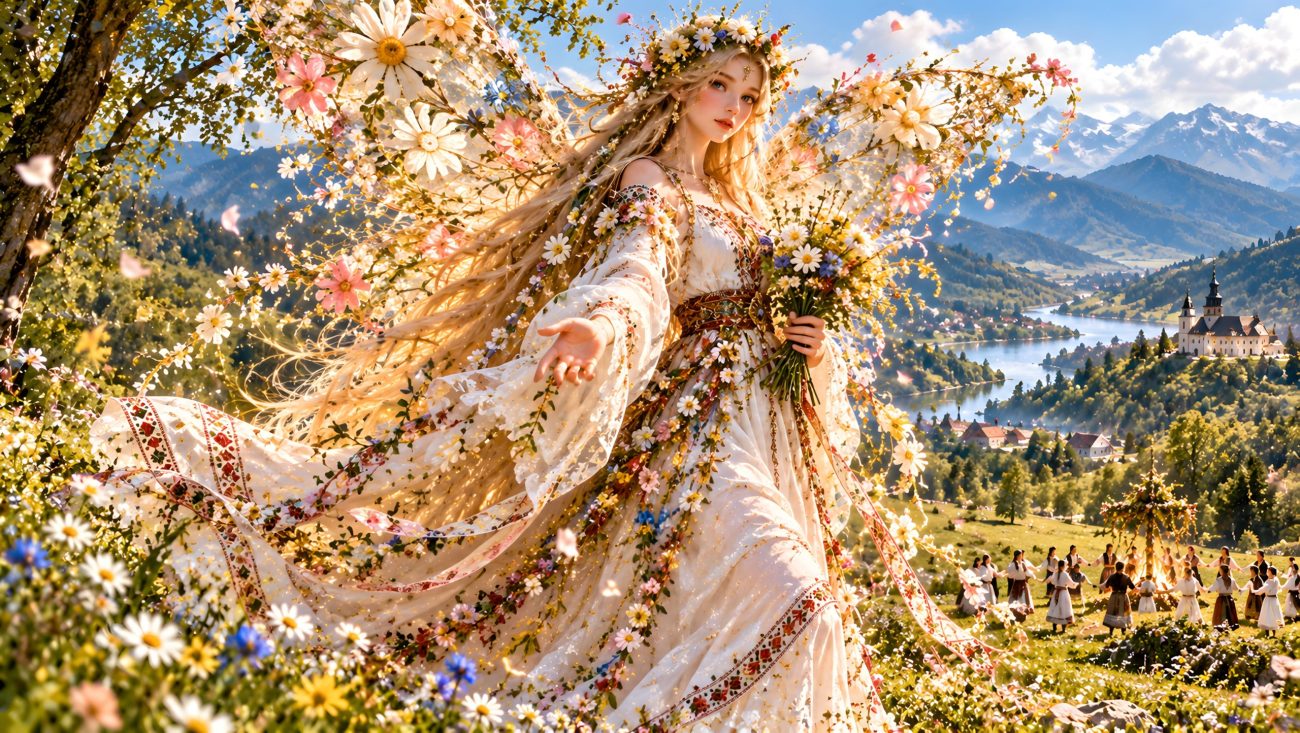
The Sânziene are gentle Romanian fairies associated with the summer solstice and the natural world. They are closely connected with flowers, especially the yellow bedstraw (Galium verum), which itself is called sânziană in Romanian. On Sânziene Eve, the fairies are believed to dance through the air, blessing crops and bringing health to people. They are powerful supernatural beings who generally remain unseen, and men who encounter them during their nocturnal dances risk being maimed, losing their hearing or speech, or being driven mad.

Sânziene is celebrated on June 24, when the most beautiful maidens of a village dress in white and spend the day gathering flowers, always including the sânziană flower. They weave the flowers into crowns and return to the village at nightfall, where they meet their beloveds and dance around a great bonfire. The crowns are then thrown onto the roofs of houses: if a crown remains on the roof, the household will receive a good harvest and prosperity, while a crown that falls to the ground foretells death within the house. People also jump over the dying embers of the bonfire to purify themselves and gain health. In some Carpathian regions, a great wheel of hay is set alight from the ceremonial fire and rolled down a hill, representing the setting sun as the days begin to shorten after the summer solstice.

Sânziene Eve is also considered a night when the heavens open and supernatural forces become especially powerful. Magic and love spells are believed to be strongest, while plants gathered during the night acquire extraordinary magical properties. Strange and sometimes dangerous supernatural events are expected to occur to those wandering alone, particularly in forests and other secluded places. In Romanian tradition, the Sânziene are therefore both benevolent bringers of fertility and health and dangerous beings who punish those who intrude upon their hidden celebrations. A Romanian folk song describes the Sânziene as the “sisters of the Sun,” further emphasizing their connection with the summer solstice and the power of the natural world.


Sources

“Sânziană.” Wikipedia: The Free Encyclopedia. Wikimedia Foundation. Accessed October 5, 2026.
https://en.wikipedia.org/wiki/S%C3%A2nzian%C4%83


Puck

Tradition: English Mythology
Alternative Names: Robin Goodfellow, Goodfellows, Hobgoblin
Category: Fairy


The Myth

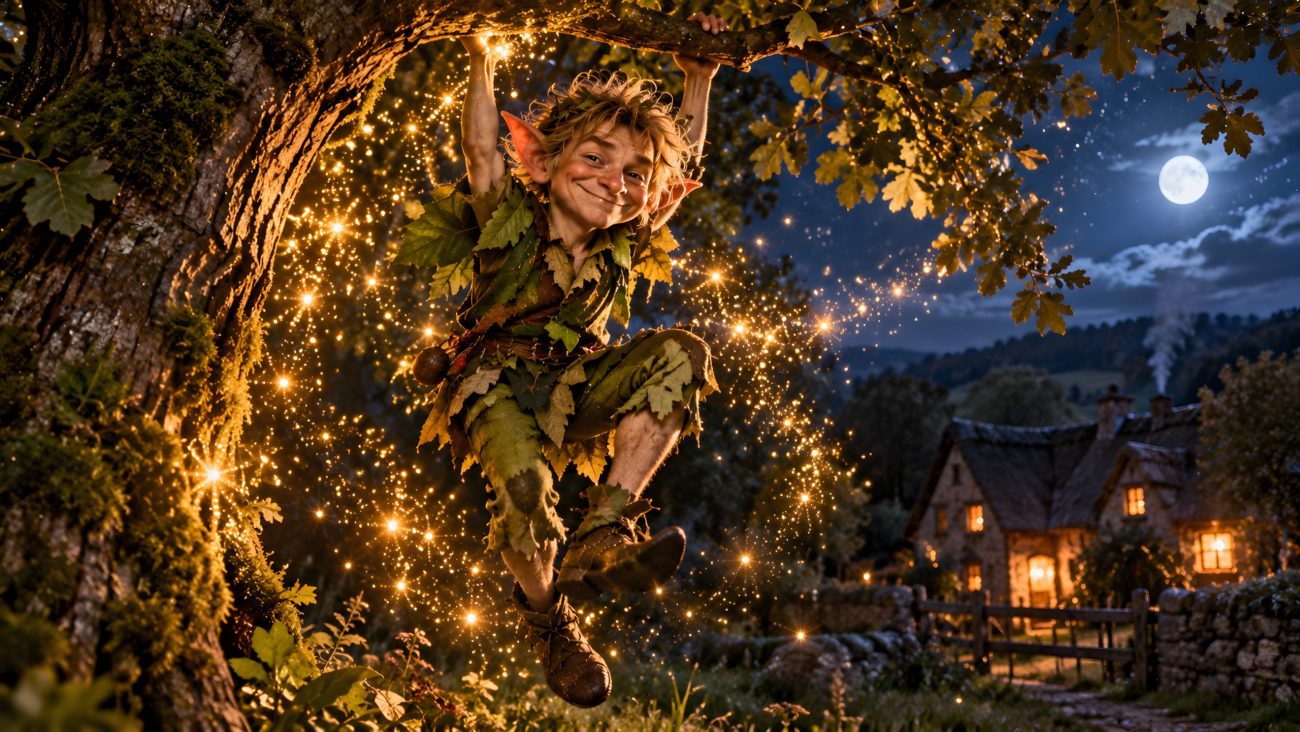
Puck is a mischievous supernatural spirit of English folklore who can appear as either a domestic fairy or a spirit of nature. As a household spirit, Puck may remain around a particular home for long periods, becoming familiar with the inhabitants while making noises, playing tricks, performing jokes, and generally causing harmless disturbances. Despite his reputation for mischief, he can also be helpful, performing small household tasks such as fine needlework, butter-churning, or other chores during the night. A household that treats him well may receive his assistance, while one that displeases or neglects him can suffer his pranks.

Puck expects offerings in return for his services, traditionally white bread and milk. If these are not provided, he may take what he believes is owed to him. He can therefore shift quickly between helpfulness and troublesome behavior, and his services may be undone by his tricks when he becomes offended. He is generally portrayed as solitary and familiar with the household he inhabits. The names Robin Goodfellow and Goodfellows were also used for such spirits, with flattering names such as “Goodfellow” or “good folk” serving to appease supernatural beings known for their mischievous nature.

Puck can also appear as a more dangerous nature spirit rather than a household helper. In this form, he belongs to the wider fairy world and may lead travelers astray or perform mischievous tricks in the countryside. His character is fundamentally ambiguous: he can be a useful domestic servant, a playful jester of the fairy court, or a troublesome supernatural creature whose harmless jokes could become more serious if his goodwill was lost. Shakespeare’s famous Puck reflects this older English tradition of the shrewd, mischievous fairy, although the folklore figure itself existed independently of the literary character.


Sources

“Puck (folklore).” Wikipedia: The Free Encyclopedia. Wikimedia Foundation. Accessed October 5, 2026.
https://en.wikipedia.org/wiki/Puck_(folklore)


Sluagh

Tradition: Irish Mythology, Scottish Mythology
Alternative Names: Sluagh na Marbh, Sluagh, Host of the Dead, Fairy Host
Category: Fairy


The Myth

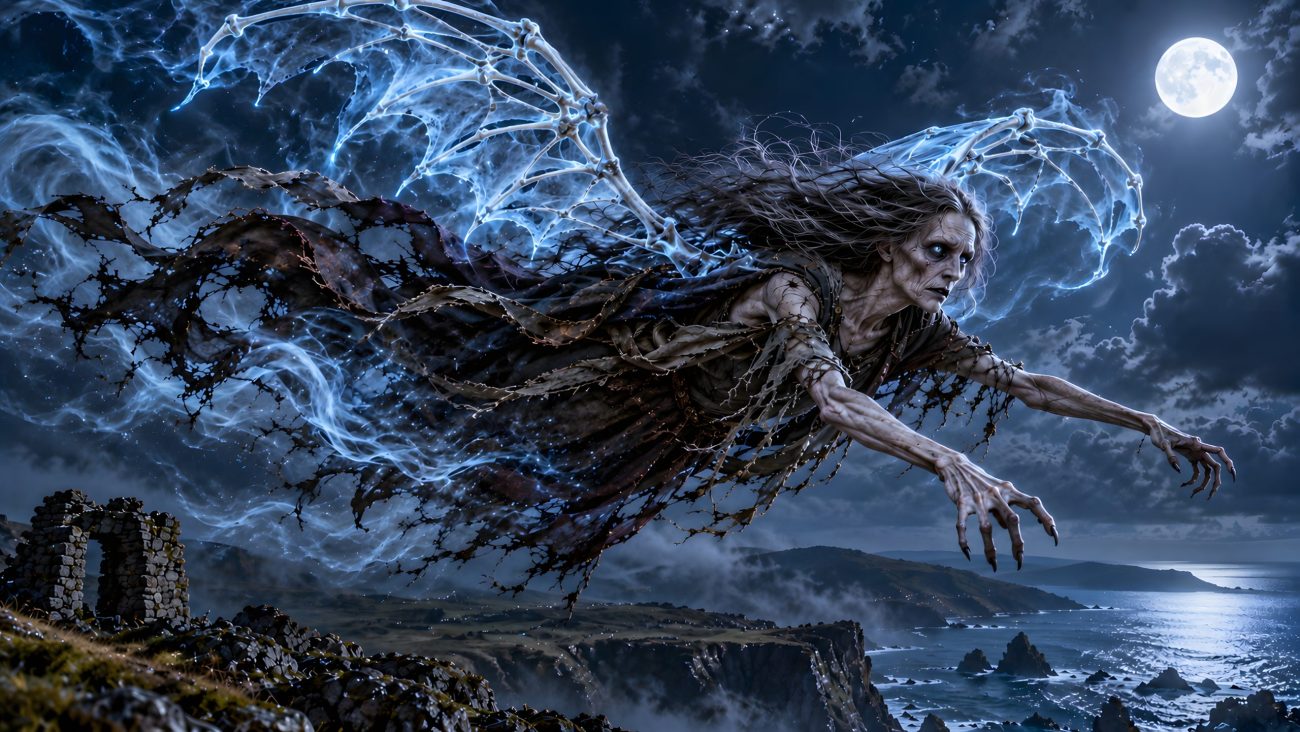
The Sluagh, or Sluagh na Marbh, were a supernatural host of the unforgiven dead who traveled through the skies in Irish and Scottish folklore. They were imagined as the souls of the dead flying together through the air, often forming a crescent-shaped mass resembling a great flock of birds. Their appearance was especially associated with the Western Isles of Scotland, where the gathering of the dead around Halloween was also understood as a gathering of the fairy host.

The Sluagh were capable of descending upon a person from any direction and carrying them away through the air. They could transport their victims enormous distances, flying from one island to another, and were generally feared as dangerous beings to mortals. Yet their nature was not entirely hostile: some traditions remembered the Sluagh rescuing people who had become trapped in dangerous clefts among the rocks. Their ability to appear suddenly from the sky and carry humans away made them an especially terrifying presence in the remote landscapes of the Scottish islands.

The Sluagh were therefore imagined as an airborne supernatural army, neither entirely belonging to the world of the living nor completely separated from the fairy realm. Their name means a “host,” “army,” or “crowd,” fitting their appearance as a great collective of spirits rather than a single creature. As the Sluagh na Marbh, the “host of the dead,” they represented the restless or unforgiven dead moving together through the night sky, particularly during the supernatural season surrounding Halloween.


Sources

“Sluagh.” Wikipedia: The Free Encyclopedia. Wikimedia Foundation. Accessed October 5, 2026.
https://en.wikipedia.org/wiki/Sluagh


Joan the Wad

Tradition: English Mythology
Alternative Names: Joan-the-Wad
Category: Fairy


The Myth

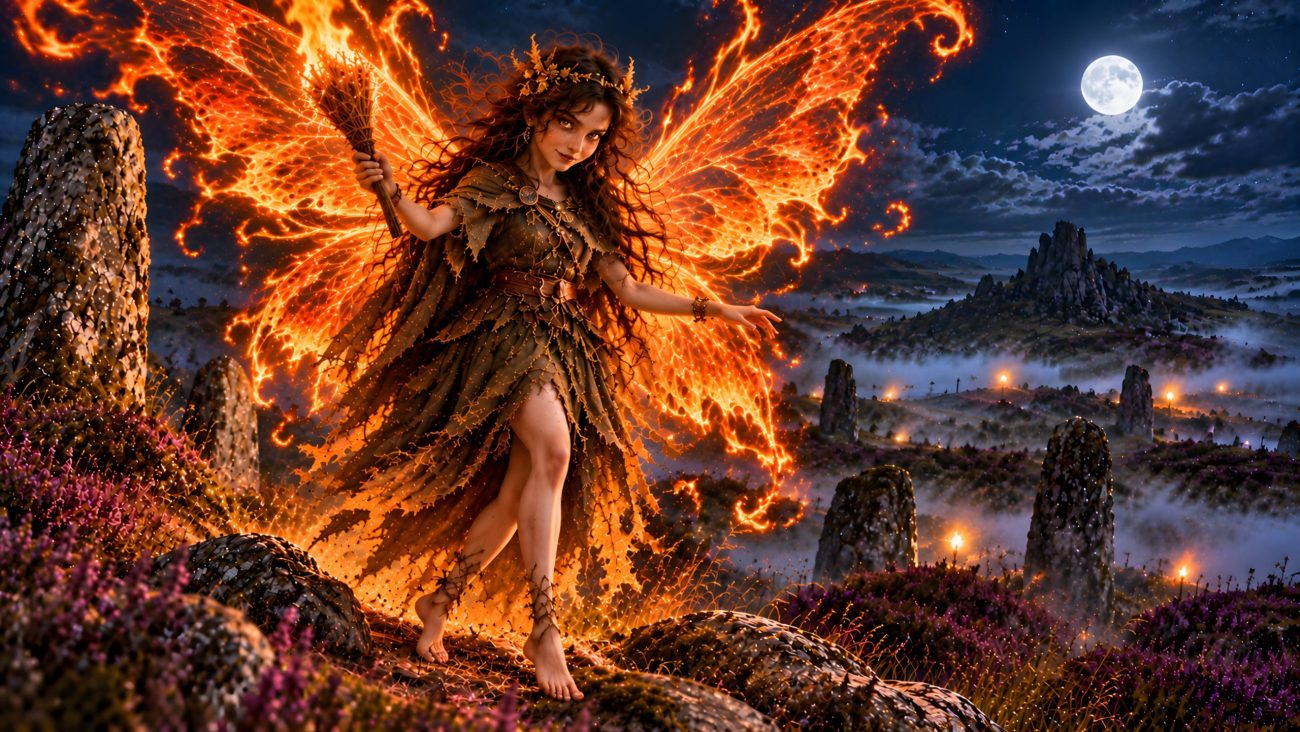
Joan the Wad is the Queen of the Pixies, the tiny supernatural beings traditionally associated with Cornwall and Devon. Her name is connected with the Cornish term wad, meaning a torch or bundle of straw. She is therefore closely associated with light and with the mysterious glowing lights that appear on lonely moors at night.

Joan the Wad is associated with Jack o’ the Lantern, the King of the Pixies, and the two may appear as supernatural will-o’-the-wisps. In this form, they wander across lonely moors and can lead travelers astray in the darkness. Joan’s torch can therefore be dangerous, drawing those who follow its light away from safety when the weather is bad.

Yet Joan’s light is not always harmful. She is also believed to use her torch to guide travelers safely home and bring them good fortune. Her supernatural light consequently has a dual nature: it can mislead those who encounter it on the moors, but it can also illuminate the way toward safety and prosperity.


Sources

“Joan the Wad.” Wikipedia: The Free Encyclopedia. Wikimedia Foundation. Accessed October 5, 2026.
https://en.wikipedia.org/wiki/Joan_the_Wad


Tante Arie

Tradition: French Mythology
Alternative Names: Tainte Airie, Tante Airie
Category: Fairy


The Myth

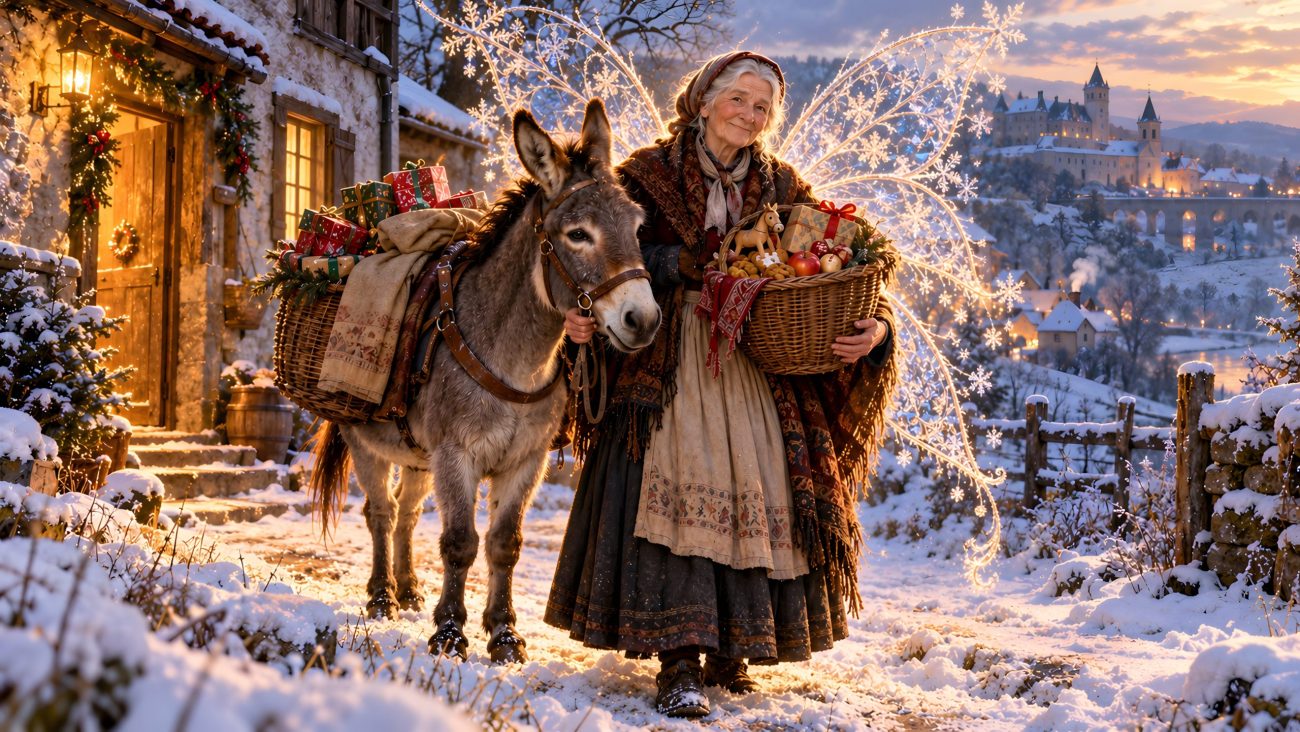
Tante Arie is a benevolent fairy who protects the people of the Montbéliard region. She is traditionally imagined as a kindly woman dressed as a peasant and accompanied by her donkey Marion, which carries Christmas gifts for children. At Christmas she visits children, whether they have been good or bad, taking the place of Santa Claus and Saint Nicholas in the old traditions of the County of Montbéliard.

According to local legend, Tante Arie is the reincarnation of the beloved Countess Henriette of Montbéliard. Henriette was remembered as a generous and protective ruler who continued to govern Montbéliard after the death of her husband and became particularly known for helping deserving inhabitants of the county during the final years of her life. After her death, her kindness was transformed in popular tradition into the figure of a supernatural protector who continued to watch over the people.

Tante Arie is not limited to Christmas. In many local tales she appears in different disguises and asks ordinary households for hospitality, observing the people she encounters and rewarding families who are virtuous, hardworking, careful, and charitable. She therefore acts as both a mysterious visitor and a benevolent guardian, testing the character of those she meets. At Christmas, however, she becomes especially beloved as the gift-bearing fairy of Montbéliard, a female counterpart to the Christmas gift-bringer.


Sources

“Tante Arie.” Wikipédia, l’encyclopédie libre (French Wikipedia). Wikimedia Foundation. Accessed October 5, 2026.
https://fr.wikipedia.org/wiki/Tante_Arie


Houles Fairy

Tradition: French Mythology
Alternative Names: Gwenn Fadoù, Houle Fairies, Good Ladies
Category: Fairy


The Myth

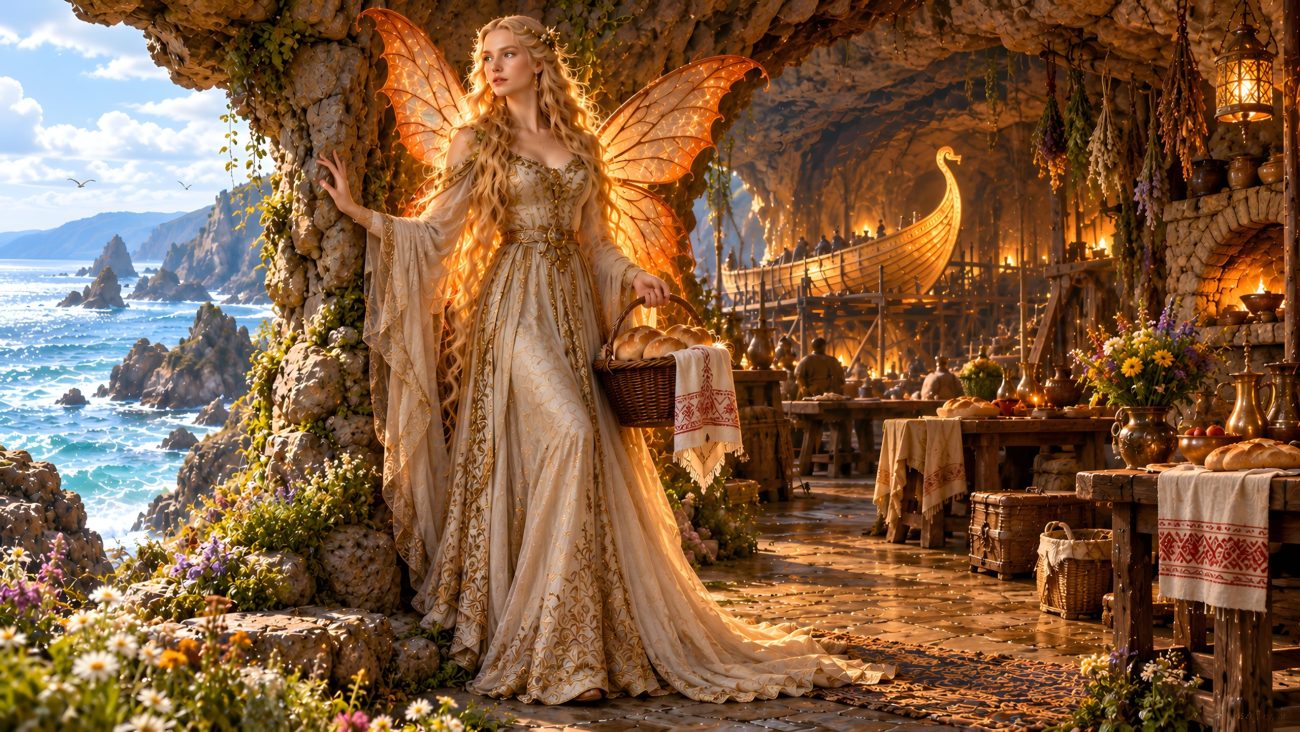
The Houles fairies are magnificent supernatural women who inhabit the coastal caves and caverns known as houles, along the Channel coast from Cancale to Tréveneuc, the Channel Islands, and parts of Cotentin. They are usually described as tall and beautiful blond women, most often dressed in grey garments. As they grow old, they are said to become smaller and cover themselves with seaweed. They are immortal, immune to illness, and immensely powerful, although salt can strip them of their immortality. Some traditions say that until they are baptized, they have worms in their mouths. Their enormous sea caves are luxurious Otherworldly dwellings containing everything they need for baking, teaching, music, dining, and daily life, and the great houle at Saint-Briac is even said to contain workshops where golden ships are built.

The fairies live together in communities and are generally benevolent toward humans. They bake their own bread, tend their flocks, do their own laundry, marry male fairies, and are served by warrior goblins known as Fions. They are often called the “Good Ladies” because of their willingness to aid people, providing food, enchanted objects, and other forms of assistance. They can nevertheless become dangerous when insulted or when humans attempt to acquire the supernatural sight needed to see through their disguises without permission. Most are contemplative and peaceful, although the fairies of the Grouin houle are an exception, being cursed and hostile creatures who bring misfortune. Some Houles fairies are also royal or descended from magicians and possess the ability to perform extraordinary or monstrous transformations.

The Houles fairies are closely tied to the mysterious Otherworld of the Breton coast. They rarely have much to do with the sea itself despite living beside it, although some stories suggest that they once possessed the ability to walk upon water. Their beauty and enchanting voices have also led them to be compared with mermaids, particularly because they can lure young fishermen. Some tales describe older, more obscure fairies resembling the groac’h, while others bring them into contact with creatures such as the “man of the sea.” The Houles fairies were regarded as powerful supernatural beings who lived alongside the human world in their hidden coastal caverns, protecting their secrets and rewarding those who treated them with respect.


Sources

“Houles fairy.” Wikipedia: The Free Encyclopedia. Wikimedia Foundation. Accessed October 5, 2026.
https://en.wikipedia.org/wiki/Houles_fairy


Morgan le Fay

Tradition: Welsh Mythology, French Mythology
Alternative Names: Morgen, Morgana, Morgaine, Morgante, Morgane, Morgayne, Morguein, Fée Morgane
Category: Fairy


The Myth

Morgan le Fay is a powerful and mysterious enchantress of Arthurian legend, traditionally portrayed as an extraordinarily magical woman whose nature can be both benevolent and destructive. She may appear as a fairy, sorceress, witch, goddess, or human woman, and her relationship with King Arthur varies between traditions. In her earliest appearances she is closely associated with the supernatural world and with Avalon, the magical Isle of Apples. She is particularly renowned as a healer, possessing the power to cure even wounds that seem fatal. She is also sometimes described as a fairy queen or goddess, and her supernatural nature remains present even in traditions where she is portrayed as human.

In later Arthurian traditions, Morgan becomes Arthur’s half-sister, the daughter of Igraine and Gorlois, while Arthur is the son of Igraine and Uther Pendragon. She marries King Urien and has a son, Yvain, but becomes a powerful and unpredictable enemy of Arthur and the knights of the Round Table. She learns magic from Merlin and becomes especially hostile toward Queen Guinevere. Morgan takes numerous lovers in different traditions, including Accolon and sometimes Merlin, while also possessing an unrequited love for Lancelot. She repeatedly plots against Arthur and his kingdom, sometimes attempting to bring about his downfall, and in some versions becomes one of his greatest enemies. Yet her relationship with Arthur remains strangely ambivalent, since she can oppose him while also retaining a connection to his protection and healing.

After Arthur is mortally wounded at the Battle of Camlann, Morgan’s oldest supernatural role returns. She is associated with Avalon and takes Arthur away to the magical island so that his wounds can be healed. In some traditions she is accompanied by other magical sisters, while later stories portray her as the immortal queen of Avalon. Thus, despite becoming increasingly villainous in medieval romances, Morgan ultimately remains tied to the Otherworld and to Arthur’s final journey. She is a figure of extraordinary duality: capable of healing and destruction, protection and betrayal, desire and vengeance, while standing between the human world and the magical realm of Avalon.


Sources

“Morgan le Fay.” Wikipedia: The Free Encyclopedia. Wikimedia Foundation. Accessed October 5, 2026.
https://en.wikipedia.org/wiki/Morgan_le_Fay