Tradition: Bulgarian Mythology, Macedonian Mythology
Alternative Names: Samovila, Vila, Samodivi, Yuda, Juda
Category: Fairy
The Myth
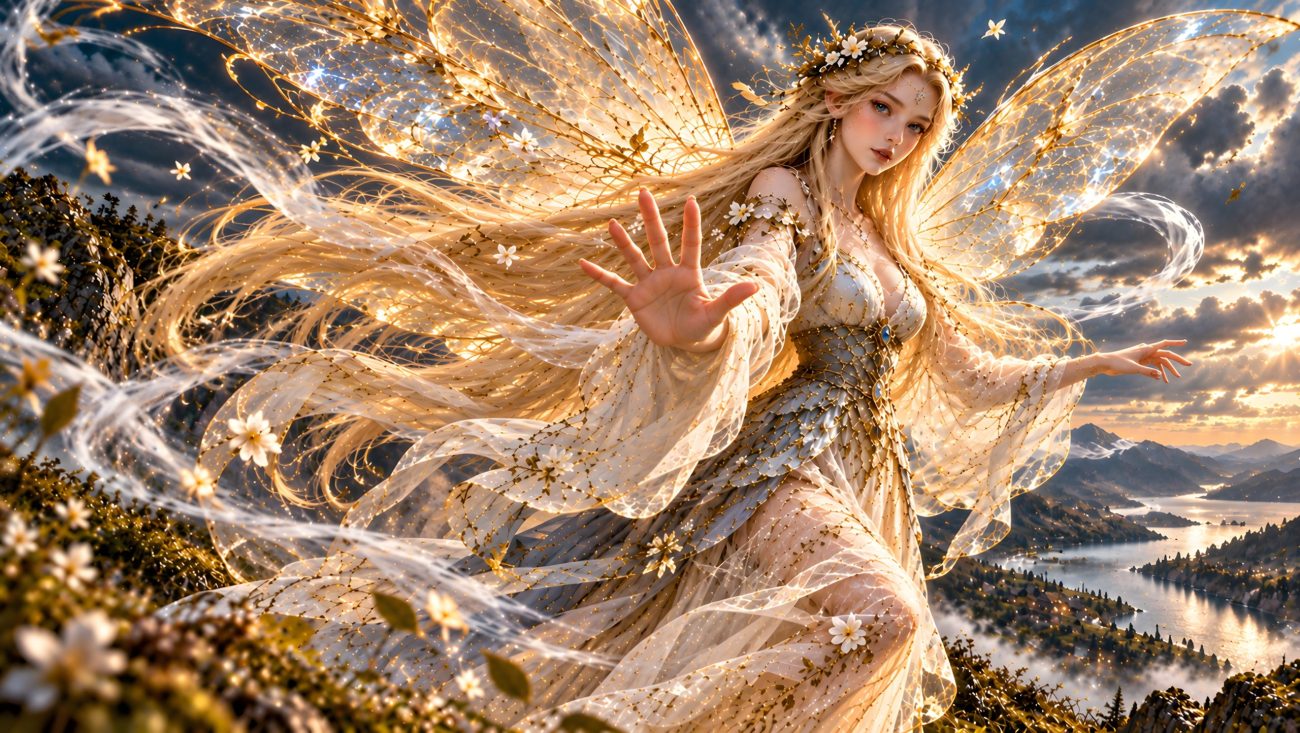
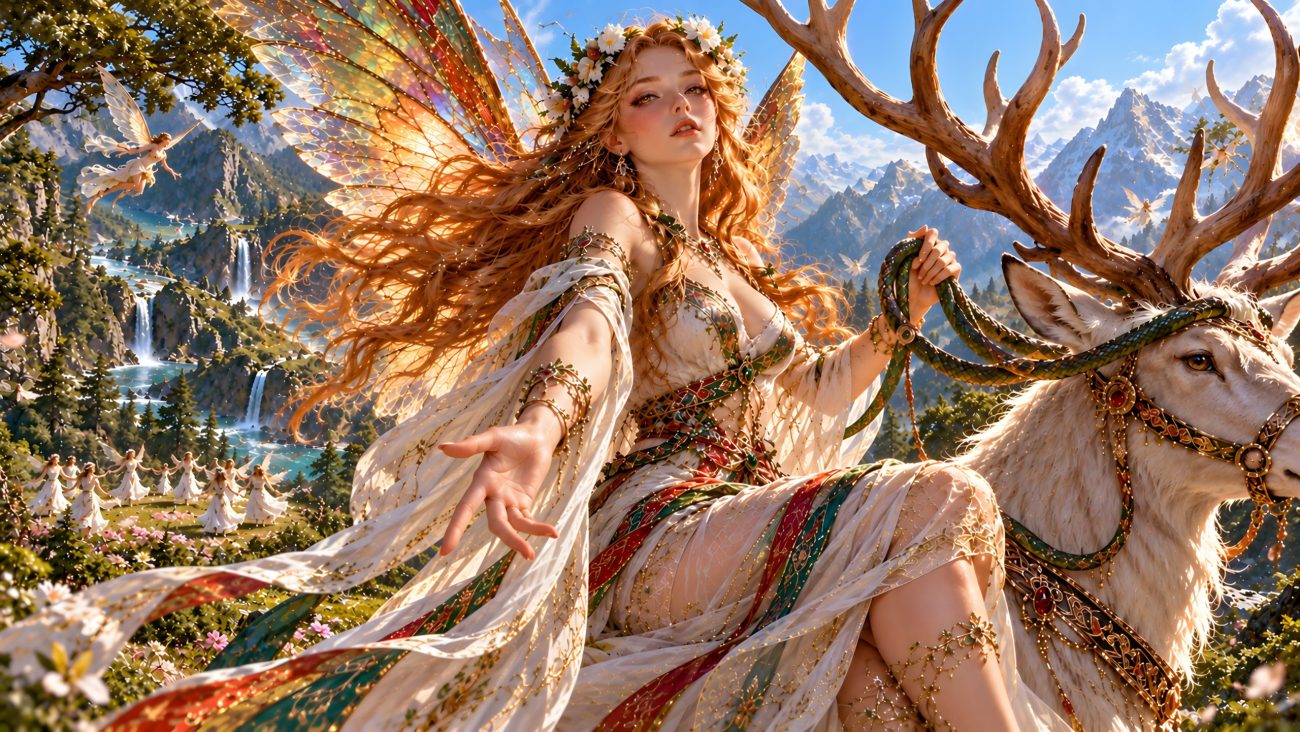
The Samodiva was a beautiful supernatural woman, usually tall and pale-skinned, with long flowing blonde or red hair and fiery eyes. She wore white garments with green or rainbow-colored sashes, and sometimes possessed wings that allowed her to fly through the air. Her clothing, veil, and wreath were sources of supernatural power, and a human who managed to steal one of these could render her powerless and sometimes force her into marriage. Samodivi were also said to ride light-colored stags, controlling them with serpents as reins, and could carry bows and arrows. Some traditions gave them wings beneath their arms, while others described them with goat-like hooves or as taking the form of a storm or whirlwind.
The Samodivi lived in wild and remote places, especially mountain springs, lakes, rivers, caves, forests, gorges, and ancient trees. Their favorite places included enchanted clearings where they gathered to dance in circles, leaving dark or scorched patches of grass behind. They were particularly dangerous at night, when travelers might accidentally enter their territory. A person who disturbed them could be struck with illness, blindness, madness, or death, while some unfortunate humans were abducted and forced to serve the fairies as musicians, nurses, laborers, or builders. Terrifying traditions even claimed that human beings were used as the materials for their castles, with men forming foundations, maidens becoming mortar, brides forming roofs, and infants serving as pillars. Samodivi were also associated with the souls of young women who had died violently or prematurely, as well as certain unbaptized children.
Yet the Samodivi were not purely malicious. They were closely associated with nature and possessed great knowledge of plants and healing. They could cure wounded heroes, restore the dead with living water, grant supernatural strength, bestow gifts upon newborn children, and help humans who earned their favor. They loved music and dancing and sometimes challenged shepherds and musicians to contests, with victory bringing rewards such as marriage to a young fairy or freedom from tribute. They could also fall in love with mortal men and become their wives, although such relationships could be dangerous or forced. At night they travelled in fairy processions, dancing the horo to bagpipes and drums, while some traditions said they returned during winter to a distant “dragon village” at the edge of the world. Their nature was therefore deeply ambivalent: the Samodiva could bring healing, strength, prosperity, and love, but could just as easily bring madness, destruction, abduction, and death to those who violated the boundaries of her supernatural world.
Sources
“Samodiva (folklore).” Wikipedia: The Free Encyclopedia. Wikimedia Foundation. Accessed October 5, 2026.
https://en.wikipedia.org/wiki/Samodiva_(folklore)