Wild’ Bauerng’fahr

Tradition: Swiss Mythology
Alternative Names: The Wild Farmers’ Ride, Wild Peasant Procession
Category: Ghost


The Myth

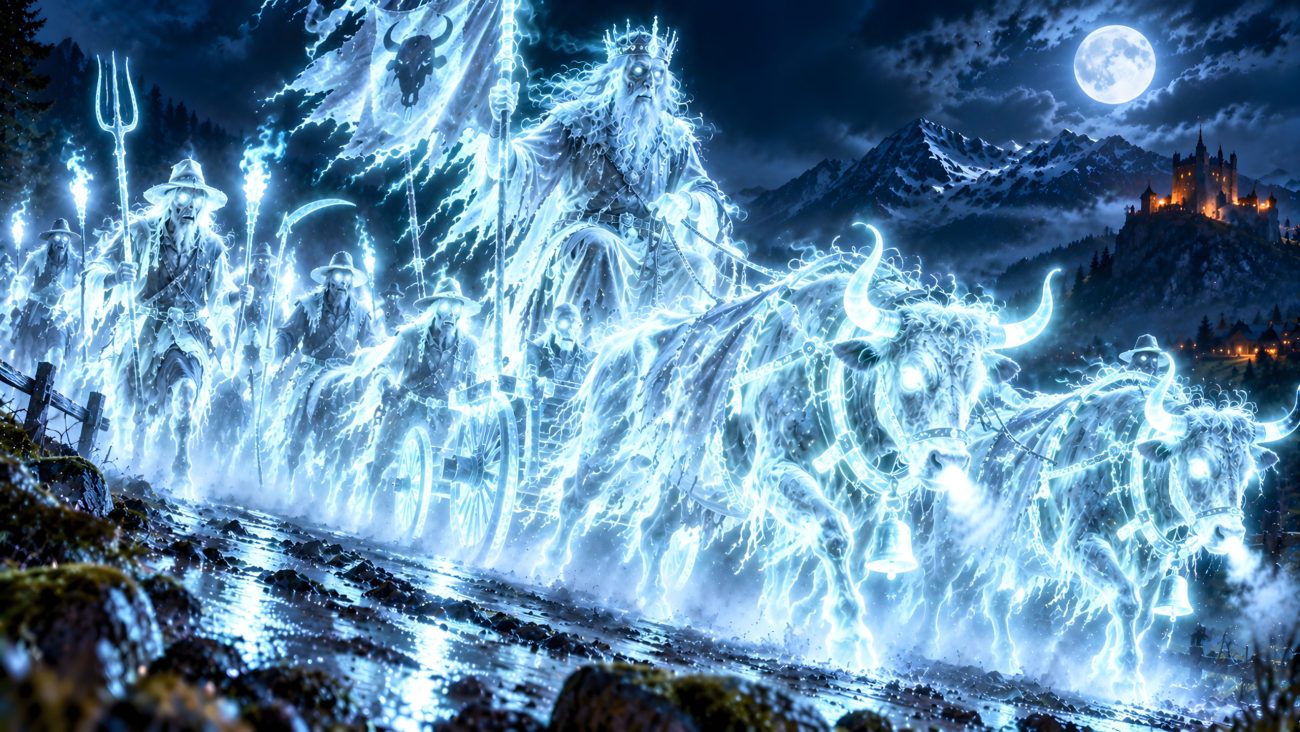
Wild’ Bauerng’fahr, meaning “The Wild Farmers’ Ride,” is a terrifying supernatural procession said to haunt the road between Nauders and Ramis in the Engadine region. During its passage, violent storms disturb the air, while the dreadful bellowing of oxen echoes through the darkness. The procession is believed to consist of the ghost of a cruel lord, his oxen, and the evil spirits of his servants. Its appearance recalls a grim episode of tyranny, murder, and rebellion from long ago.

In former times, a fierce and miserly lord lived in the great castle at Ramis and another castle at Nauders. He held the farmers of Nauders and other Tyrolean communities in captivity, treating them worse than cattle. The farmers secretly planned to free themselves from his oppression. One day, a farmer borrowed the lord’s oxen in exchange for a sack of grain, intending to keep them until his fieldwork was finished. When the lord demanded their return, the farmer delayed him with promises of more grain. Two days later, the lord himself arrived to collect the oxen and payment.

The farmer led the lord into his barn and showed him a pile of rye. As the lord bent down to inspect the grain, the farmer struck him over the head, killing him. His blood spilled across the rye. The farmer then raised a flag, and the neighbouring farmers rushed to the lord’s castle, broke through its defences, defeated the garrison, and won their freedom. Yet the memory of the violent lord and his servants did not disappear. Their evil spirits continue to haunt the road in a stormy procession, accompanied by the bellowing of oxen—a supernatural reminder of the tyrant’s cruelty and the farmers’ bloody struggle for liberation.


Sources

“Bauerngfahr.” SAGEN.at – Tiroler Sagen. Reproduced by SAGEN.at. https://www.sagen.at/texte/sagen/oesterreich/tirol/alpenburg/bauerngfahr.html
Roesschaert

Tradition: Belgian Mythology
Alternative Names: Roessaart, Roesjhoart, Roesschaert
Category: Ghost, Witch, Dog


The Myth

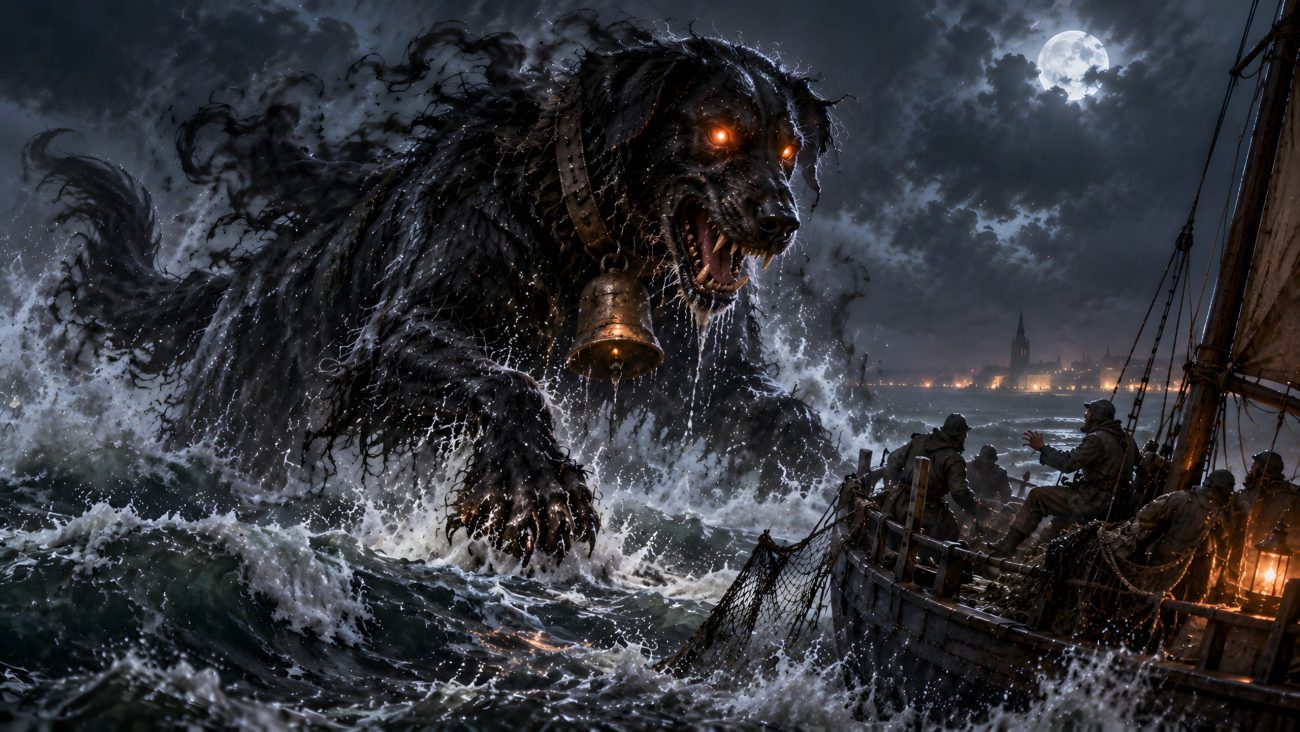
Roesschaert was the ghost of a burned witch. She could appear in several frightening forms, most notably as an enormous black dog with a bell around its neck. At other times she appeared as a cat or a donkey. Whatever form she took, her presence was accompanied by the sound “Roes, Roes, Roes,” from which her name was said to derive.

Roesschaert was especially troublesome to fishermen. She would destroy their fishing nets or try to overturn their boats, bringing danger to those working at sea.

She could also rise suddenly from the water itself, appearing without warning beside fishermen and sailors. From the sea she would seize them and drag them into the depths, making Roesschaert a particularly feared spirit along the Flemish coast.


Sources

“Aardmannetje tot zwarte juffer: een lijst van Nederlandse en Vlaamse elfen en geesten.” Abe de Verteller. Accessed September 30, 2026. https://abedeverteller.nl/van-aardmannetje-tot-zwarte-juffer-een-lijst-van-nederlandse-en-vlaamse-elfen-en-geesten/


Ghostly Rider of Meysemburg

Tradition: Luxembourg Mythology
Alternative Names: The Ghostly Rider of the Meysemburg Forest, Der gespenstige Reiter
Category: Ghost


The Myth

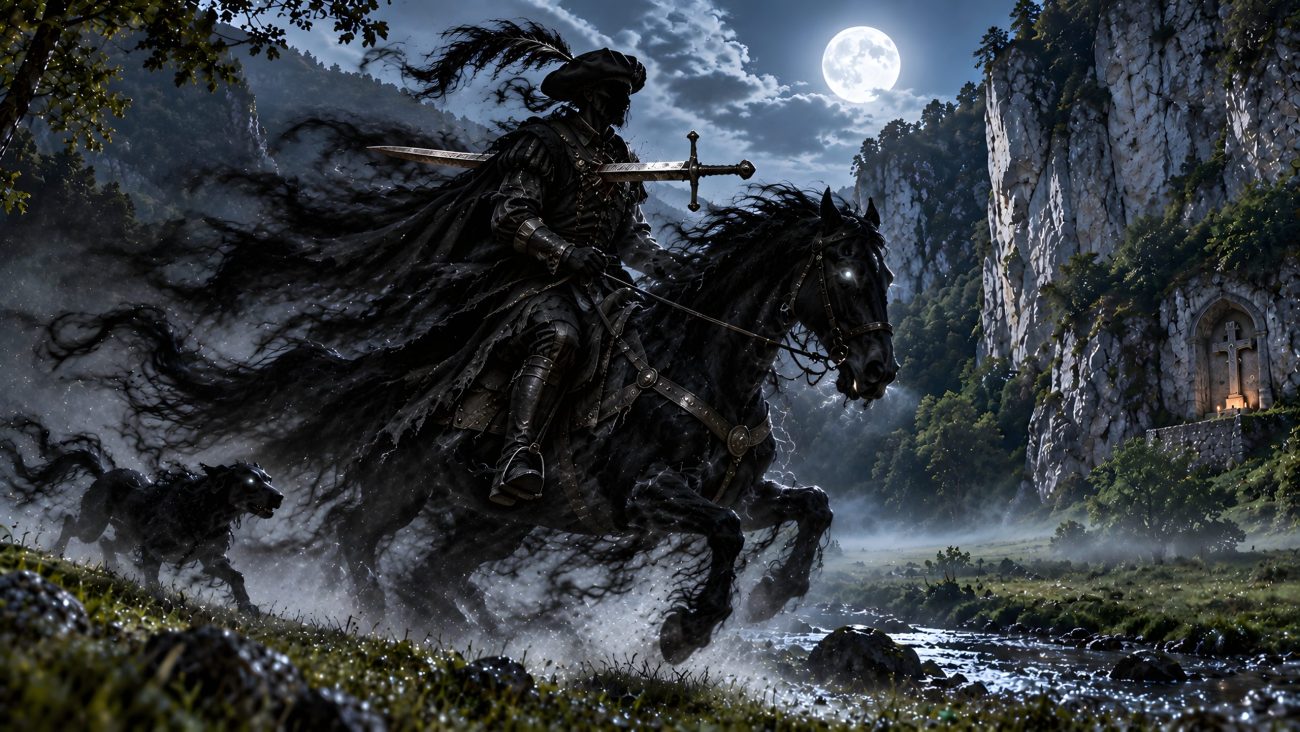
The ghostly rider appeared as the shadow of a mounted knight, wearing a beret decorated with a flowing feather. Most horrifying of all, a long sword pierced straight through his chest, its point protruding from his back. The black shadow would slide rapidly down the sheer face of the rocks and race through the meadow toward Meysemburg before disappearing into the dark woods beyond the stream.

Late travellers who encountered the apparition on bright moonlit nights were overcome with terror. They would cross themselves and scarcely dare to speak aloud. The rider was not confined to the rocks in the meadow either. He was also seen along high mountain ridges, always near the edge of the rocky forests. Sometimes the shadow of a small greyhound was seen running beside the spectral horse.

People disagreed about what the apparition truly was. Some believed it was the ghost of a notorious witch’s accomplice, while others said it was a cursed knight condemned to wander endlessly as punishment for a terrible crime.

The story behind the haunting began when several knights of noble birth competed for the hand of the beautiful daughter of the lord of Meysemburg. The knight who won her affection was the noble Lord of Linster, a virtuous and respected warrior, and the two were soon betrothed.

The other suitors withdrew, but one remained behind as a guest at the fortress of Meysemburg. He had conceived a treacherous plan to steal the bride from Lord Linster. Consumed by jealousy and hatred, he swore bloody revenge upon his successful rival and waited for an opportunity to carry out his terrible scheme.

That opportunity came during the autumn hunting season. The Baron of Meysemburg organized a great hunt through the heavily wooded countryside, where deer, roe deer, wild boar, and other game were plentiful. Lord Linster and his dangerous rival both joined the hunt, which led through the dark forests toward the territory of Fels.

While Lord Linster pursued a deer, unaware that his enemy was following close behind, the jealous knight suddenly attacked him. He drove his spear against the unsuspecting Linster and forced him backward toward the steep rock wall above the Manzenbach valley.

There was nowhere for Linster to escape. The force of the attack caused his horse to rear, and with no ground behind it, the animal toppled backward over the edge of the cliff, carrying the knight with it into the depths below.

The legend explains the ghostly rider as the restless spirit of this murdered knight, forever racing through the forests and meadows where his life was so treacherously ended.


Sources

Reuland, Heinrich Adolph. Luxemburger Volksbücher: Geschichten und Sagen aus dem luxemburger Volksleben. Luxemburg: St. Paulus-Dr., 1892.


Deogen

Tradition: Belgian Mythology
Alternative Names: De-ohen, De Ochen
Category: Ghost


The Myth

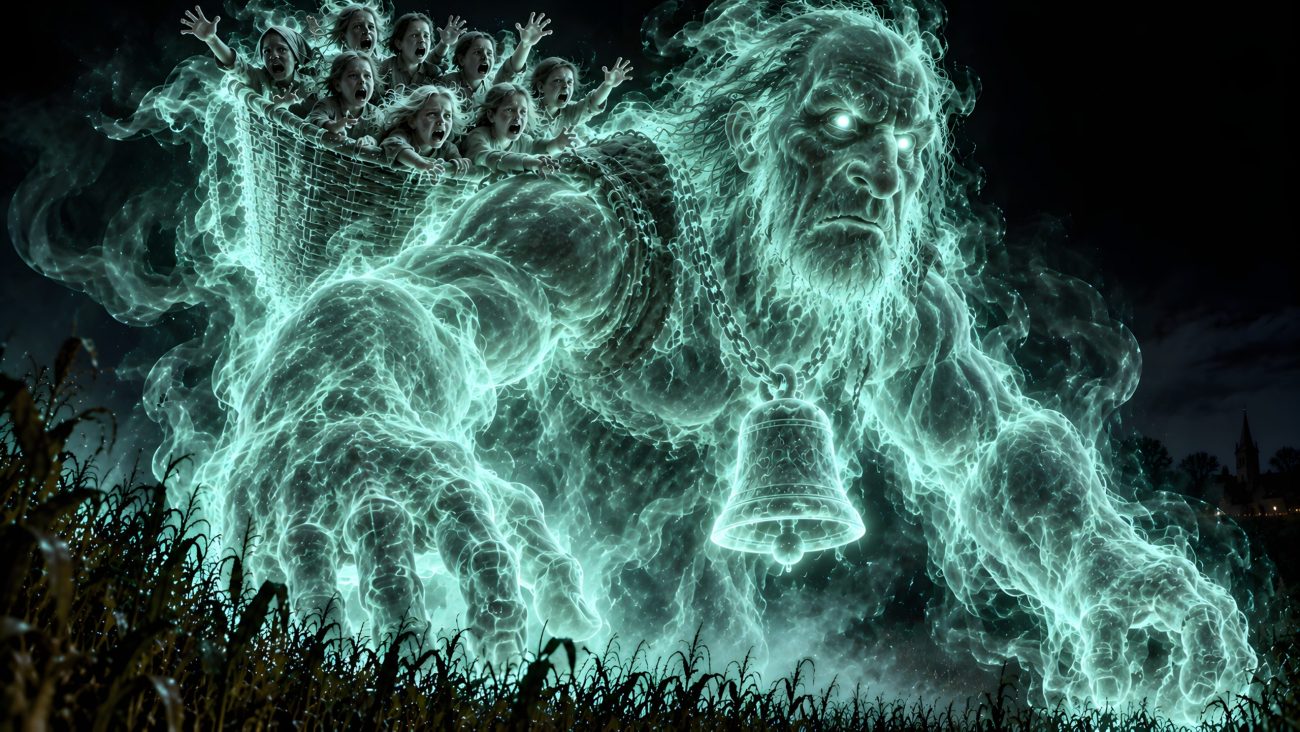
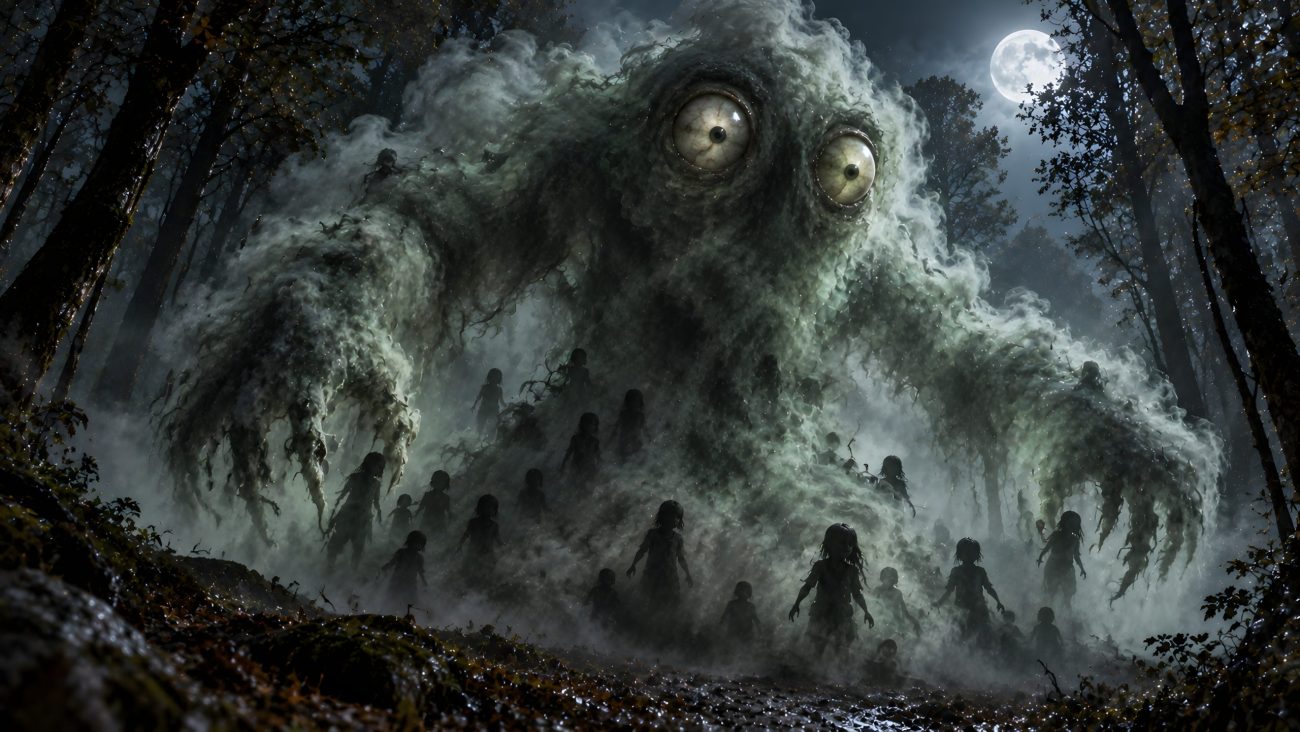
De-ohen appears as a huge, looming ghostly figure formed from a cloud of white or greenish fog. Its eyes bulge from the mist, giving the creature its name, derived from the Dutch “de ogen,” meaning “the eyes.” Alongside the towering figure come the shadowy forms of the children it has killed, their tiny silhouettes following behind it through the darkness.

The legend is associated with the Forêt de Soignes, the great forest on the southern outskirts of Brussels. Drivers travelling through the forest at night or at dusk, especially in foggy weather, were said to encounter black, ghostly figures darting through their headlights. Bloody handprints could appear on car windows, while the terrifying laughter and screams of invisible children seemed to surround the road. Behind the sounds came the tiny shadows of children, following in the footsteps of a huge, looming figure rising from the fog.

The story is tied to a tale of a local serial killer and his victims. As the legend spread, the number of children supposedly murdered in the forest grew enormously. A 1937 book, Children of the Haunted Forest, described how local nuns supposedly discovered the burned bodies of small children scattered throughout the Sonian Forest. The story claimed that as many as eighty children had been brutally murdered, their bodies burned and left throughout the woods.

De-ohen became a figure of frightening campfire stories, with people claiming that they had personally encountered the ghost in the forest. The tale presents the fog itself as something alive: a monstrous presence with enormous eyes, accompanied by the ghosts of the children lost within the woods.


Sources

“De Okhen.” New Bestiary (Bestiary.us). Accessed September 29, 2026. https://www.bestiary.us/de-okhen


Hotteman

Tradition: Belgian Mythology
Alternative Names: Hotteman
Category: Ghost


The Myth

The Hotteman was the ghost of a pig herder. He was said to carry an enormous basket on his back, so large that it was as big as a table.

With this basket, the Hotteman would seize naughty children and carry them away. He was also said to cut off the toes of children who wandered into the grain fields. Mothers told their children these frightening stories to make them behave and keep them away from the crops.


Sources

“Aardmannetje tot zwarte juffer: een lijst van Nederlandse en Vlaamse elfen en geesten.” Abe de Verteller. Accessed September 29, 2026.
https://abedeverteller.nl/van-aardmannetje-tot-zwarte-juffer-een-lijst-van-nederlandse-en-vlaamse-elfen-en-geesten/


Roaring Bull o’ Bagbury

Tradition: English Mythology
Alternative names: The Roaring Bull of Bagbury
Category: Ghost, Cow


The Myth

A notoriously wicked man once lived at Bagbury Farm. According to the story, he had done almost no good in his life, with only two acts of kindness remembered: giving a waistcoat to a poor old man and giving bread and cheese to a poor boy.

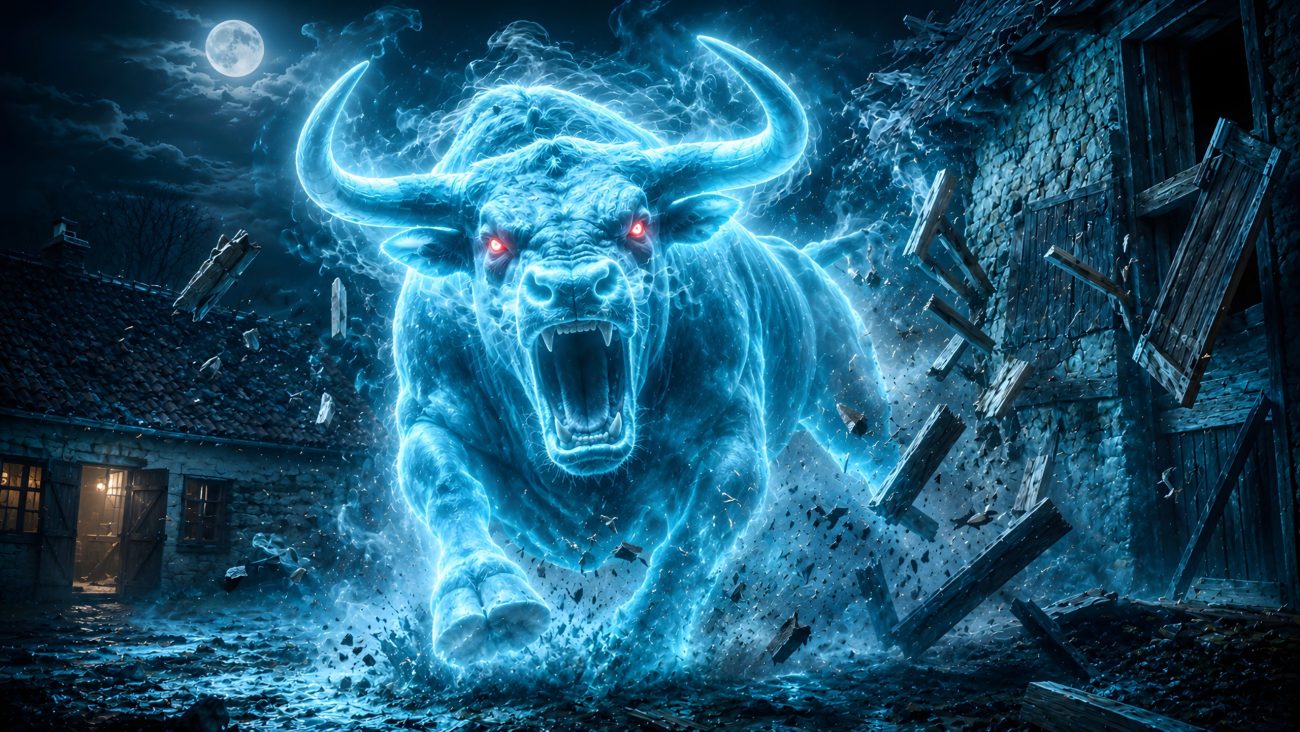
After his death, however, his ghost refused to rest. It began appearing in the buildings at Bagbury Farm in the shape of a bull, where it would roar so violently that boards, shutters, and roof tiles were thrown from the buildings. The haunting became so severe that nobody could live nearby.

The bull originally appeared around nine or ten at night, but eventually became so troublesome that it began arriving as early as seven or eight. Twelve parsons were summoned to lay the ghost. They managed to drive it, still in the form of a bull, toward Hyssington Church, but they struggled to contain it.

One of the twelve priests was an old blind parson who knew the ghost and anticipated its violent charge. He carried his candle inside his top boot. When the bull suddenly rushed at the priests, all their candles were extinguished except his. He then told the others to relight their candles from his.

Inside the church, the bull made such a tremendous burst that it cracked the church wall from top to bottom. According to the storyteller, the crack remained visible for years and was deliberately left unrepaired so that people could see where the supernatural bull had broken the church.

Eventually, the priests succeeded in forcing the bull into a snuff-box. The spirit then requested that it be buried beneath Bagbury Bridge, threatening that every mare passing over the bridge would lose her foal and every woman would lose her child. The priests refused this request and instead cast the bull into the Red Sea for a thousand years.

Even long afterward, people remained frightened of Bagbury Bridge. The storyteller recalled that the old clerk of Hyssington had personally remembered the blind parson. Decades after the bull had supposedly been confined in the Red Sea, people still crossed the bridge cautiously. One man recalled crossing it with horses and deliberately getting down from his horse, walking softly and making as little noise as possible, because he feared that the bull might hear him and emerge from beneath the bridge.


Sources

“Efft60.” Sacred Texts. Accessed August 29, 2026. https://sacred-texts.com/neu/eng/efft/efft60.htm


Poli the Cursed

Tradition: Liechtenstein Mythology
Alternative names: Poli
Category: Ghost, Cow


The Myth

Poli could have lived a good life as a herdsman on Gritsch, but one particular cow made his work miserable. The animal repeatedly escaped, forcing him to spend hours searching for it.

Poli frequently cursed the cow and began thinking of a way to get rid of it. Eventually, he devised a plan. He felled a fir tree, stripped off its bark, and placed the wet, slippery pieces of bark across a dangerous location.

He then drove the cow over the slippery surface. The animal lost its footing, fell from the mountain, and died beneath a rock.

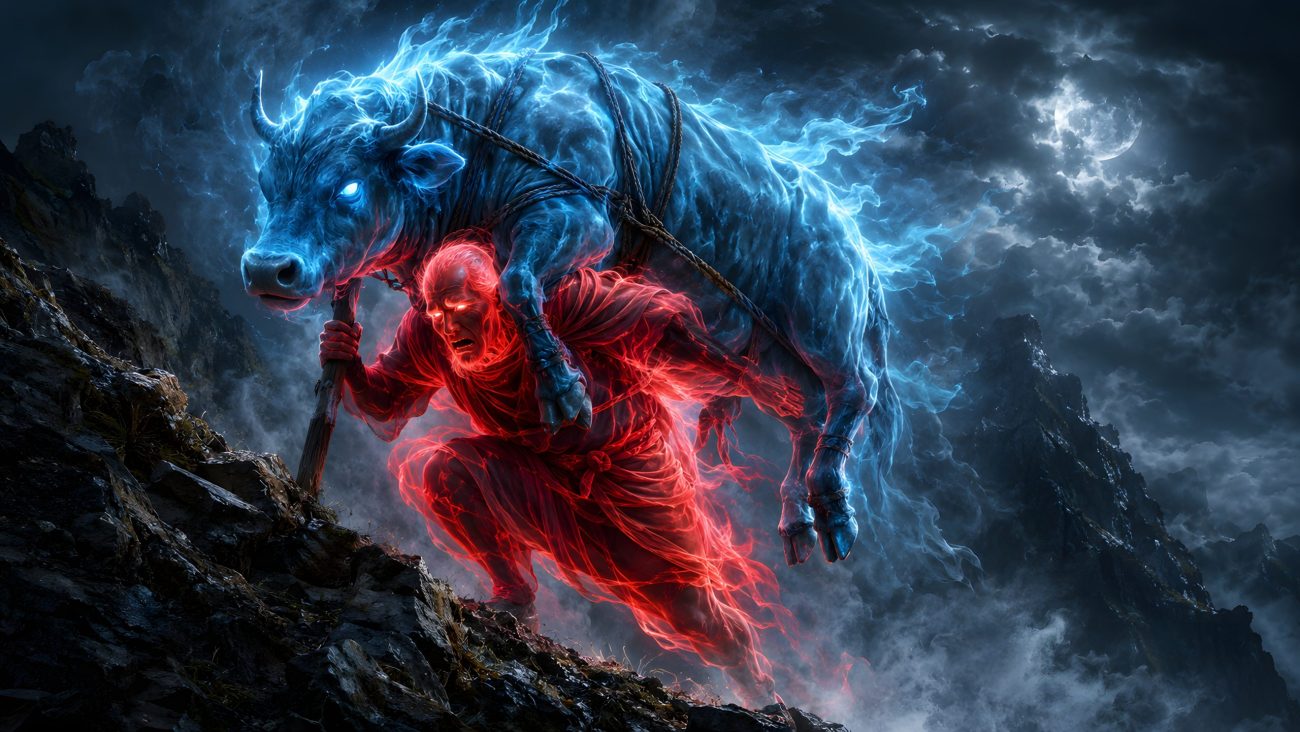
After his death, the unfaithful herdsman was condemned to wander as a ghost for his crime. He was forced to carry the cow up the mountain as many times as there were hairs on his head.

Whenever he finally reached the summit, he let out a loud cry of joy that could be heard far across the mountains. His cry was believed to be a sign that snowfall would soon come to the Gritsch Alpine pasture.

Another herdsman is said to haunt the path from the Wang Alp to the Rappenstein for the same crime. He had caused many cows to fall into the ravine and was likewise condemned to wander after death. His cries could always be heard whenever a storm was approaching.


Sources

“Van aardmannetje tot zwarte juffer: Een lijst van Nederlandse en Vlaamse elfen en geesten.” Abe de Verteller. Accessed August 29, 2026. https://abedeverteller.nl/van-aardmannetje-tot-zwarte-juffer-een-lijst-van-nederlandse-en-vlaamse-elfen-en-geesten/


Readrokje

Tradition / Region: Dutch Mythology
Alternative names: Roodrokje
Category: Ghost, Bird


The Myth

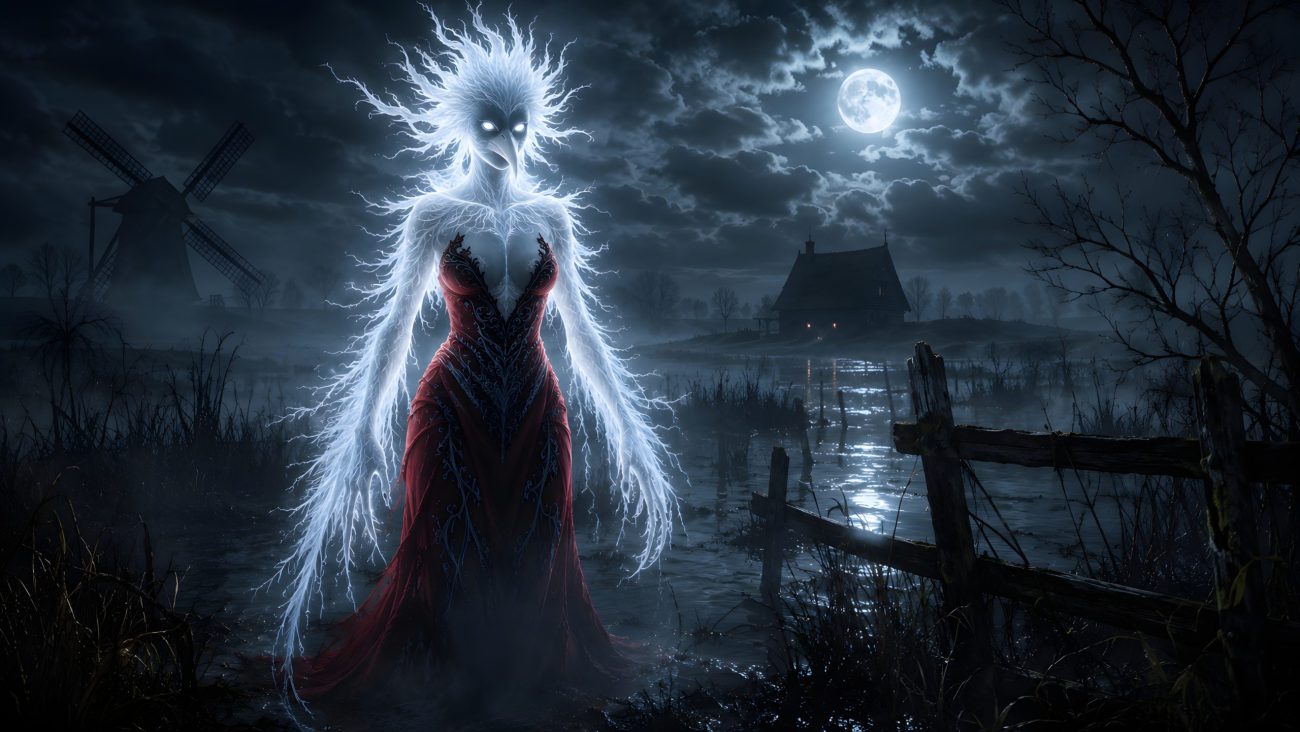
The Readrokje (“Little Red Skirt”) is a ghost said to haunt the area around Akkrum in Friesland. She is described as having a sharp, bird-like face, a white upper garment, and a distinctive red skirt.

She wanders the countryside with long, silent strides, gliding effortlessly over ditches and through beds of reeds. At times, the Readrokje suddenly rushes straight toward a lone traveler walking late at night, frightening them so badly that they flee in terror.


Sources

Abe van der Veen. (2014, July 8). Van aardmannetje tot zwarte juffer: Een lijst van Nederlandse en Vlaamse elfen en geesten. Abe de Verteller. Retrieved June 29, 2026, from https://abedeverteller.nl/van-aardmannetje-tot-zwarte-juffer-een-lijst-van-nederlandse-en-vlaamse-elfen-en-geesten/


Orco

Tradition / Region: Austrian Mythology
Alternative names: Orco
Category: Ghost


The Myth

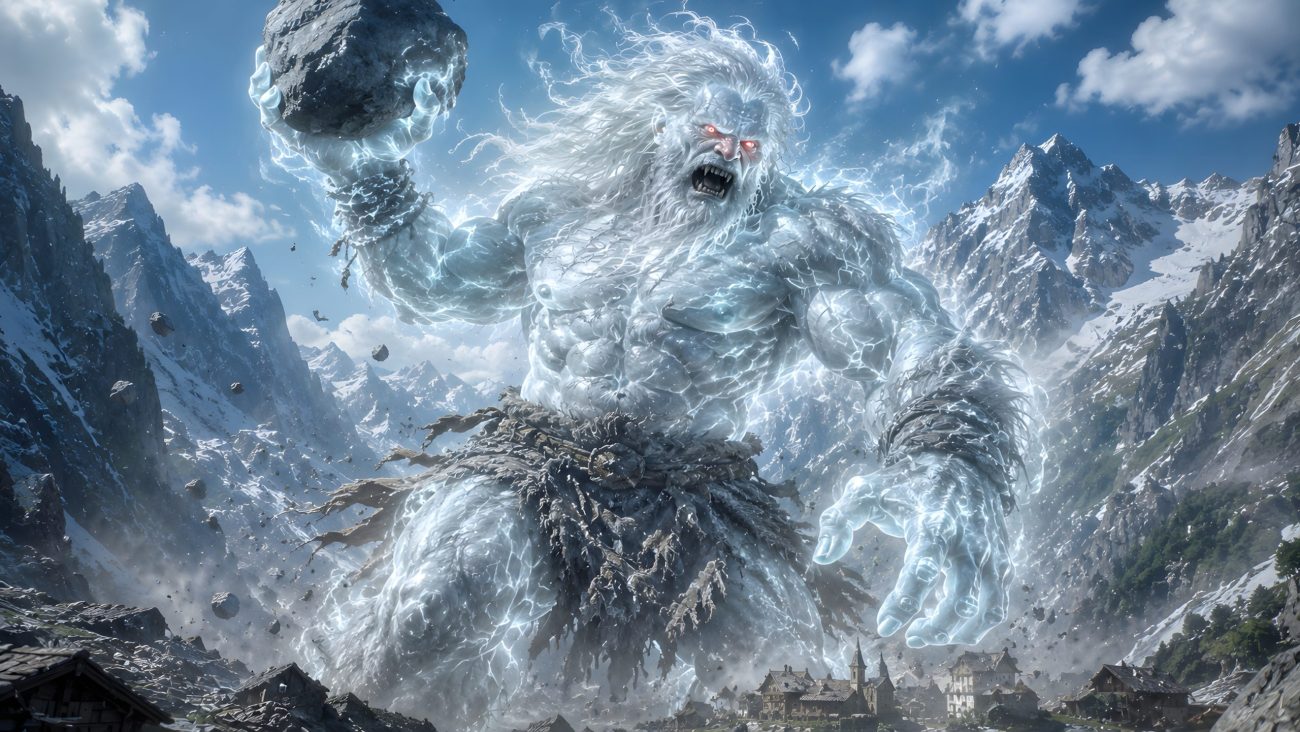
The Orco is a gigantic and ancient mountain ghost feared throughout the Dolomite Alps, especially in the mountains between Enneberg Abbey and Buchenstein. Said to dwell in deep caves, chasms, and rocky cliffs, the Orco is a malicious supernatural being that never grows old and exists only to spread fear, destruction, and misfortune among humankind.

The Orco is a powerful shapeshifter, appearing in many terrifying forms. It most commonly manifests as a gigantic black dog with blazing eyes, a wild horse whose hooves burn with fire, a raging bull, or even as a massive rolling boulder that chases terrified travelers across the mountains. On the rare occasions it takes human form, it appears as an enormous giant with a cruel expression, either naked beneath a coat of thick bear-like hair or dressed like one of the legendary mountain giants.

Many Tyrolean legends recount encounters with the Orco. One skeptical innkeeper who mocked stories about the creature was confronted by a monstrous black dog that circled his wagon until he finally made the sign of the cross, causing it to vanish instantly. Another tale tells of a fiery horse that attempted to scatter a family’s cattle before disappearing the moment it approached a roadside crucifix.

The Orco often pursued lonely travelers for miles. One young man was chased home by a gigantic black dog whose tongue dripped blue flames and whose breath smelled of burning sulfur. Although he escaped unharmed, the terror and exhaustion permanently damaged his health, leading to his death only months later.

In another legend, two young men returning home at night were stalked first by a wild bull and then by an enormous rolling sphere that crashed over rocks in pursuit of them. They escaped only by throwing themselves at the foot of a large crucifix. Unable to cross the holy ground, the Orco appeared in human form beyond the fence, striking it with such supernatural force that the marks of its blows remained visible for years.

The Orco could also imitate human voices to lure victims. A shepherd boy once answered what he believed were distant woodcutters calling through the forest, only to realize too late that he had mimicked the Orco itself. The monster seized him and carried him across mountains and deep ravines before abandoning him bruised and unconscious many miles away. From that day onward, locals warned never to imitate mysterious voices heard in lonely forests, for doing so could summon the Orco with lightning speed.

Throughout Tyrolean folklore, the Orco embodies the dangers of the wild mountains—an ancient, shape-shifting force of terror that preys upon travelers, but whose power is consistently overcome by Christian symbols such as the sign of the cross and roadside crucifixes.


Sources

von Günther, A. (1874). Tales and legends of the Tyrol. Chapman and Hall.


Ghost Mother

Tradition / Region: Chinese Mythology
Alternative names: Ghost Goddess, Tiger-Dragon Foot, Python-Eyed Ghost Mother, Dragon-Browed Ghost Mother
Category: Ghost, Deity, Tiger


The Myth

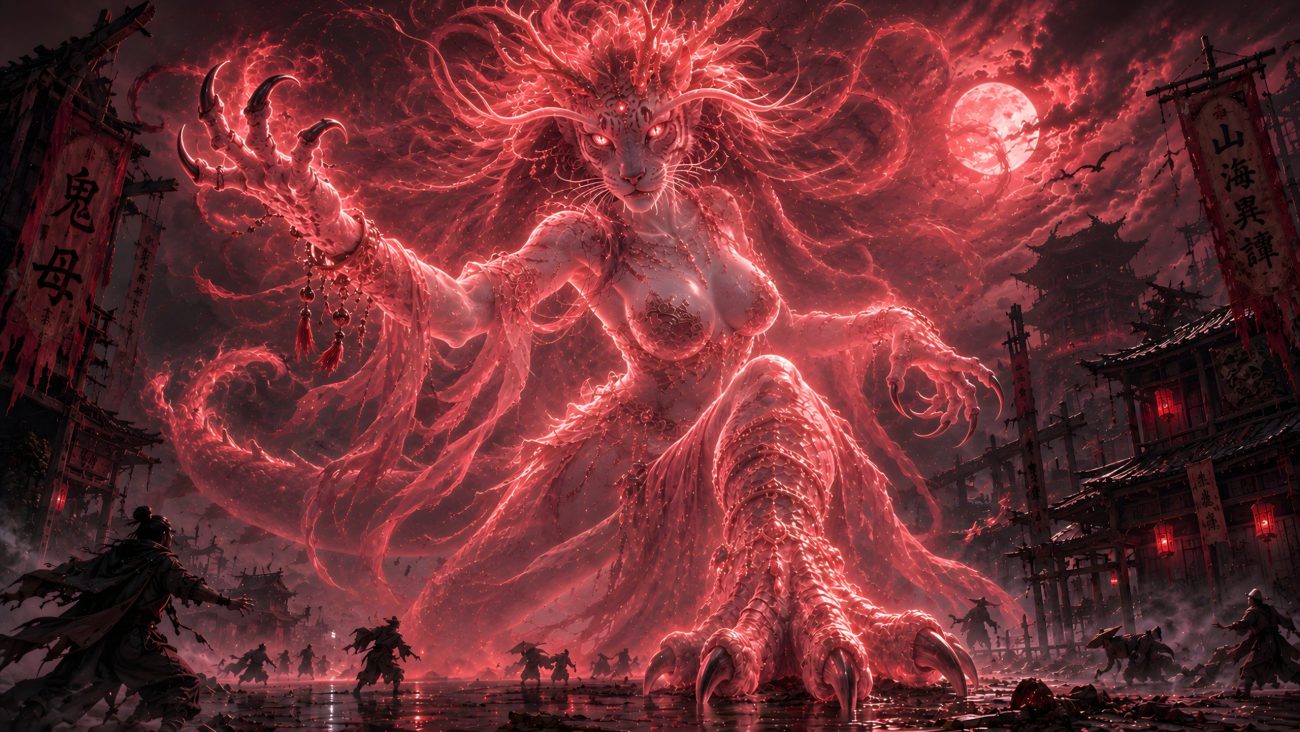
The Ghost Mother is a powerful supernatural being in Chinese mythology, appearing as both a ghost and a divine figure. She is most famously described in the Shuyi Ji (Records of Strange Things), where she dwells on Xiaoyu Mountain in the South China Sea.

Her appearance is bizarre and monstrous. She is said to possess the head of a tiger, the feet of a dragon, the round eyes of a python, and long dragon-like eyebrows that join together. She possesses extraordinary creative power, being capable of giving birth not only to ghosts but also to heaven and earth themselves. Whenever she gives birth, she produces ten ghosts at once, only to devour them again by nightfall.

The Ghost Mother also appears in Strange Tales from a Chinese Studio, where she serves as the foster mother of Yingning, a fox spirit, raising her despite not being her biological parent.

In the sequel to Journey to the West, the Ghost Mother appears in another form. After Princess Iron Fan attained enlightenment, the Bull Demon King became the Ghost King and resurrected Princess Jade Face as the Rakshasa Ghost Mother. Together they later had a son named Prince Li Zi, also known as Black Boy.

Across these traditions, the Ghost Mother is portrayed as a mysterious maternal figure whose terrifying appearance contrasts with her immense supernatural power, embodying both the creation and destruction of spirits.


Sources

Wikipedia contributors. (n.d.). 鬼母. In 維基百科,自由的百科全書. Retrieved June 27, 2026, from https://zh.wikipedia.org/wiki/%E9%AC%BC%E6%AF%8D