Virgin of Gutenberg

Tradition: Liechtenstein Mythology
Alternative Names: The White Maiden of Gutenberg
Category: Ghost


The Myth

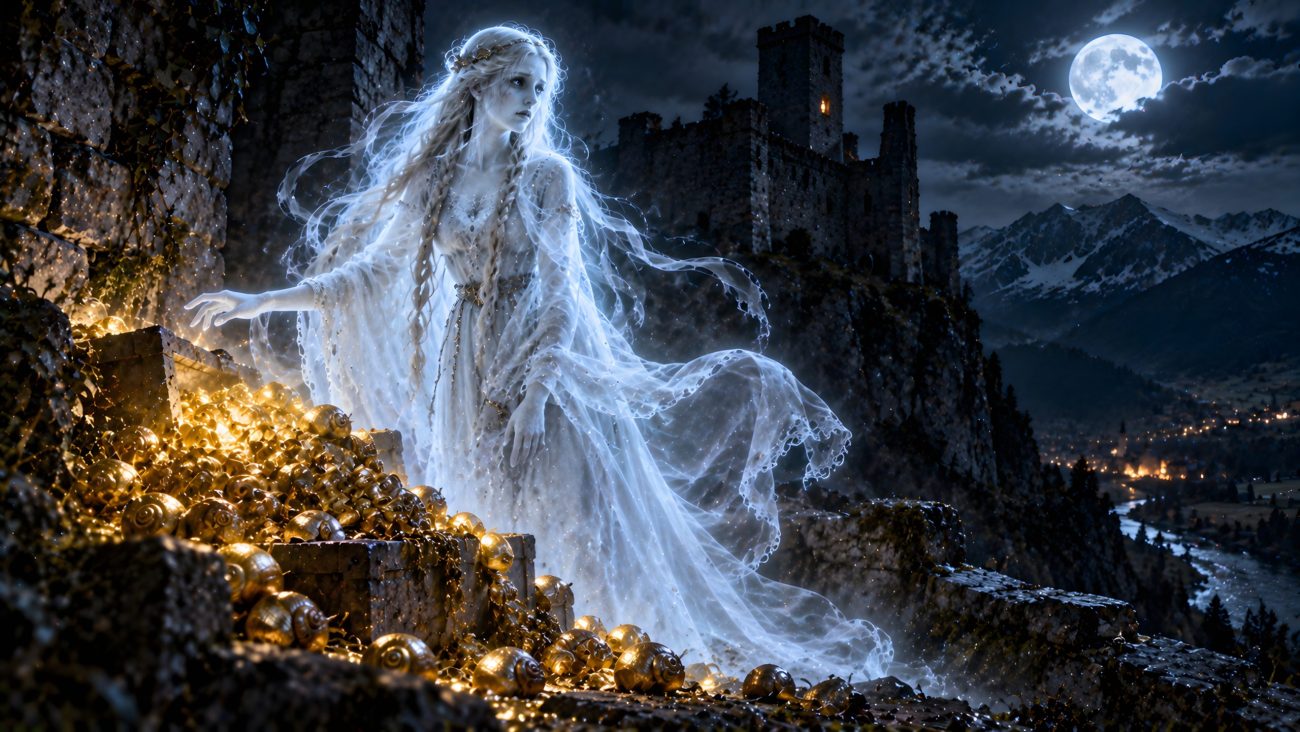
The Virgin of Gutenberg is a mysterious white maiden who haunts the old fortress of Gutenberg near Balzers, Liechtenstein. She guards an immense hidden treasure that once lay exposed to the sunlight, appearing as a great mound of snail shells made of pure gold. The treasure shines brilliantly in the sun, but anyone who wishes to claim it must first free the maiden from her supernatural burden. Until someone succeeds, she remains bound to the fortress, condemned to guard the treasure for another century.

One day, a boy from Balzers was picking berries near the old fortress walls when the white maiden appeared before him. She begged him to release her and explained that he must swing her around three times. He was forbidden to look at her braids or speak a single word during the task. Gathering all his courage and strength, the boy managed to swing her around twice without looking at her or speaking. But as he began the third turn, curiosity overcame him, and he glanced at her beautiful golden braids.

At that instant, the braids became two snakes in his hands. Startled by their coldness, the boy cried out, “Jesus, how cold!” His words broke the conditions of the enchantment, and the maiden vanished with a sorrowful lament. Her chance for release was lost, and she was condemned to haunt Gutenberg for another hundred years, continuing her lonely watch over the hidden treasure. The legend warns that even a moment of curiosity or a single careless word can undo an attempt to break a powerful supernatural curse.


Sources

“Die Jungfrau auf Gutenberg.” SAGEN.at – Liechtensteiner Sagen. Reproduced by SAGEN.at. https://www.sagen.at/texte/sagen/liechtenstein/jungfrauaufgutenberg.html
Red Ghosts

Tradition: Liechtenstein Mythology
Alternative Names: The Two Redheads
Category: Ghost


The Myth

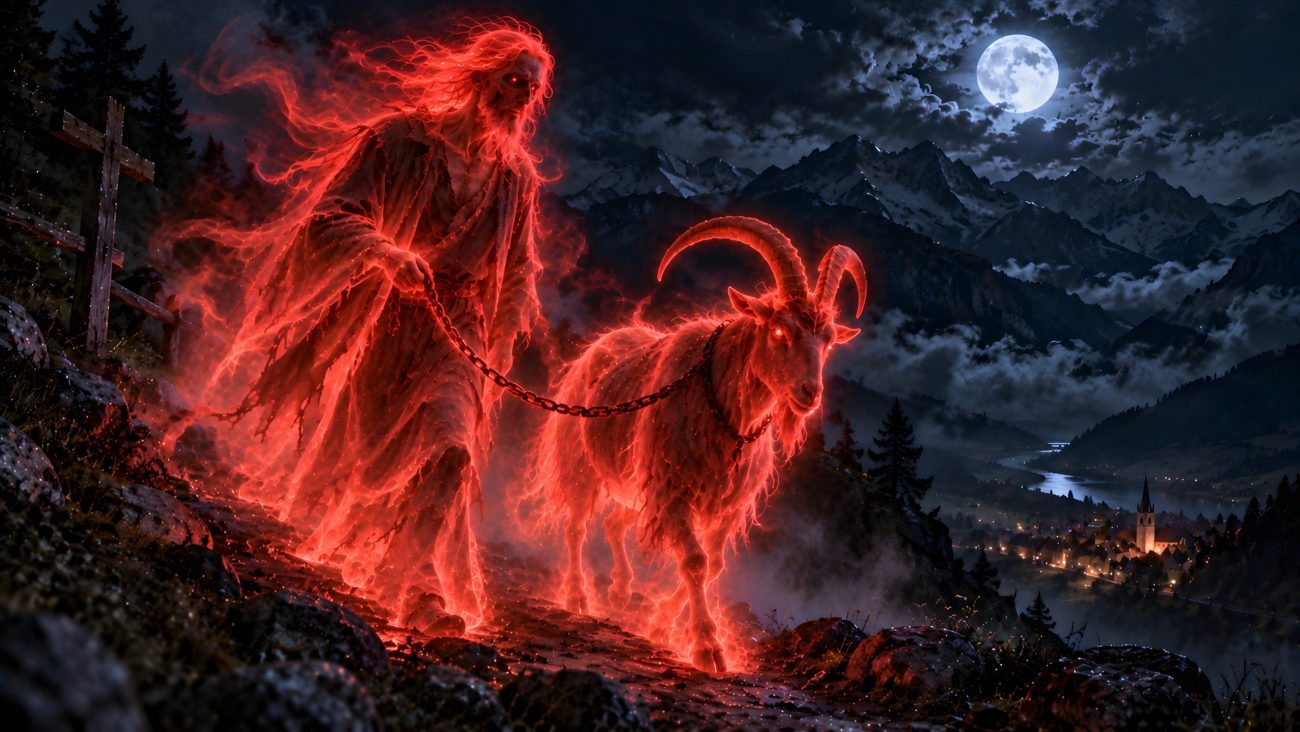
The Red Ghosts appear at night on Kulm Mountain near Steg. One is a red-haired man, accompanied by a fiery red billy goat. The man is condemned to travel almost around the world with the animal because he was once a swindler and must now atone for his wrongdoing. Burdened by this supernatural punishment, he asks a farmer who encounters him to kill the goat and free him from his fate.

The farmer takes out a knife and begins stabbing the billy goat, but he is unable to complete the task and eventually gives up. At first, the ghost is pleased by the farmer’s attempt, but when the effort fails, his expression becomes deeply sorrowful. His punishment remains unbroken, and he must continue his endless journey with the animal.

Suddenly, the two red-haired figures race down the mountain into the valley like devils, accompanied by thunderous sounds resembling a violent storm. Their terrifying departure leaves the impression of damned spirits rushing through the night, still bound to a punishment they cannot escape.


Sources

“Die Geister.” SAGEN.at – Liechtensteiner Sagen, collected by Otto Seger. Reproduced by SAGEN.at. https://www.sagen.at/texte/sagen/liechtenstein/seger/geister.html


Rofner Berg Ghost

Tradition: Liechtenstein Mythology
Alternative Names: The White-Cloaked Knight of Rofner Berg
Category: Ghost


The Myth

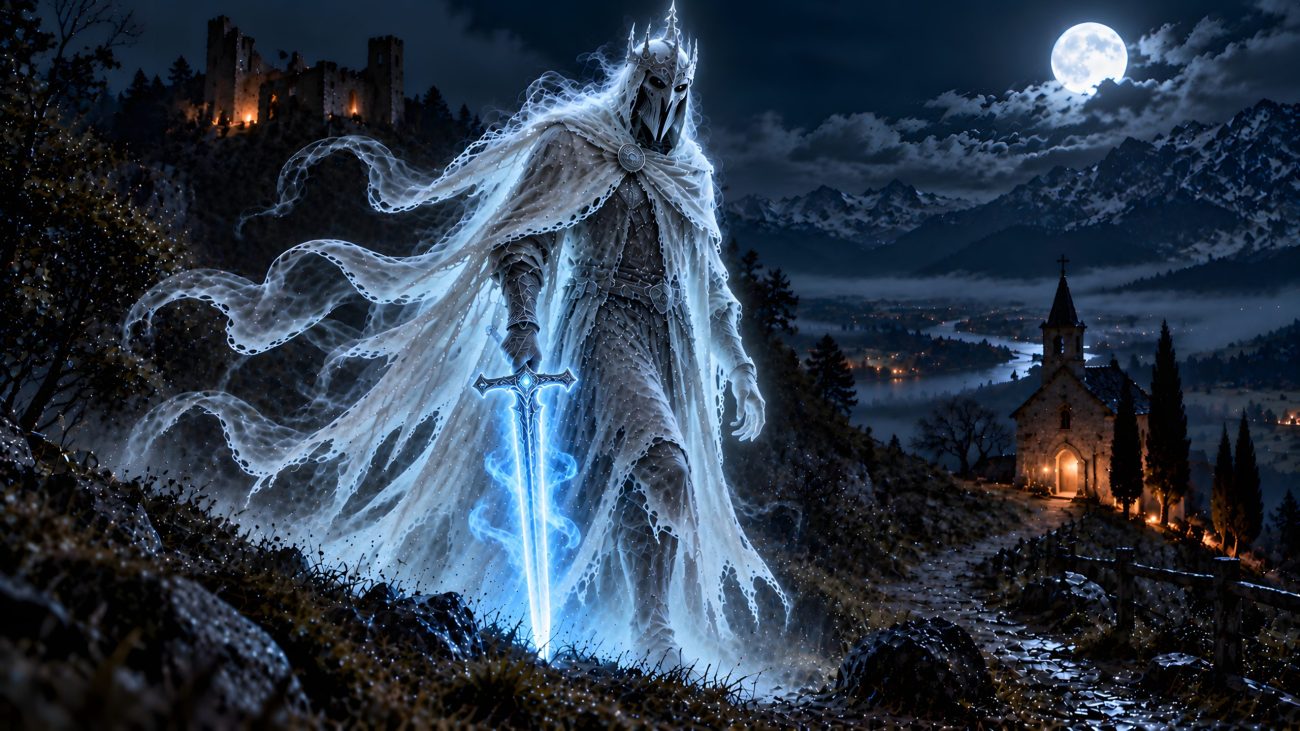
The Ghost on Rofner Berg is a mysterious apparition said to appear at night on the southern slope of the Schellenberg in Liechtenstein. The ghost takes the form of a man wearing a white cloak and wanders between the Rofner Chapel and the wooded hill known as the Schneller, where Eschnerburg Castle once stood. From this lonely hillside, the surrounding Rhine plain stretches toward the towering mountains, but after nightfall, the area is haunted by the figure of a restless knight.

According to the legend, the apparition is a knight who killed his own brother in a fit of rage. Because his sudden and violent deed went unjudged during his lifetime, he could never find peace after death. His spirit remains condemned to wander the hillside, passing between the former castle and the chapel century after century. The white-cloaked knight continues his endless journey, unable to rest in his grave because the crime he committed was never brought before a judge.


Sources

“Der Geist.” SAGEN.at – Liechtensteiner Sagen. Reproduced by SAGEN.at. https://www.sagen.at/texte/sagen/liechtenstein/geist.htm


White Horse from Malans

Tradition: Liechtenstein Mythology
Alternative Names: The White Horse of Malanser
Category: Ghost


The Myth

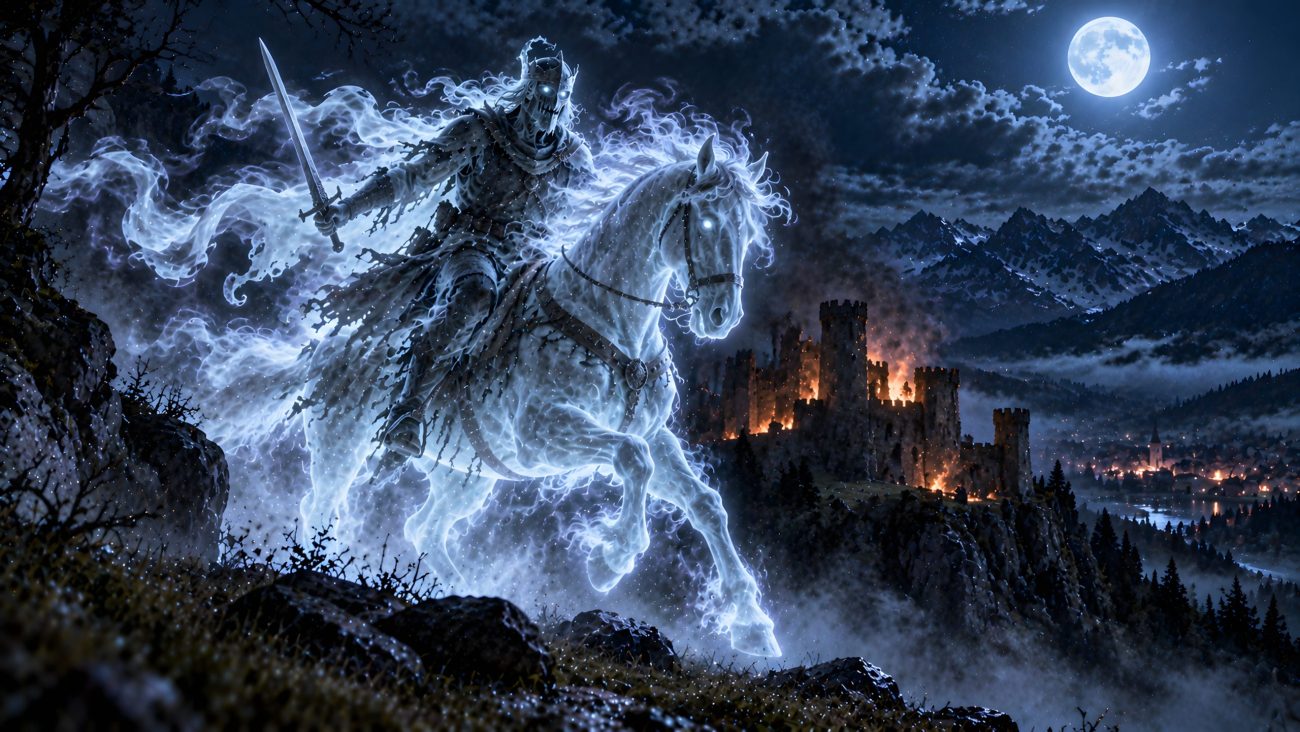
The White Horse from Malans is a ghostly apparition said to haunt the Malanser hill above Eschen, where the ruins of a once-great castle still stand. Long ago, a robber knight lived in the castle with a band of armed followers. They terrorized the surrounding region, threatening the people of Eschen and Mauren with their raids and robberies.

Eventually, the farmers of Eschen and Mauren formed an alliance to put an end to the knight’s rule. They planned to attack the castle on a Sunday evening and set it on fire while its defenders were unaware. When the day arrived, the farmers marched up to the heights and ignited the castle at nine o’clock. The knight and his men-at-arms were heavily drunk and failed to notice the flames until the fire had spread too far. All the armed men perished in the burning castle, but the knight managed to escape on his white horse.

The farmers pursued the fleeing knight as he raced across the heights. In his desperation, he rode too close to a cliff and plunged over the edge with his horse. Yet the knight’s story did not end with his death. According to the legend, his restless spirit must continue to haunt the Malanser hill, riding his white horse through the area until he has made amends for all the harm he caused during his life.


Sources

“Die Malanser.” SAGEN.at – Liechtensteiner Sagen. Reproduced by SAGEN.at. https://www.sagen.at/texte/sagen/liechtenstein/malanser.htm


Robber Knights of Schalun Castle

Tradition: Liechtenstein Mythology
Alternative Names: The Two Haunting Knights of Schalun
Category: Ghost


The Myth

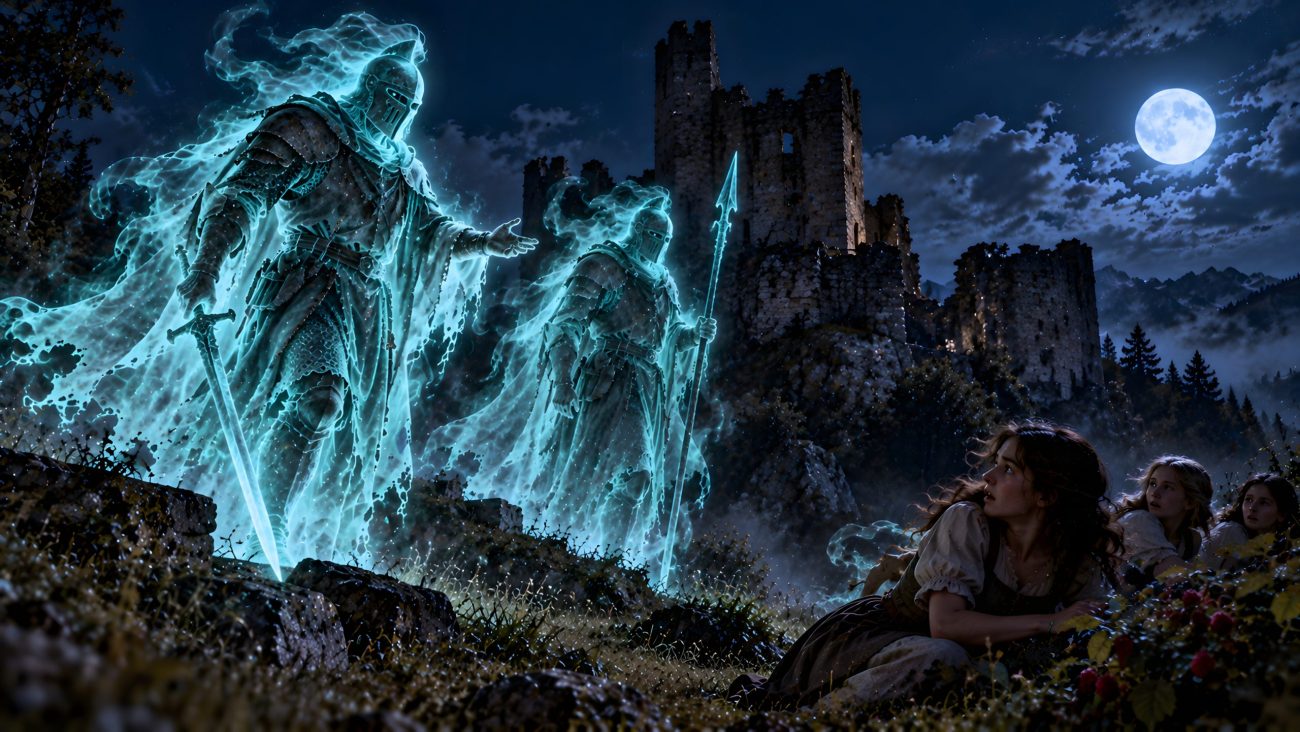
The Robber Knights of Schalun Castle are said to haunt the ruins of the castle on the Feast of the Assumption. Many hundreds of years ago, on this holy day, a group of girls climbed up to Schalun Castle to pick raspberries. While gathering fruit, they suddenly noticed two knights pacing nearby. One of the knights called out to them, inviting them to come closer. Frightened by the mysterious men, the girls immediately fled.

When the girls looked back, the two knights had vanished without a trace. They hurried home and told their families what they had seen and heard. Their strange encounter gave rise to a local legend about the former robber knights of Schalun Castle.

According to the tale, the robber knights met their destruction around the Feast of the Assumption. Since that time, two of them have been said to return as ghosts every year on the same feast day, appearing near the old castle and haunting the surrounding area. Their mysterious appearances continue to connect the ruins of Schalun with the memory of the knights who once lived there.


Sources

“Die Raubritter.” SAGEN.at – Liechtensteiner Sagen. Reproduced by SAGEN.at. https://www.sagen.at/texte/sagen/liechtenstein/raubritter.htm


Mauren Ghost

Tradition: Liechtenstein Mythology
Alternative Names: The Pledge Well
Category: Ghost


The Myth

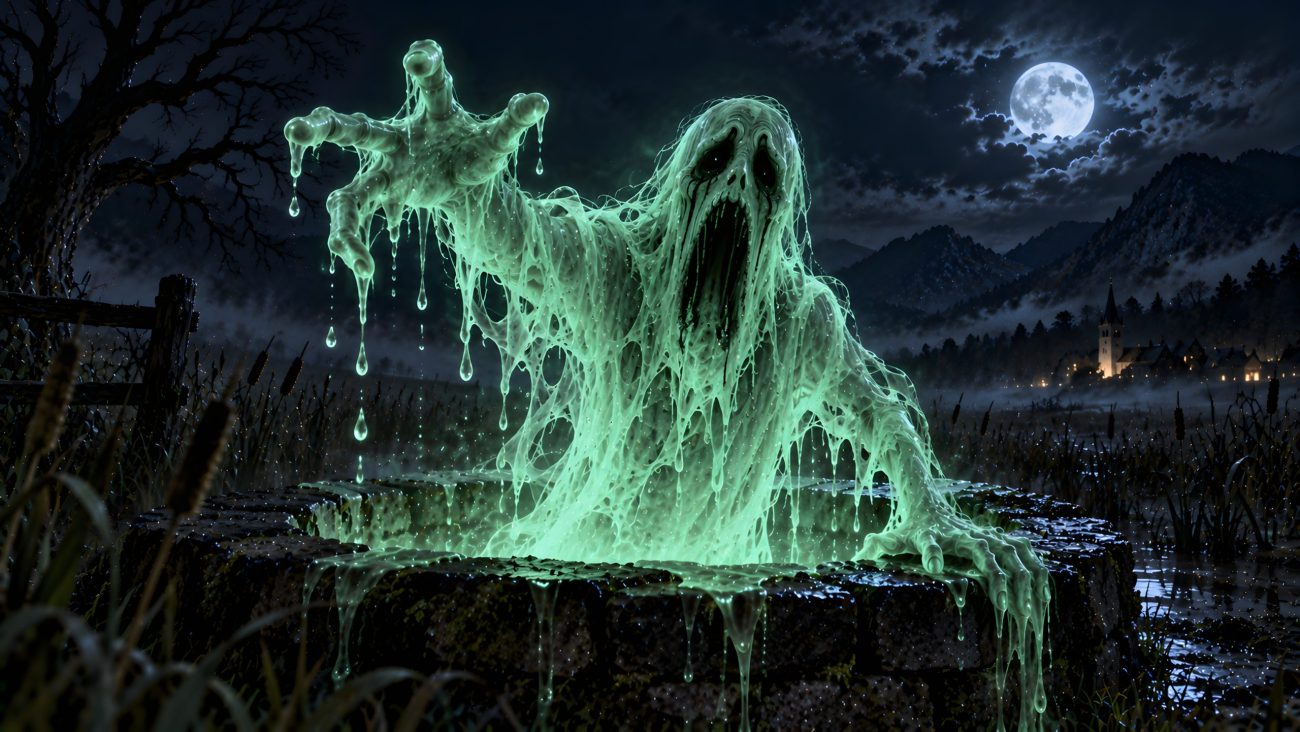
The Payment Fountain is a haunted well in the rushes of Mauren, Liechtenstein. In ancient times, a godless usurer and swindler lived nearby. He exploited the desperation of his poor fellow citizens by lending them money under unfair conditions. For every hundred he promised to lend, he would provide only fifty or, at most, eighty, keeping the difference for himself. Through these dishonest dealings, he grew wealthy at the expense of those who were already struggling.

After his death, the usurer’s ghost began haunting the well, where it has reportedly been seen repeatedly. The apparition serves as a warning against greed, usury, and the exploitation of the poor. Sometimes, strange murmuring sounds rise from the water, believed to be the ghost repeating the words of his dishonest trade: “Eighty for one hundred.”

Another version tells that the usurer met a terrible end while returning home. He strayed from the road and sank into the marshy ground that once surrounded the area. The mire slowly swallowed him, dragging him deeper and deeper until escape became impossible. At last, only one outstretched hand remained visible above the ground before he disappeared entirely. His ghost is said to haunt the well as a reminder that dishonest dealings and greed can bring a person to a dreadful end.


Sources

“Der Pfandbrunnen.” SAGEN.at – Liechtensteiner Sagen, collected by Otto Seger. Reproduced by SAGEN.at. https://www.sagen.at/texte/sagen/liechtenstein/seger/pfandbrunnen.html


Ghost in the Riethütte

Tradition: Liechtenstein Mythology
Alternative Names: The Haunting of the Riet Hut
Category: Ghost


The Myth

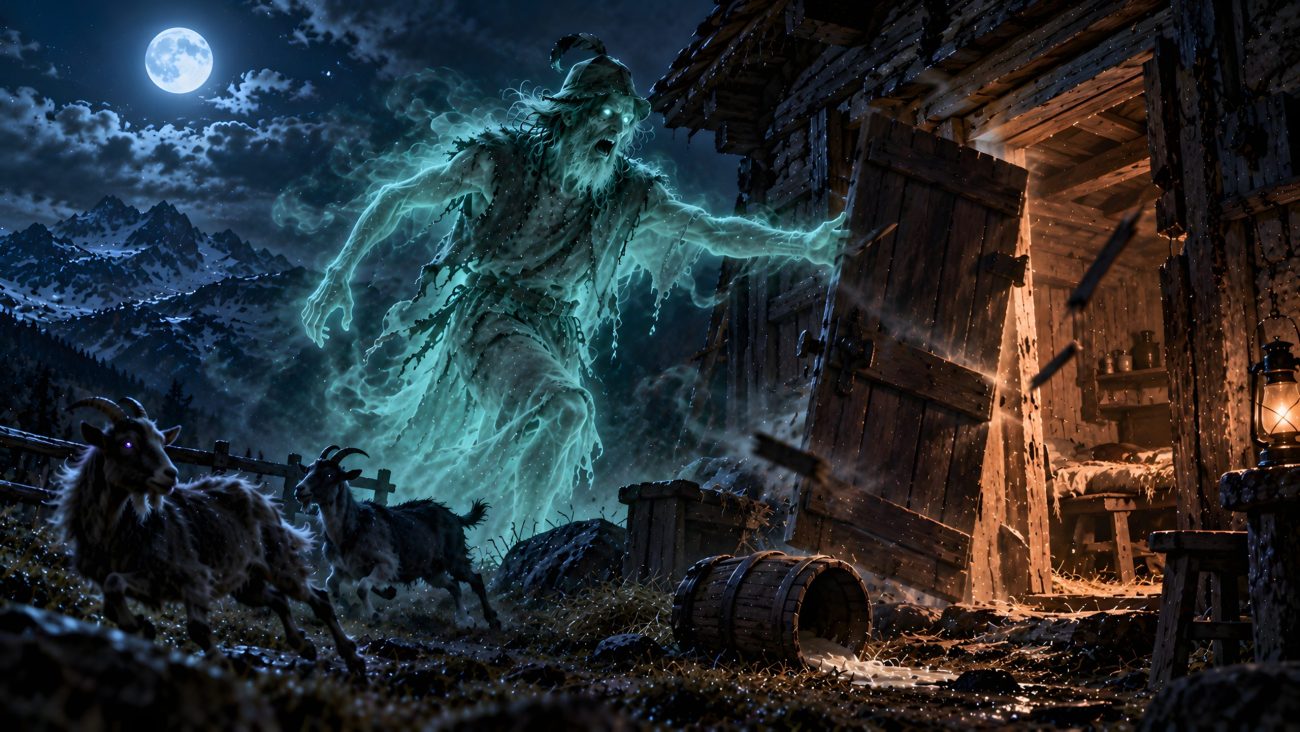
The Ghost in the Riethütte is said to haunt an old shepherd’s hut near Ziegerberg in Liechtenstein. In earlier times, farmers from Balzers kept large flocks of sheep and drove them up the mountain for summer grazing. Two boys were usually employed to watch the sheep, and each was given one or two goats so they could have milk while staying in the mountains.

One evening, two young shepherds went out to search for their missing goats. As they searched, they heard a strange voice nearby, groaning and sighing, but they could see no one. Terrified, they rushed back into the hut. The eerie voice grew closer and closer until, suddenly, it fell completely silent. Then the hut door began banging open and shut with tremendous force, making such a noise that the beams shook and crashed.

According to the legend, a herdsman who once lived in the Riethütte had committed a terrible crime. In a fit of anger, he killed a boy because the child had repeatedly licked his cream. To conceal the murder, the herdsman carried the boy’s body away from the hut. But the crime did not go unpunished. The herdsman was condemned to haunt the place, and the groaning voice and violent disturbances were believed to be signs of his restless spirit.


Sources

“Geisterspuk.” SAGEN.at – Liechtensteiner Sagen, collected by Otto Seger. Reproduced by SAGEN.at. https://www.sagen.at/texte/sagen/liechtenstein/seger/geisterspuk.html


Spirit on Gapfahl

Tradition: Liechtenstein Mythology
Alternative Names: The Headless Spirit of Gapfahl
Category: Ghost


The Myth

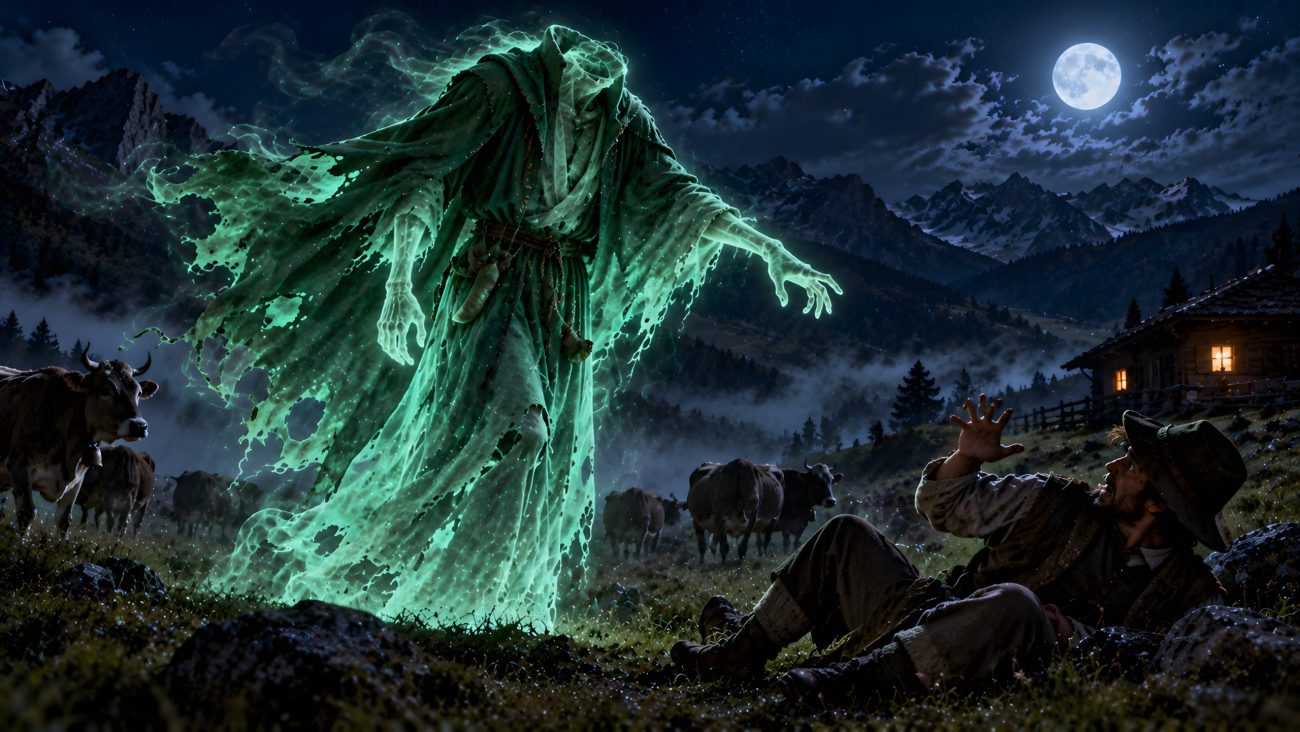
The Spirit on Gapfahl is a headless ghost said to haunt the alpine pastures of Liechtenstein. It appears as a slender figure wearing a green cloak, but without a head. Those who encounter the apparition are overcome with terror. One cowherd experienced this while tending his cattle on the pasture. As he rested on a stone before returning to the alpine hut, he suddenly saw the headless figure standing before him. His face turned as white as chalk, and he stumbled back to the hut in such a state of shock that everyone who saw him was horrified. It took him an hour before he could speak and describe what had happened.

The ghost’s origin lies in a terrible act of violence committed long ago. A hot-tempered herdsman once killed a boy by beheading him with a forest axe. The boy’s unfortunate soul could find no peace after his violent death. Condemned to wander the land without a head, his ghost continues to haunt Gapfahl, appearing to those who venture across its lonely alpine pastures.


Sources

“Der Geist auf Gapfahl.” SAGEN.at – Liechtensteiner Sagen, collected by Otto Seger. Reproduced by SAGEN.at. https://www.sagen.at/texte/sagen/liechtenstein/seger/gapfahl.html


Bergi Woman

Tradition: Liechtenstein Mythology
Alternative Names: The Ghost of Bergi
Category: Ghost


The Myth

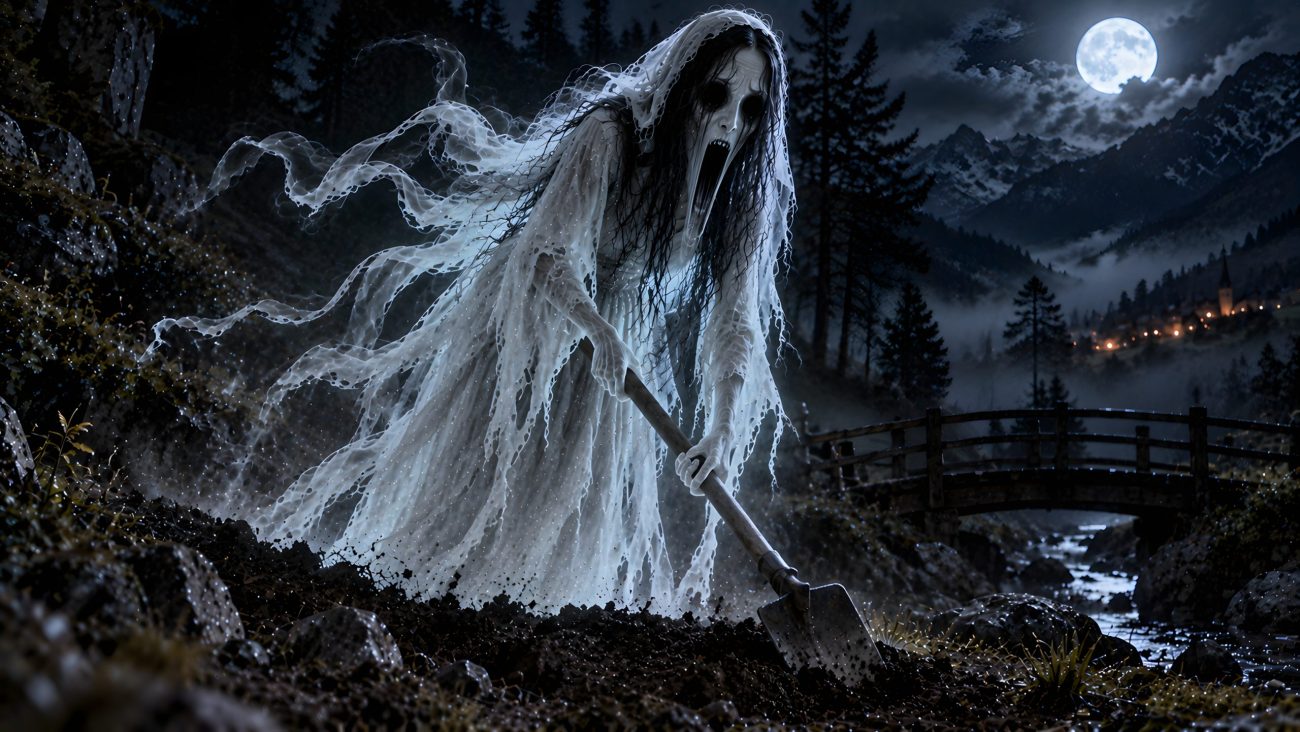
The Bergi Woman is the restless spirit of a woman who committed a terrible deed in the mountains near Triesenberg, Liechtenstein. In ancient times, farmers lived on Bergi, also known as the Bergle Alp. Among them was a woman who gave birth to a child she did not want. Carrying the infant and a hoe, she descended from the mountain and crossed a footbridge toward Valorsch.

In a secluded place, the woman dug a hole with her hoe, laid the child inside, and covered it with earth. She abandoned the infant there and returned from the mountains, but her terrible deed would not go unpunished.

The woman died soon afterward, but her spirit was condemned to atone for her crime at the very place where she had buried her child. Every night, she must descend from Bergi and travel through Valorsch, carrying the same hoe in her hand. She returns to the spot where the child lies buried, repeating her sorrowful journey night after night for all eternity.


Sources

“Das Bergi-Wiebi.” SAGEN.at – Liechtensteiner Sagen, collected by Otto Seger. Reproduced by SAGEN.at. https://www.sagen.at/texte/sagen/liechtenstein/seger/bergiwiebi.html


Sad White Woman

Tradition: Liechtenstein Mythology
Alternative Names: The White Woman of Mäls
Category: Ghost


The Myth

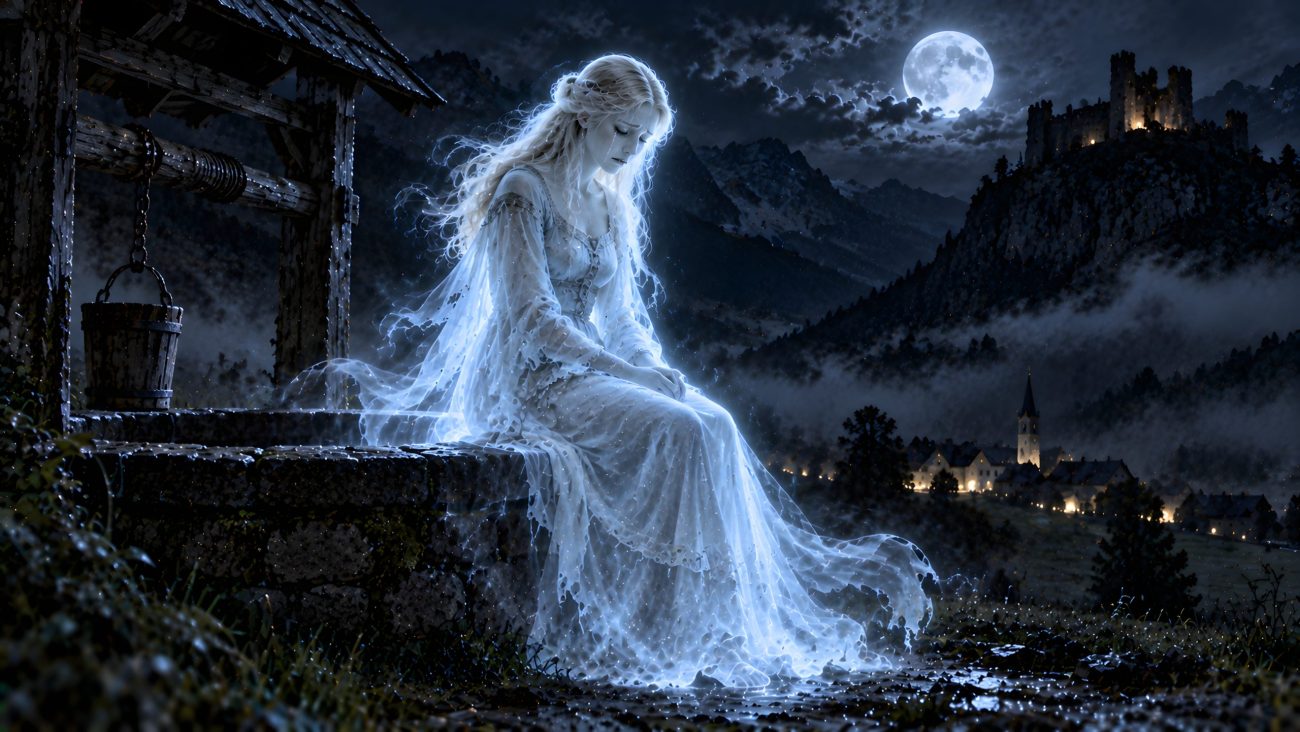
The Sad White Woman is a ghostly figure said to appear in Mäls, Liechtenstein. She is described as a woman with long blonde hair reaching down to her shoulders, dressed in a long white gown. Sometimes she appears wearing the clothing of noblewomen from an earlier age. Her presence is often accompanied by a beautiful, mysterious song, which can be heard near the village well.

According to one tale, the apparition appeared while the relatives of a recently deceased peasant woman were keeping vigil beside her body. Hearing a beautiful voice outside, they went to an open window and saw the white-clad woman near a field known as Under the Stone. The mysterious figure sat beside the village well before continuing on her way. A man secretly followed her and watched as she stopped at a place called Anaresch, where a pond once stood, and wept bitterly. Local tradition holds that the sorrowful woman had drowned her own child in that pond and could find no peace afterward.

Another version of the legend describes the ghost sitting beside the well, singing a wondrous song before slowly walking toward the old castle. As she travels, she weeps pitifully, her sorrow echoing through the night. Her appearances are believed to be the restless wanderings of a woman burdened by a terrible deed, unable to escape the grief that binds her spirit to the places where she once lived.


Sources

“Die weiße Frau.” SAGEN.at – Liechtensteiner Sagen, collected by Otto Seger. Reproduced by SAGEN.at. https://www.sagen.at/texte/sagen/liechtenstein/seger/weissefrau.html