Sücca-Keres

Tradition: Liechtenstein Mythology
Alternative Names: Keres, The Spirit of Sücca
Category: Ghost


The Myth

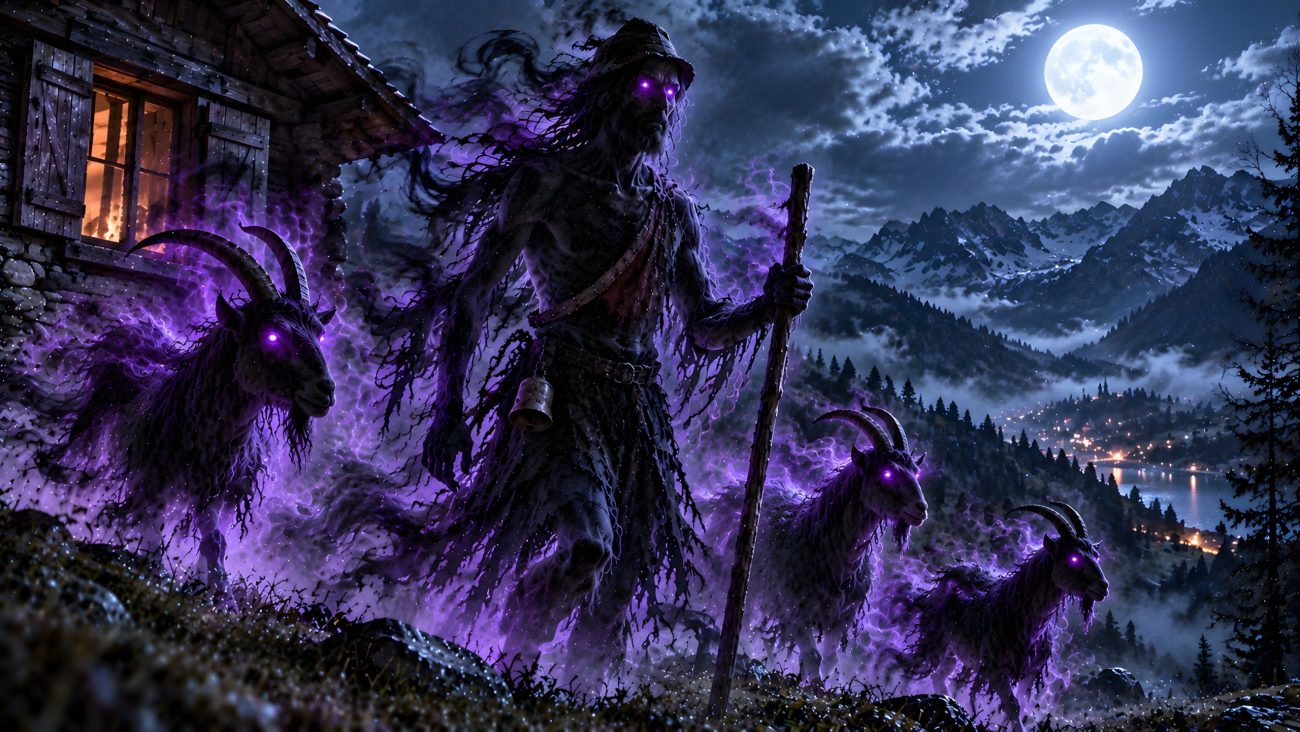
Sücca-Keres was once a herdsman who worked on the Sücca alpine pasture on Kulm Mountain in Liechtenstein. When he took the position, he was required to swear an oath promising faithful and honest service to his master. However, Keres broke his oath by secretly stealing cheese and butter and selling them in the village of Triesen. He often walked back and forth near the Guferwald forest while carrying out his activities.

After Keres died, he was buried in Triesen. When people later attempted to dig up his body, three fingers emerged from the earth. His body looked exactly as it had when he was buried, except that it had turned black. Frightened, the people immediately covered the grave again. Soon afterward, nobody wanted to work as a herdsman on the Sücca pasture, because Keres’s ghost haunted the old herdsman’s hut. People travelling from the Malbuntal and Älpelti valleys sometimes saw him looking out of its window, wearing a leather cap and loincloth just as he had when he was alive.

Eventually, a priest was summoned to drive the ghost away. Keres begged to remain on the hilltop, where he could still hear the bells of the Sücca herdsmen and look down upon his father’s estate. The priest allowed him to retreat into a hole on the hilltop, which became known as the Keres Hole. Another version says that two Capuchin monks banished him there. When they asked why he was condemned to wander, Keres replied that it was not the theft that had condemned him, but the broken oath.

Even after his disappearance from the herdsman’s hut, Keres continued to frighten people near the hilltop. Schoolgirls once approached the hut to collect walking sticks left behind by the herdsmen, but a shutter suddenly flew open and a broad-faced man wearing a leather cap and a red breast cloth peered out. Recognizing him as Keres, the girls fled in terror. On another occasion, goats suddenly bolted across the hillside, and their shepherd later saw Keres looking out of the hut’s window. The shepherd thought the animals had sensed the ghost before he did.

The Keres Hole remained a place of fear. When a poor widow’s goat fell into it, a shepherd climbed down on a rope to rescue the animal. Inside, he thought he saw a hand illuminated by a strange light, holding up three fingers as if taking an oath. Terrified, he scrambled out, and the people above covered the hole with chopped wood. Another tale tells of a boy who threw stones into the hole and then ran away in fright, claiming that a man had climbed out. The ghost of Sücca-Keres was believed to remain bound to the place because he had violated the oath he had sworn as a herdsman.


Sources

“Keres.” SAGEN.at – Liechtensteiner Sagen, collected by Otto Seger. Reproduced by SAGEN.at. https://www.sagen.at/texte/sagen/liechtenstein/seger/keres.html
Spirit of the Cloister Woman

Tradition: Liechtenstein Mythology
Alternative Names: The Ghost of the Nun
Category: Ghost


The Myth

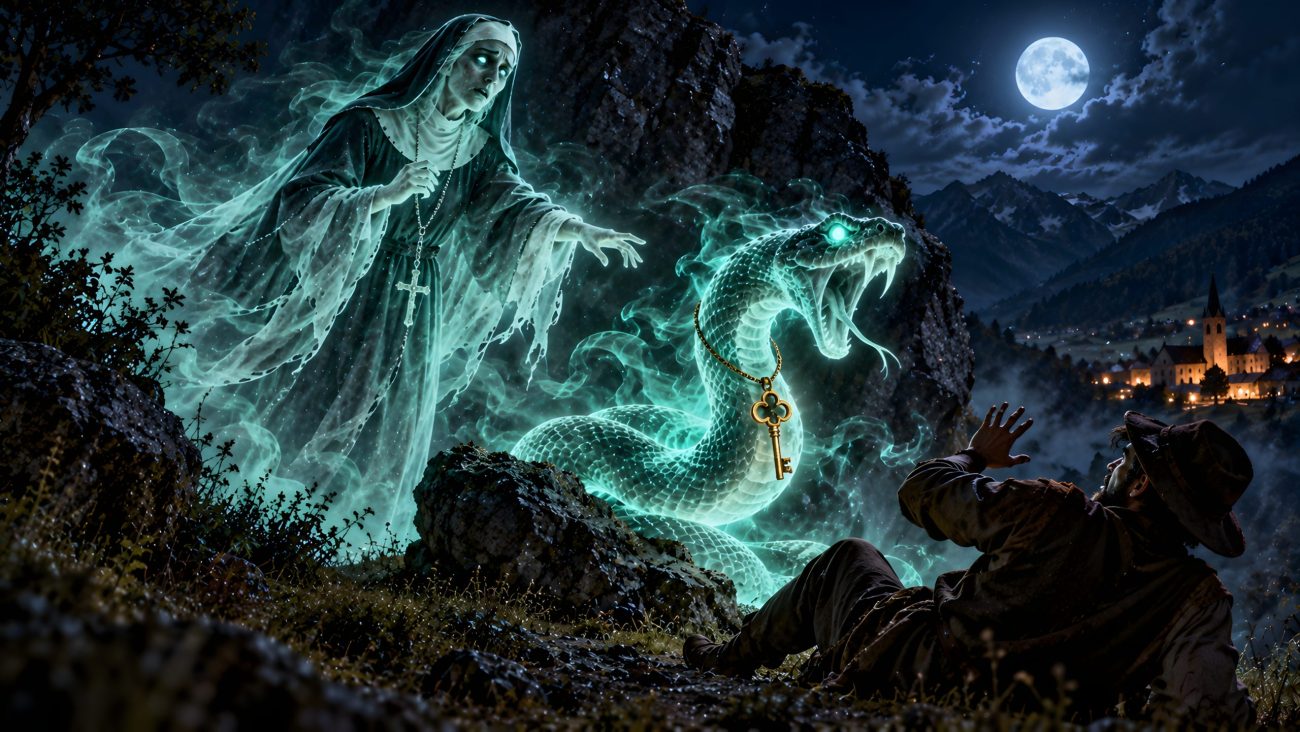
The Spirit of the Cloister Woman is the ghost of a nun who cannot find peace because she died before revealing where she had hidden a sum of money. She wanders near Triesenberg, waiting for someone who will help her recover the hidden treasure and free her spirit. One day, a farmer accidentally set out to feed his flock at two o’clock in the morning instead of four. Along the way, he encountered an unfamiliar nun who explained her predicament and asked for his help.

The nun told the farmer that he would soon stand before a large rock, where she would appear as a snake with a key hanging around its neck. To release her, he had to take the key from the serpent without being afraid. In return, she promised that he would enjoy good fortune in life and receive a place in heaven. The farmer agreed to help her.

Suddenly, a tremendous rushing and roaring sound filled the air, as though the world were coming to an end. The farmer found himself standing before a great rock, and a snake with its jaws wide open approached him. A key hung from its neck, just as the nun had described. But when the creature came close, the farmer was overcome with fear and jumped aside rather than taking the key.

The snake disappeared, and the nun appeared before him once more, weeping bitterly. She lamented that many years might pass before another person arrived at the right hour, and she could not know whether that person would have the courage to free her. With a sorrowful sigh, the nun vanished, condemned to continue wandering until someone brave enough to take the key finally appeared.


Sources

“Die Klosterfrau.” SAGEN.at – Liechtensteiner Sagen, collected by Otto Seger. Reproduced by SAGEN.at. https://www.sagen.at/texte/sagen/liechtenstein/seger/klosterfrau.html


Eggapont Mold

Tradition: Liechtenstein Mythology
Alternative Names: Eggapont’s Ghost
Category: Ghost


The Myth

The Eggapont Mold is the ghost of a miserly and dishonest little man who once lived near Eggapont, a meadow below the weaving mill in Triesen, Liechtenstein. The man was consumed by greed and wanted to possess everything he saw. Nothing was safe from his desire to own more, and one day he stole a white horse despite already having two brown horses in his stable.

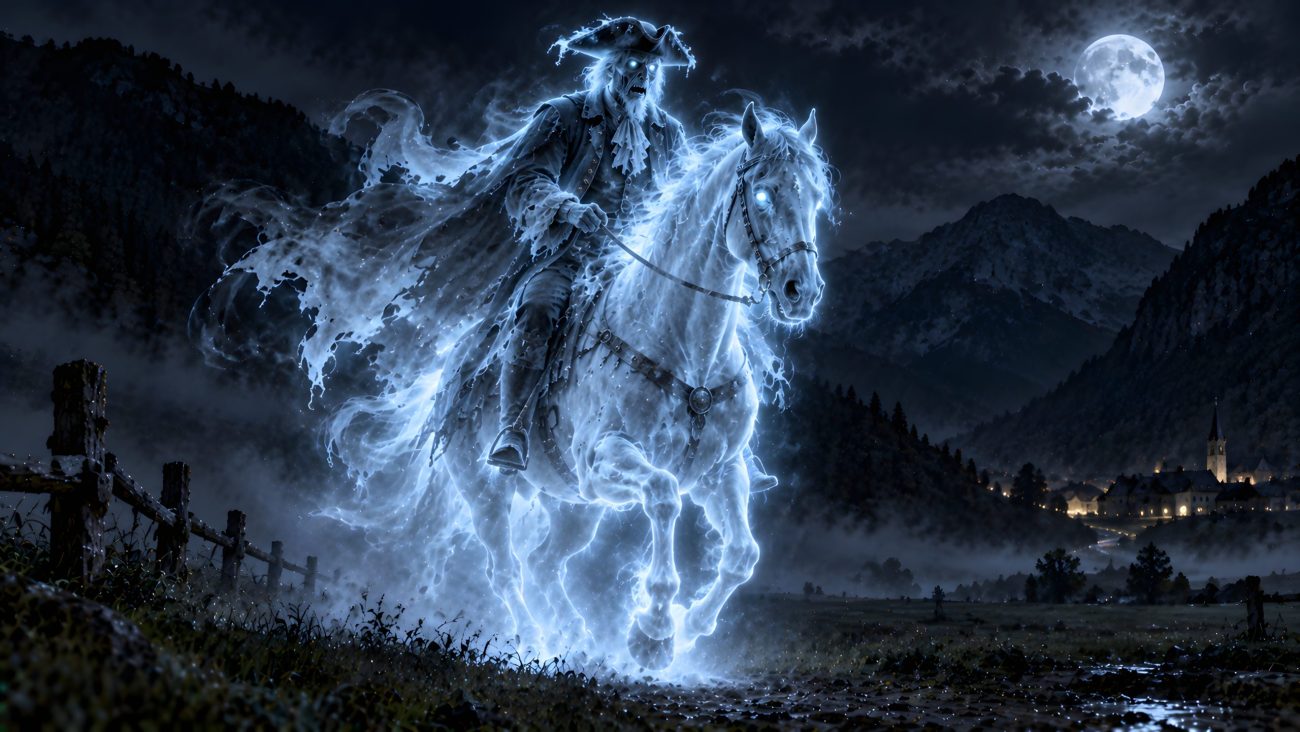
After his death, the greedy man was said to haunt the meadow where he had lived. At night, his ghost rides through Eggapont on the stolen white horse, appearing as a spectral horseman. Many residents of Triesen have heard the unmistakable sounds of hooves galloping and the horse neighing in the darkness, even when no living rider could be seen.


Sources

“Der Eggapontschimmel.” SAGEN.at – Liechtensteiner Sagen, collected by Otto Seger. Reproduced by SAGEN.at. https://www.sagen.at/texte/sagen/liechtenstein/seger/eggapontschimmel.html


Unjust Judge

Tradition: Liechtenstein Mythology
Alternative Names: The Ghost of the Unjust Judge
Category: Ghost


The Myth

The Unjust Judge is the ghost of a former village headman from Triesen who acquired land through a dishonest exchange. In the past, the people of Triesen owned extensive land on the Swiss side of the Rhine. When the river was to be dammed, men from across the river offered the judge a piece of land in Triesen in exchange for the land across the Rhine. The judge immediately accepted the deal, despite the land belonging to the community. He built a barn on his newly acquired property, but it brought him no good fortune. After several years, he died, and the property passed to his daughter.

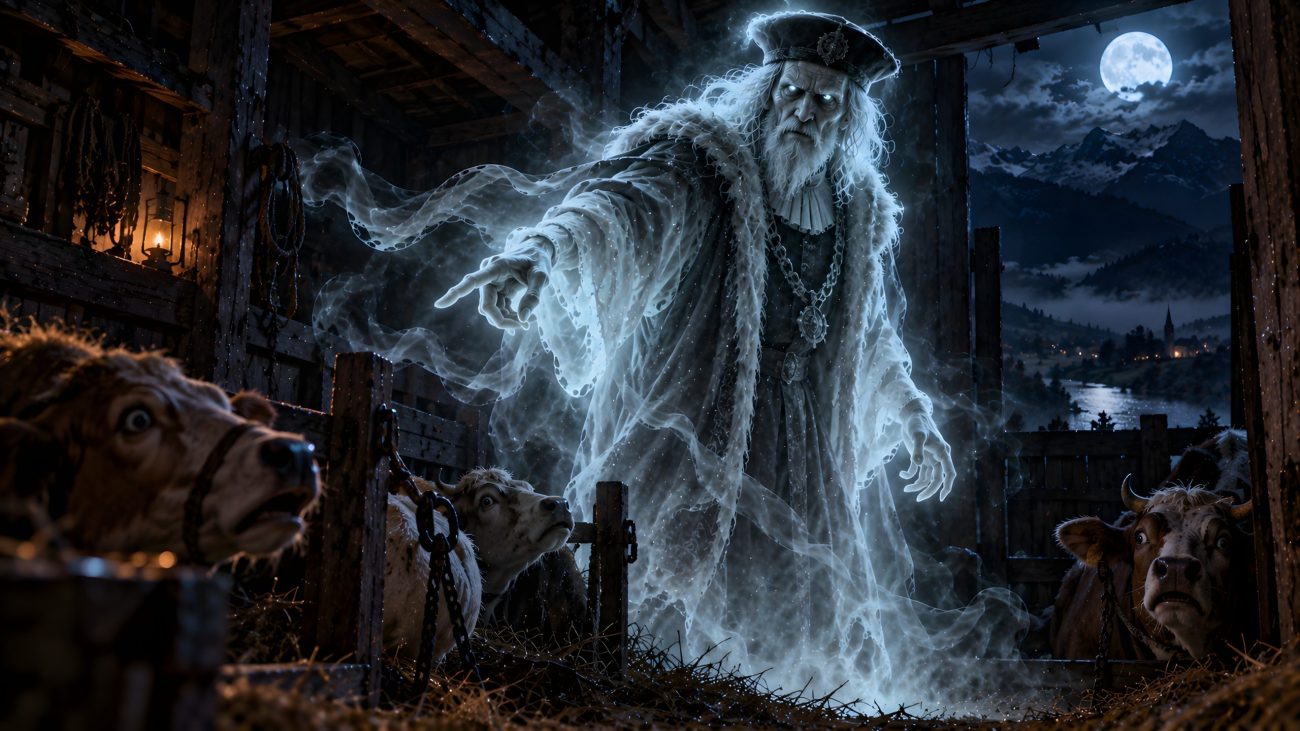
One evening, the judge’s daughter drove her healthy cattle into the barn. The following morning, she discovered that the cows were nearly suffocating. The animals were either loose from their chains or tied so tightly that they could barely breathe. She had the barn blessed several times, but the strange disturbances continued. Eventually, the young farmer’s wife summoned a Capuchin friar to investigate.

Inside the stable, the friar encountered the ghost of the deceased judge. He attempted to banish the spirit to the Lawenatobel ravine, but when he arrived there, the ghost had vanished. Returning to the stable, he found the apparition standing by the door. The friar demanded to know why the ghost would not leave the people and their animals in peace. The spirit replied that the time for his redemption had come and demanded that the land be returned to the community or used for good purposes.

The judge’s daughter refused to believe the story and would not surrender the property. From then on, no animals could be kept in the barn. The haunted building, situated between Triesen and Balzers, remained empty, and the ghost continued to be remembered as a warning against unjustly acquiring land that belonged to others.


Sources

“Der Richter.” SAGEN.at – Liechtensteiner Sagen, collected by Otto Seger. Reproduced by SAGEN.at. https://www.sagen.at/texte/sagen/liechtenstein/seger/richter.html


Poli the Cursed

Tradition: Liechtenstein Mythology
Alternative names: Poli
Category: Ghost, Cow


The Myth

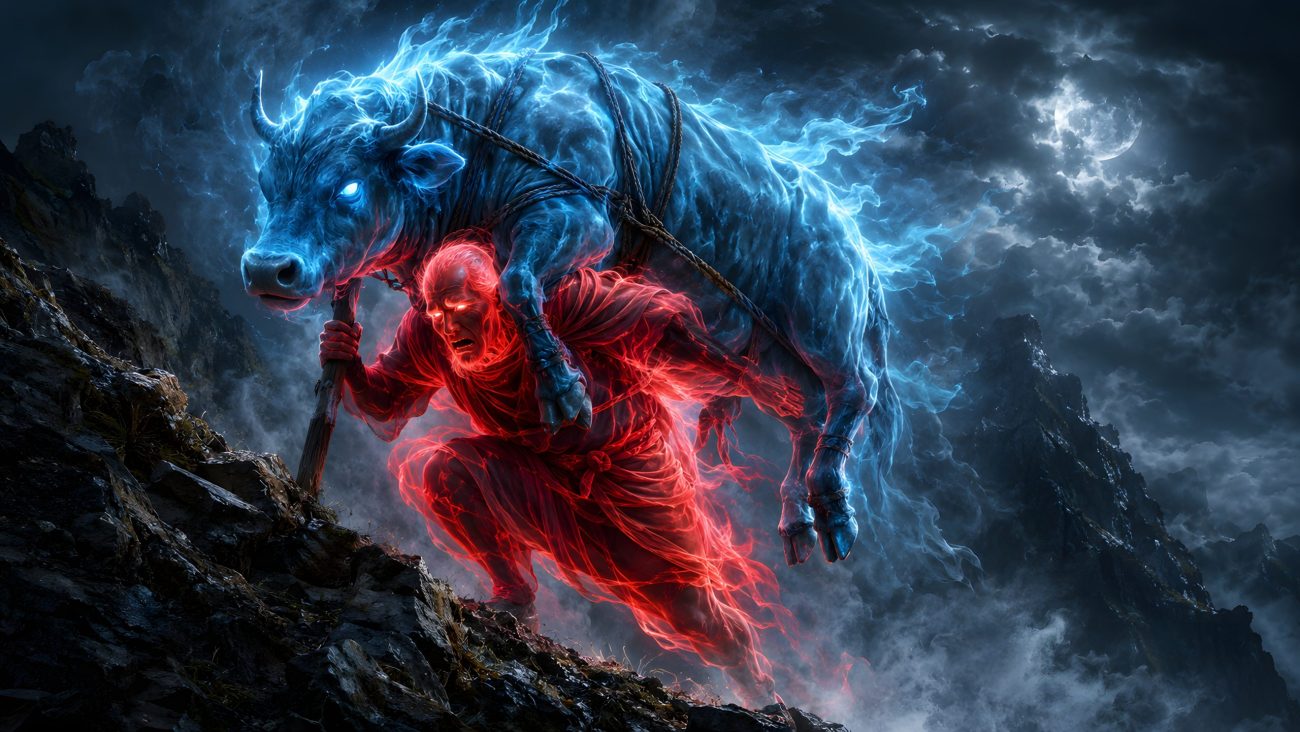
Poli could have lived a good life as a herdsman on Gritsch, but one particular cow made his work miserable. The animal repeatedly escaped, forcing him to spend hours searching for it.

Poli frequently cursed the cow and began thinking of a way to get rid of it. Eventually, he devised a plan. He felled a fir tree, stripped off its bark, and placed the wet, slippery pieces of bark across a dangerous location.

He then drove the cow over the slippery surface. The animal lost its footing, fell from the mountain, and died beneath a rock.

After his death, the unfaithful herdsman was condemned to wander as a ghost for his crime. He was forced to carry the cow up the mountain as many times as there were hairs on his head.

Whenever he finally reached the summit, he let out a loud cry of joy that could be heard far across the mountains. His cry was believed to be a sign that snowfall would soon come to the Gritsch Alpine pasture.

Another herdsman is said to haunt the path from the Wang Alp to the Rappenstein for the same crime. He had caused many cows to fall into the ravine and was likewise condemned to wander after death. His cries could always be heard whenever a storm was approaching.


Sources

“Van aardmannetje tot zwarte juffer: Een lijst van Nederlandse en Vlaamse elfen en geesten.” Abe de Verteller. Accessed August 29, 2026. https://abedeverteller.nl/van-aardmannetje-tot-zwarte-juffer-een-lijst-van-nederlandse-en-vlaamse-elfen-en-geesten/