Treasure-Hunting Calf

Tradition: English Mythology
Alternative names: Spectral Calf
Category: Cow


The Myth

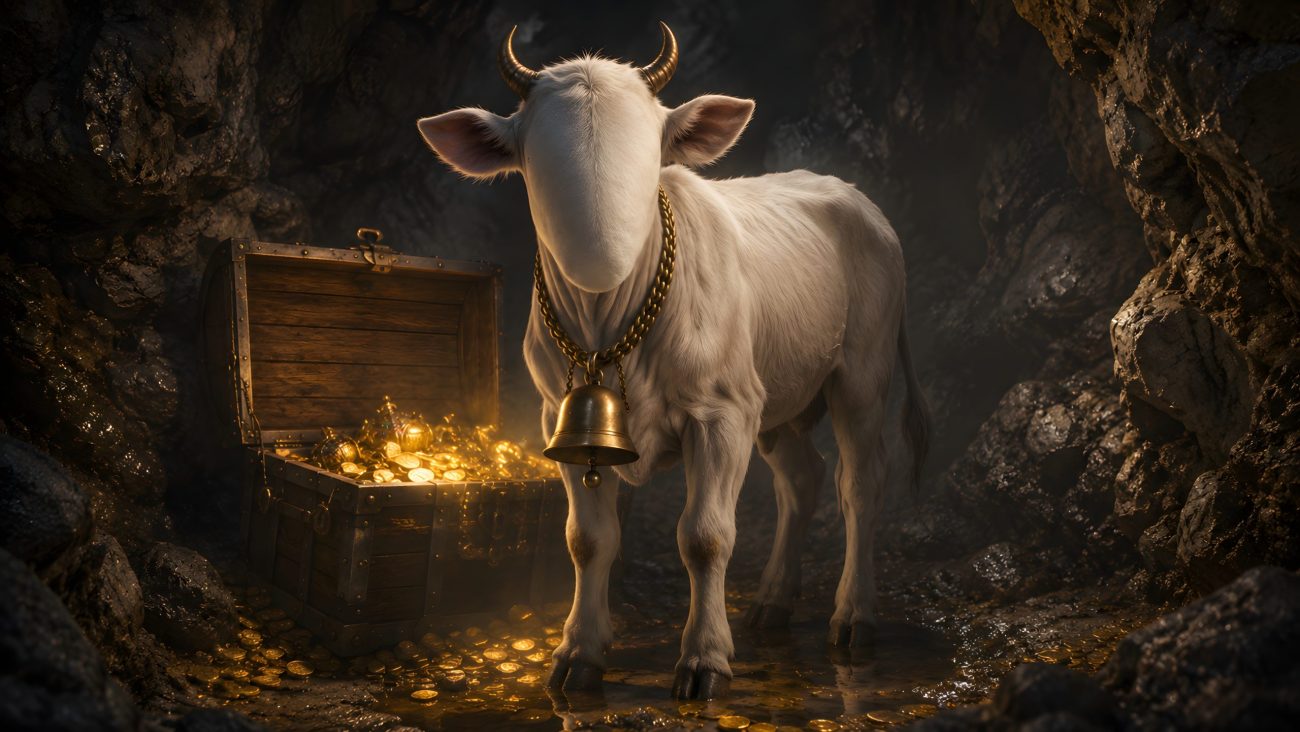
The Treasure-Hunting Calves are spectral calves associated with hidden treasure in the folklore of Westmorland. They appear as ghostly calves and can lead people to buried or concealed wealth.

In a legend connected with Hackthorpe Hall, which had become a farmhouse by the early nineteenth century, a spectral calf appeared before the tenant farmer. The strange animal led him to a stone cattle trough.

The farmer searched beneath the trough and discovered a hidden cache of gold. There was supposedly enough treasure to pay for two estates.

The legend does not explain why the calf guarded the treasure or why it chose the form of a familiar farm animal.


Sources

Sedgwick, Icy. “Cows in Folklore: From Fairy Cattle to Spectral Calves.” Icy Sedgwick. February 8, 2025.


Roaring Bull o’ Bagbury

Tradition: English Mythology
Alternative names: The Roaring Bull of Bagbury
Category: Ghost, Cow


The Myth

A notoriously wicked man once lived at Bagbury Farm. According to the story, he had done almost no good in his life, with only two acts of kindness remembered: giving a waistcoat to a poor old man and giving bread and cheese to a poor boy.

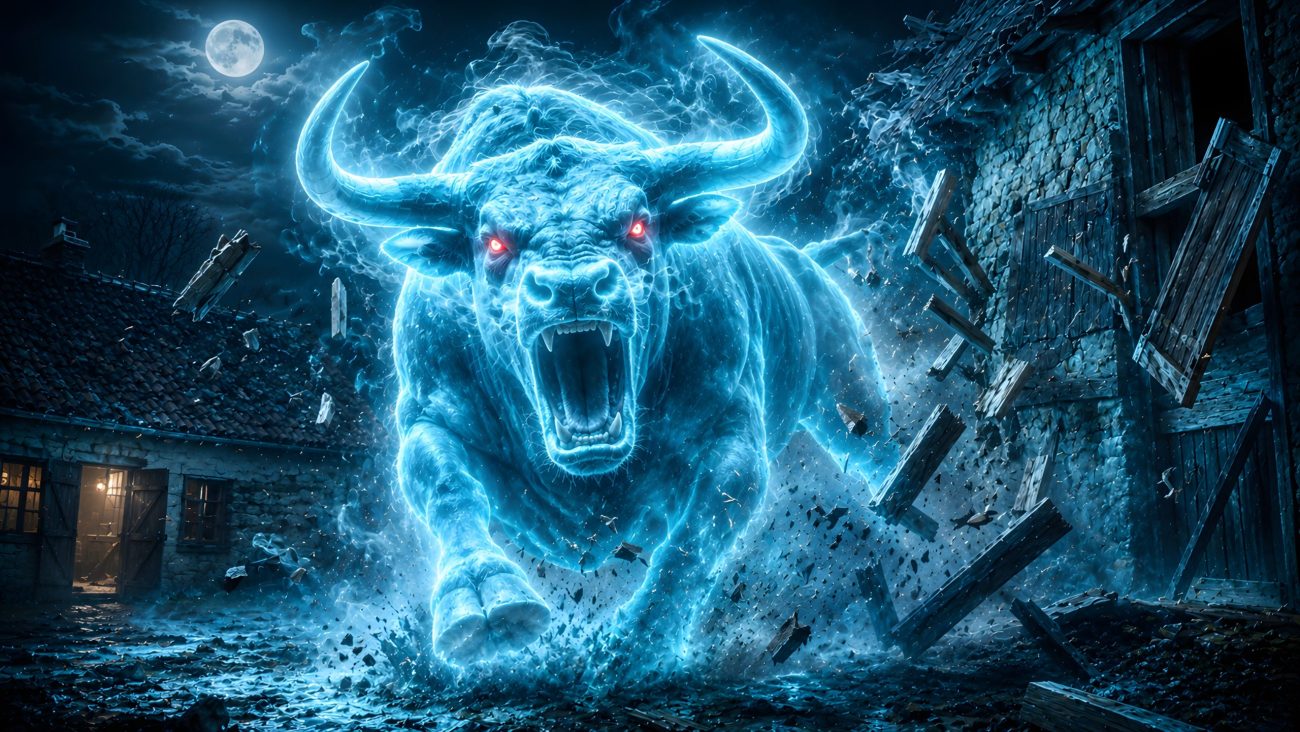
After his death, however, his ghost refused to rest. It began appearing in the buildings at Bagbury Farm in the shape of a bull, where it would roar so violently that boards, shutters, and roof tiles were thrown from the buildings. The haunting became so severe that nobody could live nearby.

The bull originally appeared around nine or ten at night, but eventually became so troublesome that it began arriving as early as seven or eight. Twelve parsons were summoned to lay the ghost. They managed to drive it, still in the form of a bull, toward Hyssington Church, but they struggled to contain it.

One of the twelve priests was an old blind parson who knew the ghost and anticipated its violent charge. He carried his candle inside his top boot. When the bull suddenly rushed at the priests, all their candles were extinguished except his. He then told the others to relight their candles from his.

Inside the church, the bull made such a tremendous burst that it cracked the church wall from top to bottom. According to the storyteller, the crack remained visible for years and was deliberately left unrepaired so that people could see where the supernatural bull had broken the church.

Eventually, the priests succeeded in forcing the bull into a snuff-box. The spirit then requested that it be buried beneath Bagbury Bridge, threatening that every mare passing over the bridge would lose her foal and every woman would lose her child. The priests refused this request and instead cast the bull into the Red Sea for a thousand years.

Even long afterward, people remained frightened of Bagbury Bridge. The storyteller recalled that the old clerk of Hyssington had personally remembered the blind parson. Decades after the bull had supposedly been confined in the Red Sea, people still crossed the bridge cautiously. One man recalled crossing it with horses and deliberately getting down from his horse, walking softly and making as little noise as possible, because he feared that the bull might hear him and emerge from beneath the bridge.


Sources

“Efft60.” Sacred Texts. Accessed August 29, 2026. https://sacred-texts.com/neu/eng/efft/efft60.htm
Cow of Saint Kenelm

Tradition / Region: English Mythology
Alternate Names: —
Category: Cow


The Myth

After the young king Kenelm was murdered and secretly buried in the Clent Hills, his sister Quendryda ordered that his name should never again be spoken, so that he might be forgotten. For a time it seemed her command had succeeded, and the child king lay hidden beneath the earth, unknown to the world.

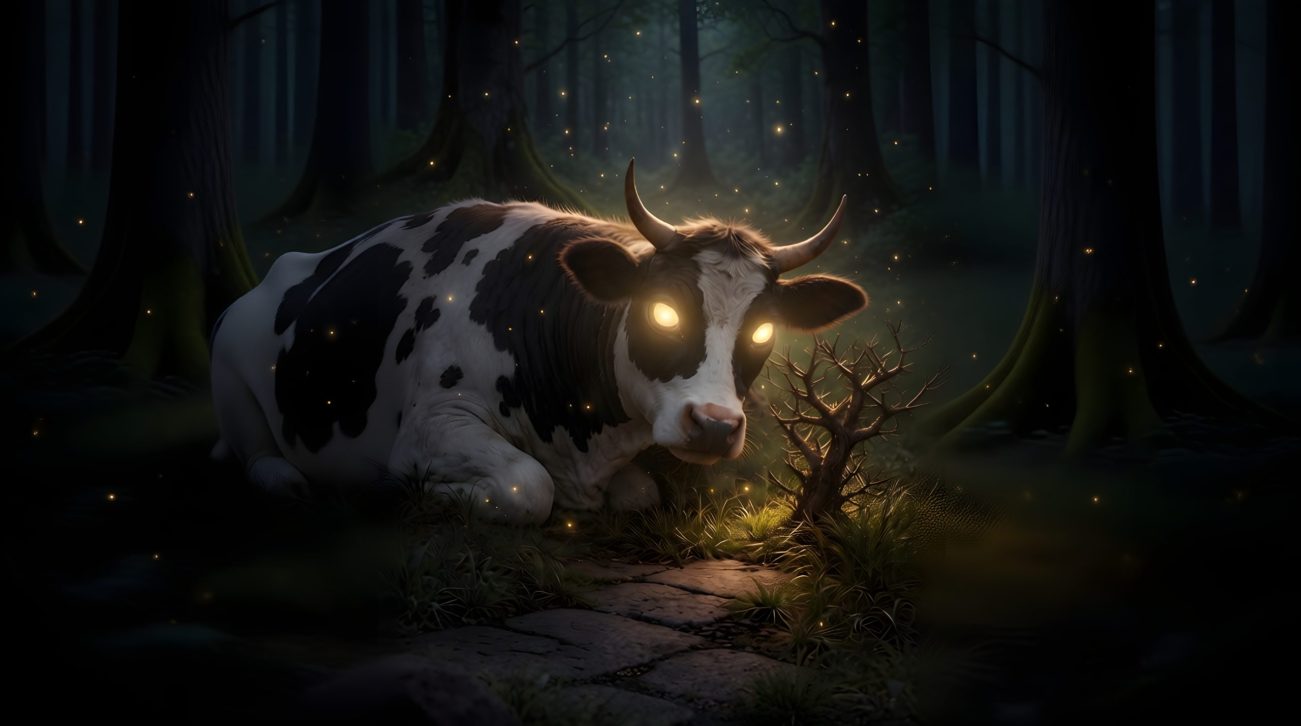
Yet a cow began to visit the place where he was buried. Each morning she went to the spot beside a thorn tree and remained there all day. From dawn until dusk she ate nothing, yet every evening she returned home with her udders full of milk. The next day she came again, and the same thing happened.

This continued for a long time. The people of the district watched in wonder, for the cow seemed bound to that single place and lived without grazing. Because of her strange vigil, the valley came to be known as Cowbach.

Though the king’s name was scarcely spoken, the cow’s silent presence kept the memory of the place alive.

Far away in Rome, a white dove flew into the Pope’s chapel carrying word that the body of Saint Kenelm lay in a place called Cowbach in the Clent Hills. The message was sent onward to Archbishop Wulfred of Canterbury, and men were dispatched to find the saint.

When they arrived in the district, the locals led them at once to the spot where the cow sat each day. There they uncovered the body of the young king. As it was raised from the earth, a clear spring burst forth where he had lain.

Thus the cow’s quiet watch preserved the resting place of the saint until the time came for him to be remembered again.


Gallery


Sources

Wikipedia contributors. (n.d.). Saint Kenelm. In Wikipedia, The Free Encyclopedia, from https://en.wikipedia.org/wiki/Saint_Kenelm


Interpretive Lenses

Religious Readings
  • Christian Ascetic Deep Dive
Philosophical Readings
  • Nietzschean Deep Dive
Psychological Readings
  • Jungian Deep Dive
Esoteric Deep Dive
  • Hermetic Deep Dive
Political / Social Readings
  • Marxist Deep Dive