Slag Pile Annie

Tradition: American Mythology
Alternative Names: Annie
Category: Ghost


The Myth

Slag Pile Annie is a ghost said to haunt the former Jones and Laughlin Steel Corporation mill in Pittsburgh, Pennsylvania. She appears as a rough-looking woman wearing a red bandana, resembling a steelworker dressed for a hard day’s labour. Her apparition is often seen working or standing alone in remote, difficult-to-reach areas of the mill, where workers might not expect to encounter anyone.

According to the legend, steelworkers sometimes came across Annie while working in dangerous parts of the factory. Believing her to be a living woman, they would warn her about the hazards surrounding her and urge her to be careful. Annie would calmly respond, “I can’t get killed, I’m already dead.” Her chilling reply revealed that the woman they had encountered was not alive, and the apparition became known as Slag Pile Annie.

The legend may have originated from the experiences of women who worked in dangerous jobs in Pittsburgh’s steel mills during the Second World War. Slag Pile Annie remains a ghostly figure associated with the hardships and hazards of industrial labour, appearing among the machinery and slag heaps of a steel mill where workers risked their lives every day.


Sources

“Slag Pile Annie.” Wikipedia: The Free Encyclopedia. Wikimedia Foundation. Accessed October 15, 2026. https://en.wikipedia.org/wiki/Slag_Pile_Annie
Fisher’s Ghost

Tradition: Australian Mythology
Alternative Names: Fred Fisher’s Ghost
Category: Ghost


The Myth

Fisher’s Ghost is a famous apparition said to have appeared near Campbelltown in New South Wales, Australia. The spirit is that of Frederick Fisher, an English-born farmer who disappeared on 17 June 1826. His friend and neighbour, George Worrall, claimed that Fisher had returned to England and had entrusted him with the management of his property. Worrall later stated that Fisher had written to him, declaring that he would not return and that his farm now belonged to Worrall.

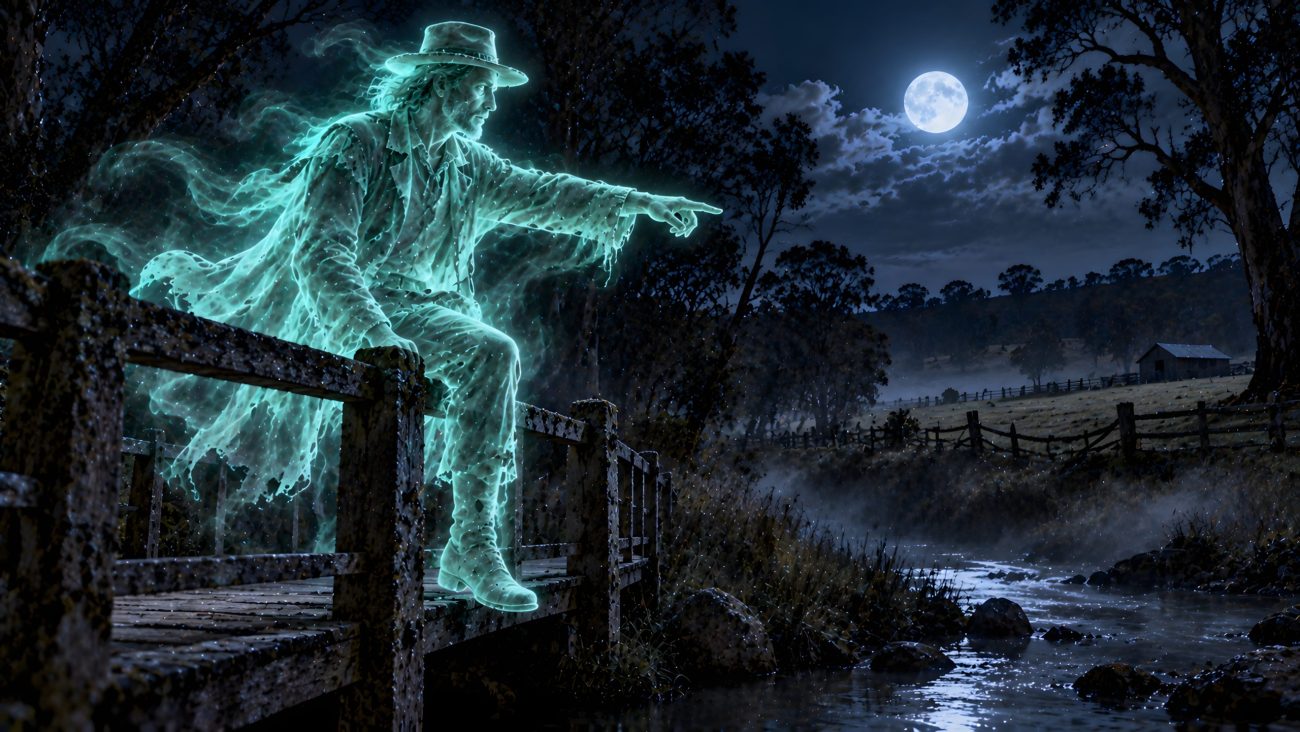
Four months after Fisher’s disappearance, a local man named John Farley rushed into a hotel in an agitated state. He claimed that he had seen Fisher’s ghost sitting on the railing of a nearby bridge. The apparition did not speak or move to approach him, but silently pointed toward a paddock beyond a creek before vanishing. Although Farley’s story was initially dismissed, the mysterious disappearance and suspicious claims surrounding Fisher eventually led the authorities to investigate the location indicated by the ghost.

During the search, Fisher’s remains were discovered buried beside the creek. George Worrall was arrested for the murder, confessed to the crime, and was subsequently hanged. Fisher was buried in the cemetery of St. Peter’s Anglican Church in Campbelltown. The bridge, the paddock, and the silent apparition became inseparable from the legend, and the nearby waterway became known as Fisher’s Ghost Creek.

The story became one of Australia’s best-known ghost legends, inspiring a silent film and an annual festival in Campbelltown. The exact origin of the apparition story remains uncertain, but the legend endures as a tale in which a murdered man’s ghost revealed the location of his own body and helped expose the person responsible for his death.


Sources

“Fisher’s ghost.” Wikipedia: The Free Encyclopedia. Wikimedia Foundation. Accessed October 15, 2026. https://en.wikipedia.org/wiki/Fisher%27s_ghost


Catalina Lercaro

Tradition: Canarian Mythology, Spanish Mythology
Alternative Names: Catherine Lercaro
Category: Ghost


The Myth

Catalina Lercaro is a famous ghost said to haunt the former Lercaro family mansion in San Cristóbal de La Laguna, on the island of Tenerife in the Canary Islands. She was a young woman from a wealthy family of Genoese merchants who settled in Tenerife after the Castilian conquest. According to the legend, Catalina was forced into an arranged marriage with an older man who possessed considerable wealth and social standing. She did not love her intended husband and was deeply unhappy with the marriage planned for her.

On the day of her wedding, Catalina is said to have taken her own life by jumping into a pit in the courtyard of her family’s mansion. According to the legend, her death prevented her from receiving a Christian burial in a consecrated cemetery because suicide was considered a sin by the Catholic Church. Her body was supposedly buried in one of the rooms of the mansion instead.

Following Catalina’s death, her family abandoned the city and moved to La Orotava. However, the young woman’s spirit was said to remain behind, haunting the mansion where she had died. Visitors have reportedly seen her apparition wandering through its rooms and corridors, unable to leave the place associated with her tragic fate. The building later became the Museum of the History of Tenerife, and the legend of Catalina Lercaro continues to make it one of the Canary Islands’ best-known haunted locations.


Sources

“Catalina Lercaro.” Wikipedia: The Free Encyclopedia. Wikimedia Foundation. Accessed October 15, 2026. https://en.wikipedia.org/wiki/Catalina_Lercaro


Blue Lady

Tradition: Maltese Mythology
Alternative Names: The Blue Lady of Verdala Palace
Category: Ghost


The Myth

The Blue Lady is a ghost said to haunt Verdala Palace in Malta. She is believed to have been the niece of Grand Master de Rohan, a noblewoman who lived at the palace and was destined to marry a suitor she did not love. According to the legend, she was deeply unhappy with the arranged marriage and could not bear the thought of spending her life with a man she had not chosen.

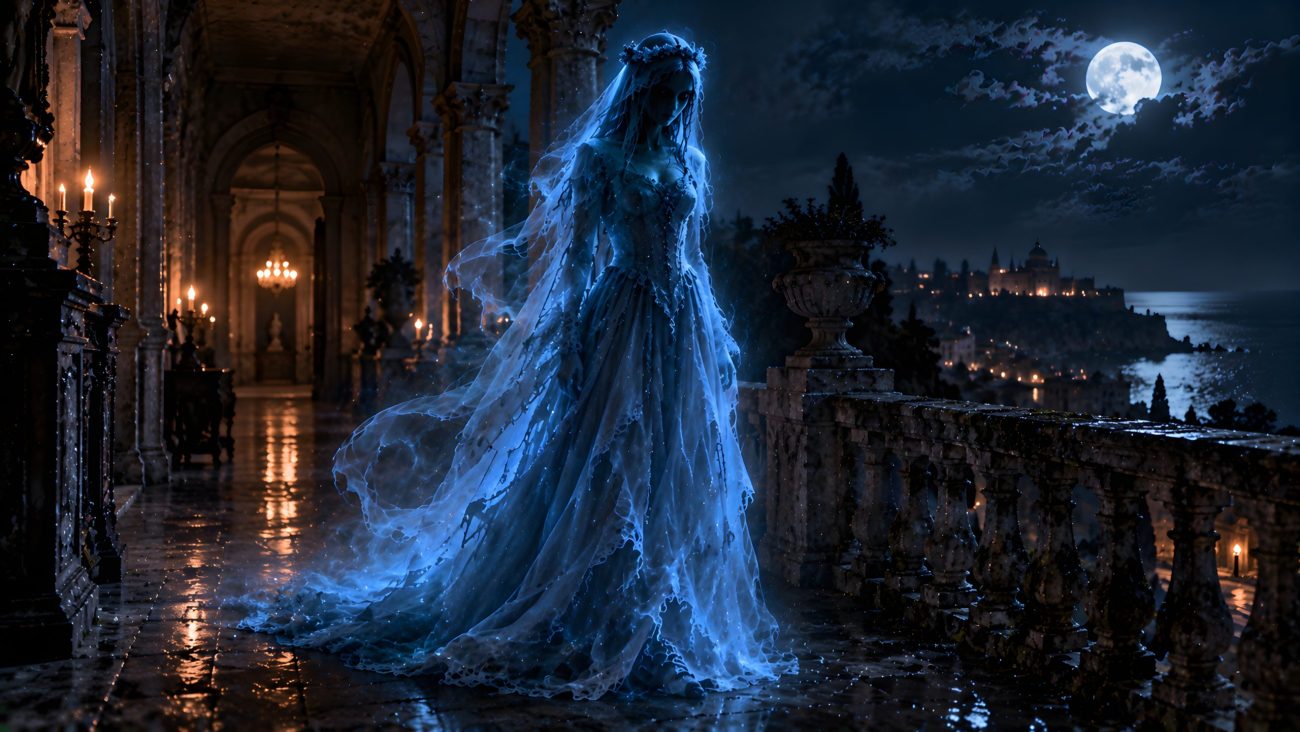
On the day of her intended wedding, the young woman is said to have taken her own life by jumping from the balcony of her bedroom. She was wearing her blue wedding dress when she died, and the garment became forever associated with her tragic fate. Her death left her spirit bound to the palace, unable to escape the place where her life had ended.

The Blue Lady is reportedly seen wandering through the corridors and rooms of Verdala Palace, still wearing the same blue dress she wore on the day of her death. Her apparition is a reminder of the young woman’s sorrow and the fate she suffered when forced toward a marriage against her wishes.


Sources

“Verdala Palace § Ghost story.” Wikipedia: The Free Encyclopedia. Wikimedia Foundation. Accessed October 15, 2026. https://en.wikipedia.org/wiki/Verdala_Palace#Ghost_story


Umbra

Tradition: Greek Mythology, Roman Mythology
Alternative Names: Skia, Shade
Category: Ghost


The Myth

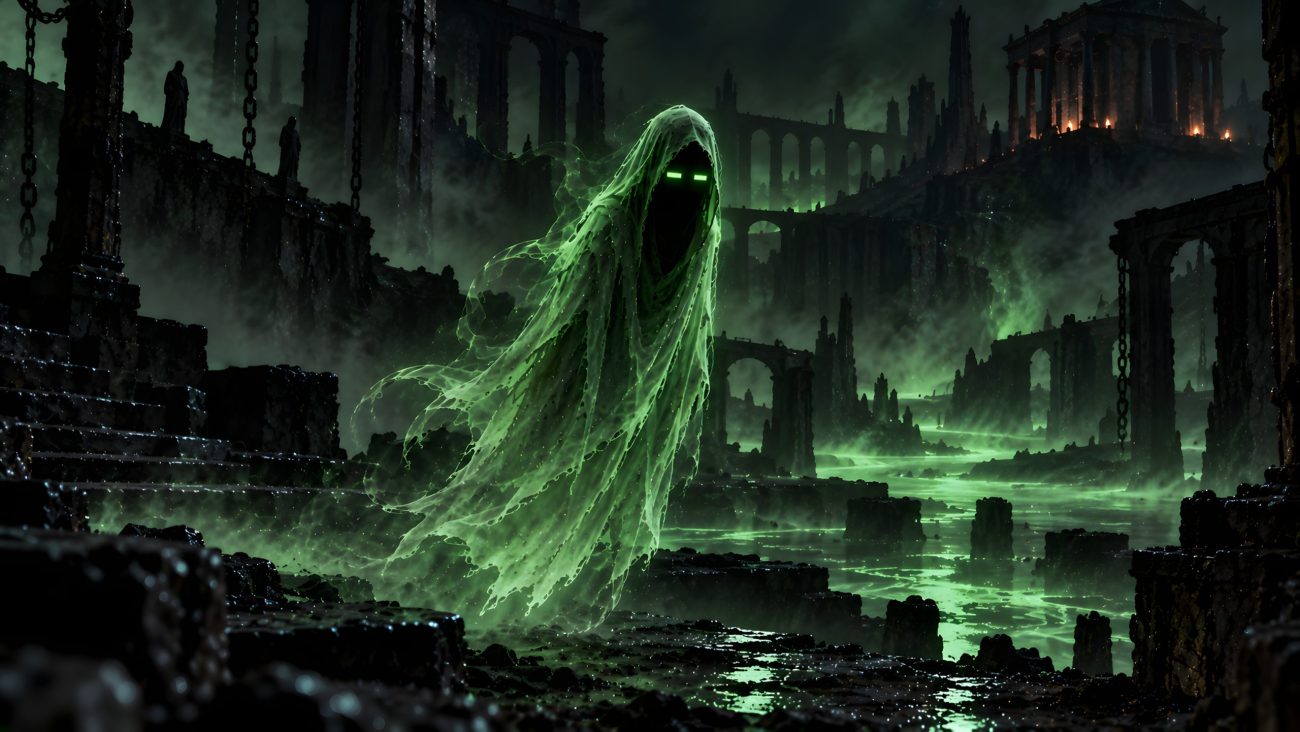
A Shade is the spirit of a deceased person who dwells in the underworld, existing as a shadowy remnant of their former life. Shades inhabit the realm of the dead, separated from the world of the living, where they linger in a diminished and shadow-like state. The concept also appears in ancient Near Eastern beliefs, where the dead were thought to dwell in a shadowy underworld. In Biblical Hebrew tradition, this realm was associated with Sheol, also described as the shadow of death.

Shades appear prominently in Greek and Roman mythology. In Homer’s Odyssey, Odysseus journeys into Hades and encounters the spirits of the dead, including the shade of the prophet Tiresias. In Virgil’s Aeneid, Aeneas descends into the underworld and encounters numerous shades of the departed. These spirits retain traces of their former identities and can be recognized by the living when encountered in the realm of the dead.

Not everyone was believed to remain a shade after death. Certain exceptional individuals could be elevated to the status of heroes and ascend to the divine sphere. According to Plutarch, Alexander the Great received an oracle confirming that his deceased companion Hephaistion had become a hero and attained divine status. Such beliefs distinguished ordinary shades, who remained in the underworld, from exceptional dead who were honoured as more than mortal spirits.

The image of the shade continued into later literature, including Dante Alighieri’s Divine Comedy, in which many of the dead encountered in the afterlife are described as shadows. The shade became a lasting symbol of mortality and the lingering presence of the deceased, representing the fragile boundary between the living world and the realm of the dead.


Sources

“Shade (mythology).” Wikipedia: The Free Encyclopedia. Wikimedia Foundation. Accessed October 15, 2026. https://en.wikipedia.org/wiki/Shade_%28mythology%29


Genius Loci

Tradition: Roman Mythology, Italian Mythology
Alternative Names: Genii Locorum
Category: Ghost


The Myth

The Genius Loci is the protective spirit of a particular place in Roman mythology. Each spirit watches over its own location, safeguarding the area and the people who live there. These spirits were honoured through religious offerings and dedicated altars, reflecting the belief that places possessed their own divine guardians. A Genius Loci could be associated with a neighbourhood, a crossroads, or another specific location, serving as its supernatural protector.

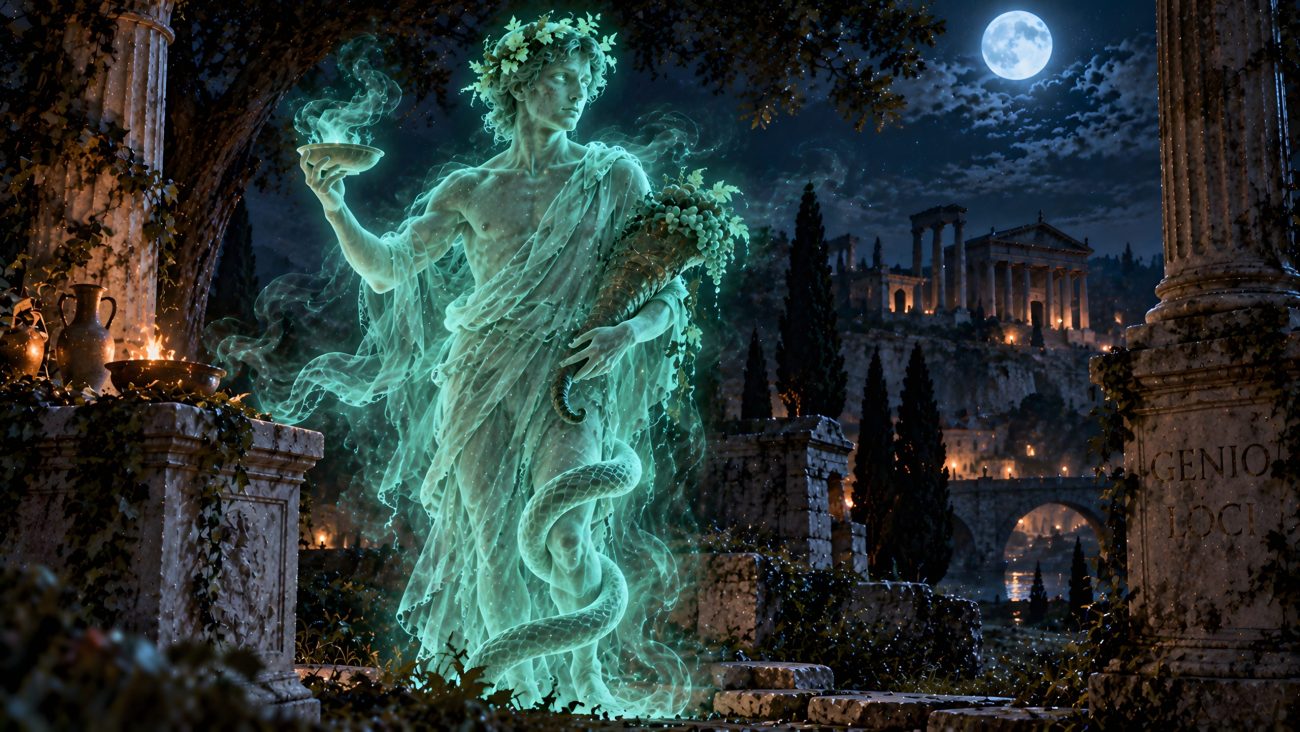
In Roman religious art, the Genius Loci was often depicted as a youthful male figure with curly hair. He commonly carried a cornucopia, a horn overflowing with abundance, and a patera, a shallow bowl used for ritual offerings. In some depictions, a snake also appeared as one of his attributes. These objects symbolized the spirit’s connection with prosperity, offerings, and the protection of the place under its care.

The worship of local guardian spirits was closely connected to Roman community life. Neighbourhood associations maintained shrines dedicated to the Lares Compitales, guardian spirits associated with crossroads. Under Emperor Augustus, these spirits became known as the Lares Augusti, while the emperor’s own divine spirit was honoured throughout the Roman Empire. In this way, the idea of the Genius Loci extended from individual locations to the protection of the empire itself, with the emperor’s genius regarded as its overarching guardian spirit.


Sources

“Genius loci.” Wikipedia: The Free Encyclopedia. Wikimedia Foundation. Accessed October 15, 2026. https://en.wikipedia.org/wiki/Genius_loci


Hatif

Tradition: Iraqi Mythology, Arabian Mythology
Alternative Names: Hātif
Category: Ghost


The Myth

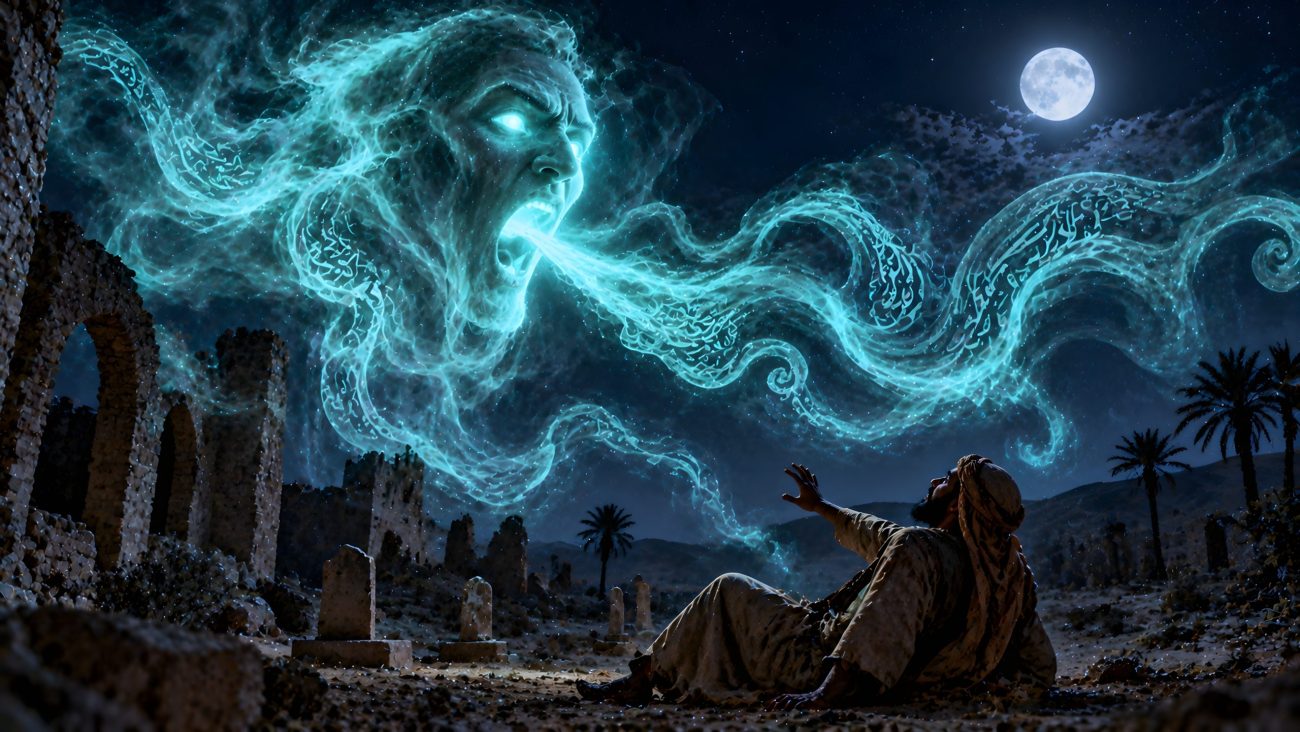
A Hatif is a mysterious supernatural voice that can be heard without anyone being able to see the speaker or discover where the sound originates. The voice may deliver important messages to those who hear it, seemingly speaking directly to them despite having no visible body. Among the Bedouins, the Hatif was believed to transmit messages across distances without any apparent physical means of communication, allowing a person to hear a message in real time while remaining unable to see its source.

Hatif voices were sometimes attributed to jinn, supernatural beings capable of communicating with humans from the unseen world. In some traditions, a jinn could use such a voice to speak to a person or take revenge for the murder of another jinn. The unseen voice might torment the murderer and eventually drive them insane. The Hatif was therefore not always a harmless messenger, as its mysterious presence could bring fear and suffering to those who heard it.

Some Hatif voices were also believed to come from ghosts dwelling near graves. These spirits called out to the living to remind them of their mortality or to announce that someone’s death was approaching. Whether understood as a jinn, a ghost, or another unseen presence, the Hatif was known primarily through its disembodied voice, which emerged from an invisible source and carried messages from beyond the ordinary world.


Sources

“Hatif.” Wikipedia: The Free Encyclopedia. Wikimedia Foundation. Accessed October 15, 2026. https://en.wikipedia.org/wiki/Hatif


Gwisin

Tradition: Korean Mythology
Alternative Names: Kwisin
Category: Ghost


The Myth

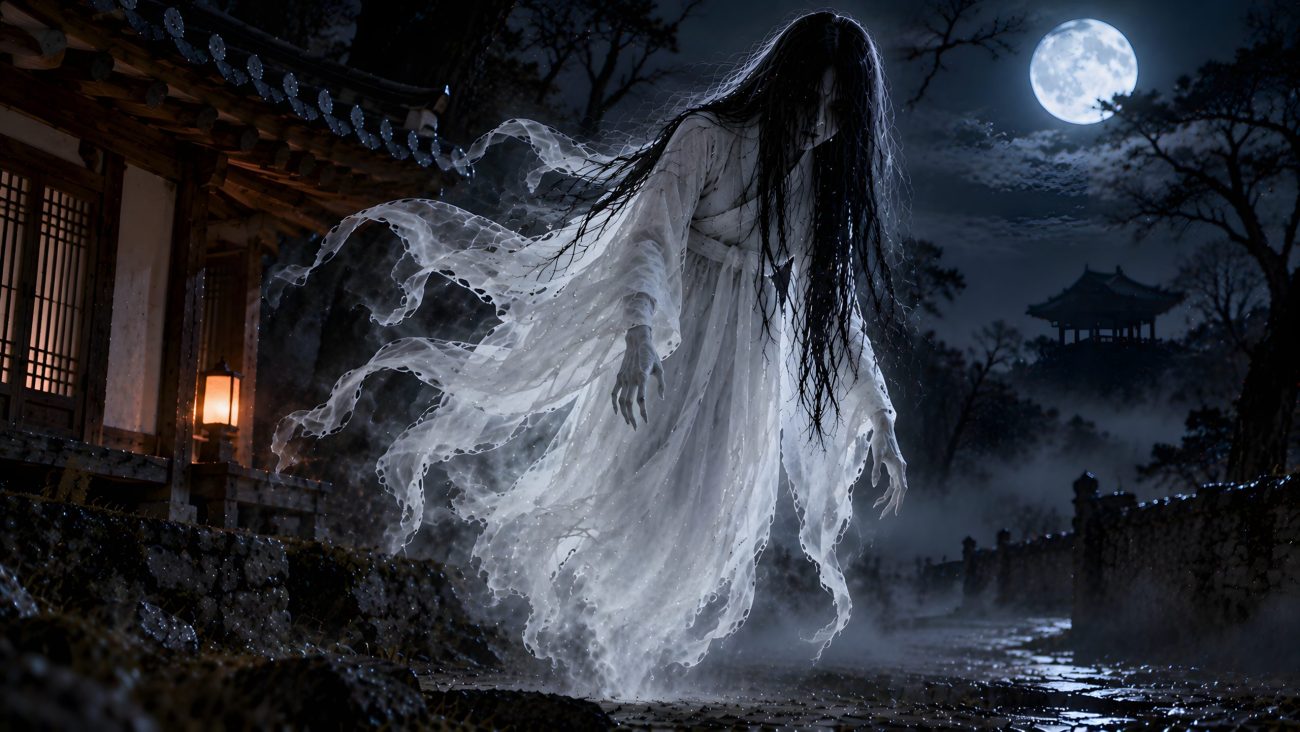
Gwisin are the spirits of deceased humans who remain in the world of the living because they have unfinished business. They are often depicted as transparent, legless figures that float through the air. Unlike supernatural beings such as dokkaebi, gwisin are the spirits of people who have died. They may linger because they seek revenge, wish to protect a loved one, or have unresolved ties to their former lives. Once their purpose is fulfilled, they can finally depart for the underworld.

Many legends describe gwisin as vengeful spirits who return to punish those who wronged them or their families. They may haunt places connected to their deaths, including homes, schools, and other locations where they suffered injustice. Stories also tell of people who were murdered or betrayed by unfaithful spouses returning as ghosts to seek revenge. Their presence serves as a frightening reminder that wrongdoing may have consequences even after death.

There are several kinds of gwisin, each associated with a different death or lingering grievance. The cheonyeo-gwisin is the ghost of a woman who died unmarried. She is commonly depicted wearing a white funeral hanbok, with long, drooping black hair that sometimes conceals her face. The chonggak-gwisin is the male counterpart, representing a man who died unmarried. The mul-gwisin is the spirit of someone who drowned and is said to drag unsuspecting people into the water out of jealousy or loneliness. The wonhan-gwisin is a spirit who died unjustly, while the yuk-gwisin is the ghost of someone who was murdered. The ja-sa gwisin is the spirit of someone who died by suicide.

Gwisin are feared because they may bring misfortune or harm to the living. Traditional methods of protection include hanging a strainer above the entrance to a house or burning a strand of hair and scattering its ashes around the courtyard. Such practices reflect the belief that restless spirits can be kept away through protective measures, preventing them from intruding upon the lives of the living.


Sources

“Gwisin.” Wikipedia: The Free Encyclopedia. Wikimedia Foundation. Accessed October 15, 2026. https://en.wikipedia.org/wiki/Gwisin


Hungry Ghost

Tradition: Chinese Mythology, Japanese Mythology
Alternative Names: Egui, Gaki, Preta
Category: Ghost


The Myth

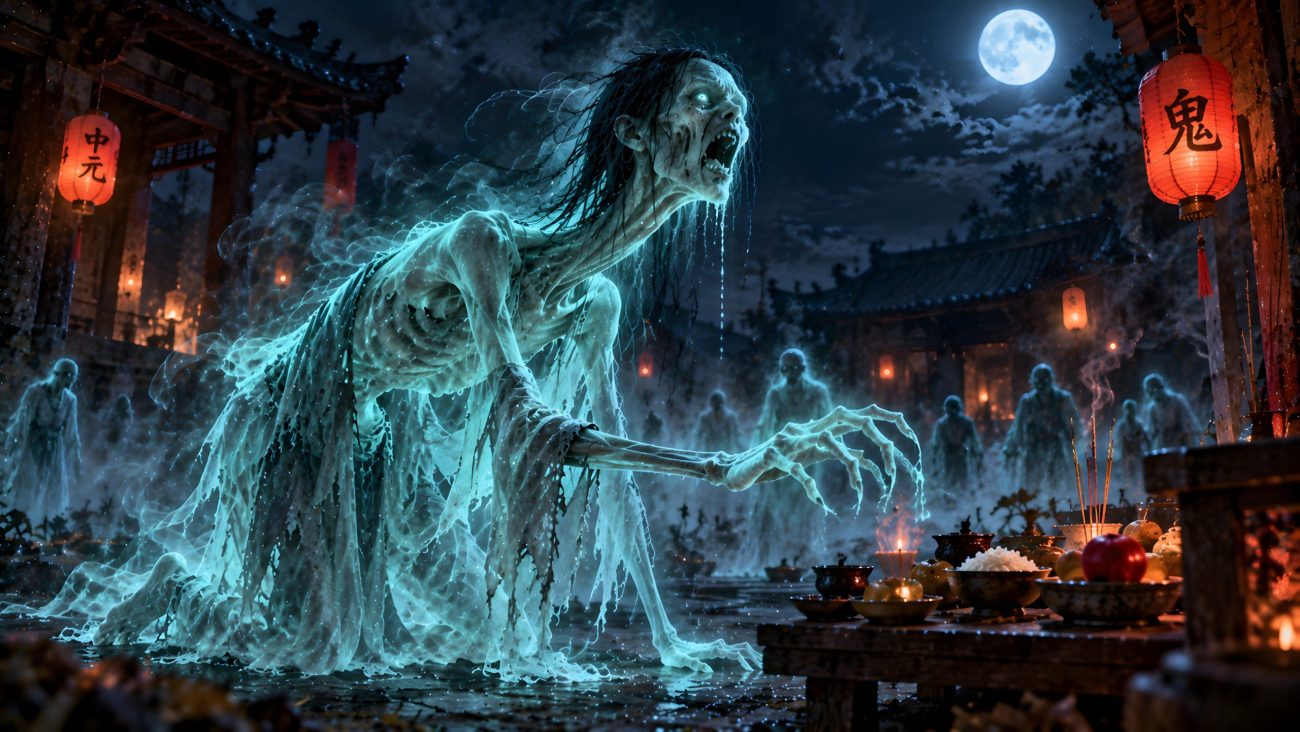
Hungry ghosts are restless supernatural beings in Chinese and Japanese mythology, associated with insatiable hunger, greed, and suffering. They are spirits of the dead who cannot satisfy their desires, remaining perpetually tormented by their cravings. They are often imagined as gaunt, miserable beings who wander in search of food and drink, unable to find lasting relief. Some are said to possess long, thin necks that make feeding difficult, leaving them endlessly hungry. Others appear in the form of animals or take on the appearance of beautiful men and women to lure the living.

A person may become a hungry ghost after death because of greed, cruelty, or selfishness during their lifetime. Those who refuse to share food, deceive others for personal gain, or deny offerings to religious mendicants may be condemned to this existence for countless lifetimes. In one tale, a wealthy man’s wife secretly urinated into a monk’s bowl before adding sugarcane juice and offering it to him. After her death, she was reborn as a hungry ghost. Another story tells of a woman who locked a begging monk inside an empty room without food, despite her husband’s instructions to feed him. Her selfishness condemned her to become a hungry ghost for innumerable lifetimes.

Hungry ghosts are also associated with neglected ancestors and the restless spirits of those who have been forgotten by their living relatives. In Chinese tradition, they are believed to roam the world during the seventh month of the lunar calendar, when the gates of the underworld open and the spirits are permitted to visit the living. Families prepare offerings of food, drink, incense, and spirit money to satisfy their deceased relatives and prevent misfortune. Unknown and homeless spirits are also given offerings so they will not trouble the living. During the Ghost Festival, performances are held for the spirits, with the first row of seats left empty for their use.

Despite these offerings, hungry ghosts remain dangerous and unpredictable. They may cause sickness, possess the living, or appear in frightening forms to lure people into danger. During the Ghost Month, people traditionally avoid wandering outside after dark, swimming, disturbing food offerings, or sitting in seats reserved for spirits. At the end of the festival, lanterns shaped like lotus flowers are floated on water to guide the ghosts back to the underworld. The hungry ghost represents a being trapped by desire, forever seeking satisfaction but unable to escape its own suffering.


Sources

“Hungry ghost.” Wikipedia: The Free Encyclopedia. Wikimedia Foundation. Accessed October 15, 2026. https://en.wikipedia.org/wiki/Hungry_ghost


Lemures

Tradition: Roman Mythology, Italian Mythology
Alternative Names: Lemures, Larvae
Category: Ghost


The Myth

The Lemures are restless and sometimes malevolent spirits of the dead in Roman mythology. They are associated with darkness, fear, and the wandering souls of those who have not found peace after death. Often described as formless and shadowy presences, they linger between the world of the living and the realm of the dead, bringing unease into the homes they haunt. The Lemures are particularly associated with the spirits of people who were denied proper burial, funeral rites, or remembrance from their surviving families.

These spirits are believed to be both frightening and easily disturbed. They may become hostile when neglected by the living, especially when the dead have not received the rites necessary to honour them. The Romans therefore observed the festival of Lemuria on the nights of May 9, 11, and 13, when the head of the household performed rituals to appease the wandering dead. At midnight, he would rise, wash his hands, and cast black beans behind him without looking back, offering them to the spirits in exchange for the safety of his household.

During the ritual, the Lemures were believed to consume the beans as an offering. If the spirits remained dissatisfied or refused to leave, the head of the household would strike bronze pots together loudly to frighten them away. Through these rites, the living sought to calm the restless dead and prevent their anger from bringing misfortune upon the home.

The Lemures represent the dangerous consequences of leaving the dead without proper respect or remembrance. Their formless presence embodies the fear that those who have passed away may return to trouble the living when their needs remain unfulfilled. Through the rituals of Lemuria, Roman families attempted to restore peace between the worlds of the living and the dead, ensuring that the restless spirits departed and their homes remained safe.


Sources

“Lemures.” Wikipedia: The Free Encyclopedia. Wikimedia Foundation. Accessed October 15, 2026. https://en.wikipedia.org/wiki/Lemures