Tradition: Chinese Mythology, Japanese Mythology
Alternative Names: Egui, Gaki, Preta
Category: Ghost
The Myth
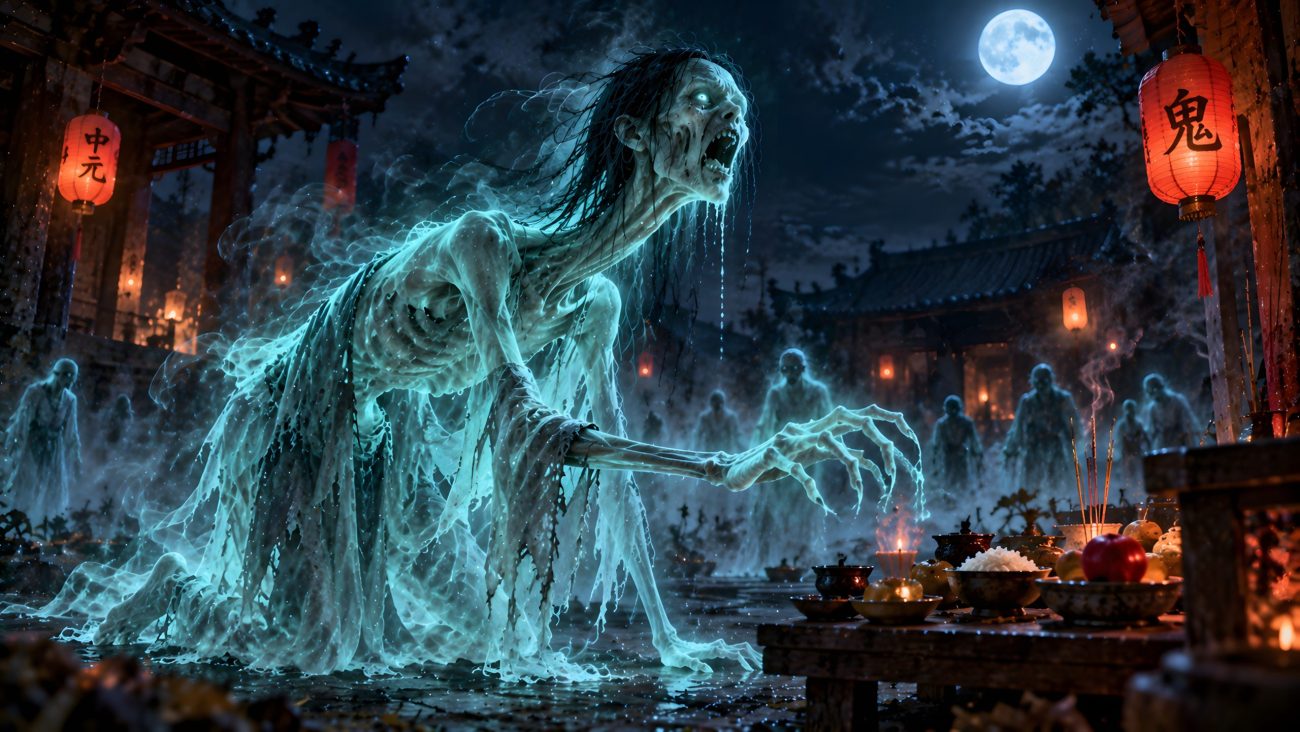
Hungry ghosts are restless supernatural beings in Chinese and Japanese mythology, associated with insatiable hunger, greed, and suffering. They are spirits of the dead who cannot satisfy their desires, remaining perpetually tormented by their cravings. They are often imagined as gaunt, miserable beings who wander in search of food and drink, unable to find lasting relief. Some are said to possess long, thin necks that make feeding difficult, leaving them endlessly hungry. Others appear in the form of animals or take on the appearance of beautiful men and women to lure the living.
A person may become a hungry ghost after death because of greed, cruelty, or selfishness during their lifetime. Those who refuse to share food, deceive others for personal gain, or deny offerings to religious mendicants may be condemned to this existence for countless lifetimes. In one tale, a wealthy man’s wife secretly urinated into a monk’s bowl before adding sugarcane juice and offering it to him. After her death, she was reborn as a hungry ghost. Another story tells of a woman who locked a begging monk inside an empty room without food, despite her husband’s instructions to feed him. Her selfishness condemned her to become a hungry ghost for innumerable lifetimes.
Hungry ghosts are also associated with neglected ancestors and the restless spirits of those who have been forgotten by their living relatives. In Chinese tradition, they are believed to roam the world during the seventh month of the lunar calendar, when the gates of the underworld open and the spirits are permitted to visit the living. Families prepare offerings of food, drink, incense, and spirit money to satisfy their deceased relatives and prevent misfortune. Unknown and homeless spirits are also given offerings so they will not trouble the living. During the Ghost Festival, performances are held for the spirits, with the first row of seats left empty for their use.
Despite these offerings, hungry ghosts remain dangerous and unpredictable. They may cause sickness, possess the living, or appear in frightening forms to lure people into danger. During the Ghost Month, people traditionally avoid wandering outside after dark, swimming, disturbing food offerings, or sitting in seats reserved for spirits. At the end of the festival, lanterns shaped like lotus flowers are floated on water to guide the ghosts back to the underworld. The hungry ghost represents a being trapped by desire, forever seeking satisfaction but unable to escape its own suffering.
Sources
“Hungry ghost.” Wikipedia: The Free Encyclopedia. Wikimedia Foundation. Accessed October 15, 2026. https://en.wikipedia.org/wiki/Hungry_ghost