Bergi Woman

Tradition: Liechtenstein Mythology
Alternative Names: The Ghost of Bergi
Category: Ghost


The Myth

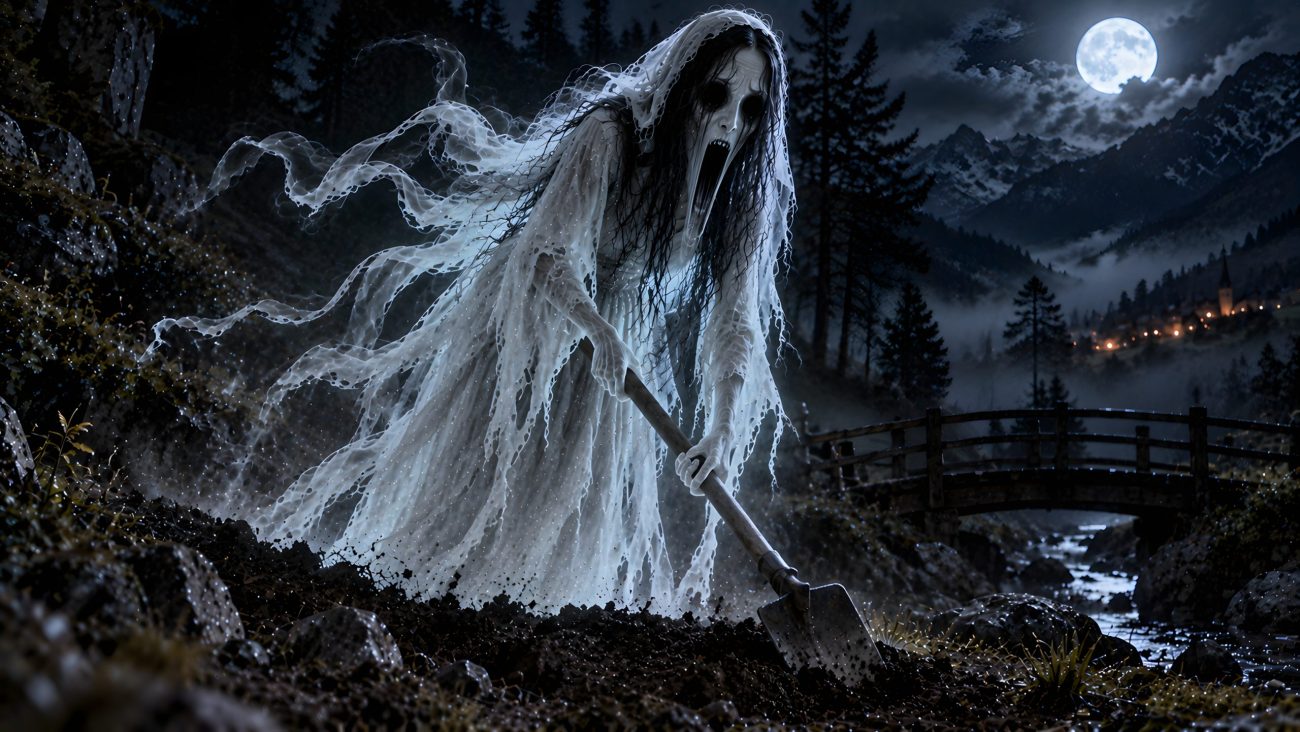
The Bergi Woman is the restless spirit of a woman who committed a terrible deed in the mountains near Triesenberg, Liechtenstein. In ancient times, farmers lived on Bergi, also known as the Bergle Alp. Among them was a woman who gave birth to a child she did not want. Carrying the infant and a hoe, she descended from the mountain and crossed a footbridge toward Valorsch.

In a secluded place, the woman dug a hole with her hoe, laid the child inside, and covered it with earth. She abandoned the infant there and returned from the mountains, but her terrible deed would not go unpunished.

The woman died soon afterward, but her spirit was condemned to atone for her crime at the very place where she had buried her child. Every night, she must descend from Bergi and travel through Valorsch, carrying the same hoe in her hand. She returns to the spot where the child lies buried, repeating her sorrowful journey night after night for all eternity.


Sources

“Das Bergi-Wiebi.” SAGEN.at – Liechtensteiner Sagen, collected by Otto Seger. Reproduced by SAGEN.at. https://www.sagen.at/texte/sagen/liechtenstein/seger/bergiwiebi.html


Sad White Woman

Tradition: Liechtenstein Mythology
Alternative Names: The White Woman of Mäls
Category: Ghost


The Myth

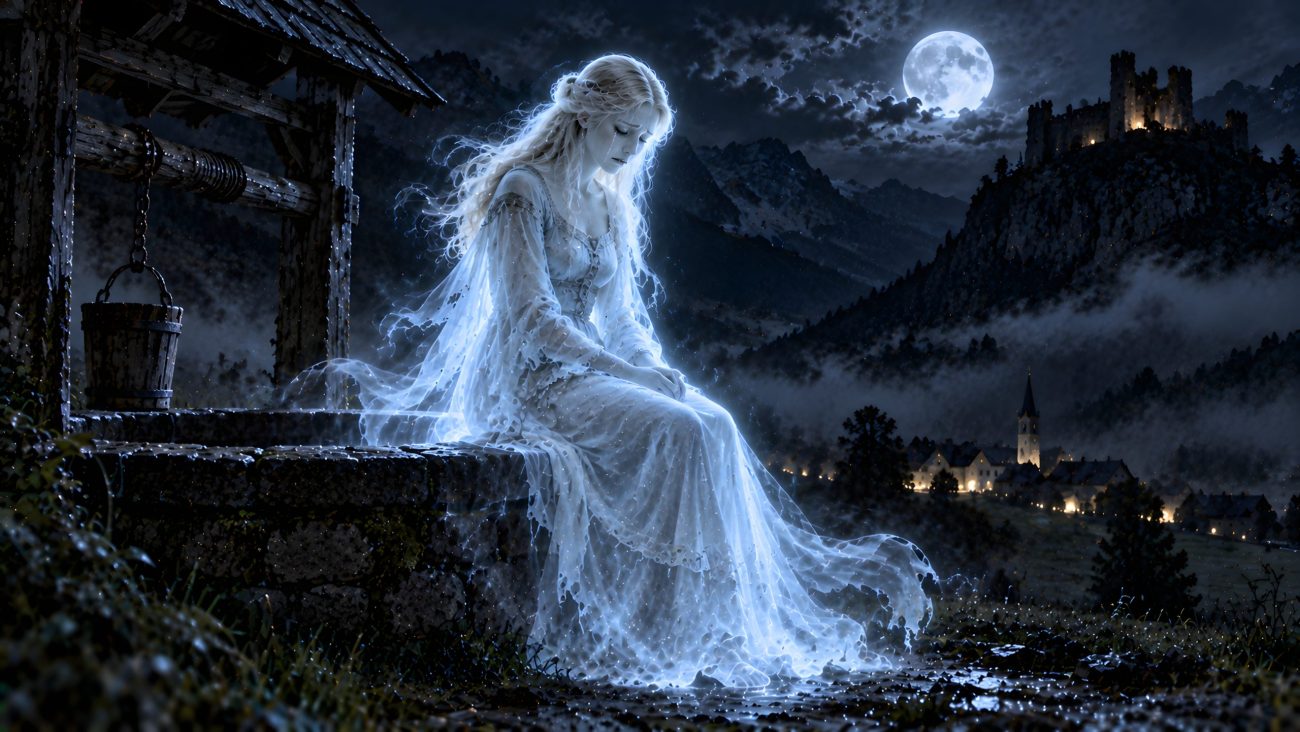
The Sad White Woman is a ghostly figure said to appear in Mäls, Liechtenstein. She is described as a woman with long blonde hair reaching down to her shoulders, dressed in a long white gown. Sometimes she appears wearing the clothing of noblewomen from an earlier age. Her presence is often accompanied by a beautiful, mysterious song, which can be heard near the village well.

According to one tale, the apparition appeared while the relatives of a recently deceased peasant woman were keeping vigil beside her body. Hearing a beautiful voice outside, they went to an open window and saw the white-clad woman near a field known as Under the Stone. The mysterious figure sat beside the village well before continuing on her way. A man secretly followed her and watched as she stopped at a place called Anaresch, where a pond once stood, and wept bitterly. Local tradition holds that the sorrowful woman had drowned her own child in that pond and could find no peace afterward.

Another version of the legend describes the ghost sitting beside the well, singing a wondrous song before slowly walking toward the old castle. As she travels, she weeps pitifully, her sorrow echoing through the night. Her appearances are believed to be the restless wanderings of a woman burdened by a terrible deed, unable to escape the grief that binds her spirit to the places where she once lived.


Sources

“Die weiße Frau.” SAGEN.at – Liechtensteiner Sagen, collected by Otto Seger. Reproduced by SAGEN.at. https://www.sagen.at/texte/sagen/liechtenstein/seger/weissefrau.html


Sücca-Keres

Tradition: Liechtenstein Mythology
Alternative Names: Keres, The Spirit of Sücca
Category: Ghost


The Myth

Sücca-Keres was once a herdsman who worked on the Sücca alpine pasture on Kulm Mountain in Liechtenstein. When he took the position, he was required to swear an oath promising faithful and honest service to his master. However, Keres broke his oath by secretly stealing cheese and butter and selling them in the village of Triesen. He often walked back and forth near the Guferwald forest while carrying out his activities.

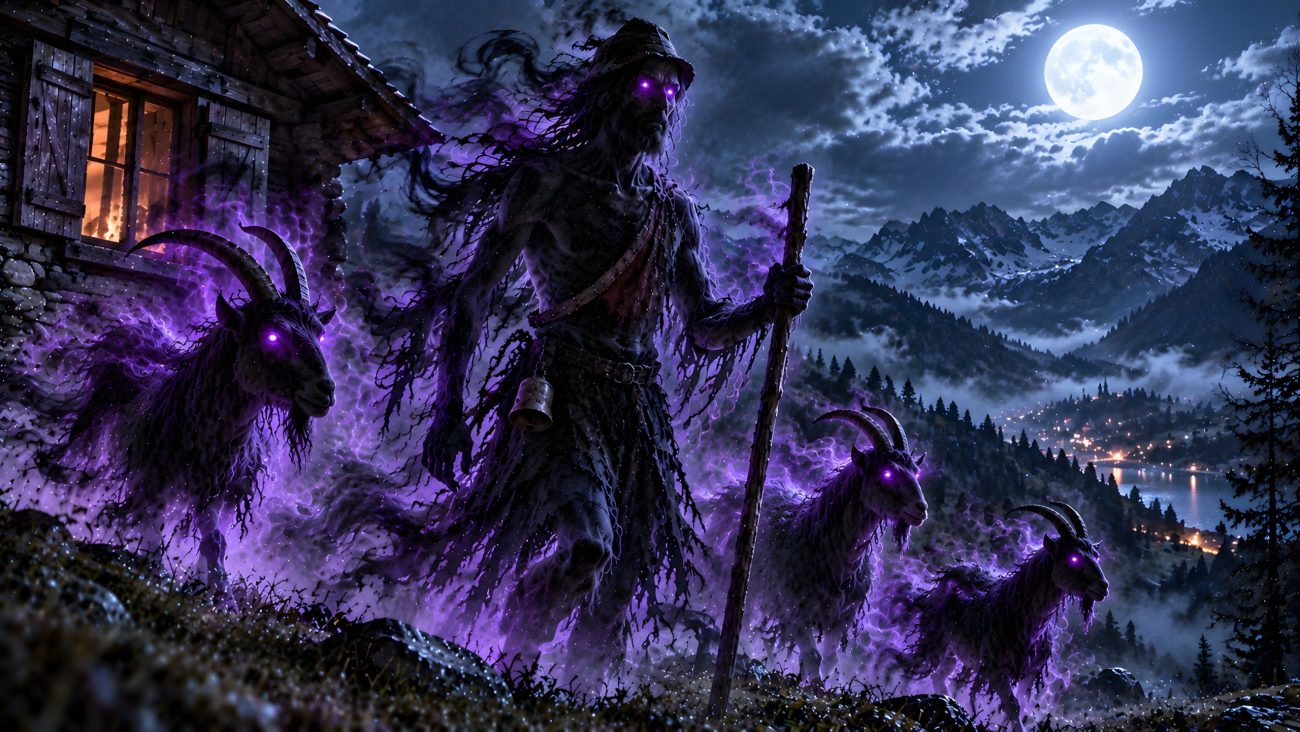
After Keres died, he was buried in Triesen. When people later attempted to dig up his body, three fingers emerged from the earth. His body looked exactly as it had when he was buried, except that it had turned black. Frightened, the people immediately covered the grave again. Soon afterward, nobody wanted to work as a herdsman on the Sücca pasture, because Keres’s ghost haunted the old herdsman’s hut. People travelling from the Malbuntal and Älpelti valleys sometimes saw him looking out of its window, wearing a leather cap and loincloth just as he had when he was alive.

Eventually, a priest was summoned to drive the ghost away. Keres begged to remain on the hilltop, where he could still hear the bells of the Sücca herdsmen and look down upon his father’s estate. The priest allowed him to retreat into a hole on the hilltop, which became known as the Keres Hole. Another version says that two Capuchin monks banished him there. When they asked why he was condemned to wander, Keres replied that it was not the theft that had condemned him, but the broken oath.

Even after his disappearance from the herdsman’s hut, Keres continued to frighten people near the hilltop. Schoolgirls once approached the hut to collect walking sticks left behind by the herdsmen, but a shutter suddenly flew open and a broad-faced man wearing a leather cap and a red breast cloth peered out. Recognizing him as Keres, the girls fled in terror. On another occasion, goats suddenly bolted across the hillside, and their shepherd later saw Keres looking out of the hut’s window. The shepherd thought the animals had sensed the ghost before he did.

The Keres Hole remained a place of fear. When a poor widow’s goat fell into it, a shepherd climbed down on a rope to rescue the animal. Inside, he thought he saw a hand illuminated by a strange light, holding up three fingers as if taking an oath. Terrified, he scrambled out, and the people above covered the hole with chopped wood. Another tale tells of a boy who threw stones into the hole and then ran away in fright, claiming that a man had climbed out. The ghost of Sücca-Keres was believed to remain bound to the place because he had violated the oath he had sworn as a herdsman.


Sources

“Keres.” SAGEN.at – Liechtensteiner Sagen, collected by Otto Seger. Reproduced by SAGEN.at. https://www.sagen.at/texte/sagen/liechtenstein/seger/keres.html
Supay

Tradition: Inca Mythology, Peruvian Mythology
Alternative Names: Supaya, Auka
Category: Ghost


The Myth

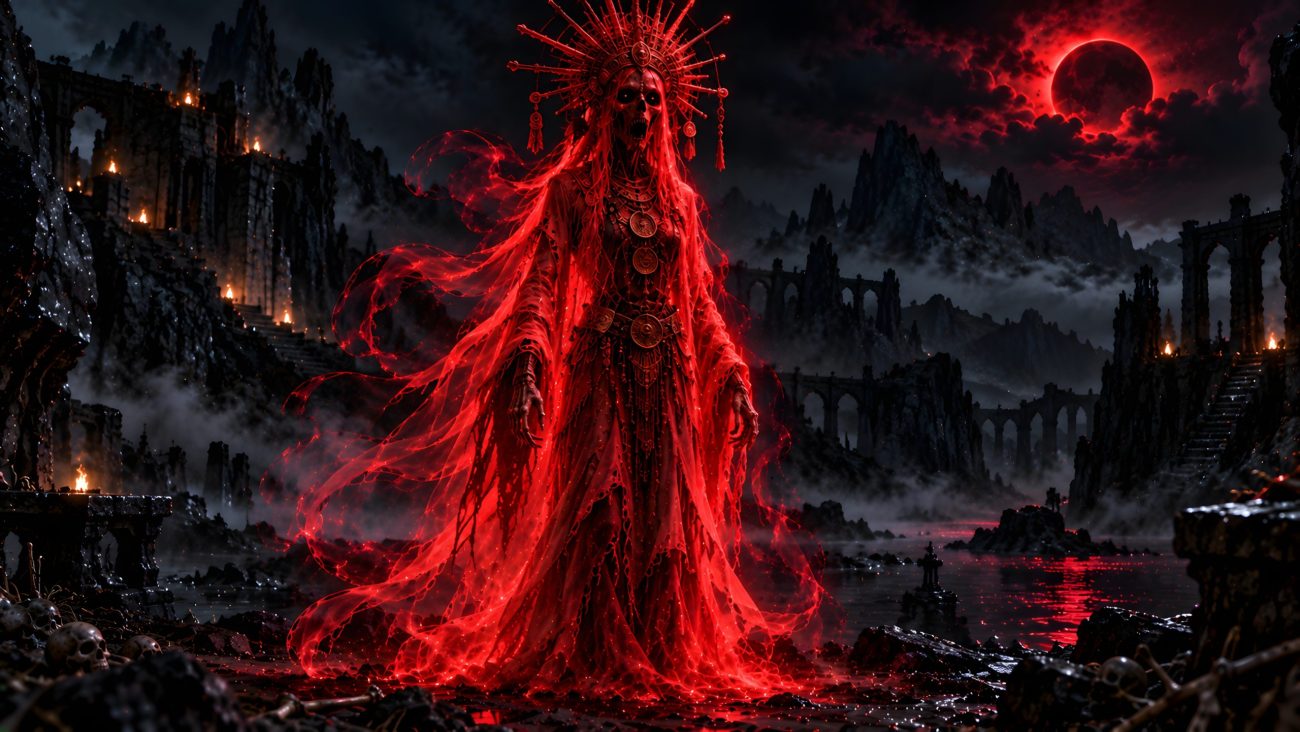
Supay is a powerful spirit associated with the underworld, darkness, death, and the shadowy forces of the universe. In Andean mythology, he is connected to Uku Pacha, the realm beneath the world where the spirits of the dead dwell. Supay is an ambivalent being who can embody both benevolent and harmful forces. In later Christian interpretations, he came to be associated with the Devil and demons, but in older Andean beliefs, he represented one of the opposing forces necessary to maintain the balance of existence.

One legend tells that Supay caused the great flood that created Lake Titicaca. Long ago, the land around the lake was a fertile valley where people lived peacefully under the protection of the mountain gods, the Apus. The gods forbade them from climbing the mountains where the Sacred Fire burned. Unable to tolerate their happiness, Supay sowed discord among the people and tempted them to disobey. When they climbed the mountains, the Apus sent thousands of pumas to devour them. The terrified people begged Supay for help, but he refused to save them. Seeing their destruction, Inti, the Sun God, wept so bitterly that his tears flooded the valley for forty days. Only one man and one woman survived in a reed boat. When the waters receded, they found themselves surrounded by an immense lake, with the drowned pumas transformed into stone.

Supay is also connected to the journey of the dead through the underworld. According to Andean tradition, the souls of the deceased must cross a river of blood called Yawar Mayu to reach Upay Marca, the land of shadows. A black dog often guides the soul on this journey. Known as Tawa Ñawi, meaning “Four Eyes,” the dog appears to have four eyes because of the distinctive markings above its own eyes. In some traditions, the hair saved during a child’s first haircut was believed to form a bridge that helped the deceased cross the river and continue into the realm of the dead.

Supay represents the darker counterpart to Kawsay, the force of life. In Andean thought, life and death, light and darkness, and other opposing forces are not simply enemies that must destroy one another. Their interaction maintains cosmic balance and allows existence to continue through recurring cycles of destruction and renewal.


Sources

“Supay.” Wikipedia: The Free Encyclopedia. Wikimedia Foundation. Accessed October 15, 2026. https://en.wikipedia.org/wiki/Supay


Spirit of the Cloister Woman

Tradition: Liechtenstein Mythology
Alternative Names: The Ghost of the Nun
Category: Ghost


The Myth

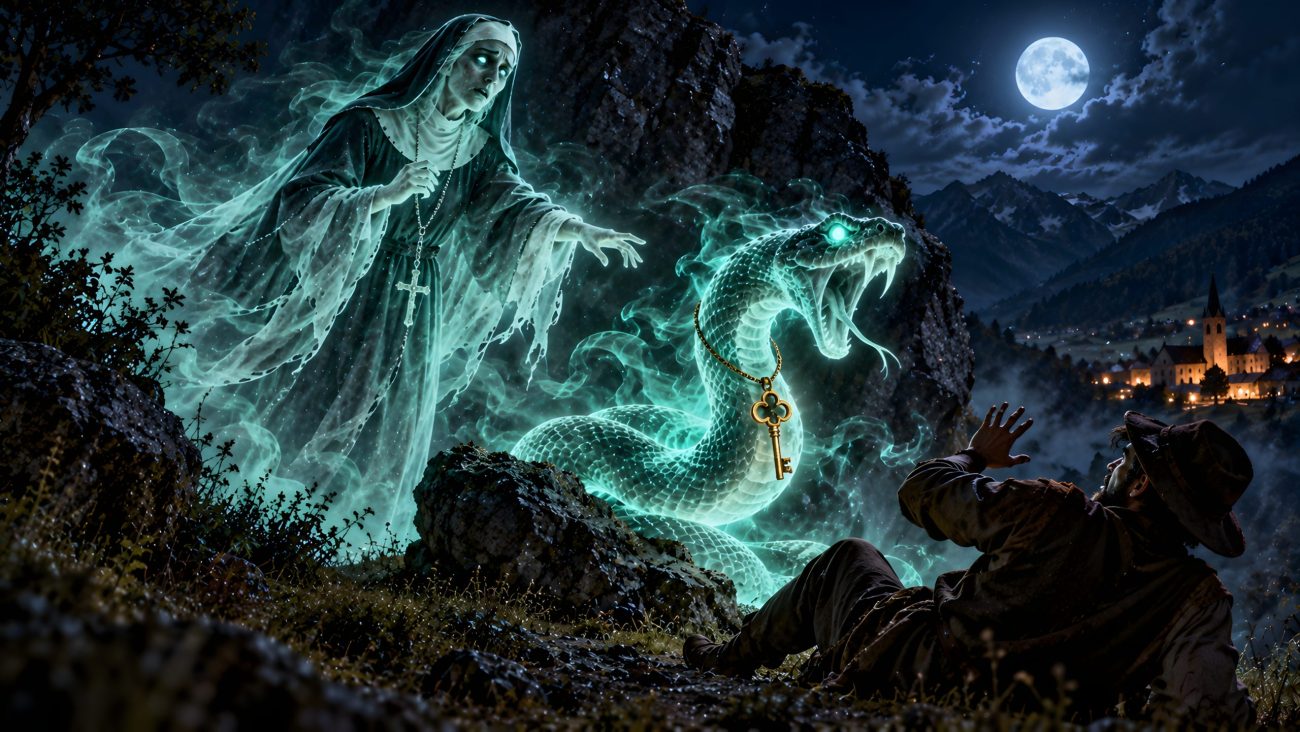
The Spirit of the Cloister Woman is the ghost of a nun who cannot find peace because she died before revealing where she had hidden a sum of money. She wanders near Triesenberg, waiting for someone who will help her recover the hidden treasure and free her spirit. One day, a farmer accidentally set out to feed his flock at two o’clock in the morning instead of four. Along the way, he encountered an unfamiliar nun who explained her predicament and asked for his help.

The nun told the farmer that he would soon stand before a large rock, where she would appear as a snake with a key hanging around its neck. To release her, he had to take the key from the serpent without being afraid. In return, she promised that he would enjoy good fortune in life and receive a place in heaven. The farmer agreed to help her.

Suddenly, a tremendous rushing and roaring sound filled the air, as though the world were coming to an end. The farmer found himself standing before a great rock, and a snake with its jaws wide open approached him. A key hung from its neck, just as the nun had described. But when the creature came close, the farmer was overcome with fear and jumped aside rather than taking the key.

The snake disappeared, and the nun appeared before him once more, weeping bitterly. She lamented that many years might pass before another person arrived at the right hour, and she could not know whether that person would have the courage to free her. With a sorrowful sigh, the nun vanished, condemned to continue wandering until someone brave enough to take the key finally appeared.


Sources

“Die Klosterfrau.” SAGEN.at – Liechtensteiner Sagen, collected by Otto Seger. Reproduced by SAGEN.at. https://www.sagen.at/texte/sagen/liechtenstein/seger/klosterfrau.html


Eggapont Mold

Tradition: Liechtenstein Mythology
Alternative Names: Eggapont’s Ghost
Category: Ghost


The Myth

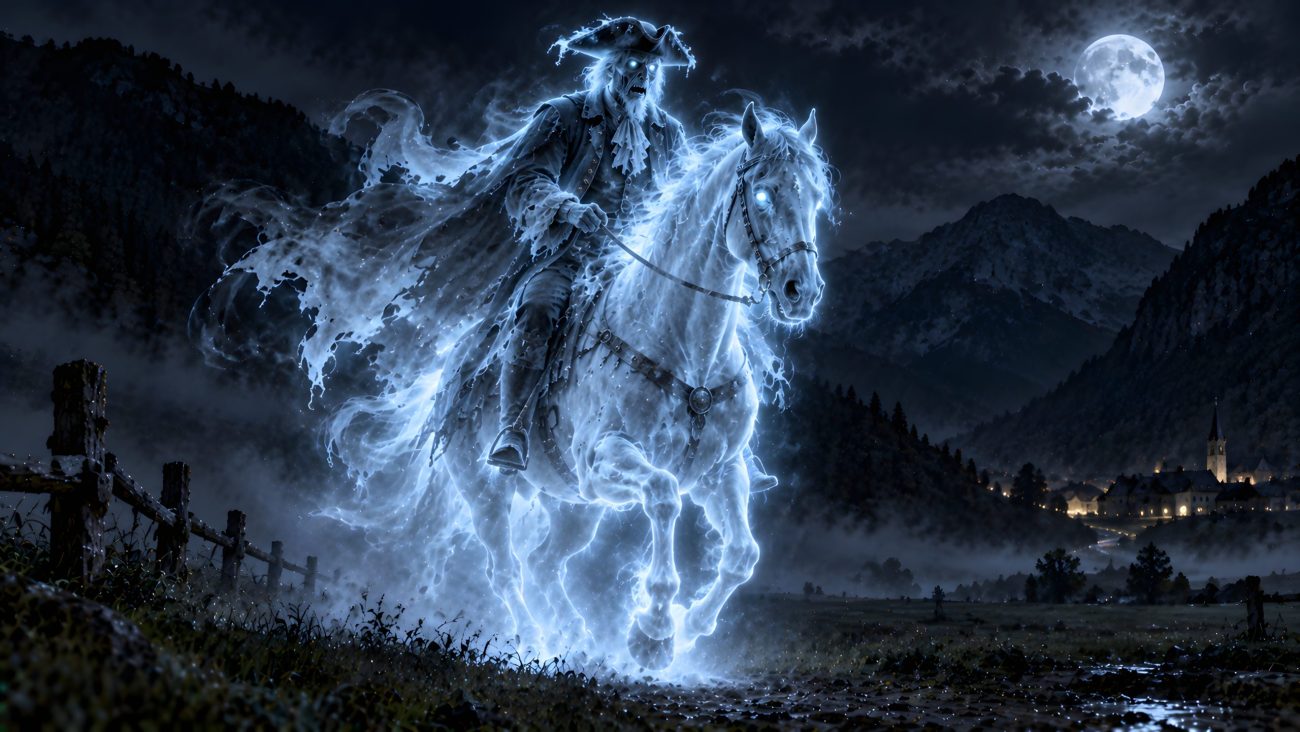
The Eggapont Mold is the ghost of a miserly and dishonest little man who once lived near Eggapont, a meadow below the weaving mill in Triesen, Liechtenstein. The man was consumed by greed and wanted to possess everything he saw. Nothing was safe from his desire to own more, and one day he stole a white horse despite already having two brown horses in his stable.

After his death, the greedy man was said to haunt the meadow where he had lived. At night, his ghost rides through Eggapont on the stolen white horse, appearing as a spectral horseman. Many residents of Triesen have heard the unmistakable sounds of hooves galloping and the horse neighing in the darkness, even when no living rider could be seen.


Sources

“Der Eggapontschimmel.” SAGEN.at – Liechtensteiner Sagen, collected by Otto Seger. Reproduced by SAGEN.at. https://www.sagen.at/texte/sagen/liechtenstein/seger/eggapontschimmel.html


Unjust Judge

Tradition: Liechtenstein Mythology
Alternative Names: The Ghost of the Unjust Judge
Category: Ghost


The Myth

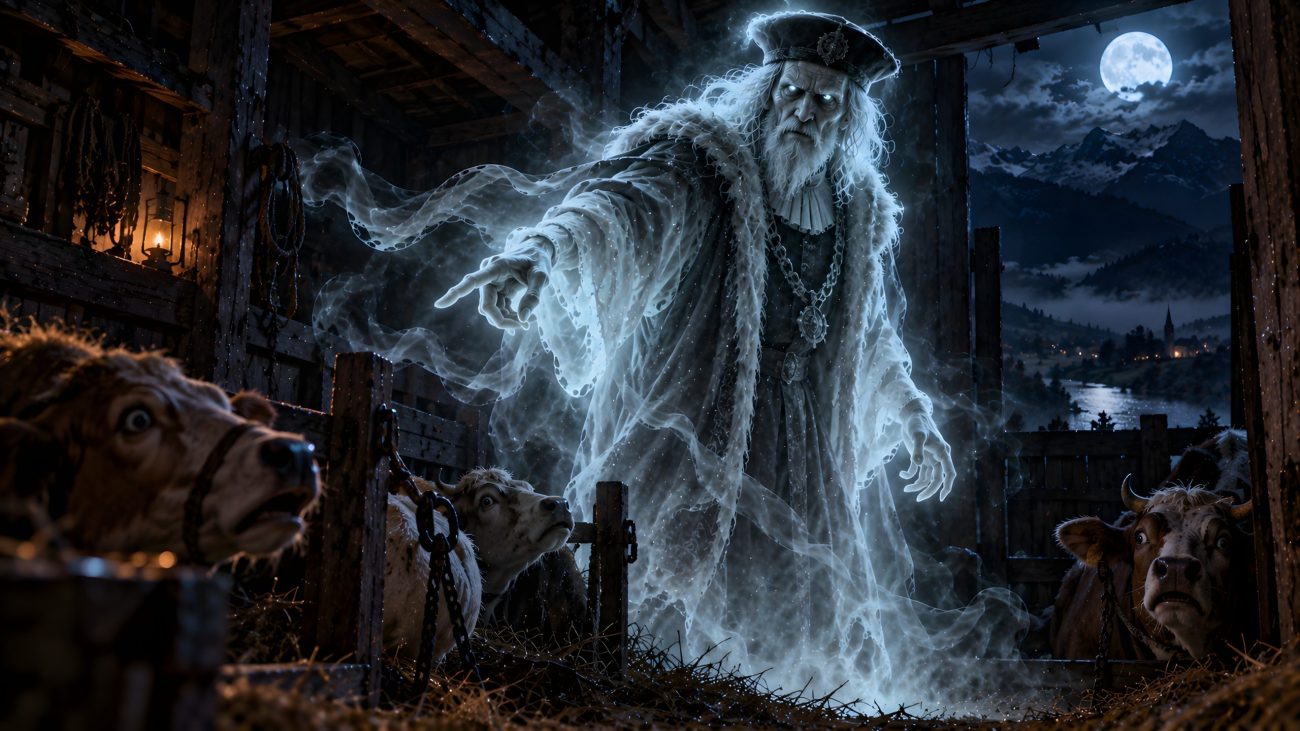
The Unjust Judge is the ghost of a former village headman from Triesen who acquired land through a dishonest exchange. In the past, the people of Triesen owned extensive land on the Swiss side of the Rhine. When the river was to be dammed, men from across the river offered the judge a piece of land in Triesen in exchange for the land across the Rhine. The judge immediately accepted the deal, despite the land belonging to the community. He built a barn on his newly acquired property, but it brought him no good fortune. After several years, he died, and the property passed to his daughter.

One evening, the judge’s daughter drove her healthy cattle into the barn. The following morning, she discovered that the cows were nearly suffocating. The animals were either loose from their chains or tied so tightly that they could barely breathe. She had the barn blessed several times, but the strange disturbances continued. Eventually, the young farmer’s wife summoned a Capuchin friar to investigate.

Inside the stable, the friar encountered the ghost of the deceased judge. He attempted to banish the spirit to the Lawenatobel ravine, but when he arrived there, the ghost had vanished. Returning to the stable, he found the apparition standing by the door. The friar demanded to know why the ghost would not leave the people and their animals in peace. The spirit replied that the time for his redemption had come and demanded that the land be returned to the community or used for good purposes.

The judge’s daughter refused to believe the story and would not surrender the property. From then on, no animals could be kept in the barn. The haunted building, situated between Triesen and Balzers, remained empty, and the ghost continued to be remembered as a warning against unjustly acquiring land that belonged to others.


Sources

“Der Richter.” SAGEN.at – Liechtensteiner Sagen, collected by Otto Seger. Reproduced by SAGEN.at. https://www.sagen.at/texte/sagen/liechtenstein/seger/richter.html


Shubin

Tradition: Ukrainian Mythology
Alternative Names: Шубін
Category: Ghost


The Myth

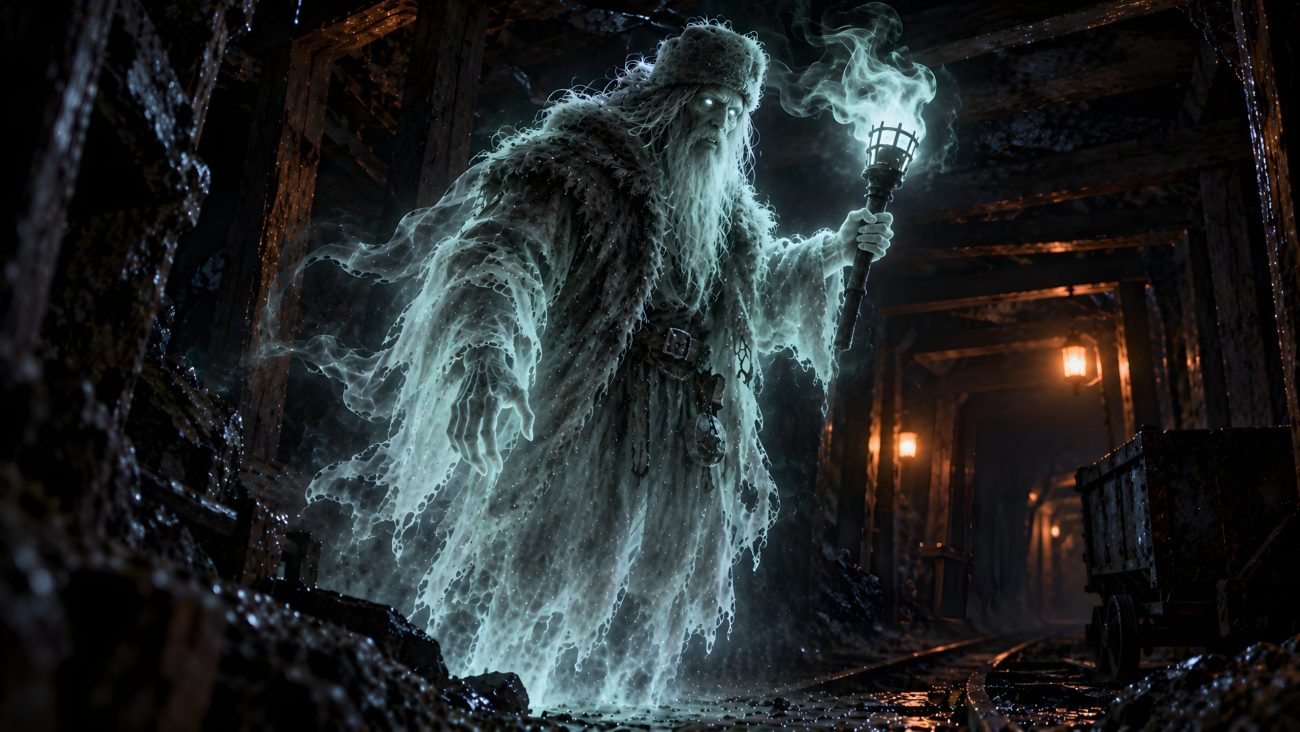
Shubin is a supernatural mining spirit associated with the mines of the Donbas region. He is usually regarded as a guardian of miners, although he can also be wicked and dangerous. According to one legend, Shubin is the ghost of a miner who wanders through the underground tunnels wearing a thick fur coat and carrying a torch. He travels through the darkness of the mines, burning dangerous underground gas and protecting miners from deadly accidents.

Another legend describes Shubin as a cruel mining master who once killed workers underground. After his death, his spirit remained in the mines, haunting the tunnels where he had committed his terrible deeds. Miners tell stories of the spirit’s presence deep below the earth, where darkness and danger surround those who work.

Shubin’s nature is unpredictable. He may protect miners and warn them of danger, but he can also become hostile. His legend has become part of the mining traditions of the Donbas, where tales of the mysterious spirit have been passed down among generations of underground workers.


Sources

“Shubin (ghost).” Wikipedia: The Free Encyclopedia. Wikimedia Foundation. Accessed October 15, 2026. https://en.wikipedia.org/wiki/Shubin_%28ghost%29


Pandafeca

Tradition: Italian Mythology
Alternative Names:
Category: Ghost


The Myth

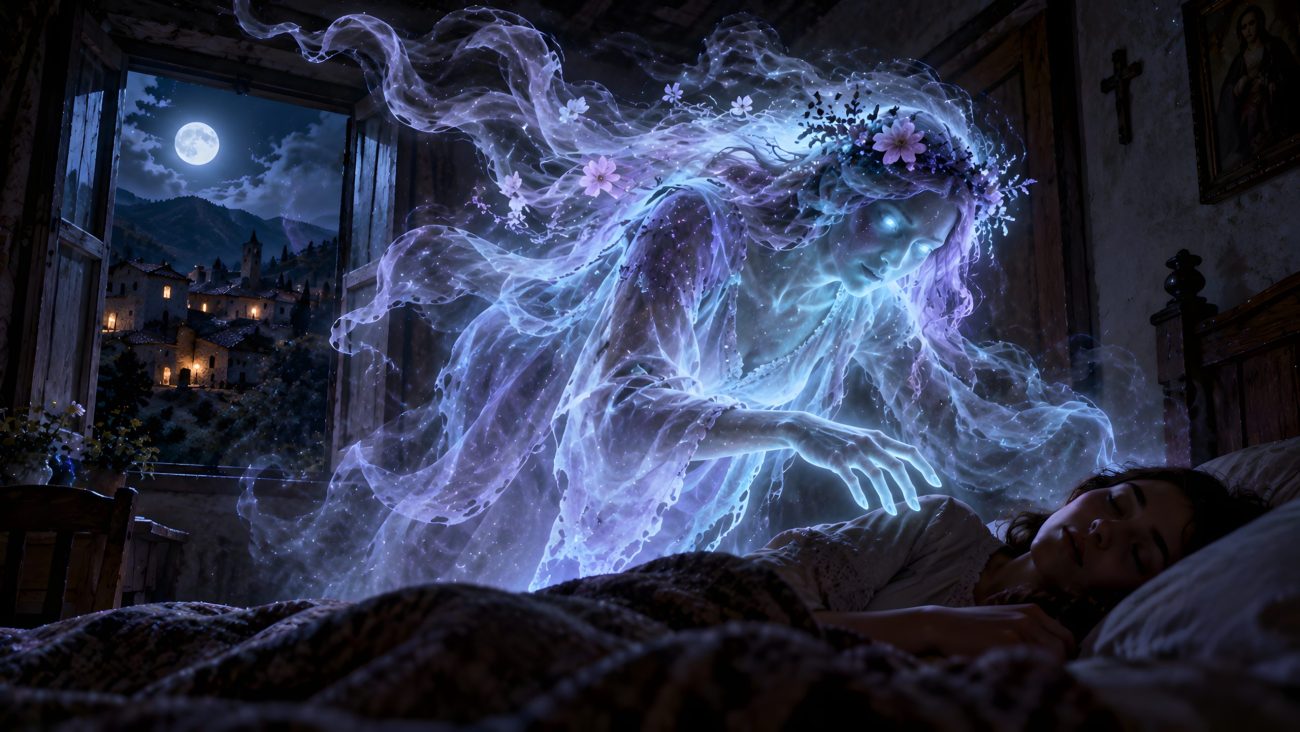
The Pandafeca is a dreamlike supernatural manifestation found in the traditional imagination of Abruzzo, a region of central Italy. It is associated with the mysterious world of dreams and the strange experiences that occur while a person sleeps.


Sources

“Folklore of Italy § Ghosts.” Wikipedia: The Free Encyclopedia. Wikimedia Foundation. Accessed October 15, 2026. https://en.wikipedia.org/wiki/Folklore_of_Italy#Ghosts


Wuetihee

Tradition: Swiss Mythology
Alternative Names: Wütendes Heer
Category: Ghost


The Myth

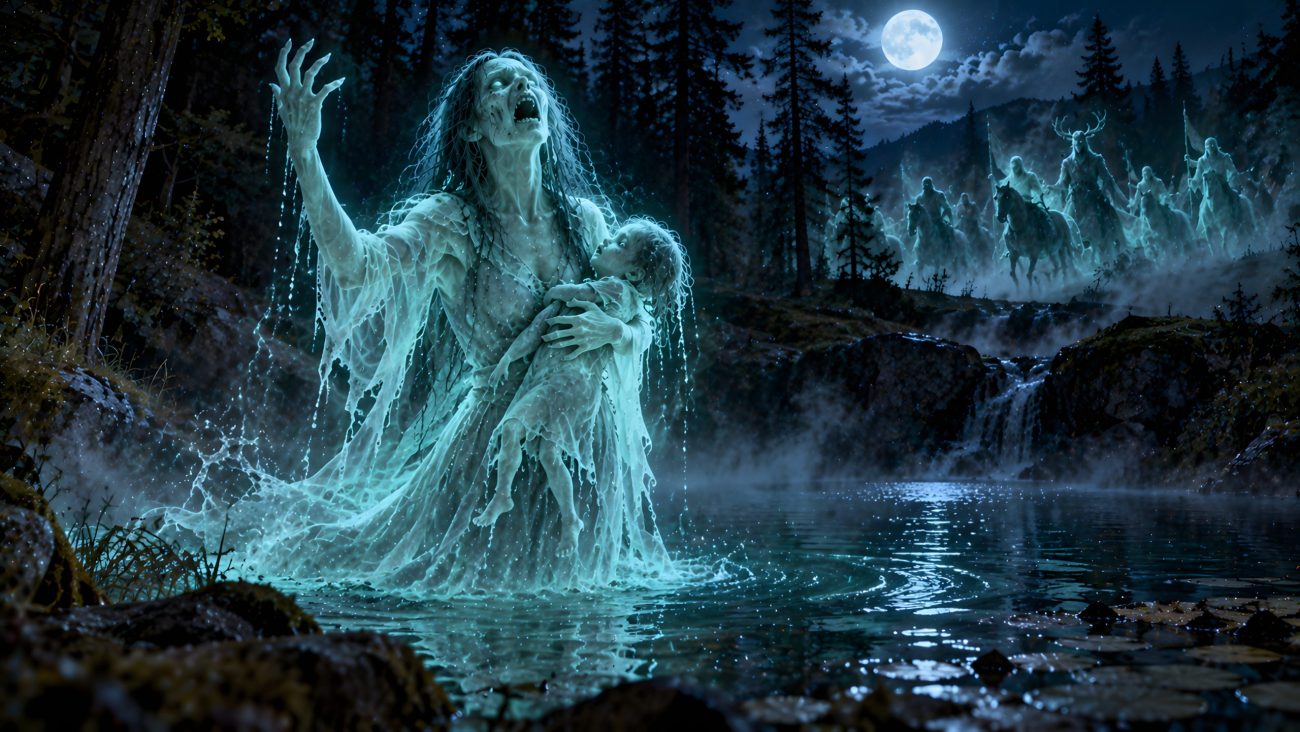
The Wuetihee is a haunting spirit associated with a pond in a forest in the Swiss canton of St. Gallen. The pond lies high in the woods and feeds the stream that flows down toward the village. At night, people often hear a piercing, bone-chilling scream coming from the water.

The scream is said to belong to a woman who drowned her own child in the pond. Because of this terrible deed, she was unable to find peace in the grave. Her restless spirit remains bound to the place where the child died, and her horrifying cries disturb the silence of the forest at night.

The legend is also connected to the tradition of the Wütendes Heer, or Wild Hunt, a spectral host that was once associated with the god Wodan. As belief in Wodan faded, stories of the Wild Hunt were sometimes given new and more tangible forms, such as haunting spirits tied to particular places and tragic events.


Sources

“Wuetihee.” SAGEN.at – Traditionelle Sagen aus der Schweiz (St. Gallen). Reproduced by SAGEN.at. https://www.sagen.at/texte/sagen/schweiz/st_gallen/wuetihee.html